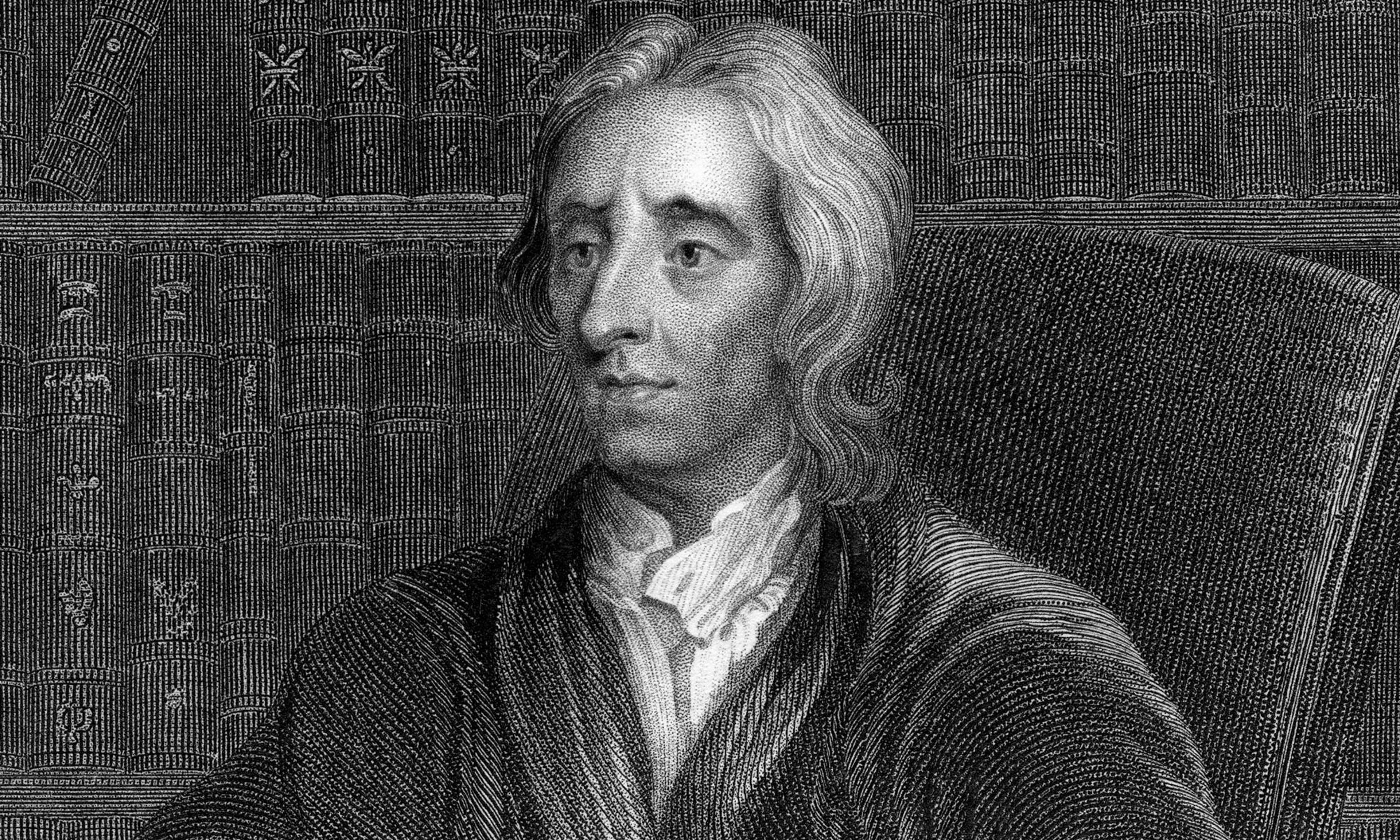
The consent of free and equal individuals is the only secure foundation of just and humane government, and John Locke’s Second Treatise explains why. But “consent” and “individuals” can be interpreted in different ways. Giving them implausible meanings unfaithful to the text of Locke’s masterpiece, recent critics, most prominently Yoram Hazony in The Virtue of Nationalism, have advanced a worrisome alternative.
To understand how the interpretation is unfaithful and why the alternative is worrisome, one must understand what people are, and what they are not. And to that end, it will help to keep in mind two fantastical human specimens from science fiction. They are Bander and Gaia, from Isaac Asimov’s Foundation series.
Bander and those of his planet believe that they alone have discovered “how life is to be lived,” but they are scarcely recognizable as Homines sapientes. They have altered themselves into hermaphrodites capable of solitary reproduction; Bander calls people like us “little half-humans.” They have augmented their brains with transducer lobes that enable them to harness energy from heat flows (as from the interior of a planet to its surface) and use it to move objects of great size telekinetically. They live on estates populated by robot servants; abhor seeing other human beings, with whom they communicate by means of a Zoom equivalent only when necessary; and do not even raise their own offspring, a job for the robots. Bander represents a near-maximum of personal autonomy.
Gaia is Bander’s opposite, a collective organism with a group mind that includes the individual consciousness of every human being, indeed every animal and plant and rock (for plants and rocks are said to have a low-grade consciousness), on a planet of the same name. Particular persons still make choices and have individual perspectives, but they are simultaneously aware of others’ choices and perspectives, since these are merged in the group consciousness of which all partake. Humans like us they call “isolates.” “Every part of Gaia is ready to be sacrificed for the whole,” one Gaian explains. “But we give up nothing in so doing, for each part is the whole, though I don’t expect you to understand that.” Gaia represents a near-maximum of community.
Returning now to the critics’ travesty of Locke: It misrepresents the Second Treatise as if it had been written for Banders, and points toward an alternative that would be suitable only for Gaia. Let’s walk through Locke’s argument and see how.
Locke holds that all are “naturally” born to “a state of perfect freedom to order their actions, and dispose of their possessions and persons, as they think fit.” “Naturally” is literal: Locke is not denying the existence of laws and governments, but asserting that they are made, that the state of subjugation is not automatic. It is what Jefferson meant the week before his death when, commenting on the American Revolution, he wrote that “the mass of mankind has not been born with saddles on their backs, nor a favored few booted and spurred, ready to ride them legitimately, by the grace of God.”
We are also born to a state of “equality.” Locke does not mean “all sorts of equality,” since “age or virtue may give men a just precedency: excellency of parts and merit may place others above the common level.” Natural equality is, instead, equality “in respect of jurisdiction or dominion one over another.” Natural freedom and natural equality come to the same thing.
The “state of nature” refers not just to a time before government, but to any condition of having no legal authority to resolve disputes: “Princes and rulers of independent governments” are in the state of nature with respect to one another. Despite being legally anarchic, the state of nature is not morally so. It has
a law of nature to govern it, which obliges every one: and reason, which is that law, teaches all mankind, who will but consult it, that being all equal and independent, no one ought to harm another in his life, health, liberty, or possessions: for men being all the workmanship of one omnipotent, and infinitely wise maker, . . . they are his property, . . . made to last during his, not one another’s pleasure.
That implies a duty to preserve self and others: “Every one, as he is bound to preserve himself, and not to quit his station willfully, so by the like reason, when his own preservation comes not in competition, ought he, as much as he can, to preserve the rest of mankind.”
The famous triad of Lockean rights — life, liberty, property — is grounded in this duty of self- and other-preservation. Liberty and property (understood as possessions), along with health, are important because they are means of preserving life: One “may not, unless it be to do justice on an offender, take away, or impair the life, or what tends to the preservation of the life, the liberty, health, limb, or goods of another.” (Elsewhere Locke uses “property” in a broader sense, to mean “life, liberty, and estate.”)
“Do justice on an offender” refers to the right in the state of nature to take reparations from and, if necessary, to kill anyone who — turning the state of nature into a “state of war” — uses force to harm the life, liberty, estate, or health of oneself or another. The reciprocal duty of all to preserve all thus defines the limit of the right to be preserved. Someone who violates the duty “forfeits” the right.
“For men to be judges in their own cases,” however, brings “inconveniencies,” since “self-love will make men partial to themselves and their friends,” and “ill nature, passion and revenge will carry them too far in punishing others.” Therefore, “God hath certainly appointed government to restrain the partiality and violence of men.” It does this by providing “an authority, a power on earth, from which relief can be had by appeal.”
There are two steps, logically distinct but not always sequential, to the creation of governments. First, “by the consent of every individual,” people “ma[ke] a community” — elsewhere a “commonwealth” — “with a power to act as one body.” Second, since “it is necessary the body should move that way whither the greater force carries it,” everyone by joining the commonwealth “puts himself under an obligation, to every one of that society, to submit to the determination of the majority” unless the community “expressly agreed in any number greater than the majority.” In this majoritarian or supermajoritarian way, the commonwealth will establish a particular form of government, whose legislative power will enact laws.
Now the chief way that Locke’s critics Banderize him is by claiming that individuals in the state of nature are purely self-interested and, as Patrick Deneen puts it in Why Liberalism Failed, “nonrelational.” Hazony compares Lockean social-contract theory to a business transaction — Banders negotiating in some boardroom — and accuses Locke of ignoring “mutual loyalty” in general and family ties in particular: “Anyone embracing the premises of the Second Treatise would be unable even to understand, much less defend, the existence of the family as we know it and the ties of responsibility that give it shape” — Bander again. Hazony also cites Locke as a source of the idea that “there is only one principle at the base of legitimate political order: individual freedom.”
The falsity of some of these claims should be evident from what we have already seen. Individual freedom is not the only or even the most important thing for Locke, but rather a means to what is most important, the preservation of oneself and others. And the imperative to preserve others is an explicit exhortation to mutual loyalty.
As for the family, Locke has a whole chapter on it, aimed at distinguishing parental from political power. (His polemical target throughout the Two Treatises is Robert Filmer, whose Patriarcha had argued that the authority of absolute monarchs is identical to the paternal power of Adam over his children.) Locke says that parents have a duty to take care of their children, “prescribe to [their] will,” and “regulate [their] actions” until they come of age and can reason for themselves. But “freedom exempts not a son from that honour which he ought, by the law of God and nature, to pay his parents,” indeed for “all his life.” Locke also sees the family as limiting the right to punish and take reparations: “I in the state of nature . . . have injured another man, and refusing to give satisfaction, it comes to a state of war. . . . I am conquered: my life, it is true, as forfeit, is at mercy, but not my wife’s and children’s. . . . My wife had a share in my estate; that neither could I forfeit.” This shows that Locke considers the family a natural institution that logically precedes the establishing of commonwealths.
Of other kinds of ties, Locke writes: “A man may owe honour and respect to an ancient, or wise man; defence to his child or friend; relief and support to the distressed; and gratitude to a benefactor, to such a degree, that all he has, all he can do, cannot sufficiently pay it: but all these give no authority, no right to any one, of making laws over him from whom they are owing.” So the entire web of natural human relationships is, again, logically prior to the contractual political order. But since Locke repeatedly acknowledges those relationships, he must mean that individuals enter political society wishing to keep them intact.
This gives depth and plausibility to Locke’s explanation of why the consenting individual will offer service or sacrifice to the community, something Hazony thinks Locke cannot make sense of. Locke’s explicit answer is that “whosoever . . . out of a state of nature unite into a community, must be understood to give up all the power, necessary to the ends for which they unite into society.” A member must “engage[] his natural force . . . to assist the executive power of the society, as the law thereof shall require”; “part also with as much of his natural liberty, in providing for himself, as the good, prosperity, and safety of the society shall require”; and “pay out of his estate his proportion for the maintenance” of government. Even on a narrow logic of Banderian self-interest, one can say that the individual consents to this bargain because he is even likelier to meet with unpleasant outcomes in a condition of anarchy.
But if we consent along with our loved ones, we will continue to consider their interests our own (an aspect of human nature that Hazony compellingly emphasizes), and will understand that the commonwealth protects them, too. And this will help move us to service and sacrifice. True, as we saw above, Locke subordinates the individual’s duty to preserve “the rest of mankind” to his duty of self-preservation. But “the rest of mankind” is perfectly general, and Locke is there preparing his discussion of the natural punishment of those who offend against oneself and others. The others foremost in one’s mind would surely be one’s loved ones, who would not normally be among the war-making offenders in need of punishment.
It is easier to forget Locke’s repeated references to intergenerational and other natural ties if one imagines the social contract as being made all at once with the creation of a new state. This is how Hazony presents it, calling the story a “myth” no better than the tale of storks delivering newborns. But it is not always a myth. It’s odd that Hazony should so disparage this story when he so often takes ancient and modern Israel as his exemplar. Just how did the Israeli state come to be? The origins of Israel as an ethnic and religious nation are ancient and gradual. But modern Zionism was nothing if not a movement of individuals-in-community to leave together the commonwealths in which they lived and, by mutual agreement, form a new political society. The biblical account of Israel’s exodus from Egypt can be understood in similar terms up until Israel embarks on a program of conquest with the extermination of Jericho. Locke himself mentions the founding of Rome and Venice, among other examples.
One can also point to the American experience: As Cameron Hilditch noted recently at National Review Online (“The 1620 Project,” November 26), the purpose of the Mayflower Compact was “to establish ‘a civil body politic,’ in order to make ‘just and equal laws, ordinances, acts, constitutions and offices’ for the new colony.” The colony remained subject to the British crown, but we nonetheless see here the voluntary creation of a subordinate political community, and in declaring independence the members of the colonies chose to create a new sovereign commonwealth (albeit not by universal consent). The history doesn’t follow Locke to the letter, but it’s certainly closer to the Second Treatise than to Hazony’s theory.
In any case, Locke is much subtler about consent than his critics care to admit. He distinguishes between the “express” and the “tacit.” Express consent makes one a member of the commonwealth, and membership is irrevocable (though subjects may change their form of government or, in accordance with natural law, overthrow a tyrant or usurper who establishes a state of war against them). Children of members subject themselves only if they give their own express consent. But simply by choosing to remain in the commonwealth and enjoy their inheritance, they give tacit consent to the commonwealth’s jurisdiction and laws. This two-tiered arrangement looks strange today, but it reflects Locke’s time and concerns: Most subjects never took loyalty oaths, but one nonetheless became a perpetual subject at birth, and so acquired a permanent, unchosen political obligation — the very thing Locke’s theory is meant to reject.
For our purposes, what matters is that Locke’s doctrine can be adapted to answer anyone who scoffs at the idea of political consent just because he cannot identify any occasion on which he gave it. Today we can say that natural-born citizens give consent by choosing not to emigrate. This allows the idea of political consent to absorb all our natural loyalties: Most of us simply choose to keep the community we were bequeathed. Our consent is, however, real, since any of us may leave.
Tacit consent also absorbs Hazony’s account of state formation, with its clans coalescing into tribes coalescing into nations. Although Locke maintains that “well ordered commonwealths” will put “the legislative power . . . into the hands of divers persons” who enact standing laws, he does not make this a requirement of consensual government: “I will not deny, that if we look back as far as history will direct us, towards the original of commonwealths, we shall generally find them under the government and administration of one man.” This man might have been the father of a family that “by degrees grew up into a commonwealth,” with “the fatherly authority being continued on to the elder son” and everyone “tacitly submitt[ing]” to the arrangement. Or “several families, or the descendants of several families,” might have “united” for “need of a general, whose conduct might defend them against their enemies in war.” Such leaders of early commonwealths governed by prerogative, but when “ambition and luxury, . . . aided by flattery, taught princes to have distinct and separate interests from their people, men found it necessary to examine more carefully the original and rights of government; and to find out ways to restrain the exorbitances, and prevent the abuses of that power, which they having intrusted in another’s hands only for their own good, they found was made use of to hurt them.” In its maturity, Israel reads Locke and gets a parliament.
This story neutralizes Hazony’s objection that the Lockean state “is eerily without borders of any kind.” That Locke speaks not of borders does not imply that he thinks the state should be without them. His belief that commonwealths often have tribal origins, which by definition are geographically specific, suggests that he simply assumes borders instead. And since borders are necessary to preserve commonwealths, his theory provides a reason to keep them.
Well, so who cares? If the Second Treatise of Government can absorb Hazony’s theory — the reality and great worth of pre-political community, the existence of nations, their process of gradual development — why does the debate between Hazonian anti-liberals and Lockean liberals even matter?
It matters because the converse is not true: Hazony cannot absorb Locke. And that is because human beings are not Gaia.
We are — each of us is — individually sentient. The value of communities, whether across a land or down through the generations, is value experienced by individuals. A communal right, if one wishes to speak in such terms, remains a right whose importance is for individuals. A communal experiencer of the value of community, a communal enjoyer of a communal right, literally cannot exist. That might seem so obvious as to be trivial, but the crucial implication is this: Any theory that takes the community rather than the individual as its fundamental unit will not be obliged to take everyone into account. Individuals need community, and that need will not disappear from a true account of what individuals value. But with the rare exception of the community-saving individual, the community does not truly need any particular individual, or even, usually, any particular group of them. And so in a theory such as Hazony’s, the good of individuals, or their misery, can simply disappear from view.
Imagine that an individual or group of individuals, though not threatening the life or liberty of anyone, adopts ways that are different and unpopular: a new religion or none, a dissenting political belief, an unconventional but nondestructive domestic arrangement. What protects such individuals from a government that would coerce their conformity?
Locke, as we have seen, knows that the good of the political community may require self-sacrifice. But what justifies his commonwealth is its protection of the life, liberty, health, and estate of every individual-in-community. The call to sacrifice is thus a call to preserve that protection for all. And the need for that protection is rooted in the value to God (or, if one prefers, the inherent value) that every human individual possesses. The law of nature thus provides an ethical bulwark to all against any government that would use force against some for the perceived benefit of others (who may be the rulers themselves). In such a case, all should revolt and establish a new government that again protects all. Some may not; the majority may favor tyranny. But there is a moral standard, available to all, that shows why such a majority or such a government is iniquitous.
Now suppose instead that, with Hazony, we take the community as fundamental, and loyalty to its particularity as that which justifies political allegiance. If the community is Gaia, no problem. If it is Gaia, the interests of the individual and those of the community can never diverge, since each individual is also the community. All being all, all experience the woe and weal of all. No ethical bulwark is required.
But human beings need the bulwark, and Hazony removes it. Once individual consent justified by the protection of universal rights is withdrawn, those led by conscience or constitution to diverge from the group’s particularity share no standard of judgment with those who, in the name of the group, would make them conform. Conformity has itself become the standard. Divergence as such is now suspect. And suspicion or suppression, not toleration, is the only logical response.
Different theories have their emphases, and different emphases may lead us to overlook what we shouldn’t. It may well be true that liberalism, with its focus on the individual, has made us care less than we should about social cohesion and social reproduction. The solution to this problem would be to non-coercively help individuals see the value of the community, and to non-coercively encourage them to make choices that strengthen it. (I see no conflict whatever, for example, between Lockean liberalism and policies that encourage couples to beget or adopt children.) But the Hazonian suspicion of the nonconforming individual is not a matter of emphasis. By the very logic of Hazony’s whole account of political allegiance, the intrinsic worth and natural rights of nonconforming individuals need not be acknowledged. That Hazony renders the theory humanely incoherent by speaking of individual liberties as desiderata does nothing to remove the danger: for the concept of individual liberties is adventitious to the theory and left with no foundation.
The danger of such a theory becomes especially grave when, as they inevitably will, nations come into conflict, whether across or within state borders. Hazony wants a mutually respectful relativistic nationalism in which each nation peaceably minds its business, “tend[ing] to disdain,” as a waste of resources and strength, “the idea of conquering foreign nations.” We are instructed to see Nazism as imperialistic, not nationalistic, and to consider these alternatives sharply distinct. But a tendency is not a requirement. Hazony gives no reason at all why national states must so conduct themselves, or why a program of conquest, guided by a supremacist belief in the superiority of one’s own, could not become part of the cultural particularism to which a nation is loyal. Hazony likes to accuse liberalism of being intrinsically imperial, but Locke’s requirement of consent rules out, by definition, the idea that peoples may justly be subjugated or have a liberal order forced upon them. The theory that cannot exclude conquest is Hazony’s. A German qua German and a Pole qua Pole, an Israelite qua Israelite and a Canaanite qua Canaanite, are, each of them, wholly other to the other. All they share is a common humanity. If the first decides that the flourishing of his people requires the taking of some lebensraum and the slaughter of a nation or a city, the second can say nothing, absolutely nothing, that the first will be able to understand in terms of his own national loyalty.
Not that The Virtue of Nationalism would have done any good for German Jews, either, if only Hitler had had it around to explain the importance of the tendency to keep to one’s borders.
Or for a Rohingya family murdered, and their village torched, by soldiers and deranged monks who mistook the Buddhadharma for a requirement of membership in the Bamar state and so concluded that the Muslims had to go.
Or for a gay person, or a democrat, in Iran, hanged because the clerics said God demanded it.
Or for the Uyghurs in concentration camps, their lives and culture destroyed for the sake of Han dominance.
Or for the Hong Kongers, against whose two-decade experience of full freedom, preceded by a century and a half of comparative liberty under British colonists, the Chinese Communist Party now opposes the 4,000-year-old tradition of dynastic despotism from which Hong Kong briefly diverged.
Or for the billion-plus mainland Han themselves, living, aware of it or not, as captive prey to that same clique of tyrants, who acknowledge no limits on what may be done to preserve their rule over those they hold captive in the name of the Chinese state.
Nothing in a theory of unchosen group political loyalty can offer the slightest argument as to why the protection of any of these people — and the examples could be horrifyingly multiplied — is a moral necessity rather than a happy contingency. For people are not Gaia, and when communities of the strong, which may be the ruling cliques themselves, feel their self-interested particularity threatened by communities of the weak, the claims of the weak will vanish altogether from the communal calculus of the strong. Not just the value that the oppressed find in their communities, but their very right to exist in the only way people ever can, as individuals, is necessarily revealed, is made necessarily intelligible, only after we acknowledge the natural duties and rights that, protecting all people just because they are people, place strong limits on what all may do to any as all pursue their good.
The consent, properly understood, of free and equal individuals, properly understood, is the only secure foundation of just and humane government. If you want to know why, read Locke.












Comments