Ronald Reagan was dubbed the “Great Communicator.” Donald Trump might well be labeled the “Great Accelerator.”
U.S. politics was polarized before President Trump, with both coalitions motivated mostly by fear of each other. We have gotten more polarized since Trump rode down that escalator. The Upper Midwest has long been moving toward the Republicans. Both the George W. Bush and Mitt Romney campaigns made Wisconsin a target, and the state’s legislatures have been Republican for a decade. In 2016, Trump was the first Republican since Reagan to get its presidential vote. Pennsylvania, too, finally tipped toward the Republicans while Trump led them. He lost both states in 2020, but in both of his elections they voted more Republican than the national average.
Trump continued the realignment of white voters based on schooling, too. White college graduates had been moving toward the Democrats, and whites without college degrees toward the Republicans, for years before him. In 2008, Republican John McCain won 51 percent of whites with degrees and 58 percent of whites without them. When Trump ran in 2016, he got 48 percent of white college graduates and 66 percent of white nongraduates. The preliminary numbers from 2020 are similar, with the candidates tied among the first group and Trump cleaning up in the second.
Voting patterns among nonwhites make for more-complicated stories. The Republican share of the Hispanic vote soared during George W. Bush’s presidential campaigns, but then dropped in each of the next two elections. Trump was widely predicted to do worse still, having among other things famously started his campaign by complaining that Mexico wasn’t “sending their best” to the U.S. But he seems to have done a tick better than Romney did in 2012, and both the early exit polls and the geographic pattern of election returns suggest he improved his share of the vote again in 2020. The Republican share of African-American and Asian-American votes may also have risen this year.
One can at this point only speculate about the reasons for these shifts. They likely reflect first the bitter end of the Bush years and then their receding into memory; the rise and then departure of our first African-American president; and the strength of the economy during most of Trump’s presidency.
Changes in the Republican Party may also have played a role. The GOP spent much of the Obama years moving sharply to the right on economic issues. Rising deficits, runaway entitlement programs, and the burdens of government on entrepreneurs were among its top concerns. The problems confronting a lot of blue-collar Americans were not. Republicans weren’t thinking about the same issues as their own voters, let alone the wider public. Trump won the primaries in 2016 in part because of that gap. He talked about jobs and wages, not about deficits and innovation.
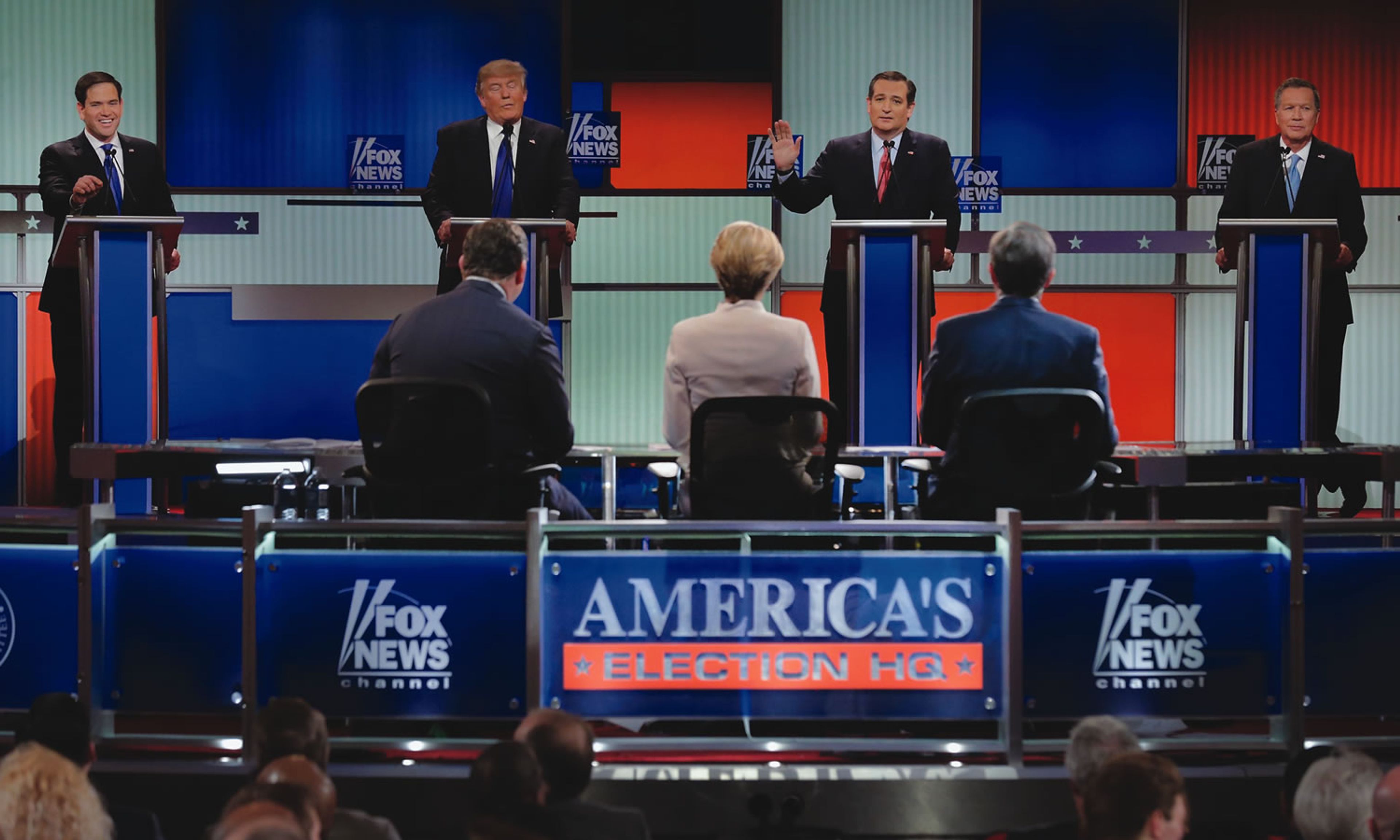
It was a message that made him more appealing than other Republicans to some voters and less to others. In the South Carolina primaries that year, a small majority of voters had college degrees. Marco Rubio narrowly beat Trump among them. Trump won the state’s delegates by beating Rubio by more than two to one among voters without those degrees.
When Romney did worse than McCain among Hispanics, the decline was widely attributed to Romney’s tough stance on illegal immigration. But it may also have resulted from Republicans’ Obama-era flirtation with the rhetoric of Randian individualism. The subsequent Republican rebound among nonwhites may, like the party’s gains among whites without college degrees, be the reward for a more popular economics.
Where Republicans go from here will be shaped by their relief at the outcomes of this election, which at the moment appear to include a narrow Trump loss in the electorally crucial states, gains in state legislatures and the U.S. House, continued control of the Senate, and an increased share of the nonwhite vote. Many Republican officials had been expecting much worse.
Many Democrats, including some who were until recently Republicans, had hoped for a decisive victory that not only gave progressives a free hand to govern but forced the opposition to excise every bit of Trumpiness from itself. They wanted voters to repudiate not just Trump but the party that enabled him. That didn’t happen, and so the fantasy of a de-Trumpified party has died.
A fantasy it always was. Voter alignments have been extremely durable over the last generation; even the shifts in sentiment among Americans with and without college degrees have taken place in slow increments. Most states voted for the same party’s presidential candidate in 2000 and in 2020. Even Trump’s “hostile takeover” of the Republican Party testified to its continuity. The vast majority of the people who voted for him had voted for Romney four years earlier, and he changed his positions to fit the party more than the party changed its to accommodate him. It was the party that generally opposed abortion and tax increases before his presidency, and it will be that party after it as well. (The long-running argument over whether the party would remain pro-life effectively ended some time between Rudolph Giuliani’s and Trump’s runs for the presidency.) The Republican Party could be de-Trumpified after 2020 no more than it could be de-Bushified after 2008. The party’s surprising success in 2020 will quiet any talk of even attempting the former.
To the extent Republicans have already settled on a conventional interpretation of the election, it is instead that the party’s future lies in Trumpism without Trump’s personal flaws. They think they have seen the birth of a new multiracial, working-class populist conservatism that can win elections.
That conclusion is premature. Republicans should not get carried away about how working-class their party is: Trump lost voters making less than $100,000 a year and won those making more. Relief that the election went much better than Republican politicians expected is also leading to some complacency about the party’s strength in presidential politics. The Cold War ended 30 years ago, and in all that time the Republicans have won more votes for president than the Democrats only once. Lack of popular support has made all of their electoral majorities precarious. More than 364 million votes were cast in the three elections they won (in 2000, 2004, and 2016). A shift of just 100,000 of those votes in the right times and places would have caused them to lose all of them. Four of the five Democratic victories were much easier than any of those.
This year, the Democrats have combined a sizeable popular majority with an electoral victory that appears to be built on a relatively small number of votes. Republicans are tempted to reason that Trump would have won if he had only made himself a little less obnoxious to voters outside his base. House Republicans generally ran ahead of him, which lends some credence to this theory.
But Republicans also had the economy working for them. The strong economy of Trump’s first three years in office never made him popular, but voters gave him credit for it. While they disapproved of his response to COVID-19, they do not appear to have held him fully culpable for its economic consequences. During the campaign, polls often gave him an edge over Biden on the question of who would handle economic issues better. Voters who said their financial conditions had improved over the last four years outnumbered those who had seen deteriorations by two to one in the preliminary exit polls. It was the most favorable answer for Republicans on that question in any election since the Cold War.
While Trump was in office, many Republicans adopted the view that the strength of the economy testified to the wisdom of the administration’s economic policies: Tax cuts, regulatory restraint, tariffs, loose money, and a decline in immigration had paid off. One can accept this theory, in whole or in part, while also recognizing that Republicans had some good luck, which they might not enjoy in future elections.
It is also possible, although by no means assured, that Democrats will moderate their image, having learned from this year that even their own voters are not quite as “woke” as some of them had believed. If Democrats are quicker to swat down left-wing brainstorms such as defunding the police, abolishing immigration enforcement, and junking memorials to the Founders, they will make themselves harder to defeat.
If the Republican Party has a bright future as the party of Trumpism without Trump, it will probably be necessary for it to figure out what Trumpism is in the first place. How much of what caused some voters to flip from Obama to Trump was based on his deviations from previous Republican orthodoxy on economics, and how much of it was based on his combative manner? To the extent it was the unconventional program, was it specifically his protectionism that mattered or his general willingness to chuck libertarian dogma to help communities? If Republicans start supporting greater government activism in the economy, perhaps to compensate for the inability of nearly all of them to replicate Trump’s persona, will they alienate some of the Republicans of longer standing who have already been gritting their teeth under Trump?
For good or ill, President Trump has not been particularly concerned with defining and defending Trumpism. He did not choose his endorsees in congressional primaries, or his top aides, to promote any particular ideological tendency. He may, however, have something to say about this “without Trump” business. Trump could run again in 2024, or at least spend the next three years talking about the possibility. He will surely retain a lot of loyalists among Republican voters — but just how many, the other potential Republican candidates are dying to know.
An ambitious Republican politician or two will try to run with the pre-Trump party’s program but Trump’s attitude. Others will try to run with their own versions of Trumpism, with more policies designed to appeal to blue-collar voters but less rhetoric that provokes affluent suburbanites. Trump’s looming presence in the race may starve the second category of candidates of attention and support.
The Republican Party will remain, as it has been for some time, an unruly coalition. At the risk of oversimplification, its main components are business-oriented moderates, ideological conservatives, and working-class nationalists. These groups often disagree on policy, and even more on priorities. The first and third but not the second favor large government infrastructure projects; the second and third but not the first are hostile to diversity-training mandates and the like. One of the effects of Trump has been to make the third group larger, more organized, and more visible to its partners.
Whoever succeeds Trump as the leader of the Republican Party — and whenever that succession takes place — managing that coalition will be an ongoing challenge. The challenge will be a more severe one if the coalition’s members fail to see that even when united they are not a majority of the country.












Comments