Republicans don’t always get what they hope for when they elect a Republican. A good example of this disappointment was the presidential election year of 1952, a year when top earners confronted a marginal income tax rate of 92 percent. The platform of the victorious Republican Party that year scored the “merciless taxation” of the Democrats and the Truman administration. With a Republican at the helm, Republicans told themselves, they could reverse what was called “creeping socialism.”
Yet no reversal materialized. When, in February 1953, Dwight Eisenhower held his first press conference, the new president bluntly announced that “I do not believe that taxes will be lowered.”
Ike’s caution could be explained. The president believed that “there must be balanced budgets before we are again on a safe and sound system in our economy.” Only then could tax cuts be considered. Republican chagrin was so obvious that a then-progressive magazine, Commentary, could not resist publishing an obit for the GOP, “The Decline of the Republican Party.” The article quoted a Republican who announced that he’d never expected “to see the day when it’s the Republican Party that’s fighting a tax cut.”
The problem was, however, not merely one of tax cuts. In the 1950s, the Decade of Ike, the U.S. faced scant competition; European economies were struggling to find their feet after World War II, and the time when Asia would become an export powerhouse was decades away. Over the long term, as opposed to a single Cold War election cycle, the United States, however, needed a freer market to thrive. Yet few in those years were willing to acknowledge that. Let alone make the enthusiastic case.
At colleges, the economics departments had taken what one observer called “a hot collectivist turn.” Professors sermonized on a fashionable new economic theory, Keynesianism, with a fervor that today is reserved to advocates of artificial intelligence. Markets did not find support on either television or radio, though in part for different reasons. Officials at the Federal Communications Commission renewed the licenses of radio and TV stations that religiously honored what came to be called the fairness doctrine: equal time for both sides of an argument.
What’s more, the FCC and our courts made it clear that they wanted those arguments to be cautious: a mild progressive versus a mild conservative. The sodden result was hardly pro-market.
Newspapers and magazines labored under no such constraint but increasingly used their freedom to parrot the professors or commentators on radio and TV. At Time magazine, Henry Luce did his part to capture the panic of strivers who struggled under the scrutiny of tax authorities: They included “executives who live for a day, like gaudy moths in the bright light of the tax collector’s investigators. Surtaxes consume their substance.” But even Time did not push hard for reform. Nor could the Wall Street Journal, while generally pro-business, be counted on to hurl the thunderbolts we expect from the paper today.
The consensus collectivism of the 1950s played on some ancient assumptions: Money requires apology. Money is dirty. Capitalism is not compassionate. Keynesianism conferred new dignity on these old stereotypes, holding that money spent by government was clean, or at least less dirty than, private lucre.
What’s more, the Cold War imposed a sub-zero chill on all such discussions. Especially when it came to political debate on domestic topics. In February of 1953, the Korean conflict stood at a terrifying impasse; a few months later General Maxwell Taylor would flee Pork Chop Hill. To assail a new president on marginal tax rates in such a moment of crisis was the equivalent of launching a flat tax campaign in March 2020, even as New York and Washington were locking down and hospitals wheeling out their ventilators. The very idea seemed irresponsible.
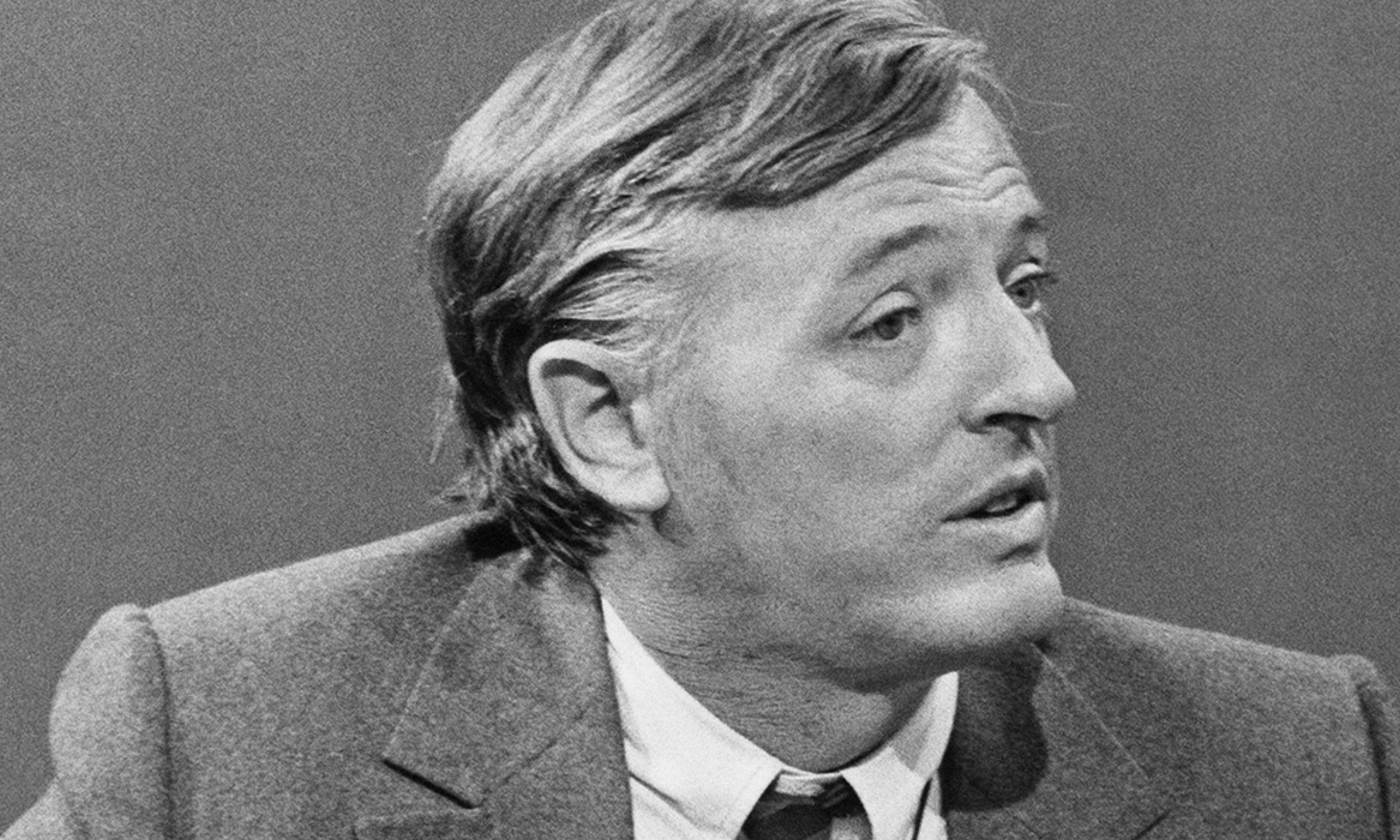
Blasting this dreary domestic landscape with his own economic thunderbolts became the goal of a singular undergraduate at Yale: William F. Buckley Jr. Most know God and Man at Yale, Buckley’s first book, as an assault on the trend away from religious faith at American colleges. Less remembered is that he devoted several chapters of God and Man to that sudden “hot collectivist turn” — it was Buckley who had come up with the term — at economics departments across the nation. Where, only years before, a diversity of economic philosophies had featured in college textbooks, now all was Keynes. Lorie Tarshis posed the great rhetorical question in his widely adopted Elements of Economics: “Does our economy provide the ideal output judging it by its correspondence with consumers’ wants?” His answer: “We have developed reason for thinking not.” Experts and governments were always the solution offered in such books.
Buckley the college man, however, rejected any conflict between faith and capitalism. To his mind, it was the compromise collectivism itself that sullied us. “I myself believe that the duel between Christianity and atheism is the most important in the world,” he wrote. “I further believe that the struggle between individualism and the collective is the same struggle on another level.” Socialism indeed crept. To subordinate the power of markets for the sake of battling communism abroad was therefore to lose the same battle at home — eventually. “When the menace of communism is gone, another battle will emerge to the foreground. And the winner must have help in the classroom.” To prepare for future days, Buckley and others named a national college group they founded the Intercollegiate Society of Individualists.
Much of the value in God and Man came in its appendices, where Buckley catalogued the long lists of universities that had adopted Tarshis, Paul Samuelson’s Economics, or other Keynesian texts. The president’s office at Yale turned on Buckley, as did the editors who followed him at the helm of the Yale Daily News. Professors did cease to assign the Tarshis book and some of the other egregious texts. It was merely a small gain. Samuelson remained the university standard. Yet as Buckley ally and brother-in-law Brent Bozell (Yale Law, 1953) would note, “No number of straw men or valid citations of error will rob Mr. Buckley’s message of its pertinence.” Buckley had awakened alumni across the nation to what was going on at their schools, and that could not be undone.
After the limited victory that was God and Man, Buckley rallied donors — dozens, not hundreds — to open a new front on the battlefield of magazines. The goal, as he put it in November 1955, in that first issue of National Review, was to revive and unify conservatives in a new powerful force capable of moving past both “the irresponsible right” and the “well-fed right.”
Under the heading “The Magazine’s Credenda,” Buckley made it clear that the era of apology was over. Credendum A was the need to do battle against the state: “The growth of government — the dominant social feature of this century — must be fought relentlessly.” The magazine would therefore take, as Buckley wrote in A, “without reservations,” “the libertarian side.”
The Cold War conformists were illogical, Buckley continued. To soften the case for markets at home was to ape the social democrats who had paved the road for communists in Russia. “The profound crisis of our era is, in essence, the conflict between the Social Engineers, who seek to adjust mankind to conform with scientific utopias, and the disciples of Truth, who defend the organic moral order.” In Credendum F, Buckley underscored the imperative of support for markets. “The competitive price system is indispensable to liberty and material progress.” Unions might appear to stabilize Cold War America, but danger lay in “union monopolies.”
The stunning trouncing defeat of the feisty defender of markets, Barry Goldwater, in 1964 by Lyndon Johnson seemed to others evidence of the absurdity of doing battle for markets. Not to Buckley. When the 1965 Republican candidate for mayor in New York, John Lindsay, defined the term limousine liberal, the magazine man attempted his own Goldwater move, entering the fray himself on the Conservative Party ticket.
Lindsay was putting forward a complex plan to rejuvenate the city, including claiming a greater share of federal aid to improve the city’s “total environment.” Buckley said complexity merely obscured clear truths. To revive the world capital of capitalism, the necessary policy was the old one: “Don’t raise taxes. Do encourage business.” The press trashed Buckley’s candidacy as “bizarre.” Buckley and free markets lost to the “next John F. Kennedy,” Lindsay, in a three-way race. That did not matter. What mattered was that Buckley had gained ground for the ideas.
Buckley’s next campaign was even braver: an attempt to claim the monitored platform of television. He weaponized the FCC’s smothering fairness doctrine by proffering genuine debate rather than double pablum. His first guest on Firing Line was a star of the Left, Michael Harrington, the author of The Other America, a book that inspired Lyndon Johnson’s campaign to eliminate poverty. Harrington — politely, to his credit — made the case that billions in federal spending would help. Wrong, Buckley countered, noting that if anything could help the poor — and that itself was not clear — it was economic growth. “I have a certain amount of faith in capitalism,” Buckley told Harrington. “It’s likely to survive even your own strictures against it.”
It was upward from there. Rather than pander to the unknowing television audience with oversimplification, Buckley challenged viewers with great truths, elevating his audience along with his eyebrows. Where Fox, for better or worse, often pulls viewers down-market, Firing Line raised them to the level of Henry George or Adam Smith. From time to time the FCC, or the television station managers’ terror of it, of course did trifle with Firing Line. But Firing Line abided, perhaps in part because even those who did not like the arch Buckley did like the show’s intelligence. ABC even made Buckley a special commentator.
It was by staging free-market political candidates — and staging them early in their careers — that Firing Line did its most profound work. As today, in the 1960s the Overton window, the window of what is culturally acceptable, was narrow. The actor Ronald Reagan’s million-vote margin of victory in the 1966 California gubernatorial race did not earn him the respect of the mainstream; for most commentators, Reagan was still behind Overton’s curtain. In 1967, however, Buckley pulled the California governor into view, pointing out that Reagan’s was “the only successful mutiny against the political script writers in recent times.” Buckley had the presidential candidate Reagan on again 13 years later, in January 1980. Weeks later, powered by a series of anti-tax commercials, Reagan won the New Hampshire primary. It would be during the second Reagan administration that the fairness doctrine finally saw repeal.
Nor did Buckley confine his political staging of market candidates to American politics. In 1975, Firing Line hosted a British politician then unknown to Americans, the new opposition leader Margaret Thatcher. In her 60 minutes, she and Buckley skipped around, mentioning the single-taxer George and delving into the evils of innocuous-sounding legislation put forward by the Labour Party, which then ruled Britain.
Buckley didn’t merely interview Thatcher. He boosted her. He noted that, if elected, she would be the first woman prime minister in British history. This even though Thatcher was not exactly “in the modernist spirit of Germaine Greer.” The magazine generally picked up on the Thatcher promise earlier than mainstream slowpokes. Mighty Britain’s problem, as Thatcher put it, was that the British government was bringing Britain down with its tendency to “put more and more powers into the hands of the state, and therefore take more and more away from the citizen.”
Nor did Buckley hesitate to take down candidates who wobbled on markets. The 1967 episode in which Buckley politely instructs the would-be Statesman to the World, former vice president Richard Nixon, in the difference between political grandiosity and principled truth, and the virtue of a “private vision,” is especially delicious. The GOP had failed to appreciate “the innate strength of its own position.” Buckley commented, prodding the hyper-politicized Nixon: “Isn’t one of our difficulties a certain lack of conviction?” And why couldn’t Republicans back tax cuts?
By the time the original Firing Line withdrew from the airwaves in 1999, the FCC’s fairness doctrine was not just gone but near forgotten, and a whole host of talk radio and TV shows were staging guests with Buckleyesque bravado. Thatcher might have proven “the Iron Lady,” but Buckley, like an iron man, had, as if with his two hands, widened the Overton window. There would be other Eisenhowers in politics — self-described pragmatists who assumed that the American engine would always power the world, however her domestic economic policy weighed on that engine.
But they would not go unchallenged.
Whence the improbable Buckley achievement?
One factor was Buckley’s own background. His boyhood home of Great Elm in Sharon, Conn., was a museum to the damage of socialism, furnished with boxcars’ full of tiles, tables, and shelves hastily pulled by rail from Mexico after his father, an oil company representative, was chased out by the Obregón government in 1921. This, along with the stream of freethinkers who flowed through the Buckley homes, including Albert Jay Nock, had shaped the young man.
Another factor, though, was Buckley’s own generative force as impresario. As has Lin Manuel Miranda in our day with the musical Hamilton, Buckley pulled together a team of talent — and then permitted improvisation. The magical product was far greater than anything that might be created by a single individual. Buckley’s children seeded the world. Buckley’s allies drew comfort from Buckley’s existence, and in turn gave Buckley comfort. The Wall Street Journal’s mighty Robert L. Bartley, the editor who converted the paper’s editorial page into that missile launcher, conferred with Buckley. He also hired Buckley trainees, and at least once published himself in National Review.
The takeaways in our era of crisis collectivism are obvious. Push out the two sides of today’s Overton window. Unghost many of the ghosted — but not all. Think aloud. Don’t dumb down your copy. Do not cede to the Left the label “intellectual”; conservative ideas can bring good to the common man. Build teams and help friends. Speak the truth, even when doing so won’t win the proximate election. Showcase pro-market political likelies before the others trash them.
Advocate bold shifts, not crisis compromises. Push for school vouchers, not merely child-care credits. Push through cuts in the income tax for earners, not small edits, such as tax relief for tips.
And that final Buckley point: When it comes to the market, explain away. But never, ever, apologize.












Comments