With the publication of Why Liberalism Failed in 2018, Patrick Deneen emerged as the leading theorist of what has become known as the “post-liberal” tendency of the intellectual Right. Synthesizing arguments he had been making for years in less prominent contexts, Deneen contended that conceptions of personal freedom, limited government, and religious toleration cherished by many Americans are the source of social disorder, political dysfunction, and moral decline rather than their solution. Placing our present condition at the nadir of a slippery slope leading from Thomas Hobbes to Anthony Kennedy, Deneen prophesied that “we may be witnessing the end of the Republic unfolding before our eyes, with some yet-unnamed regime in the midst of taking its place.”
Why Liberalism Failed received generally admiring reviews, including a favorable blurb from former president Obama. But it was criticized for the sketchiness of the prescription that Deneen appended to his searing diagnosis. Rather than articulating the new order to come, he placed his hope in the development of new, more humane ways of life in small, intentional communities, echoing Rod Dreher’s account of the “Benedict Option.” More broadly, Deneen suggested that the demand for a systematic blueprint of the future was itself part of the problem. Liberalism, as he described it, was a “political architecture that proposed transforming all aspects of human life to conform to a preconceived political plan.” Getting beyond liberalism, therefore, means rejecting that implicitly totalitarian aspiration, not just swapping one vision for another.
In Regime Change, Deneen abandons the caution that characterized his previous book. While he remains critical of ideological abstraction, he now sees a more comprehensive path forward. The inspiration for this plan lies in a pre-modern ideal of mixed government. According to that theory, whose classical exponents include Aristotle, Polybius, and Machiavelli, political communities are defined by the distinction between the few and the many. The few — that is, the rich, clever, and ambitious — want to rule. The many want modest comfort and, when they have it, mostly to be left alone.
Modern political theories proposed that the tension between the few and the many could be reduced, if not eliminated, by the dissemination of equal rights, higher education, and material abundance through the whole population. Deneen argues that this aspiration was, at best, naïve and at worst a conspiracy against the demos. The true art of politics, he suggests, consists in pitting these cohorts against each other in such a way that the distinctive virtues of each group balance the vices of its rival.
The traditional means of establishing the desired balance involves providing each faction with its own institutional domain, equipped with legal powers necessary to balance the encroachment of its rival. Rather than a uniform body of citizens, the Roman republic was styled senatus populusque romanus — in other words, a composite of the senate, dominated by a hereditary patriciate, and the people, whose authority was defended by plebeian tribunes. More recently and somewhat closer to home, the British constitution distinguished between the authority of commoners and nobles, granting each a separate legislative chamber.
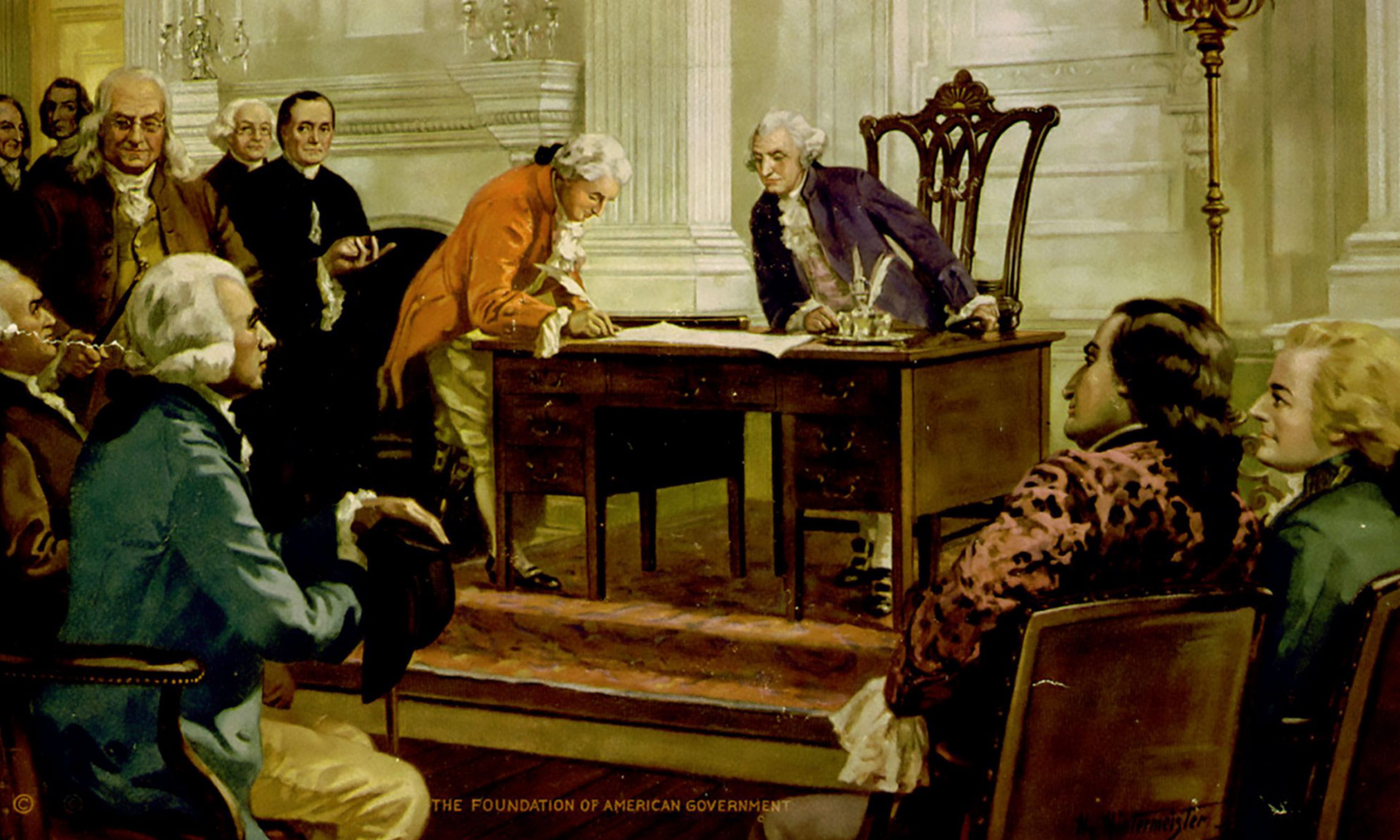
One of the obstacles to Deneen’s case for reviving the older understanding of politics is that the American Constitution rejects these models. Rather than placing different economic classes or social factions in their own institutions, it separates powers among branches of government, which all citizens are entitled to join. It is true that the Framers did not require a universal franchise and expected an informal aristocracy to lead parts of the national government, particularly the Senate and the judiciary. Even before the addition of the Bill of Rights or the 14th Amendment, however, the Constitution rejected legal distinctions among “we the People,” whether in the form of titles of nobility or religious tests.
The case for the mixed regime, then, is partly a case against the Constitution. Continuing his polemic begun in Why Liberalism Failed, Deneen contends that American efforts to evade natural constraints by means of rational design were unsuccessful. In the long run, he argues, an intricate scheme of checks and balances was no match for incentives toward centralization and unaccountable power against which Anti-Federalist critics warned from the outset.
Even worse, the shibboleth of a society without consolidated classes or estates makes it difficult to recognize differences of status, culture, and interest between the few and the many. That confusion can be exploited by the few, who know how to manipulate ostensibly neutral institutions for their own advantage. In the 18th century, it might have been possible to believe that a legally undifferentiated regime would replace hereditary authority with the prudent stewardship of public-spirited gentlemen. The 21st-century reality, Deneen concludes, is ruthless suppression of the majority by an insular elite.
In developing this diagnosis, Deneen selectively recovers voices from the historical margins. In addition to the Anti-Federalists of the founding period, he echoes Jacksonian Democrats, the original Agrarians and Populists, and elements of the industrial labor movement. In different ways, these movements claimed to speak for the many against the few. Faced with charges that he rejects the American regime centered on the Constitution, Deneen might respond that he is reviving a different and largely forgotten American tradition of protest that has too often been thwarted by legal institutions and formal procedures.
It is difficult to move from recovery to application, though. A recurring problem for small-“r” republican movements — and such latter-day expositors as Christopher Lasch — is that they are better at decrying what they are against than providing a plausible account of what they are for. In particular, the preference for smaller, more responsive, more homogeneous political communities does not map neatly onto the size or complexity of the modern state, let alone the quasi-imperial republic that the U.S. had become by the end of the 19th century. It is worth remembering Aristotle’s speculation that 100,000 adult male citizens (supplemented by a larger population of children, women, slaves, and resident aliens) might be the outer limit of a properly mixed regime.
Many Anti-Federalists objected to the Constitution because they believed that it was impossible to recognize or pursue the common good on such a grand scale as the United States already was in the 1780s. It seems that Deneen wants to have it both ways: rejecting contrivances intended to accommodate republican government to a larger territory and more heterogeneous population while insisting that we could have a stable, morally coherent political order if it were demanded with sufficient intensity. The obstacle to the common good, in his telling, is not so much practical as intellectual. As a matter of principle, Deneen charges, liberalism dissolves the common good into the mere aggregation of unaccountable, ever-shifting individual preferences. In politics as in economics, the consumer is always right.
There is ongoing scholarly debate about whether that notion is the premise of American institutions. I don’t think it is. Some libertarians might deny the possibility of any good independent of preference satisfaction. Yet the classic texts of the American political tradition are replete with references to a more stable and broadly shared interest. In Federalist No. 45, James Madison — who features as a minor villain in both books by Deneen — insists that “the public good, the real welfare of the great body of the people, is the supreme object to be pursued; and that no form of government whatever has any other value than as it may be fitted for the attainment of this object.” This does not sound like a reduction of politics to customer service.
But textual and interpretive disputes are not the main questions. The real issue is how we know in detail what the common good is. Deneen does not acknowledge the difficulty of answering that question. As Michael Novak (among others) pointed out, at a sufficient degree of abstraction, it’s not all that hard to agree about the common good. Many Americans could agree on a “wish list” including low prices, high domestic employment, steady growth, environmental protection, and so on.
The challenge is that it is impossible to pursue all these goals at the same time and with the same intensity. Several are inversely related. Consumer prices, for example, tend to rise along with GDP. Should we prefer growth, even at the cost of inflation? Or should we try to keep prices stable, even at the expense of growth? The real problem with the concept of the common good is not that it is inherently authoritarian, oppressive, and so on. It is that people will inevitably disagree about which elements to prioritize, even when there is relative consensus about the basic goals.
What brings the phrase “common good” into disrepute is the insistence that only the opinions of a particular faction could possibly be correct. To these political zealots, the only conceivable reason for disagreement is venality, stupidity, or mendacity. This epistemic distinction is usually projected onto a sociological one. Those who adopt the correct understanding of the common good are the true, virtuous, authentic citizens. Those who pursue the wrong one are fools, traitors, parasites.
Faced with the reality of disagreement, Deneen pursues a version of this strategy. The term “common,” he suggests, really means “the ordinary requirements of ordinary people.” Returning to the distinction between the few and the many that frames Regime Change, Deneen is suggesting that common goods needn’t be universal goods. Instead, they are the goods cherished and pursued by “the common people” even and perhaps especially when contrary to the preferences of the elite.
On the surface, that redefinition may not be so hostile to Madison, who appealed to the “real welfare of the great body of the people” rather than to unanimity. But Madison suggests a different relationship between the common good and politics.
For Madison, politics — and especially legislation — is a process of discovery. We can be reasonably certain of our own opinions and interests. But we can’t know in advance how they relate to the opinions and interests of others, which might cause us to revise our own. The purpose of representative and deliberative government is not simply to add up individual preferences, but to allow us to find out through elections and negotiation what the common good really is.
Deneen seems to reject this understanding of politics as discovery. While he presumes that his understanding of the common good overlaps with ordinary opinion, opinion is not the source of its authority. The common good is supposed to be a matter of objective knowledge. Where this knowledge comes from and who possesses it is never clearly explained. Deneen cites Socrates’ challenge to the sophists in the name of objective standards of justice. He does not mention Socrates’ disclaimers that he himself was uncertain what this standard required or how it could be realized in political life.
Deneen’s suspicion of opinion is convenient because he provides little empirical evidence that “the many” — that is, Americans with lower incomes and fewer degrees — share his understanding of the common good. On the contrary, Regime Change reproduces findings by Tim Carney, Charles Murray, and other writers who observe that goods including stable marriage, religious practice, and personal discipline are more often practiced, if not necessarily preached, by the very classes the book damns for their ostensibly exploitative economic and political habits.
But Regime Change is not really about political economy. Despite rhetorical appeals to an ethnically diverse but politically and morally cohesive working class, Deneen shows little interest in details of business regulation, labor conditions, trade policy, or other material issues. The original sin of the American regime lies in the “so-called ‘separation of Church and State.’”
It’s important to distinguish this argument from more familiar criticisms of what Richard John Neuhaus called “the naked public square.” Deneen does not call for a return to an earlier and healthier version of American life, when a variety of religious teachings and institutions wielded great influence over civil society and, to a lesser but significant extent, over official politics. He demands comprehensive rejection of “liberal indifferentism.”
The term “indifferentism” goes undefined in Regime Change. While it has a particular meaning in Catholic theology, it presumably refers in this looser context to the refusal of the Constitution to affirm any particular religious doctrine or institution, even though the Framers assumed a broadly Christian cultural background. Because it refuses to establish sectarian hierarchies or confessional distinctions among citizens, this strategy is indeed different from the ostensibly more authentic conservatism Deneen associates with Benjamin Disraeli. In a revealing error, Deneen praises Disraeli’s resistance to the political influence of “dissenters” — a historical category he glosses as “those of a liberal philosophical bent.” That is not accurate: In 19th-century Britain, “dissenters” were Protestants who objected to the privileges of the established Church of England.
In a surprising conclusion, then, Deneen turns away from the classical mixed regime and its premise that disagreement, contention, and instability are inescapable elements of our pursuit of earthly goods. In the final chapter, titled “Toward Integration,” he invokes the Puritan leader John Winthrop and Catholic theologian Jean Daniélou, S.J. Rather than embracing the tumults that defined relations between the senate and people of Rome, Regime Change ends with a different sort of plea for “politics as a place for prayer.”
One may well pray for redemption from the sins of this world. But to pursue that outcome through government is no less utopian than the hope of liberation from ignorance, greed, or conflicts of interest. Recognizing that neither constitutional refounding nor widespread adoption of his brand of religion seems imminent, Deneen offers some briefly sketched proposals for reform, including expanding the size of the House of Representatives, a national service requirement, and changes to the college-admissions process. These suggestions are interesting, debatable, and unlikely to be adopted. Even if they were implemented, though, none would produce the kind of “regime change” the title promises.












Comments