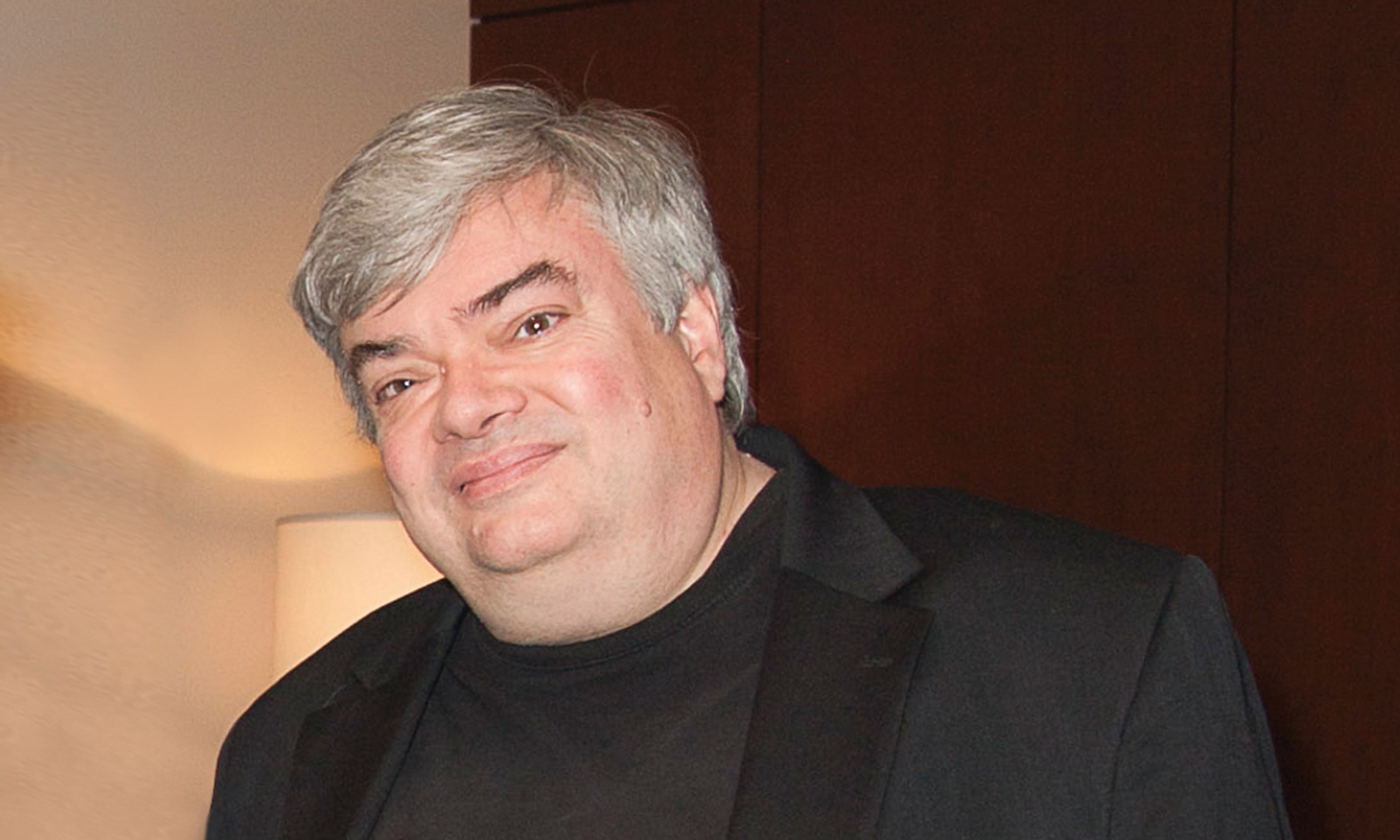
Terry was a marvelous, imaginative, confident, honest gentleman. He was also a very opinionated, educated, generous critic. And he had an enormous capacity to maintain his interests and his very high standards . . . high, yet achievable. He wrote about what he actually saw and read and heard, and not just the sort of Platonic ideal of what a work of art could or should be, as reviewers often suggest. He was kind and forthcoming in both his praise and his criticism. Although I hadn’t spent time with him in many years, I consistently read his work with interest — his interest stimulated my own. I read his articles on plays that I would likely never see, and music I wouldn’t hear. The entire U.S.A. was his beat. He championed the regional and the local without the cliché New Yorkish condescension. But still, he would never assume that you would agree with his opinions and would happily listen to yours.
Terry wrote on my work and on me and my company an age ago. And he was one of the few critics that I felt really understood what I was up to, from a choreomusical angle. Of course, he didn’t always agree with what I presented, but he never dismissed the seriousness and import of anyone’s work just because it didn’t grab him. He was in no hurry to prove his deeply held beliefs, and his conservative nature was a refreshingly level-headed defense of tradition, classicism, and history. Amongst the several plays and books that he wrote, All in the Dances: A Brief Life of George Balanchine is the book that’s dearest to me. Mercifully, it is not another hagiography; it is non-adulatory, non-elitist, non-snooty. It is a fun, exciting read for anybody and not just the Balanchine devotees (and I am one). And it is short.
Terry and I initially met when he came for a rehearsal and an interview, which grew into a friendship. We talked on Bach, Gershwin, Balanchine, Thomson, Petipa, et alia with ease. It seemed a great compliment to be closely listened to by someone with his expertise. Go back and read his work in all its variety and constant development; he got better and better . . . and sweeter. He was loved and admired. He was a doll.
The great jazzist (and friend to both of us) Ethan Iverson, who stayed in contact with Mr. Teachout much more closely than I did, wrote about him on his blog Do the Math. Here is some of it:
I met Terry over two decades ago when he wrote about Mark Morris. Frankly, I was surprised that someone working as dance critic knew anything about jazz. We kept in touch, and his blog About Last Night was a direct inspiration when starting Do the Math. . . .
I liked Terry, appreciated his perspective, but also felt I owed him a favor. His 2000 profile of Morris put me on the cover of Sunday Arts in the New York Times. (Picks up phone and calls home: “Hey, Mom? Drive to Eau Claire tomorrow and get the New York Times.”) He also advised me on prose issues when I first started trying to write criticism. So, when I heard that Terry was releasing a book on Duke Ellington, I figured it was time to interview Terry for DTM.
But, after setting up the interview, it turned out I didn’t love Duke: A Life of Duke Ellington. Indeed, I wondered if I would be dishonoring my ancestors if I gave the book positive press. It was a kind of a personal crisis: I literally fell ill with a flu that wouldn’t go away. Finally, somewhat in desperation, I wrote a rebuttal to the biography, “Reverential Gesture.” Immediately my body healed and I was fit as a fiddle. . . .
I figured springing my essay on Terry would be unfair, so I sent it along for comments. He corrected a few things and said, “Go get ’em, tiger.” The interview and my rebuttal ran side by side. . . .
I expected Terry to drop me as friend and associate. Incredibly, he just stayed the same warm self. Especially on Twitter, he constantly signal-boosted my work. After Trump was elected, I felt a chill deep in my bones and abruptly quit interacting with anyone I regarded as conservative. Terry didn’t change, so in time I circled back and sent him further things for input. . . .
I try not to make enemies, but stuff happens. If you have visible opinions in the world, conflict is unavoidable. After hearing of Terry’s death, I pondered his vast skill in staying above the fray and connecting people through kindness and friendship. There is definitely a lesson to be learned from Terry’s seemingly effortless and graceful deportment. I never told him I admired him for those reasons, but I wish I had.
Requiescat in pace et in amore Terry Teachout.











Comments