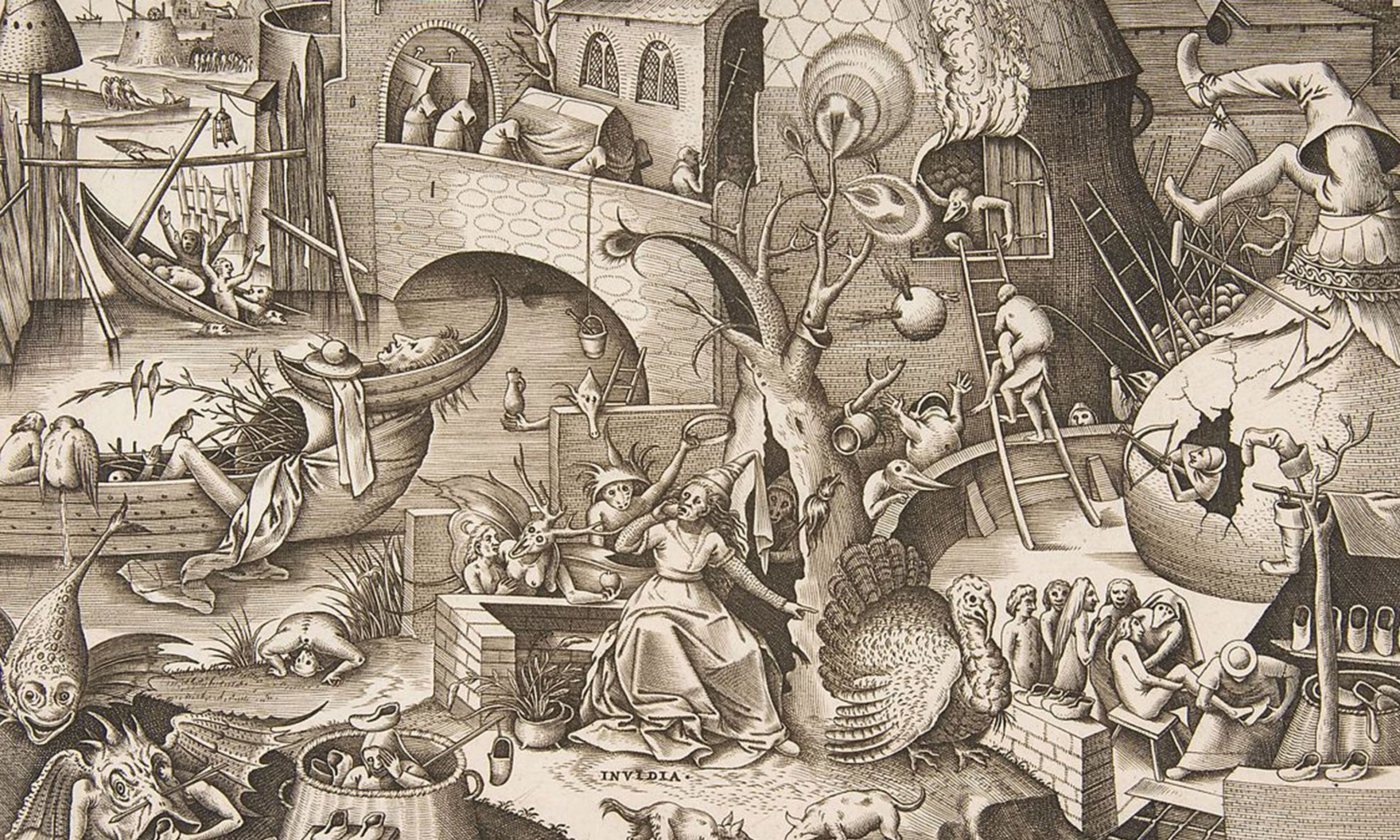
Envy is a sour, seething desire for someone else’s possessions, whether things, abilities, spouses, or good luck. It’s a universal disease, one of the seven deadly sins, but in my opinion it’s much less likely to afflict Americans. This is a great American virtue.
We take this for granted, but we’re blessed that envy isn’t part and parcel of our civic culture. When I was in Dijon in France a few weeks ago, a French friend and I chatted about how uneasy, how sullen and impotent, the French seem now. He said, “The French are taught to be unhappy and to blame the state and the rich.” Blame is envy’s bad-seed baby.
Envy is powerful and corrosive. It eats the soul. It reveals a void that comes from a want of freedom and autonomy. You covet what you don’t have and assume you can’t get. Envy and blame are states of being but also states of mind. When people don’t feel free and independent, envy and blame rear their ugly heads and toss their curls. American art has so much landscape and seascape for the obvious reason that they’re ubiquitous subjects, but they’re also open-ended. They evoke freedom and possibility, not limits.
Our identity as citizens, as Americans, draws from notions of freedom the way a tree draws water. I think that’s why envy and blame haven’t paralyzed us. Sure, as in any complicated organism, every emotion or trait finds an outlet. We’re a collection of people, and everyone is unique. Americans, though, as a rule don’t envy what others have. We don’t hate the rich. We don’t want to punish them. We want a society where everyone can become rich.
Americans are far less inclined to play blame games. Puzzling our way out of a bad situation is an instinct well supplied to Americans but less elsewhere. We’ve never been a culture of constraint and limits, which are dead ends. We’re a culture of opportunity. In most of the world, things are fixed, which can mean rigged as well as unalterably set.
When the European chattering classes denigrate Americans, what they consider our yahooism, what they’re saying is that they envy our freedom and, of course, our prosperity. I’ve experienced this hundreds of times, in work and personal relationships.
I write about art, and this really isn’t about art. It’s about character and citizenship. Victimhood, though, is a big subject in art today. I’m a sucker for a hard-luck story, but victim art gets tiresome fast. It’s a visual pity party. It’s trying to win by pretending to lose. Since we’re talking about bad seeds, victimhood is envy’s sibling. Each is as likely as the other to beget blame. Victim art is something new in American art. It’s art with little energy, drive, or curiosity. I think most of it is junk.











Comments