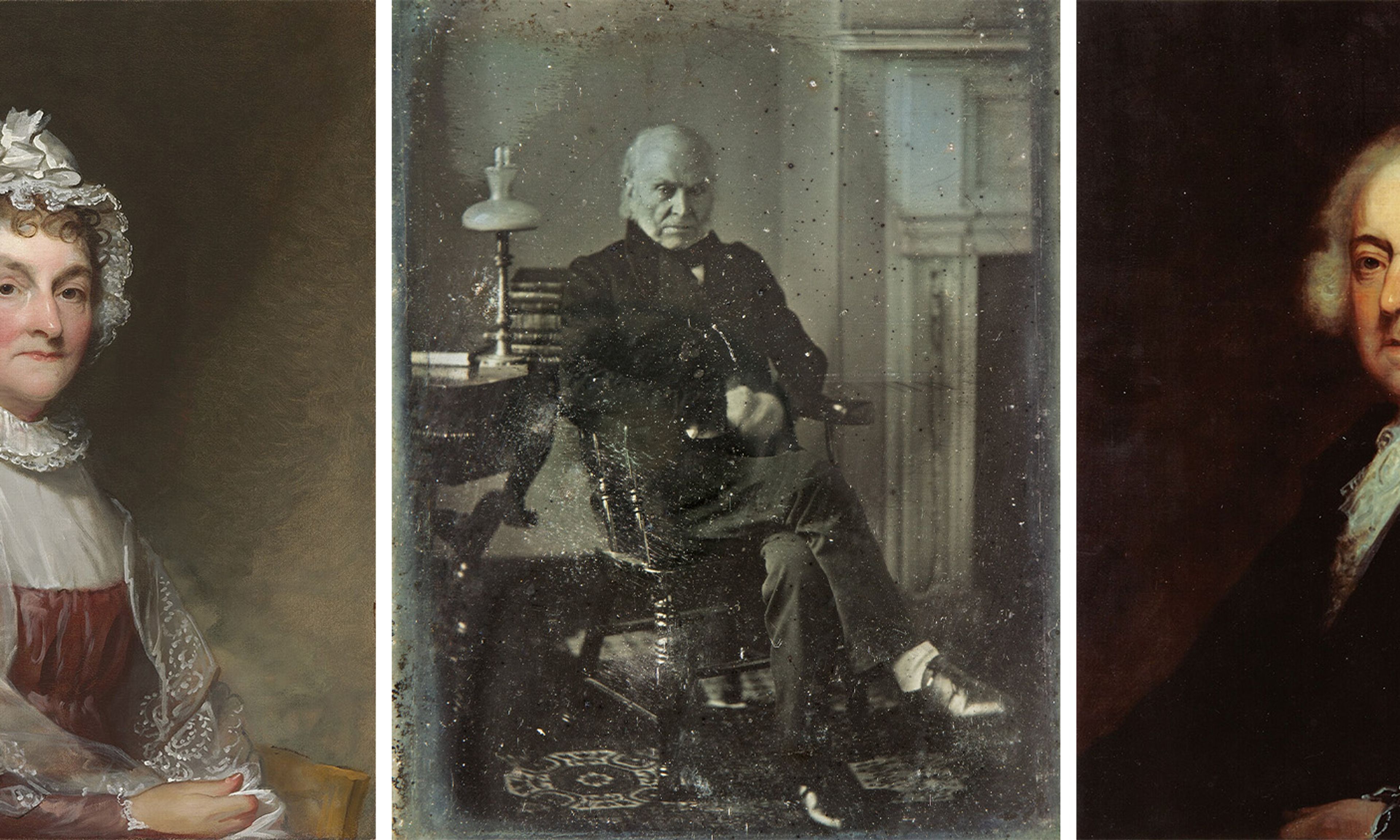
It’s time for this month’s art news, the good, the bad, and the sad. I’ve written about a dozen presidential sites over the years, the last a two-parter on the new in North Dakota’s badlands. And NR’s Judson Berger also wrote a rollicking account of his recent visit to the TR Library for the magazine. Since our schools are at their most negligent in history instruction, these presidential centers can fill the void. In wonderful news, a high-level group is making progress in creating a presidential center exploring the life and times of , Founding Father, diplomat, and president, and , his son. Their house museums are in Quincy, near Boston, and the center, a proper research center and history museum, will be there, too. The board of the Adams center hired the director of the Truman Presidential Library in Independence, Mo., to lead the charge with them. The board itself is very strong.
The two Adams presidents don’t get the respect and recognition they deserve. John Quincy was our most consequential diplomat and the president who marked the end of the Founding era. After his presidency, he had a brilliant career in Congress, from 1830 until his death. Adams père was, I’d argue, the Revolution’s chief arranger, manager, and tactician. His presidency — the Alien and Sedition Acts, the XYZ diplomatic imbroglio leading to the Quasi-War between the U.S. and France in 1798–1800, and then the 1800 election — was an intriguer’s paradise. Both men had magnificent wives. If the new center were to attempt a hagiography, it would probably fail, since both men were acrid by nature, the father more than the son. Hard to love, but that’s good. We’re less likely to be swept away by visions of thumping hearts, flowers, unicorns, and baloney.





Comments