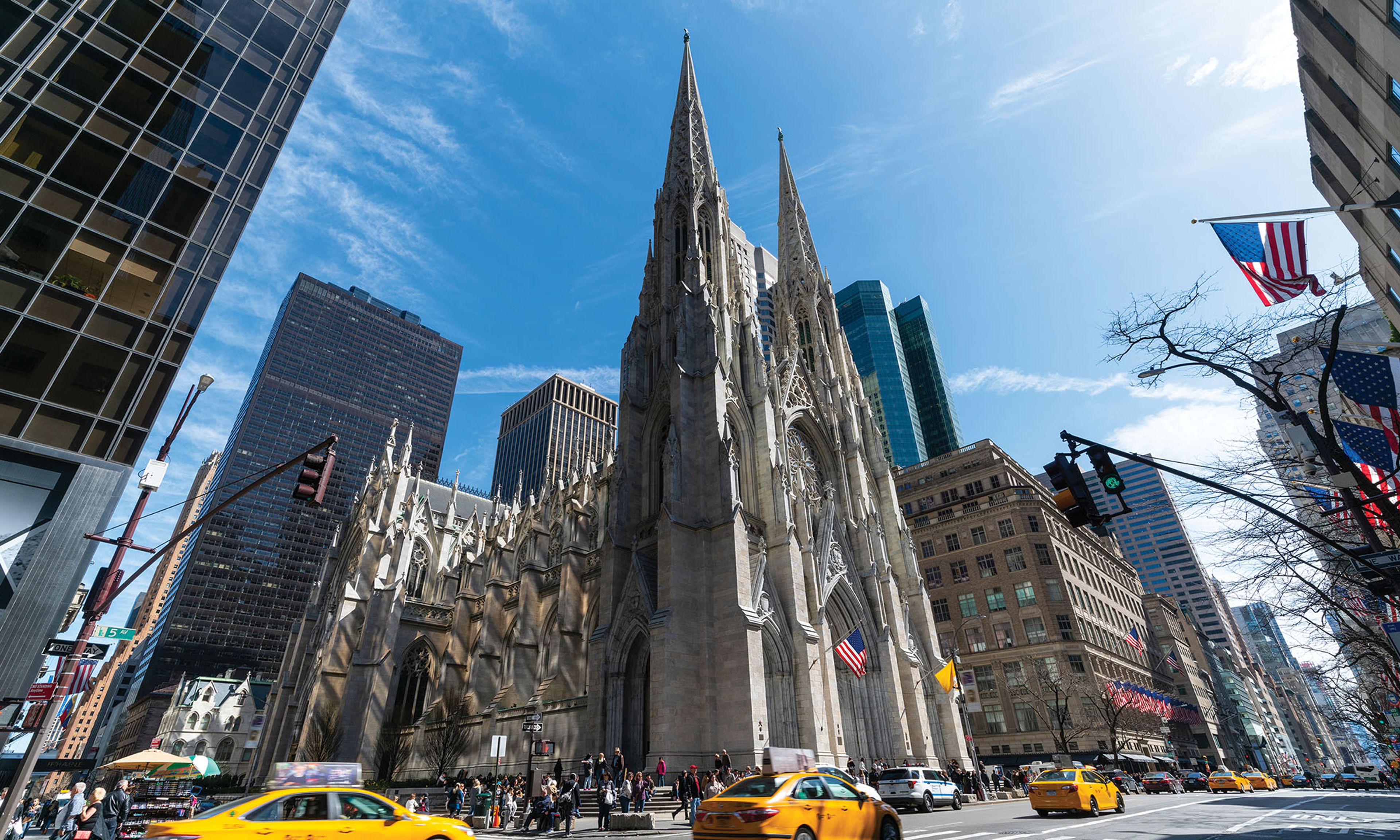
Pope Francis first found himself surprised when he arrived at St. Patrick’s Cathedral on Fifth Avenue during his September 2015 visit to the United States. There was no plaza, nothing setting it apart, he remarked. Then he quickly corrected himself: That’s, of course, exactly where the Church needs to be: in the middle of it all, drawing people in with its beauty and its promise of peace.
I love Fifth Avenue, and St. Pat’s has a lot to do with it. The pope was basically on America’s Avenue, complete with a little religion, a lot of materialism, endless people streaming through. You can see wealth and poverty, hopes and miseries. It all seems to meet there, and with unexpected opportunities.
The avenue has stories to tell––and you don’t need a guidebook to realize that. The St. Patrick’s Day Parade is familiar; even with emerald vice and controversies, it at least remains a hat-tip to Trinitarian life. “America’s Parish Church” is the closest Catholic church to National Review’s office — fitting, since William F. Buckley Jr.’s memorial Mass took place at the cathedral. Fifth Avenue is a place rich in history, a testament to the faith of the immigrants who helped build it, long before all the high-end flagship stores and bus lanes existed around it. Going uptown from NR, you can see a fading old-school ad for Charles Scribner’s Sons, calling to mind the likes of Hemingway and Fitzgerald. The culture of Fifth Avenue has so many of the elements of America — including some of the chains that bind it. Some snapshots: 1) A man named Charlie sits on the concrete on a hot summer day, asking for money. Most people ignore him. His sign says he’s a vet. 2) It’s a few days before Christmas, and a woman on a mission walks to the center of the cathedral, raises her phone to take a picture, but realizes the open door will give her a shot of Atlas, not the Rockefeller Center tree. She takes a selfie anyway. Maybe she’ll notice the beauty that is around her when she goes through her photos later? 3) I wait on the confession line on the side of the altar as a counterterrorism team patrols. That’s a normal confession experience on Fifth Avenue, most likely when Trump Tower, a few blocks up, is occupied by the president. You can see just about everything if you hang around often enough.
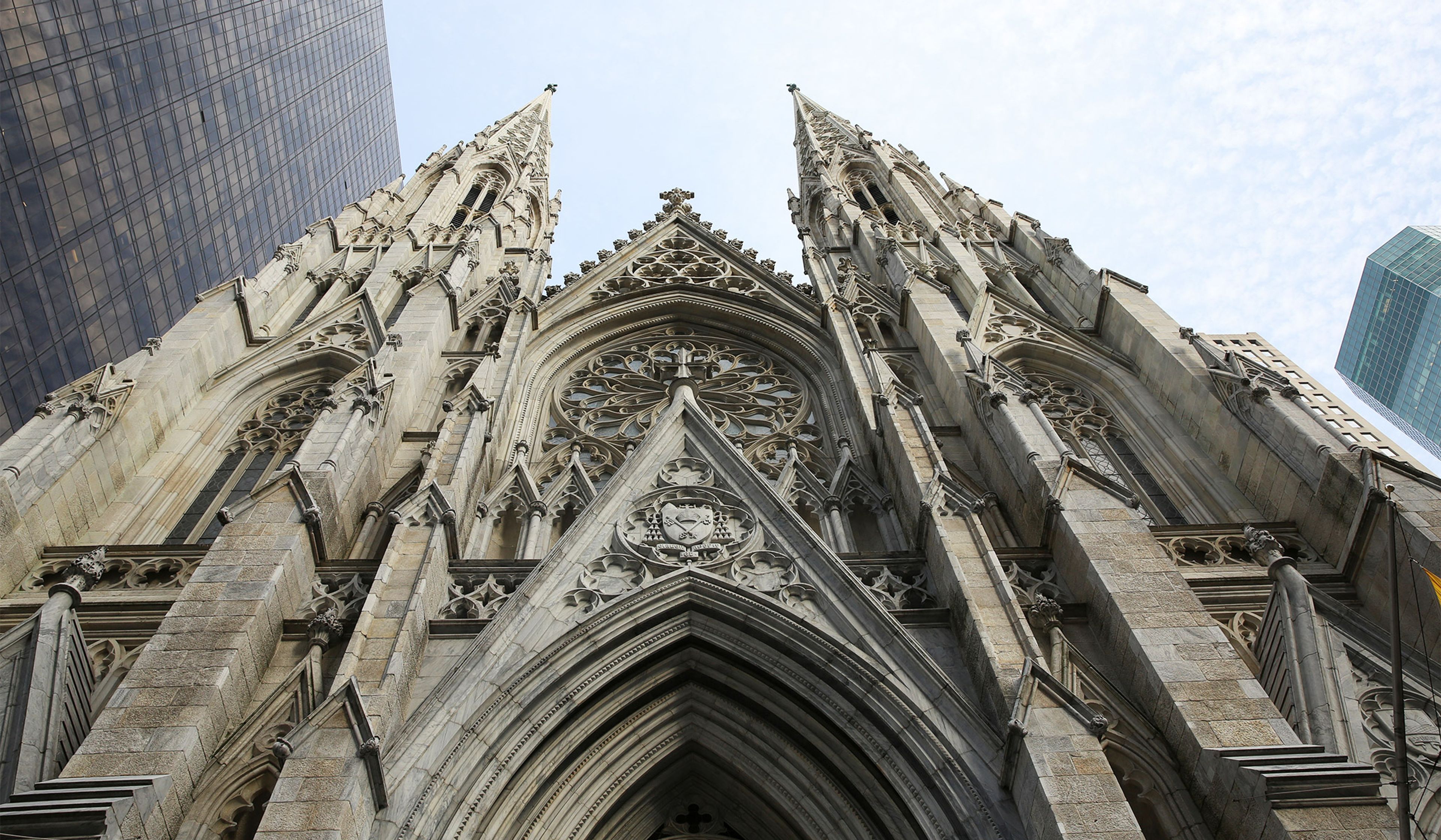
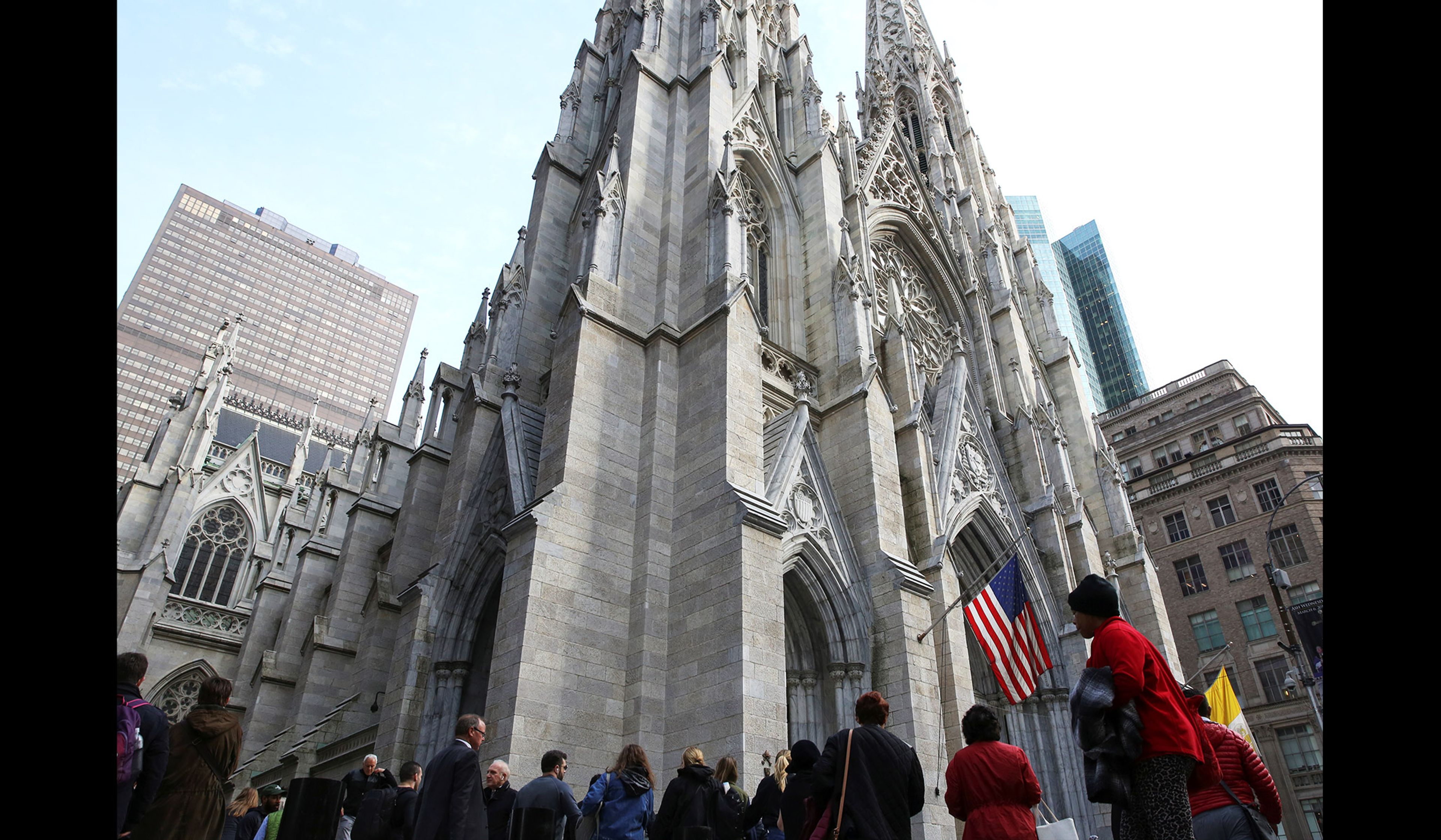
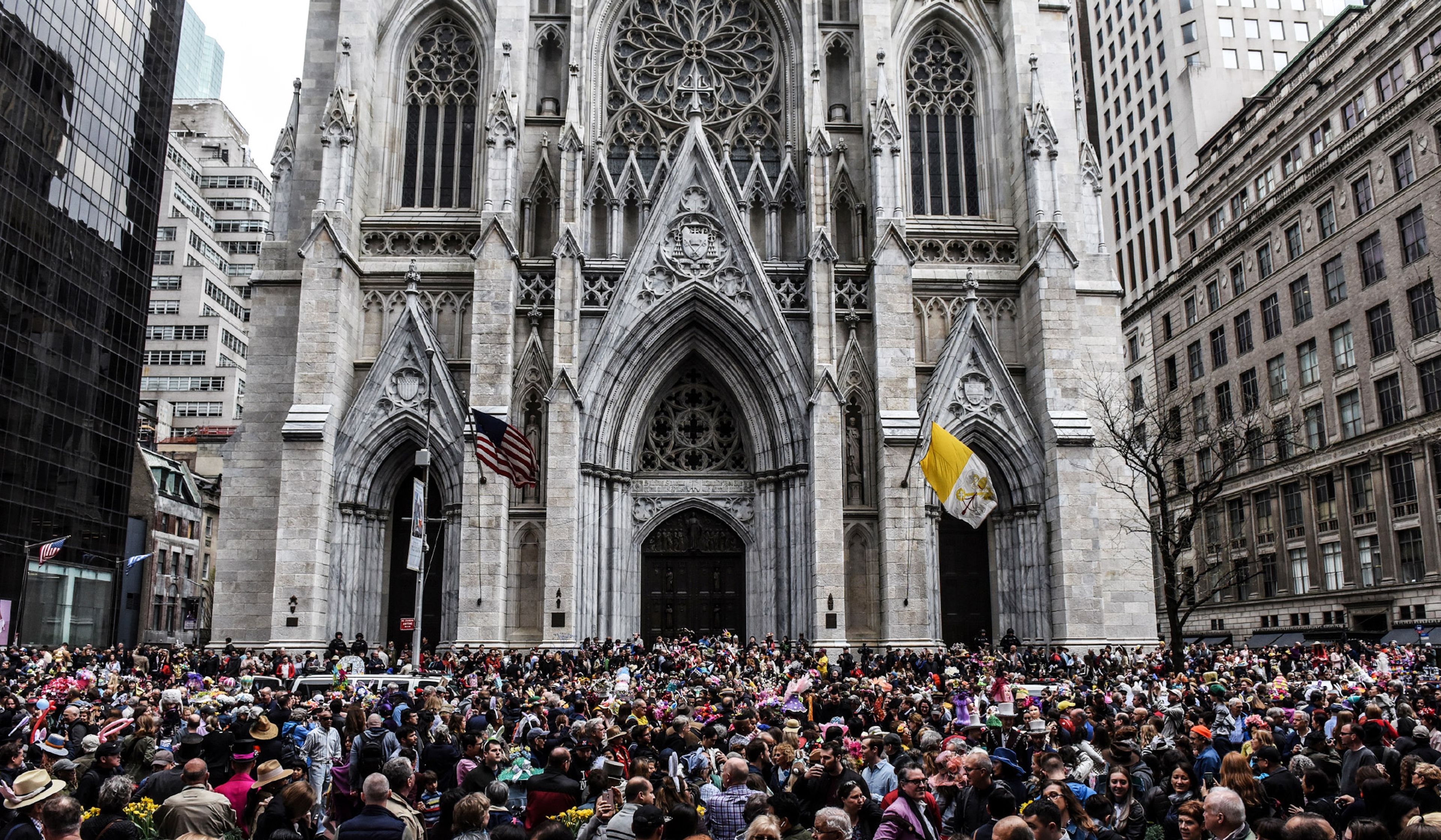
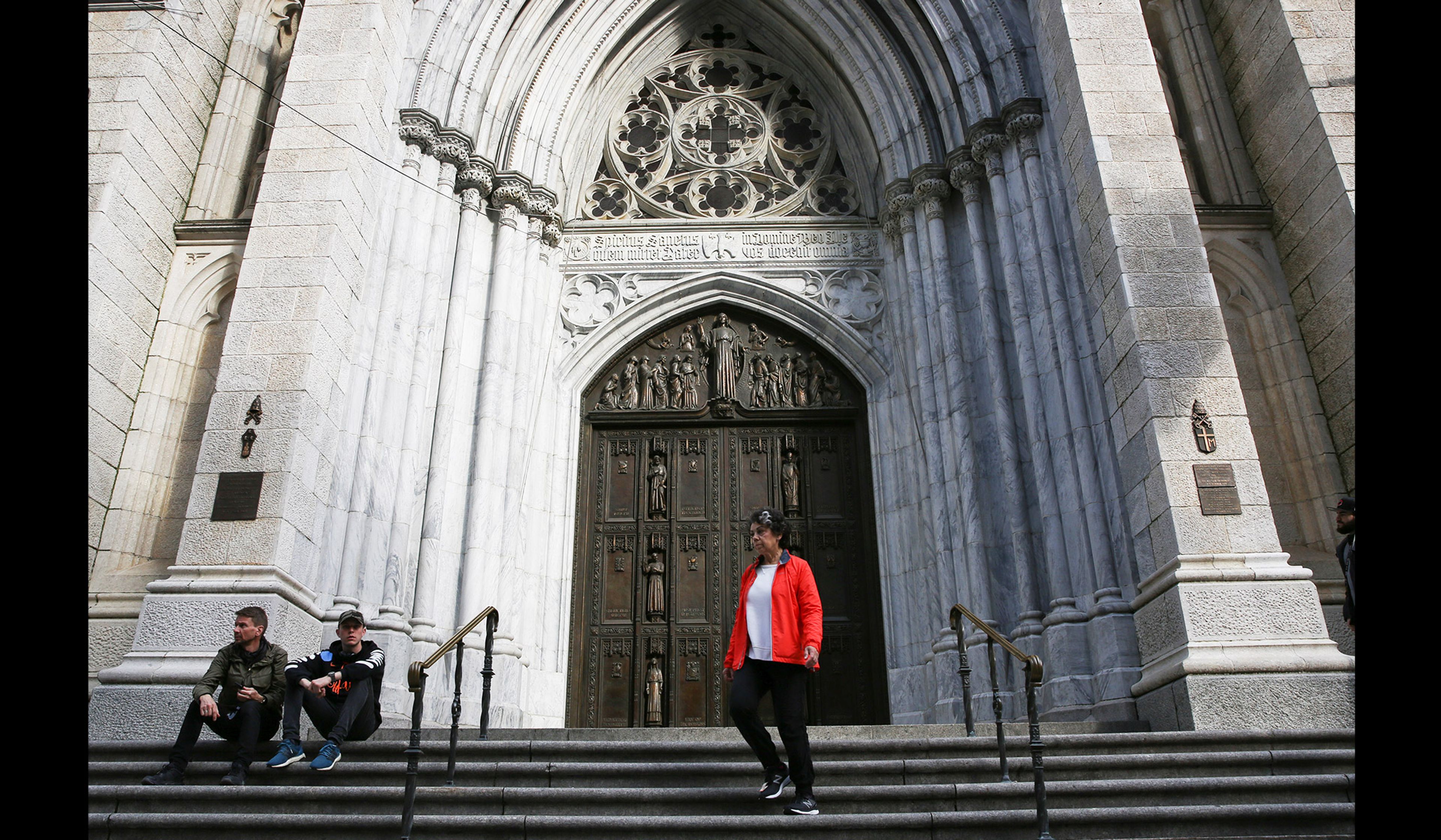
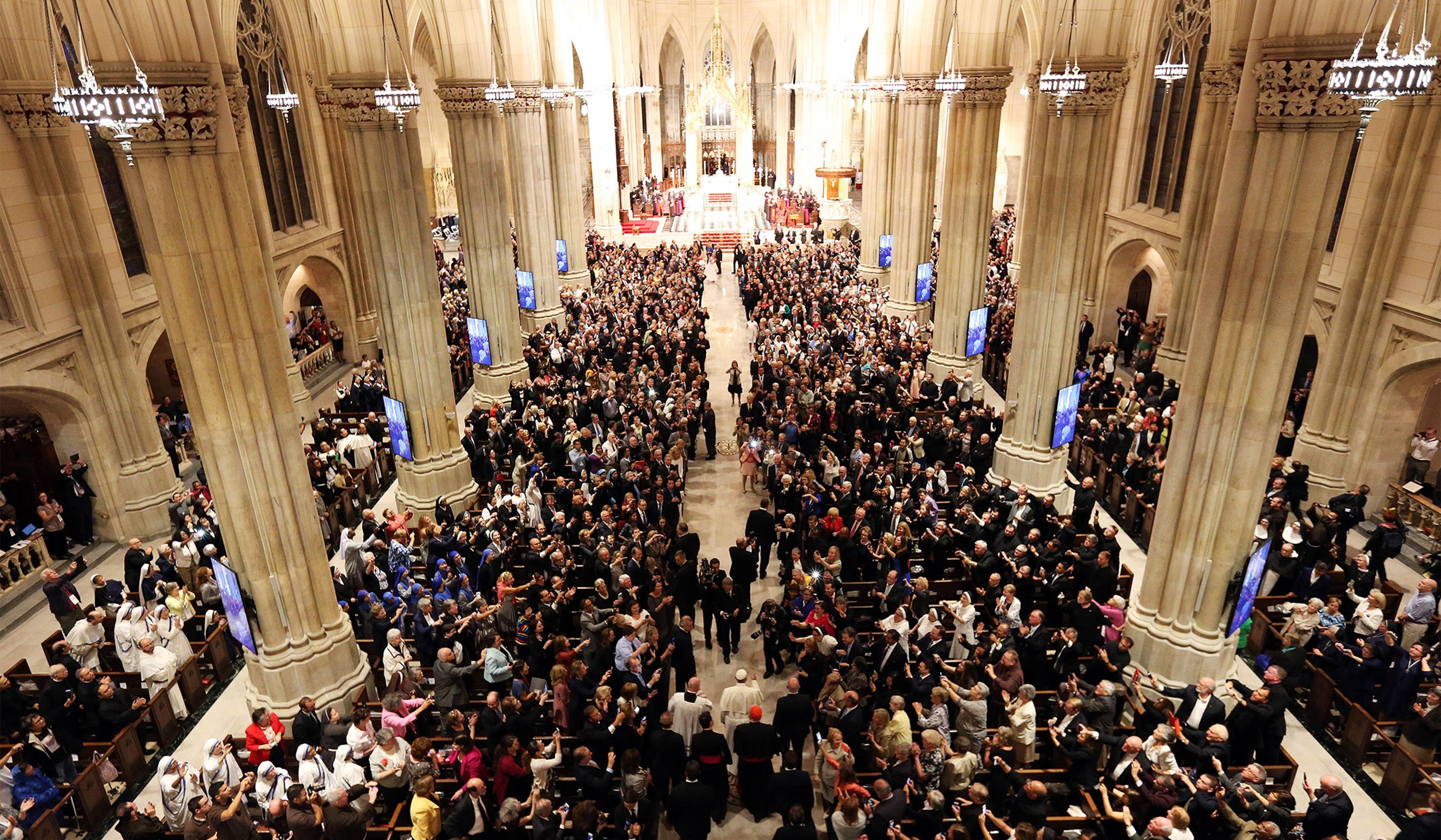
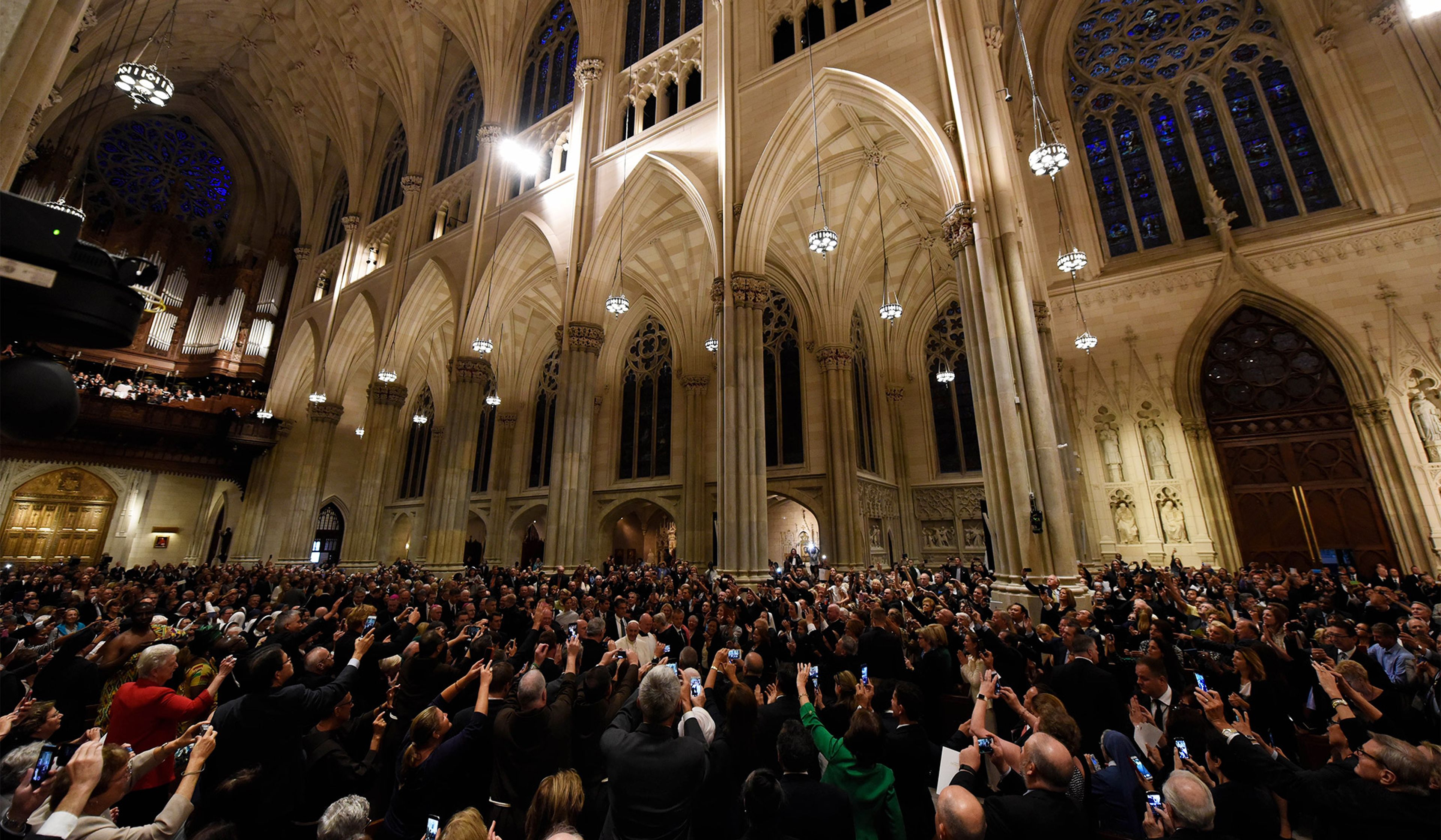
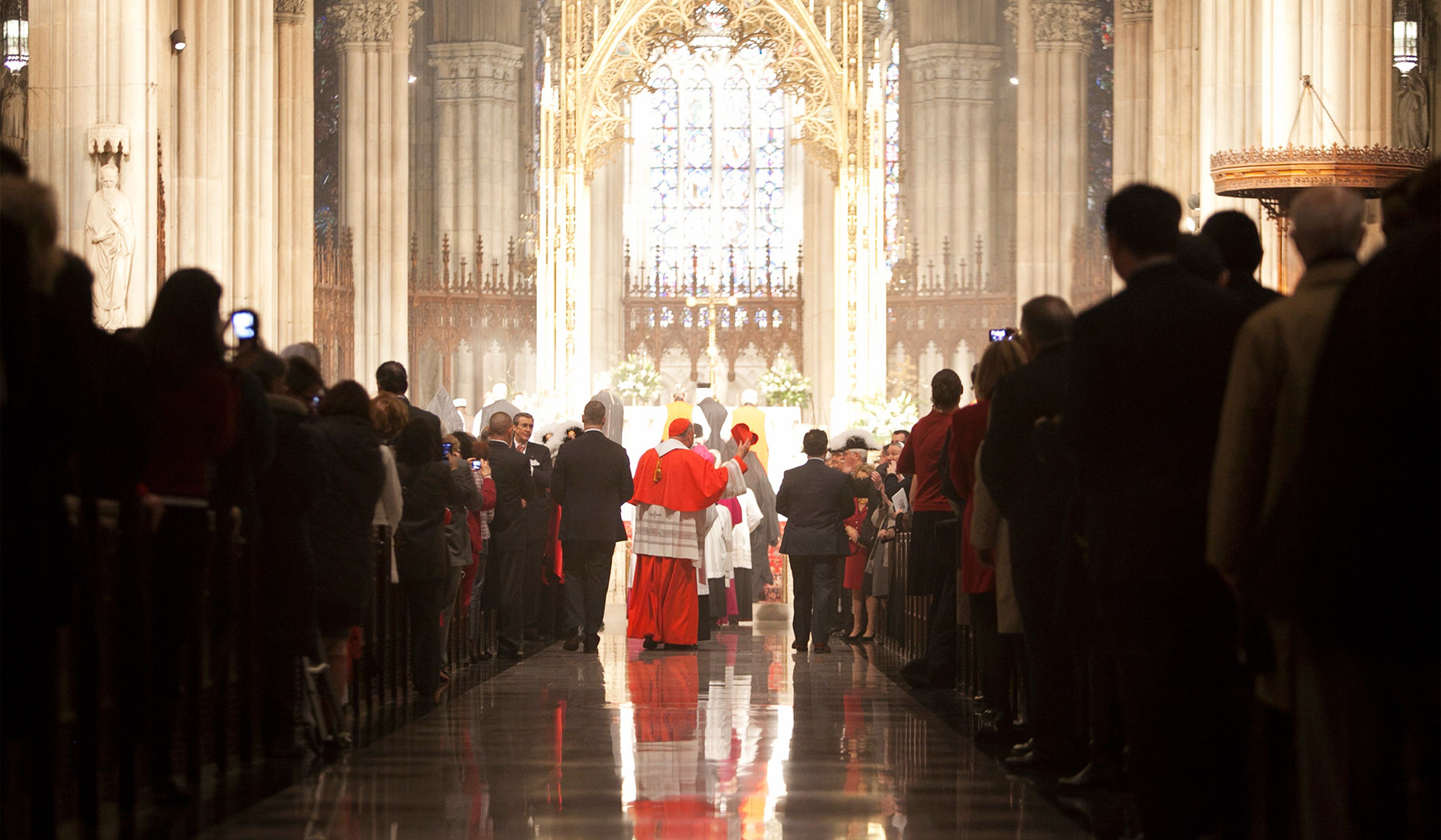
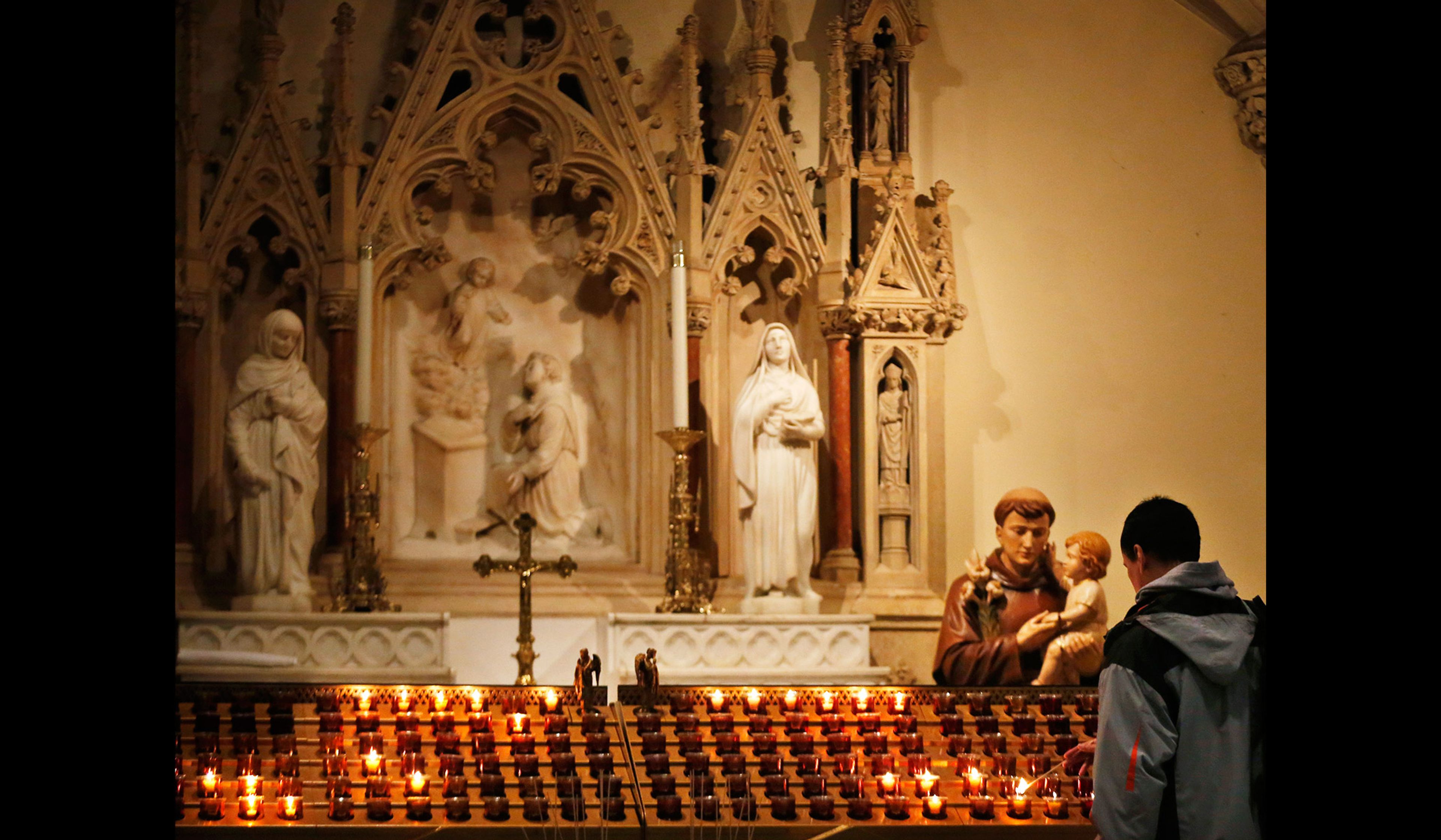
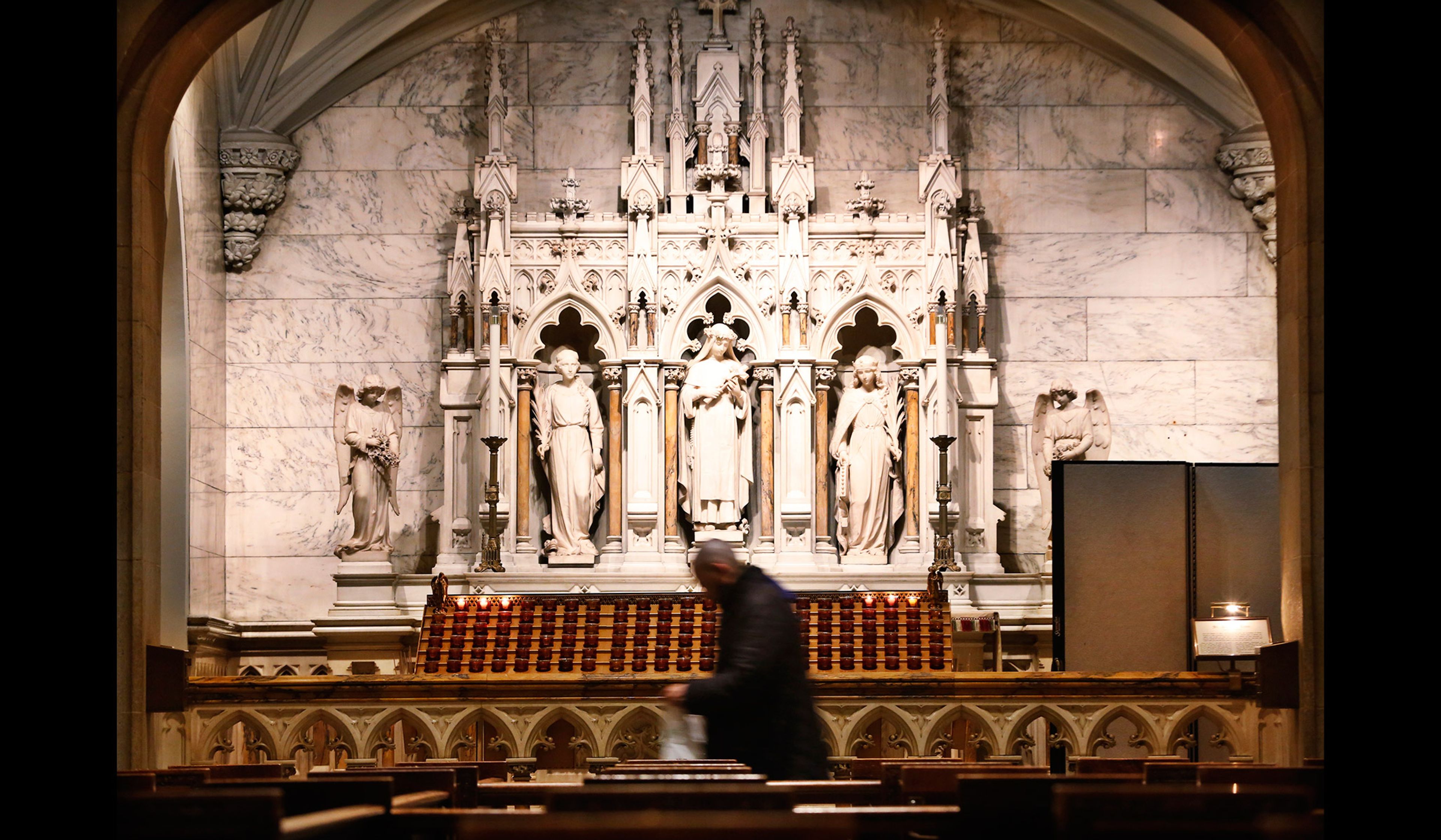
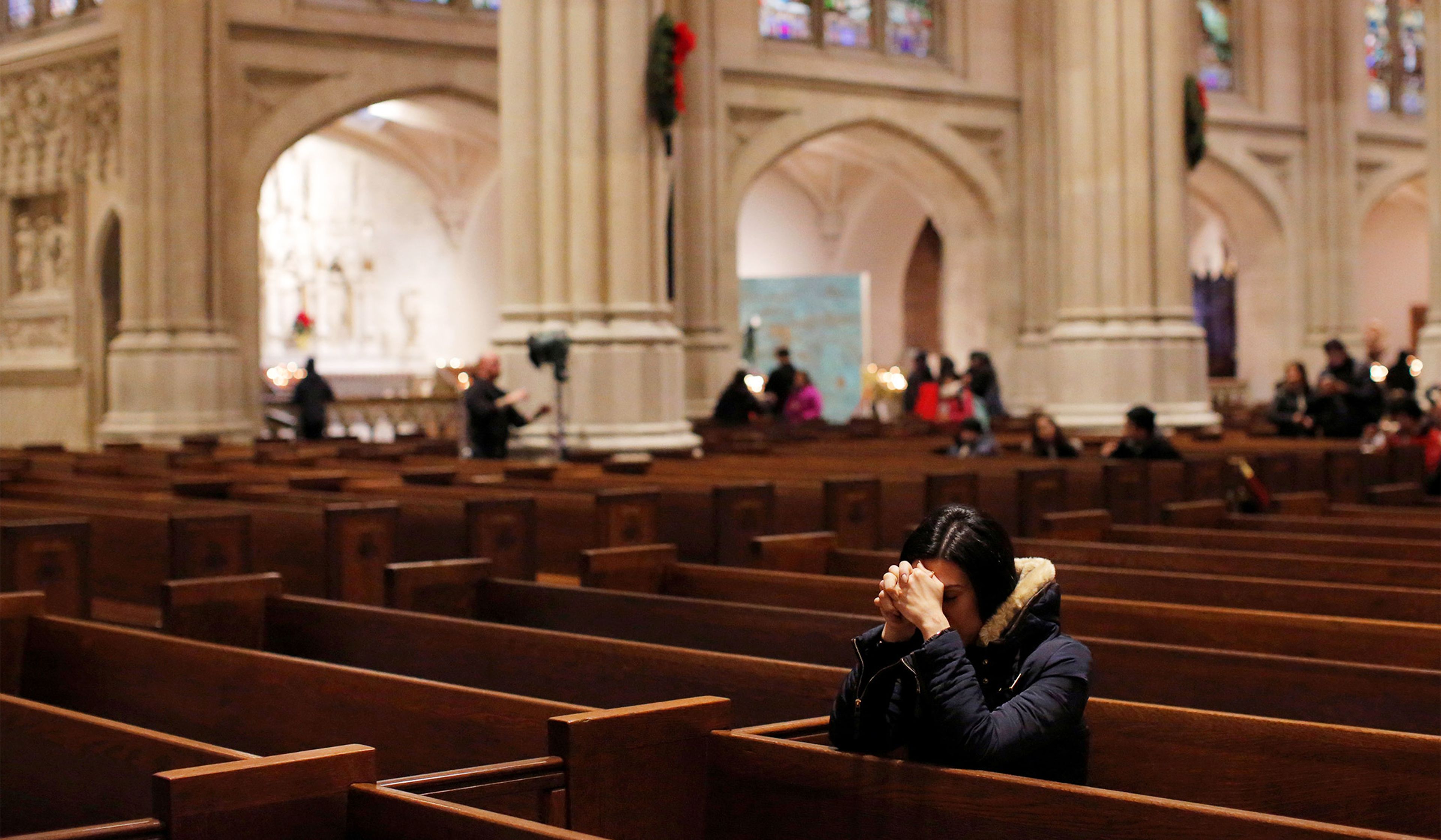
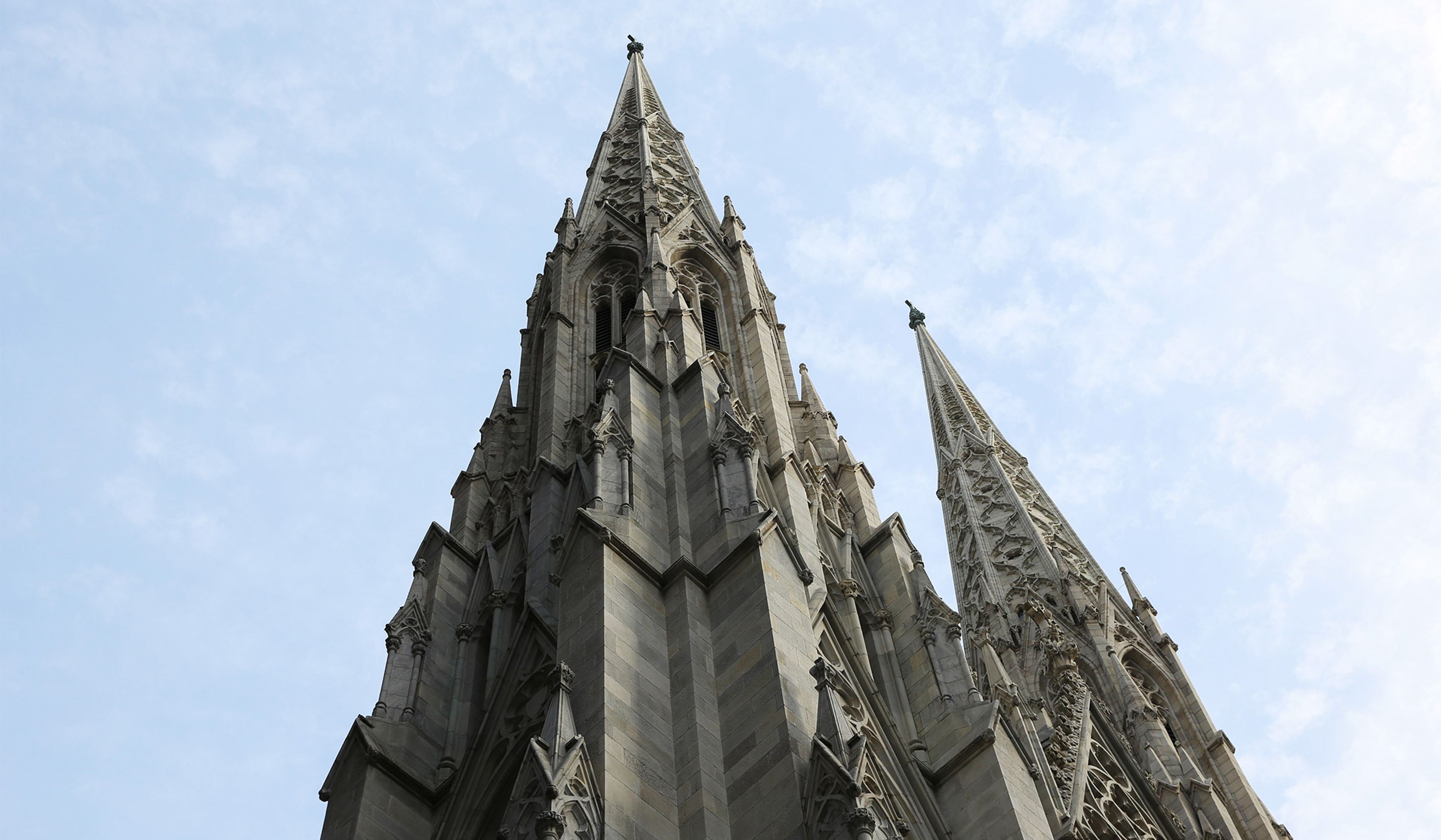
St. Patrick’s Cathedral in Manhattan
Caitlin Ochs/Reuters
On January 21, 2017, the day after Donald Trump’s inauguration, the New York Women’s March passed right by the cathedral. Some of the women actually put down their signs (many of which indicated that they were seeking far more from politics than politics could or should provide) and went inside. Welcomed at the doorway by Sisters of Life, at least one found what she was looking for: She confessed her abortion and encountered the deepest freedom there is, life with mercy and peace that is not of this world.
Freedom, in fact, is what I feel like I’m breathing in as I see the blue of the sky or the road that leads down to Washington Square Park. Anything seems possible on Fifth Avenue. And one miracle in particular: some semblance of American unity. At some places on Fifth, the Stars and Stripes seem to be everywhere. It’s as if America does, in fact, still mean something we can all agree on. I keep looking and I think about “the mystic chords of memory.” Fifth Avenue inspires gratitude. I don’t want to look at my phone. I want to keep walking. American culture today can be overwhelming with noise and soul-crushing images. But here, even with the traffic, things seem quieter.
And the mere presence of St. Patrick’s certainly suggests some ways to begin again: remembering Bethlehem and the Beatitudes and other essentials for a virtuous society. After Mass, walking down Fifth some days, I almost think I can hear WFB preaching these things again, maybe as he’s getting into his car about to write a column.











Comments