
William Gibson invented the term “cyberspace” in his July 1982 Omni magazine story, “Burning Chrome.” That and other early Gibson short stories, filled with super-condensed prose and wild metaphorical flourishes, defined the literary movement called “cyberpunk.”
As cyberpunk-era author Jack Womack puts it, Gibson
saw the writing on the wall, the blood in the sky, the warning in the entrails. Saw the mind behind the mirrorshades, as it were, and what the mind would be capable, or incapable, of thinking. . . . Now let’s be Heisenbergian and ask: what if the act of writing it down, in fact, brought it about?
It did. All cyberpunk roads lead back to Gibson, and those stories — brought together in his 1986 collection Burning Chrome — formed the mythic foundation of our technological era.
Together with “Burning Chrome,” stories such as “Johnny Mnemonic” (1981) and “New Rose Hotel” (1984) in particular are archetypes of the cyberpunk mythology. In these we get humans using machine–brain interfaces like recreational drugs, eyes mirrored over with reality-augmenting lenses, brains striped with circuitry, and that iconic cyberpunk look of leather dusters and vintage tech, skin tattooed with hologram roses, ports along the spine to jack into cyberspace, and all manner of rococo cyborg fashion accessories, such as retractable razor claws and orbital sockets with eyeballs scooped out, replaced by multi-spectral units.
More lastingly, Gibson invented the way we visualize the computer-connected world. He was there first with that techno-Aristotelian substratum called “the Matrix.” (He may as well have invented the term, he used it so much in his early work.) And he wrote about information as having sensory qualities such as light, temperature (security software, “ICE,” is physically cold), smell, even taste. His dark-toned heroes were hackers, jacked in via machine–brain interface. He pictured the alien web they entered and humanized it by capturing its essence.
Back in the late 1970s and early ’80s, Gibson had what seemed a large-bore feeder pipe from the collective unconscious, and a frontline view of the mental and spiritual tsunami that computer technology was bringing to our lives. His motifs may seem cliché-ridden today, but that’s because they were the model for how we imagined our way into the Information Age. When in 1999 some friends and I emerged from the first Matrix movie, they were gushing, had their minds blown, etc. I felt somber. Cyberpunk had finally become total kitsch.

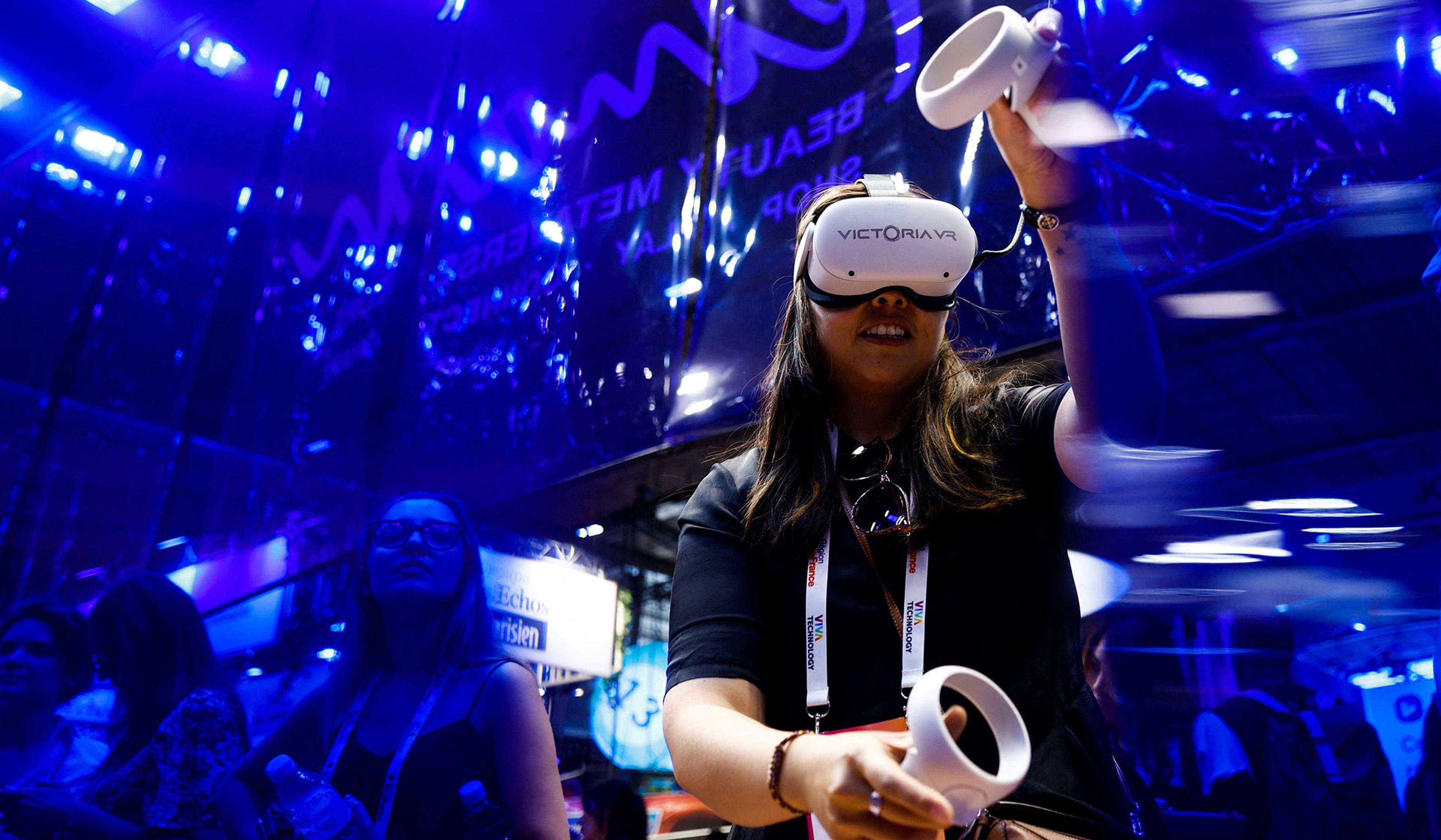
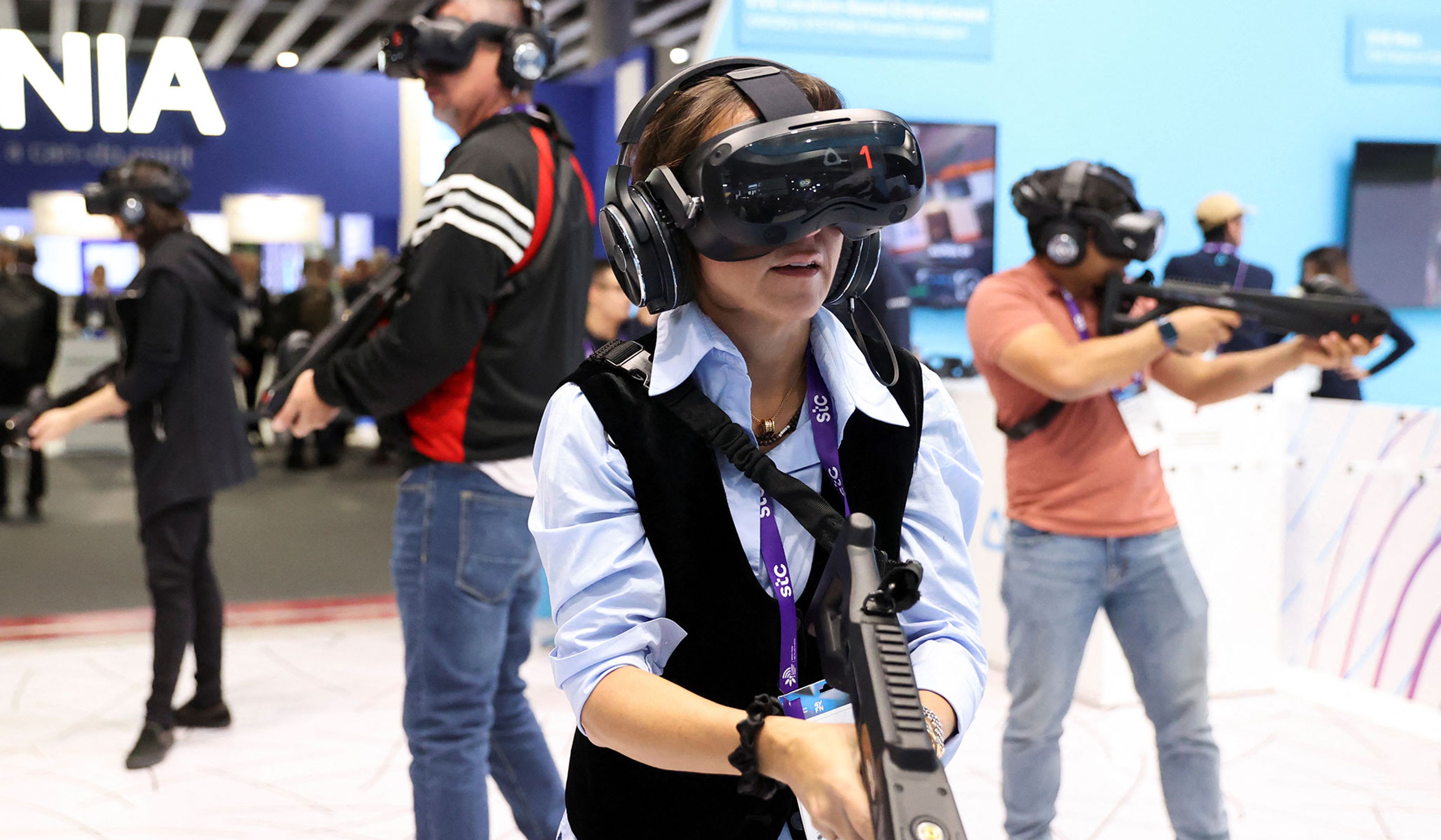
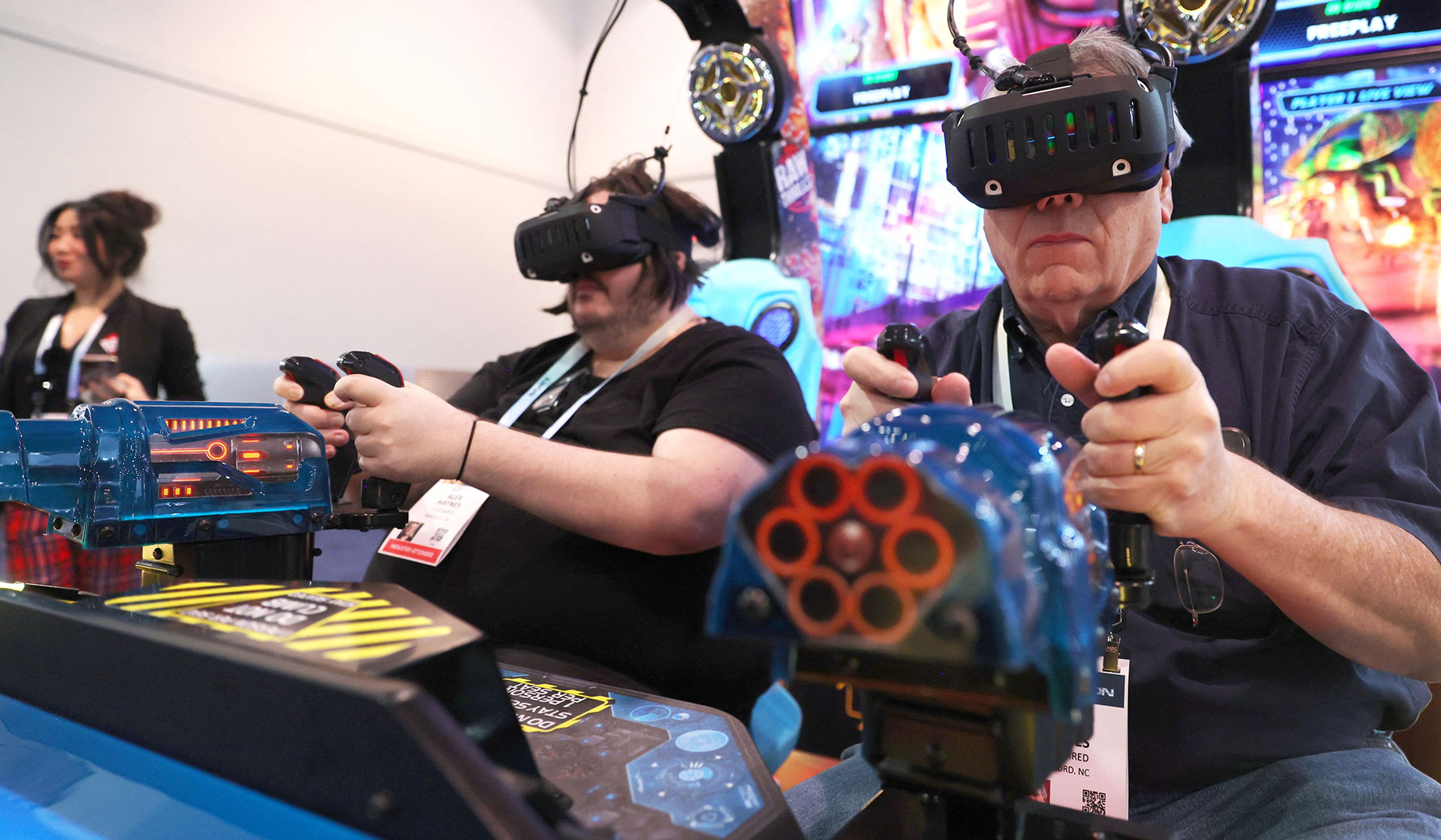
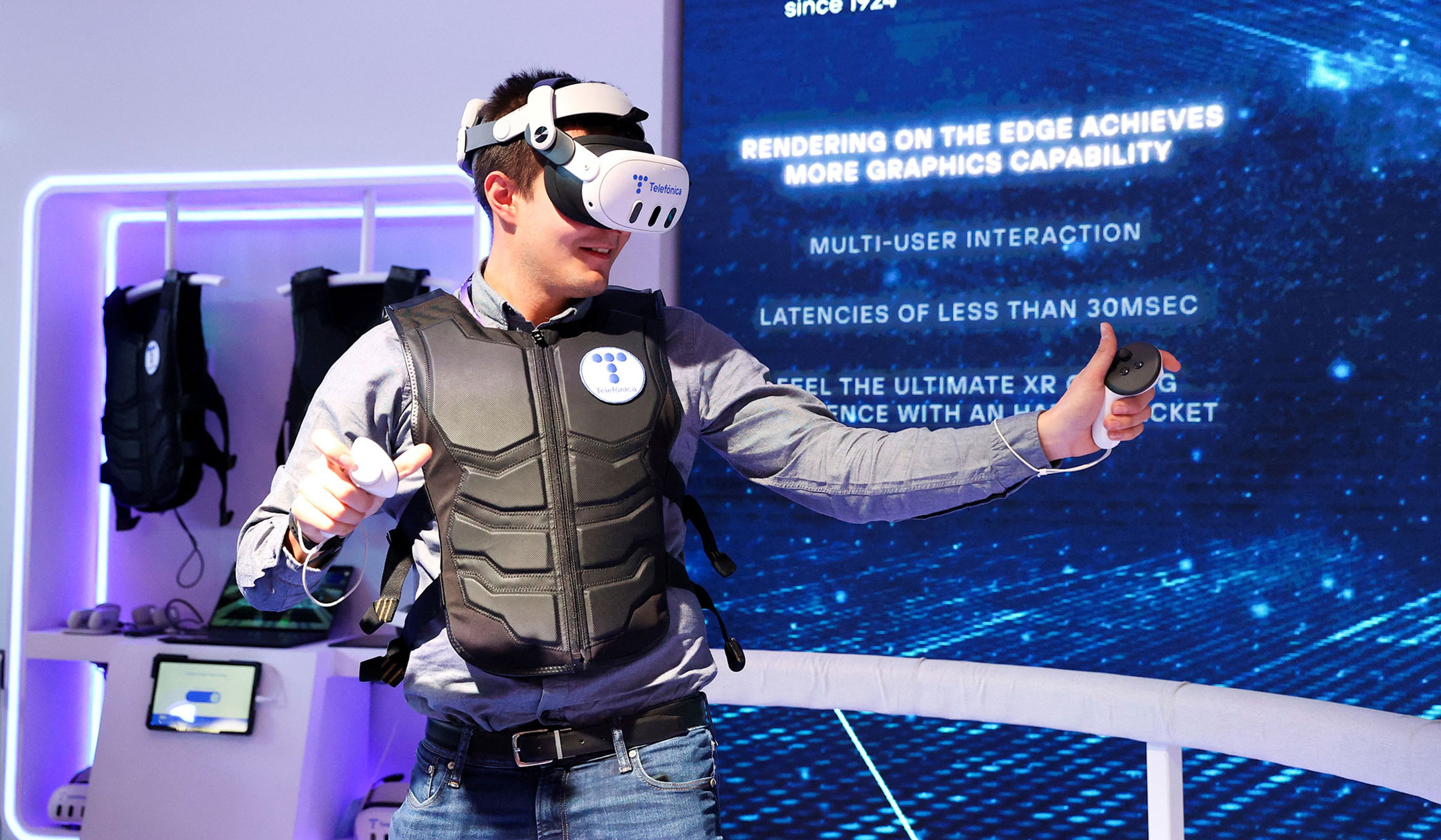

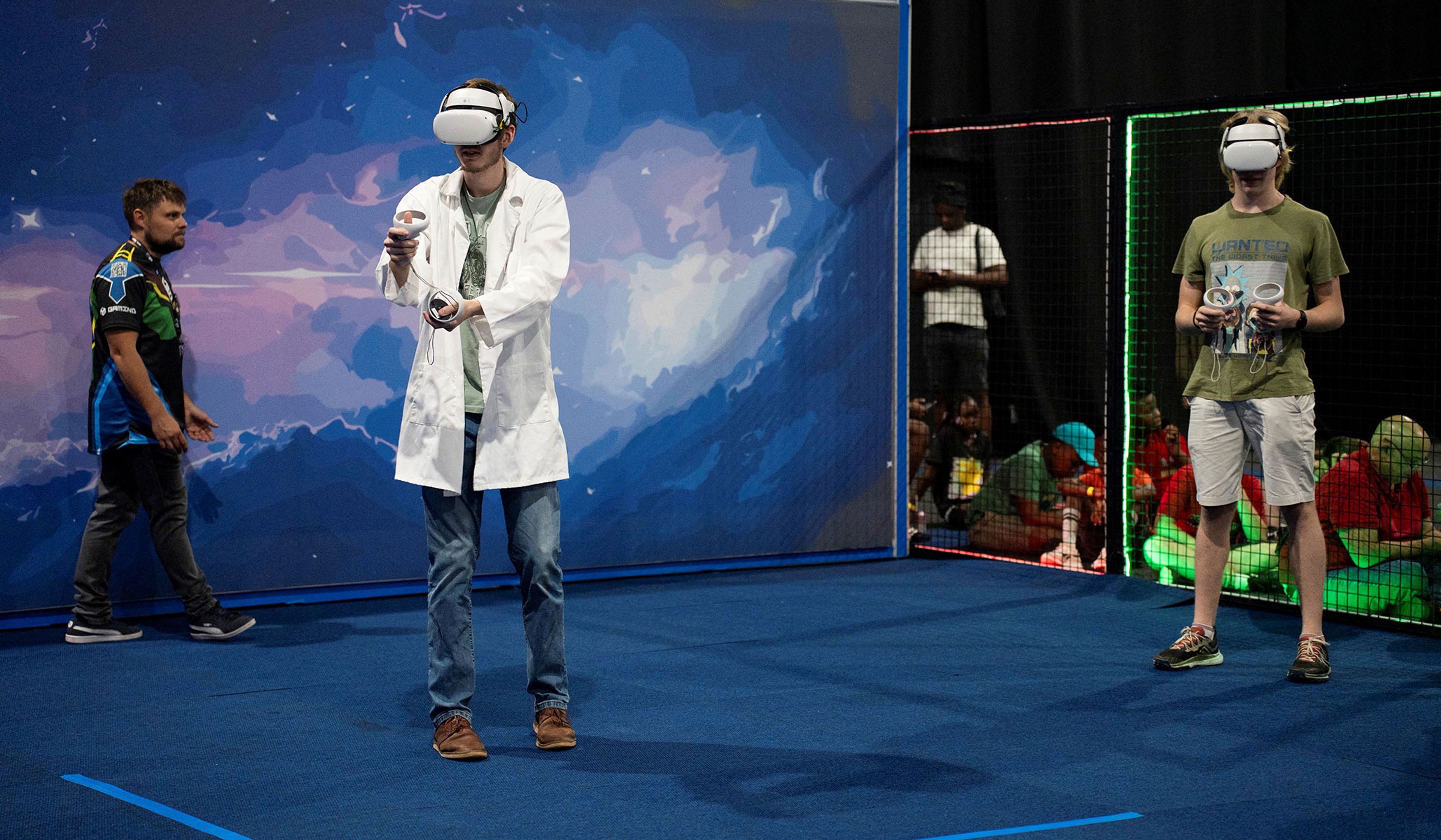
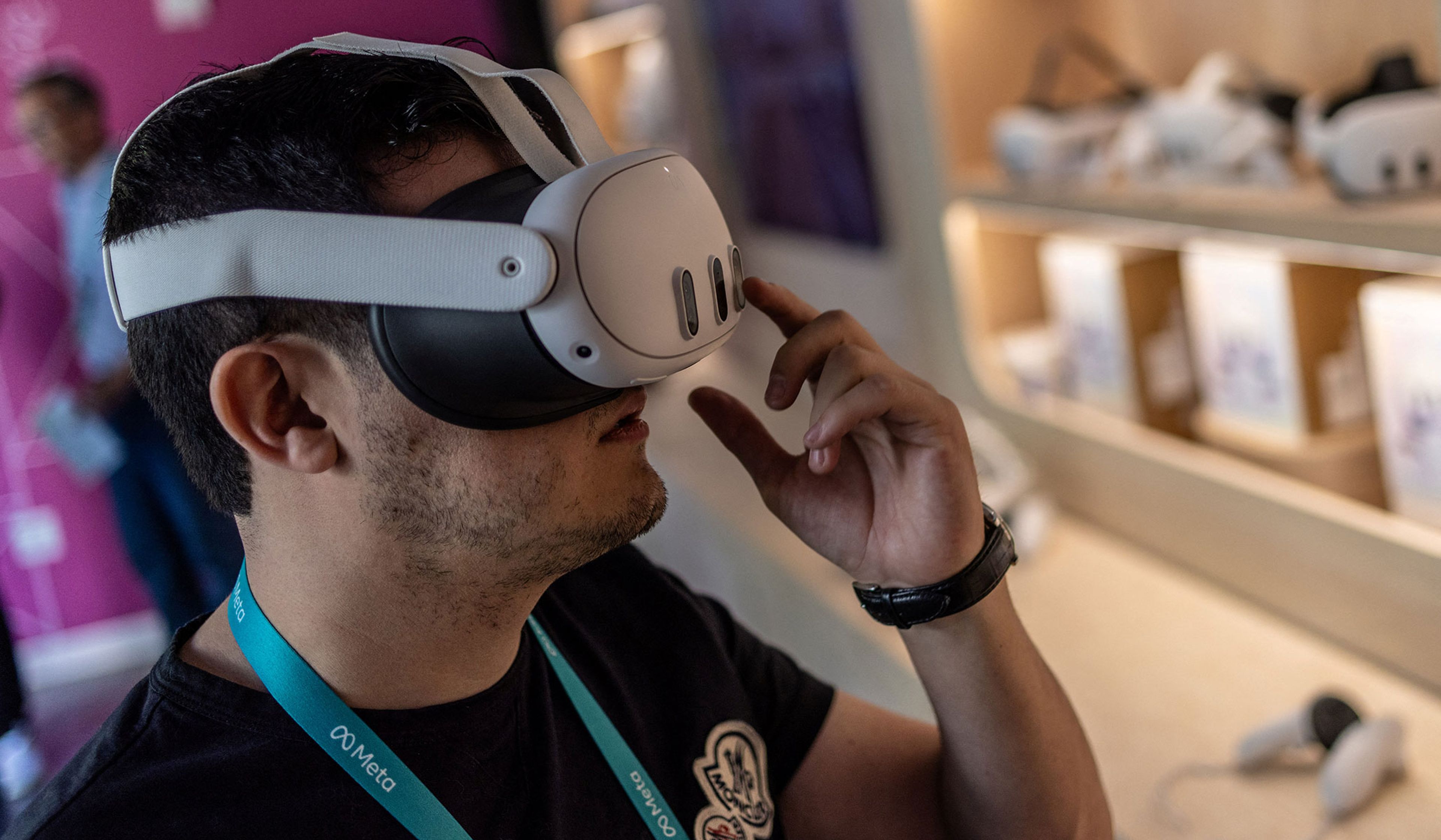
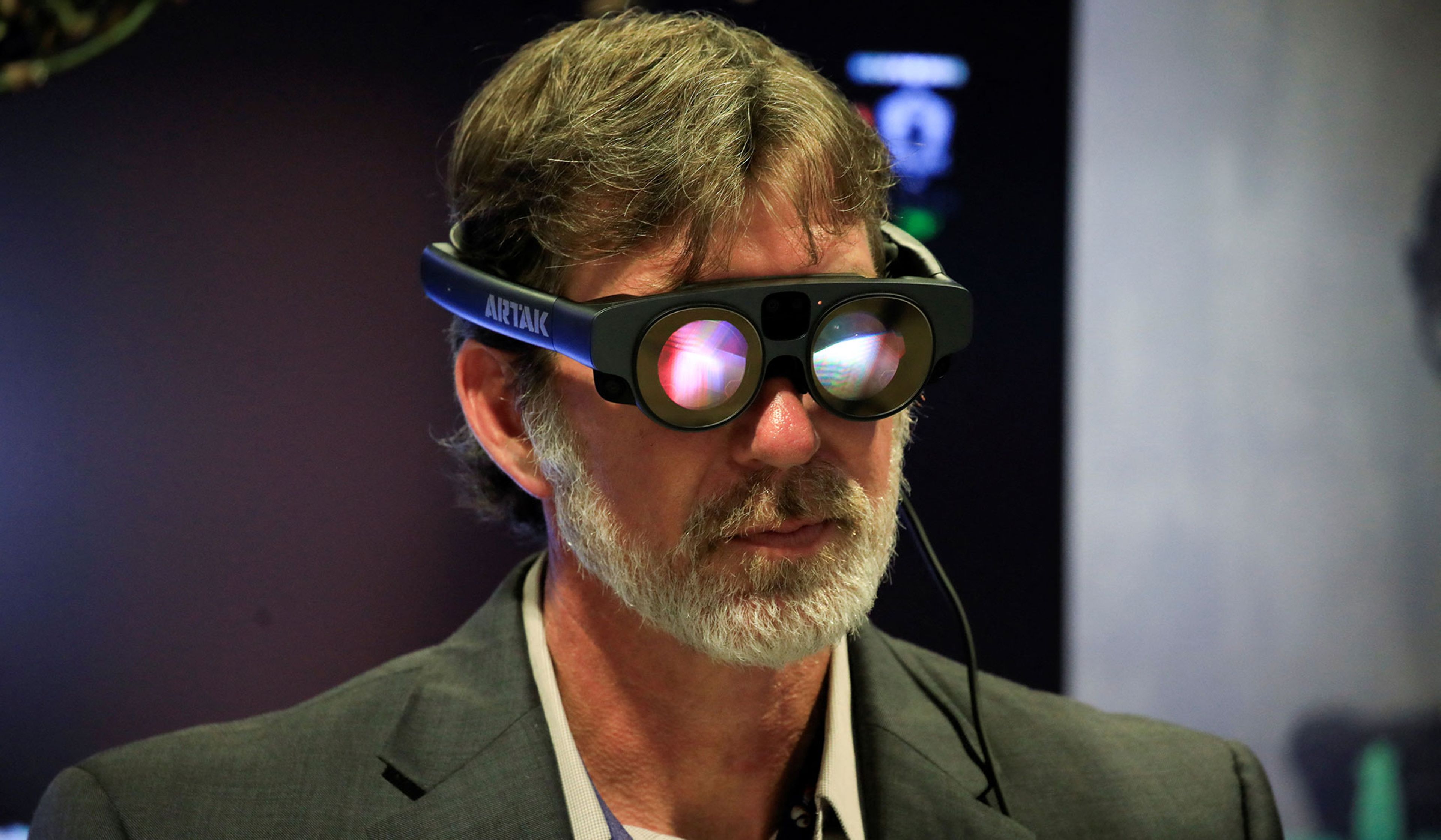
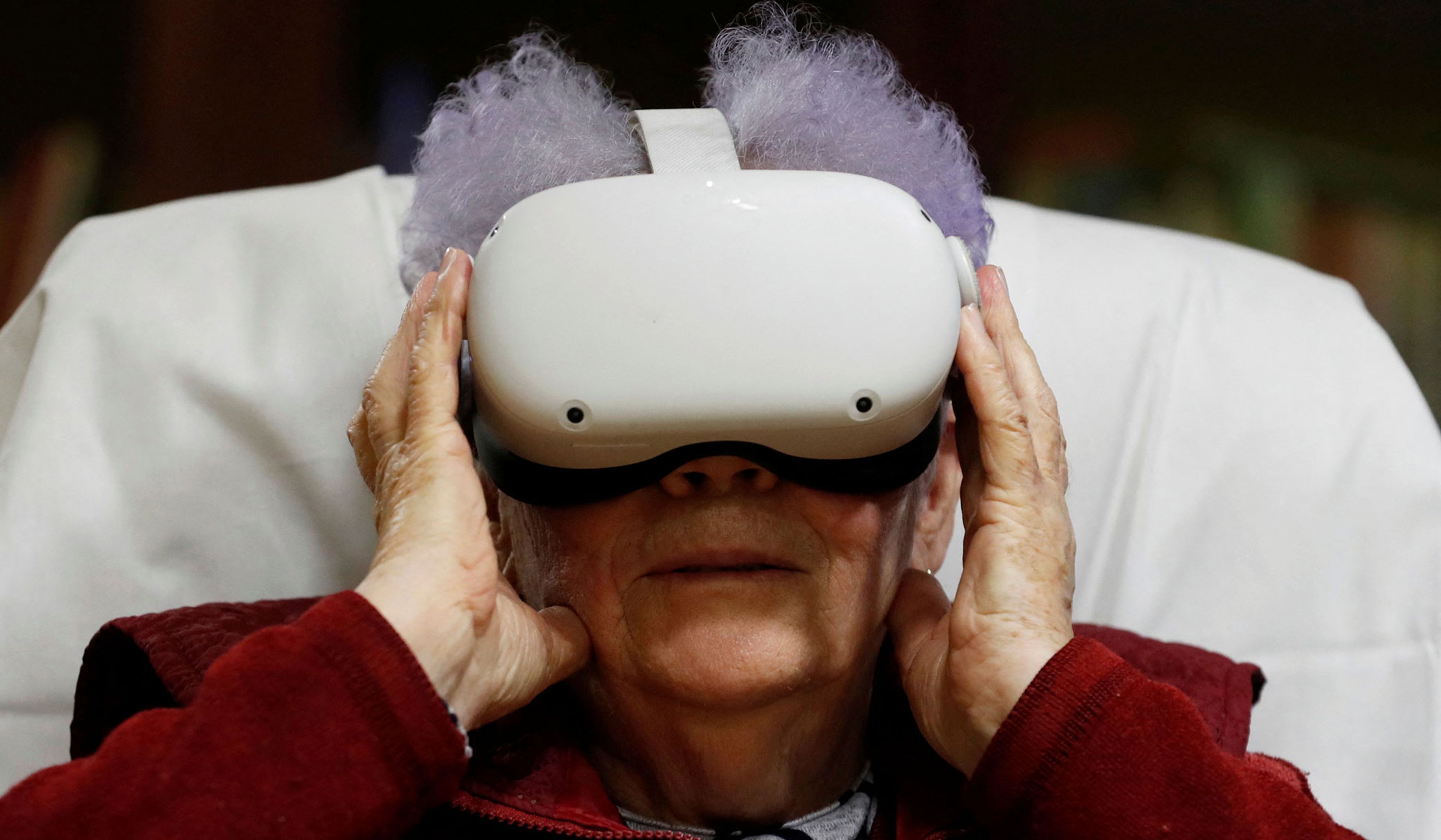
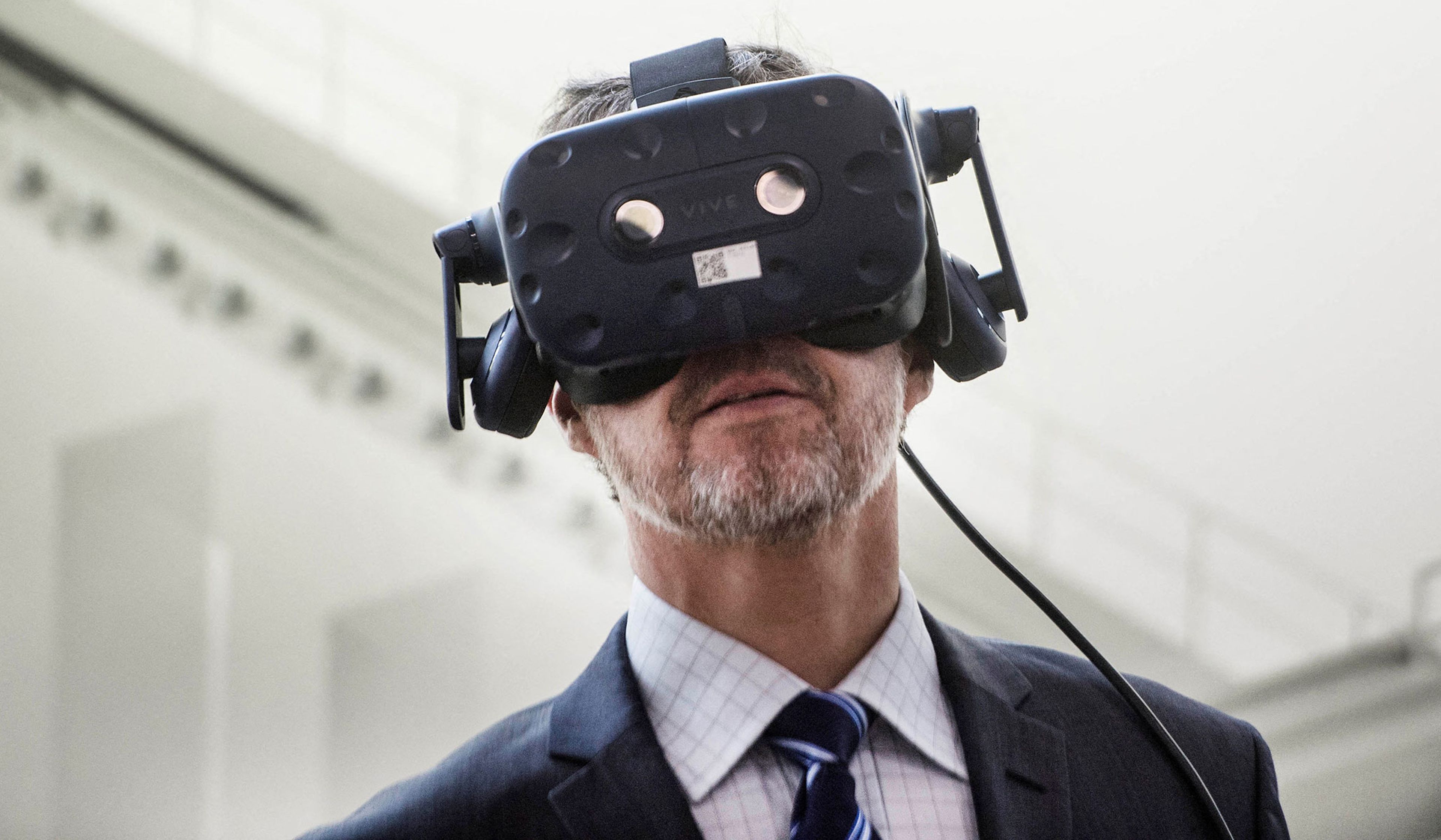
A man uses a JioDive smartphone-based virtual reality headset in the Jio exhibitor stall at the India Mobile Congress 2023 in New Delhi, India, October 27, 2023.
Anushree Fadnavis/Reuters
Always more poet than novelist, Gibson bloomed early and bright but didn’t flame out as one might have expected from a writer of such feverish intensity. He attributes his style in the Burning Chrome stories particularly to author Jayne Anne Phillips and other MFA-program hotshots of the era, but clearly he draws on Raymond Chandler, Dashiell Hammett, and the noir lyrical tradition, as well as on Faulkner and Southern Gothic.
Gibson’s best story in Burning Chrome, “The Winter Market,” presents a heartbreaking love triangle between man, woman, and technology. Lise, a tough-as-nails waif scraping by in a junkyard world of discarded tech, is withering away from an environment-induced disease, but combats it by donning a secondhand exoskeleton for locomotion. She meets Casey, an editor who records mental states that mass audiences jack into for entertainment. Casey taps Lise’s extraordinary dreams, which are the cri de coeur of a young woman whose soul is buried in — but dependent on — the excesses of technology.
Casey releases these dream-songs to the public, and Lise becomes a pop superstar. She uses her new wealth to upload herself into silicon, leaving her broken body — and probably her humanity — behind. Casey, who was in love with Lise, now must decide who, or what, is on the other end when Lise calls. And whether or not to answer.
Gibson expanded the Burning Chrome stories into his Sprawl novels, which he kicked off with the best-selling, multiple-award-winning Neuromancer (1984). His genius lies in the prescient, jittery texture of his settings, but even though he slaps cool labels on his spaces — the Sprawl, Straylight, New Jersey — in his early novels there’s a lack of physical location to grab hold of. This induces a state of mild disorientation that can grow wearying, like coming out of anesthesia. You’re surrounded by a hoard of fascinating details, perpetually waiting for the synecdoche to kick in.
In the Bridge series of the 1990s, Gibson remedies this location fuzz by ditching the cyberpunk Sprawl for a setting closer to the present. Middle novel Idoru (1996) is the strongest of the three books in the series. It posits a band’s celebrity front man falling hard for his equally famous Japanese AI girlfriend (AI pop stars are called Idorus), who is showing signs of sentience — that is, of old-fashioned humanity. Can anyone doubt that an Idoru is around the corner for us in real life? Or already here. If someone manages to slip Taylor Swift a Turing test, we may all be in for a surprise.
In the 2000s, the cancer of social media was born. Tech bros took a heat cauterizer to the right side of their brains, substituting game theory and trolley problems for human conscience, and tech sisters made plans to use that cauterizer on you. Meanwhile, William Gibson, purported novelist of the times, decided to write 1980s-style po-mo-dripping satire about the fashion and advertising business.
The less said of the conspiracy-laden plots the better, but in the Blue Ant books, the constraints of science-fiction exposition are lifted and Gibson is free to concentrate on his fully realized cast, led in Pattern Recognition (2003) by the delightfully droll Cayce Pollard. Cayce is a fashion obsessive-compulsive who is physically allergic to schlocky logos and goes into anaphylactic shock whenever she sees a Michelin Man. Her struggle to avoid turning into a raging judgmental narcissist and yet still make use of her talent is an elegant portrait of someone afflicted with a case of that dread malady, artistic sensitivity.
Gibson returned to science fiction in 2014 with The Peripheral, his best-constructed novel. In it, he loosens up and pares down his prose, letting the telling metaphor bear most of the load. His female protagonist, rural North Carolinian Flynne Fisher, is a butt-kicking Little Nell, heartbreakingly honest, blue-collar, tough, smart, and — in a sop to the cyberpunk boys of yore — very, very good at video games. Gibson does southerners well, having grown up in Wytheville and Norfolk, Va. His Appalachia is a noir landscape of failing Walmarts and small-time nanotech fabrication shops where Faulkner’s Snopes would reign supreme.
Flynne is the inhabitant of a stub universe, a mid-21st-century reality that split off from our own time line some decades before. She uses a virtual headset to project her personality into a humanoid robot, a “peripheral,” in our time line’s futuristic London, a place ruled by a kleptocratic Russian elite after the ecological and economic collapse called the “jackpot.” There Flynne allies with the delightful Detective Inspector Ainsley Lowbeer, a more-than-human combination of AI and British spy.
Lowbeer is wily and eccentric, but humbled by her passage through hellish times. She’s a great mentor for Flynne, who is combating one of Lowbeer’s transhuman rivals who seeks to commodify and destroy Flynne’s stub universe. The Peripheral is a taut thriller with a rousing finish, and great science fiction.
Gibson plays at noirish cynicism, but at heart he’s an old-school liberal brimming with secular hope, and a political naïf. A wearying Gibson motif is the idea that all business is ultimately organized crime, and that various criminal syndicates sit at the top of the power chain of commerce, whole governments at their command. Governmental impulses, on the contrary, represent the individual writ large and are benign and cruelly suppressed by those voracious kleptocrats in charge.
The opposite is the case, of course. Ideology trumps greed. Nations aren’t going anywhere, and governments are generally awful. China’s Ministry of State Security dominates all Far East mafias, and is Luciferian in its purpose — which is the old-fashioned spread of communism and Chinese racist power fantasy. Here in the West, the Information Age culture has turned sinister, hectoring, and as stupid as a DEI hire.
An artist’s relationship to the spirit of his age varies. Some incorporate and seem to effortlessly transcend human affairs. Others have little to do with the social, and their work is a primal scream from the heart or the chant of angels.
For some, however, the voodoo loa of the times rides them, as a Gibson character might have it. He may no longer be the avatar of the Information Age, but William Gibson has written three decades of solid, entertaining novels while managing to steadily develop his craft and continue to delight his readers. Agency (2020), the Jackpot series follow-up to The Peripheral, unfortunately turned on a plot baked from left-wing hysteria, but Gibson, now 76, is reportedly working on the third Jackpot novel, and all readers of quality science fiction should be looking forward to it. Gibson, whose prose poems of dread and fascination defined how we picture our age of algorithmic machinery, has mellowed into a terrific traditional storyteller.












Comments