Upon hearing that I was reviewing the Netflix series A Man in Full, based on the novel by Tom Wolfe, a conservative friend crowed: “That should be easy! Wolfe was the guy who took down the 1960s counterculture! Netflix clearly wants to defang him!” This would have made for a lively review, I admit. But it would not do justice to the topic.
Wolfe, the celebrity author in the cream-colored suit whose prose keeps readers turning pages the way Doritos keep snackers munching, died in 2019, just before streaming entertainment got a boost from the pandemic. With the exception of a 1990 film based on his first novel, The Bonfire of the Vanities, Wolfe’s fiction has not made it onto the big screen. One problem is that his four novels are long and meandering, and do not end so much as run out of steam — around page 724, on average.
But what about the small screen? Digressive, open-ended stories are catnip to streamers, who are always eager to extend a series for as many seasons as the market will bear.
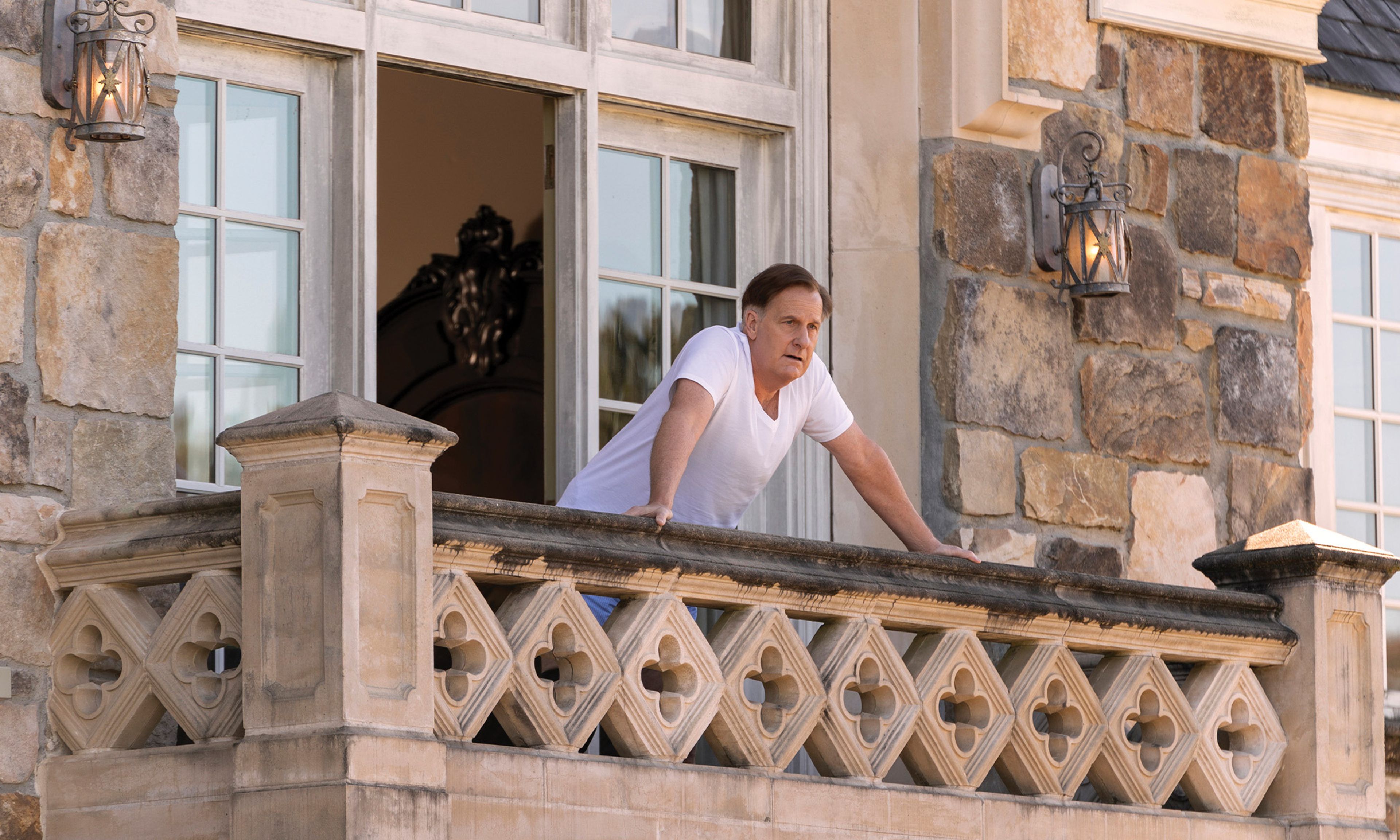
A Man in Full, published in 1998, traces the downfall of Charlie Croker, a billionaire real-estate mogul in Atlanta who is being backed into a corner by ice-blooded bank creditors and lily-livered lawyers. Jeff Daniels does a superlative job playing the defiant Charlie as he refuses to take responsibility for his reckless extravagance or face the inevitable consequences, which are social disgrace and bankruptcy.
Why did Netflix decide to make this series now? Were they hoping for a hit like Succession (HBO) or Billions (Showtime)? Or a media buzz comparing Charlie to Trump? If the former, their timing was off — those series have come and gone. If the latter, the comparison rings false — Charlie is a good ol’ boy southerner, a former football star who loves hunting quail on his 29,000-acre plantation. Trump is a New Yorker who every morning has his hair blown forward and sideways and glued to his scalp with hair spray. And his favorite outdoor activity is riding in a golf cart.
Set in money-mad 1980s New York, The Bonfire of the Vanities was a publishing blockbuster. But the movie was a flop, earning $15.6 million against a budget of $47 million. The critics panned it for casting likeable Tom Hanks as the despicable lead and for not having a single positive black character. Wolfe’s rebuttal was that the novel is a satire of New York at its rottenest, and its barbs fly in all directions, sparing no one, black or white.
In 1996, Wolfe suffered a near-fatal heart attack, followed by quintuple bypass surgery and a deep depression. By his own account, this led to changes in A Man in Full, then a work in progress. Maybe that’s why this second novel, which bristles with satirical barbs, also features a character who embodies traditional virtues such as courage, self-control, and compassion. That character is Conrad, a young laborer in a frozen-food warehouse in California, operated by one of Charlie’s subsidiary businesses. Many pages are devoted to Conrad’s ordeals, which include getting fired despite having heroically saved the life of a co-worker, being falsely convicted of a crime, barely escaping an earthquake, and fleeing cross-country as a fugitive. Ending up in Atlanta, he finds work as a home caregiver — and, fortuitously, is assigned to help Charlie recover from knee surgery.
Wolfe could have compared Conrad to Job, whose faith in God survives far greater ordeals. But Wolfe is on record saying, “I hate people who go around saying they’re atheists, but I’m an atheist.” So instead, Wolfe attributes Conrad’s survival to Epictetus, the former Greek slave who taught Stoicism to the Romans. Needless to say, this is a departure from Wolfe’s oft-stated view of human nature, which borders on social Darwinism, in the sense of likening men to dogs fighting for dominance; and women to . . . well, nitpicking bitches craving to mate with the “big red dog” but in most cases settling reluctantly for what they can get.
It’s worth noting that in the novel, Conrad is white. In the Netflix series, Conrad (Jon Michael Hill) is black, and his ordeals include being beaten by a white cop whom he punches in self-defense, and then getting arrested for assaulting that officer and having to contend with a hard-ass white judge (Anthony Heald) who denies him bail and detains him in a hellish prison full of rapists and murderers. In the short term, black Conrad hangs in there by adopting a Stoic attitude. But in the long term, he is rescued by his brave, devoted wife, Jill (Chanté Adams), who enlists the aid of her big-shot employer — who happens, fortuitously, to be Charlie.
In the novel, Stoicism is the sole alternative to cynicism, and all the other characters, including Roger, Charlie’s elite-educated black attorney, are portrayed as vain and corruptible. In the series, by contrast, Stoicism is barely mentioned, but the traditional virtues are present in several characters, notably Roger (Aml Ameen) and his wife, Henrietta (Jerrika Hinton). Neither of these upright black citizens has heard of Epictetus. But when Henrietta urges Roger to devise a purely legal defense of Conrad rather than accuse the hard-ass judge of racism, the outcome is justice well served.
I understand the reflex to chalk these changes up to racial correctness. But in this instance I do not share it. The writers and directors were no doubt motivated by a desire to correct Wolfe’s tendency to cast black characters in a negative light. But these changes provide a more solid alternative to cynicism than Wolfe’s wobbly Stoicism. I say wobbly because, instead of following through with a redeemed Charlie, the final chapter of the novel has the wily, cynical black mayor regaling Roger, his old Morehouse classmate, with a mocking tale of how Charlie relinquished his worldly possessions and became a tub-thumping “evangelist” for Epictetus.
Netflix wisely dispenses with this parody of southern Christianity. But then it unwisely substitutes a confrontation between Charlie and Raymond (Tom Pelphrey), a former Croker employee turned bank credit officer. Raymond’s pathetic mix of envy and hero worship toward Charlie is by far the most tedious part of the story. So it is one cringe after another when Charlie finds Raymond in bed with his ex-wife, Martha (Diane Lane, wasting her talent), and reverts to canine instinct. The two men square off in a dogfight made even more cringeworthy by Raymond’s brandishing of a large rubber penis that we are supposed to think is real. The series ends with the simultaneous deaths of both men, one by strangulation and the other by a heart attack. Which debacle suggests not only a failure of imagination but also a decision, taken at some point prior to the debut of this series, that it will not have a second season.
All I can say is, nice try, better luck next time.












Comments