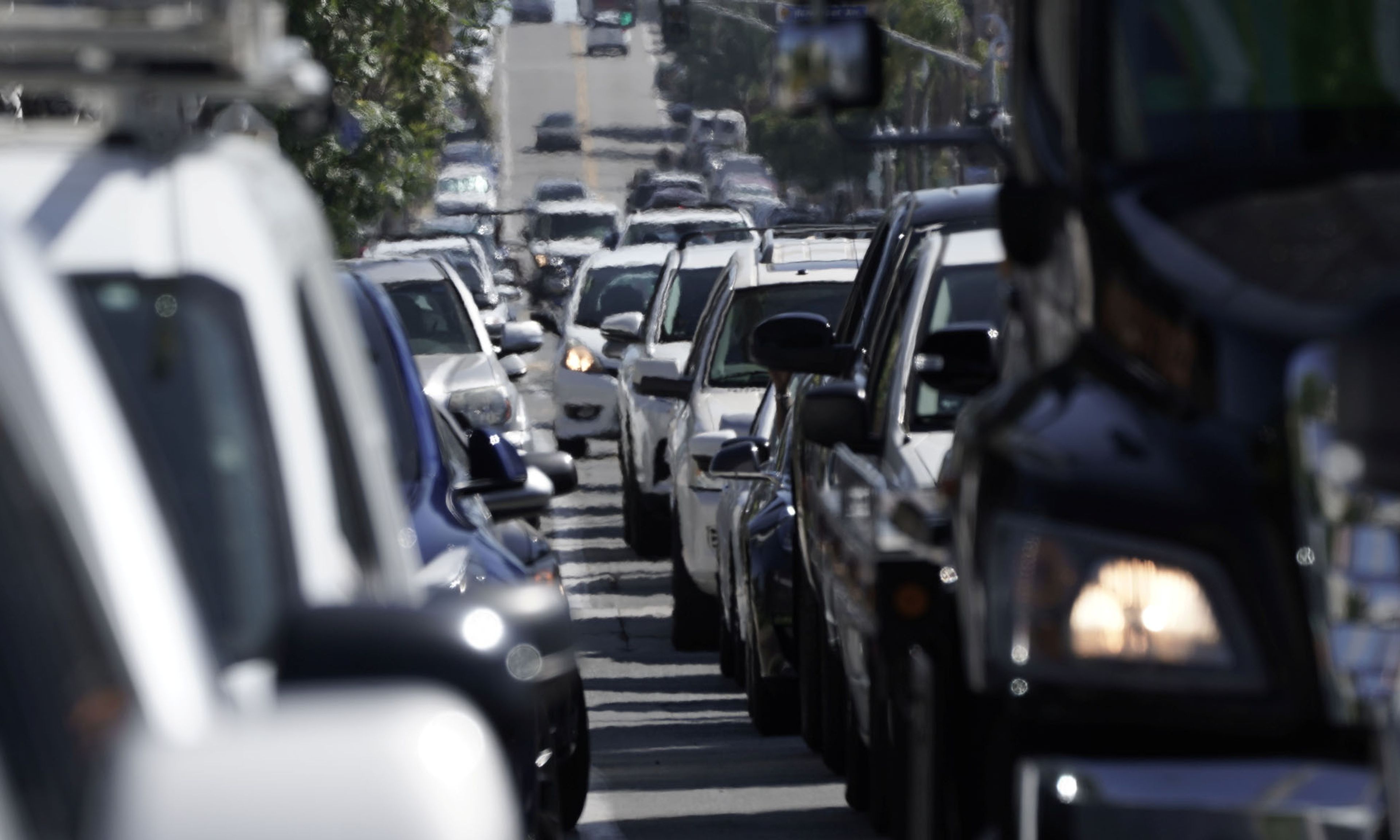
I have been spoiled in my commutes. From the time I was a summer intern until just the other day, my path from wherever I was living to wherever this magazine was living was an easy walk, or at most a quick cab ride. But since the virus came among us, my commutes have grown longer.
The country is safety and peace. How can you get infected when you see no one? The loudest night noises are owls and insects (the latter at this time of year raise a cry, dismaying to children and epidemiologists alike: back-to-school, back-to-school).
But the city is still the place for business. Though I write and confer via the ether, there are still things I must do in person: doctors’ appointments, workouts with my trainer, shoe repair (the only cobbler I trust is around my urban corner). We used to go to the country and back by bus, saving only the ends of each trip for car and cab. But now I would no more take public transportation than hitch a ride with a Horseman of the Apocalypse. So I drive all the way.
Commuting begins when the grass is still touched by morning freshness. My wife finishes the packing, I take out compost and garbage; if there has been a holiday, I take in the flags. My wife shuts the driveway gate; the Deer Buffet is CLOSED. The first half hour is the most country. One road is grandly called a turnpike. It is a two-lane county road; there are no toll booths for miles. There is a hamlet with a fire station on one side of the creek and a convenience store on the other. A handsome brick house sits in the middle of nowhere. Farther on, a chapel stands shuttered except for hip rural weddings. A ridge, an honor guard of sunflowers attending a cornfield, a college town. Here we stop for breakfast.
When the buses ran at full schedule, the bus station could be a busy place. The men’s room had strange graffiti. LORDS OF DEATH. DOZENS OF BEES. Rock groups? Prophecies? People tried to board with bicycles, huge parcels cocooned in plastic wrap. Lines could be long, the tails shamed cutters-in. Now with fewer trips it is peaceful, like a square in a Catholic city. We drink lattes — heaven! — and chat with the café owners about their five-year-olds. Next comes the long leg.
Mussolini and Pennsylvania beat us to expressways, but this one is still pretty old. Its engineers ignored colonial post roads and the towns they connected, cutting through fields, highlands, marshes as needed. One stretch bisects a large apple orchard. When we first came up to the country, it had not yet blossomed. Now it is laden with fruit, little stop signs, early Christmas ornaments. Miles on, there is an outdoor sculpture park, rolling old farmland populated by gigantic toothpicks, strange slabs. Druids built stone circles to worship the sun, we build sculpture parks to be uplifted by the stones. The best piece is by an Englishman, a straight stone wall, designed to be littered and thrust apart by the trees through which it runs.
In the early days of the automobile, roadside attractions tempted the traveler with statues of Paul Bunyan, Indian villages, petting zoos. The expressway offers rest stops, malls filled with fast-food franchises. Only now half the franchises are closed; long lines snake to every holdout. Better to suck it up and drive on.
When my brother and I were little, we would see who could first spot the station wagons; wood-paneled station wagons counted double. How did our parents stand our scorekeeping? Recently I have been intrigued by the hieroglyphics on trucks. I just looked up “tare”: tare weight is the weight of the vehicle. Gross weight = tare weight + net weight (weight of the goods). A friend once explained to me the inner construction of tankers. They are not tubes on wheels, their innards are broken by baffles so that the liquid will not rush forward at sudden stops. Strangest of all are the rigs carrying new cars to and fro. They seem glued together in an idle hour; hard to believe the auto industry depends on contraptions like those. They say we will have driverless trucks soon. Sounds as safe as tossing pianos out of apartment windows.
The last leg is a bosky parkway, with greenery down the median strip and on either side, low curved stone bridges, a 55-mph speed limit, no trucks allowed. It is the green world, the bower of bliss, a highway designed by Horace and Thomas Jefferson. All it lacks are wine-bearing slave girls.
The illusion ends when the suspension tower of the great bridge pokes above the tree line. You glide through the automatic tollbooth, make a curlicue into the mainstream of traffic, then thunder over the great river onto the island of buildings. There are miles to drive yet, but you have essentially arrived; you are a ticketholder coming down the aisle to his seat. River to the right of you, barges big as islets, masonry and metal to the left: Gothic revival, last-century apartment buildings, arches and trusses, new construction, most of it ugly, some of it amazing, some of it amazingly ugly. You cross the island to the east, restaurant tables on sidewalks and in parking lanes, women still in summer undress, cyclists, road work.
There has been yelping, as after 9/11, or during the last crime wave, or during the bankruptcy before that, that this city, and indeed all cities, are done for. How un-Christian that desire is. Augustine did not write The Suburbs of God. We fell in a garden, we are promised a city. With twelve gates: three in the east, three in the west, three in the north, three in the south. Until then, this one will do.
At journey’s end our building’s garage was full. But I tip the attendant well; he found a space.











Comments