COVID has been like college, only better. I have been able to do a lot of reading, minus girlfriend trouble. At first I read Sherlock Holmes. But I branched out to other classics, all aloud.
Why do the Russians loom so large in our imagination? Quality, of course. Then, timing. They hit just as the English novel was losing steam; Dickens had to hand the baton to somebody. Exotics are interesting (all those versts and samovars). Communism gave them a second wind: Maybe they could help us understand the Enemy. In returning to them I aimed high: War and Peace and The Brothers Karamazov.
Which versions to read? A few years ago there was a husband-and-wife team who were the Machine Gun Kelly and Megan Fox of translators, though their star has faded a bit. So I went with the early-last-century Englishwoman who was first in the field, and whose work is now old enough to be free online.
War and Peace aspires to be the epic of ordinary life. There is nothing ordinary in traditional epic, but Tolstoy achieves the feat by creating a Russian world, then throwing Napoleon at it. The dozens of characters and hundreds of events arrange themselves around three families and one odd man out. The Rostovs are happy, the Bolkonskys admirable but troubled, the Kuragins feral. The odd man is Pierre Bezuhov, legitimized son of a fabulously wealthy count. Tolstoy prepares us to like him by making him overweight, near-sighted, and callow, a receptacle for affectionate condescension. But he has an earnestness that wins our esteem, however many blind alleys he marches down.
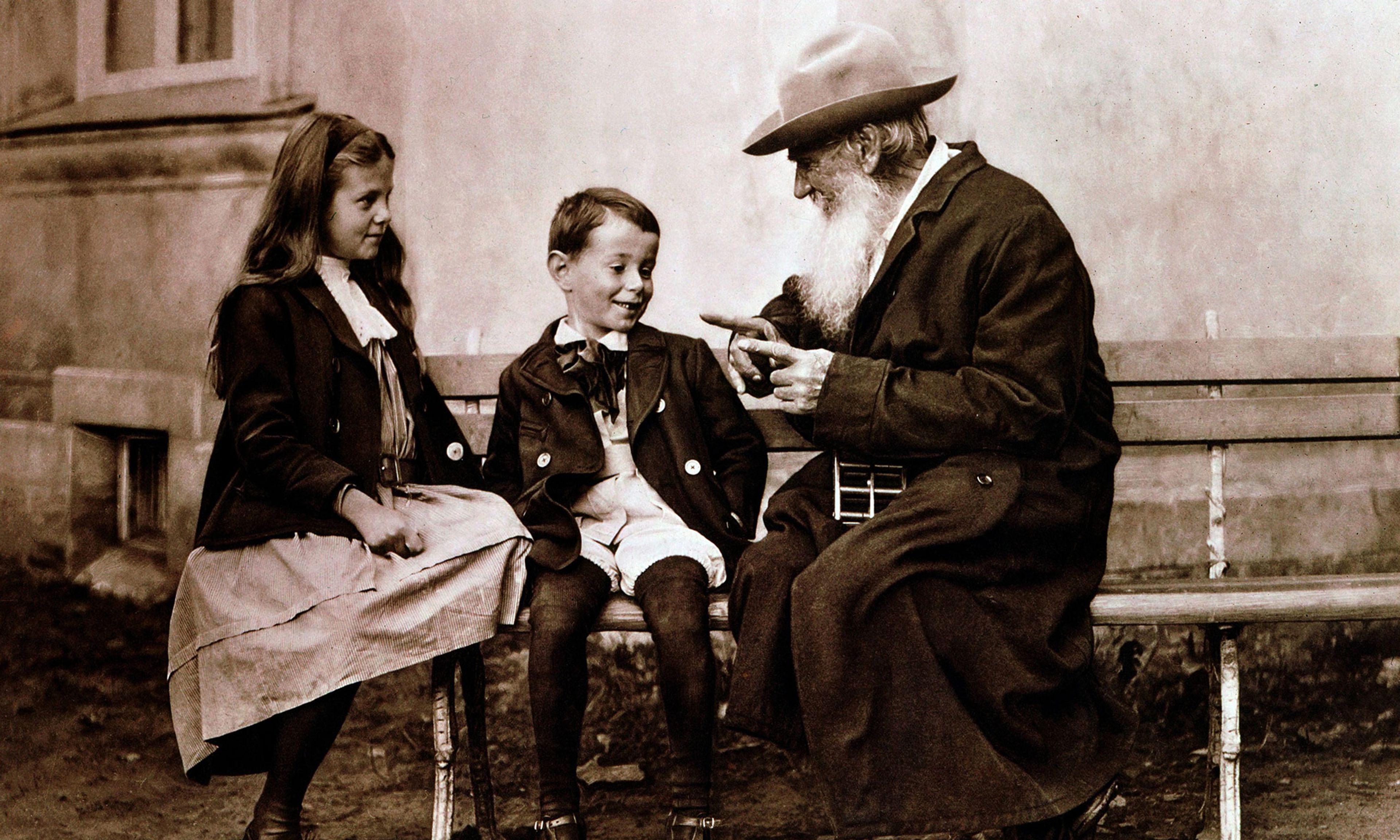
The New York Review recently ran an essay on Teffi, a Russian woman humorist whose fans included Nicholas II and Lenin. When she was a girl, she met Tolstoy, intending to tell him to rewrite War and Peace so that Prince Andrey Bolkonsky does not die. In the event, she only asked for Tolstoy’s autograph. Teffi’s involvement with Andrey is not unique to her among readers, or to him among characters. Tolstoy makes us believe he knows everything about his cast, and every incident in which they appear. The spell he weaves thereby is compelling.
What are the problems? First, shelves of crackpottery. At the time of which Tolstoy writes, St. Petersburg was inventing ballet. Tolstoy hates it. Ellen Kuragin wears low-cut gowns. Tolstoy hates that too (happily she dies during pregnancy). Second, the history lectures. I skipped through them. They make an interesting pendant to Tocqueville’s warning to historians in Part II of Democracy in that other big country. Historians in democratic ages must consider the motivations of millions of individuals, not just rulers. But, Tocqueville warns, they will be tempted to discover vast forces which bind all those individuals together. Tolstoy does both. We get the peopled canvas: Napoleon didn’t invade Russia, everyone in his army did. Then, the dumb theory: West had to flow east, and east flow back. Maybe I’m still in college — or a college bull session — after all.
Finally there is Tolstoy as Putin. East beats west because the Russian people are special. We see it when Natasha Rostov, visiting a cousin after a wolf hunt, instinctively dances to his gypsy music. It is the Russian Soul in her. We see it again, after Napoleon’s retreat, when Tolstoy writes his most poetic line, about the stars shining as if they spoke some glad mystery to each other. But this is preceded by a socialist-realist mix tape of the voices of anonymous Russian soldiers, talking happily. I missed the cussedness of American writers — Twain, Melville, Hawthorne, even mild Washington Irving (whose Rip Van Winkle sleeps through the Revolution).
And yet, whenever Tolstoy cranks up the wind machine, Tolstoy the observer saves him. The Rostovs are happy: Yet they dislike their eldest daughter, Vera, they stiff their poor cousin Sonya so that son Nikolai can wed an heiress instead, and the old count blows a fortune through sheer fecklessness. The Russians turn to partisan warfare (good, says Tolstoy/Putin). But the embodiment of it is Dolohov, sociopath and sadist. Imprisoned by the French, Pierre learns the meaning of life from a wise peasant. But when the peasant sickens, even Pierre pulls away from his impending death, out of sheer self-preservation.
Where War and Peace is huge, The Brothers Karamazov is almost maniacally focused, on the titular family in a small, dull town. Time, similarly constricted, is stuffed with their words. Has anyone ever timed the dialogue to see if it could possibly have taken place in the hours allotted? Formally the book is a murder mystery: Who killed Fyodor Karamazov, the father? But Dostoevsky aims to show nothing less than how to live.
Everyone will have his favorite brother. Intellectual Ivan appeals on first reading; his story “The Grand Inquisitor” is the best high-school literary-magazine submission ever written. Impulsive Dmitri grows on one, as you understand the source of his rage. Smerdyakov, the bastard valet, is least characterized: Is Dostoevsky guilty of snobbery here? Only the moment when Ivan compels him to disgorge the money he has stolen in order to go to Europe truly belongs to him. The odious father Fyodor, I realized on second reading, is actually amusing. Important lesson: Mind whom you laugh with.
But finally the hero, as Dostoevsky himself said, is seminarian Alyosha. He is surrounded by motormouths, yet he, and his mentor Father Zossima, are the only people in town who listen to anybody else. A precious skill. Zossima, one feels, wills the corruption of his own body after death to drive Alyosha into the world, to listen there. The final section, in which Alyosha mentors a group of boys, is quietly moving.
One attentive reader, we know from his underlinings and marginal notes, was Stalin, so listening, in person or in the form of reading, has limits. Maybe Dostoevsky would have addressed that in the sequel he died before writing.
There is always Turgenev.












Comments