Experience is the best teacher, the old adage goes, but what it teaches is often very different from what one had looked forward to learning. Carnal knowledge in particular has been known to plunge the knower into ever darker depths of confusion and consternation.
But some people don’t scare easily. Experience and energy are the bywords of a certain type of modern artist who creates from a superabundance of vitality unimpeded by conventional moral constraints, and who often lives with a headlong abandon. One thinks of Blake, Byron, Rimbaud, Balzac, Whitman, Picasso, Thomas Wolfe, Norman Mailer. Of course, colossal vital spirits don’t always make for great art. Nor does the unrelenting pursuit of experience necessarily mean a life well lived.
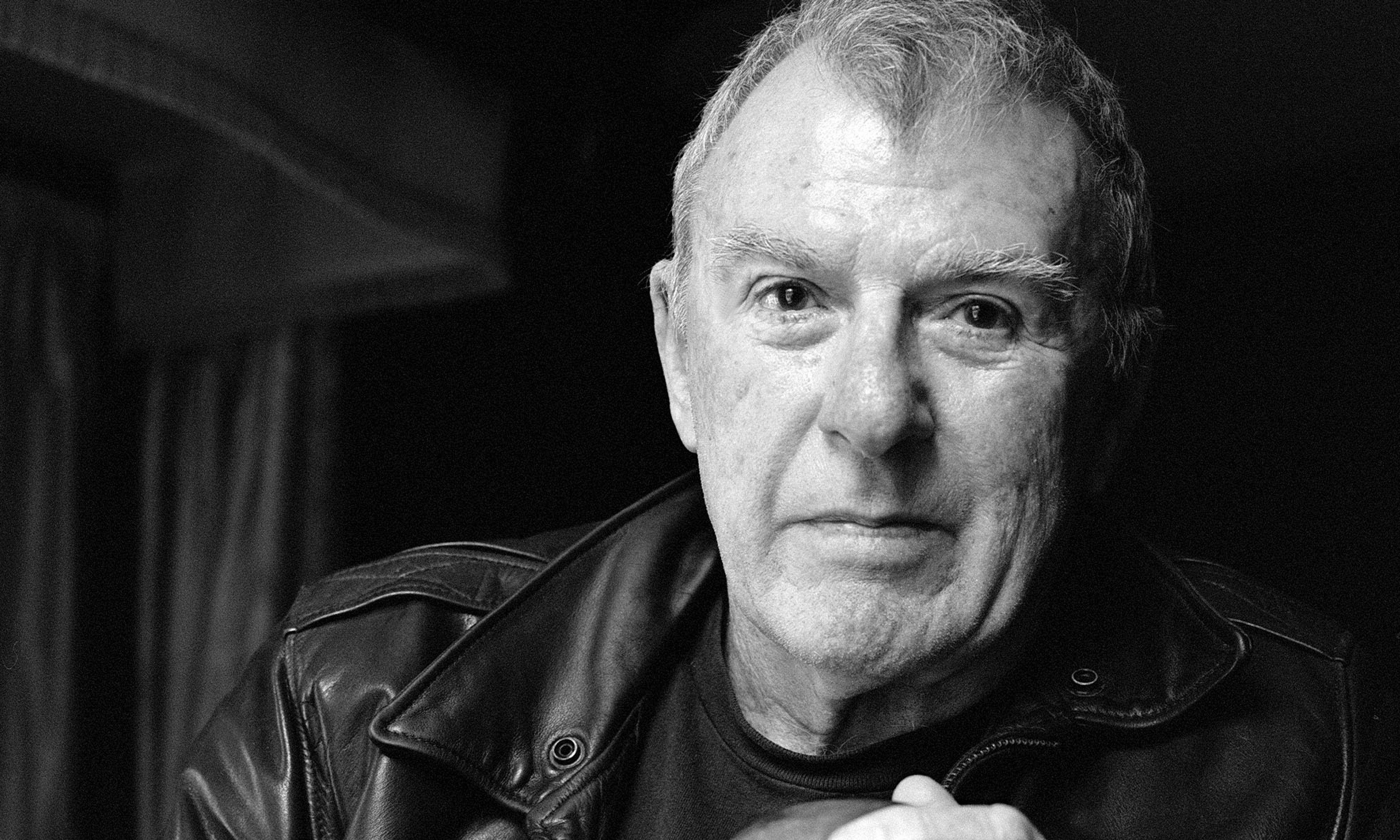
The Anglo-American poet Thom Gunn (1929–2004), one of the most respected writers of the second half of the 20th century, was the exuberant promoter of heroic manliness and the impassioned advocate of sexual promiscuity as an honorable calling befitting life’s limitless possibilities. Having sex with everyone he could fit into his bedroom provided “an entrance into all humanity,” or at least into the obliging portion of mankind’s male half. Sleeping with this crowd of strangers, he believed, was often the happy preliminary to genuine friendship; he was really out to make the deepest connections, he insisted, and these quite naturally “emerged from tricking in the first place.”
Despite its come-hither subtitle, Michael Nott’s new biography of Gunn is thoughtful and judicious in its evaluation of the poet’s life and work. He measures Gunn’s self-appraisal against the judgments of the men who knew him best — the members of what he called his family, the sometime lovers and the assorted lovers’ lovers who formed the matrix of his San Francisco household. And like Gunn himself in his most penetrating moments of reflection, Nott does not shy away from the spots of commonness in the esteemed writer’s character. As Gunn wrote in his notebook, well into his fifties, “I am a mediocre person, but neither I nor most people realize this most of the time & do not realize it because of my poetry.” The questions Nott’s biography raises but leaves unanswered are whether this self-accusation of Gunn’s is sufficiently damning where his behavior is concerned, and whether the personal failure infects the poetry he considered his redemption.
The elder son of a successful London newspaper editor and a bookish, flighty mother, Gunn grew up amid prosperity and emotional disorder. The key event of his youth, when he was 15, delivered the cruelest blow he ever endured: During his mother’s separation from her second husband — also an editor, and a hard-drinking bon vivant — she killed herself. Some months later, though, the bereft boy experienced an episode of transformative insight and jubilation, which made him feel capable of overcoming his terrible grief. He was to enjoy four such crucial moments of pellucidity and inspiration in his life; he called them his “Illuminations,” and in a flash they endowed him with a surplus of energy and an all-conquering sense of freedom. These privileged instants assured him he could do whatever he wanted to do. That proved an ambiguous blessing.
After obligatory national service in the army, which he hated — he would register as a conscientious objector when his stint in the military was over — Gunn studied English literature at Trinity College, Cambridge, where he began writing in hot earnest, turning out a poem a week during an 18-month stretch. Despite his productivity, and his baptismal immersion in Shakespeare, Cambridge remained an alien place whose alluring innermost sanctuaries he never quite managed to crack. But meeting two fellow students more than made up for anything he might have missed: Tony White, the finest Cambridge actor of that time, a heterosexual who became a fast friend, and Mike Kitay, a handsome American, also of the theater coterie, who became the love of Gunn’s life. A letter Gunn wrote at 24 testifies to the fever in his heart: “I love you so passionately, so utterly, my darling, that I am sure my love will go on existing for ever, when I’m dead — long after that.” Gunn would remain faithful — in his fashion.
When Kitay had to return to the States for two years of Air Force duty in San Antonio, Gunn headed off to Stanford, where he would refine his poetic craft under the tutelage of the poet and critic Yvor Winters — the most important teacher he ever had. Winters was an exemplary figure in Gunn’s eyes, with “almost all the qualities one could want from a man — lack of cowardice, kindness, intelligence, and toughness.” This fundamental decency, combined with brainpower and firm resolve, constituted Gunn’s humanist ideal: the highest moral standard available to a man who scorned religious faith.
He tried to live up to it all his life, even as he turned more and more to the addictive excitements of promiscuous sadomasochistic sex. The evident disconnect there did not appear to trouble him unduly. The tenets of gay liberation that dominated the Sixties and Seventies (Gunn anticipated them in the Fifties) licensed utter sexual freedom, and spelled the end of outmoded binding fidelities and other emotional delicacies. “Nothing human is alien to me” became the motto of the liberated sensibility. Nott spares the reader Gunn’s particular proclivities, but a long quotation from Edmund White, noted chronicler of gay mores, details the sporting activities practiced at the New York club the Mineshaft, which Gunn called “the worst (i.e. best) orgy house in the whole world.” White’s description shows up Dante’s lack of imagination.
Gunn spent a miserable year teaching at a college in San Antonio so he could be with Kitay, and then he returned to his studies at Stanford, where Kitay joined him as a drama student. Three years together were enough to deaden their sexual passion for each other, though they would share the same bed for what Gunn called “many, many, many years.” The boredom inherent in the commitment stands out in Gunn’s words. To live together, almost as though in marriage, Gunn lamented in a letter to Tony White, “is the most crippling choice.”
What sort of poetry did Gunn make of his energetic quest for ever more experience? His first two books, Fighting Terms (1954) and The Sense of Movement (1957), already contained some of his best work. Governed by an intellect fond of elaborate metaphor — some called him a metaphysical poet, after the manner of John Donne — and written in painstakingly regulated rhyme and meter, these poems come off as quite English in form even as Gunn becomes bemused by American subject matter: the disturbing attraction of outlaw bikers, the “posture for combat” of Elvis Presley, the eroticism of city life teeming with “desire that never ends.” The best of these poems is “To Yvor Winters, 1955,” which speaks of the mentor who bred Airedales and nurtured young poets with beneficent severity, and who taught Gunn the necessity of balancing “Rule and Energy.” The closing lines evoke a mind and will hard enough to withstand the inevitability of extinction and to create a life of value in the brief time allotted us:
Though night is always close, complete negation
Ready to drop on wisdom and emotion,
Night from the air or the carnivorous breath,
Still it is right to know the force of death,
And, as you do, persistent, tough in will,
Raise from the excellent the better still.
My Sad Captains (1961) introduces a more American Gunn. Formally looser, some of these poems have jettisoned rhyme and meter for syllabics, one step short of free verse. There are notable beauties here. The title poem celebrates formidable men of inexhaustible energy, with the suggestion that this especially includes sexual energy. Each “hot convulsion” only strengthens them, and that accumulating power makes them worthy of permanent honor in Gunn’s firmament: “. . . winnowed from failures, / they withdraw to an orbit / and turn with disinterested / hard energy, like the stars.” The reader can appreciate the artistry of rhetorical main force there, however questionable the object of the poet’s sentiment might seem. Elsewhere the sentiment and expression are unexceptionable. In “Flying Above California,” Gunn admires “the ultimate richness” of his adopted home, where one can see one’s way forward with startling clarity, free of any beguilements: “Sometimes / on fogless days by the Pacific, / there is a cold hard light without break / that reveals merely what is — no more / and no less.”
Gunn was beguiled, however, by the life that was being lived in California, the cool queer life, and his art fell into occasional inanity. Frequent partaking of LSD had the well-known baneful effect, and a slew of poems in Moly (1971) explore the expanded reaches of his unfortunate mind. Here, in its entirety, is the silliest, “Listening to Jefferson Airplane (in the Polo Grounds, Golden Gate Park)”: “The music comes and goes on the wind, / Comes and goes on the brain.” Other acid poems, though more ambitious, are not much more interesting.
The heyday of free and easy pleasure was brought up short by the appearance of the AIDS virus in 1980. While friends and sometime lovers fell in droves as on a battlefield, Gunn took it upon himself to memorialize the new dispensation of mass destruction. The Passages of Joy (1982) opens with “Elegy,” for a young man he hardly knew who shot himself in the head: “Even the terror / of leaving life like that / better than the terror / of being unable to handle it.” The Man with Night Sweats (1992) secured Gunn’s standing as a moral authority speaking for a ravaged generation. The subject of the day is holocaust: “Lament,” “Terminal,” “To the Dead Owner of a Gym,” “To a Dead Graduate Student,” “The Missing,” “Words for Some Ash.” Gunn remains steadfast in his refusal to consider a supernatural meaning to life and death, as he sets down the physical facts of pain and extinction, with a jaunty departing word for the body’s dissolution and acceptance by the earth and the waters: “Death has wiped away each sense; / Fire took muscle, bone, and brains; / Next may rain leach discontents / From your dust . . . ”
The ubiquity of suffering and hard dying helped make a practicing nihilist of Gunn. The moral squalor of his last years — mediocrity does not do it justice — is a thing of horror: picking up homeless men for 16-hour sex bouts on speed; intravenous drug use; methamphetamine psychosis. After hammering with all his might and for an amazingly long time to be admitted at death’s door, Thom Gunn died of an overdose at 75, perhaps from a speedball of meth and heroin. Having already suffered the loss of his mother, the person he loved most, Gunn feared outliving Mike Kitay, Nott speculates, and did what he could to avoid doing just that.
As Kingsley Amis once said to Philip Larkin, curmudgeon to curmudgeon, “I suppose it’s all experience, you know, but it’s a pity there had to be so much of it.” Sometimes the curmudgeons are on to something.











Comments