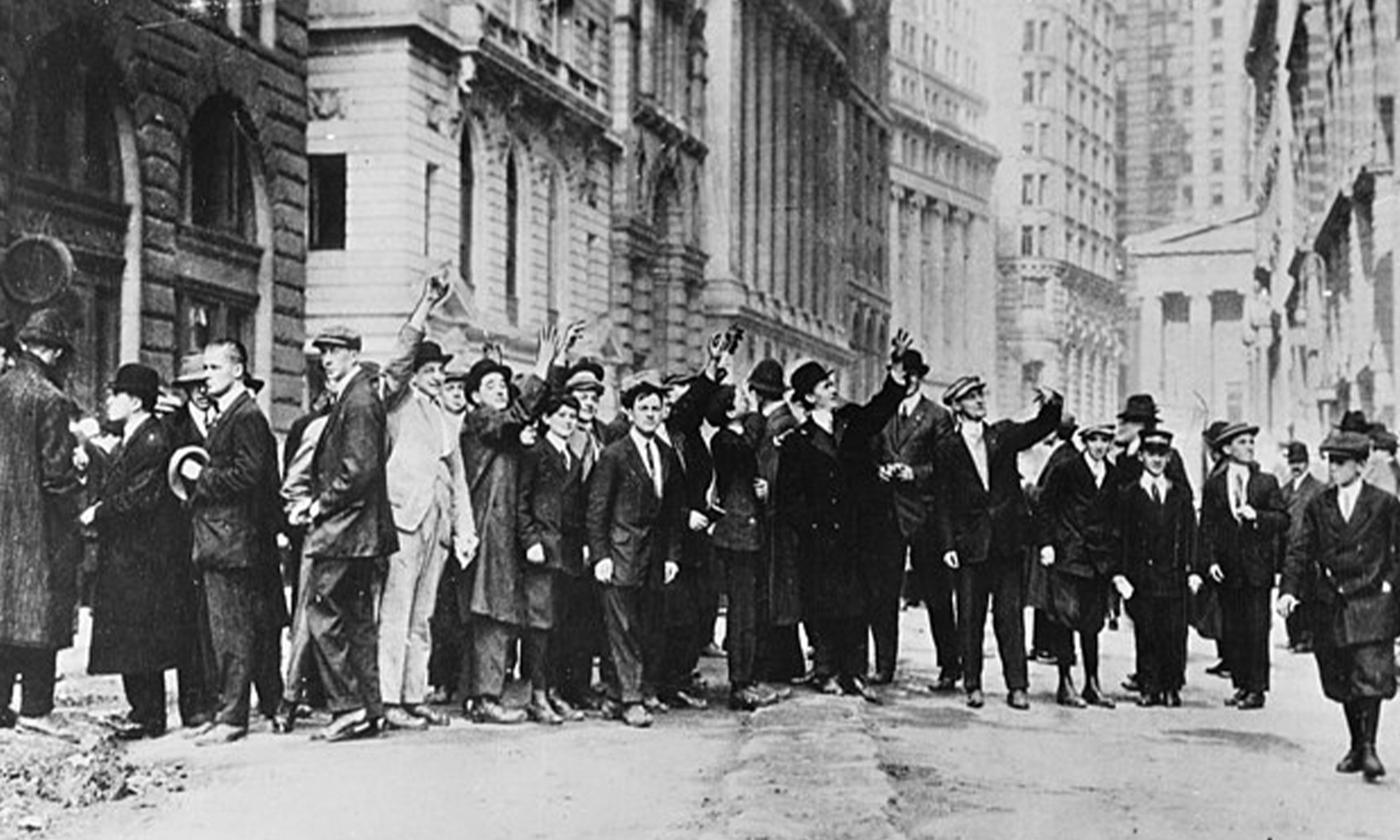
Every now and then a work of fiction comes along that captures the attention of both the public and critics. Such is Trust, by Hernan Diaz, a 2022 Booker Prize nominee and 2023 Pulitzer prize winner. Who would have guessed that a postmodern historical novel about the machinations of finance capital would have such a draw? And yet a year after its publication — just before the Pulitzers were announced — it remained high in the Amazon best-seller rankings. At my local library this spring there were 500 holds on 14 copies, in contrast with 48 holds on 87 copies of The Seven Moons of Maali Almeida, by Shehan Karunatilaka, the actual winner of the 2022 Booker Prize. Of the Sri Lankan’s novel the Asian Review of Books has written that “it is smart, it is funny, it is moving; but it is ultimately the heinous territory of genocide, torture, dismemberment, beheadings, and assassinations that we traverse.” Who would not prefer to read an American story spanning the decades of the Gilded Age, the stock-market crash of October 1929, and the early years of the New Deal?
Actually, such a story might not sound appealing either, but Trust is a most artful novel. Its contours will be familiar to readers of detective fiction, in which layers of deceit are peeled away before the true state of affairs is revealed. At the center of the story is Andrew Bevel, a billionaire financier whose stock manipulations have allowed him to emerge unscathed, indeed richer, from the crash of 1929. How this happened is related in Trust’s 402 pages in four different “genres.”
The first, “Bonds,” is a novel, a fictionalized portrait of Bevel’s life and marriage by a contemporary author, in which the blame for the crash as well as his wife’s death is laid on Bevel. The second, “My Life,” is Bevel’s draft of an autobiography, which will refute these claims and instead portray him both as a market genius and benefactor of the nation and as a loving husband. Part 3, “A Memoir Remembered,” is by Ida Partenza, the young woman whom Bevel hires in the 1930s to use this draft to write an official version of Bevel’s life. Her memoir of this time, complete with details of female typing pools on Wall Street, is the longest section. Now an established writer (e.g., of New Yorker essays and also fiction), Ida tells a story that links the source of her own writing to the period when she was Bevel’s amanuensis and created a fiction that suppressed the true facts of his life, in particular the relationship between him and his wife. The final segment, “Futures,” is a journal written by Bevel’s wife, Mildred, as she lies dying in a sanatorium in Switzerland. It is from her short account, discovered by Ida in an archive in 1985, that we learn the truth behind Bevel’s meteoric successes.
Diaz’s novel is a riff on the claim that writing often lies to us, whether it be magazine ads or the content of history books. As Bevel says to Ida when they begin working together, the imaginary events in a piece of fiction “have a stronger presence in the real world than the actual facts of my life.” Diaz shows himself a student of postmodernist scholars such as Jacques Derrida, who have faulted the Western canon of 19th-century novels for selling us a false humanist narrative while obscuring the role that capital and power have played in the rise of the West. As Bevel puts it: “Finance is the thread that runs through every aspect of life, . . . the knot where all the disparate strands of human existence come together. Business is the common denominator of all activities and enterprises.” Or, in the words of Ida’s father, an Italian anarchist living in Carroll Gardens in Brooklyn: “Money represents the divine existence of commodities. Real, concrete commodities (these shoes, this loaf of bread) are simply the terrestrial manifestation of this divine idea.” (Just as much of what Bevel says about his business acumen appears to come straight from the mouths of the likes of John Pierpont Morgan, so here, too, Marx is being paraphrased.)
Trust is not narrated in postmodern gobbledygook, but behind the façade of a happy marriage lies capital manipulation, while the “antiseptically living thing” represented by capital is mirrored in the sterility of the lives and marriage of Bevel and his wife: no children. Indeed, from the Edith Wharton–like portrait of the Bevel marriage in “Bonds,” one might wonder how Gilded Age luminaries reproduced themselves. Did intercourse ever take place? Thus, the soullessness of capital and of the people who wield it.
There is much in Trust that fascinates, be it the rise of Wall Street and of skyscrapers, the philanthropy of robber barons (though they are not so identified in Trust), the details of the Frick-like mansion on Fifth Avenue where that philanthropy is dispensed, the growing feud between the free market and the federal government, and the rise of women in the workplace. Ultimately, however, Trust is more appealing as an intellectual construction than as residing in what the young Ida calls the “exclusive domain of literature,” an “ambiguous space between intelligence and emotion.” It has more the fascination of a mystery novel than that of an exploration of changing social and sexual relationships, a subject that, to the greatest extent, is at the core of the 19th-century novel. It is somewhat of a disappointment at the end to learn that the whole thing turns on the suppression of women’s voices in the historical record.
This objection is not meant as criticism of Diaz’s exploration of the past narratives that affect our lives as Americans. His earlier novel In the Distance, a 2018 Pulitzer Prize fiction finalist, offers a much more complex picture in this regard. It concerns the settling of the American West in the years from the 1840s (gold is calling) until just after the Civil War. It is a continuous third-person narrative of the travails of a young Swede who in England boards the wrong boat to the New World and ends up not in New York with his brother but in San Francisco. Like Andrew Bevel, he becomes a legend, but he has actual accomplishments to his credit, which are painstakingly portrayed; and, like Bevel, he is also an obsessively solitary individual. Both novels are the product of much research on Diaz’s part, but In the Distance succeeds in resurrecting the arduous and brutal and dangerous business of wrenching what is called civilization into being. I don’t think I will ever watch a western movie again without such details in mind.
The novel as a literary form has of course never stood still, and in recent decades the genre has been revivified by what might be called international writers. Did it begin with García Márquez? Who is to say? Often, the native language of these writers is not English or even one of the major European ones, and their novels reach us in translation. For the most part, the writers have educations comparable to those of their Western counterparts (they also tweet and have Facebook accounts), and yet they have come of age in countries that are in the process of rapid social and political transformation, often of a malign and brutal sort, with upheaval ranging from drug cartels to civil wars. It is the effects of this transformation that they portray. Such is the territory of the author of The Seven Moons of Maali Almeida. Hernan Diaz, born in Argentina, raised partly in Sweden, and now a naturalized American, seems to stand somewhere in between. He is clearly reformulating the conventions of the novel to throw light on the historical transformation of America. For an American like myself, reading his two novels is a reminder of what an amazing historical phenomenon, whatever its flaws, America represents. If this is what is called “dismantling the past,” it is carried out with impressive research and in brilliant prose. I hope we hear more from him.











Comments