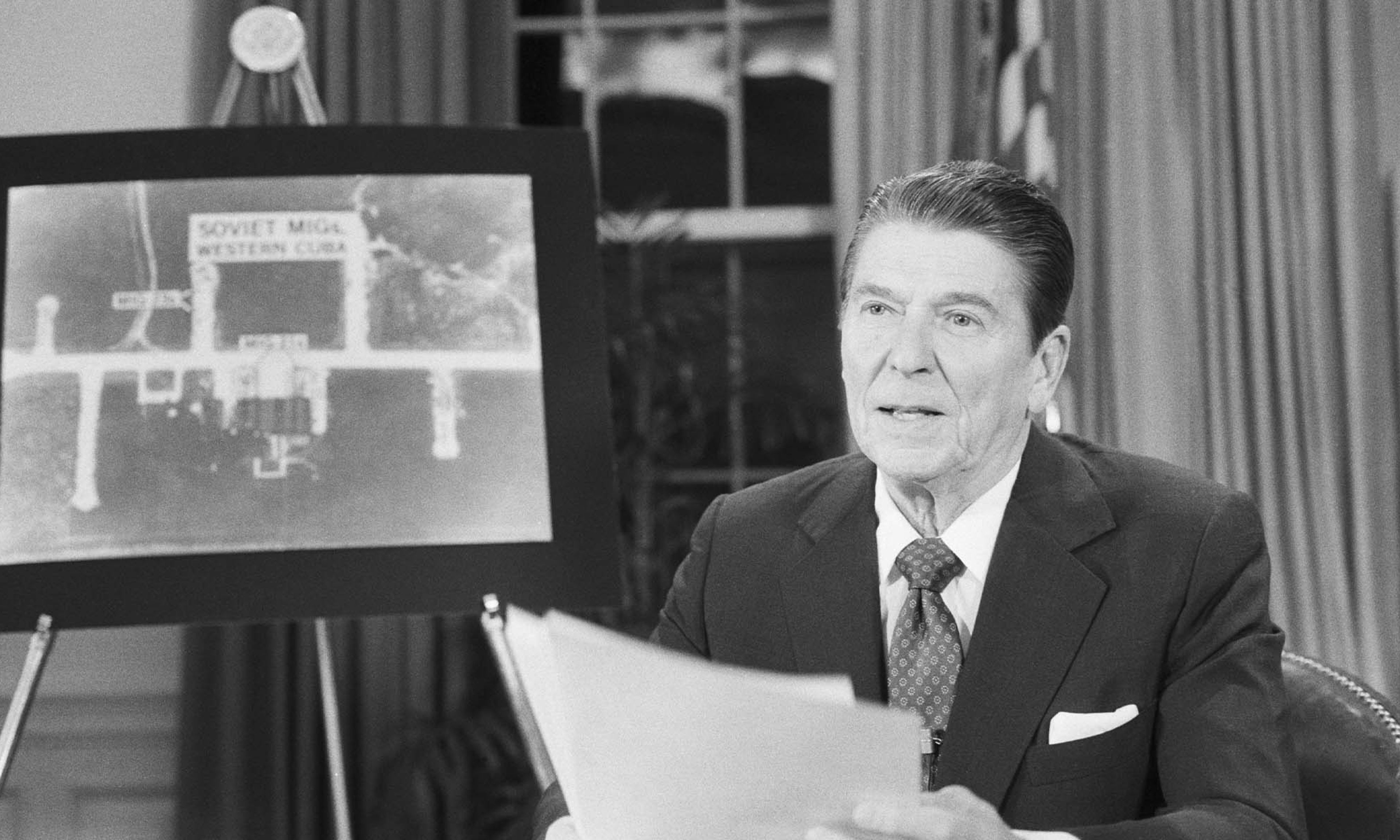
William Inboden has produced the definitive account of how Ronald Reagan negotiated a peaceful end to the Cold War. The 40th president’s achievements on the global stage originated in his perception of the world and America’s role in it. While Reagan was not an intellectual, he had extraordinary vision. It was his uncanny ability to see around corners that enabled him to leave so many experts in the dust.
Unlike the seven presidents who preceded him, Reagan conceived a world without the Soviet Union. His predecessors sought to reduce Cold War tensions through summits, arms-limitation agreements, and occasional trade deals. Believing that the Soviet Union was on the ascent and America was in eclipse, if not decline, the more pessimistic among them saw détente as a means of maintaining an “equilibrium.” A staffer on the National Security Council under Reagan termed this approach “losing as slowly as possible.”
Reagan saw détente as working in the Soviets’ favor after the Vietnam War. Détente allowed the Soviets to make inroads in developing countries, often through Cuban surrogate troops, with limited pushback. As one observer put it, the USSR challenged America in “virtually all categories” of military competition. Reagan broke with both Nixon’s realpolitik view and Carter’s declaration that America had an “inordinate fear of communism.”
To Reagan, détente rested on four faulty assumptions: Soviet behavior was more rooted in rationality than in Marxist ideology; the Soviet economy was strong; American concessions could influence Soviet behavior internationally; and little could be done to ease the plight of people living in the Soviet Union or its satellites.
Bringing to the presidency what Inboden terms “strategic imagination,” Reagan exposed the fallacies in each of these premises. Convinced that the Soviet Union was destined for the “ash heap of history,” he set out to bring an “evil empire” to its knees. He worked to speed Soviet dissolution on all fronts: diplomatically, economically, militarily, and in the court of world opinion.
Reagan despised the Soviet Union because of the Marxist ideology that governed its actions and shaped its values. He saw the USSR as an illegitimate state that lacked morality, maintained control through coercion, and stifled human creativity. He maintained that the primary struggle between the two superpowers was ideological. And he was confident that the United States would win hearts and minds throughout the world by demonstrating that, under the American system of democracy and capitalism, the U.S. had freed more people, created more wealth, and produced more medical, scientific, and technological innovations than any other country in the history of the world. Reagan never tired of telling audiences that “the world would not end if an American president told the truth” about the USSR. He was delighted to learn that word of his criticism of the Soviet system had made it into the Gulag.
Reagan embarked on a massive defense buildup to recover from years of underfunding, improve American fighting power, and force his adversary into a contest it could not win. The Soviet Union was already spending 25 percent of its GDP on its military, as compared with a peak of 6 percent in the United States under Reagan. In order for the USSR to keep up with the U.S., it would have had to shift more and more funds away from its civilian sector, spurring internal unrest. Reagan assisted insurrections against Soviet rule wherever they occurred.
Inboden explains that by the much-cited slogan “peace through strength” Reagan meant using force (or the threat of it) and diplomacy simultaneously. On some occasions this involved committing troops to further a diplomatic initiative. This approach failed in Lebanon in 1983, when 241 military personnel, part of a multilateral “peacekeeping” mission, were killed in a terrorist attack. After vowing continued participation in the mission, Reagan withdrew all U.S. forces four months later. The episode deepened the ongoing feud between Secretary of State George Shultz and Secretary of Defense Caspar Weinberger, who argued that the military should be sent to other countries only to achieve a well-defined mission with specified goals.
After meeting with the relatives of hostages held by Iranian-backed terrorists, Reagan agreed to a scheme devised by National-Security Adviser Robert McFarlane to sell arms to Iran in exchange for the release of American hostages. (Moreover, McFarlane used the proceeds from this scheme to fund the Contra rebels in Nicaragua.) Wisely, both Shultz and Weinberger opposed McFarlane’s plan. That ought to have been enough to give Reagan pause. After the 1986 midterm election, exposure of this scheme gave rise to the Iran–Contra scandal, which nearly ended Reagan’s presidency. For the Contra part of the scandal, Inboden faults Congress as much as he does Reagan, for its frequently changing the legal conditions that had to be met for the U.S. to send aid to rebel groups.
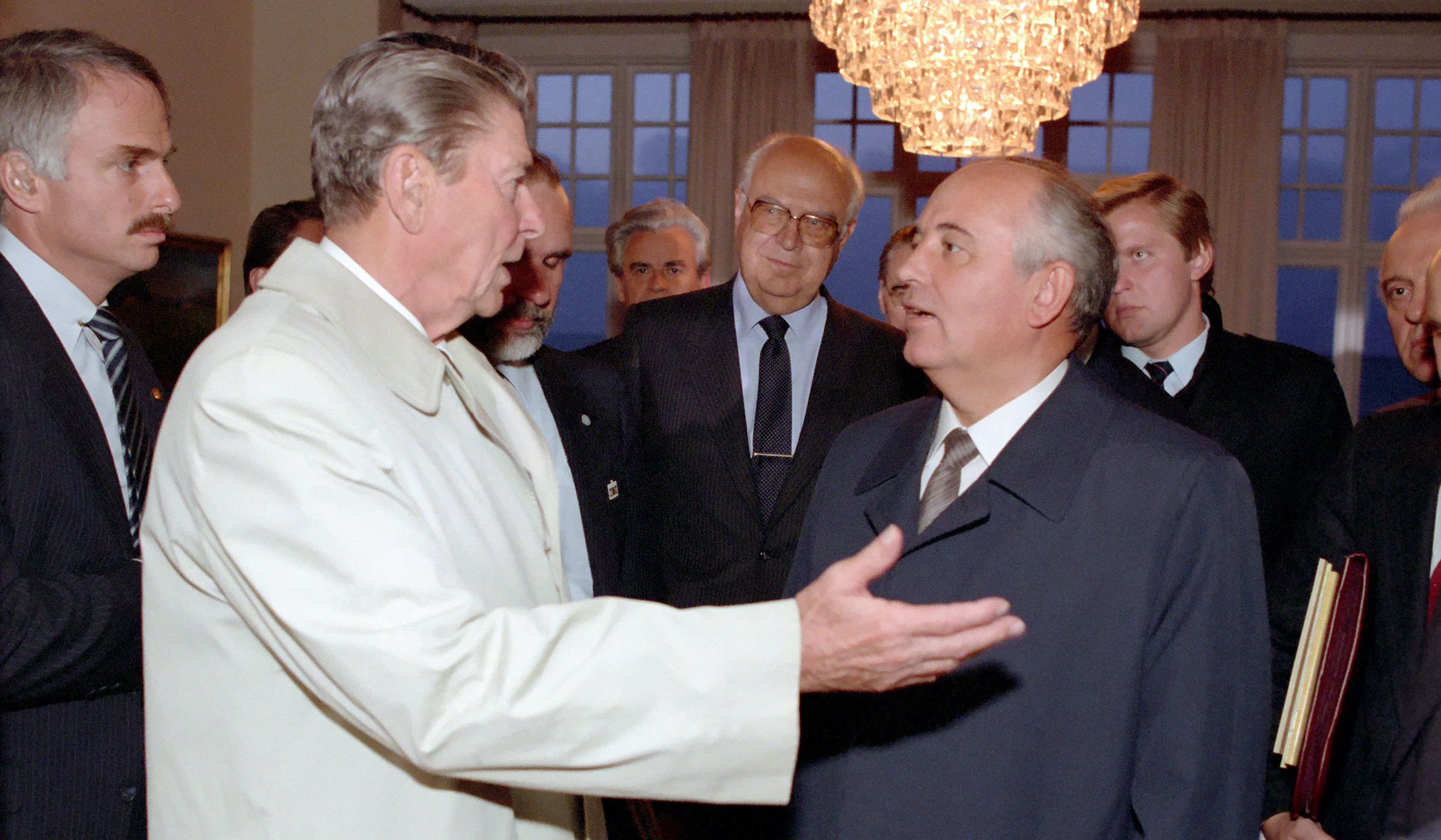
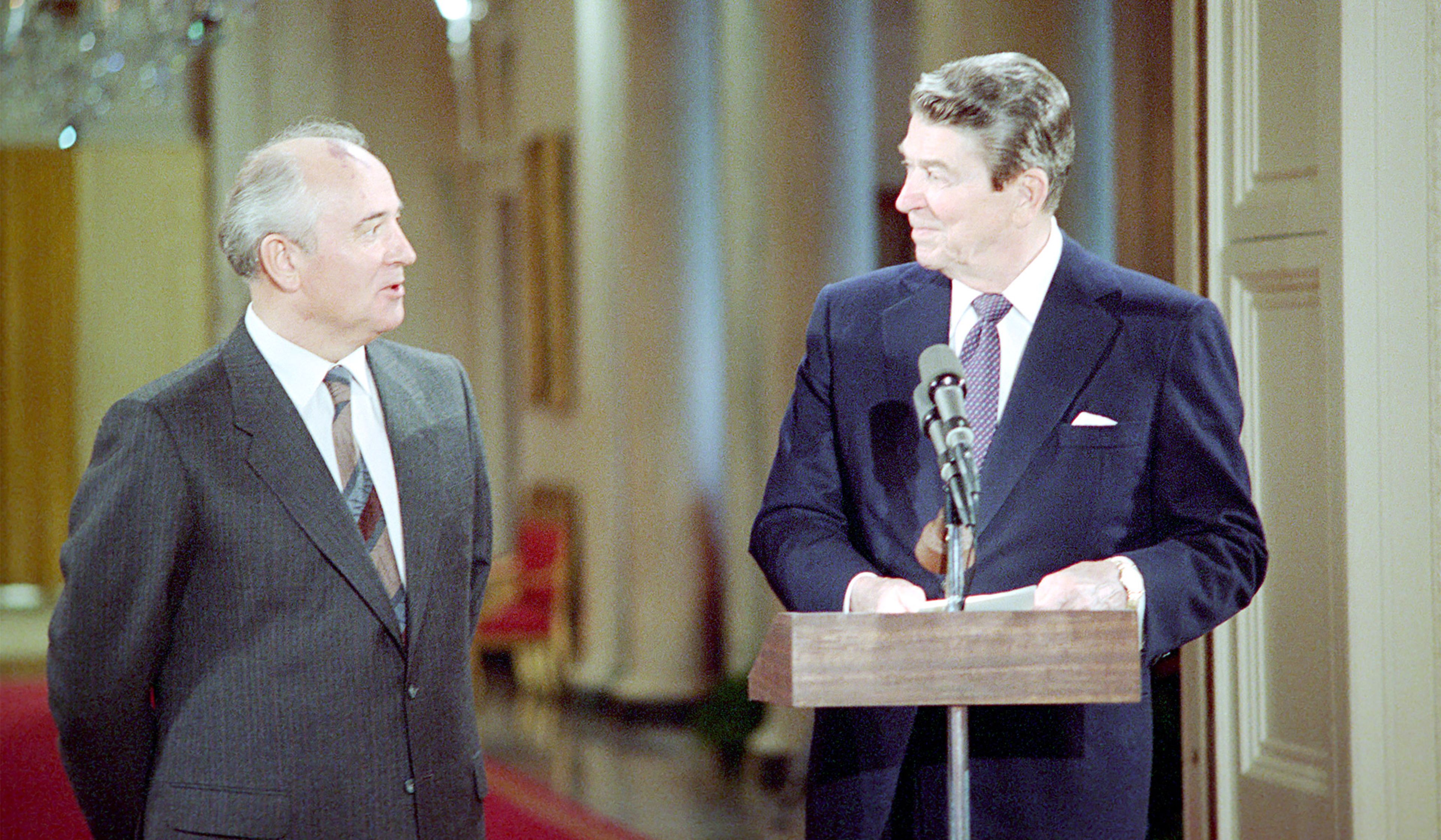
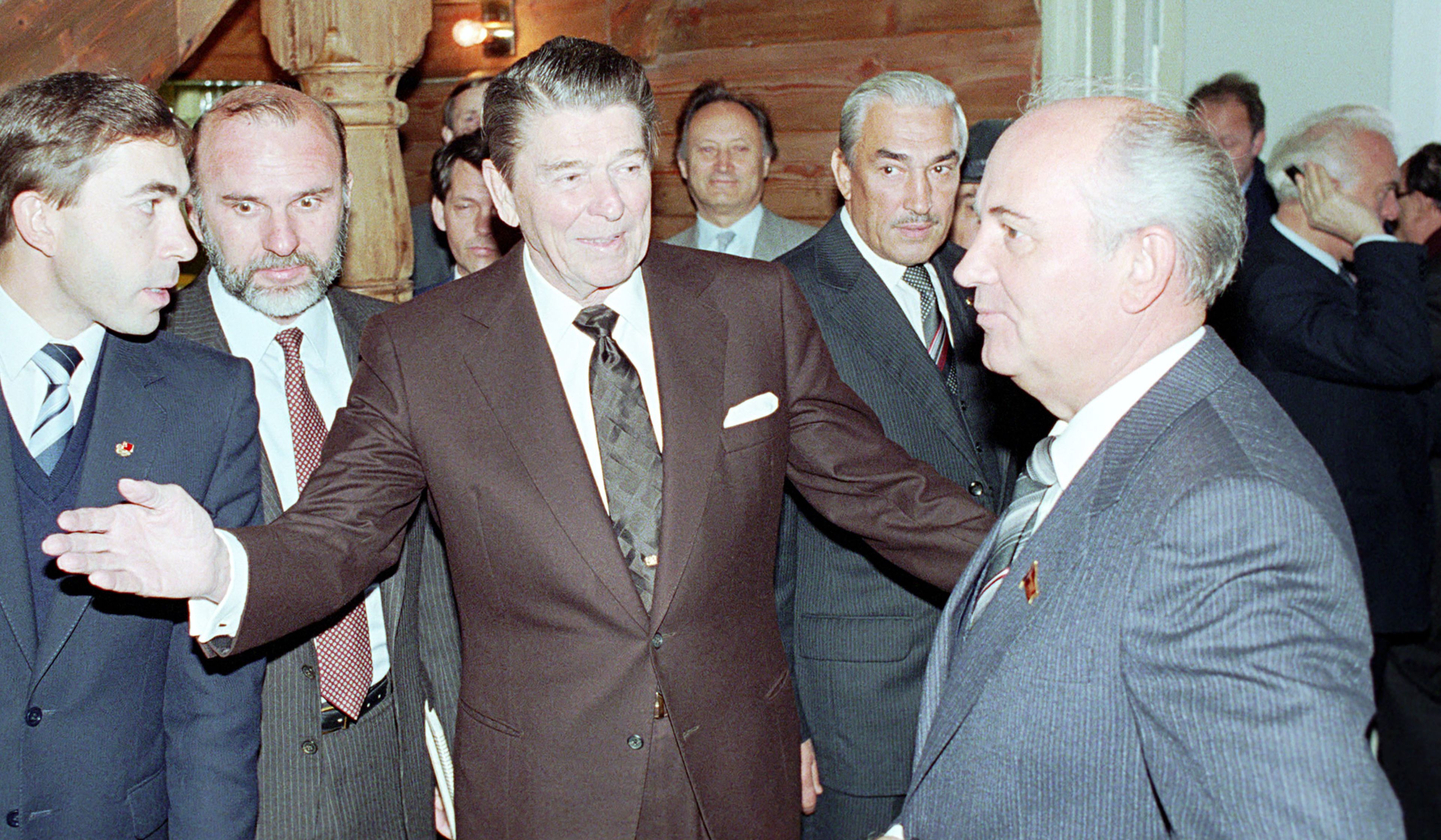
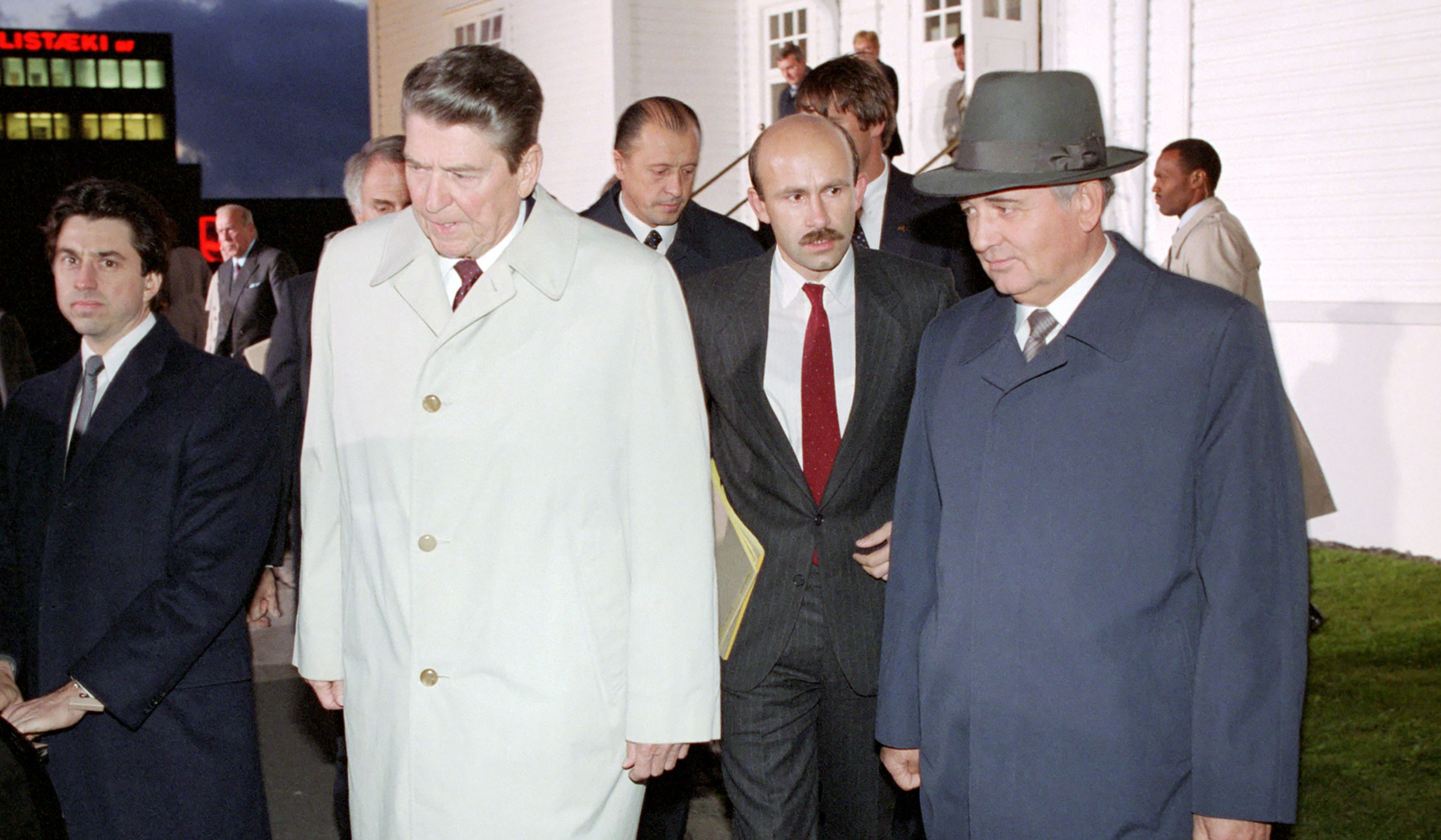
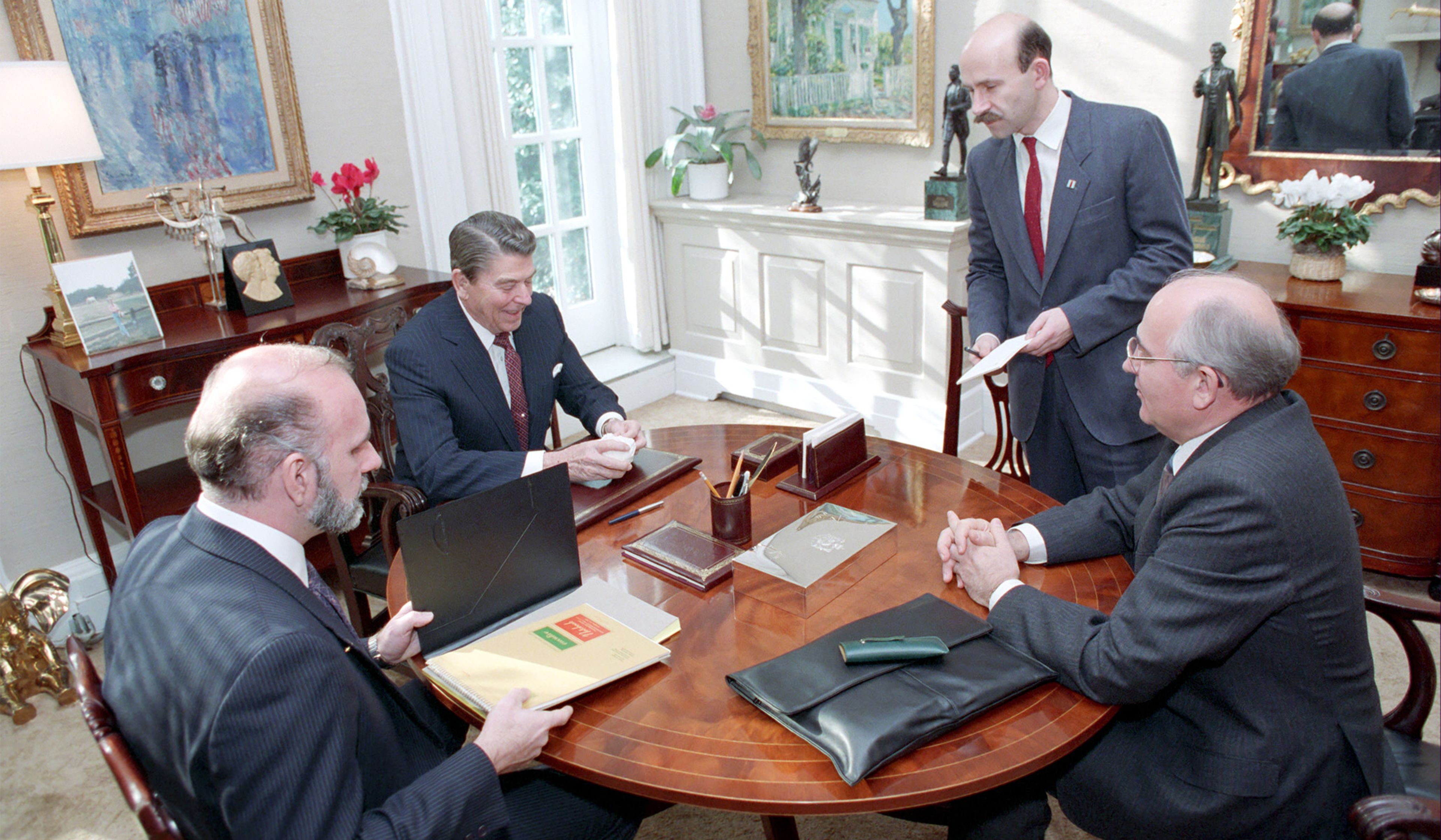
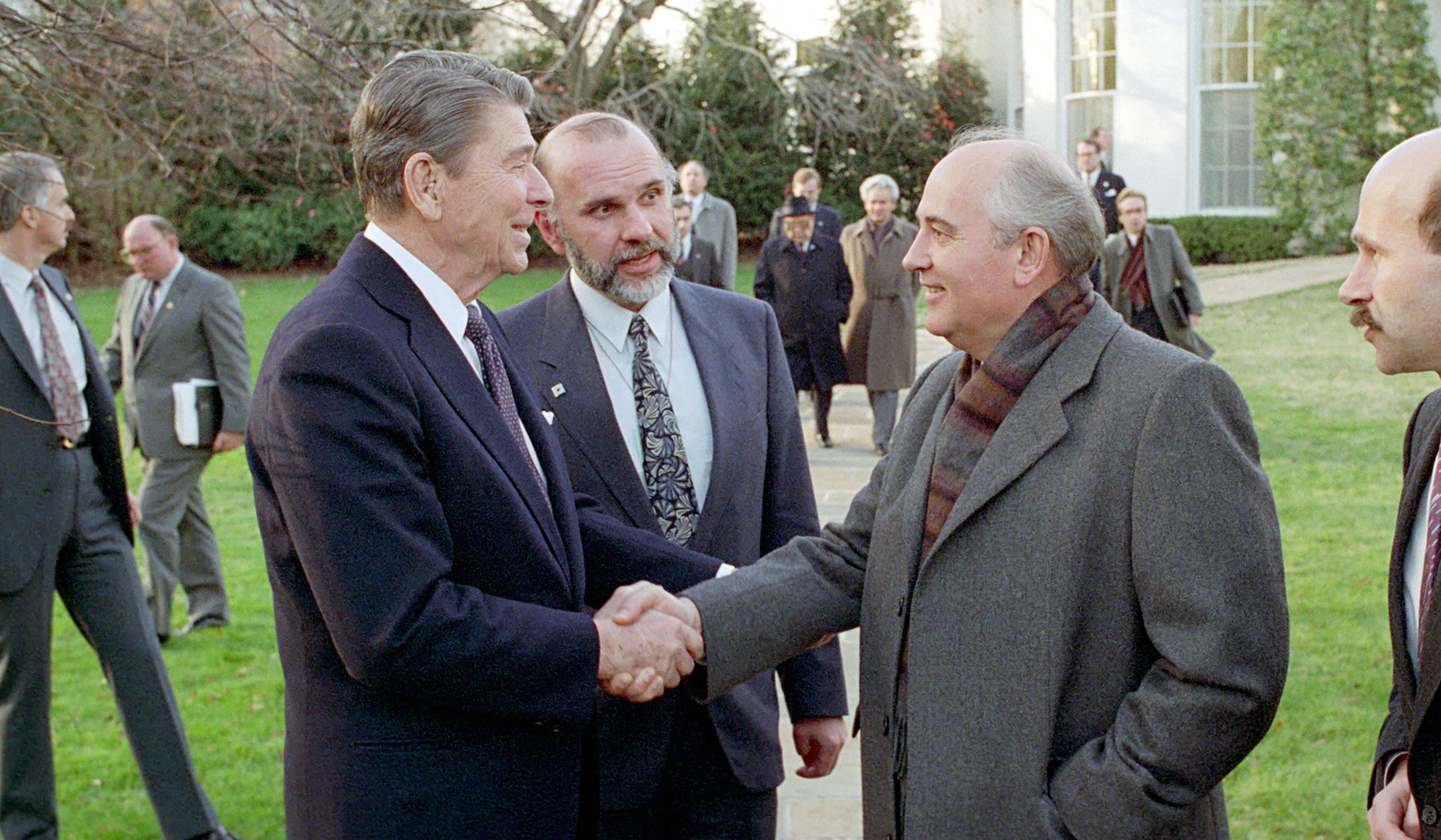
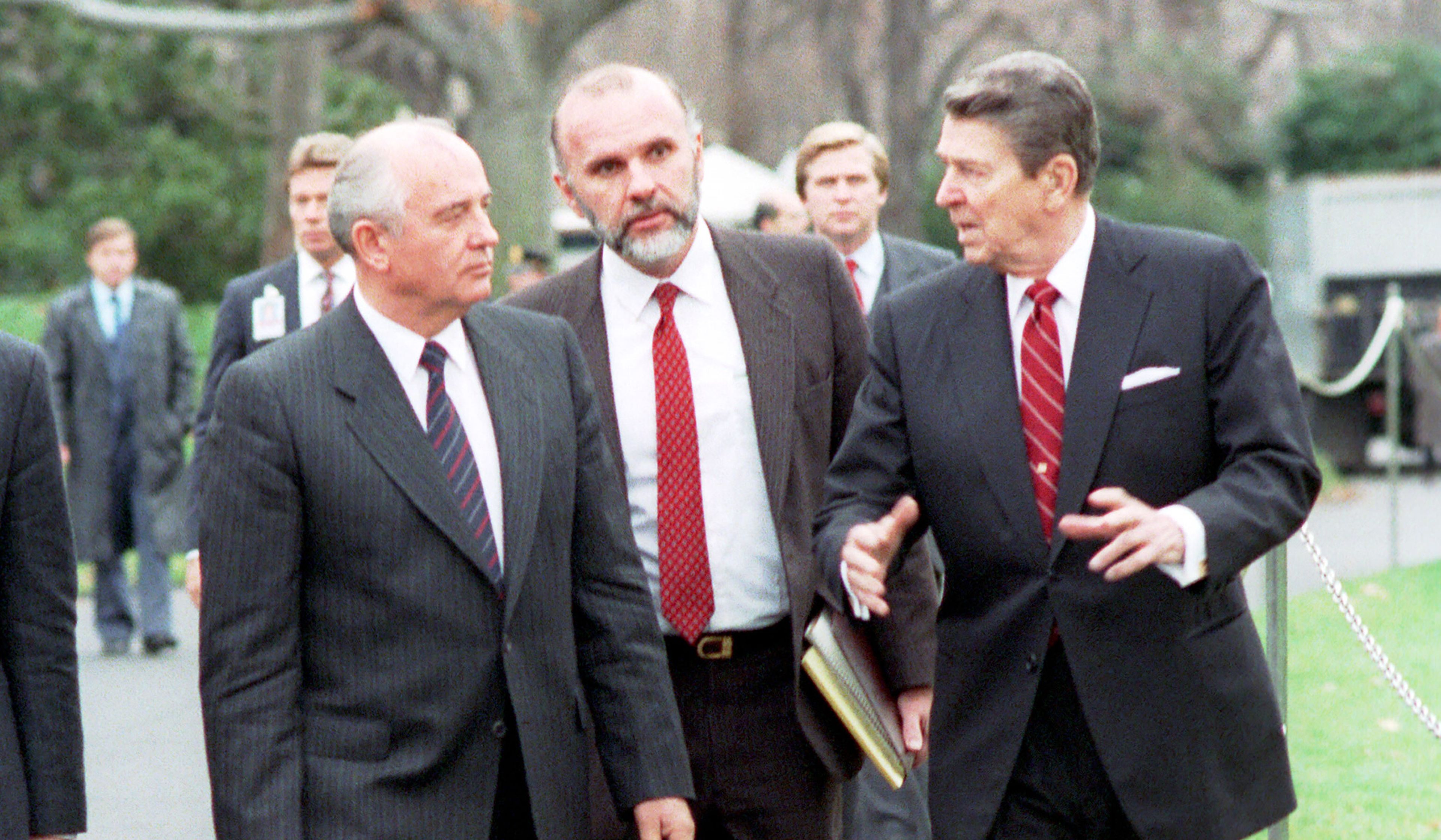
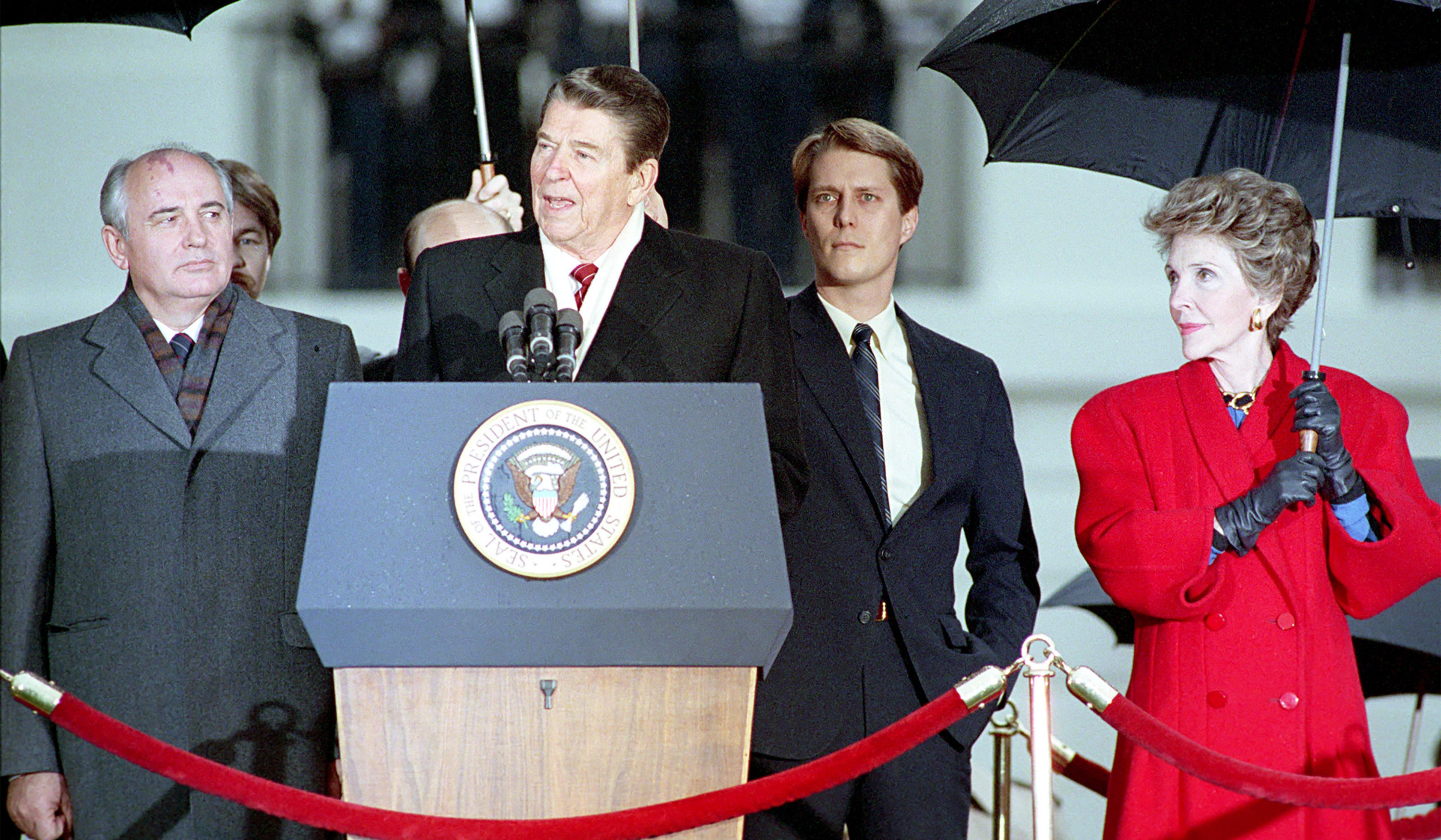
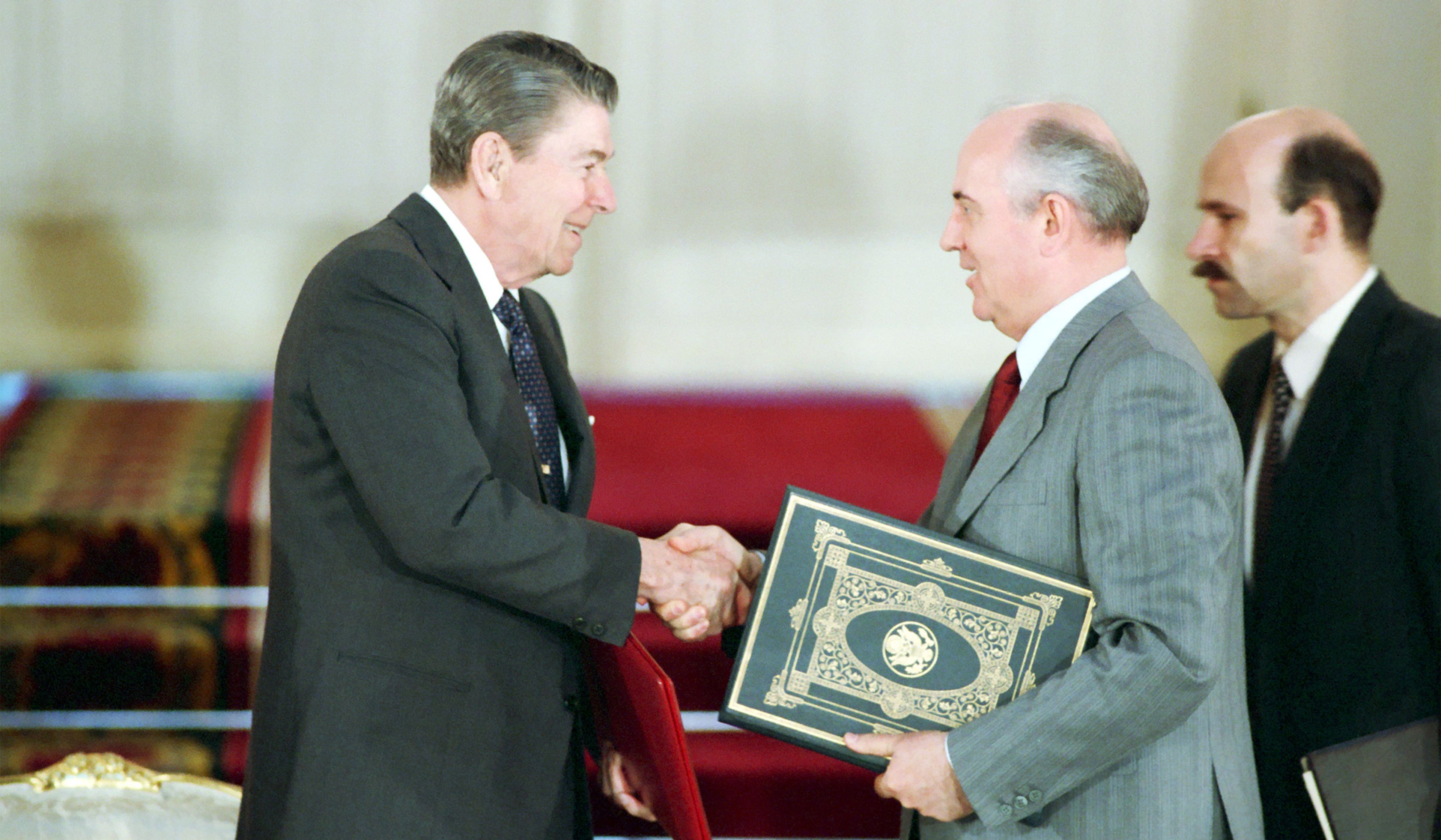
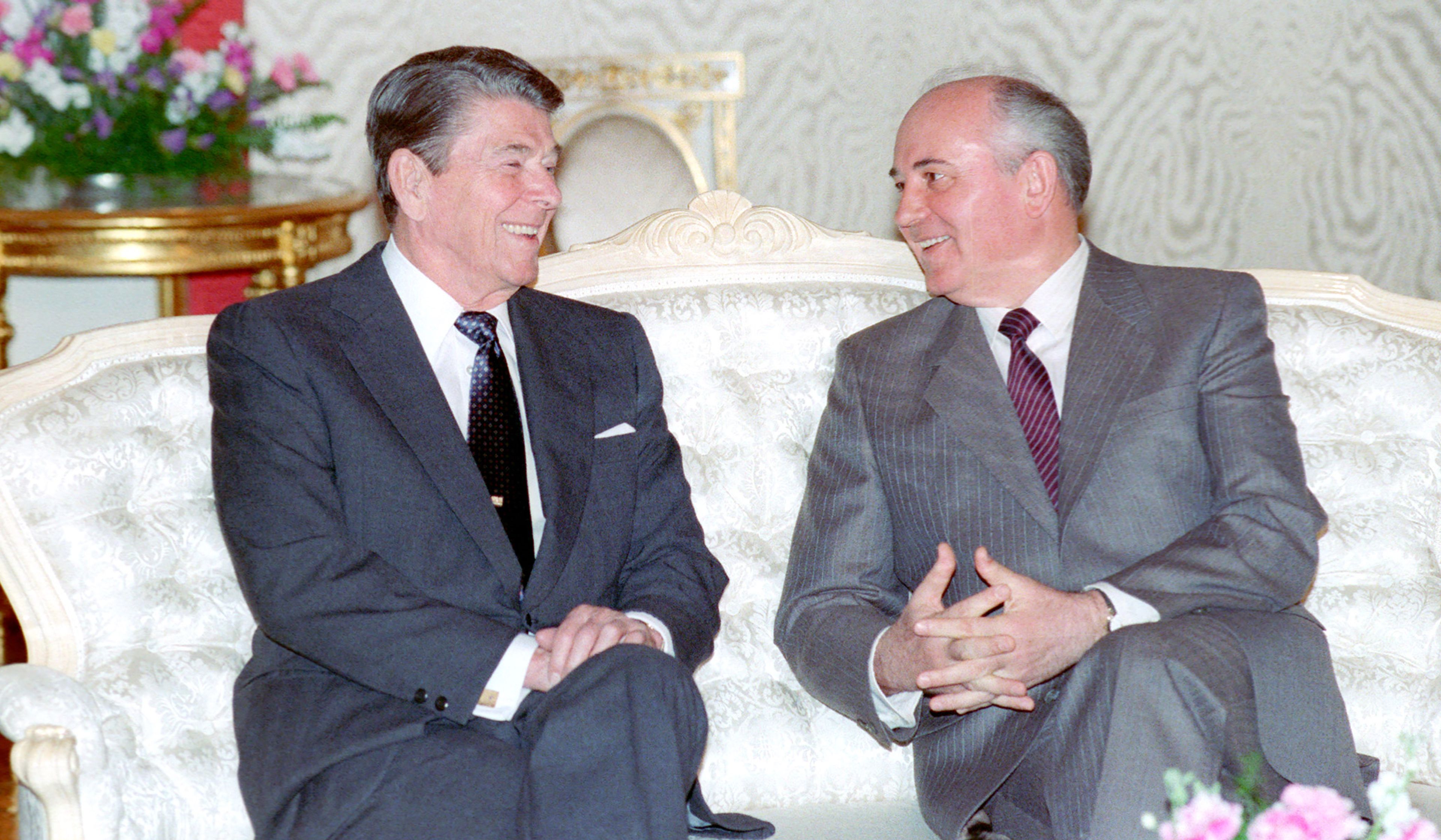
President Ronald Reagan says goodbye to General Secretary Mikhail Gorbachev after the last meeting at Hofdi House in Reykjavik, Iceland, October 12, 1986.
Ronald Reagan Presidential Library/National Archives
Reagan proved particularly deft in working with leaders of allied nations who shared his views on the universality of capitalism, democracy, and human rights. He led a strong ideological phalanx made up of Margaret Thatcher of the United Kingdom, Brian Mulroney of Canada, Helmut Kohl of West Germany, and Yasuhiro Nakasone of Japan. Inboden refers to such allies as “power multipliers.” In his interactions with them, Reagan showed concern for their domestic political needs, and they for his. Often he obtained his objectives by working through them.
One of the strengths of Inboden’s book is the light it sheds on Reagan’s view of the importance of Japan to safeguarding U.S. security. He believed that Japan anchored American interests in Asia. On a trip to Asia two years before his election, Inboden notes, Reagan told a group of Japanese business and political leaders that the U.S.–Japanese alliance was “the key ingredient for peace, stability, and economic development in the entire Pacific.” While he warned that Japan’s protectionist trade policies were an obstacle to this cooperation, Reagan clearly felt that the United States would fare far better through a strategic partnership with a democratic nation like Japan than with a totalitarian one like China.
At a time when Japan was portrayed in the media and in the halls of Congress as more of an economic competitor than a strategic partner, Reagan saw things differently. He and Nakasone had an affection for each other that advanced their mutual interests. Time after time, Nakasone moved Reagan’s way on removing Japanese trade barriers and increasing Japanese defense outlays. Nakasone’s firm support for the Strategic Defense Initiative (SDI), Inboden writes, persuaded Thatcher to overcome her initial skepticism of the program.
Aware of the inroads the Soviet Union was making among slowly developing nations by denouncing the legacy of colonialism, Reagan pressed for democratic reform and liberalization in nations long allied with America. South Korea, the Philippines, and Brazil, as well as several other countries in Latin America, became democracies on Reagan’s watch. However, some “freedom fighters” whose causes Reagan embraced proved not to be democrats. Though Inboden finds this a failing, Reagan had more successes than failures in his push for democratization.
While some of his predecessors regarded human rights as a distraction in Cold War politics, Reagan put them front-row center. He took up the cause of dissidents, who through their outspokenness became heroes to human-rights advocates worldwide. Whenever he met with Gorbachev, Reagan placed in the Soviet leader’s hand a list of names of dissidents that he wanted released. He worked closely with the Vatican and shared with it information about dissidents, their tormenters, and weaknesses, in the Soviet Union or its puppet governments, that the West could exploit.
As his presidency advanced, Reagan spoke more frequently about one reason he pressed so hard to produce a history-making agreement with Gorbachev: his hatred of nuclear weapons and his abiding hope that they could be abolished. As early as 1945, Reagan told friends of his opposition to nuclear weapons and, shortly after his discharge from military service, prepared a speech in which he called for their abolition. As the Cold War progressed, he grew to question the policy of mutually assured destruction. He doubted that any American president would respond to a Soviet nuclear attack with a counterattack that would take the lives of millions of Russians, who had no say in their government and therefore no responsibility for a nuclear attack.
As governor and as a presidential candidate, Reagan asked officials how much time a president would have to make that fatal decision. Always the answer was the same: a few minutes. Finding this reality unacceptable, he searched for an alternative to surrender or annihilation. Moreover, he grew increasingly worried that an accident or a madman in a third country could trigger a global nuclear war. Consequently, he launched the SDI to develop a system that could disable nuclear missiles before they reached their destination. Though his dream of a world free from nuclear weapons proved “a bridge too far,” in 1988 Reagan and Gorbachev signed the Intermediate-Range Nuclear Forces Treaty (INF), which abolished an entire class of nuclear weapons while allowing American research on SDI to continue.
Inboden’s masterly work underscores the importance of having a president with the vision to see what others cannot, the courage to break with conventional wisdom, and the perseverance to defy some in his political base.












Comments