In his first book, Woke, Inc., Vivek Ramaswamy, a first-generation American, Yale Law graduate, and immensely successful biotech entrepreneur with political ambitions, identified corporate political activism — in the form of restrictive speech-policing at the workplace, censorship by tech companies that control the means of communication, and investment firms’ growing interest in goals other than financial returns — as a major source of our political dysfunction. He argued that such advocacy jeopardized democracy as companies took power to settle contested political questions away from the people. To fight back, he founded an investment firm that pressures companies to prioritize the bottom line. Now he diagnoses another problem: that our political morality has been corrupted by a false narrative of victimhood. This time, though, the solution is harder to discern.
Ramaswamy finds victim narratives everywhere. Whereas Americans once took pride in their ability to overcome long odds, now they tell and believe stories about “what they can’t do,” from racial minorities living in immiserated towns to southerners lamenting the lost Confederacy to aspiring college students eagerly workshopping sob stories with admissions counselors. Declaring oneself a victim might seem disempowering, but people keep doing it, perhaps because victim status confers advantages on those who can gain official recognition.
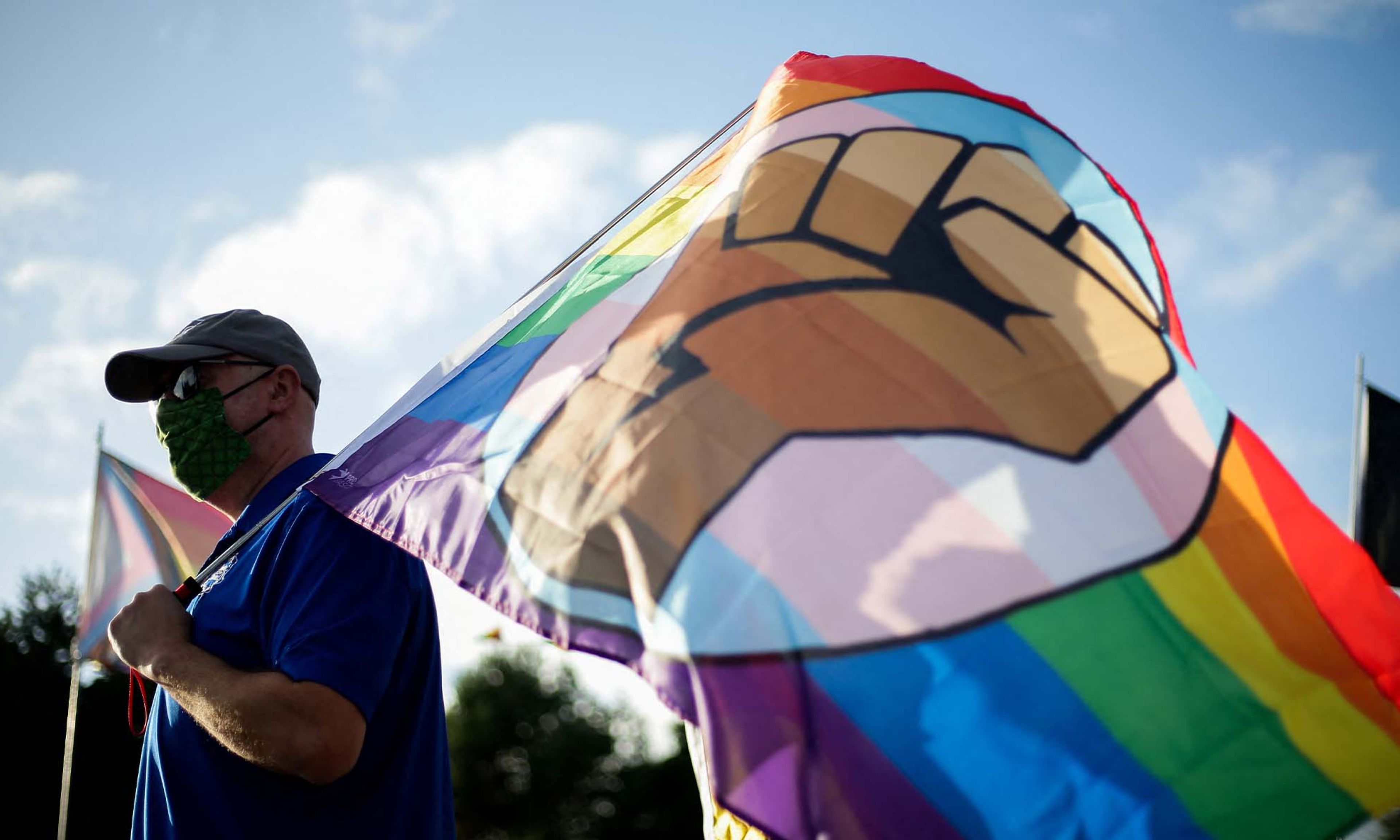
Not all victims are created equal. Ramaswamy skewers progressive attempts to rank incommensurable hardships on the “ladder of victimization.” Among a gay man, an unemployed factory worker, a black woman, and a transgender millionaire, who has it worst? And though Ramaswamy is a conservative, he notes that the American Right practices its own kind of victimhood politics, from rank-and-file voters all the way to the top of the GOP. The spread of this rhetoric suggests victimhood’s political efficacy.
Given its ubiquity, it would seem fair to call it an understudied topic. The political scientists Miles T. Armaly and Adam M. Enders distinguish between “systemic” victims, who believe that they are oppressed by a rigged system, and “egocentric” victims, who believe that they deserve more than what they have gotten. Belief in systemic victimhood, they find, is associated with higher support for the political Left and tends to indict powerful institutions. But Ramaswamy’s examples demonstrate that the distinction is not hard and fast: Donald Trump, nothing if not egocentric, railed against a rigged system, while claims that black Americans continue to be oppressed systemically often reduce to complaints about various achievement gaps.
Ramaswamy argues that a victimhood complex is contributing to national decline in America, but not all such complexes are enervating. Nazis rose to power blaming “Jewish Bolshevism” for the German people’s interwar misfortune, while communists sparked revolutions across the world by blaming capitalist exploitation for human misery. Ramaswamy fears that the U.S. has fallen behind China in educational excellence and military preparedness, and yet the Chinese government and its hard-line nationalist supporters often refer to their nation’s “century of humiliation” at the hands of an imperial West. Past alleged wrongs can be a powerful motivator.
A more precise statement of the problem is that Americans regard themselves not just as victims but as victims of one another. The legal creation of “suspect classes” encouraged people to insist, in turn, that they had been discriminated against and to “shape their group identities” in order to “receive constitutional victim status” and special treatment. At the same time, the country’s economic success induced complacency, causing people to shift from producing wealth to arguing over how to distribute it. To combat these trends, Ramaswamy advocates an ethic of excellence and forgiveness — according to which people “cast aside” their “artificial identities” and regard themselves and their putative oppressors as individuals, not representatives of their groups. He also proposes an ambitious economic program of job retraining, tax changes, and support for cutting-edge industries.
These policy solutions can seem underbaked. A push to shore up the domestic semiconductor industry would not, as he argues, relieve America of its obligation to defend Taiwan; a very high inheritance-tax rate to break up what Ramaswamy sees as a “hereditary aristocracy” would risk removing a powerful motivation for those seeking to build wealth. And his vision of restoration is incomplete: He values cultural influence more than military hegemony, citing Greece after its Roman conquest as an example that the U.S. should emulate. Nevertheless, his admirable willingness to advance creative ideas reinforces his necessary reminder that conservatism needs a substantive positive vision, lest it become “only the negation of liberalism, which is no definition at all.”
Meanwhile, the book’s account of the cultural emergence of victimhood raises deep and abiding questions. To be a victim is to make a moral claim — I was harmed, and I deserve compensation. Americans, he argues, obsess over what they are owed but rarely ask what they owe to their neighbor. Observers have attributed this decoupling of rights and obligations, endemic across the Western world, to many causes, including a decline in religious belief, the corrosive power of market capitalism, and the instant-gratification ethic promoted by modern culture.
Believing that “language carves the channels through which thought flows,” Ramaswamy finds arguments made by political, legal, and academic leaders to be just as responsible. He writes that 19th-century Supreme Court justices who mistakenly neutered a key clause in the Reconstruction amendments foreclosed an alternative future in which people saw themselves as entitled to certain privileges only insofar as they were citizens of a polity that also imposed reciprocal duties. “The legal concepts raised by [such a] jurisprudence would’ve inevitably trickled out into American culture,” Ramaswamy contends, encouraging us to consider “what duties citizens have that noncitizens lack.” Elsewhere, he asserts that “antiracism often speaks racism into existence” by essentializing different groups. And across domains as distinct as international relations and identity politics, he claims, “the way to end a world defined by power relations is to stop defining all relations by power.”
Throughout the book, Ramaswamy credits language with the power both to generate irrationality and to overcome it. American politics has no shortage of bad arguments, and Nation of Victims dismantles many of them. Animating today’s most damaging victim narratives are the notions that unequal outcomes constitute evidence of unequal treatment and that neutral procedures and the reward of merit cannot be justified as long as such treatment exists. If the marketplace of ideas were perfectly efficient, then this book would spell the defeat of such assumptions. Unfortunately for Ramaswamy — and for us — bad arguments have a longer shelf life in politics than in a courtroom, at a board meeting, or on a debate stage.












Comments