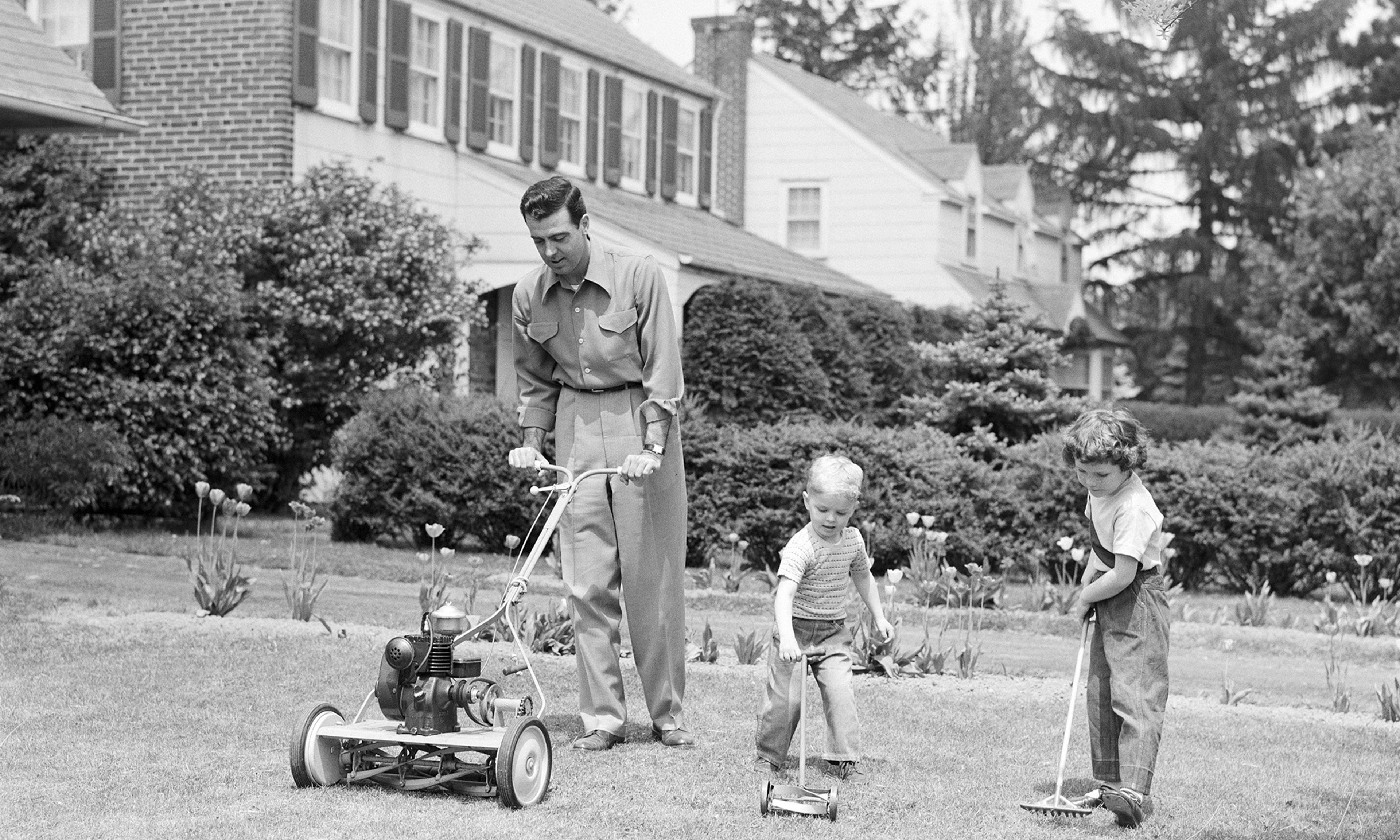
The Hollywood version of our Christian America was created by Jews.
A quick-start guide to the phenomenon is Superman. He, like Batman and the Marvel superheroes, was the creation of Jews banned from the Christian publishing world. Bob Kane, who brought us Batman, was Robert Kahn, Stan Lee was, of course, Stanley Lieber, Siegel and Shuster created Superman.
His birth world, Krypton, had been destroyed (read: the Holocaust). He came to America with superpowers “far beyond those of mortal men” (an intellect honed by constant study, if you will), and he was committed to doing good in his adopted country. But he could be valued only if he clothed his identity.
Superman was the ultimate hero, but Clark Kent was a schlemiel. He couldn’t even get a date with Lois Lane. Superman could have gotten a date with anyone, but it would have resulted in the exposure (pause) of his actual identity, a risk he would not take, even at the price of his sexuality, which is to say, his manhood.
The bargain, obviously, was acceptable, as he’s been making it for 80-plus years, and it still appeals to the adolescent mind.
As we know, only one thing could destroy Superman’s precarious equilibrium. That thing was Kryptonite, a portion of his native world. For which substance we may easily read Jewishness, Yiddishkeit, and self-assertion as a Jew. (Superman’s terror of Kryptonite is duplicated on our city streets today, by Jews crossing the road to avoid members of Chabad.)
Why do superheroes need two identities? Because, finally, like a child with two excuses, they have none they can avow.
The Jewish message of the comics must be read in the mirror, like that of the movies.
The Jewish creators of Hollywood fled antisemitism in Eastern Europe. Barred from traditional professions here, they invented new ones. The hucksters who made a living projecting the cinematograph on a sheet in 1905, in Rivington Street, went west and became known as Mayer, Goldwyn, Laemmle, Warner, and Fox.
In the beginning they were exhibiting short films, whose star was the technology itself: a depiction of a moving train, a kiss, and so on. When they began making their own product they turned first to (silent) renditions of stage plays and classics. Then they moved to Hollywood and confected the fiction of the White Picket Fence.
We remember Metro as the studio with “more stars than there are in heaven”; but the studio’s moneymaker was not Garbo but Mickey Rooney. His Andy Hardy series of 16 films ran from 1937 to 1946 and funded Metro’s excursions into Class. It was the bar brand to their call liquor, and it paid the rent.
These films are the avatar of the White Picket Fence. Here the Regular American Family, Mickey, Judy Garland, Lewis Stone, and two veg, encounter simple, charming incidents on the road of adolescent life: Andy Hardy Comes Home, Love Finds Andy Hardy, Andy Hardy Meets Debutante, Judge Hardy’s Children, and one gets the idea.
The phenomenon continued into the television era, with each network creating its own domestic-flavored mush, Father Knows Best, The Life of Riley, Bachelor Father, The Danny Thomas Show, December Bride, ad infinitum.
The genre is soporific, and it flourished, legitimately, as such, for we all could use a break. But, being human, and, so, not very smart, our continued exposure to a soothing fiction brought us to take it for reality. But we young viewers, looking around, found the vision we had imbibed nowhere around us; and for all our indictment of the sufficient nuclear family, it was against its absence in our homes that we middle-class children rebelled, outraged by our first interchanges with the actual world.
* * *
We Baby Boomers were raised by Mother’s Helper, the electronic babysitter. It was drivel, interrupted every six minutes to sell cigarettes, booze, or laundry powder.
Psychologists in the Fifties hypothesized “subliminal advertising,” an early-on attempt at confecting an Existential Threat.
These savant do-gooders held that evil producers might insert a written message in the program. If, they cried, one frame of the presentation bore the words, for example, “Buy Studebaker Cars,” the viewer, unaware that he had been manipulated, would be overcome by an irresistible impulse to run out and do so.
There was no subliminal advertising. Nor was such needed. The ads themselves were sufficiently persuasive. We were told that X made one young, envied, sexually attractive, cool. And we believed, and acted accordingly.
Driven though we were to be cool, au courant, and sexually irresistible, we still perhaps asked for particulars on the gas mileage of the Studebaker and the possibility of getting one without all the pricey options.
But we did not ask these questions of the actual programs, for we didn’t realize they were selling anything. Nor did the producers. But they were. We were being sold something called “American Life.” We viewers of our favorite program didn’t realize that the program itself was an ad, and the producers didn’t intend to produce it as such, but the result was an actual instance of subliminal advertising.
The White Picket Fence, Andy Hardy, and Father Knows Best portrayed an American existence as fictional as that of Superman’s Smallville.
We television children looked around, at the Vietnam War and segregation, inter alia, compared it to the White Picket Fence, and found America not wanting but despicable.
The Vietnam War is 50 years gone, segregation and racism have died. But the continued existence of American malevolence is insisted upon by various political movements. If we look away from the screen, however, we do not find it.
The screens today are selling us a vision of America as false as the White Picket Fence. But they are now flogging its opposite: America as an Evil Land.
The new vision, like nicotine and alcohol, creates a mental fog. But, as the map is not the territory, the fog is not America. It’s just subliminal advertising.
The world of the White Picket Fence never existed. The nuclear families behind that fence were as broken and troubled as yours and mine by divorce, perversion, addiction, deceit, disaffection, violence, adultery, and we can each complete our personal list. Some were luckier than others, and some dealt with their troubles with more wisdom or skill. But the truth of America was that we inhabitants were freer than any other people in history to lead our lives without state intervention (see the Constitution). We were free, that is, to take our chances as God intended, which is freedom, a legitimately daunting prospect to the adolescent mind of individuals of any age.
Clark Kent/Kal-El/Superman could not do so, which is why his story must continue, unresolved forever.









Comments