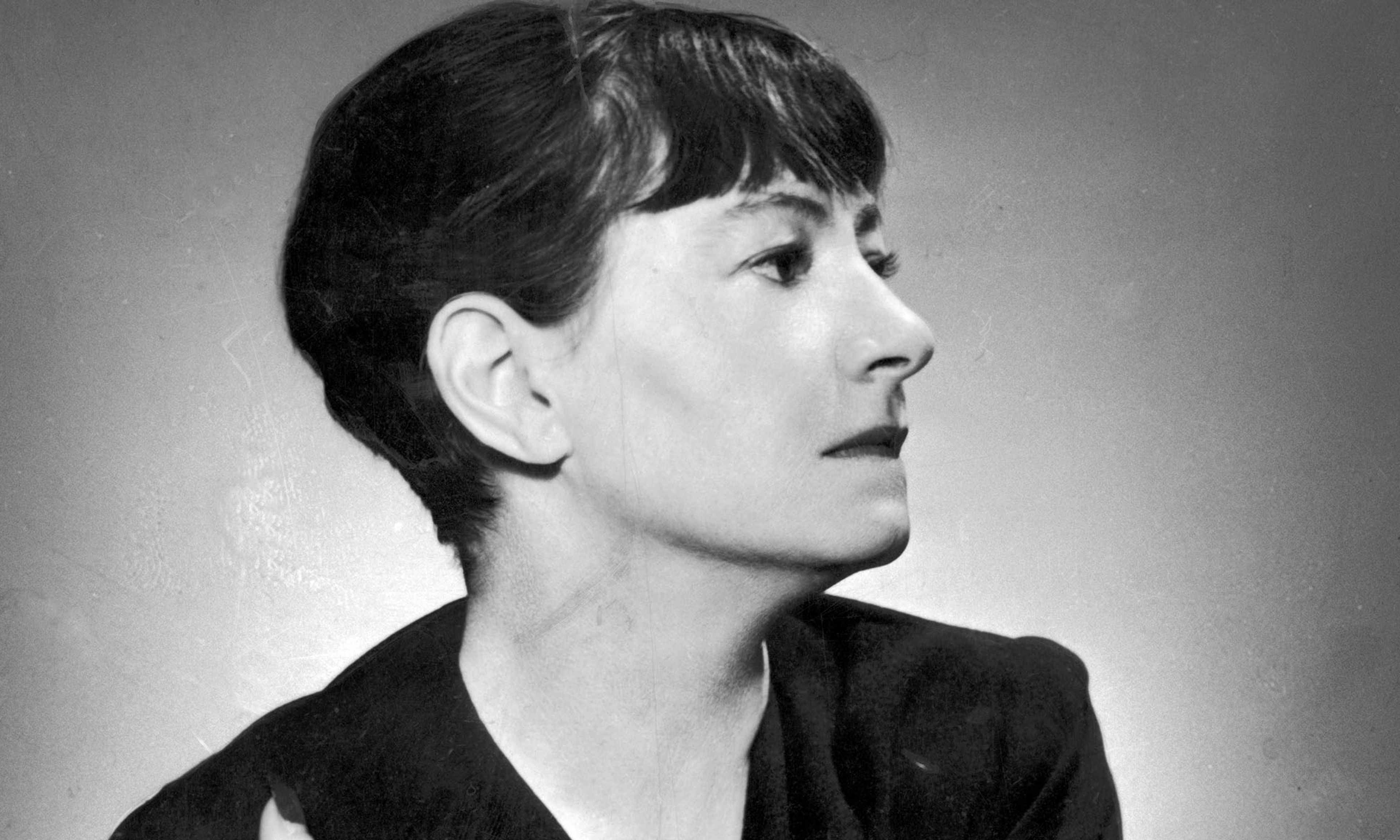
The very title of Gail Crowther’s Dorothy Parker in Hollywood seems oxymoronic. Parker grew up and died in Manhattan. She began her career there, and her reputation is inextricable from the city’s literary culture of the 1920s in particular. Her caustic wit and humor seem unmistakably New York. Yet Crowther offers a retelling of Parker’s career that casts her Hollywood years as the star. Is this facet of Parker ready for its close-up?
Parker, born Dorothy Rothschild in 1893, began her career writing picture captions for Vogue before moving on to Vanity Fair as a staff writer in 1917. There she befriended managing editor Robert Benchley and drama editor Robert Sherwood, with whom she shared a madcap sense of humor and credit for founding the Algonquin Round Table, the loose affiliation of New York literati who gossiped and traded witticisms over long lunches for several years starting in 1919. But Parker was more than a memorable lunch companion. In those years, she wrote keen-eyed and sharp-eared fictional depictions of New York social life (her 1929 short story “Big Blonde” won the O. Henry Award), brash reviews of Broadway plays, and best-selling collections of light but biting poetry. You may remember her for such classic quips as the brief poem “News Item”: “Men seldom make passes / At girls who wear glasses.” (Crowther explains in an endnote that she did not quote the couplet in her biography “out of respect for Parker,” who grew to hate it.)
Although Crowther acknowledges that many periods of Parker’s life were “badly documented,” it is clear that Parker had a chaotic personal life, particularly during the roaring ’20s. Her first marriage, to a stockbroker, ended in divorce. While she and that husband were still only separated, she discovered she was pregnant with another man’s child and had an abortion. She attempted suicide shortly afterward. (She would try again three times over the course of her life.)
Meanwhile, Hollywood sought the nation’s brightest literary talents to help carry motion pictures out of the silent era and into the age of the talkie. MGM Studios enticed Parker to venture out west in early 1929 with a three-month contract that paid $300 a week. But she disliked the city and was frustrated by the lack of autonomy and respect given to writers. Her most notable contribution during this first period beneath the palms was “How Am I to Know?,” a song that she co-wrote for a Cecil B. DeMille film and that Billie Holiday recorded some 15 years later. Parker was eager to leave Tinsel Town when the contract expired.
She had more success when she returned in 1934, this time with her second husband, Alan Campbell, as her writing partner. Most notably, she and Campbell contributed to the original version of A Star Is Born (1937), for which they shared the Academy Award for Best Screenplay. The story, about the professional and romantic relationship between a fading Hollywood leading man and his ascendant protégé, has proven to be compelling enough to have been remade three times, most recently in 2018 with Bradley Cooper and Lady Gaga.
Crowther takes us on tours of the places that shaped Parker’s peripatetic times in Hollywood, among them the “grand, spa-like” Ambassador Hotel, site of glamorous nights at the Cocoanut Grove club, and the Garden of Allah, where stars gathered in a decadent community. Crowther also provides social and historical contexts that shaped Hollywood as Parker knew it, including the implementation of the Hays Code in the 1930s, which restricted what could be said and represented on-screen.
A challenge in elevating Parker’s screenwriting career is that she either shared credit or went uncredited. Consequently, Crowther has to engage in guesswork about what contributions Parker actually made, based on whether a quip or bit of banter sounds like something she’d write. Parker’s own alcoholism and suicide attempts make it reasonable to conclude that she helped with the depiction of those issues in A Star Is Born. Crowther also makes a valiant case for Parker’s influence on the 1947 Susan Hayward film Smash-Up: The Story of a Woman!, a sophisticated and sympathetic portrayal of a woman’s descent into alcoholism. It earned Parker another Oscar nomination.
Regardless, Crowther shows that by the late 1930s, Parker had chosen to stay in Hollywood more for political than professional reasons. Parker had expressed her left-leaning politics before moving to Hollywood, as when she declared herself a socialist in the New Yorker and marched in defense of Sacco and Vanzetti in 1927. In her Hollywood years, she became even more politically engaged. Inspired by her friend Ernest Hemingway, she visited Spain to, as Crowther says, “bear witness to” the civil war there (I think she just means “witness”). She helped fund a pro-republican propaganda film, written by Hemingway and the novelist John Dos Passos and narrated by Orson Welles. She also hosted fundraisers for progressive causes, co-founded the Hollywood Anti-Nazi League, and played what Crowther argues was an underappreciated role in establishing the Screen Writers Guild. These activities, and the company she kept, were enough to draw the attention of both J. Edgar Hoover’s FBI and, in 1955, the House Un-American Activities Committee. Although the FBI determined that she was not a significant threat, she was blacklisted and her screenwriting career stalled.
Readers may be less sympathetic to Parker’s political allegiances than Crowther is. “There was something wonderfully bewildering about a woman who would spend hundreds on one piece of elegant lingerie while equally funding several socialist campaigns,” Crowther notes. “In a rather empowering way, she saw no reason why she should not benefit from her wealth . . . so long as she never lost her desire to level things for everyone else.” What Crowther calls “wonderfully bewildering” others might call “hypocritical,” and some of Parker’s friends viewed her as what would later be called a limousine liberal. At her death, she gave her entire estate, including her literary property, to Martin Luther King Jr. (whom she had never met); after his assassination, the NAACP gained the estate and, eventually, full executorship. Crowther presents this as an uncomplicated good, but it was controversial: Parker’s friend Lillian Hellman, having supported Parker financially for years, felt cheated. “She must have been drunk when she did it,” Hellman concluded.
It’s a common fallacy that progressive politics necessarily pairs with a pleasant personality. Crowther offers many instances of Parker’s social “viciousness” and “uncalled-for cruelty.” People didn’t so much enjoy Parker’s company as fear being out of it and therefore subject to her abuse — and even being close to her was no guarantee of safety. She had no qualms about insulting her husband in company, frequently throwing gay slurs at him. Crowther wonders how anyone as progressive as Parker could be such a homophobe, which I suppose is a version of the more basic question: How could anyone be so mean? The answer is probably a cocktail of insecurity and alcohol.
Yet despite her cruelty, Parker often comes across as a sad, even pathetic, figure, especially after two late pregnancies ended in miscarriage. Crowther frequently points out the ways Parker diminished her own accomplishments in a manner that seems more like self-loathing or impostor syndrome than simple modesty. And the biographer often wonders why her friends weren’t more concerned about Parker. Why didn’t they support her after terrible love affairs? One possible reason is that they followed Parker’s lead, and she seems to have at least affected detachment. It’s harder to answer the question of why they dismissed her suicide attempts as mere attention-seeking. One of her last Hollywood projects was a screenplay for a Marilyn Monroe vehicle that never came to fruition; it’s no wonder that, as Crowther suggests, Parker sympathized with this Big Blonde’s anxieties and insecurities.
Parker’s final spell in Hollywood, in the early 1960s, is a depressing period. Long gone is the glamour of the Cocoanut Grove. She and Campbell — whom she divorced in 1947 and remarried in 1950 — are only fitfully employed, drinking more than ever, and languishing in “dirty and squalid living conditions: dog mess dotting the floors, rotting food in the refrigerator, . . . and overflowing ashtrays.” In 1963, Parker found Campbell dead at home, overdosed on alcohol and sleeping pills. Shortly after his death, she reversed the course of a Hollywood ending and rode east, away from the sunset, dying in New York City in 1967, alone.
Crowther’s biography is both a compelling account of an overlooked element of Parker’s life and a glimpse into the development of the film industry. The book will not convince readers that Parker was a major screenwriter; her short stories and, to a lesser extent, her poems remain her signature contributions to American culture. Yet Crowther’s focus on this facet of Parker’s writing is instructive, because it reflects a flip in the cultural hierarchy between literature and cinema. Whereas Parker had been lured to Hollywood to help elevate its prestige, it now seems her reputation needs burnishing by being connected to an art form that is much more appreciated than are stories and poems today.












Comments