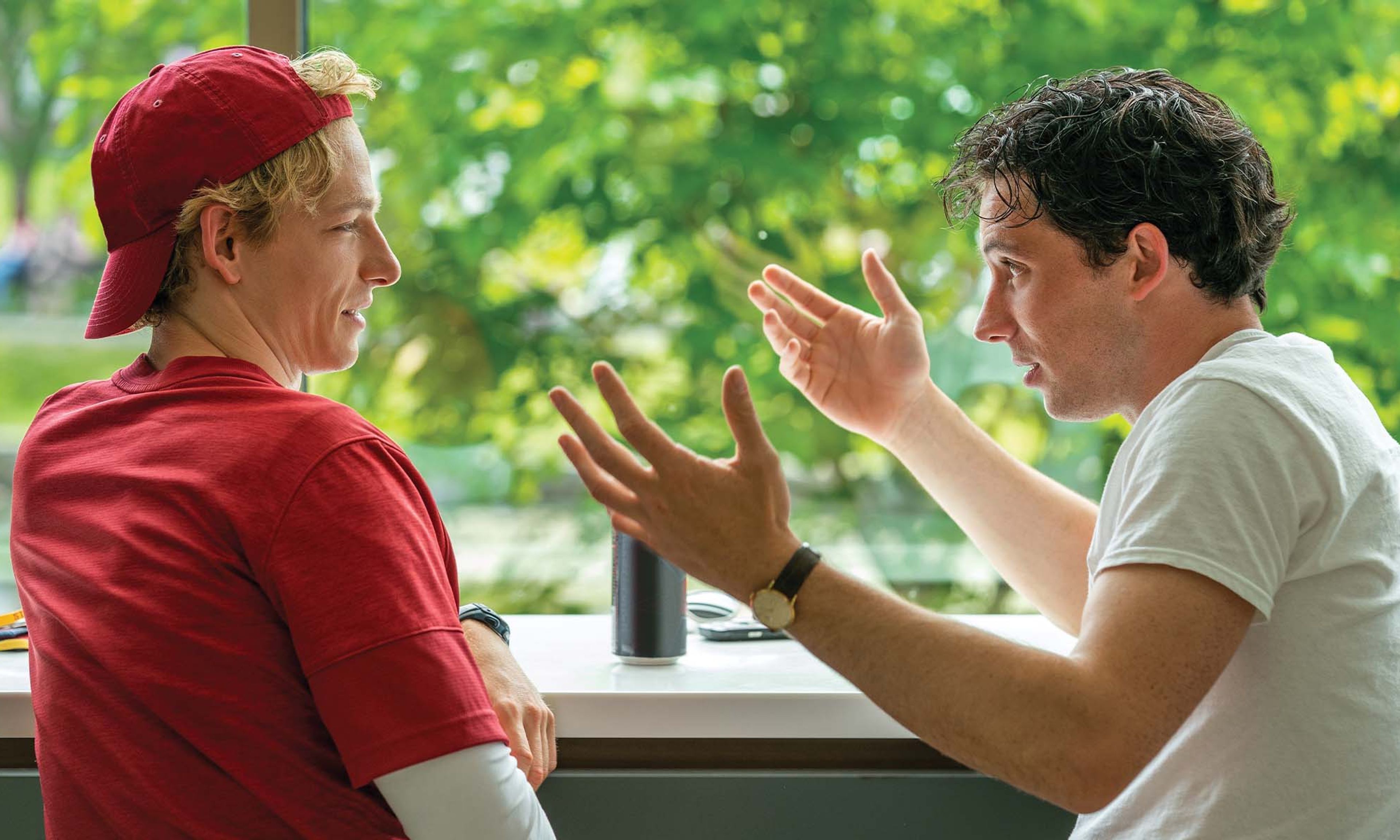
Not since Tom Cruise and Val Kilmer oiled up for a beach-volleyball game in the original Top Gun has a cinematic sporting event exuded as much homoerotic energy as the tennis matches in Challengers, a same-sex romance about two male tennis players in love and the girl who comes between them.
If you know only the barest amount about the film, that may sound like an inapt description: Surely it’s a love triangle about two male tennis players in love with the same female tennis star? If you know a bit more, if you’ve seen the trailers and read the think pieces about how Challengers is bringing sex and sizzle back to the big screen, you may think that I’m overhyping one sub-theme in an erotic romp, that the movie is just playing with the idea of attraction between its male characters — in particular, by having their female object of desire lure them into a threesome and watch as they briefly make out — in the hopes of tarting up its love triangle for an age of polyamory chic.
The second description might fit the movie as a script on paper, as a story written by a screenwriter to be summarized by a critic. That story begins with a 2019 tennis match at a low-profile tournament — the New Rochelle Challenger presented by Phil’s Tiretown — where second-tier players compete to vault into contention for a major open. Except this match features one of the highest-profile players in the world, the superstar Art Donaldson (Mike Faist), who’s using the tourney to regain his confidence after a year of disappointing losses. And his opponent, the once-promising journeyman Patrick Zweig (Josh O’Connor), turns out to have a history with Donaldson that makes their encounter into a dramatic grudge match.
As the match proceeds, we get that history served to us in calculated doses via flashback. We meet Patrick and Art years earlier when they’re doubles partners, roommates, and best friends, with Patrick the slightly superior player. We also meet Tashi Duncan (Zendaya), a budding female superstar, whom both of the boys attempt to proposition, leading to a hotel-room encounter that includes the foray toward a threesome, but ends with Tashi making a quick exit and promising a date to whichever one of her suitors wins a looming junior championship match.
Patrick wins and gets to date her first, but then Tashi suffers a devastating injury that changes everyone’s trajectory. She ends up as Art’s coach and then his spouse, substituting his success for the career she never got to have; meanwhile Patrick descends into louche mediocrity, alienated from his best friend even as he retains a certain kind of hold on Tashi.
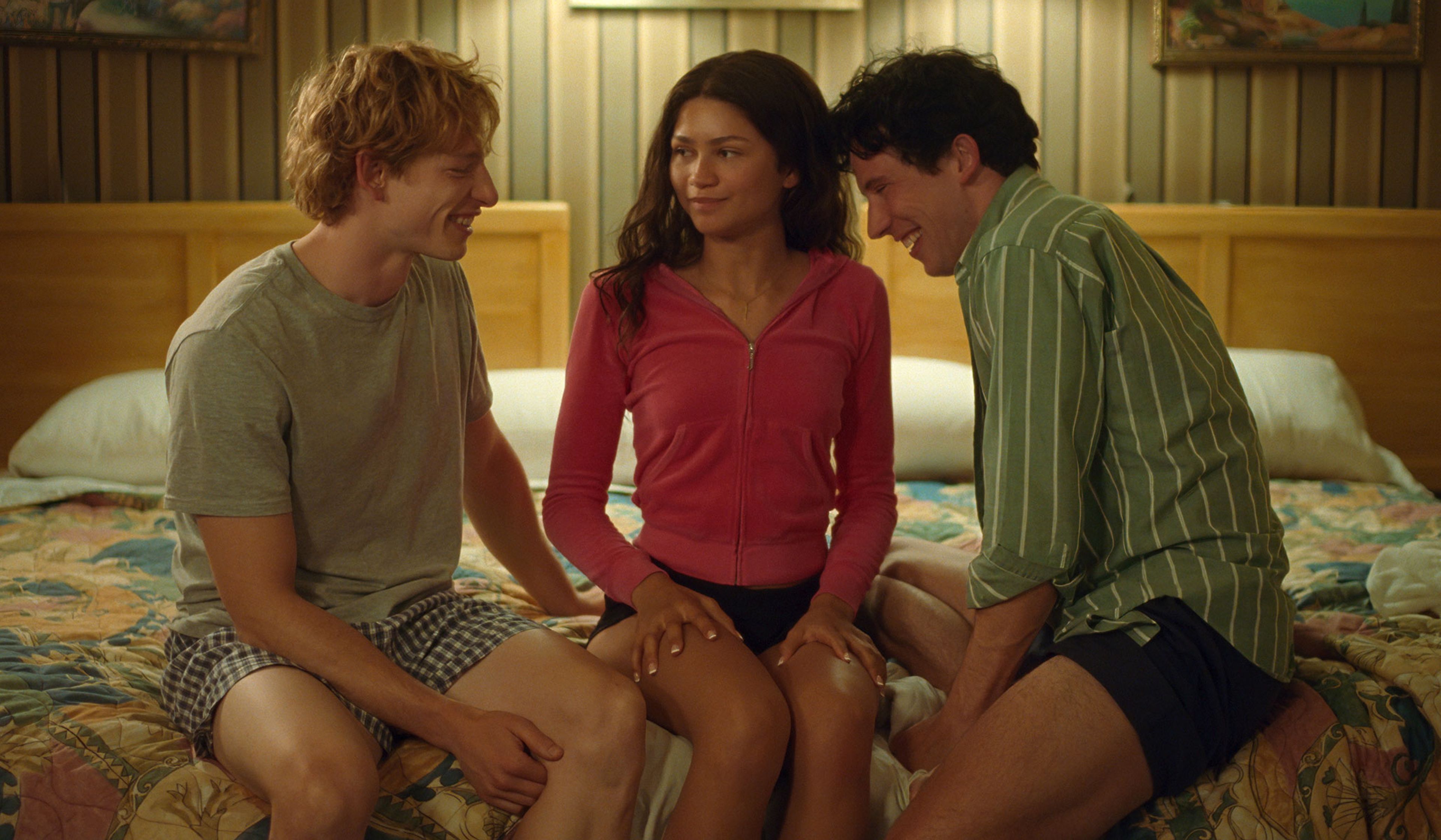
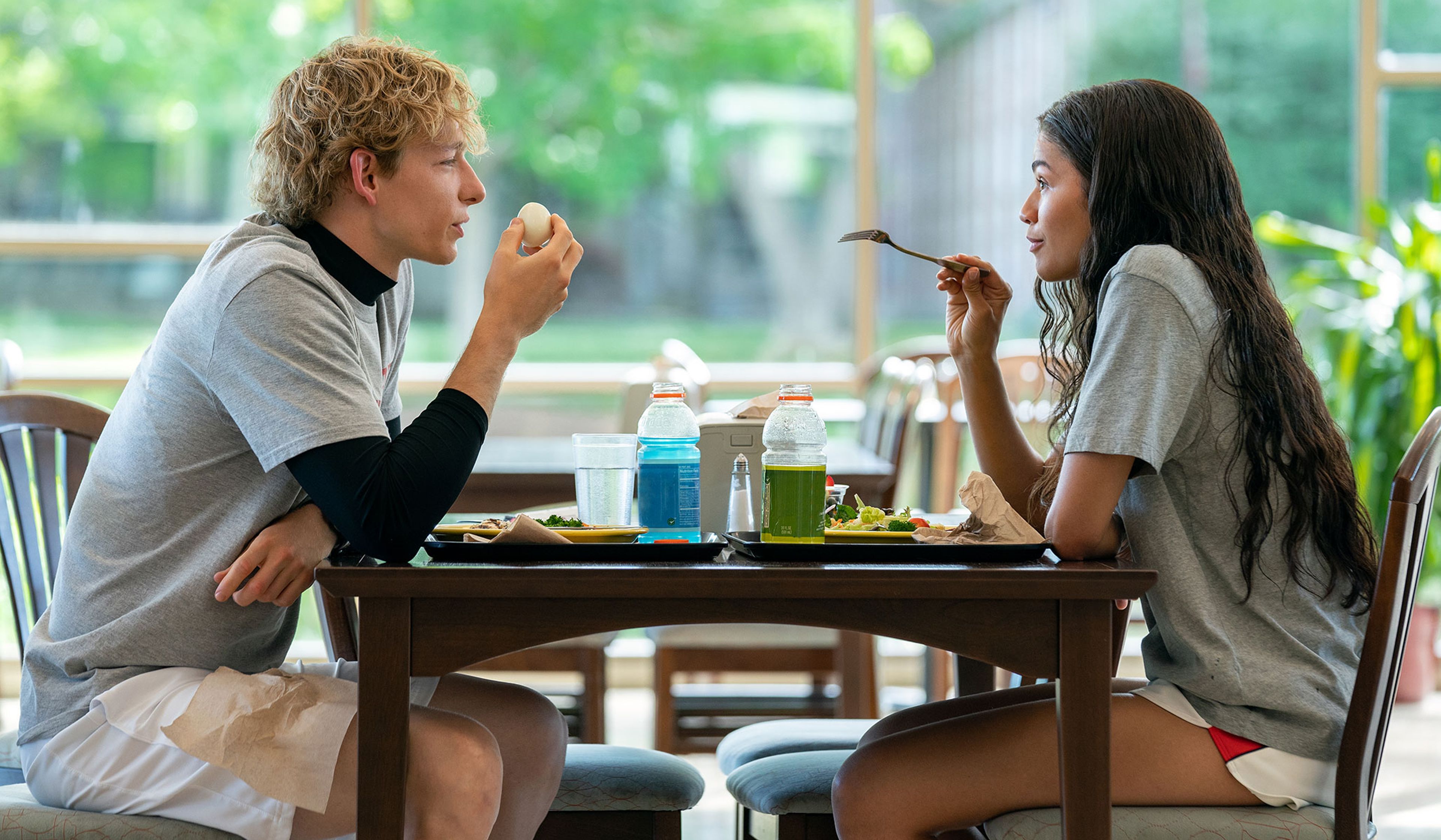
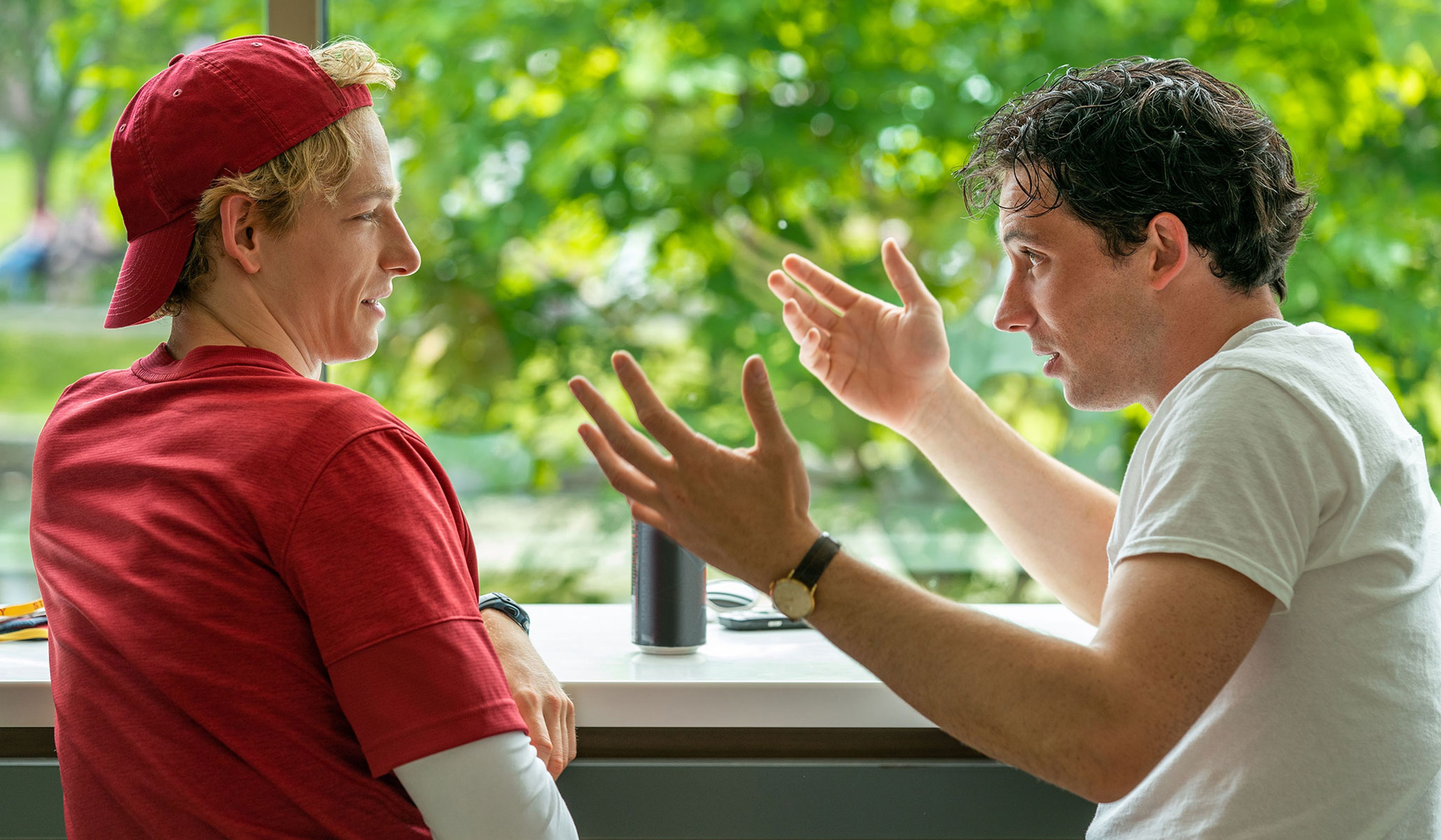
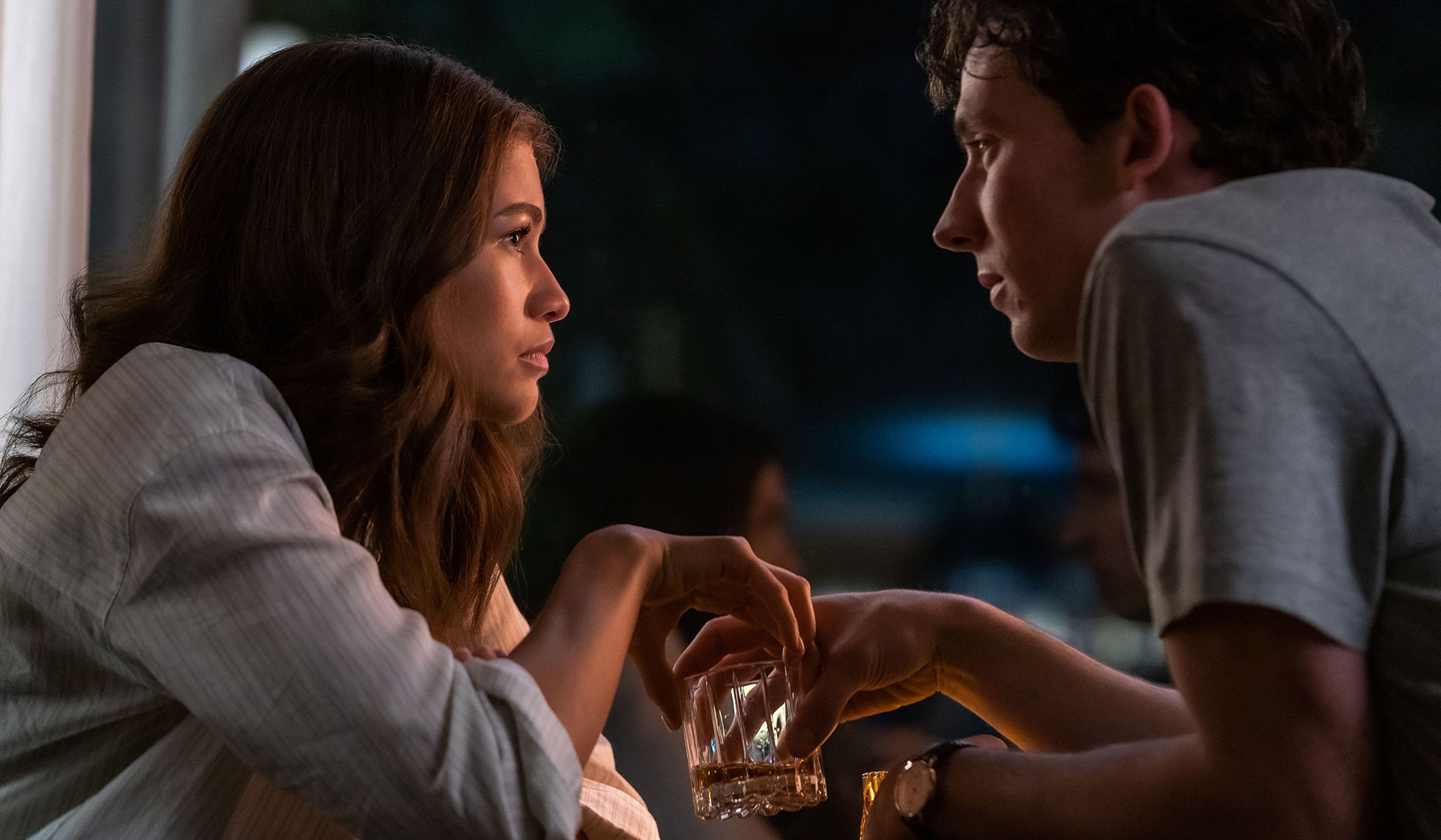
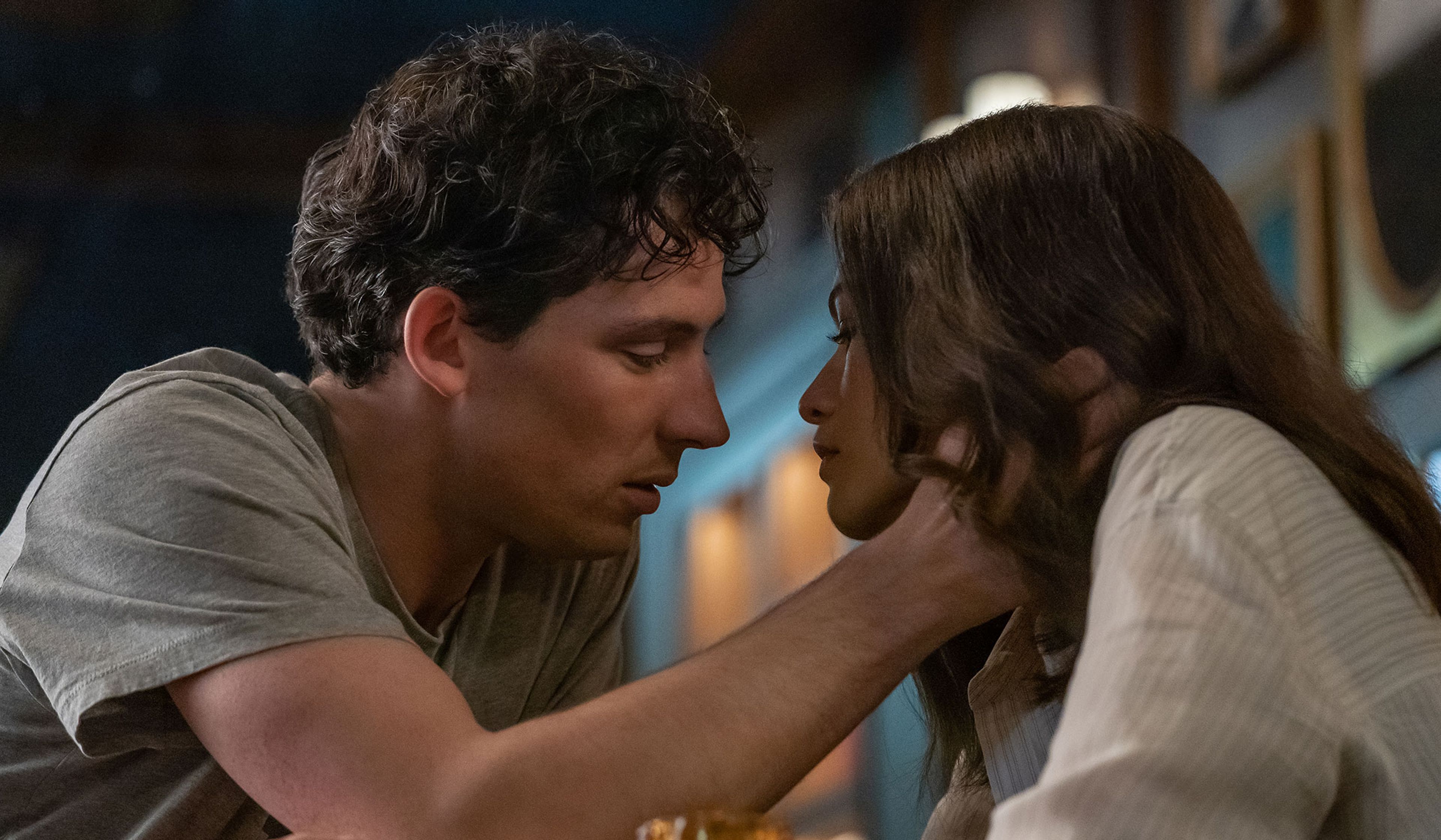
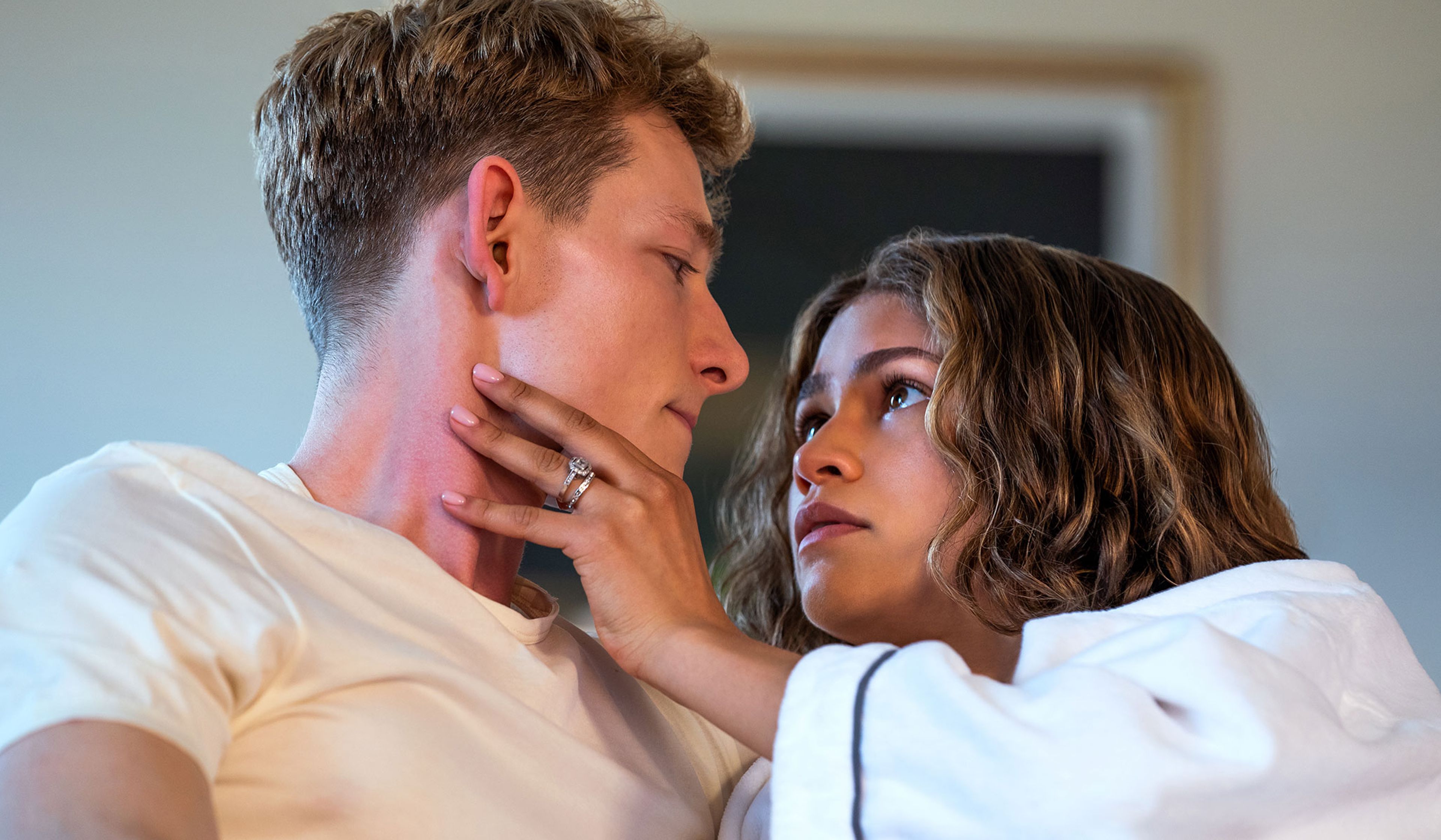
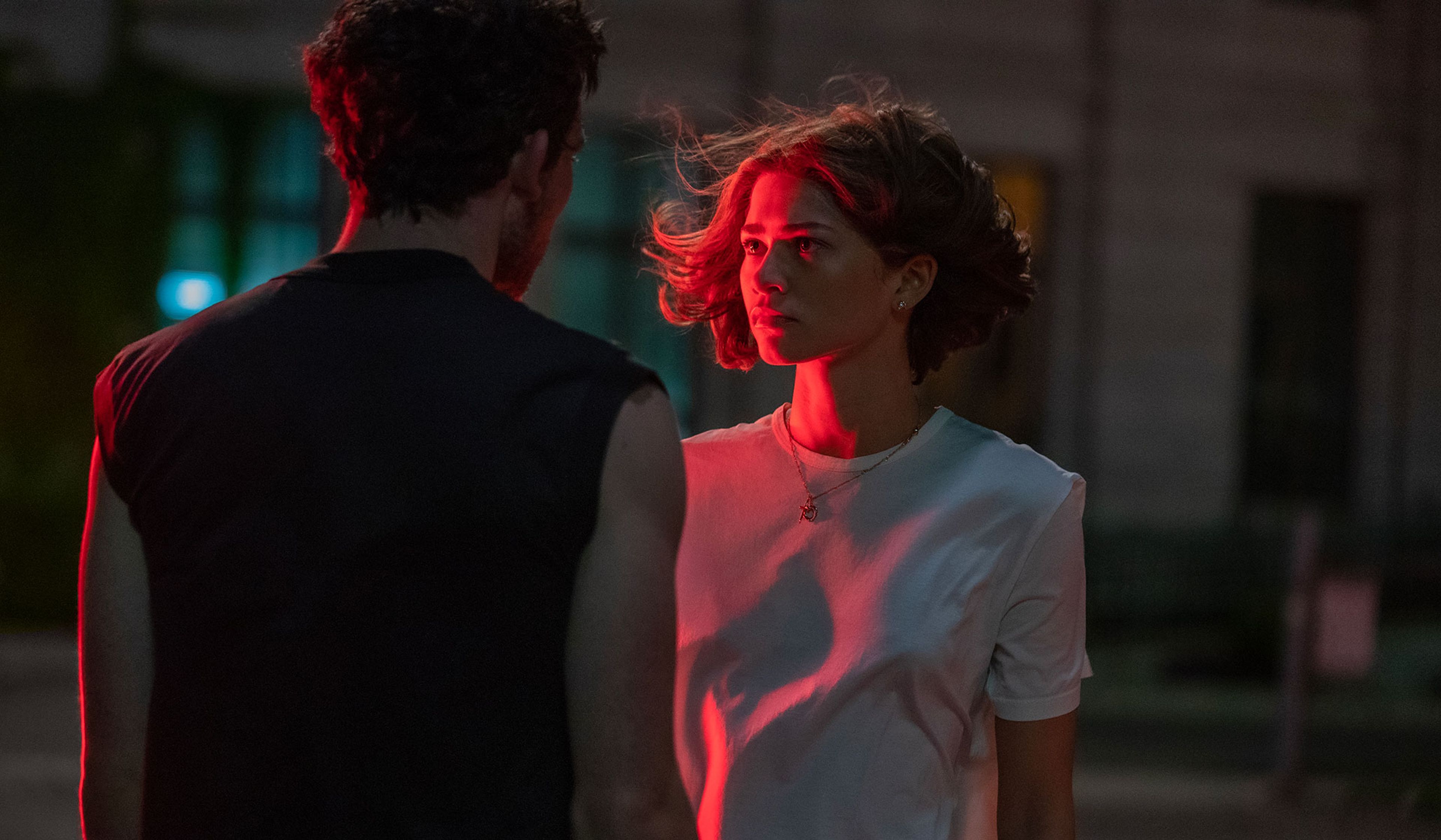
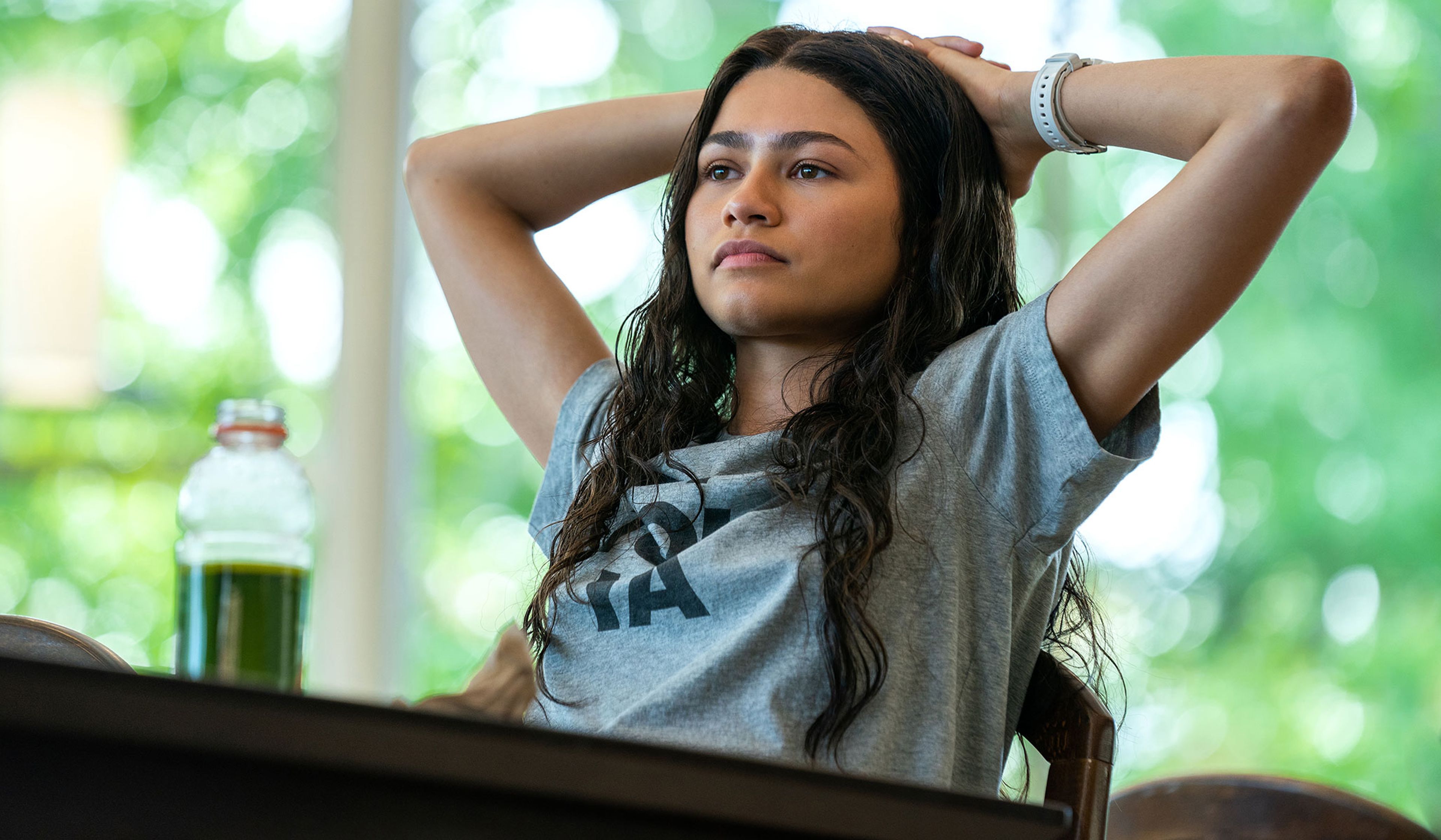
Mike Faist, Zendaya, and Josh O’Connor in Challengers
Metro Goldwyn Mayer Pictures
That description of the movie yields straightforward and, let’s say, heteronormative stakes for the match that frames the story: rivalry, competition, two men constantly seeking the approval of a single woman, who is herself ambivalent about her life choices and her relationship with both.
But movies are made as well as written, and the director of Challengers, Luca Guadagnino, films the story as if he’s making a sequel to his famous gay love story, Call Me by Your Name. The camera ravishes Art’s and Patrick’s bodies, off the court as well as on; they wrestle and grapple like characters in a D. H. Lawrence novel; they eat bananas and feed each other churros; they have an argument in a sauna that generates more heat than all the heterosexual sex scenes (in all but one of which, notably, the actual lovemaking is either interrupted or stillborn). “I don’t want to be a home-wrecker,” Tashi jokes early on about the boys’ roommate setup, and long before you get to the climax of the tennis match — which I won’t spoil but which is entirely thematically appropriate — it’s clear that this is not a joke: Art and Patrick belong together, and Tashi is at best a coach, at worst an interloper; the two men are each other’s natural partners.
This effect is accentuated by Zendaya’s peculiar screen presence. She’s a polarizing actress: I know that some people received this performance as a major star turn, while others found it frustratingly opaque. For my part, I think that her beauty is entirely dependent on her smile: When it’s turned on she’s gorgeous; when she’s neutral or frowning her charisma fades. And both of her major roles in the last year, this one and her part as Chani in Dune Part 2, have involved an increasingly grim-set look as the story moves along.
In Challengers, that means that after her injury curdles her happiness and takes her body off the court, she stops being visually competitive with her male co-stars. The camera ceases to be entranced by her, even if the men are supposedly still interested. Her allure fades, theirs is constant to the end: two male bodies in motion, at play, while the woman sits alone and watches them converge.












Comments