If our society was decadent before the pandemic, what has it become now? Just a bit more so, argues Ross Douthat in the new paperback edition of his February 2020 book The Decadent Society. When the hardcover first appeared, Douthat’s book was an exceptionally insightful work of cultural criticism and an indispensable guide for understanding our national psyche. What has it become now? Just a bit more so.
Even those who have read the hardcover would benefit from the paperback, which is peppered with updates, emendations, and new caveats. Its central thesis is only strengthened. “Like the plagues that punctuated the later centuries of the Roman world,” Douthat now argues, the COVID-19 pandemic has turned out to be “a crisis that ultimately deepened decadence, . . . a shock to a sclerotic system that only made the system more itself.”
As Douthat shows, the pandemic has advanced several of the trends that he had identified as symptomatic of our decadence. These include above all our declining birth rate — which is both a symptom of decadence and a chief driver of its other symptoms (such as economic stagnation). They also include the growing tendency, especially among the young, to experience life through the mediation of an empty and numbing “virtuality.” And they include the trend toward stultifying national consolidation in both our businesses and our cultural institutions.
Another of Douthat’s symptoms of decadence had been technological stagnation. The breathtaking success of our COVID-vaccine development might therefore seem a counterpoint to his thesis. But although the paperback went to press too early to say so, our new vaccines fit into a pattern Douthat had already described: The U.S. is mostly producing not the life-changing breakthroughs of a few generations ago but mere “defensive” innovations that “allow our society to stay essentially the same” (i.e., to stay decadent). Thanks to unprecedented national efforts and astonishing technological achievement, our seemingly miraculous vaccines are now allowing American public health to become . . . only slightly worse than it was 17 months ago.
Even the apparent political tumults of 2020 fit into the pattern of political decadence that Douthat had described. These fantasy revolts will, he argues, have little lasting impact on a political system effectively governed by the forces of sclerosis. The hardcover had said:
If you want to feel like Western society is convulsing, there’s an app for that, a convincing simulation waiting.
That sentence now reads:
If you want to feel like Western society is sliding into the abyss of civil war, there’s an app for that, a YouTube clip of rioting to watch, a convincing simulation waiting.
The sound you hear is a thousand pundits’ bubbles bursting.
What Is Decadence?
Douthat’s adept portrait-painting conveys a vivid sense of what he means by “decadence,” which he uses as a term of art. He shows persuasively that decadence, in his somewhat idiosyncratic meaning, remains the most important feature of Western societies today. But he never quite offers a unified definition to explain why “decadent” applies equally to Donald J. Trump, the U.S. News & World Report College Rankings, contemporary Christian theology, and low birth rates, inter alia.
I would suggest that for Douthat, “decadence” refers to a condition of worldly success without rationale or justification, in which the spiritual characteristics that once earned that success appear to have vanished. Americans feed, lodge, and are clad better than the kings of yesterday; we are at peace, secure, and rich in physical comforts. Yet we are unsure of what all this was won for, even as we remain terrified of losing it. Our society therefore acquires all the characteristics that Douthat describes in detail. We become stuck, tired, distracted, repetitive, irritable, bored and boring, or just “comfortably numb.” We have fewer murders, more suicides; fewer teen pregnancies, way more porn; fewer bills passed, more executive actions quickly undone by court order; fewer good movies, more sequels; fewer great inventions, way more apps.
Douthat rightly worries that this decadence is leading us into “a territory of darkness, a posthuman landscape as barbarous as it is posh, whose sleekness covers over a sickness unto death.” The smug intellectual defenders of our modern world risk becoming Mustapha Monds who would advocate “the abolition of human nature for the sake of human comfort.” We are not quite at Huxley’s dystopia yet, but we are already “dystopia-ish” and getting worse. For our decadence tends to “crowd out essential human goods” that Douthat lists with bracing clarity: “fecundity and piety, memory and invention, creativity and daring,” “ideological ambition and religious hope,” and perhaps above all, the “spiritual ambition” or “desire for knowing” that produces both science and religion — the two activities most distinctively characteristic of the lonely stargazing mammal.
Nor has this decadence shown any signs yet of short-circuiting itself. Jeremiahs of both Left and Right predict civilizational collapse as the unavoidable result of our various sins, but Douthat argues at length that there simply are no barbarians at the gates of our decadent empire. He suggests that some Jeremiahs may be engaged in wish fulfillment: Our decadence must be overthrown soon, they think, because it deserves to be. But what if porn and opioids, instead of producing other socially destabilizing crimes, tend to tamp down those crimes by numbing their would-be perpetrators? What if our nation’s global rivals, instead of challenging us to new acts of patriotic sacrifice, are all gradually falling victim to the same decadence as we are? What if climate change will cause havoc in poorer countries but (for the next century, at least) only manageable harms to the great decadent societies whose carbon emissions have produced it? These, Douthat argues at length, are the likeliest scenarios for the predictable future. God was willing to chastise the Jews and even the Ninevites for their sins, but it is nearly a century since He showed any such sign of favor to the Americans. Humanly speaking, we are likely to remain “aging, comfortable and stuck, . . . burrowing into cocoons from which no chrysalis is likely to emerge, growing old unhappily together in the glowing light of tiny screens.”
Still, civilizational collapse always remains a possibility. Douthat games out numerous scenarios that could end our decadence for better or for worse: a relatively unlikely “catastrophe” on the one hand, or an equally unlikely “renaissance” on the other. He writes in the express hope that, by helping us understand the strengths and weaknesses of our current situation, he may increase our chances of escaping from decadence via “a renaissance without an intervening dark age.”
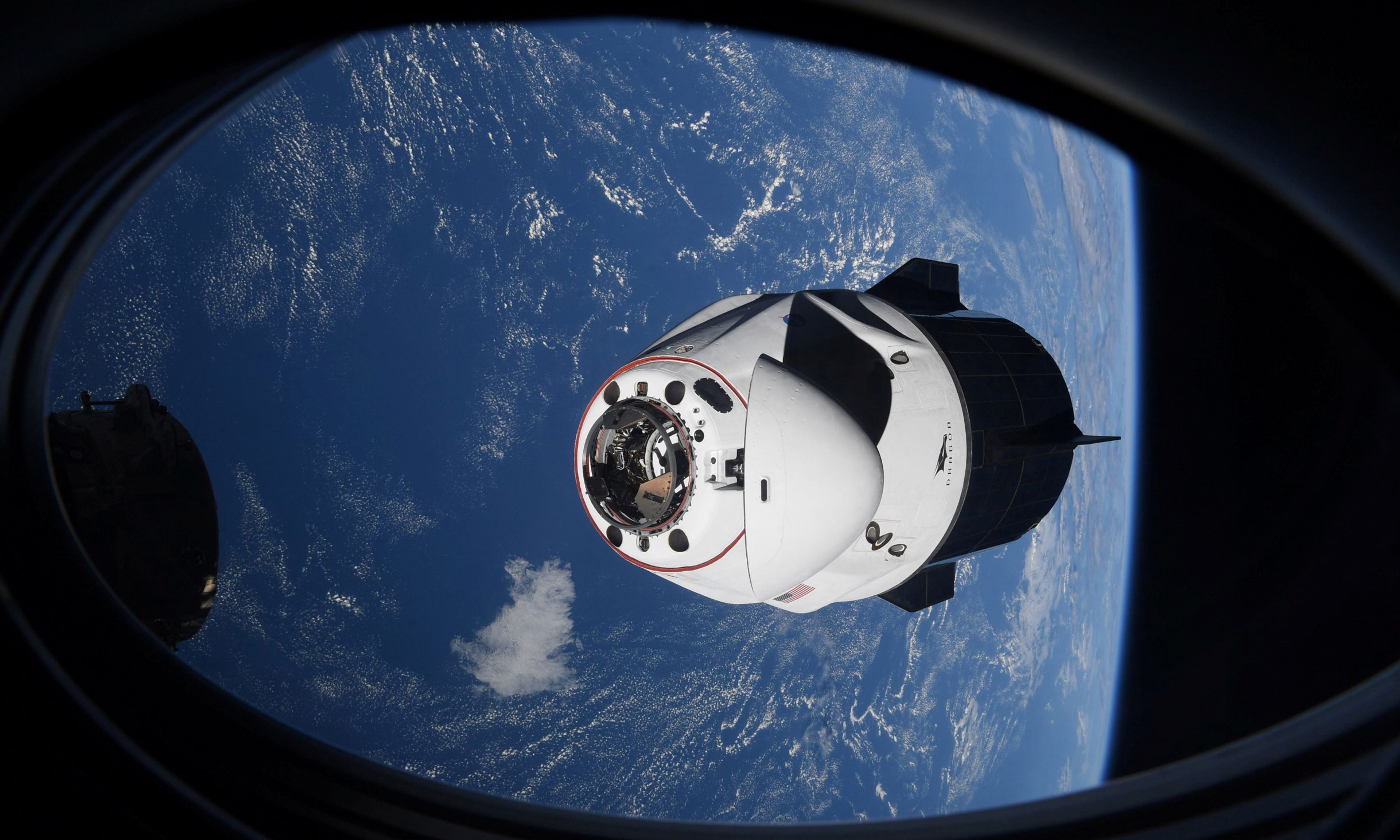
On the Advantages and Disadvantages of Space Exploration for Life Douthat therefore urges Americans to reach for what he considers the likeliest scenario for such a renaissance: a synergistic pairing of religious revival with renewed space exploration. His insistence on the space-exploration prong of this twofold assault on decadence is the quirkiest aspect of his whole book, and will surely elicit skepticism from his fellow religious conservatives. Why should we be seeking God among the stars if we already know how to find Him here at home? And how could space travel ever slow our culture’s progress toward the “abolition of human nature”? Can we seriously imagine, say, the fertility crisis abating simply because prospective parents can hope to send their one more child to Mars?
Douthat defends his suggestion on the grounds that in our modern world, where “the solidity of the past” is “always melting into air,” the stable rhythms needed for a life well lived can no longer be drawn from “faith and tribe and family and hierarchy.” Only the “dream of progress,” the hope of “unexplored frontiers and fresh discoveries and new worlds to conquer,” can give us the sense of purpose necessary for cultivating those essential human goods of fecundity, creativity, etc. Douthat therefore sees our current decadence as profoundly connected to our post-Apollo sense that, “for the first time since 1491,” there is “quite literally nowhere else for mankind to go.” Once, we hoped to pass on to our children the world we inherited from our fathers; then we hoped to discover for our children a world better than our fathers’; now we are running out of places to look for that world, and we are losing hope.
But this entire argument relies too heavily on the breathless ideologists of modernity, from Hobbes to Marx to Steven Pinker. It is even belied by Douthat’s own deft cultural observations (at which he continues to outshine his whole generation). In his sparkling chapter on the sorry state of our intellectual and artistic culture, we learn that old solidities such as faith and tribe and family and hierarchy were alive and well in America as recently as the 1950s. To the honor and shame of the Baby Boomers, they tore down many of the inherited cultural structures in whose shadow they themselves were educated, without ever building new structures sturdy enough to hold a similar place in the education of their own children (who have since been stuck resenting the Boomers’ mistakes while envying their superiority). In place of a dynamic culture riven by conflict between strong old faith-based certainties and vibrant young critiques of those certainties, Douthat sees American culture since the Boomers grew up repeating either stale versions of ’60s critiques or much-weakened and diluted versions of pre-’60s certainties. Our decadence thus owes more to a crisis of education, in its deepest moral and spiritual meaning, than to the closing of any technological frontier.
The faith-based certainties of our former generations were not narrowly religious, at least as the term is used today. They were cultural. Our pre-’60s national culture (like most national cultures) was religious yet not terribly devout, in a nation that has always shown a Protestant talent for infusing worldly ambitions with religious zeal and vice versa. Douthat’s hoped-for “renaissance,” if it were going to lift our culture out of decadence, would have to form new American cultural certainties to replace what the Boomers destroyed.
One way this could happen would be if some great new geopolitical conflict were to bind our nation together as World War II did. But Douthat, like many of us his age or younger, spent formative years watching the derailment of neoconservatives’ post-9/11 hope that our generation had finally found such a new and culturally ennobling geopolitical conflict. He therefore prefers, reasonably, that our nation’s next “worlds to conquer” should no longer require literal conquest. He seems to want space travel to be the unbloody re-creation of the bloody and unsuccessful Global War on Terror.
Yet viewed strictly as a means to cultural renaissance, space travel is likely to suffer from the same weaknesses as the War on Terror. The decade of peace from 1991 to 2001 was as much the effect of our decadence as its cause. No one should have expected that the American fighting spirit was simply waiting, unabated, for the geopolitical opportunity to show itself again. So too, the end of space exploration has been as much the effect of our decadence as its cause. As Douthat himself says, “a sense of religious mission was crucial to the national commitment to space travel, and the fading of the missionary spirit, as much as any technological impediment, contributed to the closing of the final frontier.” No one should expect — nor does Douthat even quite claim — that the religiously infused cultural confidence that produced the Apollo program is simply waiting for the technological opportunity to show itself again.
Like the War on Terror, a space program would also involve aspiration and sacrifice by relatively few Americans, leaving the disconnected majority to shop their way into further decadence. Also like the War on Terror, space travel would cause other new problems that would positively worsen our decadence. Mid-century R&D dollars at NASA produced a wave of consumer inventions. A new space program would direct even more of our nation’s wealth toward the AI-related technical innovations that (if I am reading Douthat’s book correctly) have been flattening our culture, hollowing out our inner lives, rending our social fabric, deadening our youth, and turning our society into what he memorably calls “a police state with liberal characteristics.”
Douthat already predicts that, merely based on current technological trajectories, improvements to today’s dystopia-ish VR simulations may soon “demand” from serious religious faith a “dramatic” reaction that approaches, if not quite replicates, the anti-technological Butlerian jihad of the Dune novels. How then can any partisan of human flourishing wish to direct a single unnecessary dollar to the demon-conjurers of Silicon Valley, in the name of space travel or anything else? (Douthat’s response elsewhere, that we will need some forms of technical innovation in order to sustain global population growth, does not directly address this concern.)
Stuck with Decadence We may yet experience some geopolitical or other catastrophe that awakens us out of decadence and rejuvenates our national culture, as nothing since World War II has yet done. But as Rousseau said in similar circumstances, such a catastrophe is impossible to foresee, blameworthy to desire, and almost as much to be feared as the evil it might cure. Short of that, readers of this book ought to conclude that American society is, at best, stuck with decadence.
Douthat rightly notes that we can still “live vigorously amid a general stagnation, be fruitful amid sterility, be creative amid repetition, and build good and fully human lives that offer, in microcosm, a counterpoint and challenge to the decadent macrocosm.” For the relatively few Americans who share Douthat’s assessment of our current “sickness unto death,” today’s task is to build up and protect those collective and institutional spaces within which we can live like human beings and educate our children to do the same. That task will indeed call for no less heroism, ambition, and creativity than would any space race.
Moreover, under today’s unfavorable circumstances, simply securing these small zones of human flourishing will practically require an entire national political agenda. This was a theme of Yuval Levin’s 2016 book Fractured Republic, which warned against any hope for a nationwide cultural renaissance. Levin admonished us to accept as unavoidable, and to make the best of, our post-’60s fragmentation of the more unified post-war national culture (such as it was). Speaking to cultural conservatives in particular, Levin urged us to craft and support a national politics of decentralization and delegation that would allow us best to leverage our minority status in a nation profoundly indifferent to our deepest concerns.
It is to this frustrating but indispensable task — the patient management and amelioration of our sclerotic politics — that Douthat’s book ought to point any reader interested in national solutions to the problems of our decadent society. For while the book makes clear our deep need for a cultural renaissance, it should also reveal the extreme unlikelihood that this could take place at any national scale. Let us then work to foster whatever small renaissances we can, and leave the rest to God.












Comments