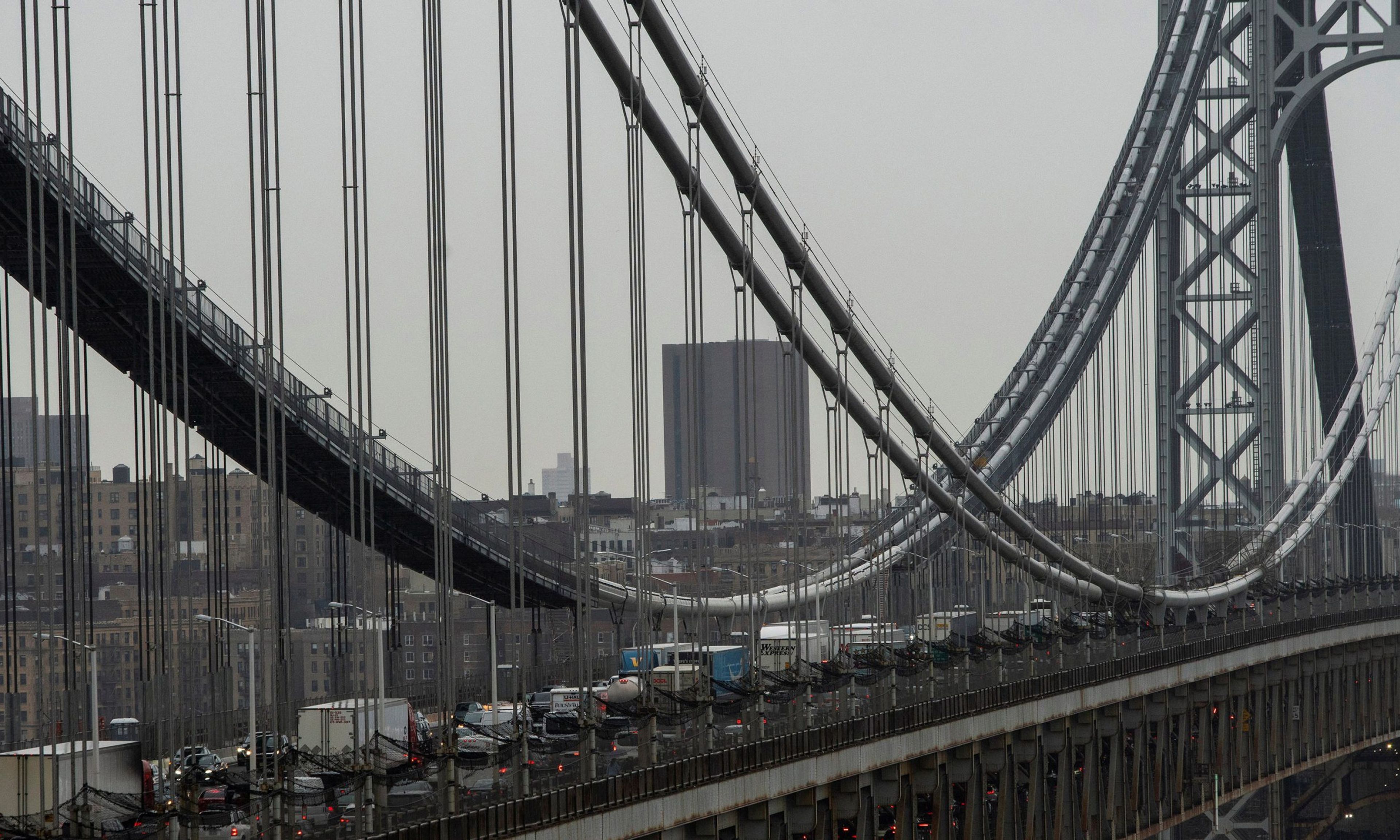
Whenever city-dwellers have to drive into and out of their home, they marvel at how the other half lives.
I am no anti-car zealot. In rural Elba I take a car for every trip as simple as visiting my neighbors. As a winger I believe that Henry Ford is second only to Samuel Colt, and far ahead of Roger Williams or Martin Luther King Jr., as a practical guarantor of American liberty. It is just that, in my normal city life, keeping a car would be as frivolous as stabling a horse. Taxis — other people’s cars — ply the streets, trains rumble below them. Mostly I rely on that most primitive form of locomotion, legs. City-dwellers are walkers. God gave us sidewalks and feet to pound them with. But I had to visit an out-of-the-way historic site and the city was the most convenient starting point for the trip. So I became a commuter for a day.
City driving begins with tipping the garage attendant. My rate, every time he produces my car from the car tomb, is $20. The art of living, said Gouverneur Morris, consists in knowing how to be cheated. Another way of framing it is, generosity greases the wheels of society.
On to the streets. For many years, driving here was more wild and woolly. But after the tiny billionaire added bike lanes, and COVID sprouted outdoor restaurant seating, things calmed down a bit. I was soon done with the streets, and on to the great arteries that wind around and about the city.
They take their names from dead statesmen. Since one figured largely in my day, I will give its history. In a parody of Overdrive, WFB’s second week-in-my-life book, the New York Review imagined him being chauffeured into the city on the Bruckner Expressway and asking himself, “Was Bach less deserving?” But the Bruckner was named not for the pious Catholic Wagnerian but for a congressman, borough president, and Tammany stalwart. His obituary in the Herald Tribune deserves quoting. “Mr. Bruckner was an amiable politician who wept when employees gave him diamond and ruby rings. He made a fortune in soft drinks. . . . He went unscathed through the Hofstadter legislative committee’s investigation of civic corruption and was able to explain to [its] apparent satisfaction . . . his practice of keeping $50,000 in cash in a safe-deposit vault. Called to the stand in April, 1932, Mr. Bruckner said: ‘In 1907 I was caught in the crash and I didn’t want it to happen again.’” Honest Bruckner gave his name during his lifetime to a Staten Island ferryboat, and after his death to a desolate stretch of elevated highway connecting a megabridge and an interstate. Construction here generated those amusing wavy-line detours and 40 mph speed limits, so productive of tickets. After that came the highway long haul.
The rightmost lane is the way of humility. Modest as it is, you can still cover a mile a minute. But incoming traffic merges from that side, so the middle lane seems easier. But there you risk the wrath of the impatient charging past you on your left, or (when maddened) your right. You become justly impatient yourself behind trucks — tubes of milk or oil, single and double rigs, redneck pickups with slapped-on wooden walls and God-knows within, vans belonging to Pentecostal churches, cement-mixers. Out you swing to the left. How much over the speed limit is kosher? Five mph is business as usual. Ten should be okay for passing. Uphill you need less as the trucks labor. Downhill is harder as gravity speeds them.
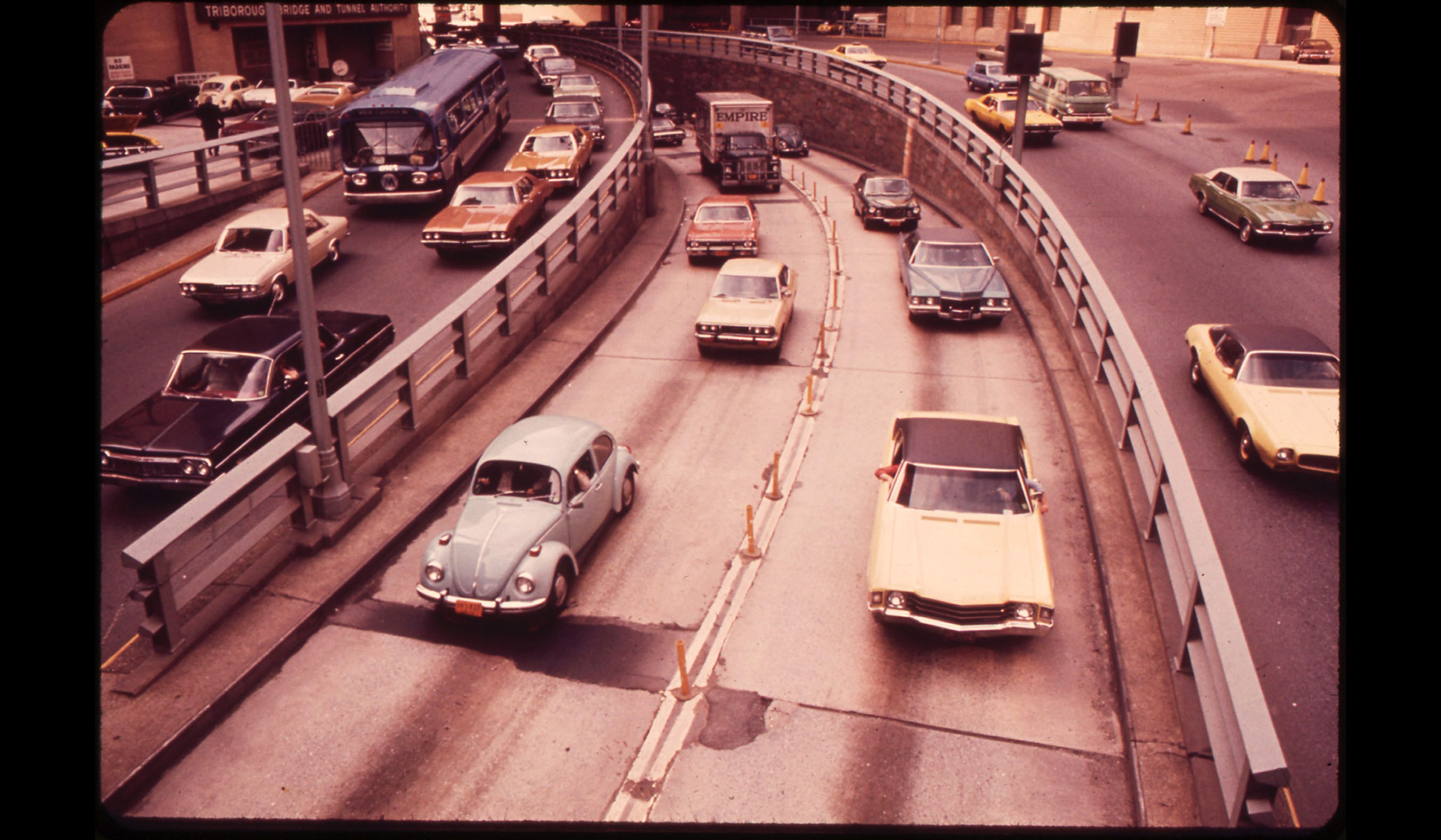
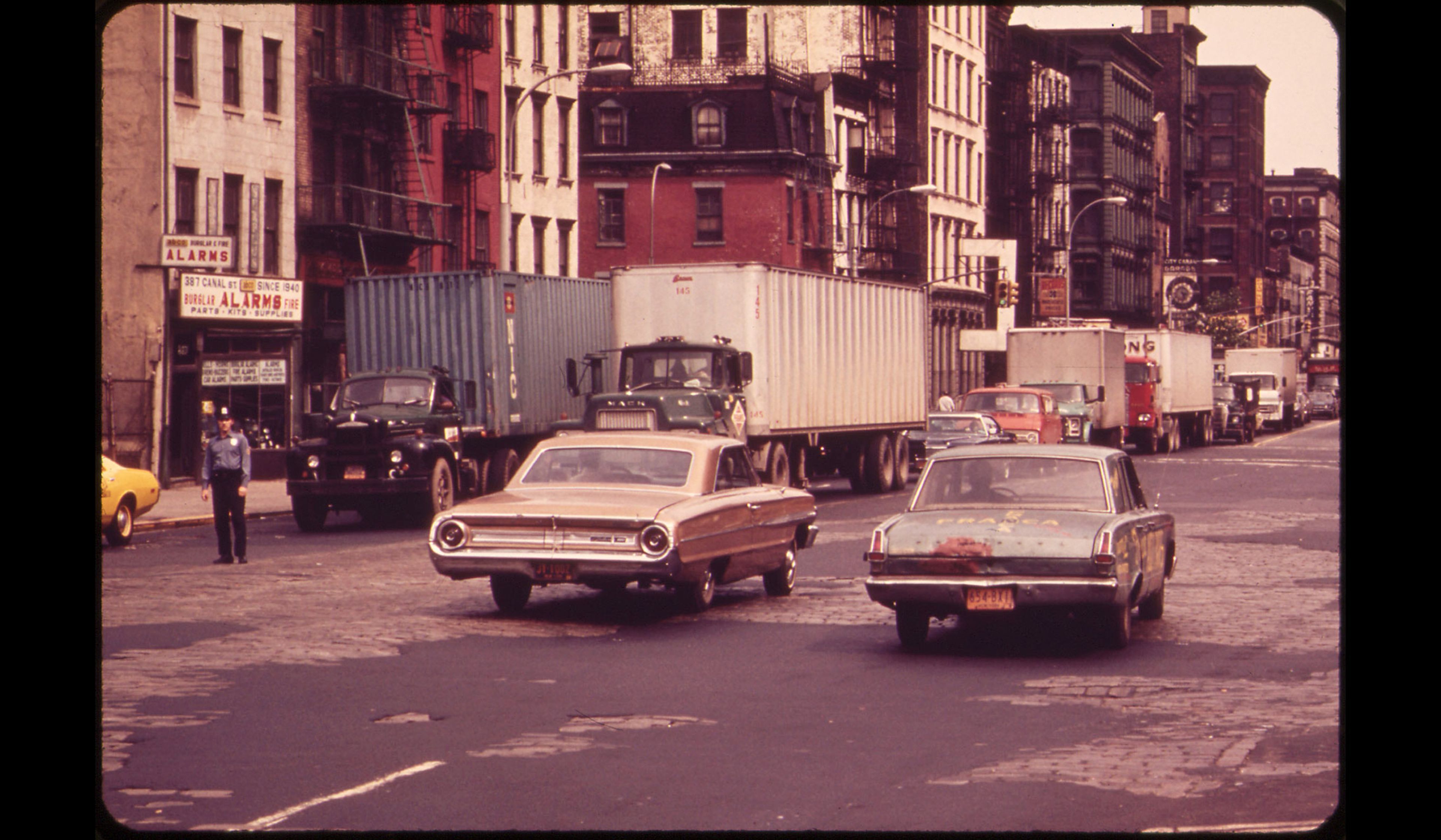
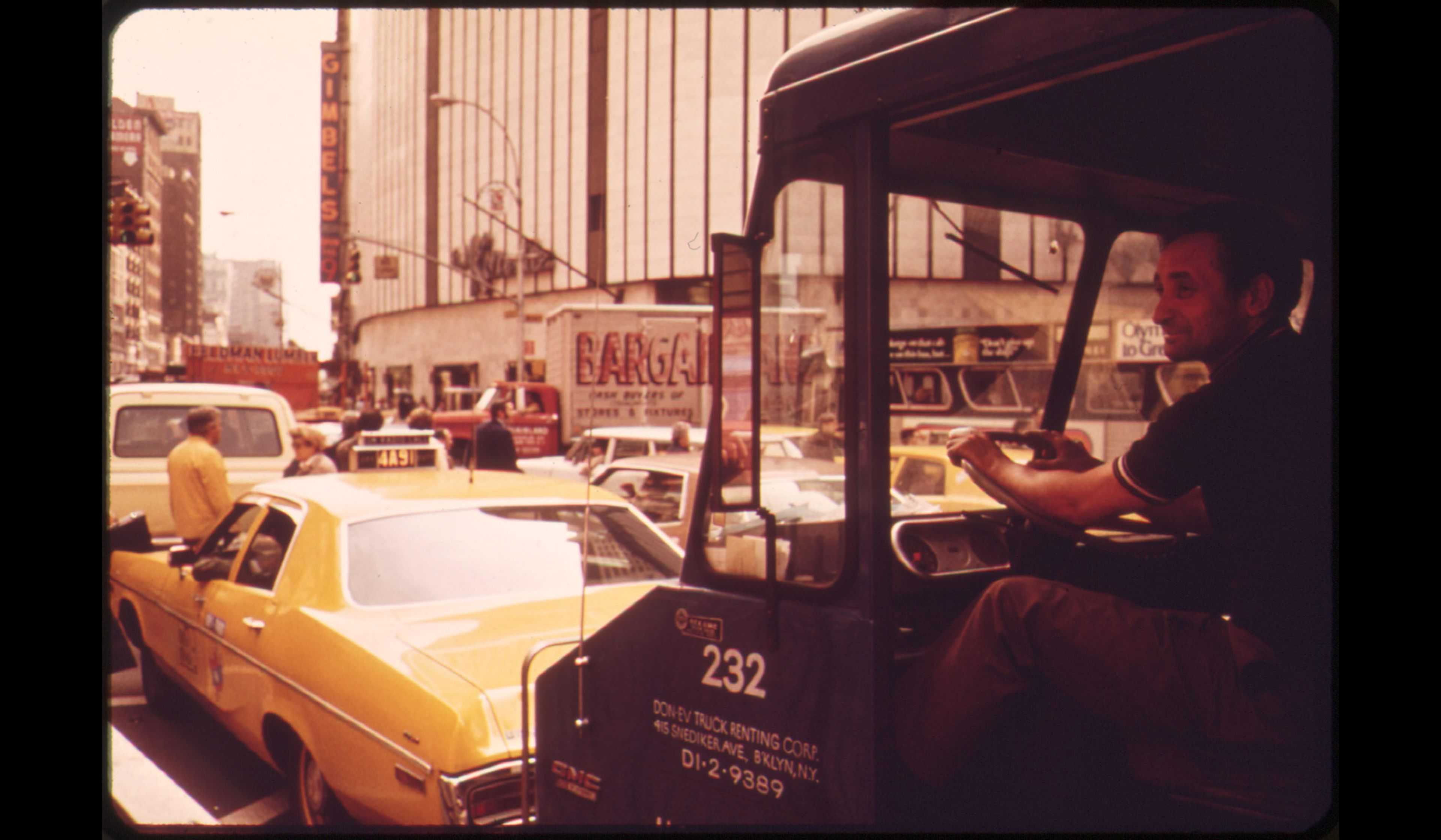
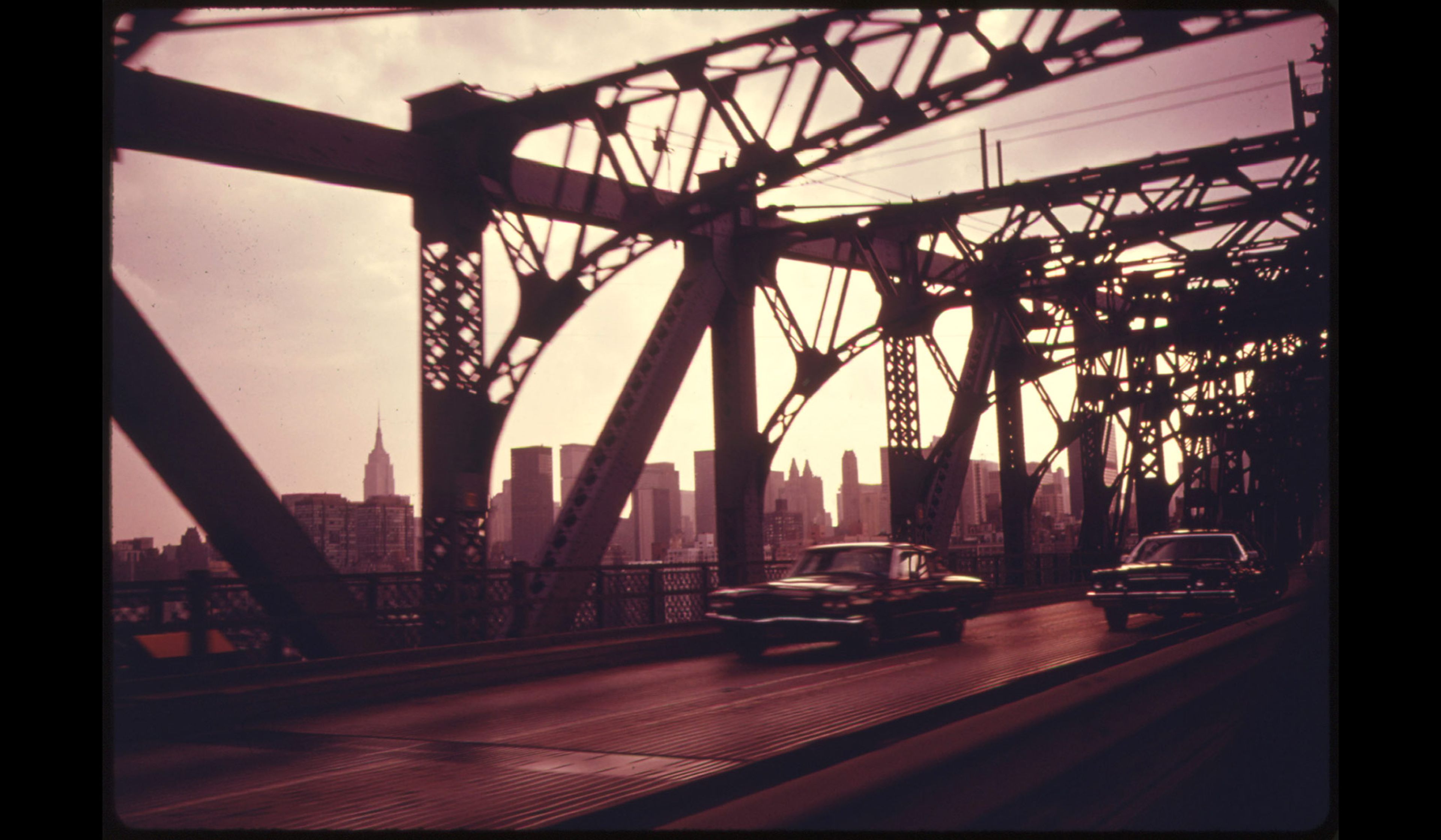
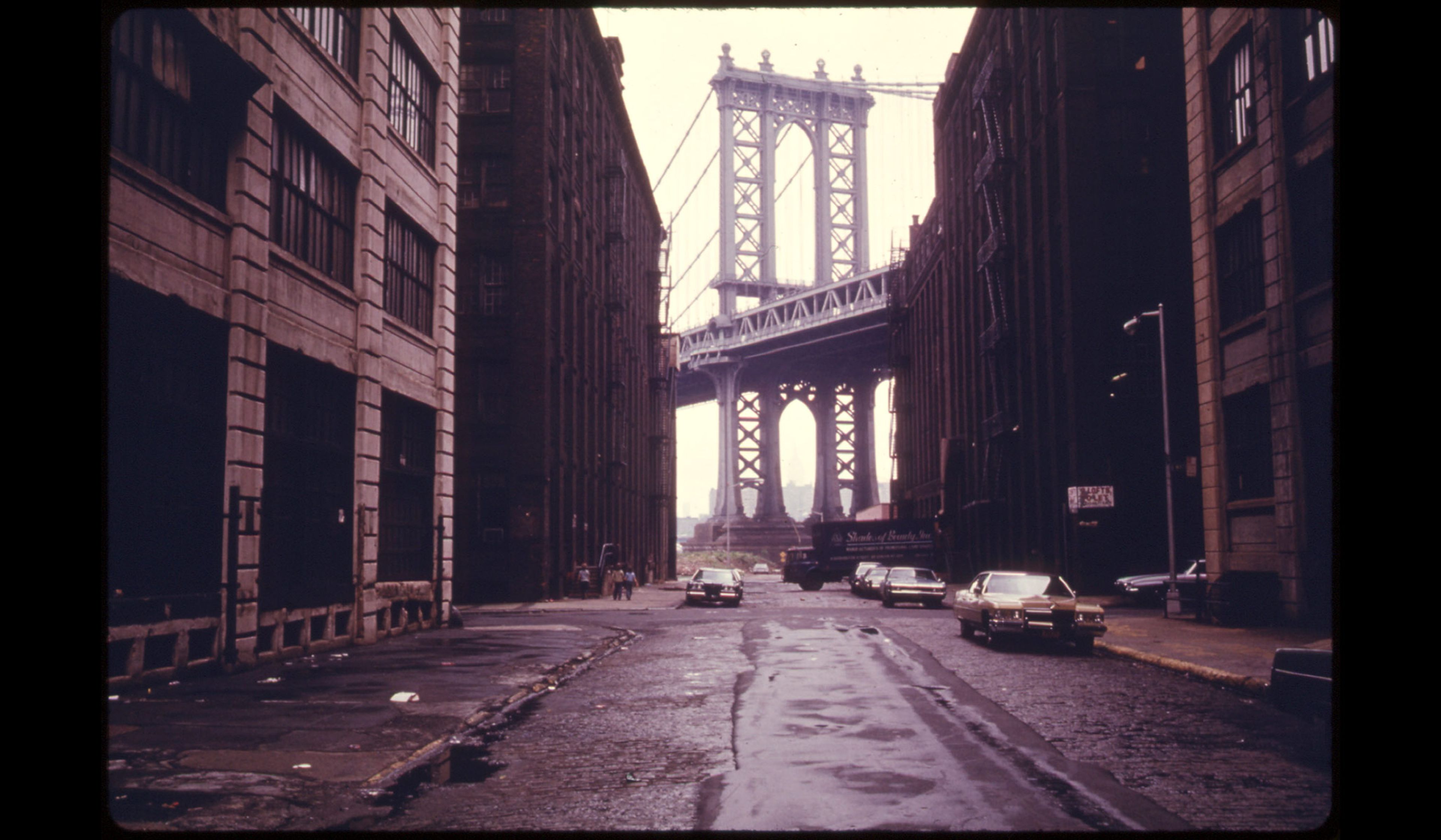
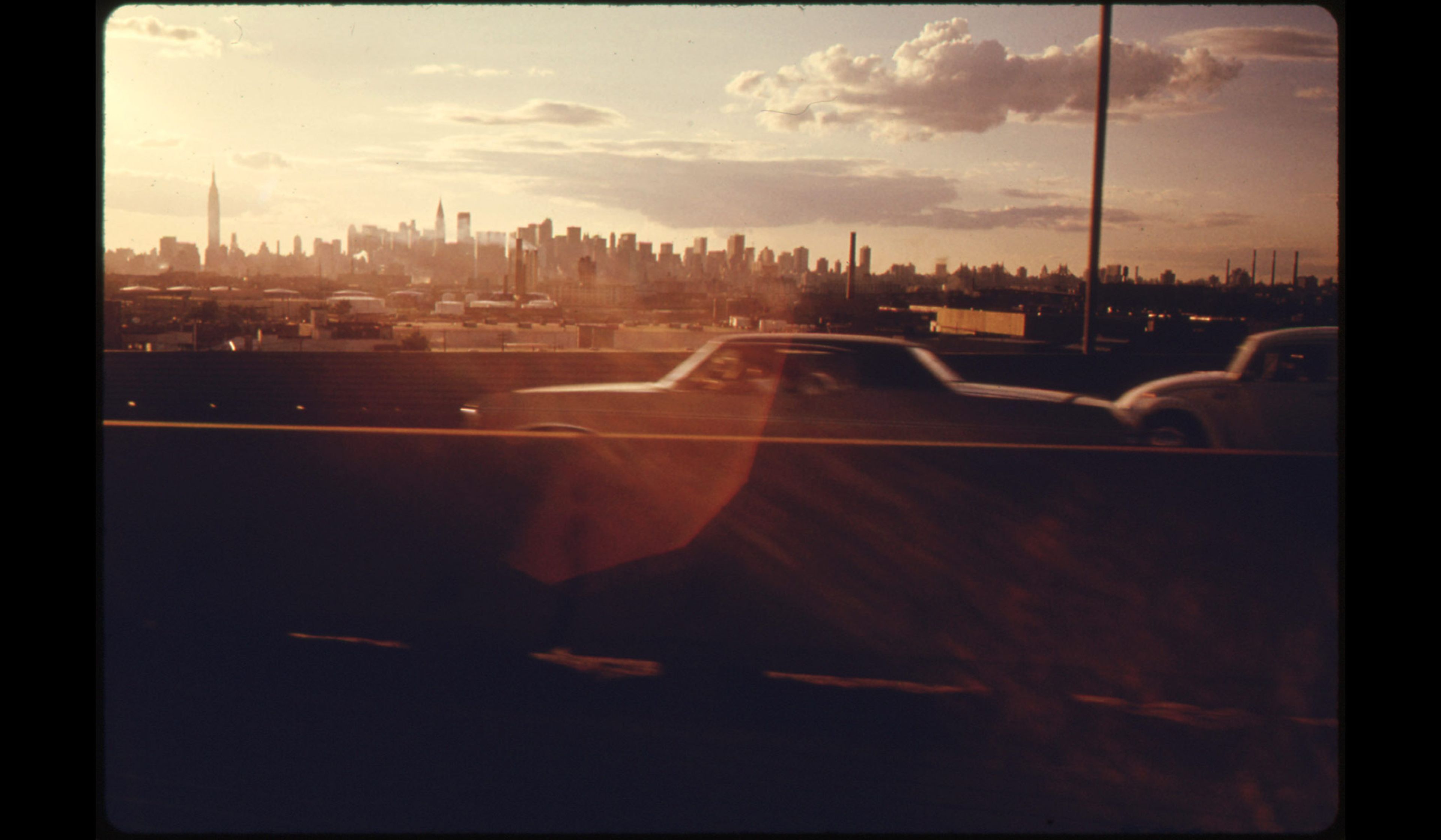
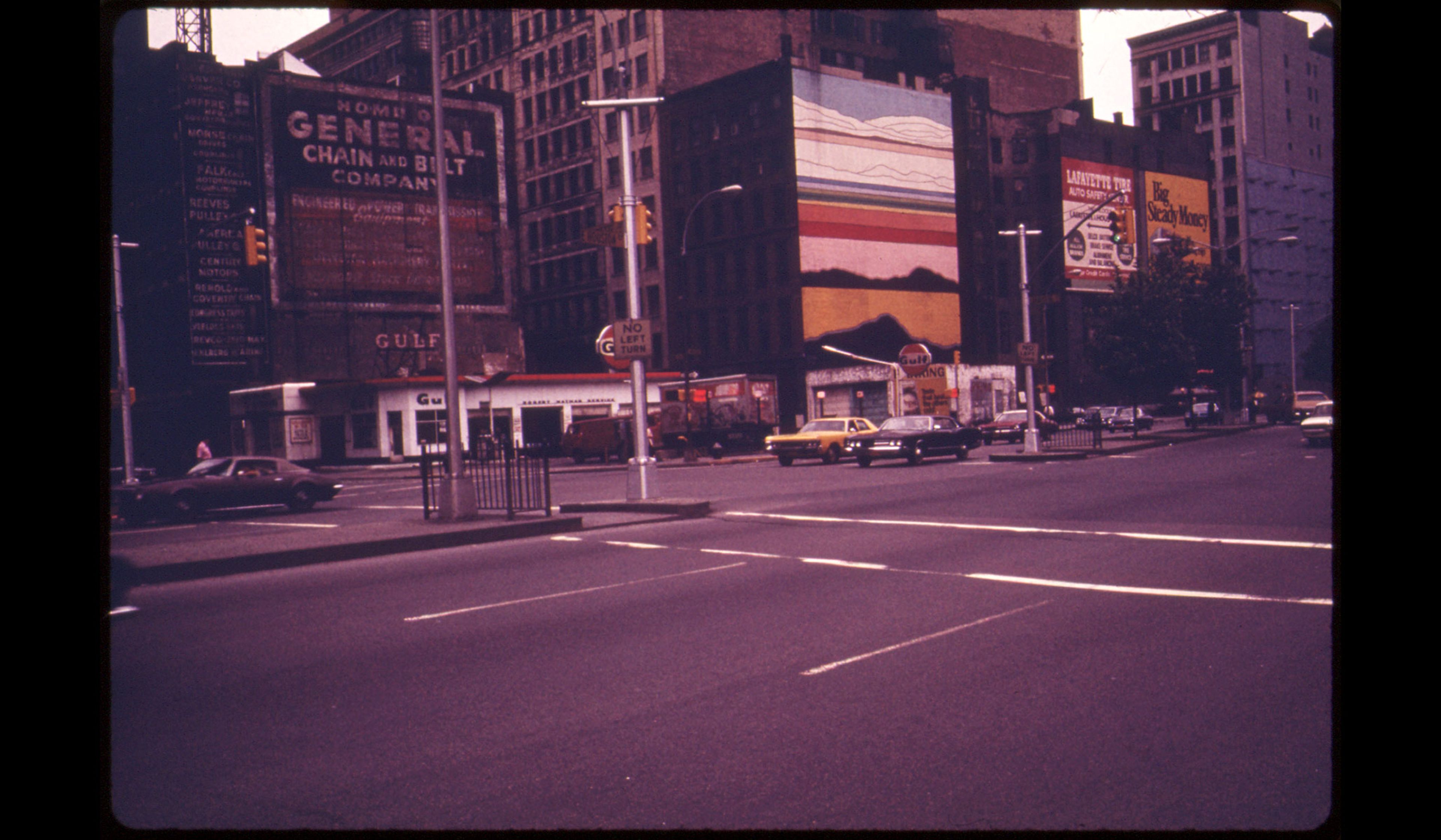
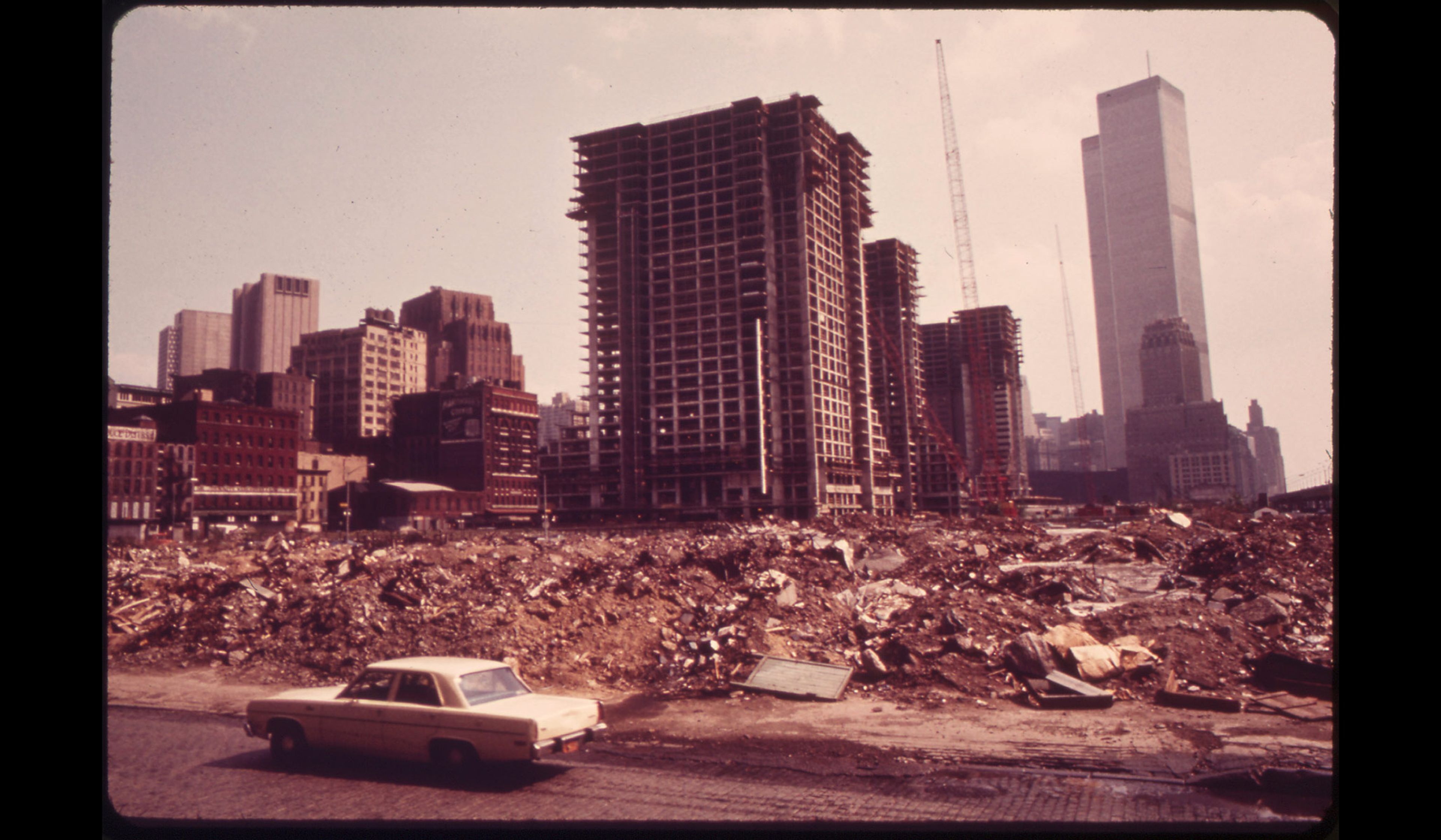
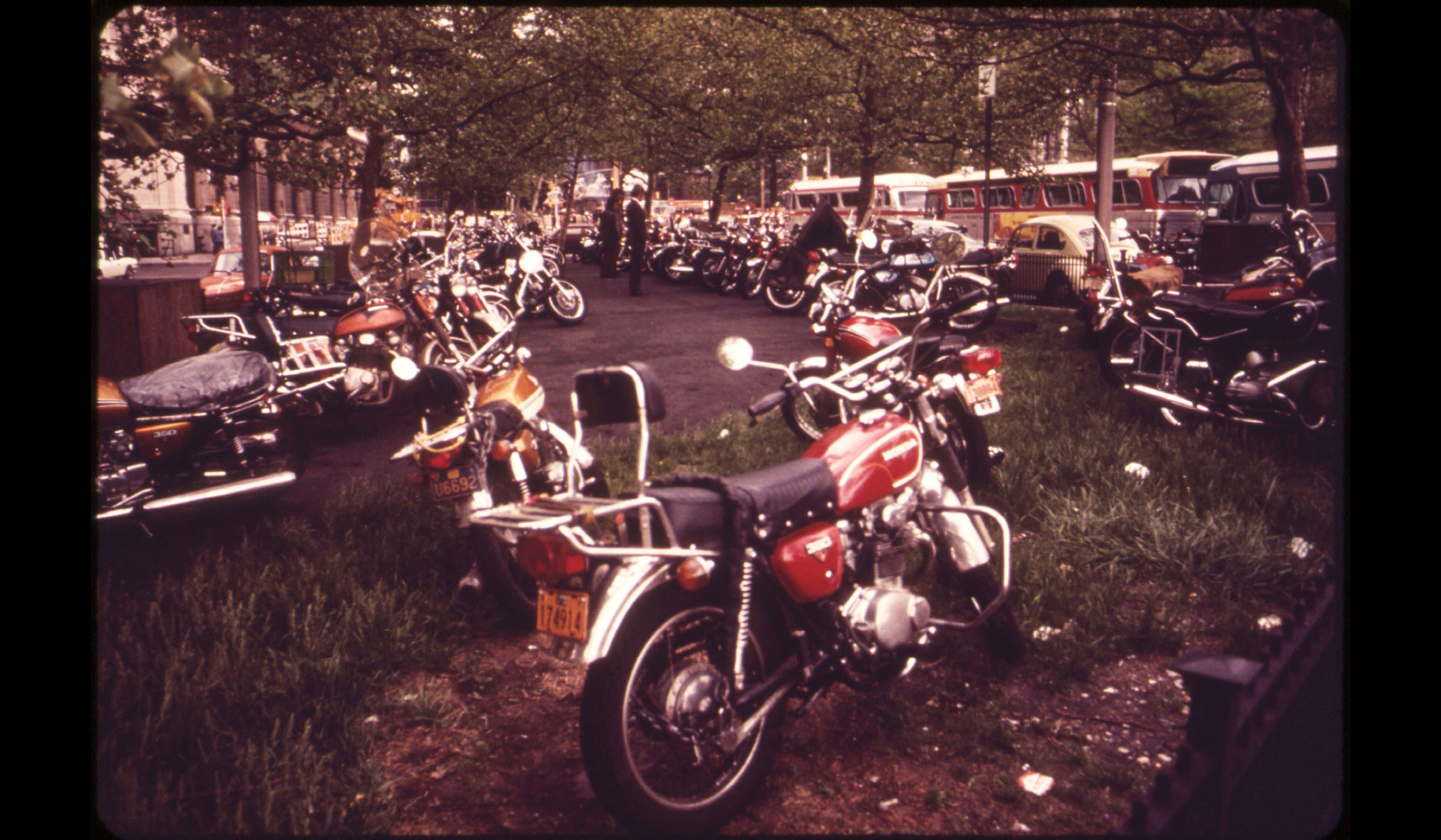
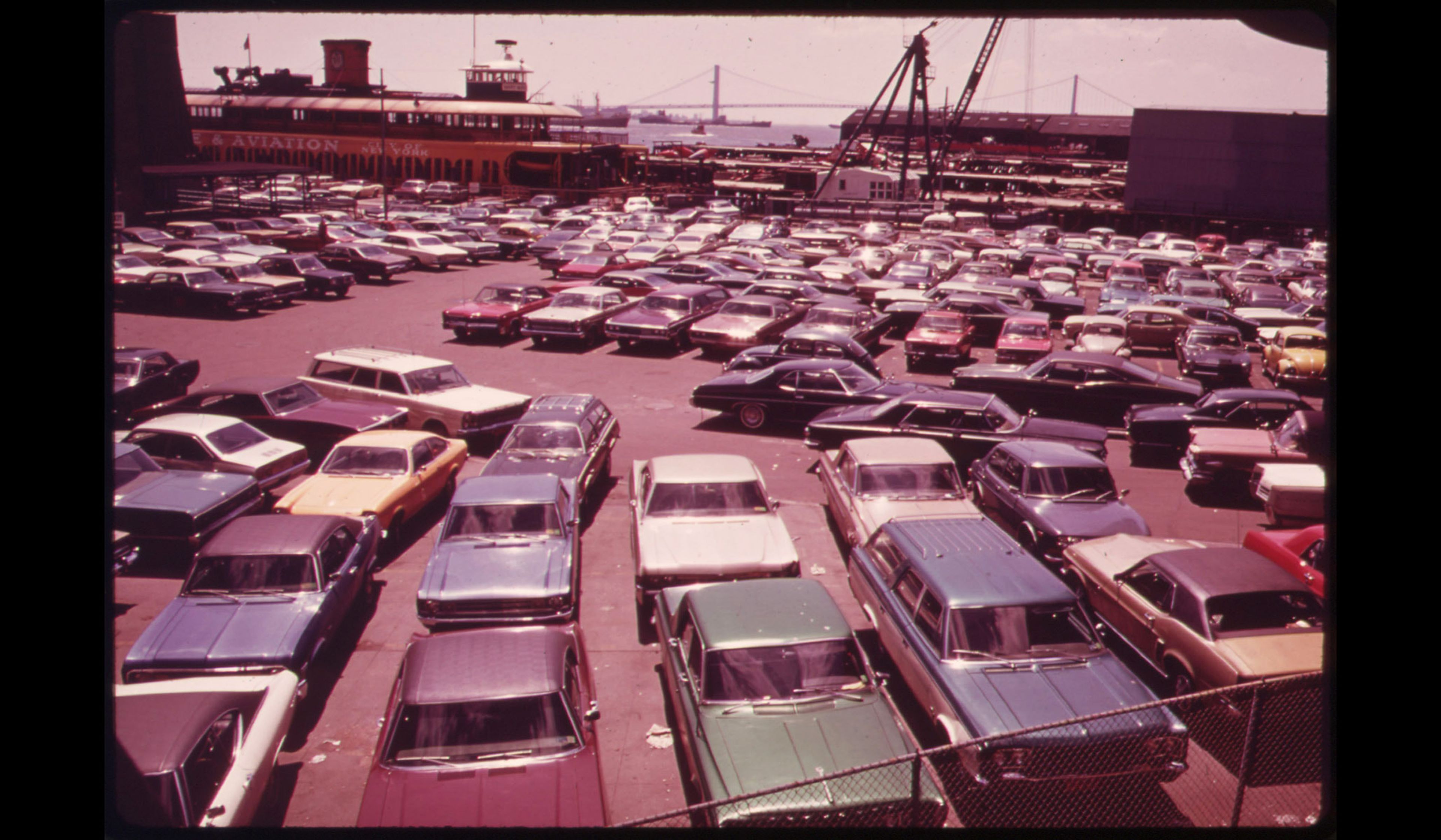
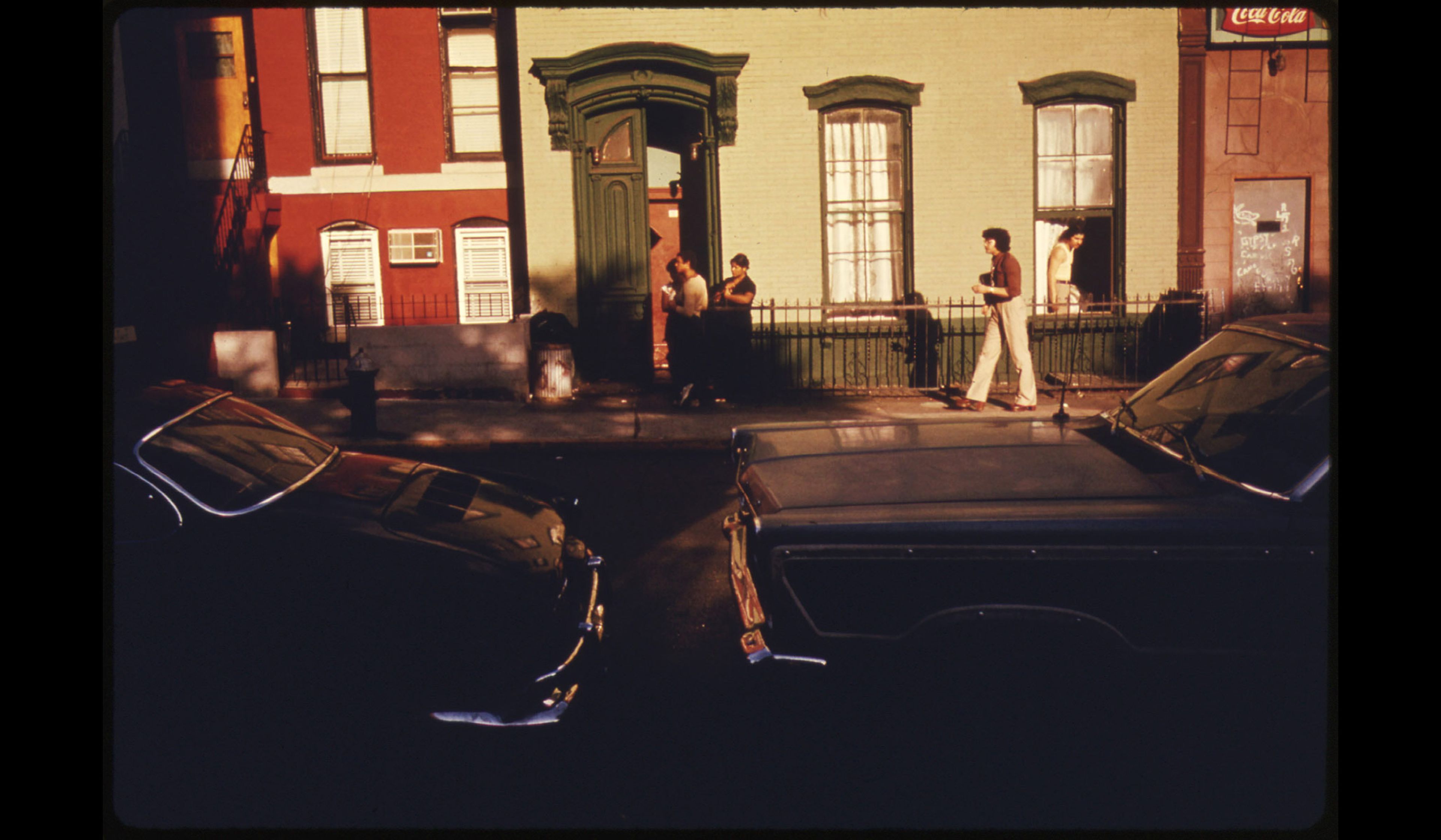
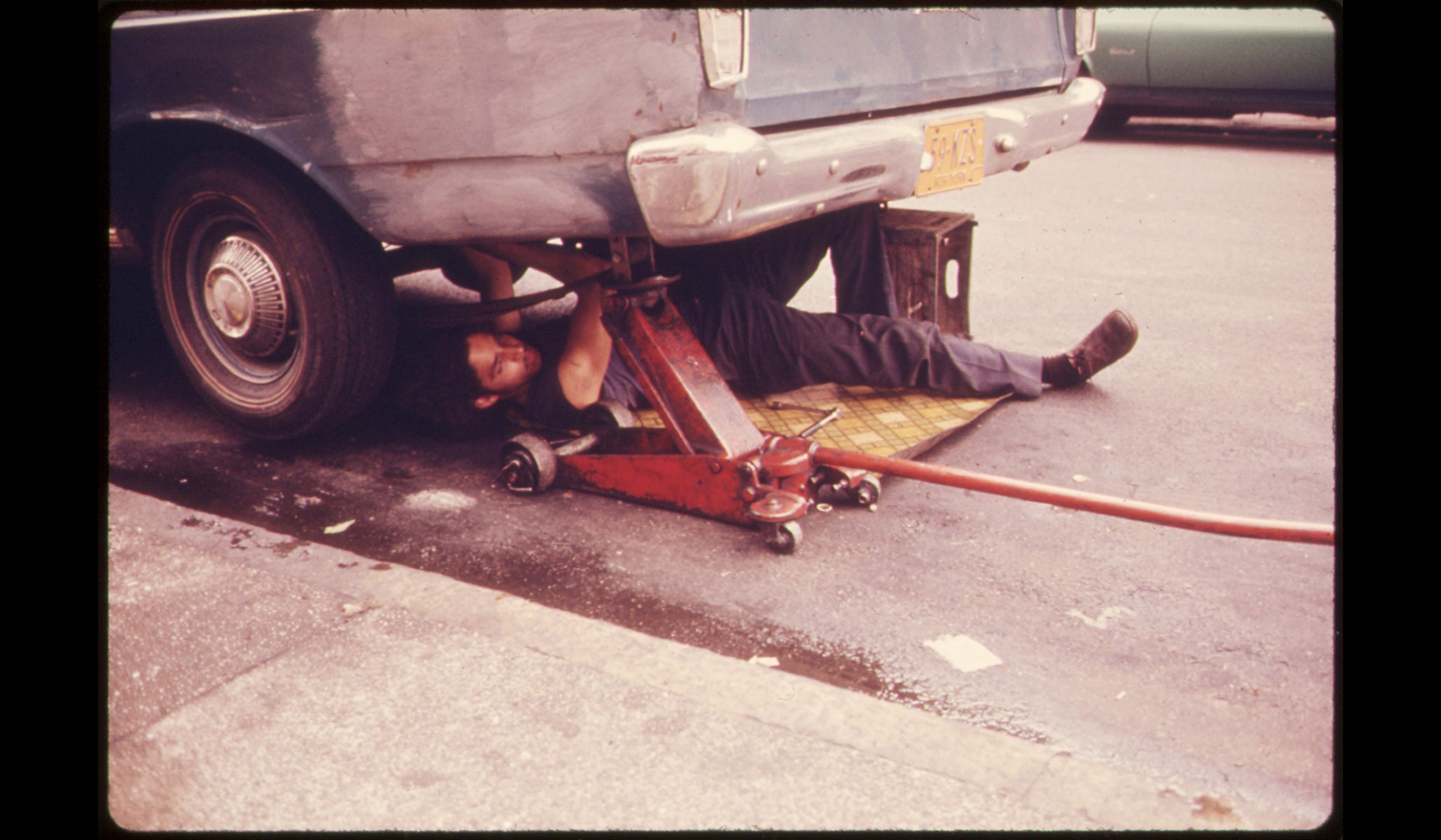
Manhattan side of the Brooklyn-Battery Tunnel, May 1973.
Will Blanche/Project DOCUMERICA/National Archives
Over miles and half hours you find yourself playing long games of tag. There is that car the shade of bug-blue again. And the little geography lesson on the side of a U-Haul. No doubt they think similar thoughts of me — damn, that is one old Subaru.
After two hours, traffic lightened a bit. But the journey seemed endless. Even small American states are pretty big. The highway curved inland, and shrank to two lanes. Less lebensraum, but fewer contending powers. Then, finally, the exit to a street once more, only this one ran between farms still under cultivation or subdivided into lots where parents waited on driveways to greet their kids leaving the school bus. A Congregational church, a green: arrival. Three hours, on the dot.
Business done, back I went. The way up and the way down are the same, and since I would be going against rush-hour traffic, this same should have been shorter. So it was — until the eponymous expressway, where what had been merely vexing now became almost literally unmoving. I possessed my soul in patience.
Car tag slowed to moonwalking or mimes in a city park. My companion now was the lady in front of my hood, talking on her cell as she drove, and thereby letting the occasional impatient car slip ahead of her — for what? To move ten feet farther?
I listened to CDs. Previously unreleased Hank Williams. He sang for a radio show sponsored by a flour company. He seemed to know how to play in only one key, but nobody did abjection as raw as he could. Bach partitas by Gould. How those countermelodies fly. I was glad something was moving. Schubert by Brendel. After the Bach, you wanted to say, C’mon Franz, show a little discipline. If I had gone on any longer, I might have started slagging Bruckner.
I passed one fender-bender in the left lane, five cars in a row. Nothing totaled: a crumpled trunk, a dangling rear license plate. Drivers on their phones, calling their insurers or their mates: the only motorists moving more slowly.
But the accident was not the cause of the clot, it was three lanes shrunk to two, then to one, all slowed by feeders of new traffic entering left and right.
Finally on the horizon the emerald city, then the normal frantic rush. Four hours, on the dot. That’s living.












Comments