• Biden told Harris to keep people from going to the border, and she decided to lead by example.
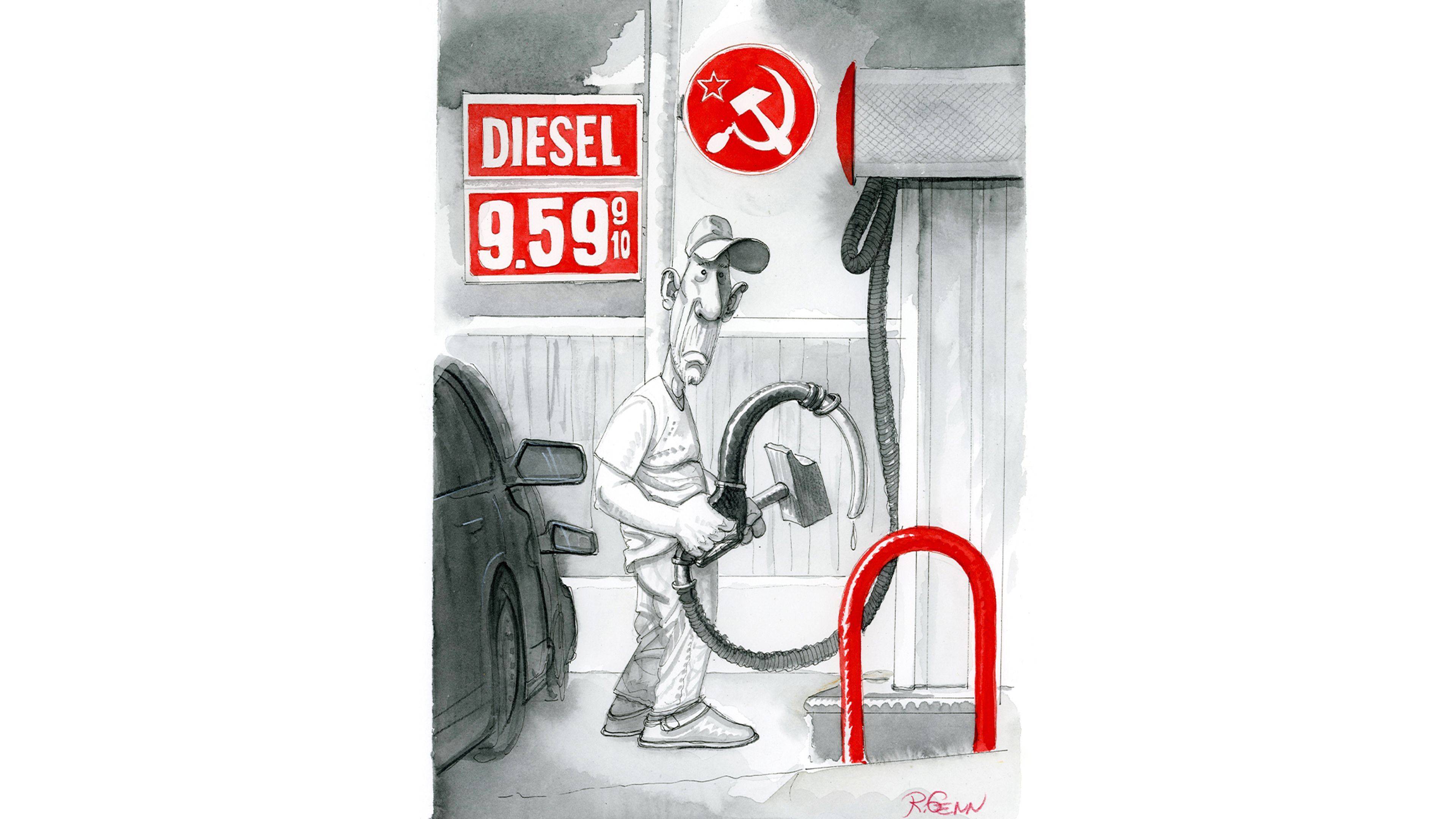
• For a second consecutive month, the jobs report came in below expectations. With the economy reopening and household incomes up since last year, employment should be skyrocketing, but Biden’s stimulus bill extended enhanced unemployment benefits to September. That means six in ten benefit recipients make more off the job than they did on the job. More worrying than the unemployment numbers is declining labor-force participation, a clear indication that Americans are choosing not to go back to work. Sixteen Republican states have taken matters into their own hands, letting unemployment top-ups expire in June. More vindication for the tens of thousands of businesses and workers that fled blue states during the pandemic.
• What Samuel Gompers said of labor’s agenda — “We do want more, and when it becomes more we shall still want more” — is true of the Biden administration’s new budget as well, with taxes, spending, and debt in the place of wages. The Congressional Budget Office expects a $3 trillion deficit this year amid economic expansion; Biden’s plan, including the “COVID relief” bill already signed into law, envisions $8 trillion in additional spending over the next decade. That’s more than $62,000 per American household. Along with all of this excess will come higher interest payments, and higher budgetary risk should interest rates themselves start rising. The only thing that is likely to be smaller is the private sector, unless Republicans and moderate Democrats slam the brakes.
• President Biden’s budget puts America’s most important pro-life public policy on the chopping block. Every year since 1976, the Hyde amendment has prohibited federal funding of abortion for Medicaid recipients except in rare circumstances. Multiple studies confirm the obvious: Subsidizing abortion results in more abortions. One of those studies, by the Charlotte Lozier Institute, found that the Hyde amendment saves tens of thousands of human beings each year from being aborted — more than 2.4 million lives saved since 1976. Put plainly, ending the Hyde amendment and funding abortion with taxpayer dollars is an evil policy, because it would cause the destruction of innocent humans. It’s also an evil policy because it treats abortion as a public good and compels millions of pro-life Americans to fund abortions. Joe Biden used to recognize that fact. During the 2020 Democratic presidential primary, however, Biden caved to his party’s activists. The fate of the popular 45-year-old pro-life policy now depends a great deal on West Virginia Democratic senator Joe Manchin’s commitment to keeping the filibuster and his willingness to stop any budget-reconciliation bill (which cannot be filibustered) that guts the Hyde amendment. Republicans should keep this issue front and center.
• Why is Donald Trump so unwilling to accept that he failed to be reelected? He thereby joins a club that includes Franklin Pierce and Andrew Johnson, presidential duds. But it also includes John Adams and John Quincy Adams, great patriots. In the teeth of COVID, he almost pulled it off. Yet his narcissism is such that he embraced and propagated fantasies of fraud in close states, bullied Republican election officials, joined forces with kooks and grifters, and finally sent an angry crowd to the Capitol and reportedly watched in bemused approval as its angriest members tried to trash the place. His latest gambit is talking up the notion that by August, after “audits” in Arizona and Georgia have been completed, he will be reinstated as president. A normal man would know that believing and saying this makes him sound nuts. The former president, or his counselors, must face reality if he is not to become the Norma Desmond of Mar-a-Lago.
• A Reuters/Ipsos poll found that Republicans were much more likely than everyone else to say that the January 6 attacks on the Capitol were led by left-wingers trying to make former president Trump look bad and that the people there were mostly peaceful. But in any case Trump was not to blame, not even “partly.” The espousal of ludicrous beliefs to scratch a partisan itch is not novel: When George W. Bush was president, many Democrats told pollsters they thought 9/11 was an inside job. Some of these respondents believe what they are saying, although many of them have not thought it through; others are fragging the pollsters. Whatever the ratio, it is not a sign of health, for the party or the country, that so many people are willing to affirm nonsense — and that so many Republican leaders, starting with Trump, are encouraging it.
• Michael Flynn, a former lieutenant general in the United States Army and short-lived national-security adviser to Donald Trump, told an audience at a QAnon-affiliated event in Dallas over Memorial Day weekend that there is “no reason” why there could not be a Myanmar-style coup in the United States. “I mean, it should happen here,” he continued. He issued an unconvincing denial afterward. It is shameful for any American to call for a military coup against the country’s elected government. It is dangerous and alarming when a man who once occupied high-ranking positions in the military and executive branch is doing so.
• The Georgia Republican Party censured Secretary of State Brad Raffensperger at its convention on June 5 — the same retreat that saw Governor Brian Kemp booed. Both are running for reelection in 2022. If the resolution of censure is to be believed, Raffensperger is guilty of failing to “perform his duties in accordance with the laws and Constitution of the state of Georgia.” This is nonsense. Raffensperger has been villainized in some quarters of the Right not because of his job performance, but because Donald Trump failed to capture the state’s electoral votes for the GOP for the first time since 1992 and Raffensperger refused to advance Trump’s schemes to reverse that result. Many in the party are too emotionally attached to the former president to recognize the truth of who is to blame for his loss. Consequently, they have resorted to scapegoating Raffensperger. The embattled secretary is no tool of the Left; he convincingly and fervently defended Georgia’s much-maligned election bill against the smears of Democrats including Joe Biden and Stacey Abrams. But he won’t lie about the 2020 election, and admirably goes on performing his duties and speaking the truth despite the political consequences.
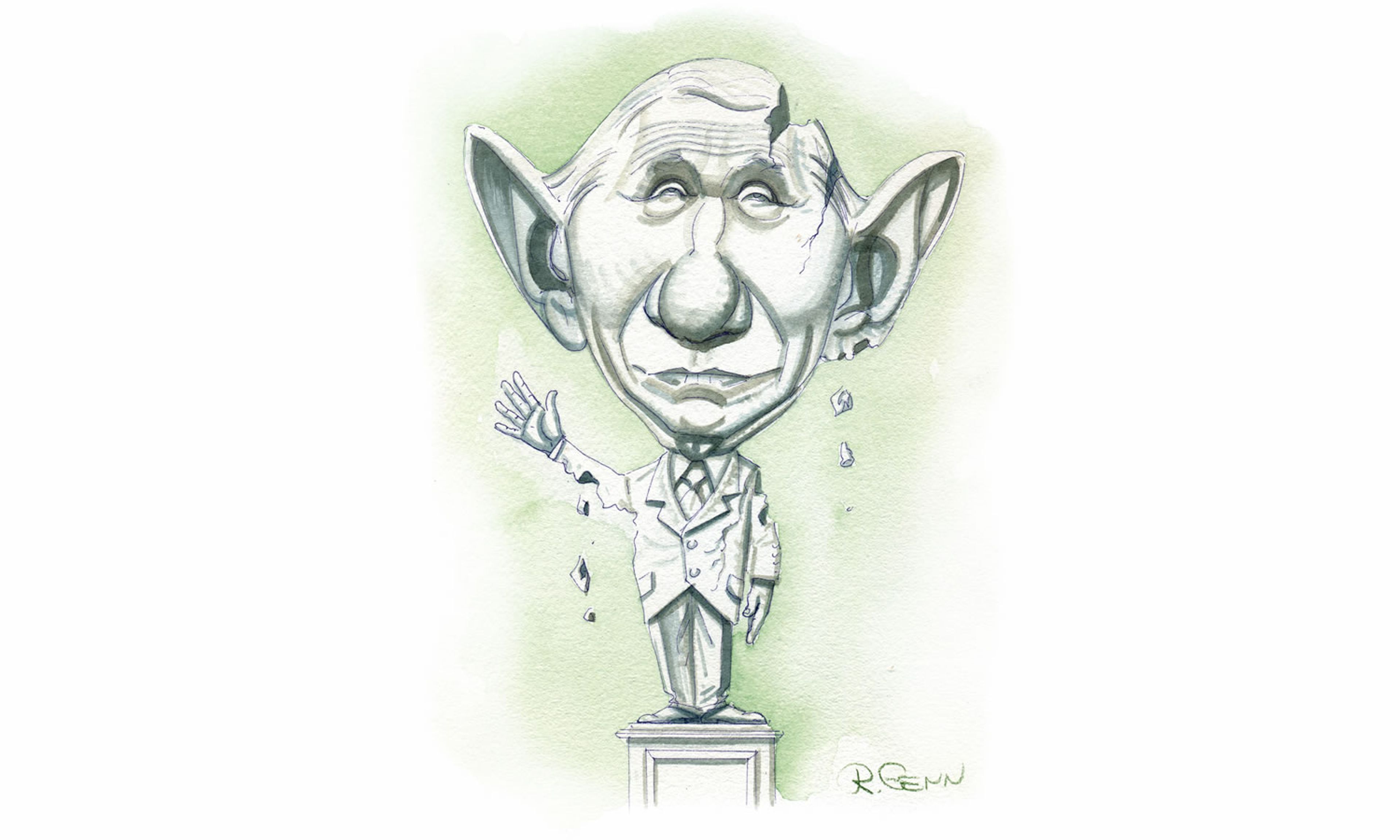
• Thousands of Dr. Anthony Fauci’s emails were released to the public via FOIA requests from BuzzFeed and other outlets. They give us more evidence on which to judge the face of American public health during the COVID crisis. Early emails about the possibility that COVID-19 leaked from a lab in Wuhan have a slightly panicked tone, with Fauci urging that the conversation move to the phone line. What we find consistently is a man working very hard, but working from adamantine prejudices. Instead of leading the scientific consensus, he merely stands in front of it, even as it contradicts itself. He denigrated store-bought masks at the start of the crisis, and his U-turn on them lacked scientific conviction. As Americans come out of this crisis and begin to reflect on how we handled it, the tendency of Fauci and other public-health officials to chase after and ratify respectable liberal opinion, to try to manipulate public behavior rather than speak with candor to a self-governing people, will look worse and worse.
• In the past, advocates of stem-cell research that destroys human embryos reassured those with qualms about it that they would confine their work to the earliest embryos, stopping once the 14-day mark had passed. Because it was not a restriction that made any difference in principle, most pro-lifers weren’t fooled. Now that researchers are capable of working past 14 days and believe they can yield benefits from it, the International Society for Stem Cell Research is scrapping the limit. It also wants to loosen the rules on creating embryos that are partly human and partly nonhuman animals, again for research purposes. The Senate just voted on a ban on federal funding for these chimeras; it was defeated when all the Democrats voted to allow the funding. Press coverage has been scant and superficial. Republicans ought to draw public attention to the issue, and note that the group’s cynical evolution is a case study in why industry self-regulation is an empty promise.
• The decision by the Biden administration to suspend the oil and gas leases in the Arctic National Wildlife Refuge that were formally issued in (almost) the last hours of the Trump presidency builds on an earlier decision by the White House to pause new oil and gas leasing permits on federal land. That’s so even if the underlying argument for this more recent suspension can also be read as the latest chapter in a wrangle over development in ANWR that has been going on for years, rather than as simply an extension of the administration’s aggressive climate-change agenda. The decision wasn’t entirely unexpected (ANWR leases went for very low prices) and was welcomed by some local indigenous people, if by no means unanimously. It was condemned by leading Republicans in the state, including the state’s entire congressional delegation and Governor Dunleavy. They were right, both on the facts of this particular case and as a broader matter of principle. Like it or not, the world is going to rely on fossil fuels for many years to come. It is better — environmentally, economically, and strategically — that as much as possible of that need be met by tightly regulated and, in terms of what they produce, cleaner American companies than by less scrupulous competitors abroad, many based in countries that do not wish the West well.
• Governor Ron DeSantis of Florida has made few missteps since he won election in 2018, but the “Big Tech” bill that he signed in June represents a notable exception to that rule. It is based upon a faulty premise, parts of it are almost certainly unconstitutional, and it contains a carve-out for the Disney Corporation that is impossible to justify with a straight face. All in all, the bill is that tragic thing: the wrong answer to a real problem. Republicans in the Florida legislature have been keen to sell the bill as a set of “consumer protection” rules that serve to uphold the First Amendment. But this badly misstates the nature of America’s fundamental law. The First Amendment exists to limit viewpoint discrimination by the government, not by private enterprise. When, on July 1, the law goes into effect, it seems certain that it will be immediately dragged into the courts. There are better things for Governor DeSantis to be doing with his time than this.
• But DeSantis has also recently taken a strong stand for common sense. Amid major pushback from progressives and national media, he signed a bill requiring high-school and college athletes to compete against members of their own biological sex. Most media outlets billed the law as an effort to “ban transgender athletes,” but the Fairness in Womens’ Sports Act and other state laws like it do no such thing. Whatever one thinks of the notion that a person can alter his or her gender identity, most of us still understand how unjust it is to force female athletes to compete against men.
• Attorney general of Texas is a big job. Seven former Texas AGs have gone on to become governor, including Greg Abbott. Three have become senators, including John Cornyn. The current AG, Ken Paxton, is up for reelection in 2022 and richly deserves a primary challenger. He has been under state criminal indictment for securities fraud since 2015, with the process delayed by legal wrangling over where to try him. Federal criminal and SEC charges were dismissed in 2017, but he remains embroiled in a second securities-fraud dispute with former business partners. Paxton is also under FBI investigation; former aides claim that an Austin real-estate developer remodeled his home and gave a job to his mistress in exchange for official favors. As AG, Paxton led Texas’s overreaching lawsuit against Pennsylvania over the 2020 election, which the Supreme Court swatted away, and spoke at the “Stop the Steal” rally preceding the Capitol riot. Texas land commissioner George P. Bush has announced a challenge to Paxton, and that is good. But Bush’s obsequious embrace of Donald Trump at the expense of his own family appears to be an overcompensation for the skepticism of his father, Jeb. Bush has preemptively announced that he would support Trump for another presidential run in 2024, and at his kickoff rally he handed out beer koozies with a 2018 quote from Trump: “This is the only Bush that likes me! This is the Bush that got it right.” We understand populist campaigning and avoiding conflict with Trump, but a man who aspires to be the chief law officer of the state should have more self-respect.
• Primaries for the New York City mayor’s race come on June 22. Although there are two contenders for the GOP nod — Curtis Sliwa, founder of the Guardian Angels, and Fernando Mateo, a Dominican-American small-businessman — the race will be won in the Democratic primary, which has a field crowded with leftists. Scott Stringer, a longtime pol, has been hit with two accusations of sexual harassment. Maya Wiley, a former lawyer for current mayor Bill de Blasio, wants to spend less money on the police. Kathryn Garcia is another de Blasio veteran (sanitation commissioner). Best of the lot are the two front-runners in the polls. Entrepreneur Andrew Yang’s entire political experience consists of a long-shot race for the presidency last year. But he has a pleasant demeanor and an outsider’s freshness. Eric Adams, who now leads Yang, made his name complaining about the NYPD, in which he rose to the rank of captain. Lately, though, he has been tough on crime: “Black and brown babies are being shot in our streets, hate crimes are terrorizing Asian and Jewish communities, and innocent New Yorkers are being stabbed and shot on their way to work.” COVID, crime, taxes, and de Blasio have brought the city low. The winner will have his work cut out for him.
• George Floyd Square in Minneapolis is a makeshift permanent-protest site at the intersection where Floyd was murdered. At the one-year anniversary of his death, a day of commemorative activities was interrupted by shots from a speeding car into a nearby barbershop (fortunately no one was hurt). Antifa of Portland, Ore., has kept that city warm with periodic rampages; local and federal prosecutors are finally throwing the book at rioters, indicting more than two dozen in recent weeks for months’-old attacks on, irony of ironies, Democratic Party headquarters. Meanwhile, Washington Square Park in Greenwich Village, New York City, suffers not from race warriors or anarchists but from old-fashioned druggies and dealers who have turned the tony green spot into a 24/7 open-air souk. It took cops in riot gear to break the party up. Heartland, West Coast, East Coast: Wherever you look, the inversion of the old demonstrators’ slogan — “No justice, no peace” — is played out: No peacekeepers, no justice. The fact that some of these disorders are stoked by police misbehavior is the exception that proves the rule. The solution to bad policing is not no policing, but good policing. It can — and must — be done.
• The Tulsa Massacre was a race riot that raged in the Oklahoma city from May 31 to June 1, 1921. A national culture of lynching, and a local police department undermined by corruption, provided the tinder. The spark was the arrest of a young black man (a shoeshiner) for the alleged assault of a teenage white girl (an elevator operator) and a report that the accused would be lynched. Armed white and black mobs gathered at the county courthouse. The first shots became a conflagration. Hundreds of black homes and businesses were burned, some by turpentine balls dropped from private aircraft. Death-toll estimates range from 39, 26 black and 13 white (official), to 300. “God grant,” said President Warren Harding, “that . . . we never see another spectacle like it.” A dark page in American history, worse for being quickly turned and forgotten. Commemorations, sped by the HBO show Watchmen, have brought it back to light. Americans periodically realize what a violent people they can be. Race is often the tinder, though not always (the Hatfield–McCoy feud, the lynching of Joseph Smith, serial killers). God grant we do better.
• “You are making the greatest mistake of your life,” General Winfield Scott told Colonel Robert E. Lee when the younger man, a hero along with Scott of the Mexican War, decided to follow his home state Virginia into the Confederacy. (Scott, a fellow Virginian, stayed loyal.) After the Civil War, Lee could have had any job in the South he had led to defeat. The job he chose was to be president of Washington College, a struggling school in the Blue Ridge. Lee spent the end of his life educating young men rather than killing them; after his death the school added his name to its. To the disappointment of woke faculty and students, the trustees have voted to keep it, though they will rename the Lee Chapel, where he is buried. Men and women who make no mistakes will bide their time until they can erase the remaining blot. Until then the grateful must do their duty.
• There are few academic fields as politically incorrect as classics — all those dead white males, working in dead languages. Princeton University has decided that it will no longer require classics majors to learn Greek or Latin. Something to do with racism and oppression generally. We hope that classics majors at Princeton — home of Robert Fagles, the late, great translator — will learn one or both languages anyway, knowing that you can’t be a real classical scholar without such training. In other words, we hope that students will have higher standards than the university. One member of the classics faculty is on record as saying that the world may be better off without study of the classics. Those who value the field may have to fight for it, or we will soon not have any classics majors at all, with or without the languages. If this sounds alarmist to you: Remember, Cassandra was right!
• Google agreed to pay a $270 million fine to French regulators for alleged abuse of its power in the online-advertising market. The case concerns Google Ad Manager, which connects online publishers selling ad space with brands buying it. The problem: Google itself is one of the largest sellers of ad space on its search engine and on YouTube, among its other properties. The French Competitive Authority charged Google with giving preferential treatment to its ad properties over those of competitors. While the fine is nominal, it marks the first major regulatory action targeting Google’s opaque ad business. With the U.S. and the U.K. conducting ongoing inquiries, the tech giant’s practices are likely to come under greater scrutiny. You don’t have to be a trustbuster to recognize a conflict of interest in Google’s ad exchange. While overzealous regulation would harm consumers, some commonsense transparency requirements would be welcome.
• The State Department has authorized our embassies around the world to display Black Lives Matter flags and other such banners, “appropriate in light of local conditions.” The U.S. embassy at the Holy See is flying a “pride” flag, in support of gay rights. “The United States respects the dignity and equality of LGBTQI+ people,” tweeted the embassy. “LGBTQI+ rights are human rights.” In Congress, Republicans have proposed a bill to outlaw such banners at our embassies. We think this is right: The American flag, the Stars and Stripes, ought to suffice, representing “liberty and justice for all.”
• The Senate passed the U.S. Innovation and Competition Act (USICA), a $200 billion measure to turbocharge U.S. efforts to compete with China. Unfortunately, it’s largely toothless. The package’s main attraction is a massive funding boost to the National Science Foundation for research on critical technologies, such as AI and quantum computing. But the legislation does almost nothing to protect that research from potential theft of intellectual property. Meanwhile, other provisions to craft a U.S. strategy for competing with China are, with some exceptions, largely symbolic. The legislation devotes $52 billion to strengthening U.S. production of semiconductors, but already there are signs of diversion into pork. It also includes provisions creating new sanctions authorities to punish and deter, among other things, complicity in Uyghur forced-labor abuses. The House has a chance to improve the legislation, but that’s unlikely to happen. Congress has far to go before it can be said to be taking China seriously.
• In 1984, Orwell gave us a memorable concept: the memory hole. For the past 32 years, the Chinese government has tried to memory-hole the Tiananmen Square massacre, which the government committed on June 4, 1989. The government has largely succeeded. Mention of the massacre is strictly forbidden in China. An exception has long been Hong Kong, where a candlelight vigil has been held in Victoria Park. But the authorities have now clamped down on free expression, making Hong Kong a city nearly indistinguishable in this respect from any other in China. Participation in a vigil is punishable by up to five years in prison. Yet some people gathered in or near Victoria Park anyway, holding candles, or their smartphone with its light on. An unknown number were arrested. Reuters quoted a district councilor, Derek Chu, saying, “Being able to have a memory is a basic human right. Taking that away is beyond anyone’s authority. We need to remember those people who have been sacrificed for democracy in the past.”
• The Chinese Communist Party announced that couples would be allowed to have up to three children. Four decades after adopting its brutal one-child policy, China now faces a rapidly aging and shrinking population: a demographic disaster alarming enough to compel the Politburo to change course. But the original policy — depending on forced abortions, sterilization, and infanticide — was heinously successful enough that its effects are likely to be irreversible. After the CCP changed the cap five years ago to allow for two children, birth rates ticked up initially and then continued to plummet. China’s rulers may find that there are limits to what coercion and control can accomplish.
• In the future, when China is a free country, it will look back with nothing but disgust on the innumerable American corporations, institutions, and celebrities that helped enable authoritarian rule under some cockamamie misconception that the Chinese people are perfectly content to live indefinitely without the basic freedoms we have taken for granted for more than 200 years. But John Cena, the wrestler turned actor, shouldn’t wait for Chinese democracy before he feels ashamed of himself; he should start right now. After giving an interview in Taiwan in which he referred to that independent redoubt of democracy as “a country,” he issued a revoltingly abject apology aimed at the Chinese Communist Party in order to protect the mainland Chinese moneymaking prospects of his new film F9, which may well earn more in the Middle Kingdom than in North America. Cena has spent more than ten years studying Mandarin, seemingly to build up to this defining moment of ritual self-humiliation. He may play a tough guy on screen, but for lovers of freedom and democracy it is now impossible to think of him as anything but the toady who hurled himself at the CCP’s feet to polish its jackboots with his tongue.
• The political drama now unfolding in Israel is more and more extraordinary. The root of it is that Benjamin Netanyahu (“Bibi” to friend and foe) has been prime minister for the past twelve years and has rivals who have in common only that they would do almost anything to replace him. Proportional representation is the Israeli parliamentary system, which means that any number of parties may stand for incompatible ideologies and that deadlock is a common outcome. In the last two years, four general elections have produced this deadlock. Each time, Bibi’s party, Likud, has had a plurality but not the 61 seats required to form the government in a house with 120 seats. Black arts come into their own. Rather than hold a fifth election, eight of the small parties have agreed to form a coalition. Once Bibi’s chief of staff, the coalition’s leader, Naftali Bennett, heads a party with only six, or possibly seven, loyal parliamentarians, hardly a basis for power. Stranger still, the coalition comprises Ra’am, an Islamist party under Mansour Abbas, an Israeli Arab in a position to be disruptive. Israel may be entering only another phase of deadlock.
• With the Taliban on the cusp of returning to power, it is very dangerous to be a woman in Afghanistan. It is even more dangerous to be a woman who reports the news. Mina Khairi, age 23, was an anchorwoman at Ariana News TV. After work one day, she was blown up in her minivan, along with her mother and two others. In all likelihood, there will be no honest reporting before long, and no women in Afghan public life, which is a victory for darkness. Those who persist are incredibly brave.
• The dictator of Belarus, Alexander Lukashenko, forced down a plane traveling from Athens to Vilnius. As the plane was descending to Minsk, Roman Protasevich put his head between his legs and said, “They’re going to execute me.” He is a Belarusian opposition journalist, age 26. They have not executed him. But they have tortured him, as is clear from a videotaped “confession” he was forced to make. Whatever the regime’s intent, the effect was to put its evil on full display.
• Russell Moore announced his resignation as president of the Ethics & Religious Liberty Commission (ERLC), the public-policy arm of the Southern Baptist Convention (SBC). Since Moore has been critical of Donald Trump and many Southern Baptists are Trump supporters, the media have been satisfied to report that support for Trump is the source of tension in the SBC. But on June 2, a member of the ERLC board of trustees leaked a letter that Moore wrote to the board in February 2020. In it, Moore makes clear that from his point of view, the conflict isn’t about Trump at all. He wrote that he saw organizational patterns in the SBC that prevented sexual abusers from being held accountable. He also recounted specific instances of racism among members of SBC leadership. Moore felt that some SBC leaders were using psychological pressure to keep him from speaking out on these topics, and his departure makes sense, at the very least, as a decision to leave a toxic work environment. Accusations of “liberalism” against Moore — who believes in biblical inerrancy, the traditional definition of marriage, and the sanctity of human life — never really made much sense, and his letter sheds some light on what he sees as the true nature of the conflict. The SBC is the largest Protestant denomination in the U.S., and it’s in all American Christians’ best interest that it be a healthier organization.
• Look out, Bachman’s sparrow. Because you were named after a 19th-century Lutheran minister with connections to slavery, you might lose your name. “McCown’s longspur” went the way of the dodo last summer, when it was discovered that John McCown was a Confederate general. More than 140 North American bird species have eponyms, from Anna’s hummingbird to MacGillivray’s warbler, but some in birding communities are determined to see these types of names completely rooted out. Even the presidents of major avian associations are applauding the changes and “forming an ad-hoc committee now to address the issue over the coming months.” Cancel culture is for the birds, alas.
• After the construction-company executive raised $600,000 for Ronald Reagan’s presidential run in 1980, the candidate named him campaign chairman in New Jersey, won the election, and appointed him the secretary of labor. That smooth and quick was Raymond J. Donovan’s ascent to the national stage. His Senate confirmation hearings featured allegations that he had collaborated with the mob in shady business practices. He survived. As labor secretary, he sought to expand the list of industries in which employees could lawfully work at home: He was ahead of his time. By the end of Reagan’s first term, the Bronx district attorney had indicted Donovan for fraud and grand larceny, in a case involving his former construction company, the New York City subway system, and the Genovese crime family. Meanwhile, a special prosecutor was investigating an accusation that he had been complicit in a payoff to a union extortionist. Donovan was exonerated on both counts after leaving the Labor Department in 1985. He fared better in the court of law than in the court of public opinion, which lagged the first. “Which office do I go to to get my reputation back?” he asked. Dead at 90. R.I.P.
The Vote-Suppression Hoax
Senator Joe Manchin (D., W.Va.) dashed liberals’ hopes when he declared that he was not going to vote for their “For the People Act,” let alone kill the filibuster to turn it into law. The bill thus does not have the support of a majority of senators, let alone the supermajority it would need to go to President Biden. It is dead.
Good riddance. While the press has gone along with the bill’s supporters in labeling it a way to protect “voting rights,” it is a sweeping proposal with many provisions that have nothing to do with voting rights. It regulates judicial ethics, for example, and institutes a generous scheme of taxpayer funding of candidates. Many provisions are of dubious constitutionality, and the courts have already nullified state-level versions of some of them. The best that can be said of its regulations of political activity is that they are in the tradition of modern campaign-finance laws, which is also the worst that can be said of them.
The bill is supposedly vital for stopping a Republican campaign of “vote suppression” in the states. That campaign is almost entirely a liberal invention. It is not suppression when Republican legislators insist on voter-ID requirements that are popular and have not, according to studies, done anything to reduce turnout for any demographic group. Nor is it suppression when legislators partially reverse pandemic-inspired changes to voting procedures. We would not defend every detail of every state bill, but then again, most bills haven’t come close to becoming law. To keep the storyline going, Democrats have had to harp on proposals that have been withdrawn (Georgia Republicans abandoned restrictions on Sunday voting, and Texas Republicans modified theirs after saying a drafting error had made them too stringent) and to distort others (no, Georgia does not forbid voters to drink water while standing in line).
Some people are treating the demise of this bill as a death knell for democracy: the very kind of rash and foolish sentiment that a healthy political system will not empower. A senator from a state that does not share his party’s passions is putting a bridle on them; violations of the Constitution are being stopped before they happen; and the country’s government is not being rearranged in response to hysteria. That’s politics working as it should.
Gain of Knowledge
Almost a year and a half has passed since the first reports of a strange new form of pneumonia making people sick in the once relatively obscure city of Wuhan, China. Fairly early on, it was clear that the Chinese government was lying about the new virus’s contagiousness and seriousness: Authorities don’t shut down Shanghai and Beijing over a routine flu bug. By April, the first curious reporters and China-watchers had realized that Wuhan was also the location of not one but two state-run laboratories researching novel coronaviruses found in bats, a remarkable coincidence — if it was, indeed, a coincidence.
In the past 18 months, the circumstantial evidence suggesting that a lab leak caused the pandemic has piled higher and higher. The natural virus that most resembles SARS-CoV-2 was found in a copper mineshaft in Yunnan Province, China, where the Wuhan Institute of Virology (WIV) collected many bat coronaviruses. The city of Wuhan is 1,140 miles from the mineshaft and well beyond the natural habitat and natural migration patterns of bats that are most likely to carry coronaviruses. After 18 months of searching, the Chinese government says it cannot find any animals infected with SARS-CoV-2, and has concluded that the wet market that was initially suspected as the origin point was not the source of the virus.
It took more than a year for a World Health Organization team of investigators to be allowed into Wuhan, and when they arrived, Chinese authorities refused to hand over raw data on early COVID-19 patients. It fit a pattern of an obstinate regime whose secrecy, crackdown on doctors telling the truth, and refusal to allow independent investigators screamed “cover-up.”
The Biden administration spent its first months in office waiting for the WHO to find some magic new way to get access, and then in late May Biden finally ordered the U.S. intelligence community to provide an update on its own investigation within 90 days. Now Secretary of State Antony Blinken is declaring that China must cooperate, but he isn’t giving many details on what the consequences of further refusal would be.
Enough obscuration and obfuscation. If the pandemic was caused by a lab leak, it ranks among the most consequential and catastrophic errors in human history. The intelligence community’s assessment must be declassified as much as reasonably possible and revealed to the public. It’s time to get answers in public hearings and forums instead of relying on leaks from unnamed sources. Figures in the U.S. who clearly had a good deal of knowledge of what was going on in the WIV should answer questions under oath. They include Dr. Peter Daszak of the EcoHealth Alliance and Dr. Ralph Baric of the University of North Carolina.
Chinese authorities and doctors are unlikely ever to publicly testify, so the regime’s refusal to cooperate should have severe consequences for the rest of the U.S.–Chinese relationship. Beijing’s refusal to share information should be publicly declared a violation of the WHO’s international health regulations, warranting rebuke and sanction. China’s government deserves to be treated as a pariah for its initial dishonest downplaying of the virus’s contagiousness alone.
The U.S. must halt gain-of-function research until safety protocols are verified as (literally and metaphorically) airtight, and must encourage allies to do the same. As our Dan McLaughlin suggested, safety may require that all gain-of-function research be conducted in remote locations, far from large groups of people. And while the National Institutes of Health paused this kind of research and later permitted it with certain safety protocols in place, revising that decision after this global calamity is more than justified.
The pandemic’s effect on American life is fading, but our hunger for the truth of how this horrific ordeal began must not fade until we get clear answers.











Comments