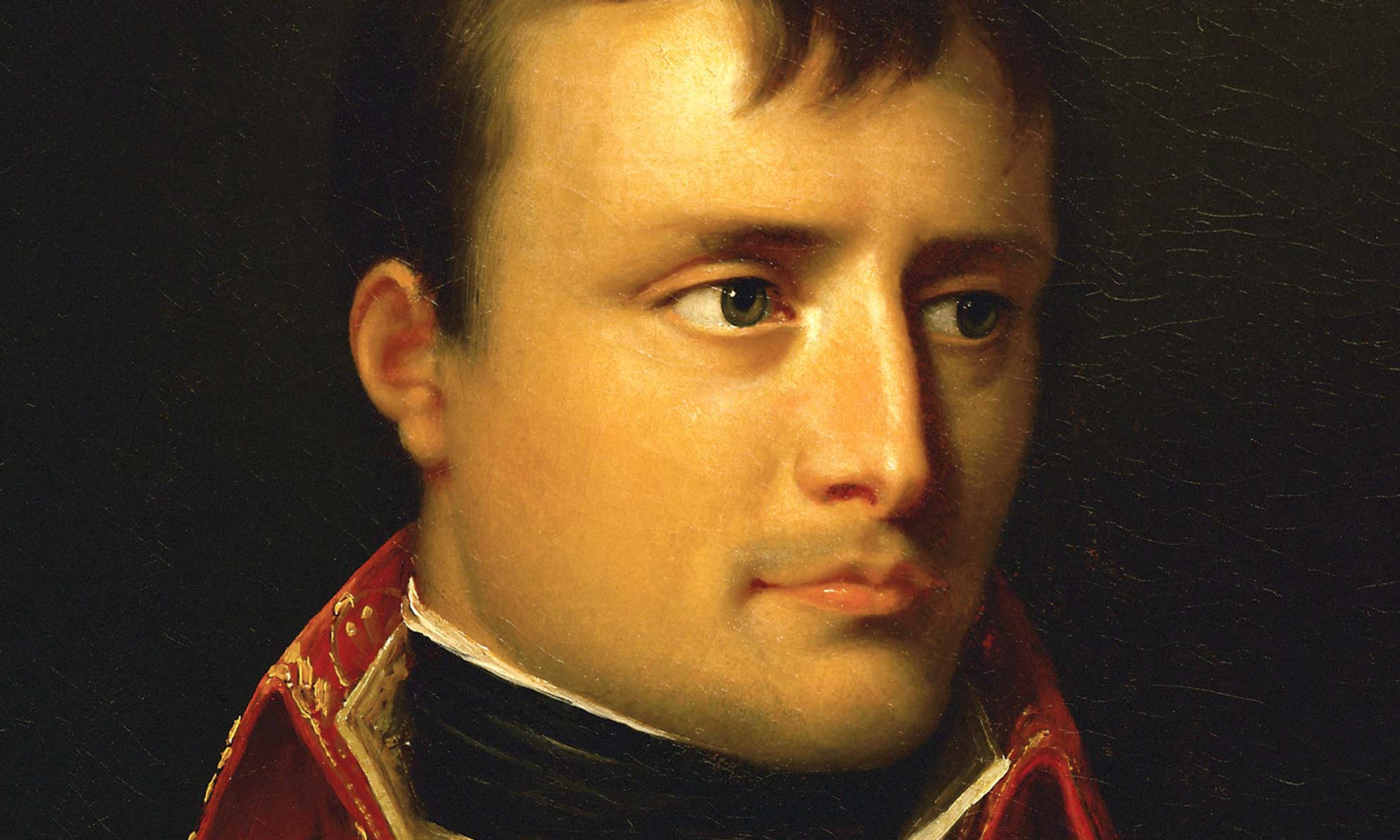
Around 8:45 a.m. on the cold morning of December 2, 1805, with a fierce battle already raging on his right flank, Napoleon Bonaparte noticed through his spyglass that a gap was developing upslope, in the center of the enemy front. “How long will it take you to move your divisions to the top of the Pratzen Heights?” he asked Marshal Soult. “Less than 20 minutes, Sire,” was Soult’s reply, “for my troops are at the foot of the valley, hidden by fog and campfire smoke.”
Napoleon decided to wait 15 minutes and then attack. Ever since, cadets at military academies, engrossed in the pages of classic military histories such as David Chandler’s The Campaigns of Napoleon (which I reread for this article), have pored over what happened next. Many movies have depicted it, most recently a biopic directed by Ridley Scott, with Joaquin Phoenix in the role of the French emperor.
Days before that December morning, having failed to defeat the Austrian army before it joined with a large Russian force, the French had been compelled to abandon their brief occupation of Vienna. The Grande Armée was far from home, dangerously extended, and now outnumbered. Concluding that only a major victory could save him, Napoleon began looking for a good spot to turn and fight.
He found it near the Moravian town of Austerlitz. “Gentlemen,” he said to his aides, “examine this ground carefully, it is going to be a battlefield.” Having ordered his rear guard to give every appearance of panic and disorder while retreating from Vienna, Napoleon now ceded the high ground of the Pratzen to the approaching Austro-Russian allies — hoping to lull them into complacency and carelessness.
As usual, Napoleon was guided by several insights that were lost on the enemy. First, the enemy forces thought they had Napoleon badly outnumbered, 89,000 to 53,000. In fact, with the overnight arrival of Marshals Bernadotte and Davout near his left and right flanks, Napoleon would have more than 73,000 soldiers. Moreover, he knew that the Russian and Austrian generals, with their emperors present, had never campaigned together and would have difficulty agreeing on any plan other than the most obvious, which was to attack his right flank. He arrayed his forces so as to encourage them. Crucially, Davout’s corps, which was approaching Napoleon’s extreme right flank, was ordered to hold back so as not to alert the Allies to the trap being prepared for them.
At what amounted to a lavish dinner party at Tsar Alexander’s tent, the Russians and Austrians debated the broad outlines of their attack long into the night, proving Napoleon’s maxim “One bad general is better than two good ones.” The emperor, meanwhile, was on his hands and knees in his campaign tent, quietly shifting small-unit figurines back and forth on a large map of the battlefield, issuing a flood of tactical-movement orders to his frantically scribbling aide-de-camp. As night fell, Napoleon was slowly turning the battlefield into a spiderweb.
His method was to lure the opponent onto favorable ground for a single ferocious attack while covering every contingency, so that the more the enemy forces struggled, the more entangled they became. That is how, throughout his campaigns, Napoleon seemed to have an immediate answer for every move the enemy made and often seemed to know his foes’ next move before they did. On the eve of Austerlitz, having already fallen for Napoleon’s ostentatious display of weakness, the Russians and Austrians resolved to do almost exactly what he had predicted.
He was confident that the enemy forces would leave their center dangerously weakened. The Austrians and Russians, he thought, probably assumed that he would not want to attack high ground ringed by escarpments. Moreover, the marshes and brooks running southwest behind the Pratzen would force the enemy to deploy westward onto the plateau. Hence, in order to press the attack on his right flank, successive enemy columns would have to approach the crest of the Pratzen and then head south downslope toward the fighting. That would leave them vulnerable to enfilade. Worse, hemmed in by its escarpments, the plateau would prove a confining space for the enemy to maneuver in, with a high probability of a traffic jam slowing down the movements of reinforcements.
Sure enough, as soon as the shooting began on Napoleon’s right flank, enemy columns started descending from the Pratzen in that direction faster than reinforcements were approaching the heights behind them, creating the gap that Napoleon noticed through his spyglass.
After waiting “a quarter of an hour” for the gap to widen, Napoleon ordered the attack. The trap sprang shut. In the first wave, Soult’s two divisions emerged from the mist and began marching uphill in massive columns totaling 15,000 soldiers. They quickly reached the crest of the Pratzen as the attack swelled to 50,000 men.
The Allies were stunned, and during the short window in which they could react, they fatally did nothing. By noon, Napoleon had broken the Allied front in three, with the main force under Russian general Buxhowden fully engaged downhill away from the French counterattack. Napoleon was soon atop the Pratzen with his main force and immediately wheeled to his right to begin the encirclement of Buxhowden.
Unable to go back whence he came, Buxhowden sought to escape farther east. He ran straight into the guns of Davout’s corps and realized that he was completely surrounded. Wasting no time (“I may lose a battle, but I shall never lose a minute,” he liked to say), Napoleon immediately ordered Davout to attack and brought up a massive battery of artillery to shred Buxhowden’s right flank.
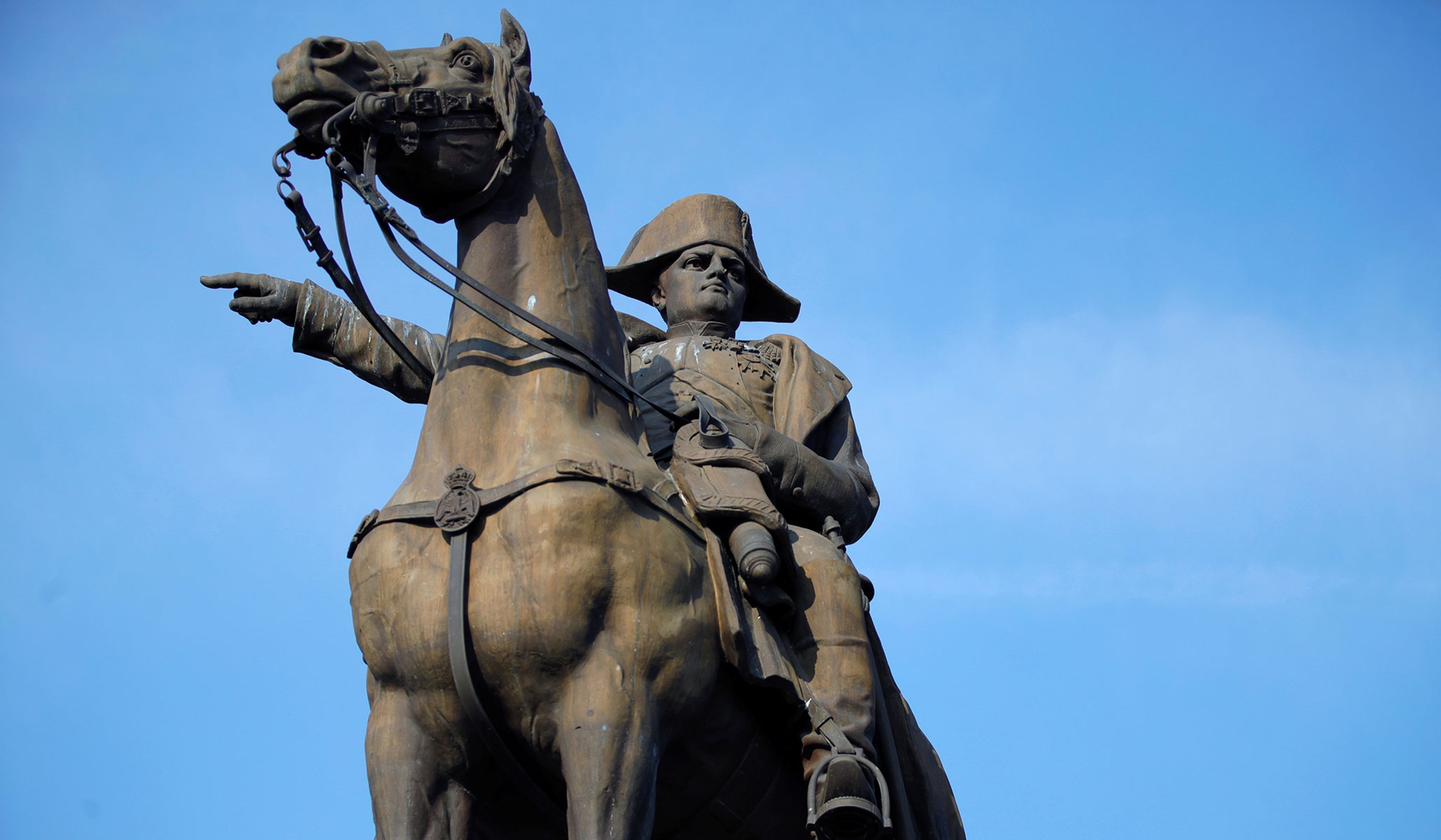
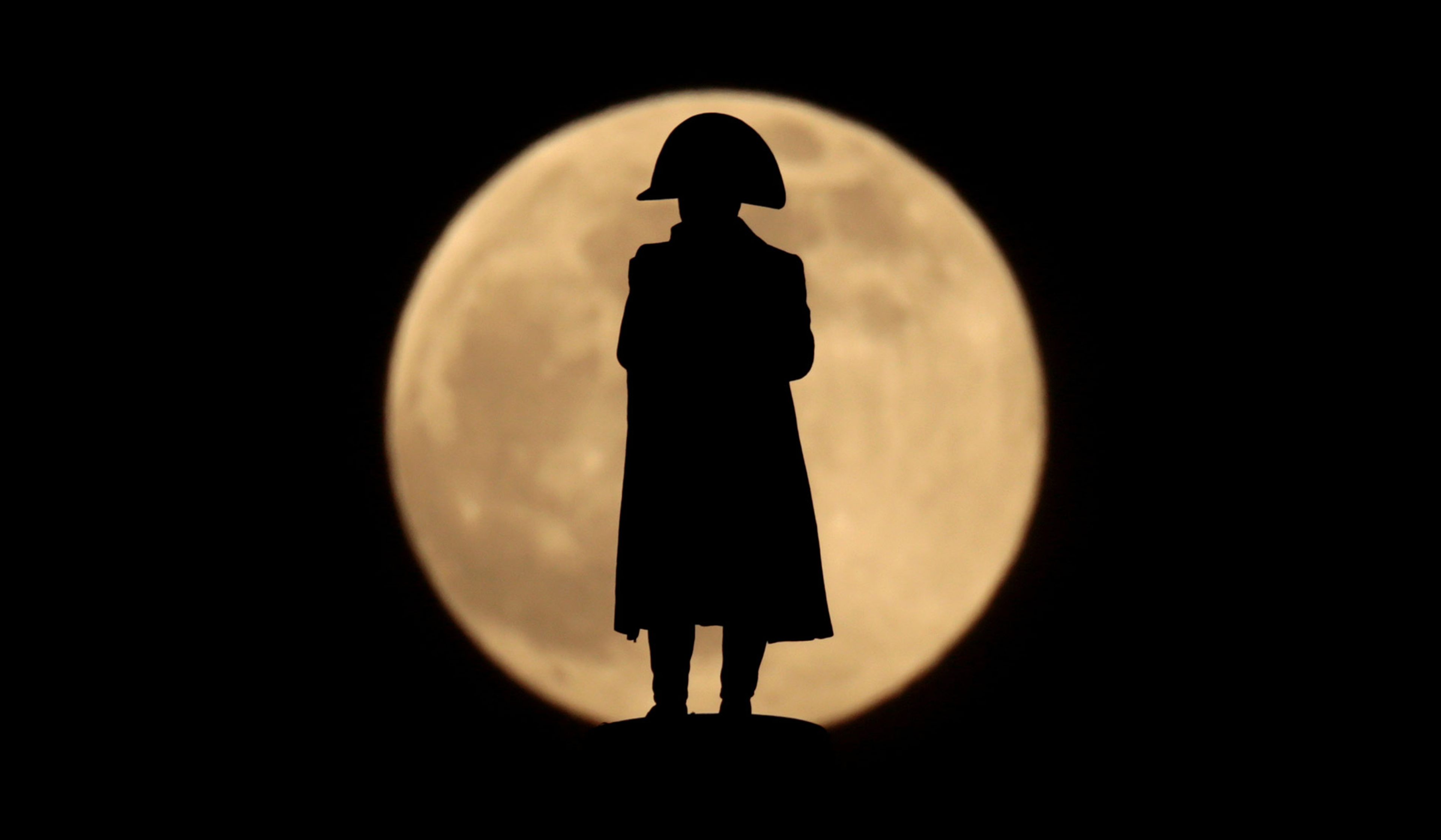
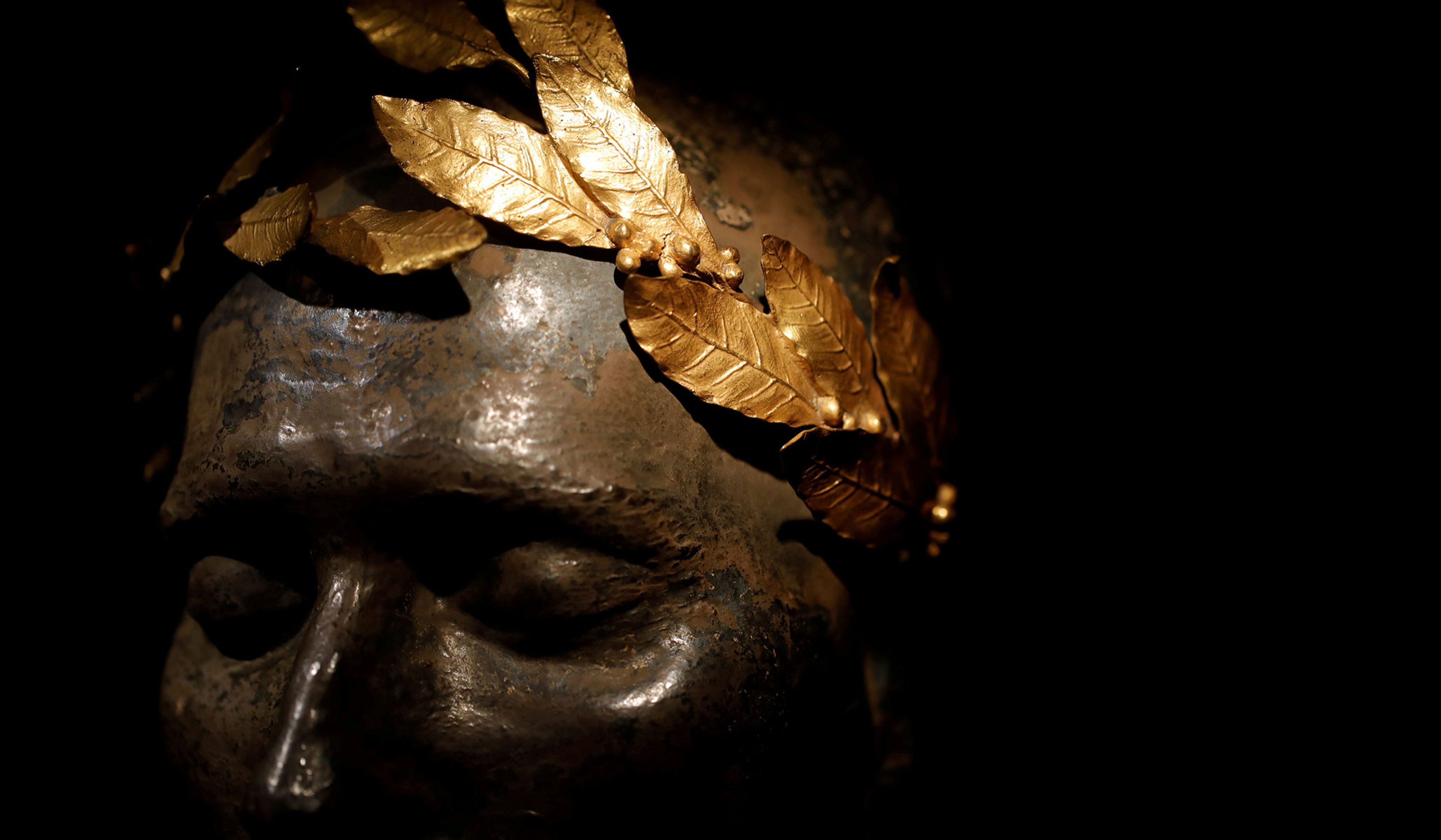
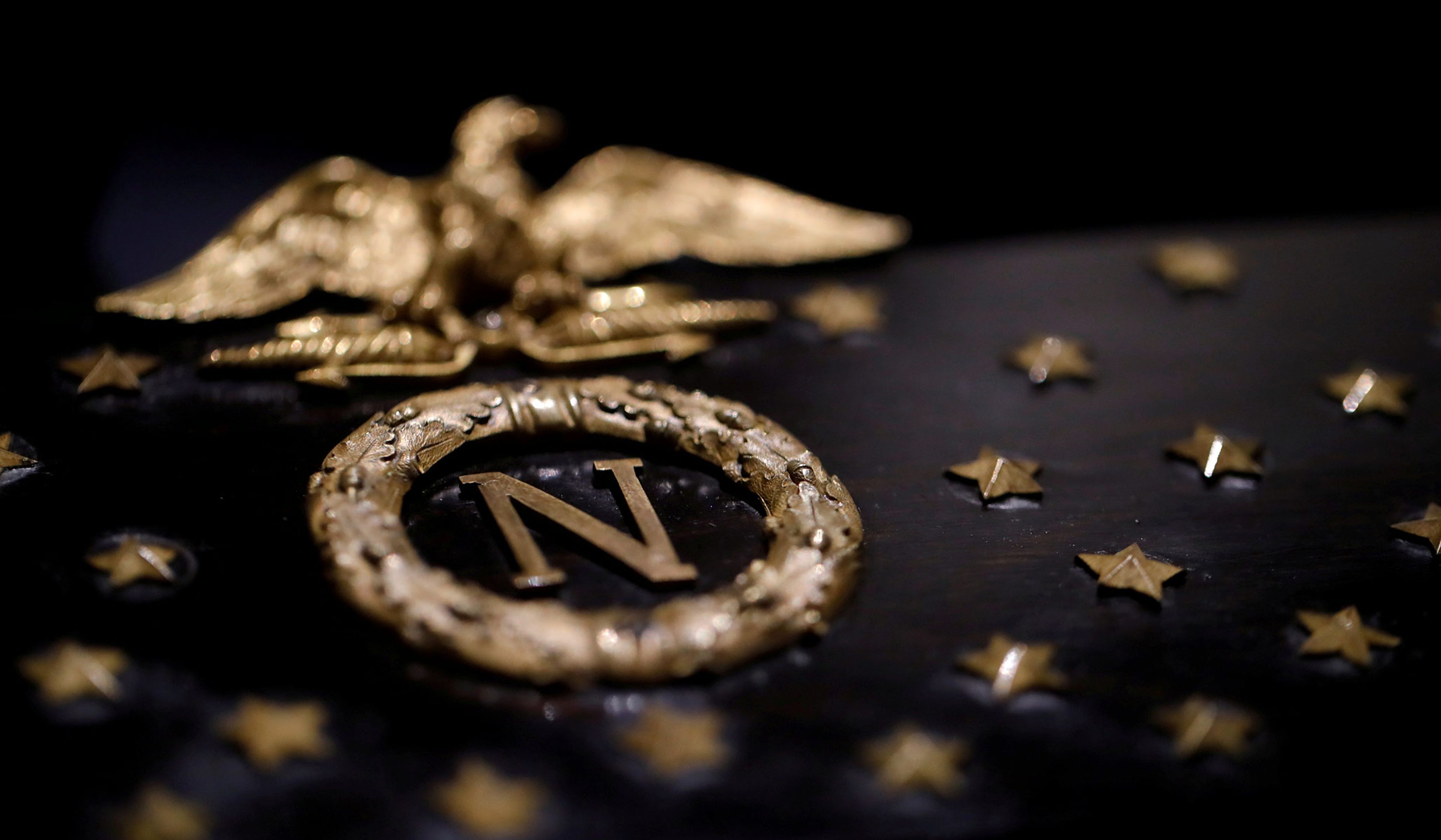
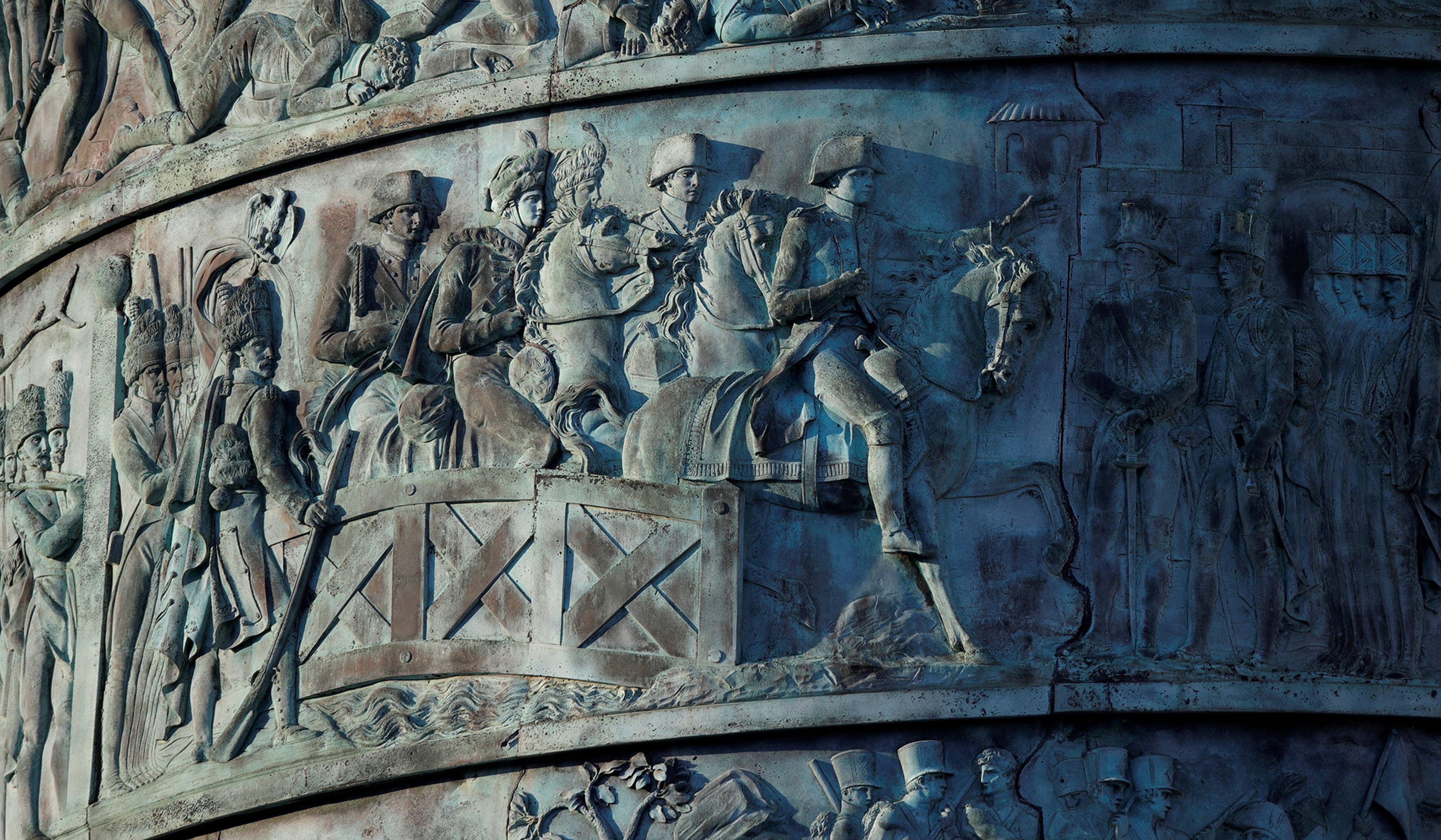
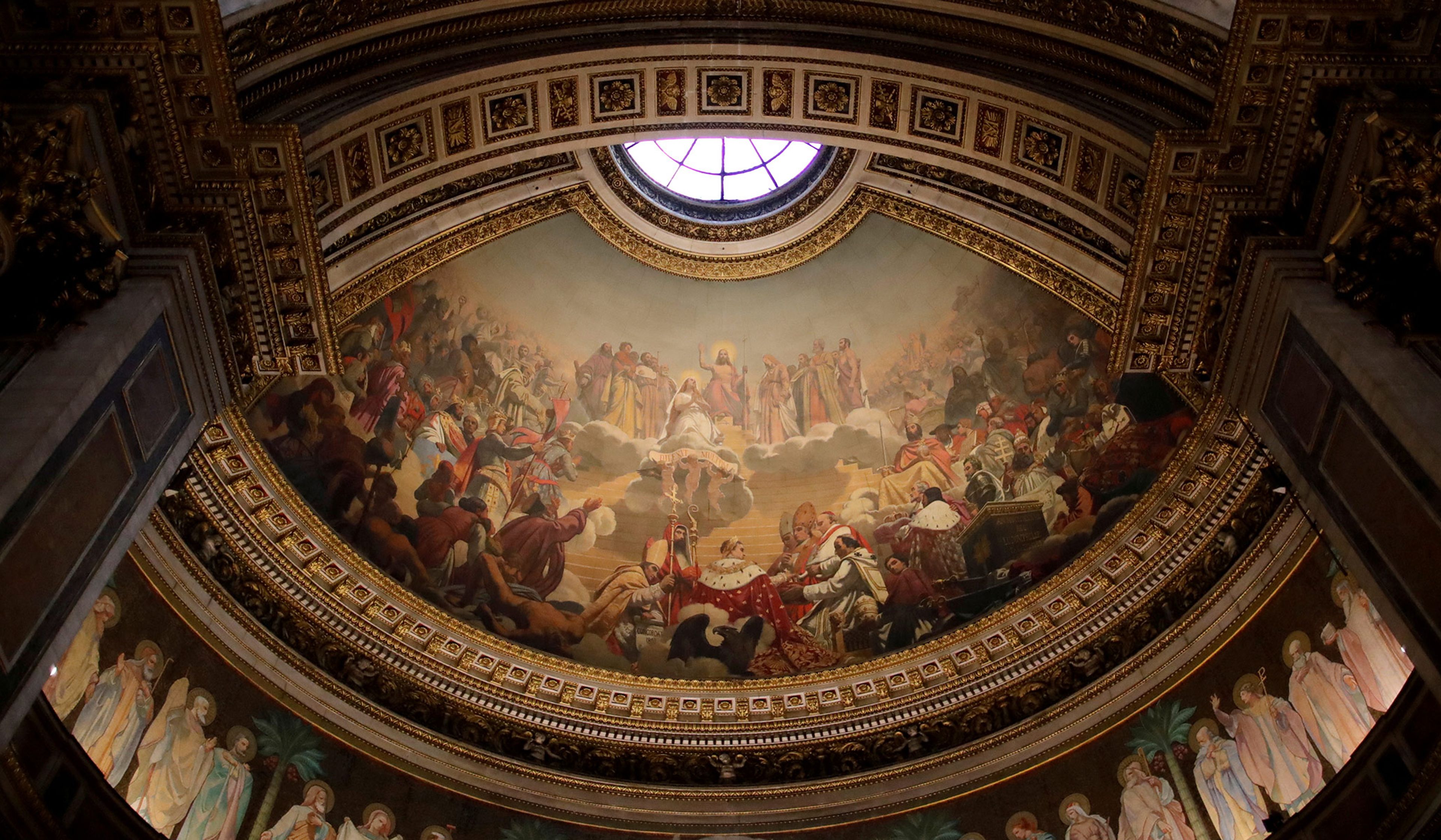
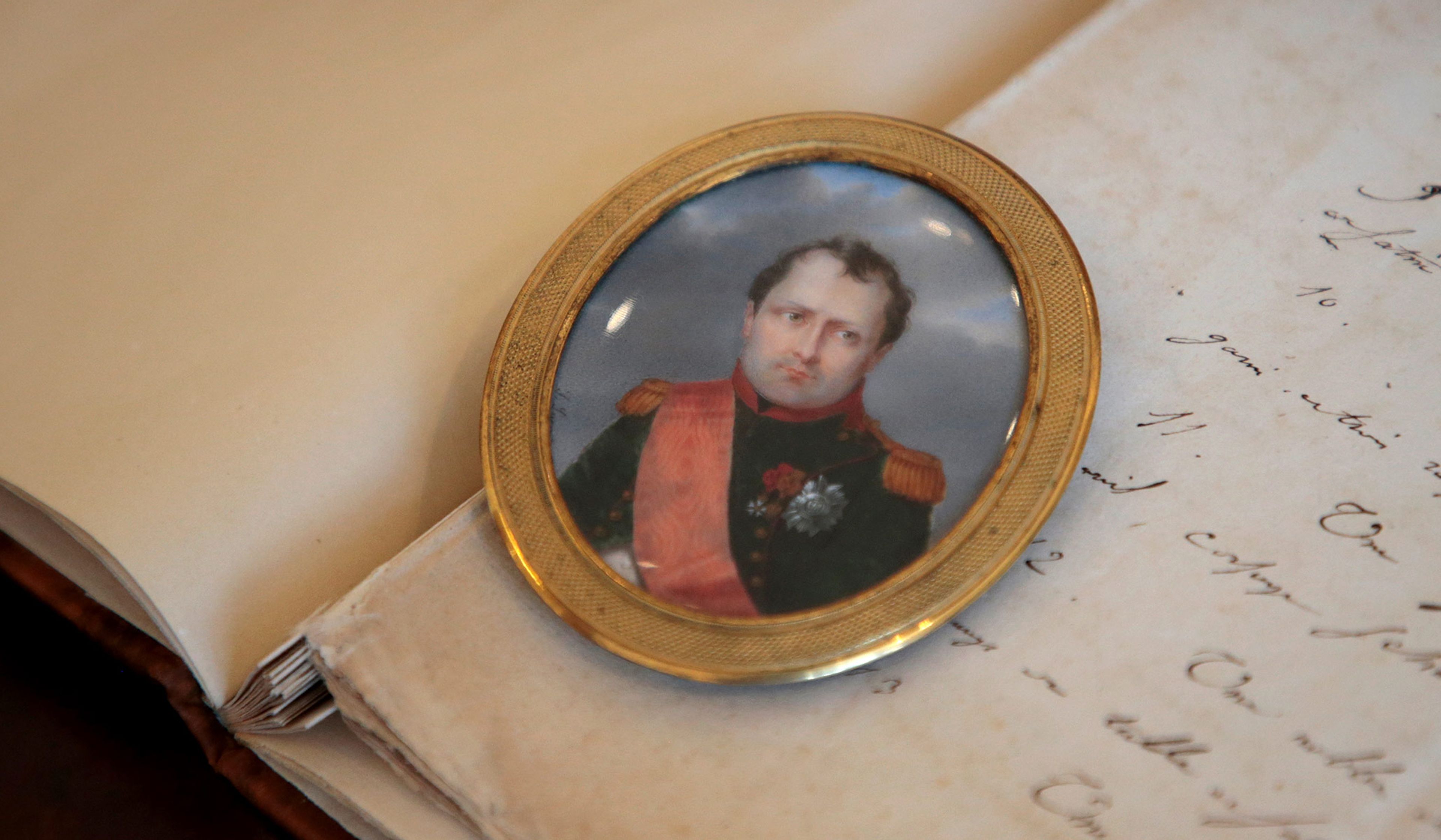
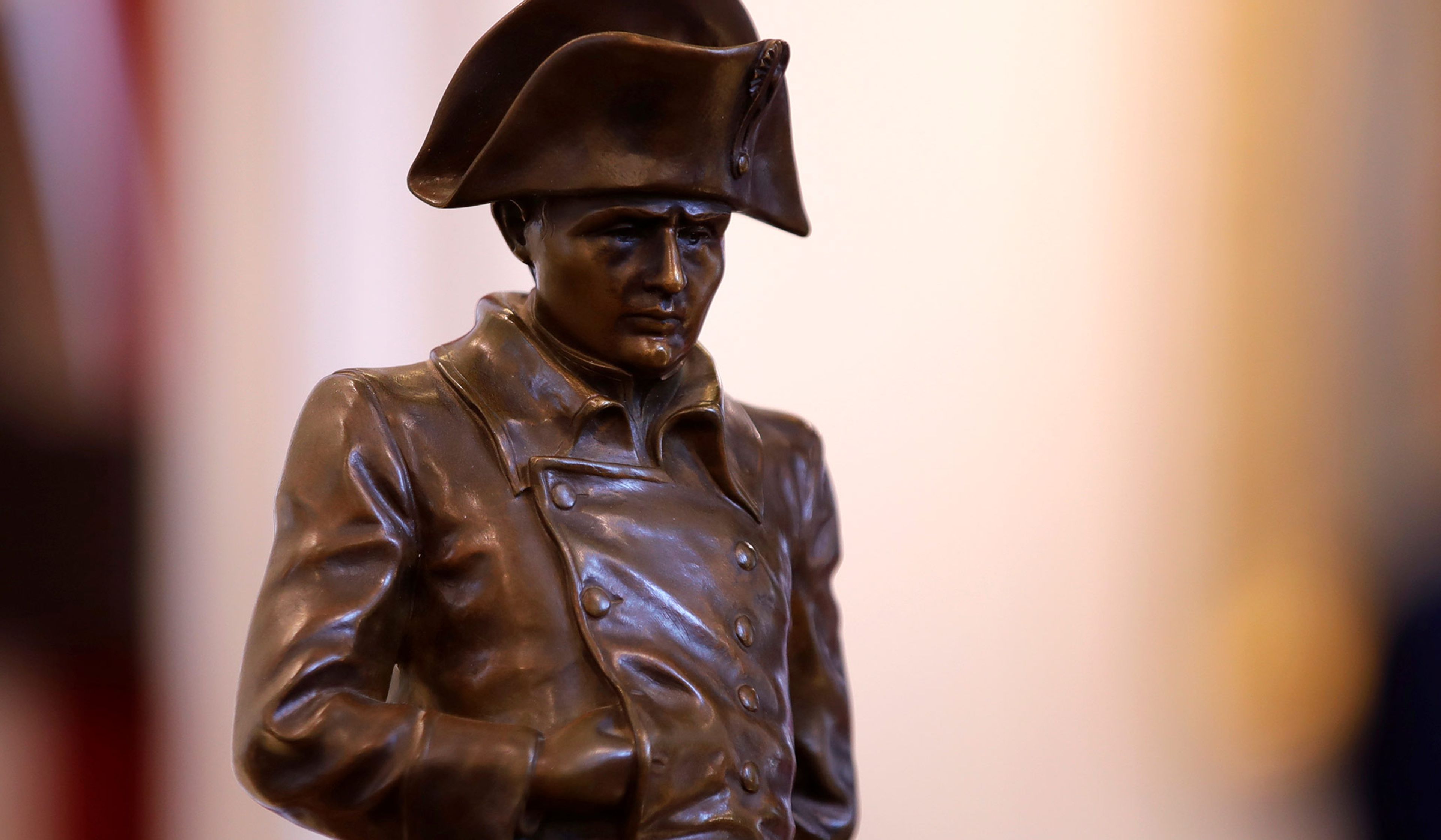
Statue of Napoleon I on a horse by sculptor Charles-Pierre-Victor Pajol (1812-1896), built in 1867 in memory of the battle of Montereau, in Montereau-Fault-Yonne, France, April 20, 2021.
Sarah Meyssonnier/Reuters
The noose around Buxhowden’s neck became a garrote, and when some Austrian units under his command began running across a frozen pond, Napoleon ordered nearby cannon to bombard the ice. The dramatic incident is vividly portrayed in Napoleon, the new Ridley Scott epic. (Alas, the movie otherwise does not attempt a historically accurate portrayal of that or any other battle, nor of Napoleon as a general.) Having killed or taken prisoner virtually the entire force under Buxhowden, Napoleon now turned to attack the rest of the Allied force with overwhelming numerical superiority. The Russians ordered a general retreat, and the Austrians surrendered. Between them they had lost 16,000 killed and another 12,000 taken prisoner — more than a third of their entire force, with another third wounded. Scarcely 1,300 French had fallen.
This lopsided tally is particularly astounding because at that time the technology and tactics employed by major European militaries had been substantially uniform for generations, as a result of which casualty ratios tended strongly to approach 1:1. Hence most battles were decided by simple numerical superiority. But at Austerlitz, Napoleon achieved an effective casualty ratio of 20:1 against a numerically superior force, which he had not merely defeated but destroyed. In the ensuing days, the royal courts of Europe would read the news of his victory in stunned silence.
* * *
Napoleon took to war from an early age. Enrolled at a military academy in France, he spent his teenage years embroiled in Corsican revolutionary strife. His preparations for a life of military command consisted mostly of books, and he was particularly keen on calculus and history. Later, at the Artillery Training School of Auxonne, he was able to practice innovative tactics with small formations, but he spent much of the time absorbing the campaigns of Alexander, Hannibal, Julius Caesar, and especially Frederick the Great.
The little math student from Corsica was an ill fit for command, which was traditionally reserved for aristocrats. “What is that costume you’re wearing?” Joséphine asks him at their first meeting, in Scott’s telling. “My uniform,” he answers. But that was part of the genius of the French Revolution and the hidden strength of its armies, and of America’s too: Meritocracy had replaced aristocracy as the source of its officers.
Math remained primordial for Napoleon. The soldiers who complained that he had “turned our legs into weapons of war” didn’t realize that he was using Newton’s second law of motion to increase their combat power. “Time is the great element between mass and force,” he liked to say. His sense of timing was one reason why, though consistently outnumbered, he was consistently victorious.
Rarely surprised but full of surprises, Napoleon viewed the smallest tactics and grandest strategies as elements of the same system of campaign, whose unifying principles were speed and flexibility. “A general should ask himself several times a day, ‘What if the enemy were to appear now in my front, or on my right, or my left?’”
Whatever the size of the formation, Napoleon’s forces always marched so as to be able to lend mutual support and immediately reorient the direction of advance to the left or right by simply designating one side or the other as the new vanguard. A cavalry screen around the whole formation helped him learn the enemy’s location before the enemy knew his and could coalesce into a cavalry reserve in time to deliver a knockout blow in the battle.
This was possible because Napoleon had pushed the principle of “combined arms” (infantry, cavalry, and artillery operating together) down to battalion level in an era when such combinations were more typical of larger formations. At Austerlitz a small force of just 3,000 French was thus able to pin down Russia’s reserves long enough to prevent relief from reaching Buxhowden’s beleaguered men.
Napoleon sought a single point of attack as the best way to throw off the enemy’s equilibrium. He fully agreed with his hero Frederick the Great that in warfare the goal must be to seek a “bloody decision.” Wars rarely end before somebody is decisively defeated, which is why Napoleon always sought the most decisive victory possible.
Austerlitz is never far from the mind of a well-trained general. In Israel’s surprise counter-attack in the Yom Kippur War of 1973, General Ariel Sharon crossed the Suez Canal under heavy fire and breached the center of the Egyptian front before wheeling left to encircle Egypt’s Third Army, in an almost perfect mirror image of Austerlitz. When Robert E. Lee launched Pickett’s ill-fated charge up Cemetery Hill on the last day of the Battle of Gettysburg, he must have been thinking of Austerlitz. (Alas for the Confederates, General George Meade probably was, too, and had reinforced his center overnight.)
It did not take much longer for Napoleon’s career to assume a tragic arc. The year after Austerlitz, he scored an even more crushing victory against the Kingdom of Prussia. He proceeded to occupy all of Germany, and then unified it for ease of administration. Thus did Napoleon unintentionally give birth to one of the most destructive forces in world history: German nationalism.
On the road to the Pyrrhic victory over the Russians at Borodino in 1812 and his ultimate downfall at the hands of the British and the Prussians at Waterloo in 1815, Napoleon’s genius turned increasingly against him. His clairvoyance turned to delusion, his diligence to paranoia, his confidence to megalomania.
He spent his final years, which were not many, under house arrest on a remote British island in the southern Atlantic. He was ultimately buried, according to his wish, “on the banks of the Seine among the people of France whom I so much loved.”
In a country that reveres its history and scoffs at le wokisme, Napoleon won’t be getting canceled anytime soon. The “little corporal” from Corsica — tyrant, war criminal, and genius — is still honored as the greatest Frenchman who ever lived. We can still hear the guns of Austerlitz, telling us of history’s greatest soldier.












Comments