The flowers and the ferns put themselves to bed, shedding petals, drying and darkening, folding up. Bee targets, bursts of color, shrivel to black odd punctuation marks. Christmas ferns, clinging to the ground as if to avoid enemy drones, try to make it to the day they are named for. The sleeping herb garden takes a little more work to prep, the plants you might want to harvest throughout the winter getting dug up, potted, and put inside, where you hope the weeks you do not come up to water them will not choke them out. It is the vegetable garden that requires the big cleanup, shutting off the irrigation, stacking the conical tomato support stakes, emptying clay pots lest freezing moisture in the soil crack them, cutting desiccated vines and leaves and consigning them to the compost. The striped zucchini that reached submarine size get picked and arranged on the kitchen table like odalisques. They won’t last too long. I picked up one the other day to move it a bit and its neck snapped off. Dispose of them before they begin to leak.
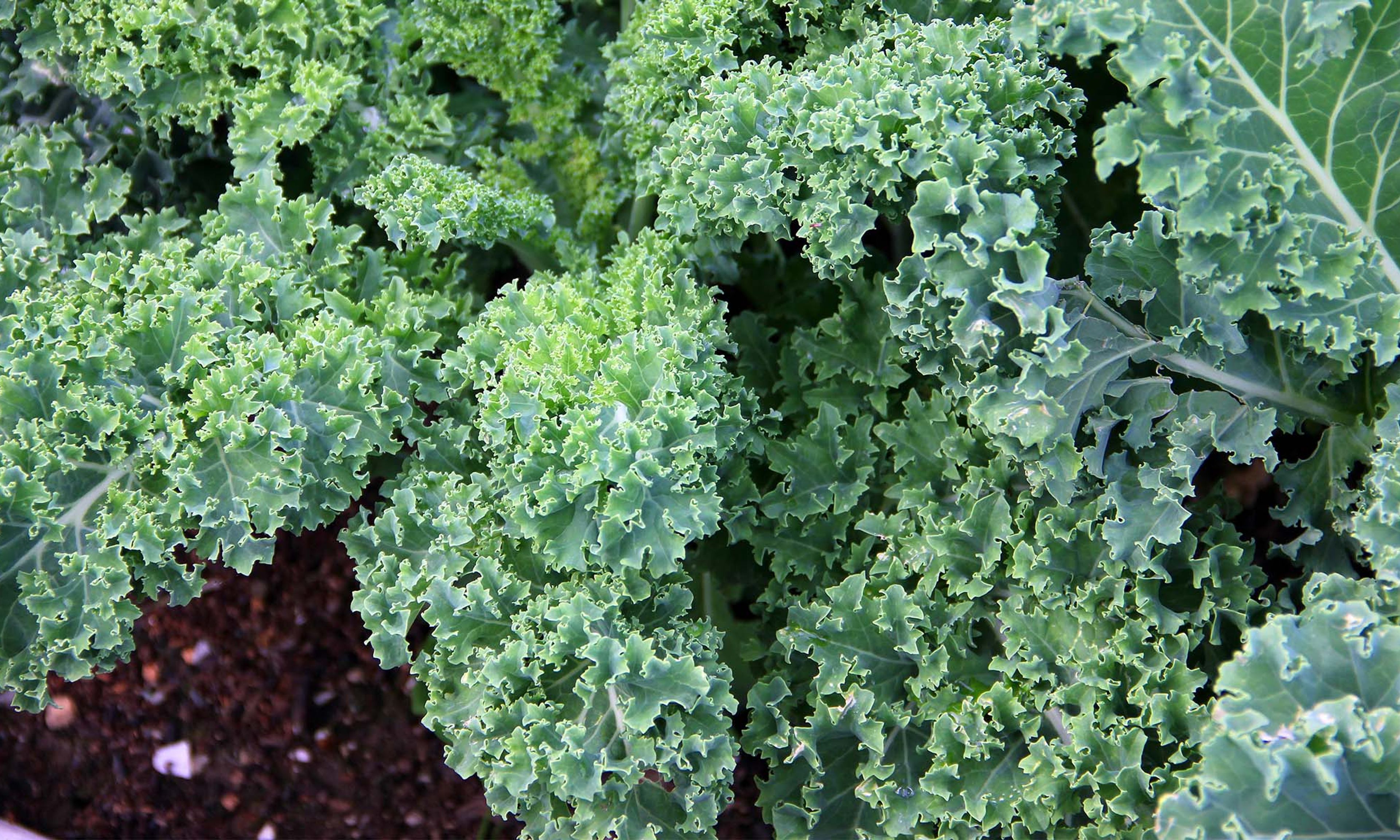
One garden plant stays though, longer than all the rest: kale.
Kale is a leafy cabbage, first grown in the Near East. It could have more fans than it does. Years ago a cartoonist in the old weekly did a panel about a shopping trip to the green market gone wrong: “I can’t give you anything but kale, baby,” read the text, “it’s the only thing that was for sale, baby.” Its leaves are rather chewy, even when steamed; its taste, plain, like chlorophyll base paint. It takes a lot of garlic to pep it up. Insects like it, unfortunately. In the warm months, when its vegetable neighbors are yielding and prolific as young lovers, kale plants stand as if abused, gnawed to the midrib. They seem prematurely skeletal. You would be tempted to pull them up then and there. You would be wrong. When the mercury drops and its predators die, kale comes into its own.
The leaves, once spindly, become full and fresh. Fresh for a kale leaf means wrinkled like the hide of a dinosaur, but it is like the hide of a robust, frisky dinosaur. Inside those leaves, science tells us, kale’s cells are accumulating sugar, which acts as anti-freeze. Why didn’t lettuce learn that trick? Go know. The explanations of science can be verified on the tongue: Late-harvest kale is sweet, like a Riesling Auslese. Kale candy.
One Thanksgiving years ago, we were having company for an evening dinner. Whether because something sat in the microwave too long, or because we had shopped without a checklist, there seemed to be, minutes before the guests’ headlights were due to come searching down the driveway, not enough greens. Just before one of those “Why didn’t you think?” “Why didn’t you think?” conversations, I thought to grab a flashlight and step down to the benighted garden. Ducking my head to avoid the rose cables looping over the trellis at the garden gate, I found the proper bed and the plants I sought. The outer and upper leaves were blasted and done for, but curled closer in and further down was late-delivery kale, postmarked spring. Back to the house with two handfuls. Dinner was saved, dinner was served.
This Thanksgiving there was snow the night before, a wet inch or two. My going-to-the-bathroom eyes opened at six in the morning to see every branch and twig iced as if by a confectioner. After I woke up for real, and throughout the day, it warmed up and slid off, the conifers telling their deciduous friends, Hey this is what we’re made for. Down in the garden the snow made a tidy blanket. It clung to the kale, and to a clump of Swiss chard that had tried and failed to pass the winter endurance test. I shook and brushed the kale leaves, tore half the best looking off their stems, left the rest for later. All the brown things — turkey, dressing, innards, gravy — would have green accompaniment.
Early this month we had more snow — not two feet, our house isn’t in that part of the state, but one night when a dusting was predicted, three to four inches according to one friend, four to six according to another. That will be tough indeed, even for kale.
The winter flock does not care, they are eating seeds.











Comments