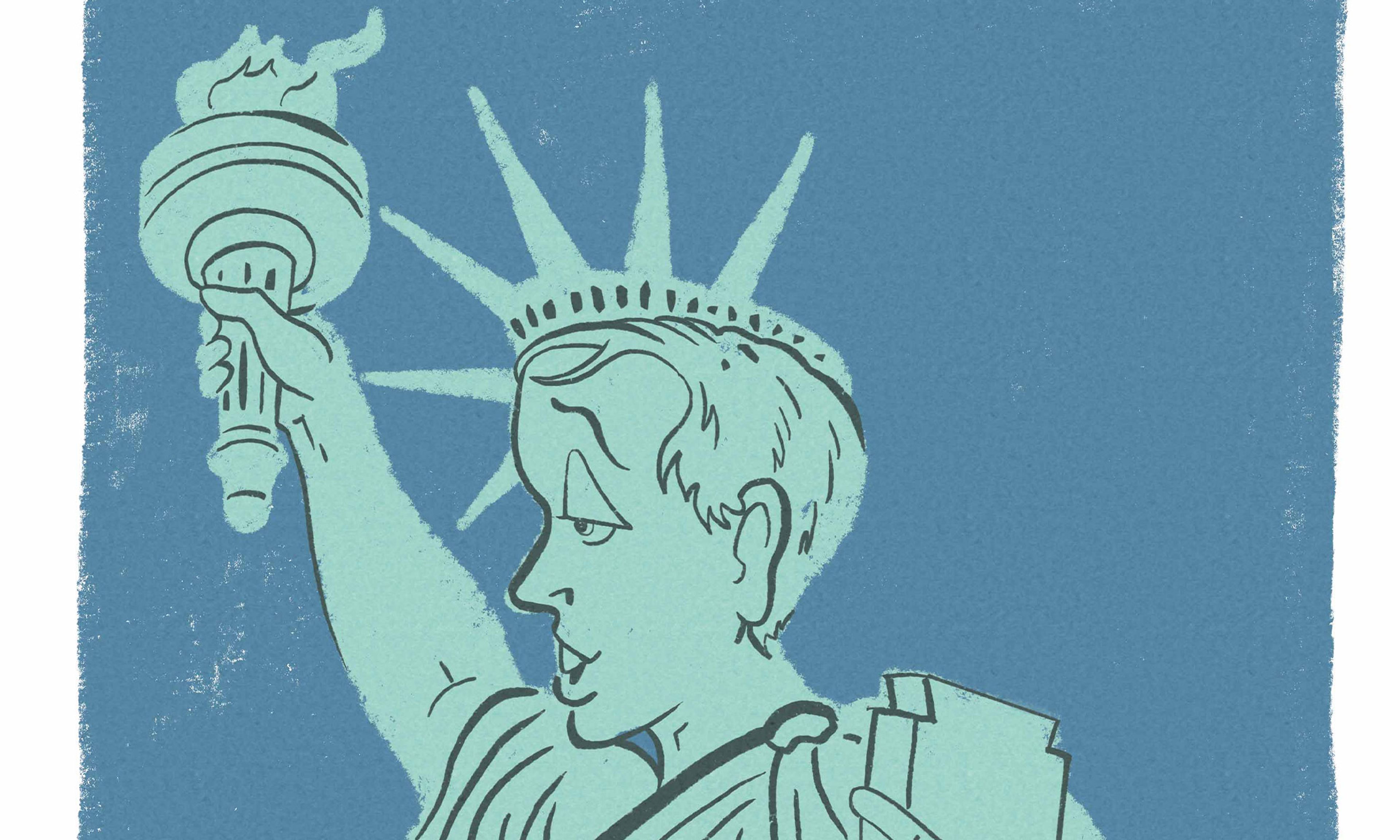
In 1965, when asked by a reporter what he would do if elected mayor of New York, William F. Buckley Jr. famously said: “Demand a recount.” It is one of the great lines in political history — although at the time, he later wrote, it made his supporters “gloomier than ever.”
Later in the campaign, after a meeting between Buckley and the editorial board of the New York Times, a reporter asked him a similar question, to which he responded: “Hang a net outside the window of the [Times] editor.” In the book he published the year after his campaign, The Unmaking of a Mayor, Buckley added that he should have further suggested creating a commission to look into “the desirability of suspending such a net.”
Buckley’s droll wit is as legendary as his exotic vocabulary, and both are on display in The Unmaking of a Mayor. The book is equal parts narrative of the campaign, justification for it, and attack on the press for misrepresenting it. Unmaking is not exactly a jaunty read, being filled with long discursions on various topics from the campaign presented in a somewhat nonlinear style, but it remains an excellent document of mid 1960s conservatism.
Buckley ran for mayor of New York in 1965 as the candidate of the recently formed Conservative Party. He faced liberal Republican John Lindsay, a congressman from the affluent Silk Stocking District of Manhattan, and Democrat Abe Beame, city comptroller and a plodding stalwart of the Brooklyn Democratic machine. Why would the conservative 39-year-old editor of National Review, without any previous political experience, run for what would later be called “the second toughest job in America” in a city that was overwhelmingly Democratic?
Some argued that Buckley’s campaign was driven by a personal vendetta against Lindsay. He certainly was merciless toward the liberal Republican and found him a lightweight. “It is a relief when John Lindsay rises from banality, if only to arrive at fatuity,” Buckley jabbed. Yet Buckley strongly denied any personal motive. In fact, there was a family bond between the Lindsays and Buckleys. Not only had they all gone to Yale around the same time, but Bill’s brother Jim and John’s twin brother David were close friends, with Jim serving as godfather to one of David’s children.
The real reason for Buckley’s campaign was summarized in a memo by a Lindsay campaign staffer that Buckley approvingly quoted in Unmaking. Buckley’s goal, the memo read, was to “eliminate from major elective office a moderate Republican who would, if elected, become a threat — within the Republican Party — to the Goldwaterite extremists, of whom WFB is one.” Coming just after the landslide defeat of Barry Goldwater in the presidential election of the previous year, which buoyed liberal Republicans, Buckley’s campaign was aimed directly at the future aspirations of John Lindsay. Buckley’s Republicanism was ideological, while Lindsay’s was “largely . . . a matter of baptismal affirmation,” Buckley wrote.
A tall, handsome Navy veteran of the Pacific in World War II, Lindsay possessed a national political profile, and it was assumed that the mayoralty would be a stepping stone for him to bigger things. In retrospect, the year 1965 seems suspended in history between the dimming afterglow of Kennedy’s Camelot and the chaos and division that would mark the end of the decade and beyond. Lindsay was, in many ways, the Republican JFK. If the liberal Republican won, Buckley wrote, “the opinion-making press . . . would herald Lindsay’s victory as charting the road ahead for a resurgent Republicanism.” Buckley’s campaign, if it could siphon off enough Republican voters to tilt the race to Beame, might create a major embarrassment for the liberal wing of the party.
The second reason for Buckley’s campaign was also ideological but not quite in the way that one might assume. As he had been doing for years in the pages of National Review, Buckley on the campaign trail made the case for conservative policies. Yet he was not merely presenting the usual litany of reasons for New York’s decline. Yes, taxes were too high, public schools were not as good as they should have been, and policing was “inadequate.” But it was actually Lindsay who based much of his campaign on the fact that New York was, in the words of a series of articles in the New York Herald Tribune, a “city in crisis.”
Buckley’s argument was more subtle: “Almost every problem in New York that doesn’t have to do merely with maladministration arises out of a series of capitulations to special interests.” Politicians sought to appeal to “bloc voters” rather than to the greater public interest. For this reason, Buckley refused to be photographed eating blintzes to appeal to Jewish voters or pierogis to appeal to Polish voters. He promised not to cater to political interest groups. It was a novel political strategy and ironically one more in keeping with the city’s traditional good-government reformers, of whom Lindsay was a direct descendant.
The Unmaking of a Mayor devotes an entire chapter to Buckley’s “position papers,” which display a remarkably sophisticated sense of urban public policy. Some are solidly conservative ideas, such as hiring more police, abolishing rent control, imposing a one-year residency requirement for welfare recipients, opposing a Civilian Complaint Review Board to assess accusations of police brutality, and defending neighborhood schools. But others are more surprising.
Buckley called for the universal metering of water, to reduce waste by making consumers pay. He advocated abolishing all business and sales taxes and replacing them with a value-added tax. Channeling Jane Jacobs, he called for the end of all urban renewal programs and instead for investment in rehabilitating existing structures. He promoted public transportation as vital to the city and called for making buses and subways free for low-income New Yorkers. He even laid out a kind of congestion-pricing plan for cars entering Manhattan that were not registered to city residents.
But no policy showed Buckley’s vision more than the Buckley Bikeway, a proposed elevated path for bikes running down Second Avenue from 125th Street to First Street with crosstown spurs. Today, bike lanes are a staple of progressive urban policy — and a controversial one — and New York and other cities across the country have reengineered their streets to make room for bikes, even if New York’s lanes are not elevated. Buckley admitted that his Bikeway was an idea ahead of its time and probably convinced many voters that his was the “frivolous” campaign of a dilettante.
In addition to some policy proposals that might surprise them, Buckley’s conservative fans today would find in Unmaking interesting parallels to contemporary politics. This is not to claim that Buckley was proto-MAGA or would have supported Trump, although he did make nods toward a populist conservatism — especially with his line about preferring to be governed by the first 2,000 names in the Boston telephone book rather than the 2,000 members of the Harvard faculty. It’s clear, though, that today’s conservative attacks on “establishment Republicans” echo the attempts by Buckley and Goldwater Republicans to wrest power from the liberal Republicans they felt were pale imitators of New Deal Democrats. Although today’s so-called RINOs are far more conservative than Lindsay and Rockefeller Republicans were, the arguments made against them are similar. In 2024 as in 1965, many on the right believe that more moderate members of their party are too comfortable with the way things are and that their coziness with power makes them unwilling to push conservative policies that would make a real difference.
There is another parallel in the language used in political attacks. Whether in 1965 or 2024 or most years in between, accusations of “fascist” or “Nazi” or “extremist” or “racist” have been a common, if not always successful, weapon in the rhetorical arsenal of opponents of conservatives. Lindsay’s running mate promised that Lindsay would “rip the sneering clown’s mask from Buckley” and reveal to New Yorkers his “negative, divisive preachings as the threat they really are to peace on earth, to progressing the nation, to the uplifting of our city.” Lindsay himself said that a boisterous crowd that heckled him at a campaign event “reminded him of some of the worst moments in history.”
Lindsay called Buckley “a candidate of the ultra Right.” (Buckley wrote in Unmaking that he had never “discovered, in all of America, from the mountains to the prairies to the oceans white with foam, a single ‘ultraliberal.’”) He warned that Buckley’s campaign had brought to the city “radical rightism and extremism of the most dangerous kind.” The main office of the Lindsay campaign was decorated with a cartoon of the conservative editor wearing a Nazi armband. To scare voters, especially Jewish voters, and continue with the Nazi theme, Lindsay’s surrogates blasted Buckley for supporting “concentration camps,” based on his proposals to ship some welfare recipients out of the city and to quarantine drug addicts.
Buckley also touched the political third rail of race during the campaign. In recent years, he has attracted criticism over his views on race and civil rights, some of it warranted and some not. Just as Buckley refused to appeal directly to ethnic voting blocs, he proved unwilling to directly speak to the needs of African Americans. He began Unmaking with the story of his speech at a communion breakfast for city policemen, where he discussed the recent civil rights protests in Selma, Ala., and the murder of Viola Liuzzo, a white civil rights worker. The press ran with criticisms of Buckley for allegedly defending the police of Selma and attacking Liuzzo, when in reality Buckley was making a larger point about the media. Why, Buckley wondered, did the murder of a policeman in Mississippi not receive much attention while Liuzzo’s murder was a front-page story? “Didn’t the killing merely confirm precisely what everyone has been saying about certain elements of the South?” Buckley asked rhetorically. His larger defense of the police and criticism of the press would have been stronger had he not inserted the example of Liuzzo. Yes, the press misinterpreted Buckley’s remarks, but Buckley opened himself up to such misrepresentations with his awkward example. And, as some would add today, the incident confirms that Buckley showed little appreciation for the civil rights movement.
Later in the campaign, he criticized James Baldwin, who told Buckley that throwing garbage out of windows in Harlem was a form of social protest, to which Buckley responded by wondering why people would throw garbage “in order themselves to wallow in it.” In Unmaking, Buckley admitted that the word “wallow” was ill chosen. When the subject was race, Buckley’s elegantly provocative and sometimes convoluted writing and speaking style got him into trouble. It paved the way for the Lindsay campaign to paint Buckley not just as a “Nazi” but also as a bigot. “In the streets,” Lindsay told a crowd, “the Buckley campaign becomes a racist campaign.” Jackie Robinson, a Lindsay supporter, publicly condemned Buckley as “a liar and a bigot.”
The most recent presidential election has elicited a great deal of discussion of a historic political realignment whereby the Republican Party has become a working-class party. Whether there has been a true realignment is something that will reveal itself in the coming years, but the fact is working-class voters have been migrating to the GOP for decades. The great revelation of Buckley’s 1965 campaign was that his major base of support was not in more well-heeled and “conservative” bastions of New York, but rather in the more humble middle- and lower-middle-class neighborhoods of the outer boroughs that were home to the city’s “white ethnics.”
Buckley was as elite as they came, but his campaign showed that the real conservative battle was against elites who often fell prey to the latest ideological or cultural fads and who looked with disdain on folks of more modest means and traditional outlooks. It was something that surprised Buckley, especially given that he ran in large part against appealing to factions and voting blocs. Buckley turned down a request to march in the annual Pulaski Day parade — or at least his aide Neal Freeman did, telling organizers that the candidate had “pledged himself to make no specifically ethnic or nationalist appeals.” Yet the campaign showed that conservative policies appealed to very distinct voting blocs in the city, whether Buckley wanted to admit it or not.
Buckley attracted a great deal of attention during his campaign because he made such good copy and did not talk or act like a typical politician. He also proved the perfect foil for the Lindsay team, who elevated him because they believed — correctly, as it turned out — that it was in their political interests to run against the evils of right-wing extremism.
In the end, Buckley received 13 percent of the vote and failed to prevent Lindsay from becoming mayor. The Unmaking of a Mayor ends on a slightly negative note, with Buckley writing that he regretted “the prospective decline of the GOP” if it followed the lead of Lindsay and other liberal Republicans. Buckley went on to warn that if conservative principles were not advanced by Republicans nationally, “I suppose I shall have to threaten another book, if not another campaign.”
It has become fashionable to say that Goldwater and Buckley won by losing. Lindsay did not become the harbinger of a glorious liberal Republican restoration of the GOP. In fact, by presiding over the continuing decline of New York in the 1960s and 1970s, he significantly damaged the brand of both urban liberalism and liberal Republicanism and eventually made his way into the Democratic Party before seeing his once-promising political career fizzle out. The Unmaking of a Mayor, as it turned out, would have made an even better title for a book about John Lindsay’s two terms.












Comments