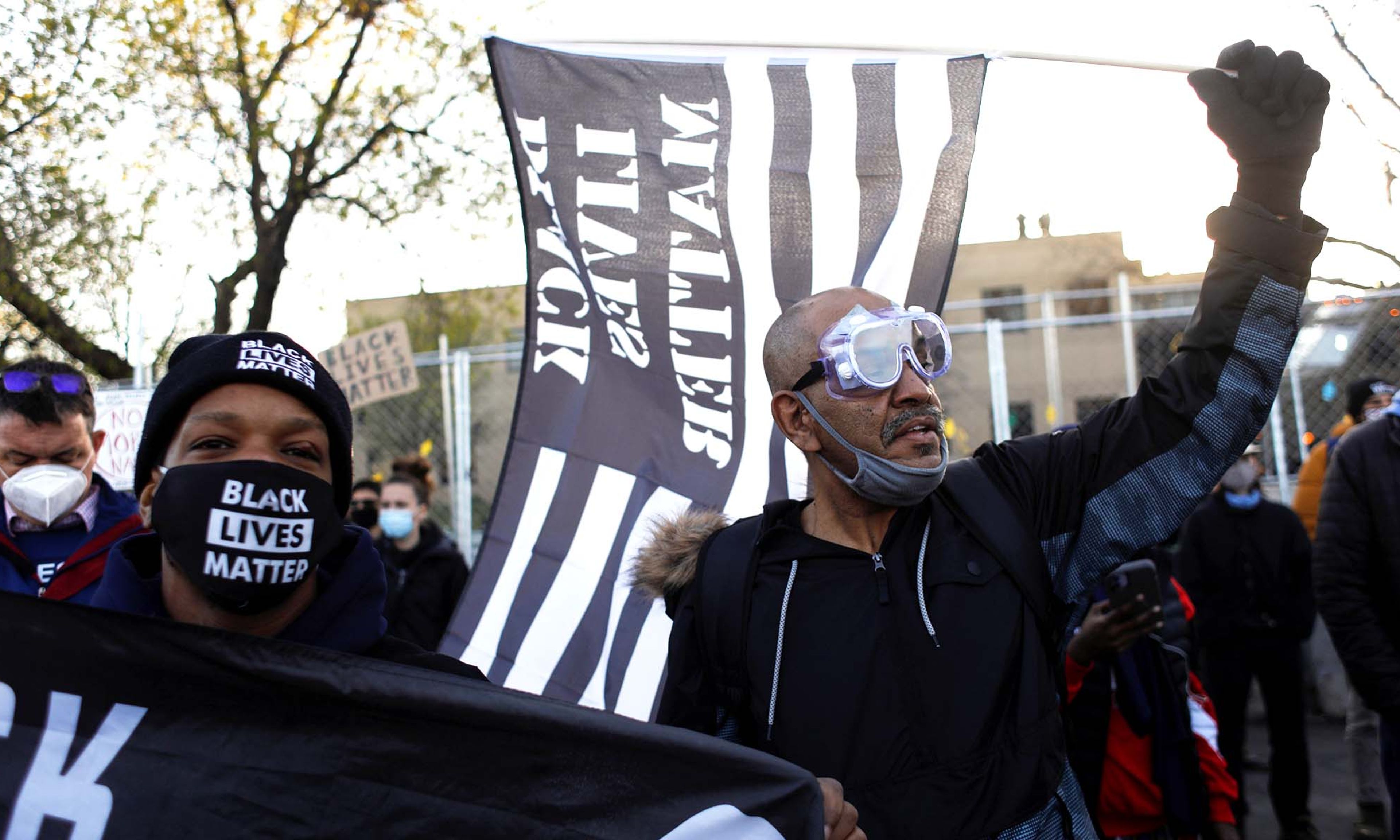
Before I so much as opened Noah Rothman’s fine new book, two thoughts struck me. First, to paraphrase C. S. Lewis’s classic The Screwtape Letters, the odor that now wafts from the word “puritanism” is one of the devil’s finest accomplishments. Second, the image of a Puritan throwing a Molotov cocktail while wearing what appears to be a Covid mask is about as good as book-jacket art gets. Let us concede that the latter at least makes up for the former.
The latest from Commentary magazine’s associate editor, The Rise of the New Puritans is a master class in bringing a novel argument to full flower. Not for Rothman is 21st-century wokeness a mere “secular faith in which meaning and identity [are] derived from political activism.” Rather, the progressive project represents “the rehabilitation of an all-encompassing code of social conduct.” To say, as many have, that today’s scolding leftists are puritanical in the sense that they operate with religious fervor is to say too little. The better contention is that progressives’ puritanism manifests as a kind of behavioral totalitarianism. Theirs is not just Sunday worship but an all-consuming “way of life.”
In order to make this case, Rothman must first clear a hurdle. Aren’t conservatives, with our historic aversion to moral innovation, the true inheritors of early-American fastidiousness and fanaticism? To answer this question in the negative, the author devotes early pages to the “great role reversal” effected by “progressivism’s penchant for moral crusades” and “the right’s more practical concessions to American political realities.” A fascinating topic in its own right, this narrative takes into account both the contemporary Left’s rejection of 1960s-style liber-tinism and the Whig-to-Republican-to-Progressive journey undertaken by a certain kind of idealistic voter in the 19th and early 20th centuries.
Having laid this important groundwork, Rothman advances to the meat of his hypothesis. Here, in six central chapters, are the great Puritan virtues reimagined as categories of woke complaint. While a less clever table of contents might have included such entries as “The Performing Arts,” “Hobbies,” and “The Family,” Rothman instead identifies these and other innocent pursuits with the 17th-century values of which we allegedly fall short while enjoying them. Thus is the chapter on food and comedy presented here under the heading “Prudence.” (It is unwise to relish such things without pondering our sins against “inclusion.”) Thus, too, are sports and fashion reconceived as offenses against “Austerity,” while alcohol and sex fall under the banner of “Temperance.”
That such an organizational principle is not only sly but deeply effective is one of the triumphs of Rothman’s book. Time and again, the author references some contemporary leftist insanity, then consults the historical record to show Puritans doing more or less the same thing. Rothman’s chapter on hobbies (“Fear of God”), for instance, examines woke condemnation not only of customary bugbears such as Halloween costumes but of such seemingly harmless diversions as knitting, jogging, gardening, and baseball-card collecting. In each of these cases, the ostensible complaint from present-day activists is that the pastime in question is somehow racist. It isn’t difficult, however, to hear in their protestations an echo of the Puritan belief “that there is no such thing as private life.” Just as the Puritans forbade tobacco and dice lest men be “distracted . . . from God’s mission,” so their progressive heirs must eliminate the “appealing amusements” of today lest we be diverted from the solemn work of revolution.
A similar pattern can be found in Rothman’s chapter on entertainment. Observing the “bizarre backlash against cop shows” in the wake of the George Floyd killing, Rothman notes that the Left “neither asked nor answered” how “banishing the ‘good-cop archetype’ from media would advance the progressive project.” Determined to make a “showy, zealous pageant” of their outrage, they chose instead to up the ante, turning their fire from the indisputably pugnacious series Cops to the anodyne cartoon Paw Patrol. To the extent that this gambit has a historical antecedent, it is in the famous austerity of Protestant reformers, such as John Dod (1549–1645), who asked of their congregations not only repentance from sin but “garish displays of fealty to Puritanism.” In both the 17th century and the summer of 2020, “the piety was the point.” To give up more than one’s neighbor — to contort oneself ever more grotesquely — was to prove, at least until the next trial, one’s fidelity to the cause.
Of all the innocuous activities made “problematic” by the Left, those related to food and eating are perhaps the most compellingly handled here. In story after story, Rothman exposes a neo-puritan movement that simply will not let us clean our plates in peace. Opening the previously mentioned chapter titled “Prudence,” the author gives an account of the Portland, Ore.–based taco truck Kooks Burritos, whose white owners were mobbed and “canceled” for the crime of “stealing recipes from Mexico.” Something comparable happened in Chicago when the James Beard Award–winning chef Abe Conlon found himself accused of insufficient support for Black Lives Matter. In both instances, the food being chucked away was universally lauded as delightful. Yet, “for the New Puritans, a smug sense of self-satisfaction is the most delicious dish of all.”
As in other chapters, Rothman is quick to connect such behavior to that of rigid men and women of old. Like their philosophical progeny, the original Puritans “wallow[ed] in contempt for [their] own desires.” Theirs was a demanding God, and mortification of one’s appetites was a direct path to His grace. That contemporary wokesters are comparatively godless is, while true, largely beside the point. To subjugate the flesh in the name of ideology is not ultimately about faith but about power.
Like many anti-woke polemics, The Rise of the New Puritans presents readers with mostly familiar tales of progressive misbehavior. Many of those who purchase Rothman’s latest will be aware already of, say, the anti-“appropriation” crusade roiling the fashion industry. The excesses of the Me Too movement, though appalling, will shock few. Given the audience’s presumable jadedness on such subjects, the book’s value lies not in surprise but in the way it organizes and lends harmony to its anecdotes. No longer are the woke episodes on display mere incoherent spasms of misanthropy or civilizational self-loathing. Rather, they are the natural outgrowth of an organized, resurrected, indeed unkillable ideal.
As for Rothman’s conclusion, it is remarkably hopeful, given the extent to which neo-puritanism has captured our institutions and deformed our national character. Noting first that wokeism “is busily creating its own counterrevolutionaries,” Rothman nevertheless cautions against complacence on the right or a passive “wait them out” mindset. Instead, conservatives who wish to hasten the fall of our humorless overlords should engage in a strategy as gratifying as it is straightforward: “mock them.” While so easy a response may seem “insufficient” to some, it is poison to the priggish young men and women at wokeness’s vanguard. Like the Satan of Thomas More’s famous conception, these “prowde spirites” simply cannot endure public scorn.
This is not to say, of course, that such an approach will be without its costs, particularly for those conservatives whose professional circumstances require seeming accession to prevailing political orthodoxies. Yet every chuckle, every wry shake of the head, makes it easier for others to follow suit. And so, brick by brick, the edifice collapses. One day, God willing, we will tear it down altogether.












Comments