There were many choice sentences in the disgraceful petition that circulated among the movie industry’s elite following Roman Polanski’s long-overdue arrest, demanding the confessed sex offender’s release and pledging him the “support and friendship” of “everyone involved in international filmmaking.” But the one that jarred the most, perhaps, was a passing reference to Polanski as “one of the greatest contemporary filmmakers.”
Now I know what they meant: The longtime fugitive from American justice made great movies in his time, and so long as he’s alive and behind a camera (or behind bars, with any luck) I suppose he counts as a “contemporary.” But it’s still a strange turn of phrase, given how long it’s been since any of Polanski’s movies deserved the appelation “great” — rather like referring to Jimmy Carter as one of our most important contemporary politicians, or Ann-Margret as one of our most beautiful contemporary actresses.
During his brief time in Hollywood, Polanski made Rosemary’s Baby and Chinatown, guaranteeing his place in the cinematic pantheon. But across the 30-odd years since his arrest, trial, and flight to Europe, he’s made a succession of misfires, duds, and not-that-interesting failures. (The Pianist, his most acclaimed post-exile work, was distant, stagey, and overpraised.) Indeed, if they really care about the cult of art so much, maybe all his rape-excusing friends should be rooting for his extradition to the United States: It will cost Polanski his liberty, but it might restore his artistic touch.
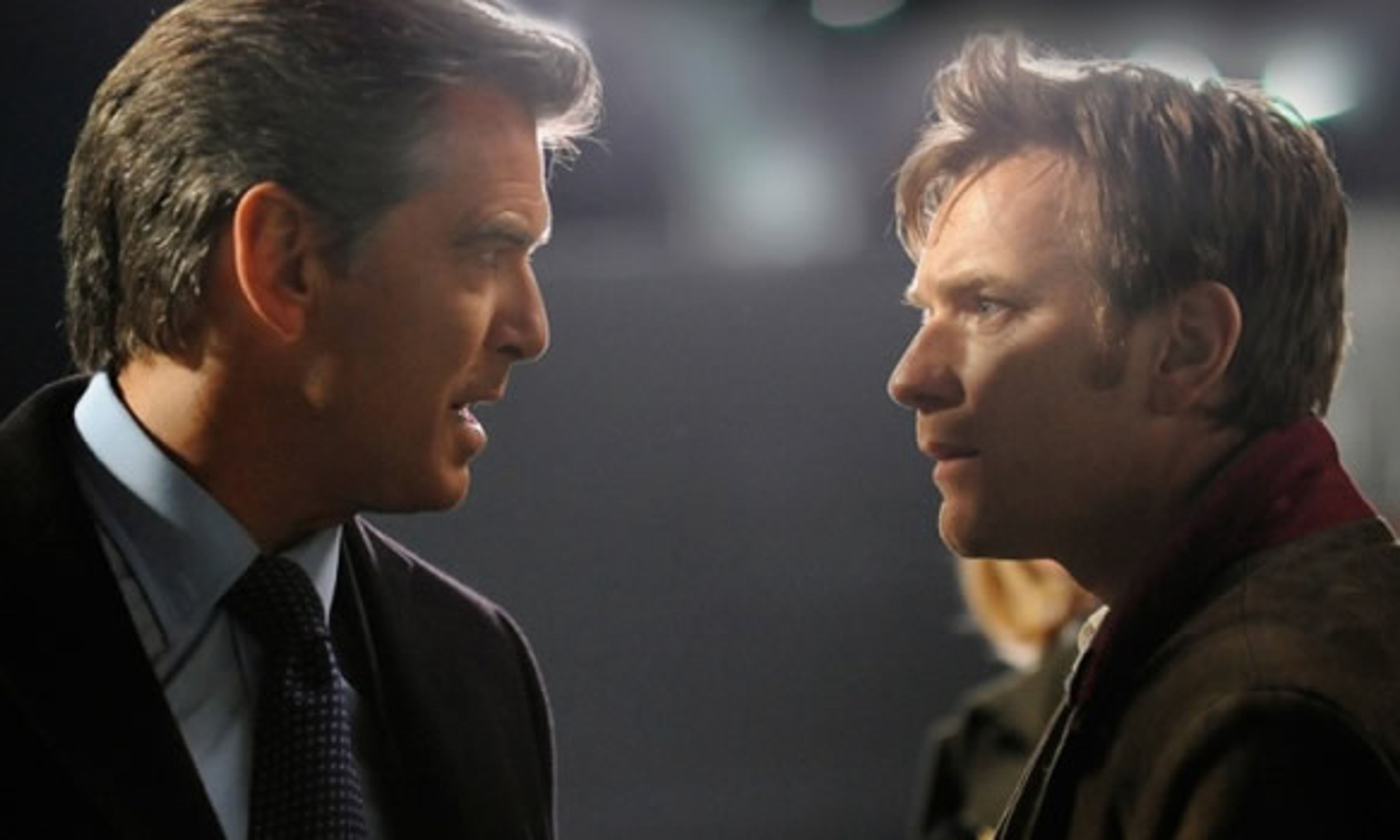
At the very least, the shadow of jail time seems to have concentrated his mind, and spurred his creativity. His latest film, The Ghost Writer, which slunk into American theaters this month (how would you like to be the publicist responsible for promoting it?) and which Polanski edited while under house arrest in Gstaad, turns out to be very much worth seeing. Sleek, chilly, and Hitchcockian, it’s by far his finest work in years.
Ewan McGregor plays the nameless “ghost” of the title, a talented hack hired to assist Pierce Brosnan’s Adam Lang, a Tony Blair–esque British prime minister, with his post-resignation memoirs. The ex-PM has repaired to a grimly modernist beach house on Martha’s Vineyard (though of course Polanski had to use a European coastline as a stand-in), where the huge windows expose an expanse of sand dunes and the sea beyond — the same sea, as it happens, that claimed Lang’s first ghost writer, who washed up on the beach after drinking too much and tipping himself over the side of the island-bound ferry.
His replacement is quickly enveloped by a mood that’s tense, claustrophobic, and besieged. Lang stands accused of turning British citizens over to the CIA for waterboarding, and the case has been referred to the International Criminal Court; if the PM recrosses the Atlantic, he may face trial for war crimes. (Perhaps you can see why Polanski was attracted to the material.) There are protesters outside the gates of the oceanfront estate that Lang is borrowing, and a media swarm gathering in the island’s inns. His inner circle is divided against itself, with his long-suffering spouse (Olivia Williams) staring daggers at his aide-de-camp and paramour (a wildly miscast Kim Cattrall, layering a bad British accent atop her man-eating Sex and the City persona). And as if this weren’t enough intrigue for a simple scribbler to reckon with, McGregor’s character gradually realizes that the last ghost writer was on his way to uncovering a dark secret from Lang’s past — one that certain people might be willing to kill to keep hushed up.
It will not surprise you to learn that this secret rewrites the history of the Bush-Blair relationship along the most paranoid lines imaginable. But the sub–Gore Vidal conspiracy theorizing didn’t really bother me. Unlike, say, Paul Greengrass’s Iraq War thriller Green Zone, which I caught a few days before I saw The Ghost Writer, Polanski’s movie doesn’t pretend to be a hyper-realistic commentary on contemporary events. Lang’s secret is just the MacGuffin, as Hitchcock would say, that keeps the plot’s gears clicking into place. The conspiracy theory is entirely in the service of the deft plotting, rather than the other way around.
It’s also in the service of a slew of fine performances. McGregor takes an underwritten, undermotivated part and infuses it with the kind of ferocious charisma that I briefly worried he’d lost during his grim slog through the Star Wars prequels. Brosnan, who was too handsome to be taken seriously as a younger actor, is perfect as a faded, battered lion — charming and evasive, bitter and entitled, flashing a politician’s grin one moment and blowing up in rage the next.
But it’s Olivia Williams, as his seemingly disillusioned wife, who walks away with the movie. Beautiful and brittle, with a cutting putdown for everyone and an alluring vulnerability underneath, she’s the keeper of The Ghost Writer’s deepest secret, and the character who makes the implausible story seem worth taking seriously.
Williams enjoyed what seemed like her breakout role more than a decade ago, in Wes Anderson’s Rushmore, but she hasn’t done much that’s worth seeing since: She’s too caustic and intelligent, perhaps, for the kind of work that Hollywood usually assigns its younger actresses. With any luck, her turn in The Ghost Writer is a foretaste of the roles that await her in middle age. If so, then Roman Polanski will deserve credit, in what may prove his final effort as a filmmaker, for reviving what ought to be a fine career — and for doing so in a movie that reminded me of his talent, and almost (but not quite, not quite) made me forget about his crimes.











Comments