Providence — The 20th-century restaurant renaissance in Rhode Island began in its capital city, at the intersection of Westminster and Weybosset Streets. The legacy of Italian cocktail maestro Giuseppe Cipriani endures at one of the family’s newest restaurants, Bellini, on a corner of the intersection. Julia Child’s beloved Pot au Feu, America’s oldest French bistro, and Capriccio, a classic Italian spot in an old wine cellar, lie farther south. But the intersection also has a storied past: In the 19th century, the American diner was born on Westminster Street.
The first diner was invented in 1872 by a Rhode Islander, Walter Scott, who had left journalism for a different vocation: feeding writers. According to a book by Patrick T. Conley, the president of Rhode Island’s Heritage Hall of Fame, Scott grew up selling candy, fruit, and newspapers on the streets to support his family. He “started an after-hours business selling sandwiches and coffee” to men’s clubs and night workers in Providence when he was 17. Not having been drafted in the Civil War because of his poor eyesight, Scott tried and failed to be a farmer in New Jersey before returning to Providence, where he found work as a journalist — first at the Providence Evening Press and then at the Morning Star.
Star writers at the time had their pick of fantastic stories: Providence lush John Whitford “was fined $5 for drunkenness by Judge Essex” (“Bully for you; I’ll pay it,” Whitford said, at which point the judge fined him another $5); the city’s postmaster general declared that postmasters were liable to the government for “the value of all registered letters lost in their offices” (“Husbands jealous of their wives will be interested — and wives, too, for that matter — in knowing that the Acting Postmaster-General has decided that letters can only be delivered to the person addressed”); the town council of North Providence mysteriously lost some votes.
The Star got busier in 1873, when it began to be printed in a larger format: “Of course we shall for a day or two feel a little embarrassed in our enlarged quarters, and must request our patrons, for a time, to temper their judgement with that which shall encourage us, not to sloth, but to greater exertion,” its editors wrote on January 1 of that year.
To sink oneself in one’s craft required food and drink, so Scott turned his childhood gig into a full-time job feeding night-shift workers at the papers. He parked a horse-drawn wagon outside the old Providence Journal building at this same intersection, which is near Brown University and in the center of the city’s financial district. The diner suited the fast-paced nature of newsrooms and of American life hastened by the technology of the times. Entrepreneur Thomas Buckley later took the diner concept to Massachusetts and opened a stationary lunch wagon of his own, where the diner developed its characteristic interior.
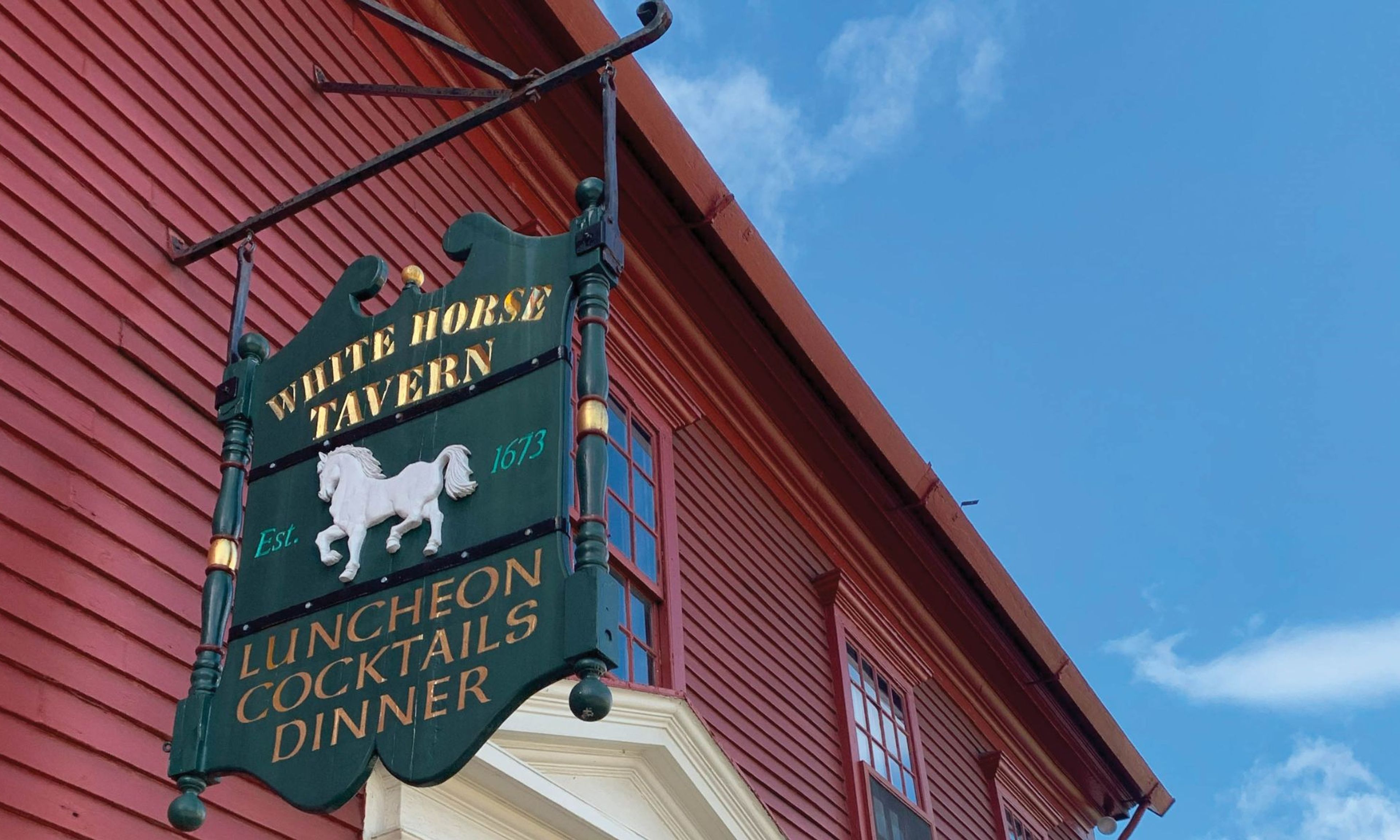
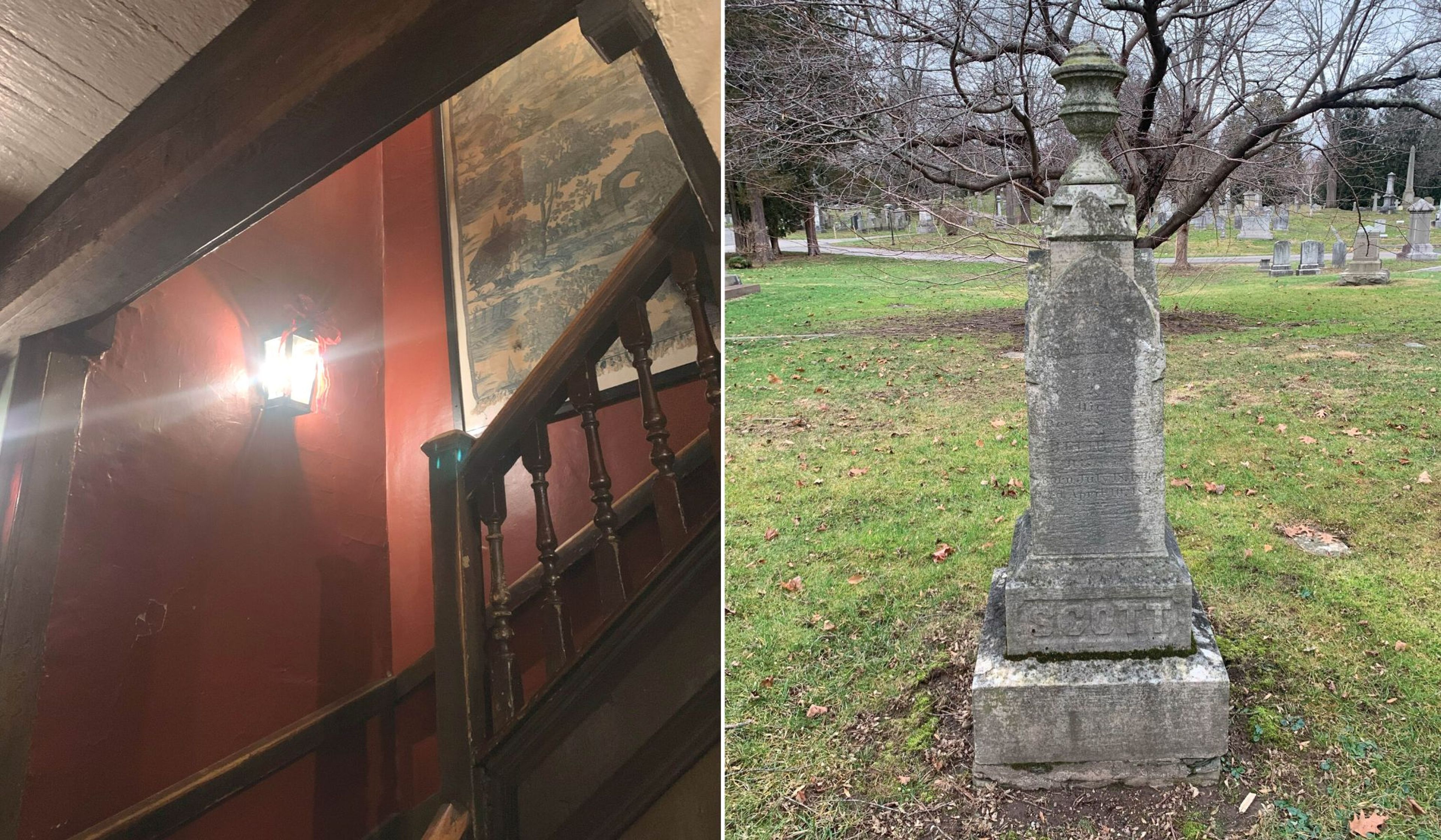
Newport’s White Horse Tavern is the oldest restaurant in America. There are a few White Horse Taverns, locals told me, but none as good as theirs (which is not to be confused, in particular, with the White Horse Tavern in New York’s West Village where Welsh poet Dylan Thomas drank himself to death with 18 consecutive whiskeys). Walk into the place, with its elegant maroon walls, and you know at once it has hosted storytellers and schemers. A three-year-old in a tweed jacket and page-boy cap wandered into the dining room, in full compliance with the business-casual dress code. A young couple on their first date ordered fifth and sixth glasses of vino. An elderly woman who knew the tavern preferred “not to be upstairs, please.” A local politician’s family was led up a treacherously narrow staircase to their table. White Horse gets its seafood from Narragansett Bay and its produce from surrounding farms; its clams are as delicious as its colonial interior is charming. The tavern seems to be enjoyed equally by locals and visitors. Jacqueline Kennedy Onassis preferred table no. 40, which was empty upstairs.
Francis Brinley built the two-story structure in 1652 as a residence. William Mayes Sr. made it an inn in 1673 and ran it with his son, William Jr., a Red Sea pirate whose trips home to Newport roused the community. Young William got a license to sell “all sorts of strong drink” when he took over the pub in 1702. Two gin cocktails confirmed that the drinks remain strong.
The Mayes family maintained the inn for hundreds of years. A convenient few blocks from Newport’s city hall, the tavern became a political destination — members of the city council and the general assembly would even charge meals to the public treasury. White Horse was restored in 1954 by the Preservation Society of Newport County. Oliver Lee Pitts, a writer who escaped the trade for yachting (he spent $75, earned at the Fort Worth Press, on his first boat), acquired the restaurant next.
What kept the tavern going? People who love good stories, probably. In 350 years, it has seen pirates, politics, and children in tweed, but it has had only six owners. Had Walter Scott’s wagon been cared for as lovingly? I walked past the old Providence Journal building many times in search of a plaque or marker for Scott or the diner, but there was nothing. I tracked down the oldest boxcar diner in Providence, the Haven Brothers Diner, which “loves to cater!,” but I did not find Scott’s wagon. Scott died in 1924 and is buried at Swan Point Cemetery, a ten-minute drive from Westminster Street. His headstone is almost too deteriorated to read.
Diners: Still Cookin’ in the 21st Century is on permanent display at Johnson and Wales University, on the other side of the Providence River. The exhibition’s director, Richard J. S. Gutman, explained the civic value of the diner to Smithsonian magazine: “Without ordinary people, how would the world run? Politicians have to go to diners to connect. What’s the word on the street? In diners, you get people from all walks of life, a real cross-section.” Where does that happen today? Not in the sterile and overpriced minimalism of so many currently trendy restaurants. But in Rhode Island’s oldest taverns it lives on, even if the original diner does not.












Comments