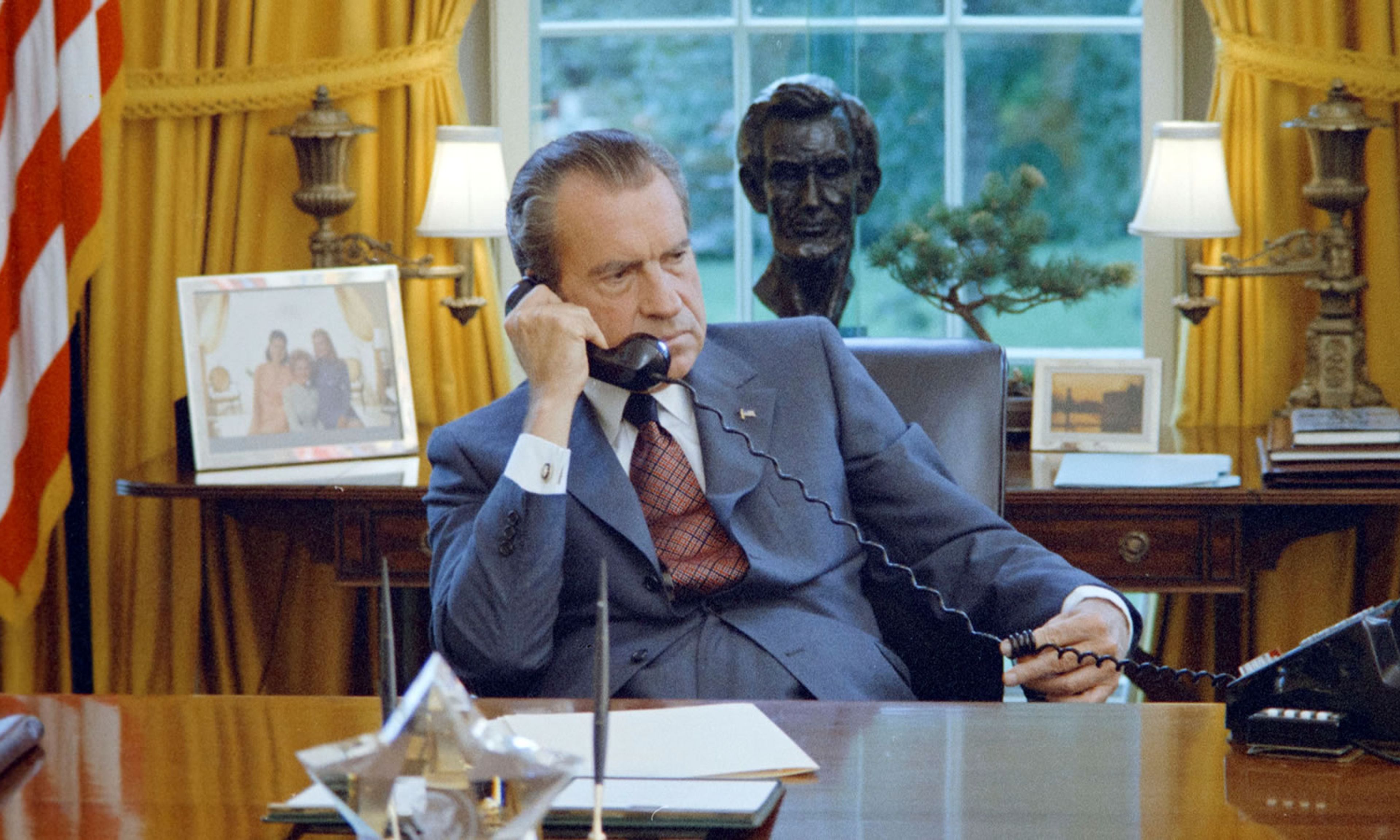
“I did not see the program, but Mrs. Nixon told me that you were great on The Donahue Show. As you can imagine, she is an expert on politics, and she predicts that whenever you decide to run for office you will be a winner!” — Richard Nixon to Donald Trump, December 21, 1987
The silk-tied real-estate tycoon whom Pat Nixon witnessed on NBC the afternoon of December 14, 1987, is in most ways the same self-promoting, sarcastic, brashly populist force that voters see today. At 41 years of age, Trump was at the height of his real-estate success — “no one has done more at this age,” he told Donahue — flogging the book that would be read by every wealth-conscious New Yorker of the ’80s, The Art of the Deal. Watching Trump’s Donahue interview today, one can see why Pat foresaw a political future for the man.
Nixon’s letter predicting Trump’s electoral success is relatively well known, but by the time the real-estate mogul appeared on Donahue, he and Nixon had been exchanging fawning correspondence for more than five years — and would continue doing so into the 1990s. A cache of previously unreleased correspondence between the former and future president will be part of the soon-to-be opened Presidents’ Club exhibit at the Richard Nixon Library in Yorba Linda (the date depending on when California can finally open for business).
One won’t find deep camaraderie or warmth in the correspondence. Both Trump and Nixon, however, did share an acute disdain for the journalists, intellectuals, and elites who underestimated and undermined them at every turn. “I know nothing about the intricacies of your business enterprises, but the massive media attack on you puts me in your corner!” the former president wrote the mogul in the summer of 1990.
It’s also clear that both craved the acceptance of those they dismissed. The exiled Nixon, then still the butt of jokes and a target of opprobrium from journalists, regularly praised Trump’s media triumphs. He was more wounded by rejection than Trump probably ever would be.
On December 24, 1987, Trump thanked Nixon for the kind words about his Donahue appearance, enclosing a videotape of the program and a copy of his new book, signed to Nixon and to Pat, “a truly wonderful lady.” Trump had been trying to lure the Nixons into his shiny new 58-floor building, Trump Tower. It was not to be.
We don’t know whether Nixon ever sat down and watched the tape, but if he did, he would surely have been impressed by the future president’s breezy dismissal of the unreliable and undisciplined characters — the “flakes” — he had encountered on his climb to the top. Nixon, one also imagines, would have nodded knowingly when Trump extolled the virtues of men Trump deemed strong and loyal.
“If people screw me, I screw back in spades,” Trump had told a reporter at Newsweek earlier that year. Nixon privately skewered his opponents in the severest terms. Trump has never been inhibited by norms of polite society. Nixon quietly nursed his grudges for decades. No one has ever had to guess who is on Trump’s Enemies List.
Why, Donahue wondered, did a man with the “power and influence” of Trump take things so personally? Why did he feel the need to describe New York mayor Ed Koch as a “moron”? Trump, mischievously grinning, his rhetoric overflowing with absolutes, notes that Koch was the most corrupt and incompetent mayor ever to govern the city. Neither Jimmy Walker nor William O’Dwyer, after all, had ever tried to strip Trump of residential tax abatements.
Trump sent his first letter to Nixon in June 1982, enclosing a photo of a lunch the two had shared at the 21 Club: “I think that you’re one of this country’s great men, and it was an honor to spend an evening with you.” What did they talk about? Perhaps their upbringing. Perhaps their grievances against the press. Perhaps politics.
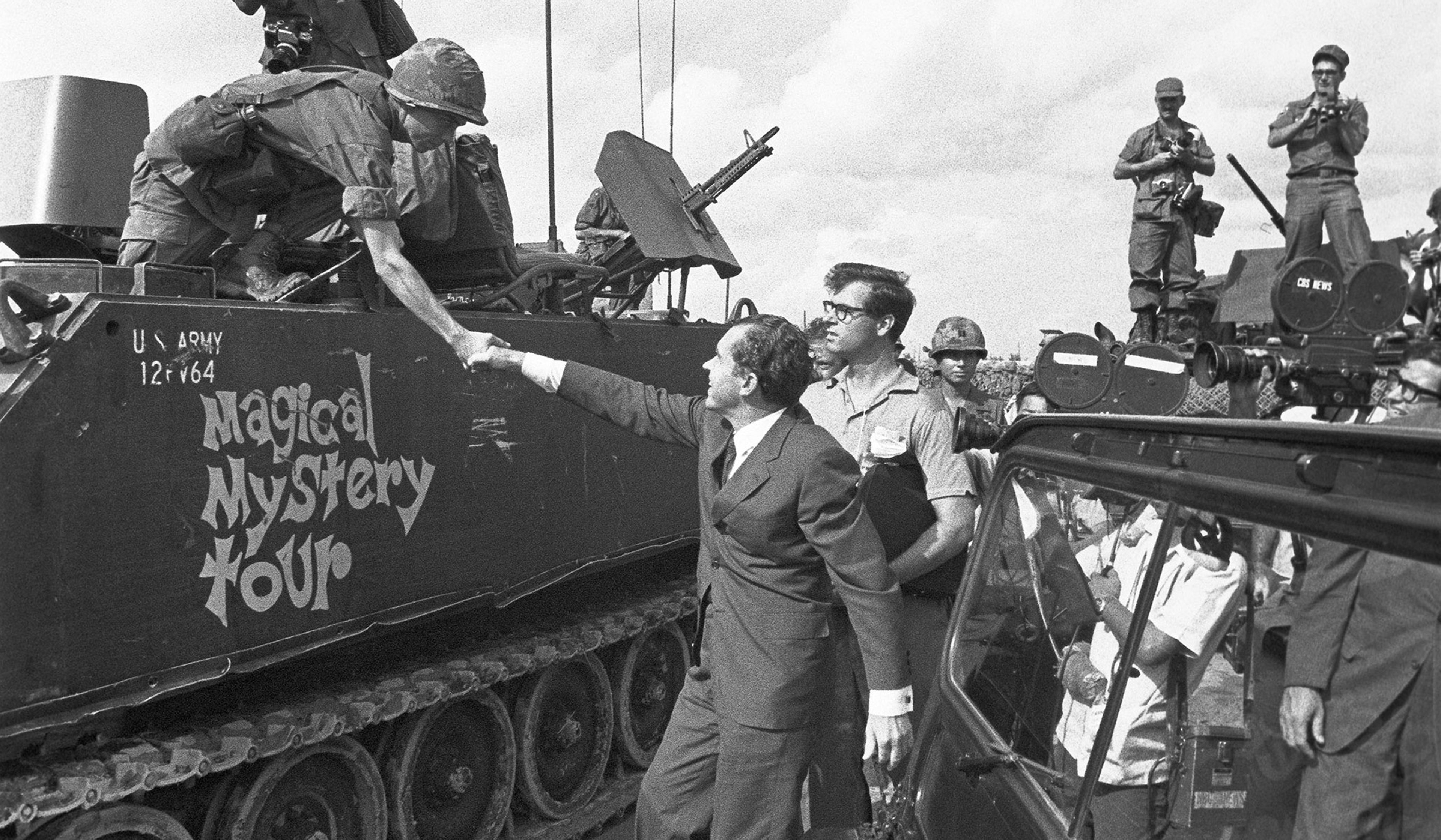
In truth, the only policy discussion found in the Nixon–Trump letters concerns the Vietnam War. “It is indeed gratifying to note that after ten long years, the American people appreciate the sacrifice of those who served the nation in a long and difficult war,” Nixon told Trump after the latter had participated in his charitable venture for veterans. The former president pointed out that New York mayor John Lindsay had quipped in 1970 that “our best young men went to Canada.” He, Nixon, had responded in his book No More Vietnams that “our bravest young men went to Vietnam.”
Trump concurred in May 1985, noting his “extraordinary respect and admiration” for Nixon’s most unappreciated accomplishment: “You did a great service to this country when you extricated us from the war in Vietnam.”
These exchanges, however, come off as perfunctory. What Nixon seemed most interested in discussing was the New York Generals of the upstart United States Football League, which operated in the early ’80s. To judge from his letters, Nixon was the biggest fan the team had in its short history.
Nixon’s longest letter to Trump, sent September 23, 1983, contains the only instance of the former president’s openly offering Trump, who had bought the Generals earlier that month, any unsolicited advice. Nixon, a former varsity football player, had thoughts on both the fiscal and coaching sides of professional sport. Concentrate on lowering ticket prices and filling the stadium, Nixon counseled, because fans are “indispensable props for the television broadcast, which in the future is where the real money lies.”
While Nixon had a number of inherent gifts, it’s fair to say that Donald Trump didn’t need a lesson from him on the power of television.
Nixon stressed drafting as a way to build a team. “It’s a miracle,” he wrote, that star running back Herschel Walker “did as well as he did considering the weakness of the offensive line.” A month later, Trump was appreciative — “Your opinions on world events are beyond doubt, but now I hope to be able to obtain some wise football advice as time goes by” — and conceded that for Walker “to have gained 1700 yards with almost no line is incredible.”
This is the only time that Trump sounded even remotely like an actual sports fan. Nixon, on the other hand, couldn’t stop writing about football. After Pat took a tour of Trump Tower in the fall of 1983, Nixon wrote, “I hope everything goes well with all your ventures — and particularly with the most interesting even though least profitable one — the Generals.” After praising Trump for a Time-magazine profile in April 1984, Nixon said he was certain the Generals would live up to Trump’s “standard of excellence” and “go all the way.”
In May 1985, Nixon wrote, “I am still rooting hard for the Generals and for the U.S.F.L. Only your strong leadership will enable both to survive.”
Neither the team nor the league survived into the next season. In 1985, at the behest of Trump, league owners voted to move from a spring to a fall schedule and directly compete with the National Football League. Trump’s ultimate goal wasn’t to create a thriving alternative league but to force a merger with the NFL. “Too often I feel like a one-man band,” Trump complained to Nixon about his fellow owners.
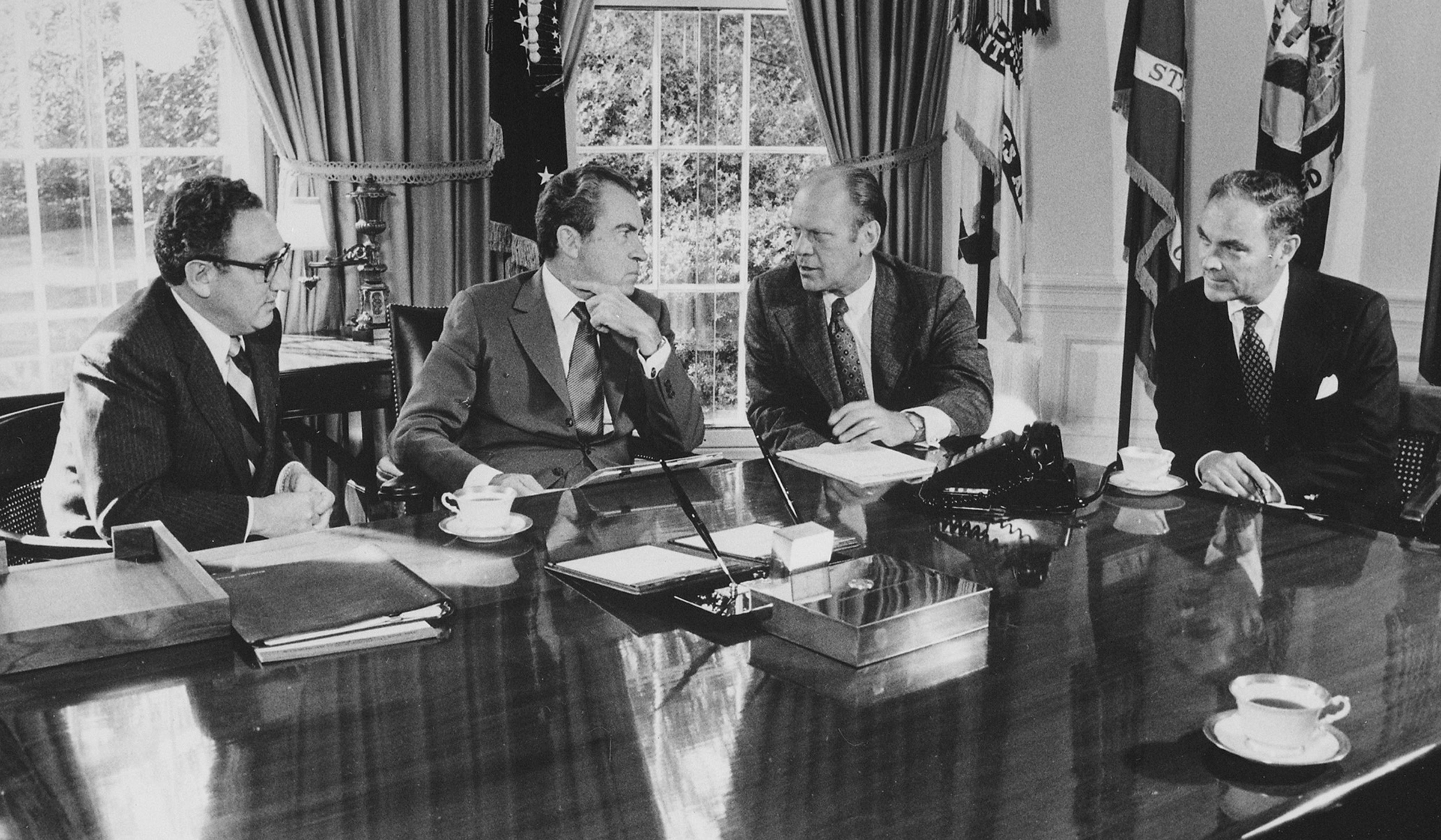
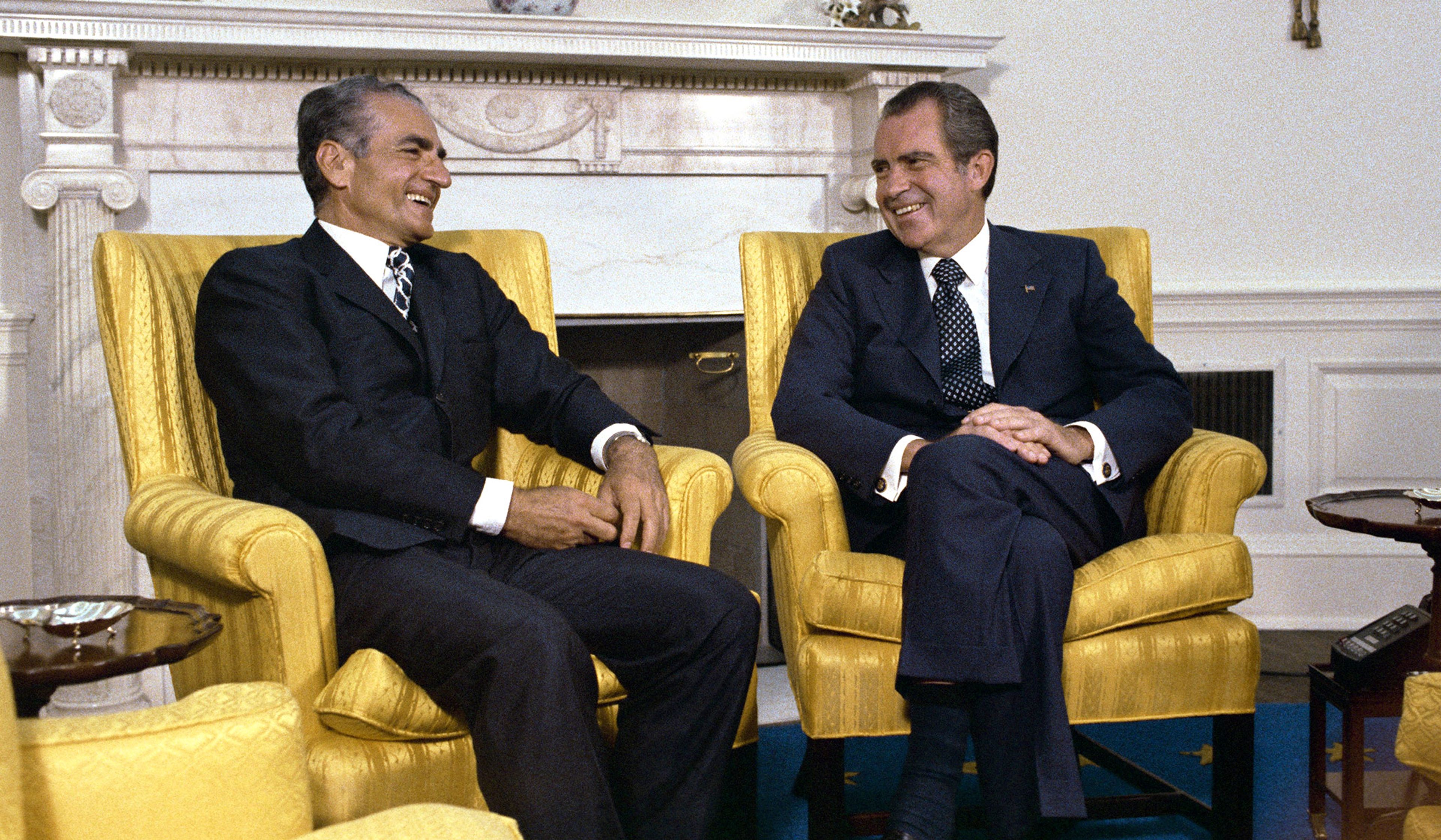
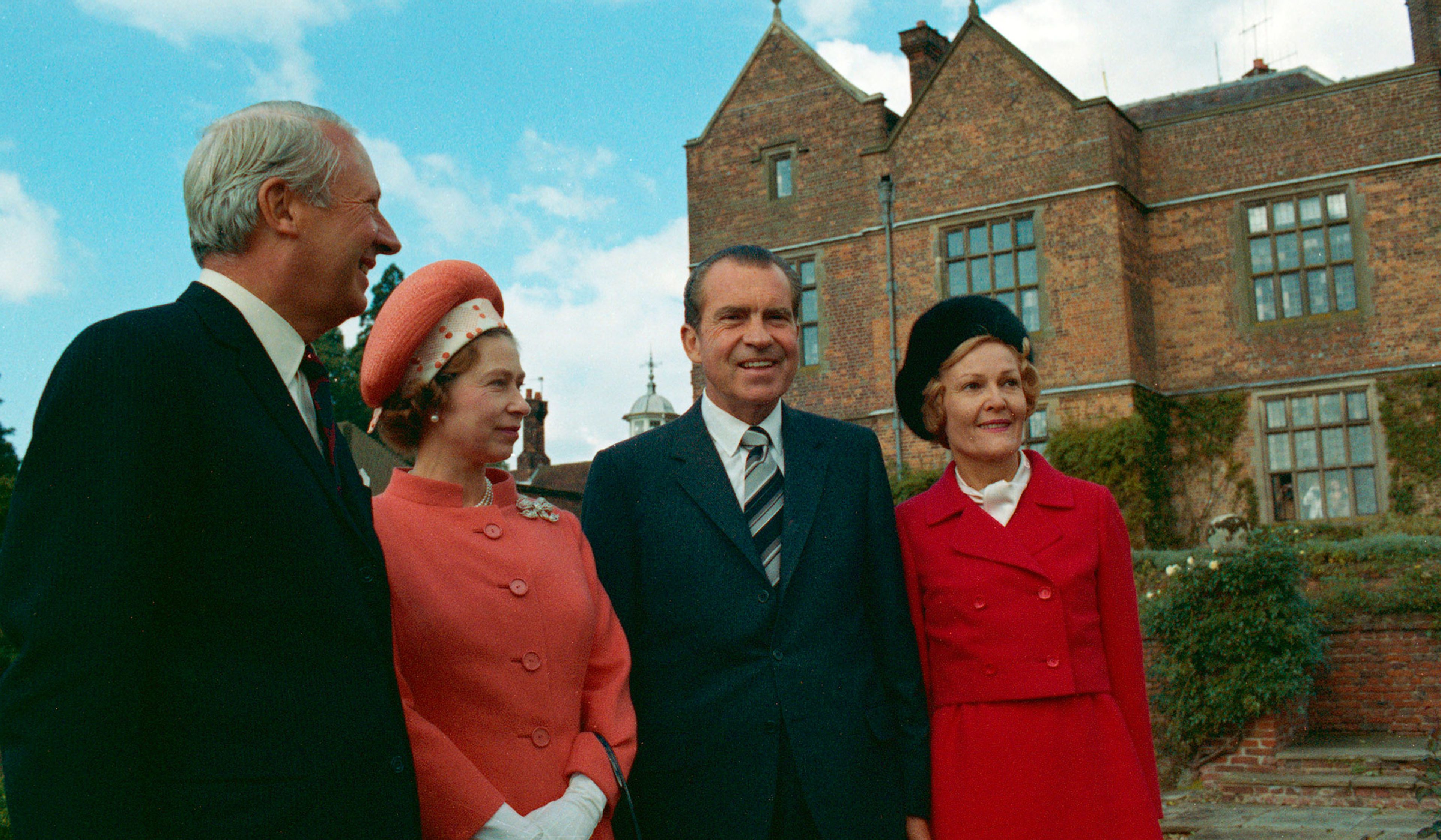
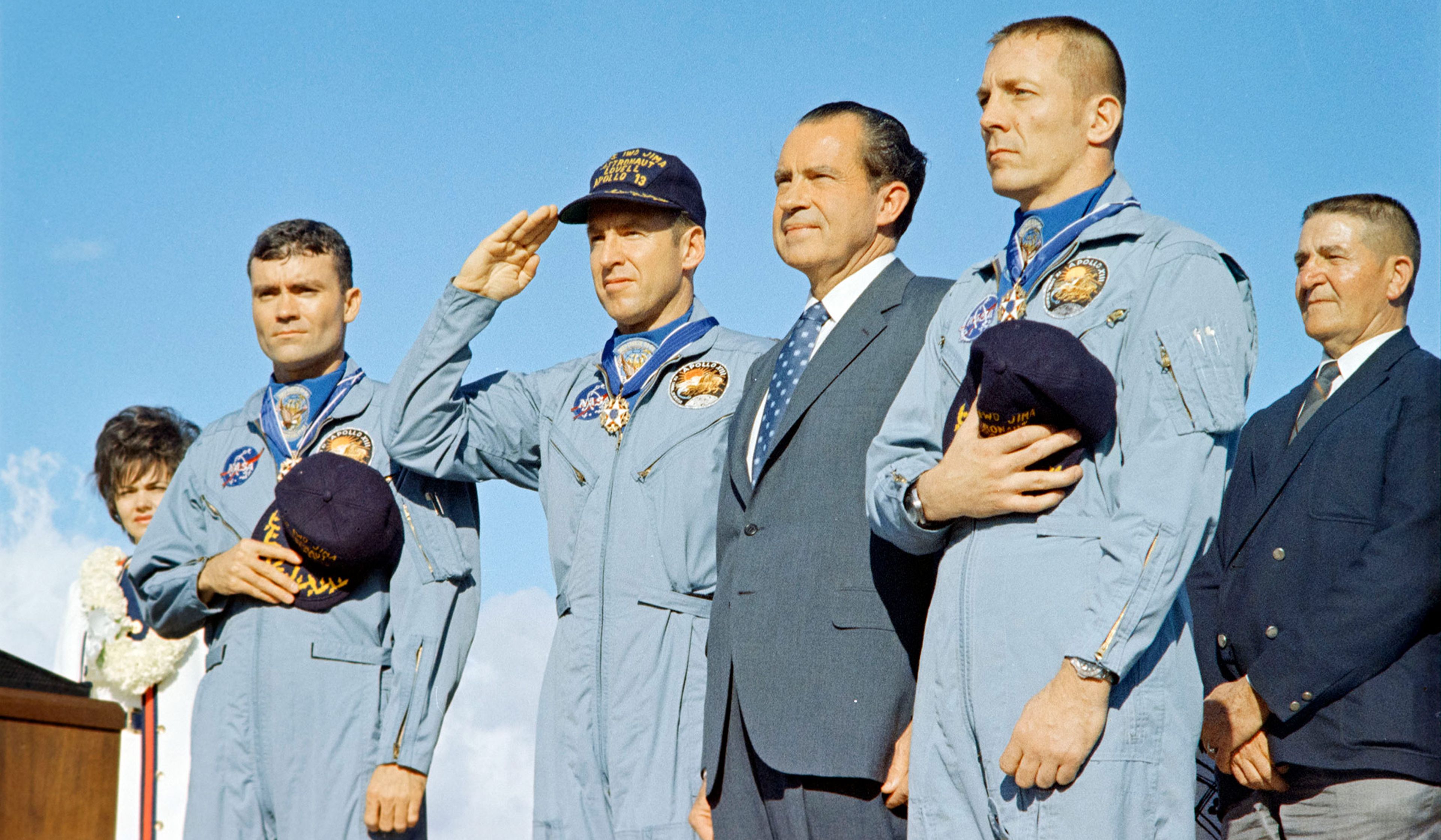
From left: Secretary of State Henry Kissinger, President Richard Nixon, Vice President-Designate Congressman Gerald Ford, and Chief of Staff Alexander Haig, Jr., in the Oval Office, October 13, 1973.
National Archives
The former president didn’t view the USFL as a competitor against the NFL. Nixon — football-obsessed from his youth, an attender of games during his presidency, a sender of notes with play-calling advice to NFL coaches — genuinely loved the game. He stressed to Trump that Americans who did not enjoy basketball or hockey were excited about football all year long.
Trump ignored Nixon’s advice and pushed owners to file an antitrust lawsuit against the NFL in 1986. The USFL won the suit but was awarded only $1 in damages. The decision killed the league, which lost somewhere around $163 million during its short existence and had no chance going head-to-head with the NFL. Neither man brought it up again, but it’s certain Nixon was greatly disappointed.
Despite all the alleged similarities between the two, including their political tribulations, they made an unlikely pair. Nixon grew up in poverty in a Quaker household in Whittier, Calif. Harvard accepted him, but his brother was ill and his convalescence was costly, so Nixon stayed in his hometown, helped run the family grocery store and care for his brother, and attended a local college. He would later take scholarships to attend the new law school at Duke, enlist to serve in the Navy during World War II in his 20s, and climb every rung with awkward determination.
Trump, the kid who tooled around his dad’s construction sites, would be bequeathed wealth and ride the turmoil of New York’s real-estate explosion to great riches. Trump married former Eastern European models. Nixon, who never went to Le Club or Studio 54, married his equal in Pat, a woman who worked her way through college in the 1930s, sweeping floors and answering telephones. And he stayed married to her until her death in 1993.
Trump is a man of instinct, Nixon was all pragmatism. One of them is happy to talk about his high IQ, the other was among the most intelligent but enigmatic men ever to occupy the White House. It’s fascinating that the two presidents developed a friendship, but the letters between them tell us something we already know: Donald Trump is what you see. Richard Nixon never was.












Comments