Criminologists can give you lots of data — social science. I can give you stories, mainly. But they’re not nothing. I have the evidence of my own eyes, ears, and nose. Don’t forget that last organ: Smells can tell you something about how a city is going.
And I will talk about New York.
In July 2020, a friend of mine invited me over to dinner. He lived at 77th and Broadway; I live at 69th and Broadway. He and his fiancée proposed a rooftop, socially distanced dinner. (The pandemic was roaring.) My friend is a European; I figured he would want to eat late.
“What time are you available?” he texted. I said, “Anytime after 5:30.” He said, “Great. Why don’t you come over at 6? That way, you’ll be home before dark.”
Readers, I can’t tell you how strange that sentence was. For the previous 25 years or so, that stretch of Broadway had been utterly peaceful and delightful — as had New York, for the most part.
After dinner, when I was leaving, my friend said, “Text us when you get back home, just to let us know that you made it okay.” Again, that sentence was astounding. When I got back home — eight blocks — I did not text them. But they texted me, just to be sure.
You can forgive them their nervousness. In previous weeks, hundreds of homeless people had been moved into hotels around 77th Street. These included the drug-addicted and mentally ill. Plus convicted sex offenders. Maybe this was right — a necessary, humane measure in a pandemic — maybe it was wrong. I don’t know.
In any case, my friends could scarcely walk the streets, even during the day. It was disturbing at best, dangerous at worst. They were paying a pretty penny to live in their building, mind you.
They found themselves in Central Park, listening to Curtis Sliwa talk about neighborhood safety. Sliwa is the leader of the Guardian Angels, which he founded in 1979. Their purpose is to fight crime where the police can’t. Sliwa had been asked to speak by a newly formed group called “Upper West Siders for Safer Streets.”
If Sliwa and the Guardian Angels had been summoned; if they were needed — then the old days had definitely come back, at least for a while.
My friends, now married, moved from 77th and Broadway to a different neighborhood of Manhattan.
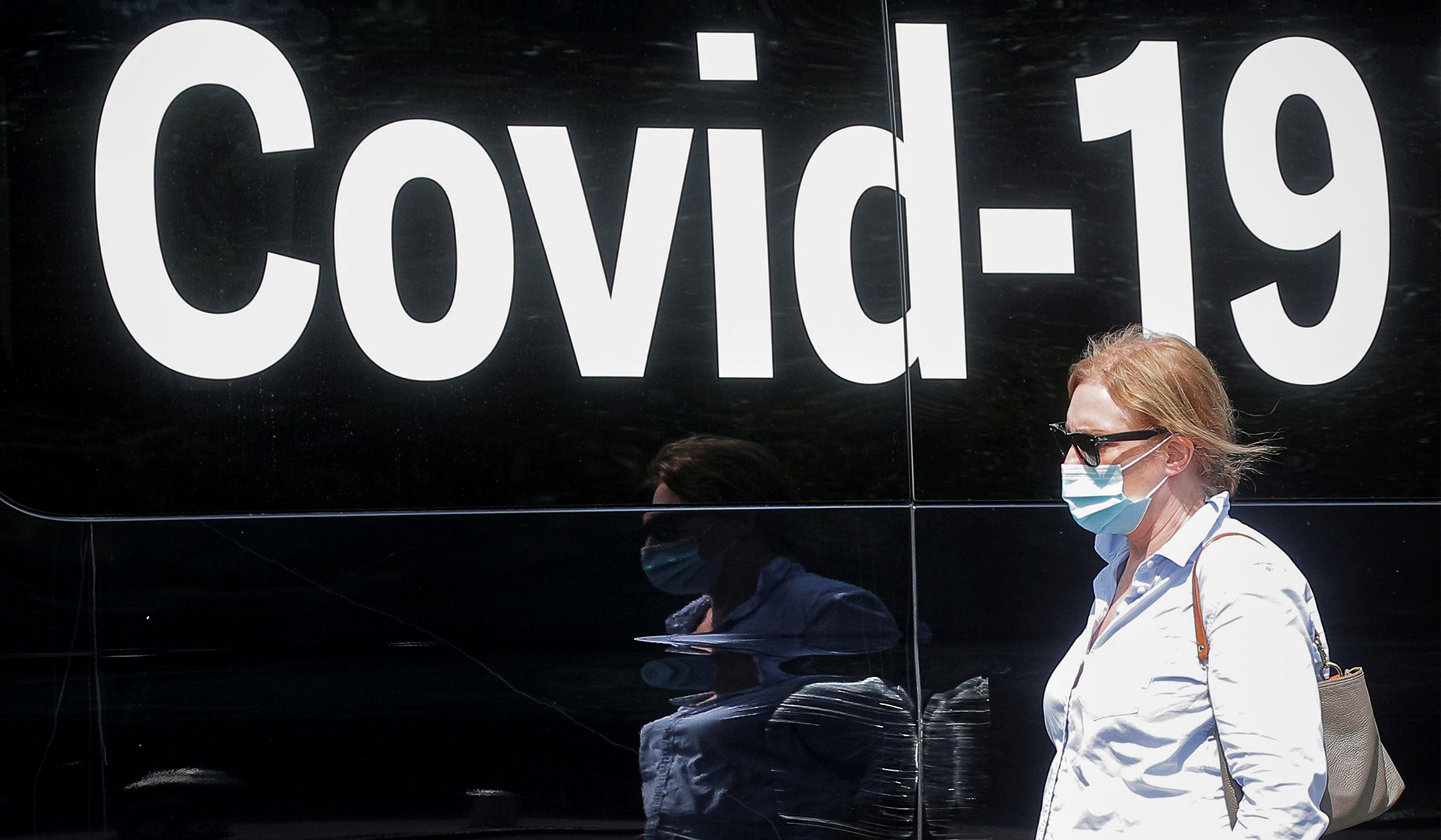
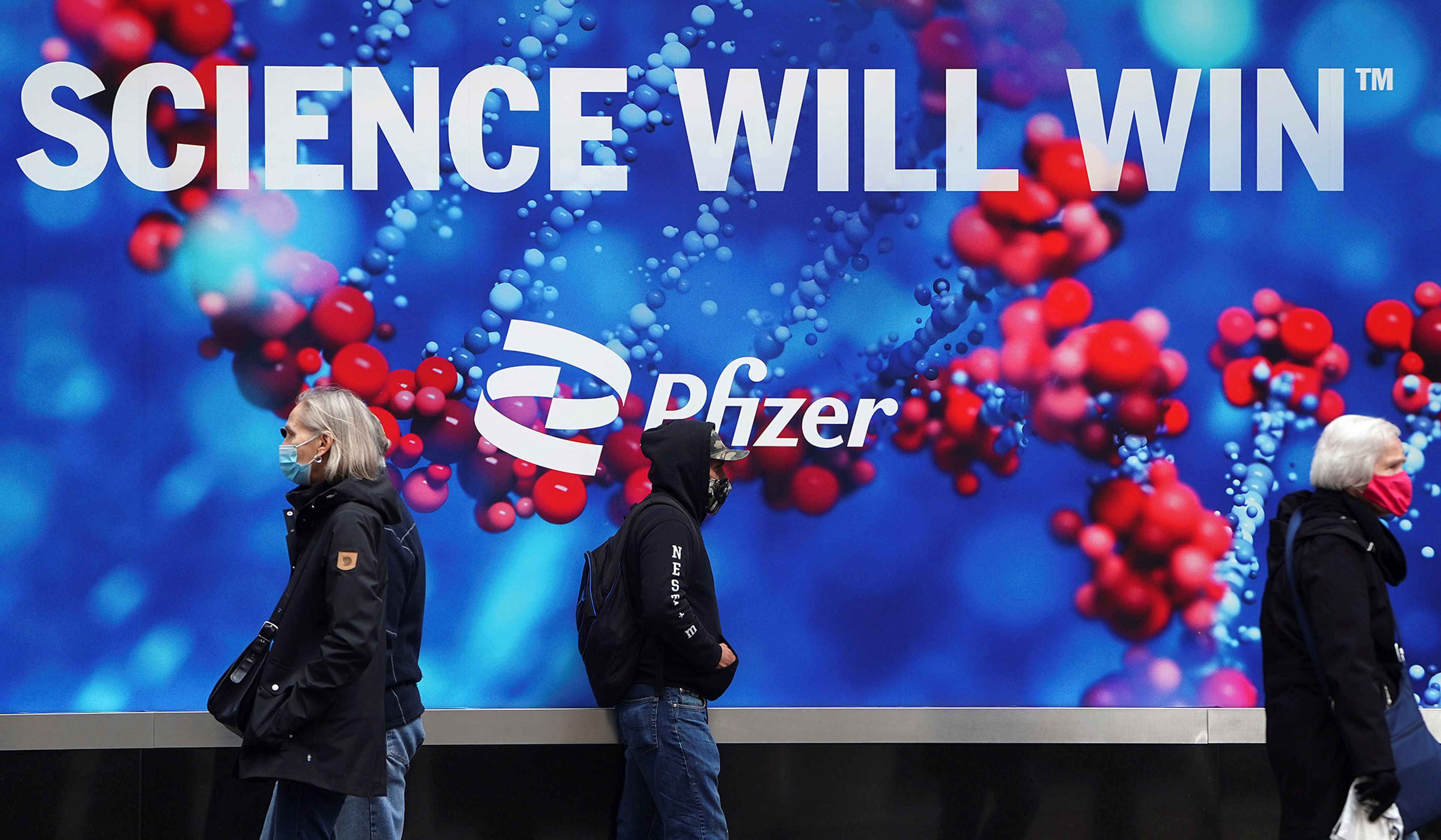
A woman passes a coronavirus mobile testing van in Washington Square Park in New York City, July 22, 2021.
Brendan McDermid/Reuters
I myself moved to New York — 69th and Broadway — in November 1998. For more than 20 years — November 1998 until June 1, 2020 — I did not look over my shoulder, once. You may not believe me, but it’s true.
How can you be aware that you’re not looking over your shoulder? I would occasionally visit other cities: Philadelphia, St. Louis, Chicago, San Francisco. Then, I would look over my shoulder. And it would occur to me: “I don’t have to do this at home. Isn’t that remarkable?”
I mentioned a specific date: June 1, two summers ago. You will recall the national atmosphere. Riots, looting, and other criminality had broken out. This was an offshoot of peaceful protests following the death of George Floyd, in Minneapolis. (He was killed while in police custody.)
Concerning June 1, I could give you details. But suffice it to say, I had to run that night. Run home, I mean. This was so weird — so jarring — in view of what life in New York had been.
I jotted a few notes on Twitter, and some responded, “Oh, poor, privileged whitey, getting a taste of what others have had to go through for a long time.” Okay. Interpret as you wish.
As I said at the top, I’ve got stories. Incidents. How many do you want to hear? Hoodlums have menaced people on the streets, where no one had been menaced in recent memory. Some of us found ourselves taking cabs home from Midtown Manhattan — because suddenly, walking was a problem.
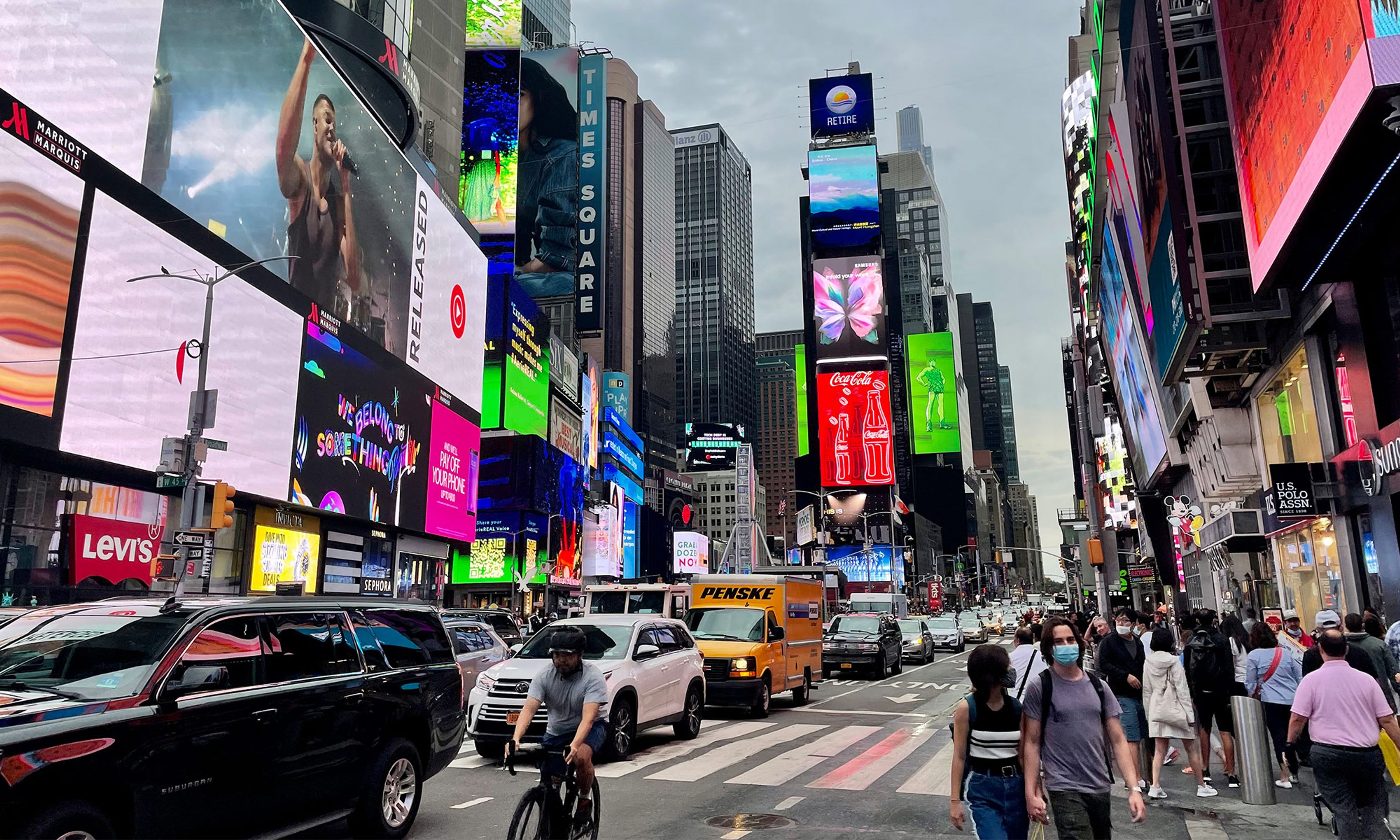
In the 1990s, some people complained of the “Disneyfication” of Times Square. The area had always been gritty and “edgy”; now it was nauseatingly family-friendly. “You might as well be in the suburbs!” Well, here is a headline from June 28, 2021: “2nd Times Square Bystander Shot in Broad Daylight in 2 Months, Mayor Vows More Cops.”
How do you like Times Square now? Better? More “authentic”? Less suburby?
Mass social protests, and accompanying criminality, are rare. Pandemics are rarer. It is only right to cut governmental authorities some slack. But I can tell you that life in my part of New York had been going down, down, well before the onset of the pandemic.
There were ever more vagrants. There was a lot more camping out. More begging, including of the aggressive sort. More urination and defecation, out in the open. Obvious, tragic mental illness — people literally barking at the moon. Trash piled high, and scattered about. Overall degradation.
It was as though the authorities — the police, primarily — had withdrawn. Been ordered to withdraw, or “stand down.” They were not present. There was a sense of “anything goes.”
Here is something small, but maybe telling: For the first time in my experience, people started camping out in the vestibule of my bank, after hours. The vestibule is where the ATMs are. This was not when the weather was cold, I should say, but when the weather was nice. Sometimes you wanted to bank and thought twice about it.
One night, I wanted to bank and saw that a man was in the vestibule. I was hesitating whether to go in. But then I noticed: The man seemed to be wearing an insignia of some sort. He was a security guard.
I went in and conducted my transaction. As I was leaving, I said, “Sir, I hope you don’t mind my saying this, but I’m glad you’re here.” He said, “Everyone is saying that.”
Next door to the bank was a French bakery and café. It closed sometime last year — to be replaced by a cannabis dispensary. Have I mentioned the weed yet? It is everywhere, choking New York. Not the pot of the dorm rooms of yore. New stuff, “skunk weed,” I think they call it. It is harsh, obnoxious, repellent. I don’t think the dispensary, unlike the bakery and café, will be closing anytime soon.
In a September 2013 issue of this magazine, I published a piece called “Freedom from Fear, for Now: A personal reflection on living in New York.” I expanded that into a four-part series, online: “The Fate of New York.” For 20 years — under Mayors Rudy Giuliani and Michael Bloomberg — the city had been a model. A model city, demonstrating broad peace and prosperity. Now we were on the eve of another mayoral election, bringing the Giuliani–Bloomberg era to an end. What would happen?
When I moved to the city, back in ’98, people would regale me with tales of the bad old days. I knew about them already, actually: through newspapers, magazines, TV shows, movies, a Tom Wolfe novel . . .
Outside my window, I’m looking at Verdi Square and Sherman Square, which are in the general area of 72nd and Broadway. These squares, together, were once known as “Needle Park.” In 1971, there was a movie, The Panic in Needle Park, starring Al Pacino.
By the time I got here, “Needle Park” was heavenly — no needle park at all. The biggest danger was being bumped by a baby stroller, pushed by a happy young mom (or her nanny).
In 2004, the New York Times was moved to publish an article titled “Is New York Losing Its Street Smarts?” There were young people and newcomers who had no idea about urban dangers. They had been given no occasion to learn.
When I wrote in 2013, I had a question, and many other people had the same question: Would New Yorkers go back? Now that they had seen what a city could be, would they again “tolerate the intolerable,” in a phrase of Norman Podhoretz? Some said no. There is no going back to staying in your apartment, out of fear, or putting a “No Radio” sign in your car. I had a different view.
“People can be convinced to tolerate the intolerable,” I wrote. “Convinced they have to. After all, it happened before.” And “everything Giuliani and Bloomberg have done is reversible. None of their gains is permanent.”
Government is important. (Forgive an elementary-school point, which will turn into a homily.) Government makes a difference, whether that government is good or bad. We can debate, as we always do, what government is for. What the scope of its responsibilities is. But almost everyone agrees that government is responsible for law and order. And when government sleeps on the job?
Back in 2013, I quoted the Bible (which you can do in National Review): “Yet a little sleep, a little slumber, a little folding of the hands to sleep: So shall thy poverty come as one that travelleth; and thy want as an armed man.”
A broken window here, a graffito there; a jumped turnstile here, an encampment there — pretty soon, you’re talkin’ real trouble.
In New York, I am a single-issue voter: crime, or public order. Everything else flows from public order: commerce, tourism, vibrancy, beauty (or at least non-ugliness) — all the things that inhabit the phrase “quality of life.”
I have given you a lot of impressions in this piece, not data. Here’s another impression: The decline in New York has been arrested. You look over your shoulder less. You may not like what you see around you — or hear or smell — but you look over your shoulder less. Moreover, there will be a new mayor next year: Eric Adams, an ex-cop who has promised law and order.
“Nothing is inevitable,” said Charles Krauthammer in a famous 2009 speech. “Nothing is written. For America today, decline is not a condition. Decline is a choice.” He was talking about this country’s position in the world: its foreign policy, its military strength, its security strategy. The same is true, I think, of city life.
And here’s something encouraging: If people choose — in some vague, collective sense — to decline, they can choose, after being fed up or rousing themselves, to un-decline.











Comments