‘We take the big sellers, you take the small sellers.” It was a sensible division of labor, the kind that needs to be made when the federal and state governments have “concurrent jurisdiction” over a crime category, such as drug-trafficking.
Controlled substances are regulated under the police power that states exercise over their internal affairs. Simultaneously, drugs fall under federal purview, pursuant to penal statutes enacted under Congress’s interstate-commerce authority. In theory, then, any illegal act involving narcotics could be prosecuted by state and federal prosecutors. Since there are many more criminal acts than resources to prosecute them, the feds and the states try to maximize efficiency. Justice Department components (mainly the Drug Enforcement Administration and Federal Bureau of Investigation) prioritize large-scale drug enterprises that import big quantities of drugs or distribute across state lines. State and local law-enforcement officers, who are far more numerous than their federal counterparts but confined to policing their communities, concentrate on street-level sales and — ever more rarely owing to decriminalization initiatives — simple possession.
In both cases, the target is illegal drug sales, not use; felonies, not misdemeanors. And because big-money illegal enterprises are inherently dangerous — requiring firearms and muscle to protect product, cash proceeds, and territory — the enforcement focus is on violent street gangs, organized-crime groups, and international cartels.
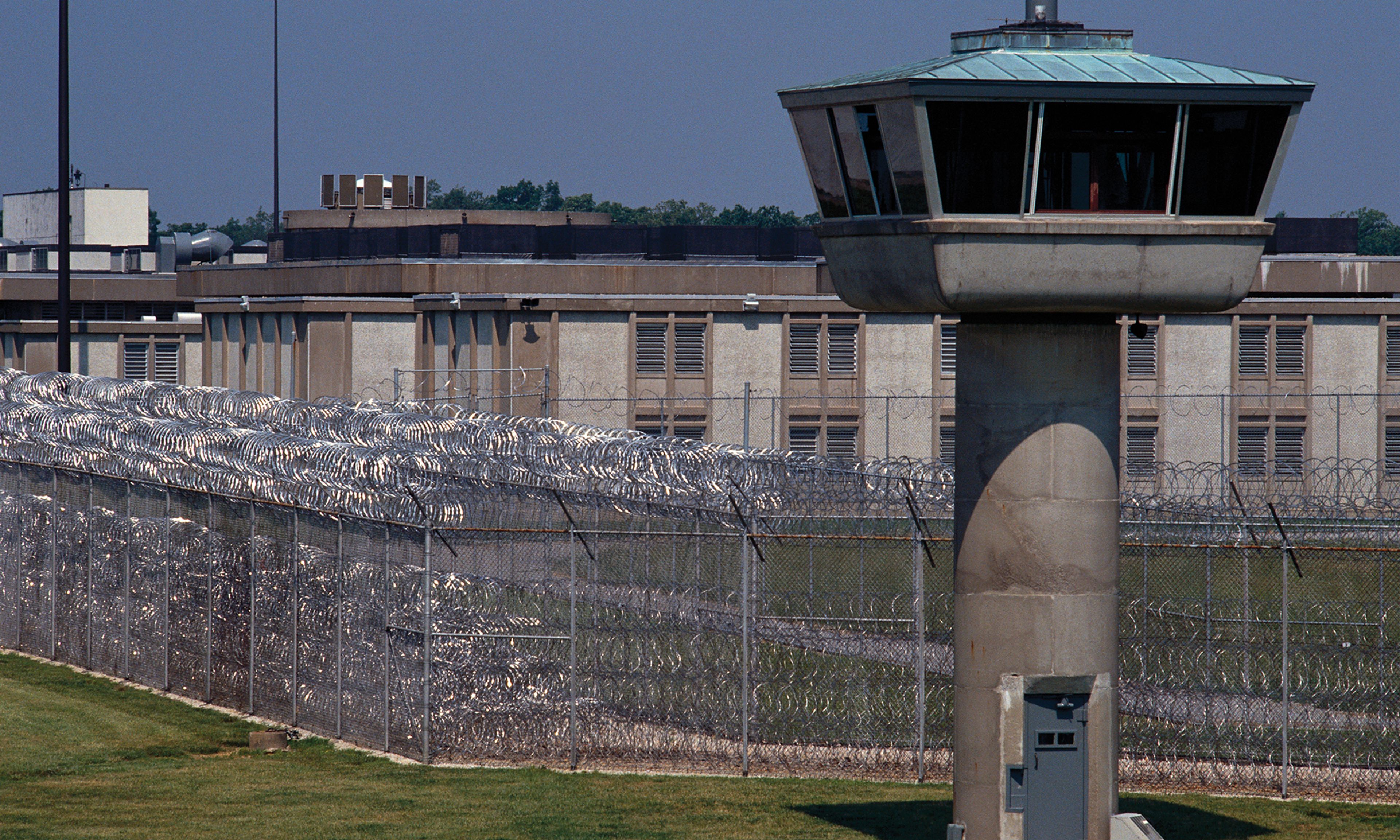
As a result, virtually no convicts are sentenced to prison for mere use of illegal drugs or possession of them in personal-use amounts. Not in the federal prison system, where nearly half of inmates have been convicted for drug crimes (often in addition to other crimes); and not in the state system, which is far bigger — housing 88 percent of the nation’s incarcerated population — and in which violent crimes far outstrip drug offenses as the bases for imprisonment.
That is to say: Just about everything you’ve been told by self-styled criminal-justice “reformers” about who is being detained in our “carceral state” is fictitious. The notion that the jails are teeming with nonviolent drug offenders is nonsense — though it may be marginally less ridiculous than the companion narrative that blames this imaginary outrage on “systemic racism.”
In point of fact, our prisons are not teeming at all.
In general, the incarcerated population in the United States is divided between prisons and jails. The former, in which about two-thirds are detained, are long-term-confinement facilities — from high-security penitentiaries to low-security prison camps — that are run by state and federal governments. Jails, which house the remaining third, are mainly holding facilities run by counties, cities, towns, and law-enforcement agencies. Pretrial defendants who are denied or do not make bail are detained in jails, as are convicts sentenced to short stints, usually a year or less.
The incarceration rate in the United States — i.e., the percentage of our national population that is confined, as opposed to the total number of people in custody (the incarcerated population) — has been decreasing for well over a decade. It peaked at 1,000 inmates per 100,000 people between 2006 and 2008. With the decline that began in the Obama years, the incarceration rate has dropped nearly 20 percent, to 810 per 100,000. That’s its lowest level since 1995, a time at which, not coincidentally, crime rates were beginning to fall as detention rates inched up.
Even in absolute terms, the incarcerated population is plunging. In 2019, it was 2.1 million — about 1.4 million in prisons, the rest in jails. That is about the same as it was in 2003, even though our current national population (over 330 million) has grown since then by 40 million. For comparison: Two years ago, we were confining the same number of criminals that we did 16 years ago, even though our population has since swelled by the size of Iraq or Poland.
The numbers have continued to plummet, despite significant upticks in violent crime. As the Bureau of Justice Statistics reports, concerns about controlling the potentially calamitous spread of COVID-19 infections induced federal and state governments in 2020 to shed an additional 208,000 inmates — mostly by not making arrests for comparatively minor crimes and by granting early release to inmates in the late phases of their sentences. At about 1.8 million, the incarcerated population in the United States is now lower by about half a million than it was in 2008, when violent crime was in the midst of stunning reductions from its frighteningly high levels from the 1970s into the mid ’90s.
Fewer prisoners means more violent crime. That is reality.
The reformers’ myth notwithstanding, the jails are filled with recidivist criminals, most of them violent. As the Manhattan Institute’s Heather Mac Donald puts it with characteristic pith, “prison remains a lifetime achievement award for persistence in criminal offending.”
It is not difficult to see why. In the 1980s, to address scandalous disparities in sentencing, the criminal-justice system was transformed by the implementation of “sentencing guidelines.” They were adopted by the federal government in 1984, accelerating a trend that had begun in Minnesota in 1980 and has since spread across most states.
Prior to the implementation of guidelines, sentencing was essentially indeterminate, within broad parameters. Virtually every crime is codified by a penal statute that prescribes a broad sentencing range. Take robbery, where the statute might provide for a penalty of zero to 20 years’ imprisonment. In an indeterminate regime, the court’s sentencing discretion is limited only by Congress’s statutory range of years — it can’t go over the maximum of 20 (or, obviously, under zero). The term imposed upon conviction thus depended largely on the judge: The tough law-and-order types would typically hammer defendants with terms of 15 or more years; the softer bleeding-heart types might impose no prison term at all, or a minimal one at most. Consequently, two defendants of comparable backgrounds who’d committed the same offense would be treated vastly differently.
The system lent itself to credible claims of racism and arbitrariness. It also placed too much control in the hands of prosecutors, whose charging discretion was boundless. For example, say two defendants collaborated to sell a kilogram of cocaine in two installments. The prosecutor might charge one drug-conspiracy count; or one distribution count that included both installments; or separate distribution counts; or a drug-conspiracy plus one or two distribution counts; or, if the prosecutor was in a generous mood (i.e., trying to make the case go away on a sweetheart plea), all conduct covered by one minor conspiracy charge (rather than invoke the harsher conspiracy statute Congress enacted specifically for drug cases). In this scenario, the defendants might be facing a maximum of five, 20, 40, or 60 years’ imprisonment, depending on how the prosecutor decided to draft the charges. And there was no requirement that two defendants in that same case — or, for that matter, any two similarly situated defendants — be treated equally. The prosecutor could package an attractive minor-conspiracy plea deal for one while throwing the book at the other by stacking as many counts as could be culled out of the offense conduct.
Sentencing guidelines put a stop to such capriciousness. They endeavor to impose uniformity and determinacy. This way, similarly situated defendants receive roughly the same sentences for the same type of criminal conduct; and, at the time they decide to plead guilty (as the vast majority do) or go to trial, they have a more realistic idea of what the sentence will be — within a range of months, rather than something like the zero-to-20-year crapshoot described above.
Furthermore, the guidelines install a system of “real offense” sentencing, which assesses criminal conduct as an objective transaction (or series of transactions) rather than as what the prosecutor, by adding or subtracting formal charges, subjectively depicts the conduct to have been. The guidelines prescribe exacerbating and mitigating factors that apply to the heartland of offenses in a crime category. With fraud, for example, it instructs courts to consider the total dollar amount of the scheme; the dollar amount actually stolen; the number of victims; the scheme’s level of sophistication; whether the particular defendant was a leader or a subordinate; whether violence, intimidation, or obstruction came into play, and so on.
To calculate sentences, each offense transaction is assigned a “base offense level,” ranked from 1 to 43, reflecting its relative seriousness. (In the federal guidelines, for example, trespass is 4, while kidnapping is 32.) Adjustments are then applied based on the factors typical of that offense, including a reduction, for “acceptance of responsibility,” that is routinely afforded to a defendant who pleads guilty, admitting guilt and sparing the public the burden of a trial. That computes to a total offense level, which translates to a range of months. For example, an offense that computes to level 27 presumptively calls for a sentence of 70 to 87 months’ imprisonment.
We must say “presumptively” because the offense is only half of the sentencing calculus. There is also the offender. The principal driver of sentencing is criminal history: the defendant’s prior record of arrests and convictions, along with the personal circumstances under which the charged offense was committed — e.g., whether the accused was on parole, probation, or bail from another offense; whether he has a violent-gang or organized-crime affiliation; whether there is a pattern of forcible misconduct or substance abuse. The federal sentencing guidelines prescribe six criminal-history categories of increasing seriousness. That offense-level-27 sentence of 70 to 87 months described above is for a Category I offender. It balloons as we pass from the aberrational first offender to the habitual offender to the gangbanger and career criminal — 78 to 97 months, 87 to 108 months, 100 to 125 months, 120 to 150 months, and 130 to 162 months, as the chart moves from Category II to Category VI.
Notice what is never considered in either the offense factors or the offender characteristics: race. It has nothing to do with sentencing — and, very basically, sentencing is what determines who goes to prison. Of course, in a corrupted era in which critical race theory is taken seriously, some progressives would tell us that even math itself is racist. And certainly the Justice Department has swallowed the narrative uncritically: The Bureau of Justice Statistics catalogues the rise and fall of the black, other nonwhite, and white demographics of the prison population — as if these levels were intentional outputs despite their absence as relevant inputs.
It is a canard. The legal profession, including most prominently judges and leading criminal-justice practitioners, predominantly educated in elite law schools, is among the most self-avowedly progressive in the world. The notion that it would preside over a “systematically racist” process of prosecution, sentencing, and incarceration is ludicrous.
Overwhelmingly, inmates in our thinning prison population are there because they break the law, serially. And the inconvenient truth we’re not supposed to notice is that young African-American men offend at significantly higher rates than any other racial or ethnic demographics of comparable age. That is a fact we know, not because of theorizing by “systemically racist” police departments but because crimes have victims. Victims make formal reports describing who has preyed on them — and, because crime tends to be local, the victims include disproportionately high numbers of black Americans, typically residing in urban centers that are plagued by gang violence.
It is trendy to turn a blind eye to these facts. It remains remorselessly true, however: American prisons are substantially populated by hardened criminals. When fewer of them are in custody, there is inevitably more crime on the streets.












Comments