‘What’s our virtue for this week?” the assistant principal shouted to the 370 students crowded onto the basketball court. Every morning at Lake Country Classical Academy (LCCA), in Oconomowoc, Wis., begins with an outdoor assembly; it was snowing the first day that I visited, and everyone shivered through.
“Wisdom!” came a chorus of tiny voices.
“And how do we develop wisdom?”
Dozens of skinny little arms shot into the air. The assistant principal pointed to one child. “Through experience and knowledge,” the boy recited. Another teacher spoke about the importance of persistence in the face of adversity and then dismissed the throng, which proceeded to the day’s first-hour classes.
Interest in classical education — once a niche movement associated with uniforms, Latin, and old-money aristocrats — has boomed. In the past decade, public-school enrollment has fallen by 2 million students. Broader demographic trends have caused much of that drop, but so has an exodus driven by parental dissatisfaction with pandemic closures and politicized lessons.
Classical education happily welcomed many of those exiles. Between 2019 and 2023 alone, 264 new schools have been established, and enrollment at these K–12 academies has increased sevenfold in the last decade. A powerhouse in classical education, Hillsdale College has launched 30 charter schools as part of its Barney Charter School Initiative and has supplied curriculum and support to countless more. Lake Country Classical is one such school.
While media coverage has highlighted the growth of classical education, its founding principles, and its internal debates, I had a simpler question: What actually happens inside these schools? Aside from a few extra allusions to Aristotle and Homer, what makes the instruction and curriculum of a classical school different from those of a traditional public school?
In short, nothing and everything.
Walking through the hallways after the assembly made me nostalgic for my days teaching in, yes, a public school. White-painted cinder-block walls. A kindergartner struggling with his laces. A student and I bumped into each other, but by the time I turned around to say, “Sorry,” she’d disappeared into a crowd of blazers and book bags and children asking their teacher for a Kleenex.
Much of what has been called the “grammar” of traditional schooling remained. Students sat through lessons on discrete subjects for preset periods of time. They worked at desks and raised their hands. Teachers introduced new concepts to practice or facts to be learned. Classical education, of course, came first, so it’s unsurprising that traditional public schools adopted many of the same methods.
And appropriately so. Attempts to innovate past this fundamental grammar of schooling always fail. Every couple of years, some new schooling model appears — discovery learning, open classrooms, AI-powered tutoring — but teachers quickly resume explicitly teaching concepts from within four walls, handing out worksheets and requiring note-taking by hand as they shut down classroom computers. There are reasons behind this traditional method. Humans learn best by means of explicit instruction. Bells marking out the school day ensure that transitions happen concurrently and efficiently. Rows of desks keep attention forward and distraction minimal. We learn best from face-to-face interactions, not screens.
And to its credit, LCCA does traditional schooling exceptionally well.
Classroom routines were seamless. As I entered a kindergarten class, there was a bustle of children readying themselves for the day’s work before the teacher boomed, “Show me your writing spot.” And plonk, 23 little hands all dropped the tips of their pencils onto their papers to write; the room was silent.
Sporting Hillsdale attire, Mrs. Mixdorf spent the following 20 minutes leading her classroom through phonics and spelling like a master conductor. Students recited phonograms, spoke to their pencils as they wrote (the idea is to verbalize phonemes while writing, to encourage the association of the written and spoken sound), marked syllables on their papers, read word lists with partners, and stood up to do a choreographed dance when they arrived at the silent “e” in “nine.” Each phonogram had a chant associated with it, and boy did those children recite the chants with gusto. The routines were so well practiced that the progression of tasks required few if any directions, only prompts and gestures, flicks of a conductor’s baton: My turn. Your turn. Write. Pencils down. Read to a partner.
Through it all, one boy slumped over his desk; he wasn’t disruptive, but neither was he engaged. Such scenarios are a challenge for a teacher. Prod the child and you risk an outburst or overt display of defiance. Ignore him and it signals to the class that participation is optional. She kept reminding the boy, correcting and corralling him, all through the lesson, and he complied just enough to avert consequences. When partner time came, the teacher crouched next to him, working with him independently and cheering his perfect reading, and then gave him a fist bump before she stood back up to direct her charges once again. It was a masterly demonstration of behavior management.
In LCCA’s upper-school building, which includes seventh- through twelfth-graders, routines relaxed. The day opened with students ambling about their homerooms, a few scrambling to finish homework, others refreshing their understanding of entropy before a quiz. One boy spent his seventh-grade math class blurting out inane adolescent jokes, and two girls tossed scraps of paper into the hair of a friend in front of them. It’s a school.
In eleventh-grade English, a ponytailed teacher leaned over the lectern as he read aloud from the Aeneid, pausing to explain passages or ask questions in the style of a literary Socratic seminar. “Bro, he’s embarrassed for falling asleep at the wheel?” one student said, laughing, after Palinurus falls asleep and into the ocean. They were reading an ancient text, but humanity hasn’t changed, and these students saw that. “And he’s about to lie to save face,” their teacher replied. The students glanced back down and kept reading.
All of this — the routines, the behavior management, the instruction, the classroom content — will seem familiar to anyone who graduated from public school. The academic curriculum and how it’s taught differ in quality, not in kind, from instruction at a traditional public school.
Where LCCA differed was in its hidden or implicit curriculum. Every school teaches more than the preset academic content. What’s on the walls? What behavior is rewarded or sanctioned? Do adults decide which books to read, or children? What language do teachers use to justify this grand enterprise of educating the next generation? Each of these decisions and subtle norms helps to form the worldview and character of the students as much as the explicitly taught content.
Behind the ponytailed English teacher was a hand-drawn silhouette figure. The label above the image read “Reason, Will, Passion.” And next to the figure was a statement written in cursive: “Reason rules the passions through the will.” The bookshelves hold not young-adult fiction or graphic novels but classroom sets of Wheelock’s Latin, C. S. Lewis’s The Abolition of Man, and weathered volumes of American literature.
Perhaps the most subtle, albeit the most consequential, difference was LCCA’s guiding principles. Traditional public schools have expectations for student behavior and try to foster values such as community and caring. Values are soft things. I value family more; you value work more. Who’s to say which of us made a wiser choice? They’re subjective preferences. The primary value upheld in public schools might be not to offend.
In contrast, LCCA has a “virtue code.” In between images of works of art by Leonardo and Michelangelo, the walls of every classroom bear the words “Honesty, Courage, Responsibility, Respect, and Wisdom.” Virtues are hard things. Fail a test of courage or act unwisely and virtue will demand justice or forgiveness. Values are subjective, virtues objective. The former is a preference, the latter a firm statement of right and wrong, true and false, good and evil.
Some of our most heated debates in education are really over this hidden curriculum, and none is more contentious than how we frame American history. Media alarms notwithstanding, no one denies in practice that students ought to learn about slavery, Jim Crow, redlining, and other American sins. The real disagreement centers on the fundamental view of America: Is our country hopeless, built on corrupted ideals, or a good country growing closer to its ideals?
The seventh-grade history teacher made her view clear: She has a large portrait of George Washington hanging over her whiteboard, with framed texts of our founding documents outside in the hallway. The textbook proceeds through writings of and about major historical figures, ranging from Bartolomé de Las Casas, writing in the early 16th century of Columbus’s discovery of the New World, to Frederick Douglass, to Malcolm X’s dissent from Martin Luther King Jr.’s nonviolence, to Peggy Noonan on Ronald Reagan. The readings cover the moral failings throughout American history, but they frame our country nonetheless as a moral project, a force for good, an evolving realization of worthy ideals.
When LCCA teachers must correct students’ behavior, the word “structure” crops up frequently. Children are encouraged not to pursue their own passions or pleasures but to command the helm of their own ship. This approach departs from a culture that preaches “Follow your heart” and moral relativism. Here, the Western Civilization teacher opens his class by having his students recite a catechism that begins: “I am the master of my house, for I rule myself. I am free to do good. I am not the slave of my desires.” It goes on to cover individual virtues and vices and their definitions.
Above all, LCCA has something that public education currently lacks: This classical school believes in itself and its mission, in American ideals, in the value of traditional academic learning. Doubts about the value of traditional content or the goodness of the American project beset public education. Discipline is oppression, the American project is racist, the Western tradition is hegemonic.
Here, teachers believe that structure is good for children, that there are works of literature worth reading and history worth learning about. They believe there is knowledge worth acquiring — not simply because it sparks superficial interest or fosters utilitarian skills for employment in the modern workforce. Classical education views adult authority as good, healthy, and necessary. Teachers can therefore stand at the front of the class and teach with conviction without being hobbled by self-doubt.
When I asked the principal, Margaret Daigneau, why her school works, her answer was simple: “We’re grounded in what is true and what is good.” That means effective instruction, a robust curriculum, proper behavior, and the conviction that some actions are right and some are wrong, some things true and others false, some beautiful and others abhorrent.
A few weeks after submitting this article, I met with the founding board member to discuss what led her to launch a new school. In her own children’s public-school classrooms, she had watched as teacher-led instruction was replaced with online-learning software and curricula that denigrate our country. When she mentioned an opening as assistant principal, I promptly applied for the job. In my early days of teaching, I was a progressive educator who thought classical education was old-fashioned and even oppressive. This fall, I’ll be helping to lead a classical academy.
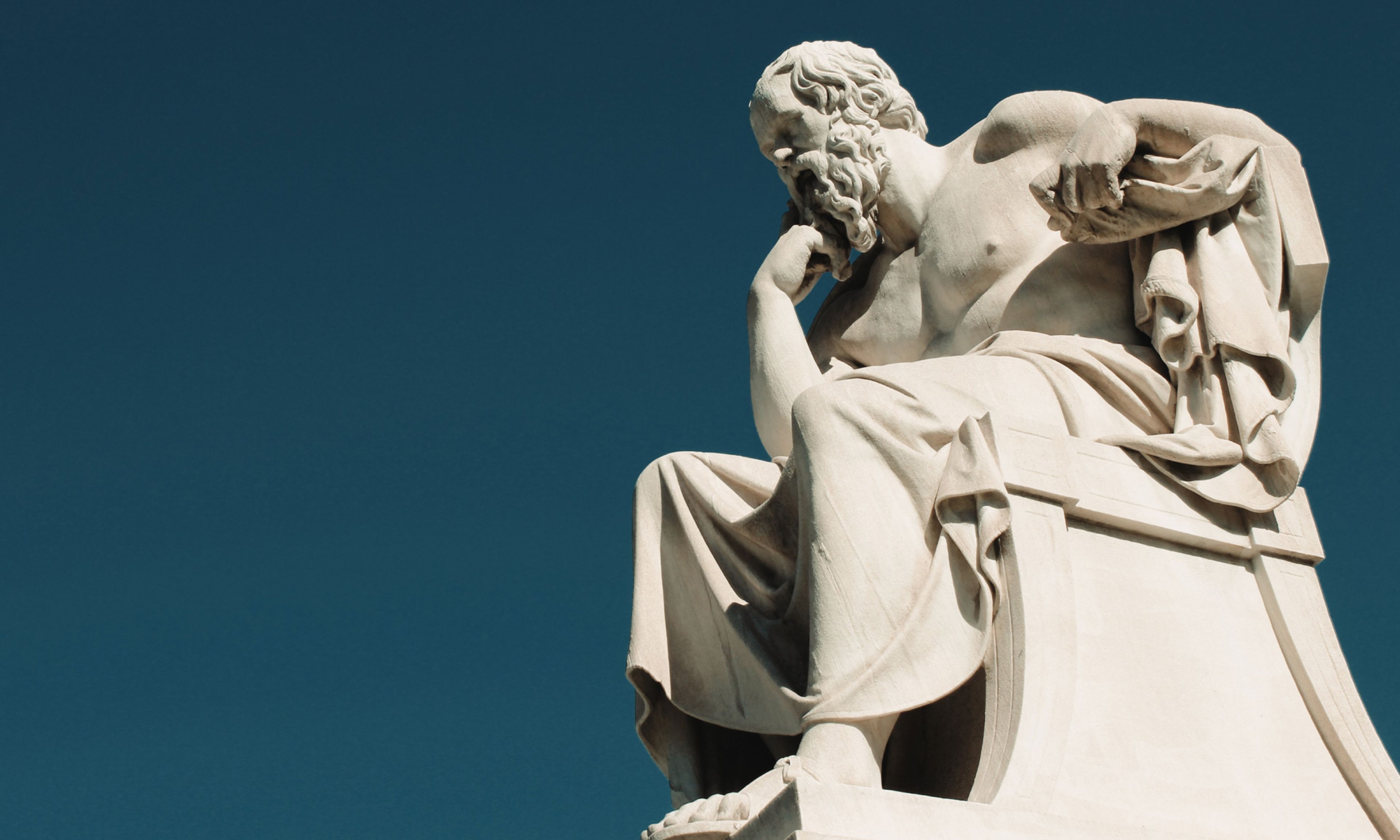
Once upon a time, classical ideals were the foundation of all education. Socrates defined education as teaching men to love what is beautiful. Much of the day-to-day workings of this classical school mirror its traditional public-school counterparts, with the difference that it holds to this purpose of education still, and the result is beautiful.












Comments