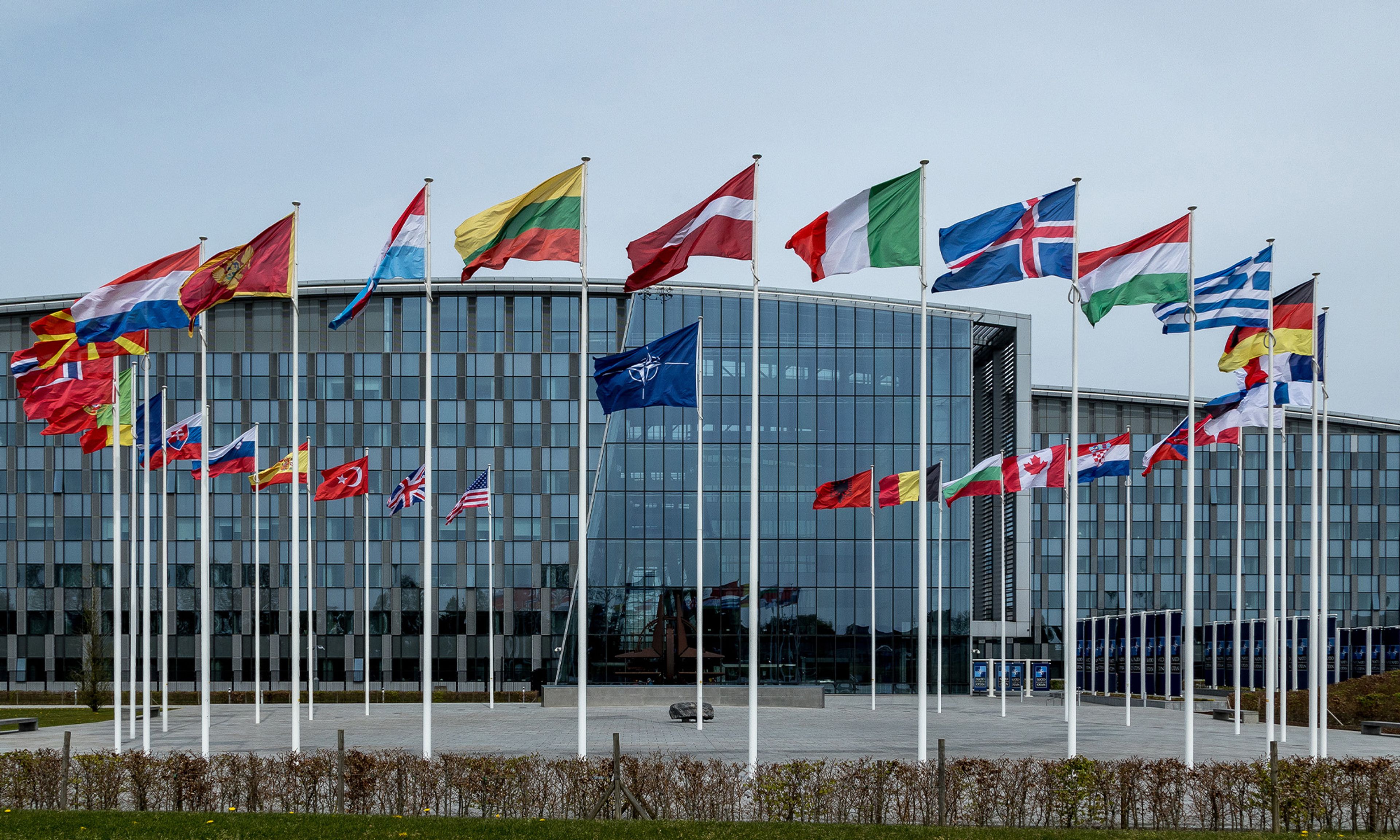
Make any criticism of NATO you wish (including some I might agree with) — it should have ended when the Warsaw Pact ended; it wastes resources on pursuing nonmilitary aims, often woke ones, such as fighting climate change; it allows rich European countries to ride for free on U.S. defense spending — still, you have to concede that the alliance has been a remarkable success.
It was a resounding success in the years 1949 to 1989, when it achieved the highly ambitious objectives that its signatories set at its foundation. In the famous words of Lord Ismay, it was founded “to keep the Russians out, the Americans in, and the Germans down.” Well, NATO did rather better than that: It drove the Russians out, it enabled the Germans to return to respectable democratic nationhood and join the alliance politically and militarily within a decade of 1945, and it gave the United States a secure, legitimate, and leading position as a European power in its own right. The U.S., through NATO, did more than help Europe defend itself in those 40 years. Its powerful presence meant that no country in Western Europe felt insecure in relation to its neighbors — the U.S. wouldn’t allow a serious conflict to break out, because that would complicate its defense against the Warsaw Pact.
Two vast developments flowed from this: first, the 30 glorious years of European growth and prosperity that contributed to winning the Cold War; second, the secure peace in Europe that fostered the birth of the European Union. The EU likes to present itself as the creator of that peace, but look at the dates. NATO and the European peace it protected started in 1949; the EU (then the European Economic Community) was founded in 1956–57. In reality, the EU is the child of that European peace. Given the fractious disputes within the EU today — plus occasional suggestions from Paris and Brussels that the EU should evolve into an empire — we cannot be certain that European peace would survive if the U.S. were to leave the continent.
Moreover, did the value of NATO disappear in 1989? No. In the immediate aftermath of the velvet revolutions of 1989 and 1991, we in the West were far from optimistic about the newly liberated post-Soviet satellites. We knew they had ruined economies, collapsed party-states without democratic institutions, and social attitudes that had been frozen in the past by Soviet rule. As the Soviet refrigerator broke down and they unfroze, we feared the return of such evils as antisemitism, authoritarianism, border disputes, and ethnic warfare. It was, however, NATO expansion — incidentally, the EU lagged far behind NATO in welcoming Central and Eastern Europe into the Atlantic family of nations — that required not only the reform of their militaries to meet NATO standards but also the reform of their economic and political institutions to meet the standards of market democracies.
For the people in many of these countries, it was a hard struggle to adapt to these standards. But they succeeded — some did better, some worse — from the first. Thirty years later, the old broken Soviet satellites are a zone of prosperity and stability. Hungary and Poland are today in a position to criticize France, Britain, and Germany for their failure to offer sufficient protection to their Jewish citizens.
That’s principally a credit to those countries, of course. But the way they moved steadily towards this success with encouragement and mentorship from NATO is also a tremendous achievement for the Atlantic institutions that helped them. More broadly, it’s a triumph for Western civilization that it was able to welcome back its “captive nations” and integrate them fully into its civil and military institutions within two decades. These changes, properly considered, were a benefit to Russia, too, because they removed any possibility that NATO’s new members would threaten it. NATO and the U.S. would simply never tolerate that.
Are these achievements of NATO’s expansion counterbalanced or even negated because it may nonetheless have added to Russia’s perceived reasons for invading Georgia in 2008 and Ukraine in 2014 and 2022?
To answer the argument that NATO expansion provoked Russia, then, let me remind you that the push for both NATO and EU expansion did not come from Washington, Brussels, Paris, or London. It was the newly independent satellites themselves that eagerly sought admission despite initial Western hesitation. As early as March 1990, the foreign ministers of Poland, Czechoslovakia, and Hungary were opposing Soviet attempts to block NATO from moving onto what was still East German territory. The former satellites wanted the various economic and other benefits mentioned above, of course, but their overriding reason for wanting to join the West militarily as well as economically was that they feared Russian revanchism.
And who is to say that they were wrong?
Fewer than ten years after NATO’s first expansion in 1998, Russia moved troops next to Georgia. Then they moved into it, in 2008, and occupied part of it. French president Nicolas Sarkozy, also holding the EU presidency, flew to Moscow and negotiated a deal that effectively legitimated the Russian occupation. (They’re still there.) One year later, 23 Central and Eastern European political and intellectual leaders wrote to President Barack Obama asking him for a declaration of resistance to this breach of international law and of support for themselves and America’s other friends in the region. All they received was a visit from Vice President Joe Biden, who soft-soaped them with false comfort — Biden’s outstanding talent for most of his career.
That lack of support from the Obama administration persuaded Russia not that NATO and the U.S. were peaceful — presumably its intended effect — but merely that the West was risk-averse and therefore could be challenged with relative impunity. Since then, Russia’s foreign policy has been one of gradual and calculated recovery of former Soviet possessions. The Kremlin moved tentatively against Ukraine in 2014 under the pretense of supporting Russian-speaking Ukrainian insurgents, and it finally abandoned caution altogether in February 2022. Which brings us to the present wartime crisis.
If you reject the view that the Central Europeans need defense against a revanchist Russia, then you believe that Russia is not a revanchist power. That is not a belief I share. Here are five arguments why:
(1) At their last summit meeting in Istanbul in November 1999, President Bill Clinton was surprised to be asked by Russian president Boris Yeltsin: Why don’t we agree that Russia can have Europe while the U.S. gets the rest of the world? His exact words were: “I ask you one thing. Just give Europe to Russia. The U.S. is not in Europe. Europe should be the business of Europeans. Russia is half European and half Asian.” Clinton wittily deflected this offer — which, incidentally, is reminiscent of Hitler’s peace offer to Britain in 1940 — but it worried him and cast a somber light on Mikhail Gorbachev’s stress on the long-standing Soviet proposal of “our common European home,” addressed to Western Europe and implying the withdrawal of the United States, the end of NATO, and a continent run by Europeans only — some of them.
(2) Vladimir Putin inadvertently confirmed this tendency himself — while making other tendentious arguments — in his notorious justification of the Nazi–Soviet Pact. But who threatened Russia in 1939? Not the Western democracies. Indeed, they wanted the Soviet Union as an ally against Nazi Germany, but Poland objected because it doubted that the Russians would withdraw when asked. Neither Britain nor France had any intention of invading Soviet Russia in the late 1930s, which alone might have justified a nonaggression pact between the two totalitarian powers. Besides, the Nazi–Soviet Pact was not a nonaggression pact. Stalin’s Russia and Hitler’s Germany agreed to invade and divide Poland between them and “give” Finland and the Baltics to the Soviets. It is better described as an aggression pact.
(3) After 1945, the Russians refused to withdraw the Red Army from Eastern Europe, as the Poles had feared. That might have been justified in the case of Hungary, which had been a reluctant ally of Germany, but not in the cases of Poland and Czechoslovakia. As the local joke goes, the Soviets gave to the Poles and the Czechs as a gift what they gave to the Hungarians as a punishment. The Red Army stayed there for 40 years.
(4) Andrei Illarionov, who was Putin’s economic adviser for several years (and a very successful one), has on several occasions testified that the Russian president has a well-worked-out long-term strategy to divide continental Europe from America and the U.K., to reach a Treaty of Rapallo–like agreement with Germany and France, and subsequently to wage a long campaign of subversion to weaken the Anglosphere powers. Without Ukraine under his control, such a campaign would be a pipe dream, because Russia would remain a mere regional power (admittedly one protected by its nuclear weapons and energy resources) and be gradually forced to shed its neo-imperialist mind-set. This does not mean that the West must defeat Russia; in my view, however, it does require preventing an outright Russian victory in Ukraine.
If you find this list of historical Russian advances unpersuasive, consider this: It is the first rule of realist geopolitics that your knowledge of a potential enemy’s sinews of war should guide your thinking far more than your guesstimate of his intentions, since the latter can change overnight. Russia’s economy is roughly the size of Spain’s. Spain spends 1.5 percent of its GDP on defense. The most conservative estimate of Russian spending is 6.5 percent of GDP. Other estimates go as high as 14 percent — though recent events suggest that President Putin is not getting a good bang for his buck.
(5) Finally, before Russia invaded Ukraine fully in 2022, Putin sent to the U.S. president and the secretary-general of NATO letters demanding a rewriting of the Cold War settlement in ways that would compel Hungary, Poland, and other countries to withdraw from effective military participation in the alliance. He did not address these letters to any of the European governments that would have been affected by his demand. The presumption smacked unmistakably of the neo-imperialist “Greater Russia” mind-set that is the reason for its neighbors’ fear.
My conclusion from these points is that Europe is at long-term risk from a Russia that has traditionally confused its security with the control of its neighbors. And Russia will always have neighbors. However far it advances geographically, it will therefore always have a motive to possess either a buffer state or a new protectorate. That means Europe must be permanently vigilant and have strong military capabilities.
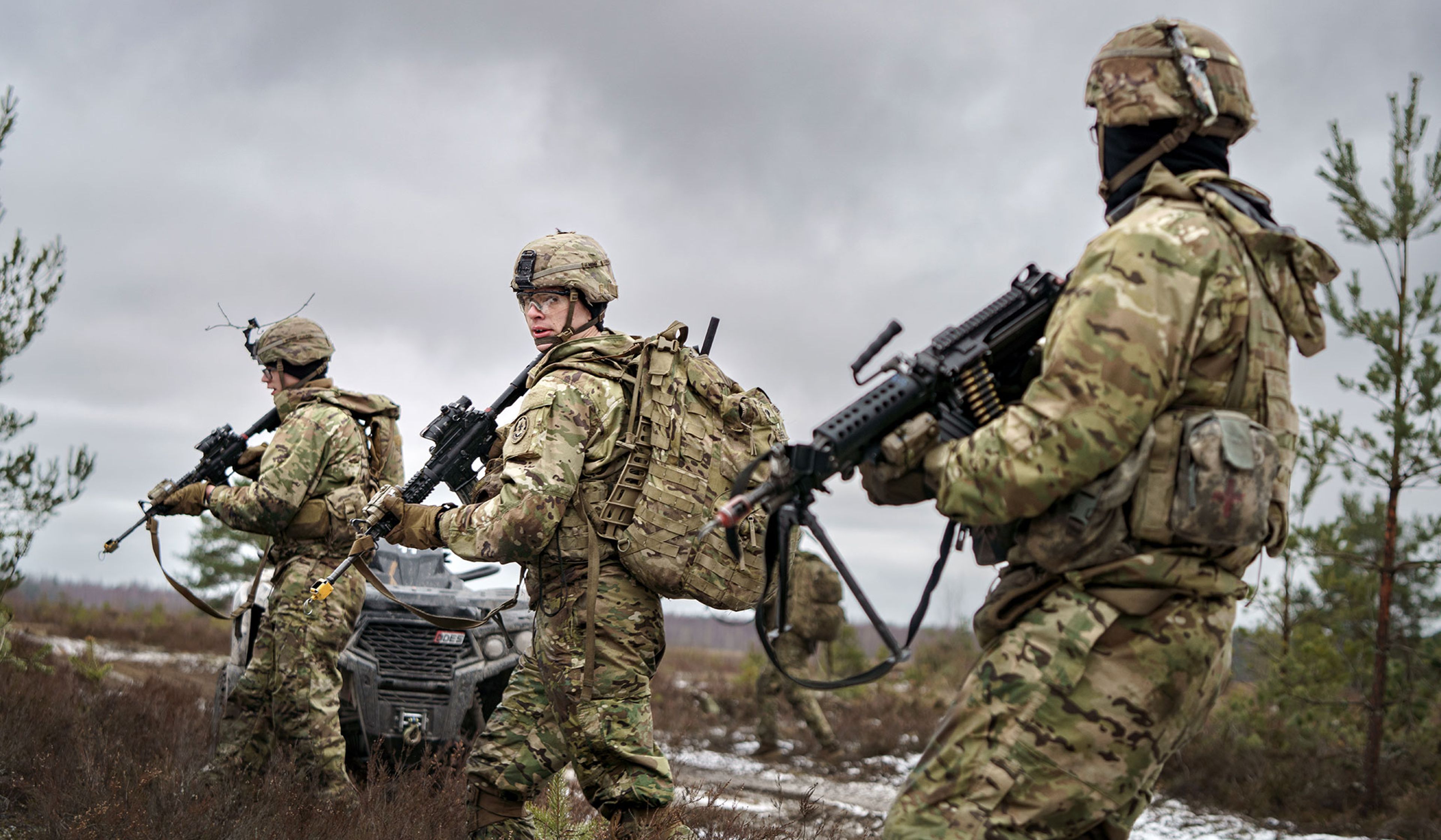
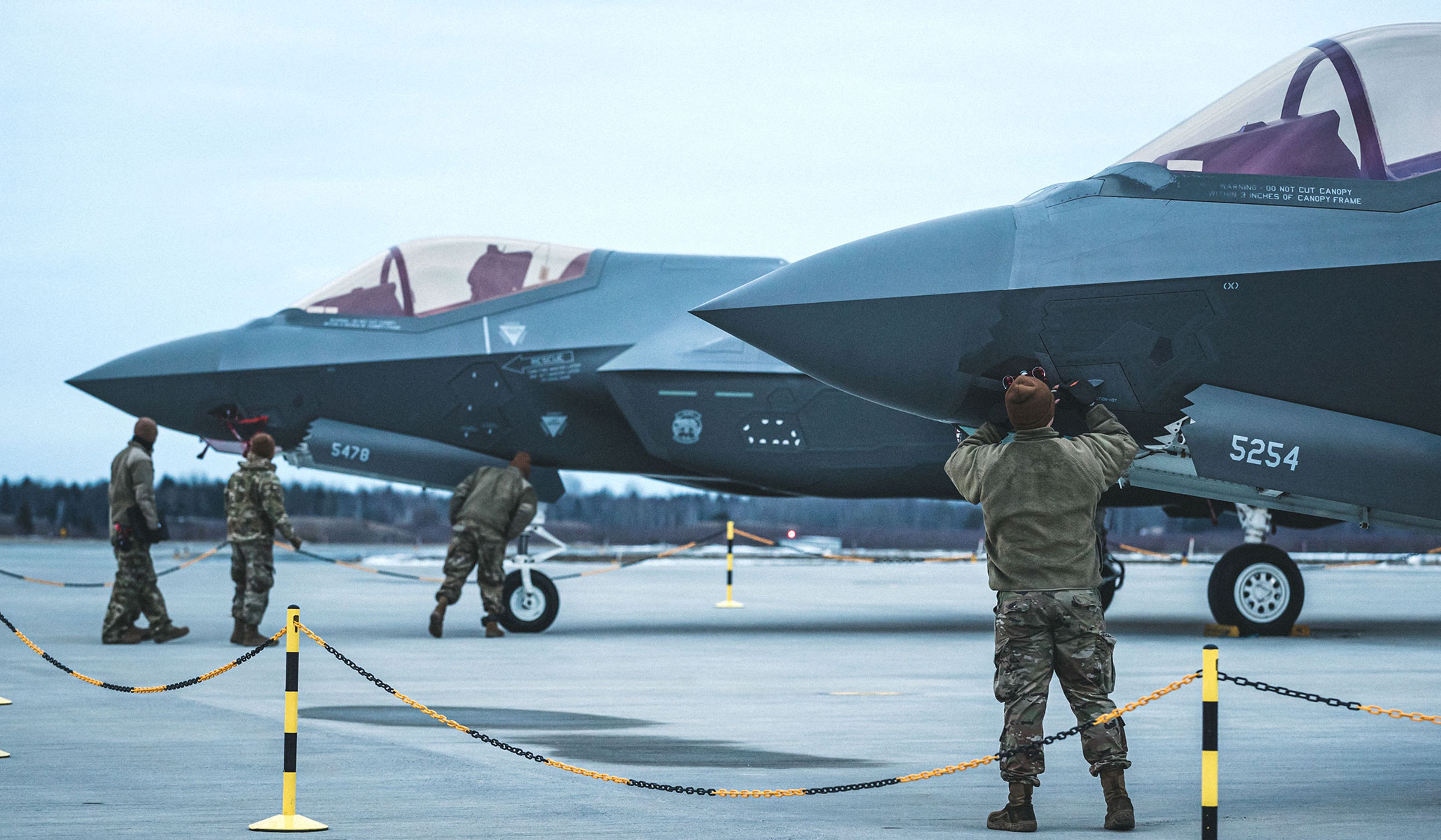
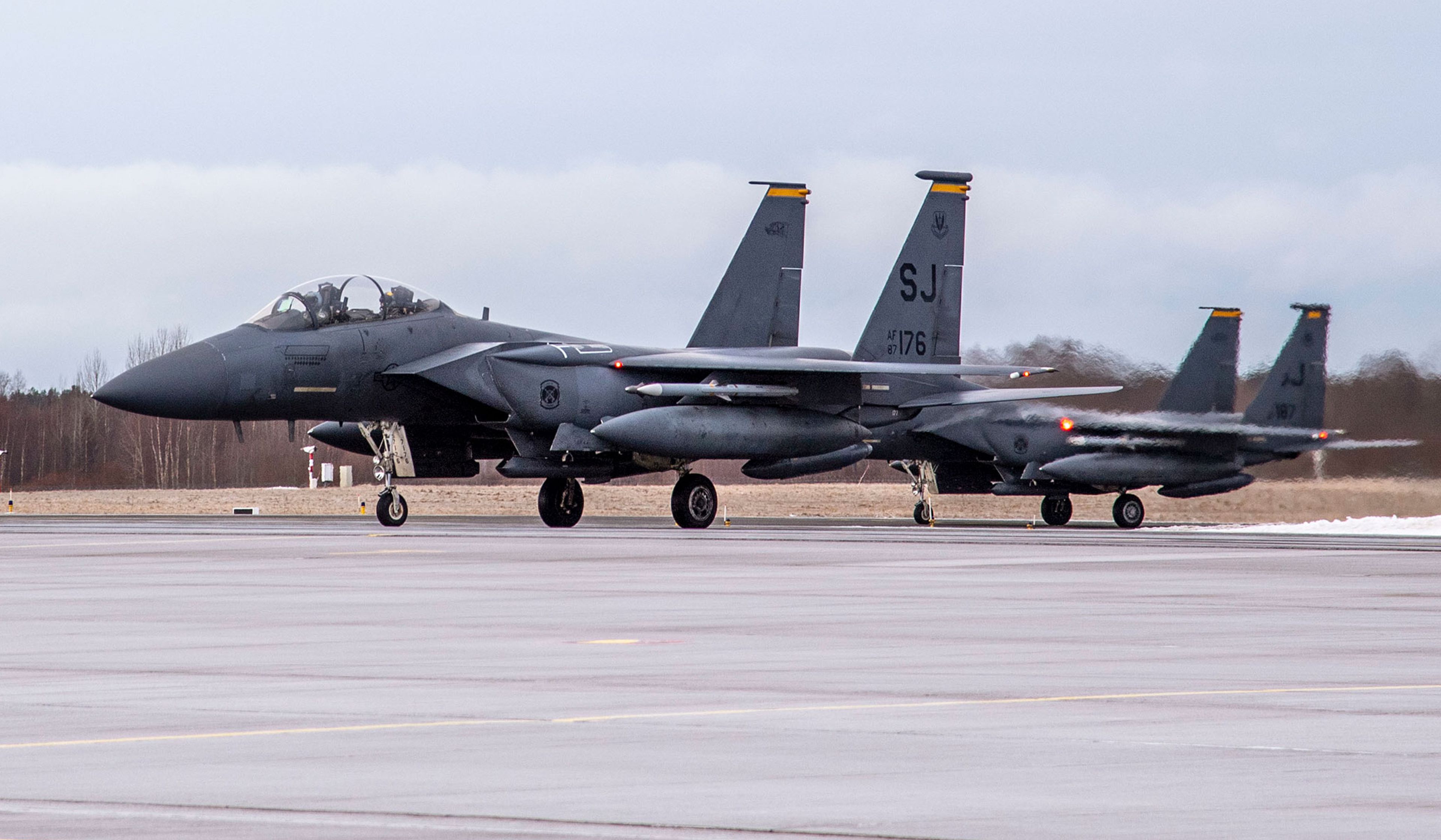
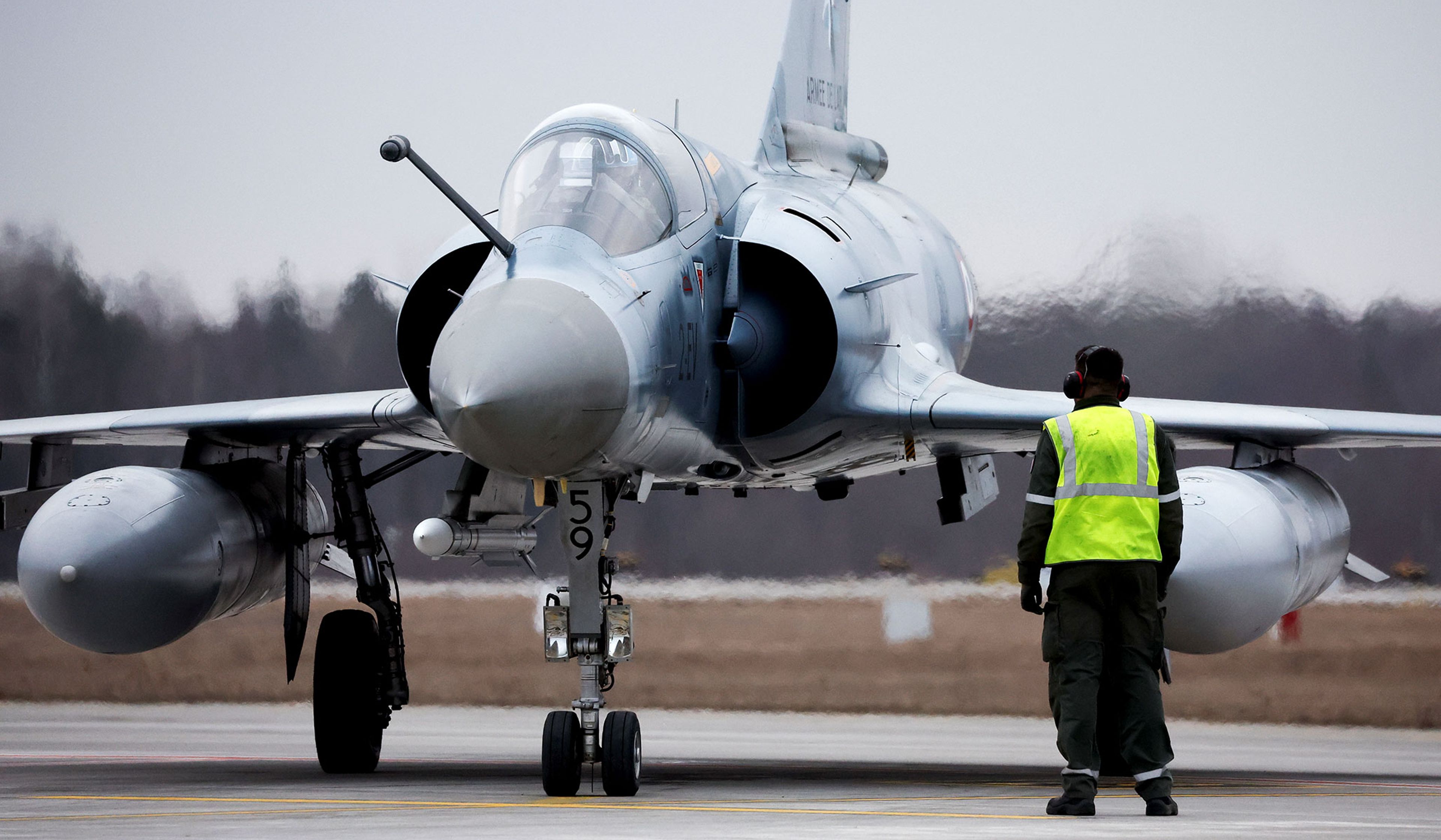
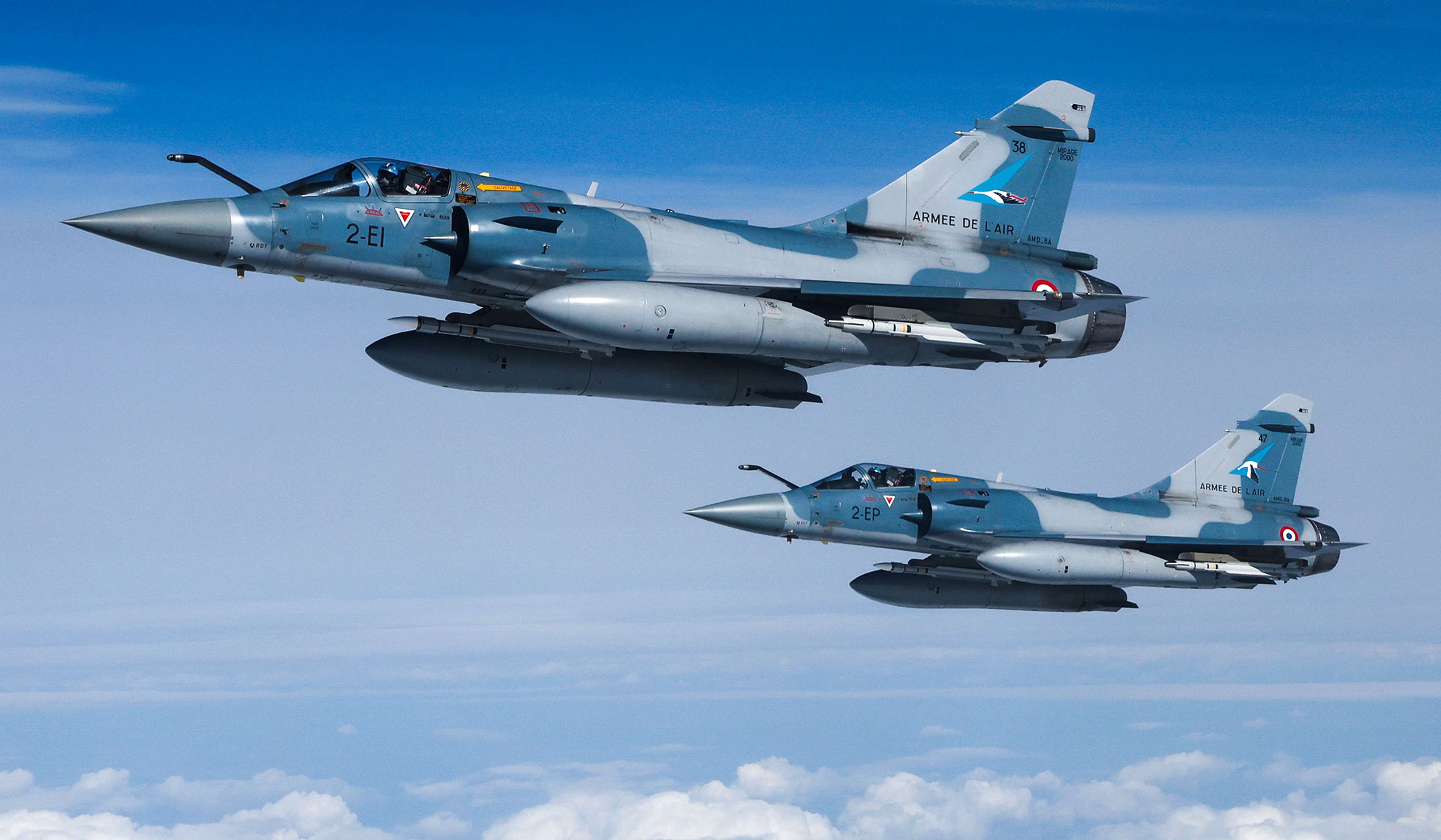
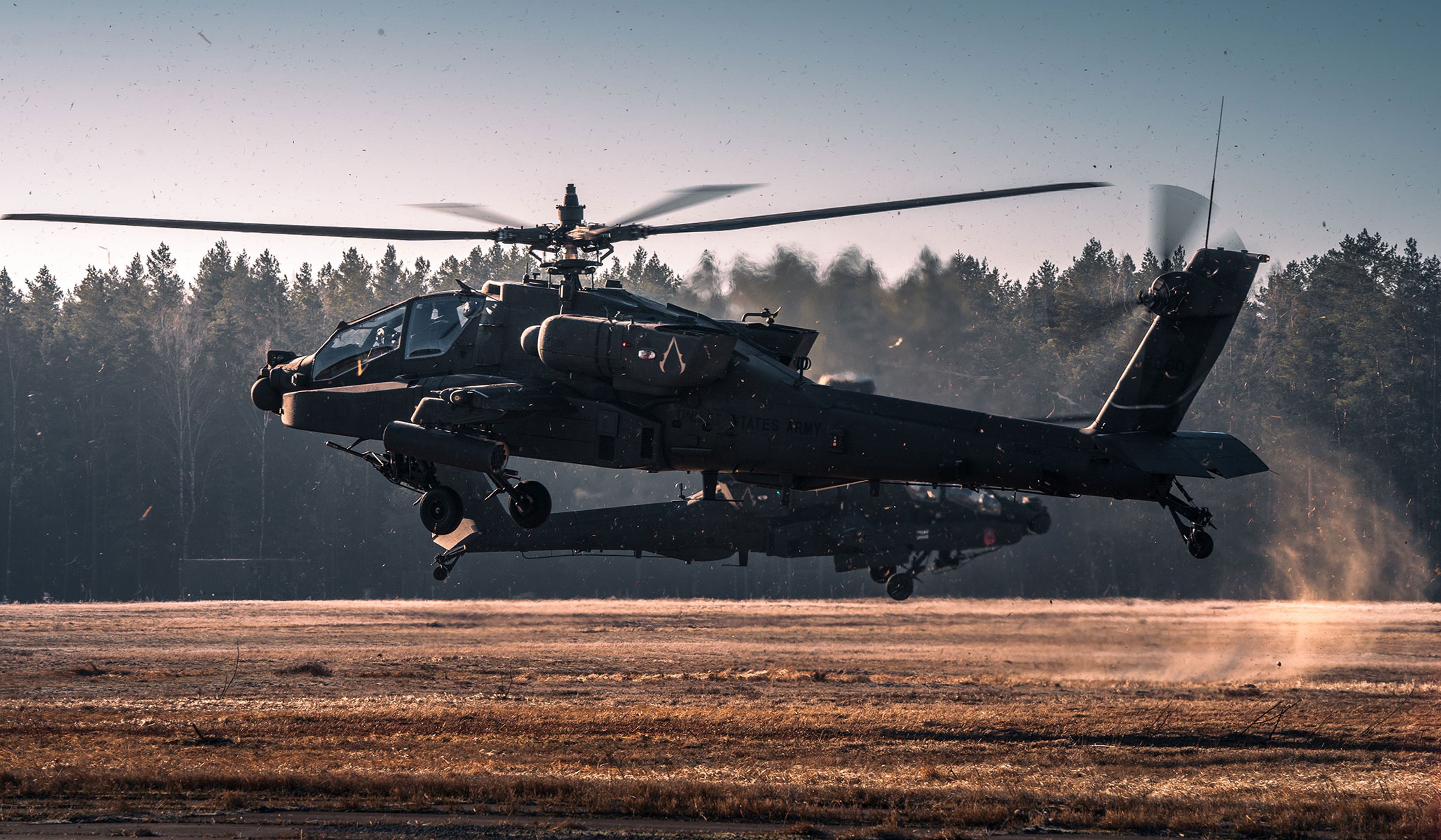
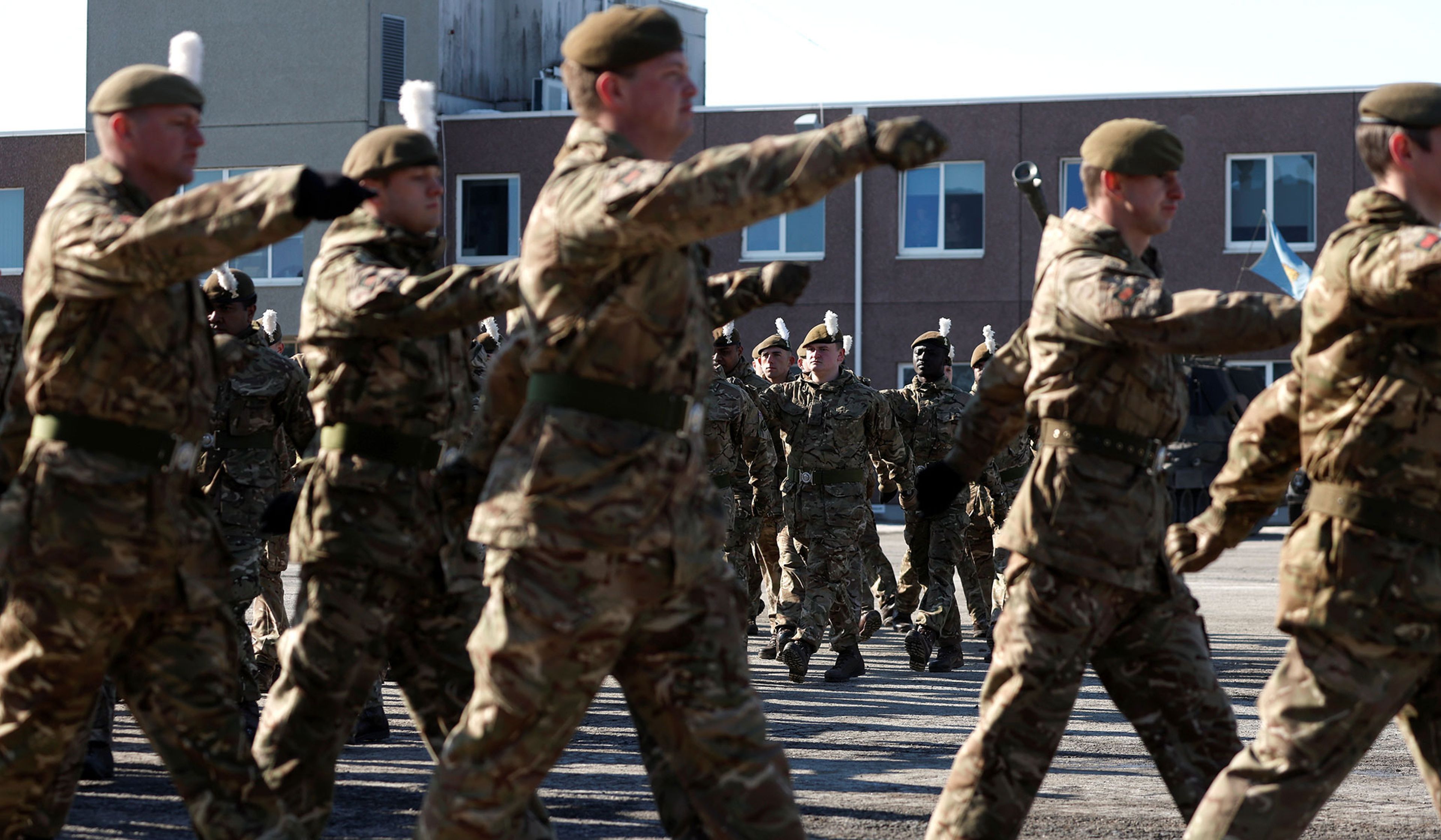
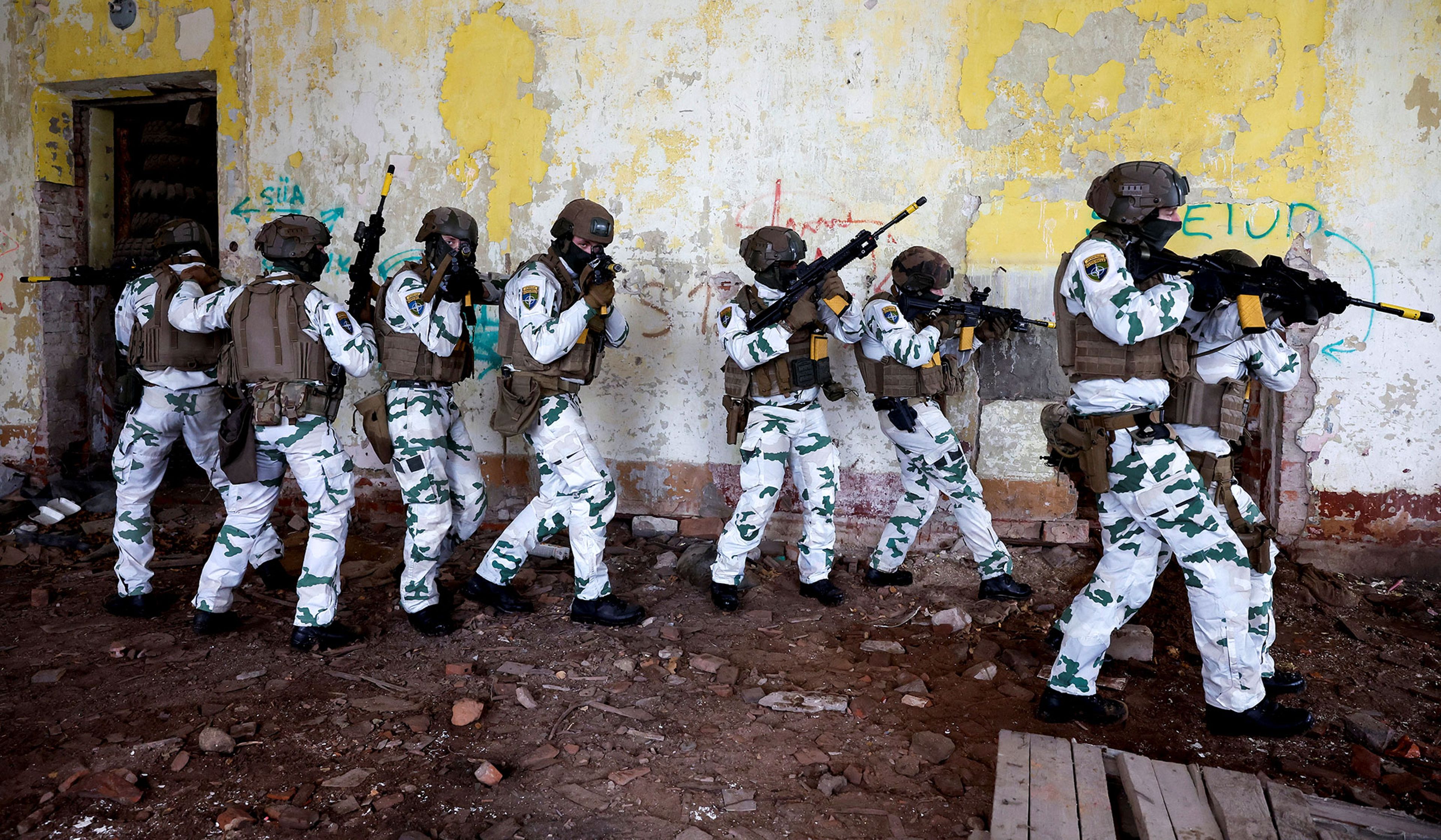
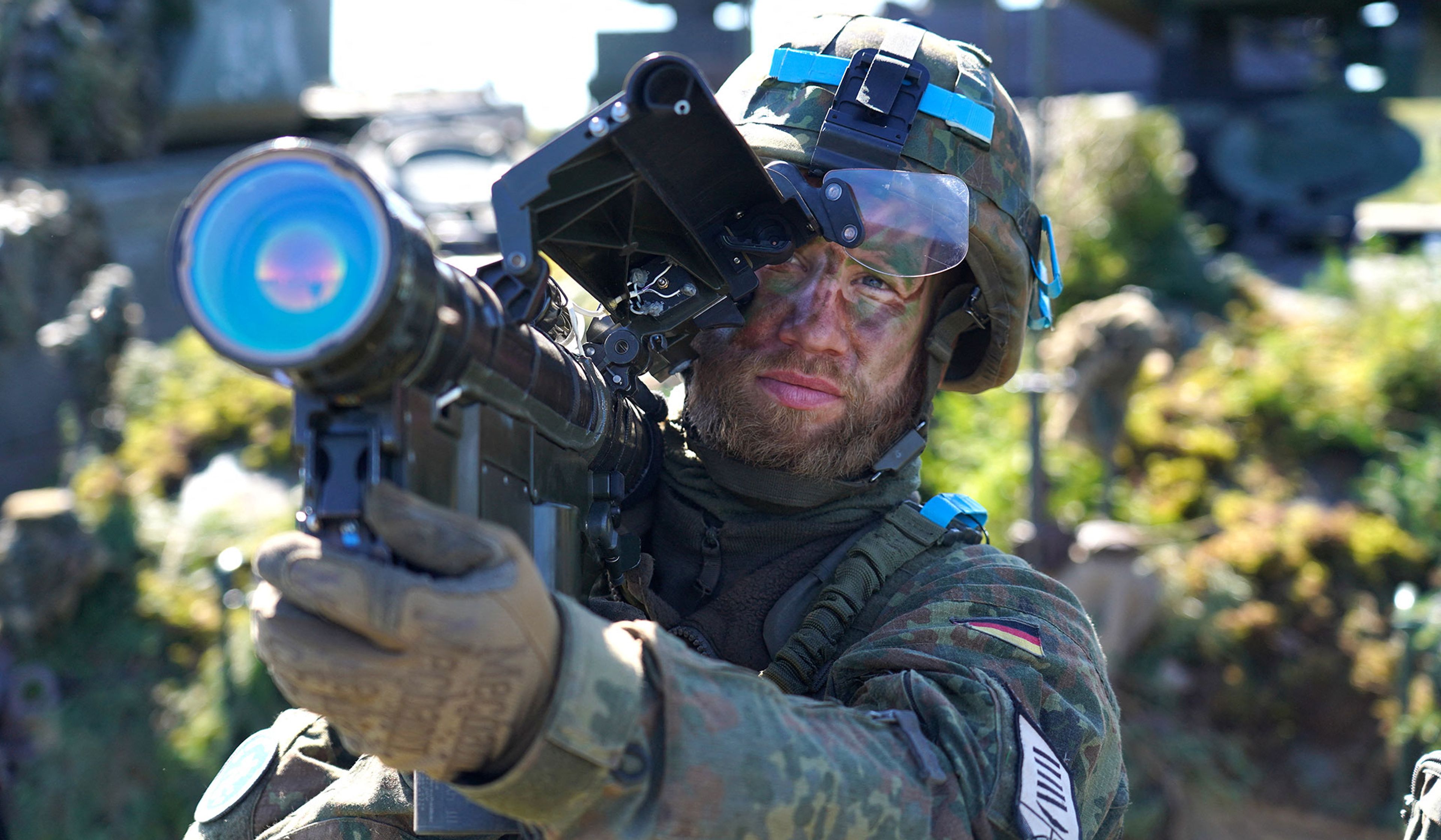
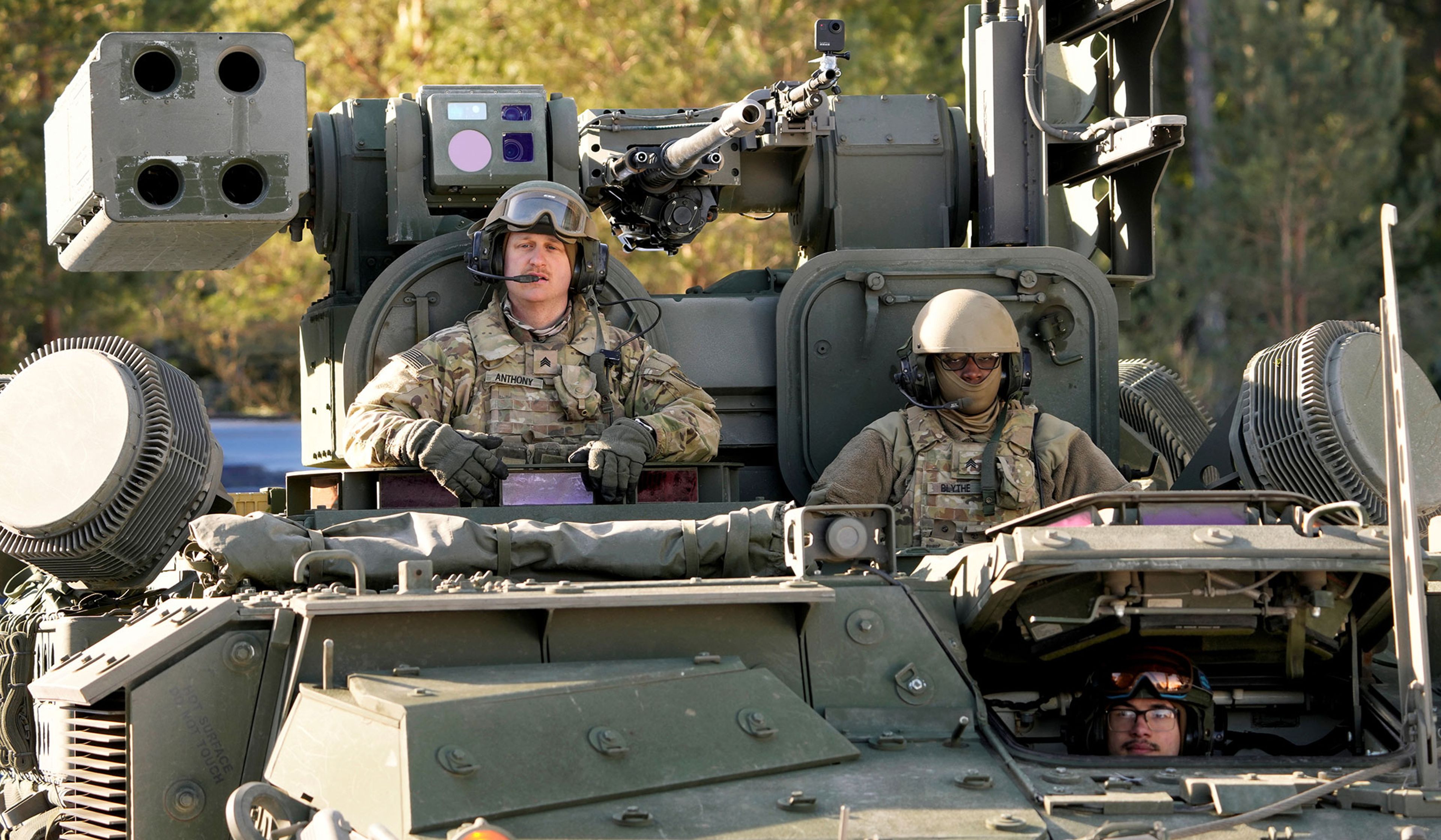
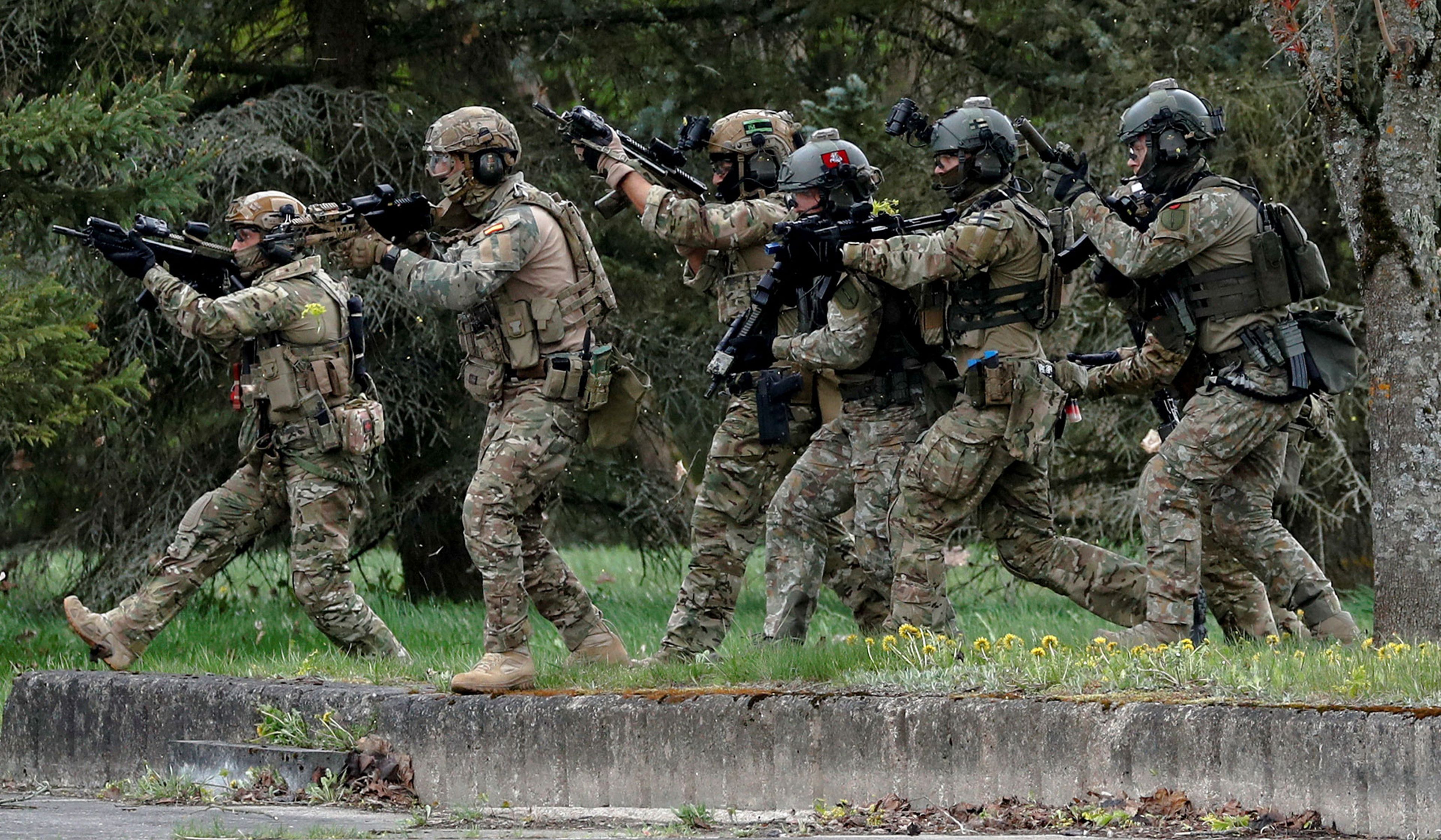
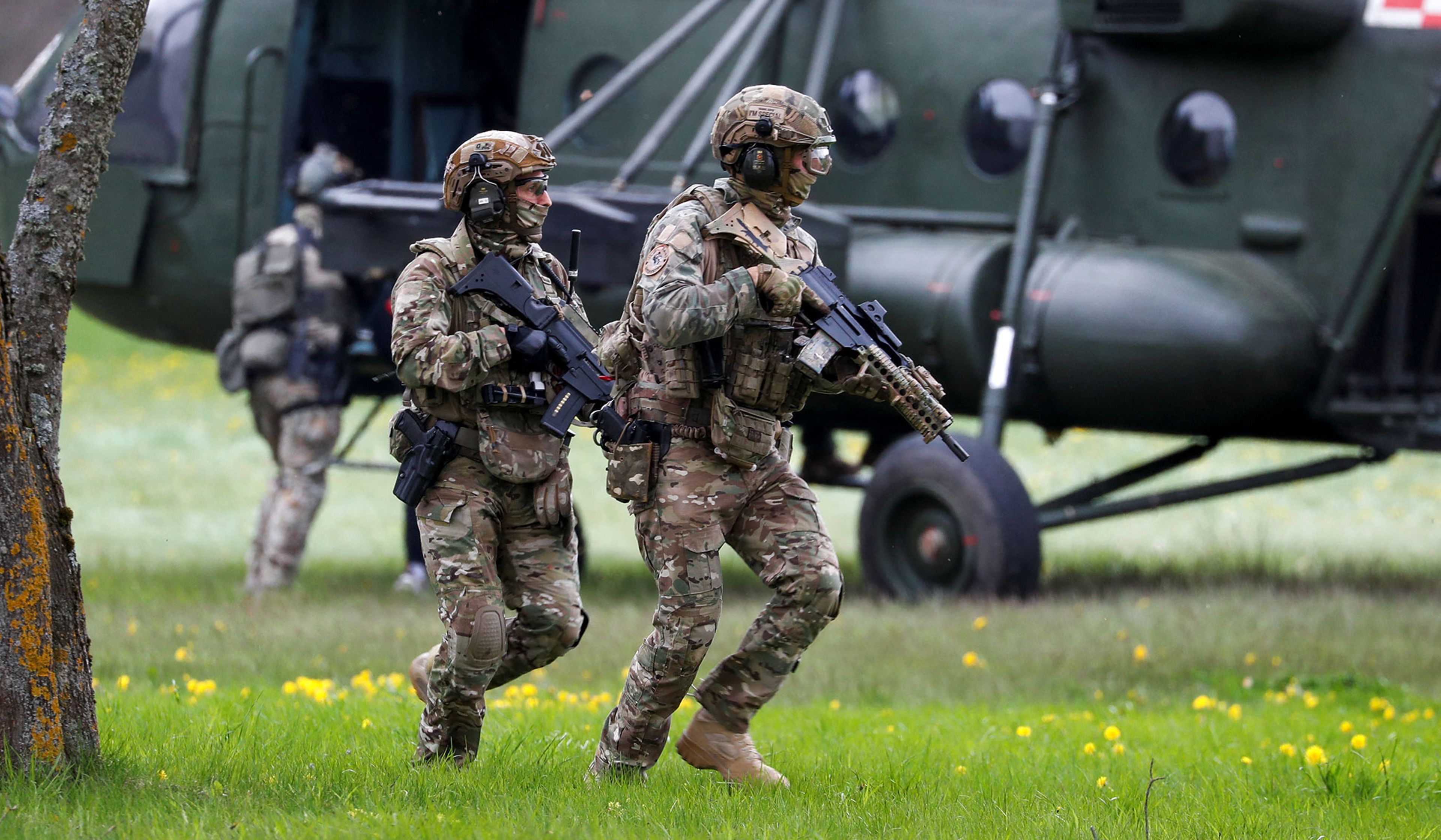
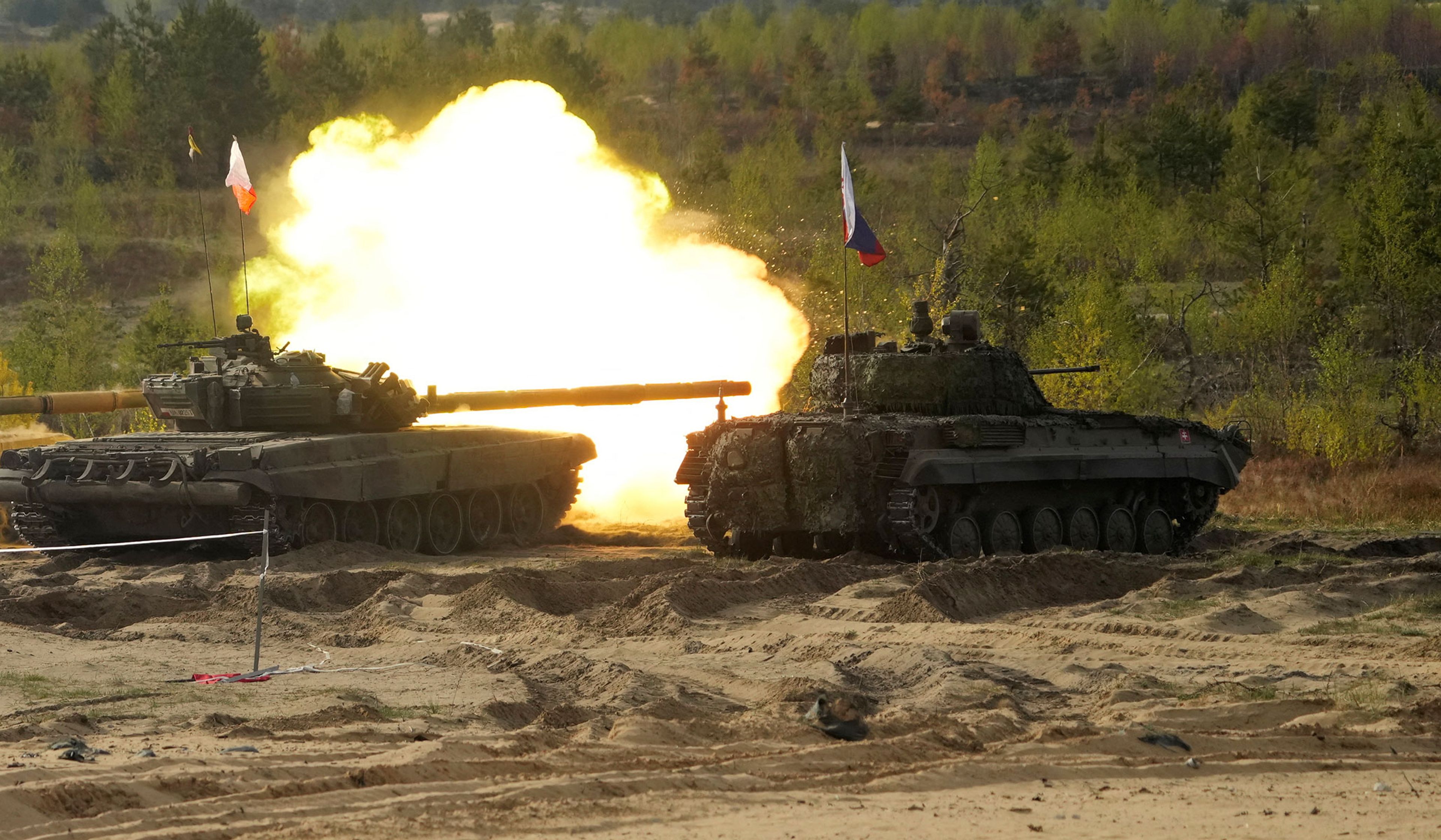
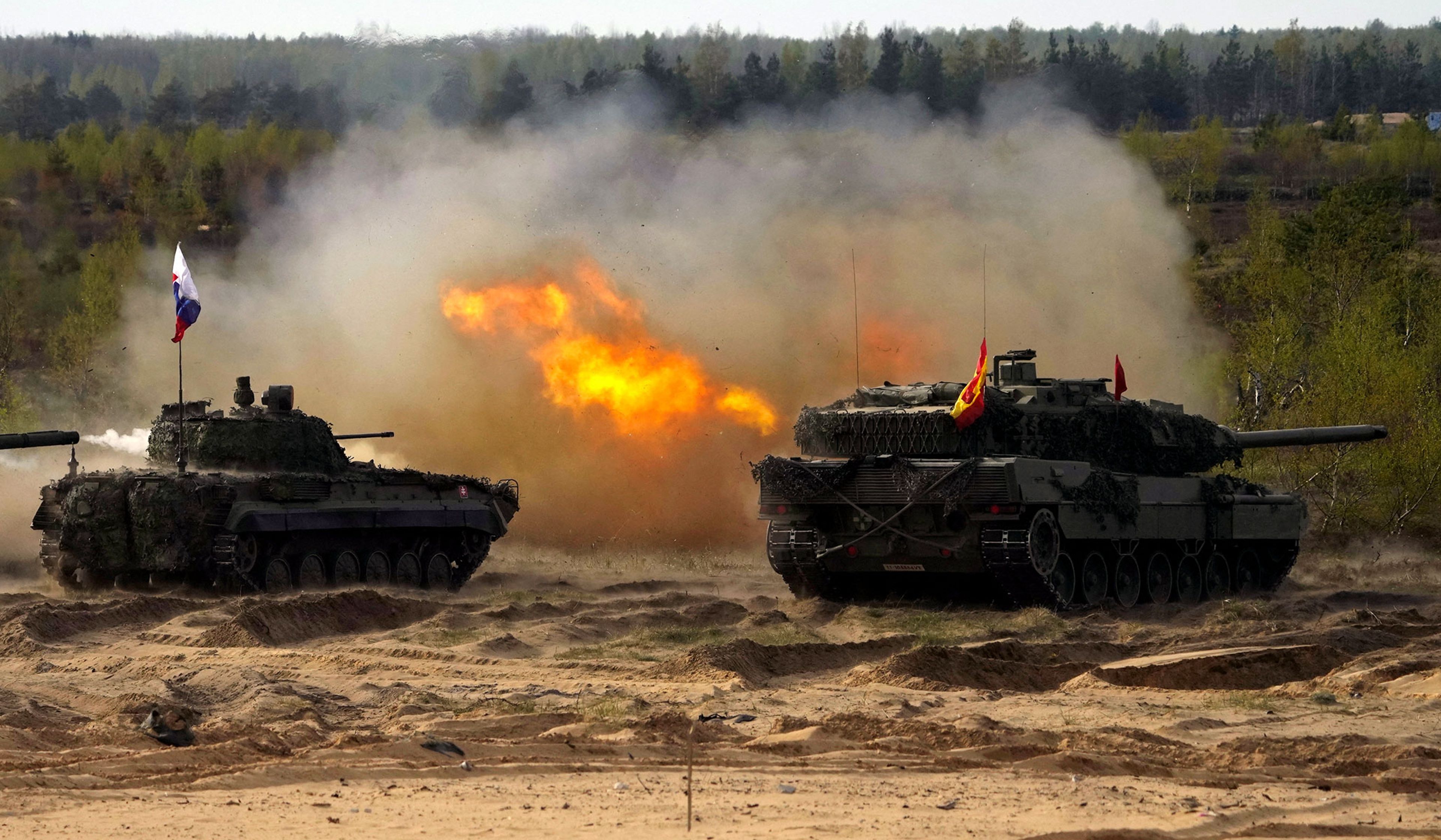
U.S. Army soldiers assigned to the Second Cavalry Regiment take part in multinational training during Saber Strike 22 exercises at Camp Adazi, Latvia, March 7, 2022.
Staff Sergeant Thomas Mort/U.S. Army
Given the success of NATO over almost 80 years, it makes good sense that it should be the vehicle of such a defense.
But that view is now threatened by three considerations: (1) the need for the United States to rebalance its military commitments and spending in order to contain the growing threat from China; (2) the delusion that the European Union can and should pursue strategic autonomy in response to such rebalancing; and (3) the U.S. attempt to subject NATO member states to an extreme political liberalism that reflects a minority’s worldview even in the United States and Brussels.
On the first point, it is inevitable that an America that is now, if anything, too aware of China’s challenge (having ignored it for too long) will move money and troops from Europe to counter that challenge. What matters is how much money and how many troops. The U.S. must keep its nuclear umbrella over the continental NATO members and commit enough troops and forward supplies to justify its leadership of the alliance. No other power can play that role. U.S. commitment must be enough to sustain Washington’s preeminence in the alliance.
The idea of European strategic autonomy, meanwhile, lacks the essential underpinning of a European polis and people who would make the financial and military commitments needed. Only a few months ago, the European Council failed to agree on a scheme for EU defense bonds that would finance current levels of spending (far lower than those needed for European strategic autonomy). European NATO members have struggled to reach the defense-spending target of 2 percent of GDP. Yet if America is to do and spend less, Europe must do and spend more on NATO. Strategic autonomy means either diverting funds from NATO or duplicating NATO functions that already exist. What military activities EU strategic autonomy has already spawned, such as the rapid-reaction force, have been embarrassing failures, with governments asking their allies to keep their soldiers in place so that they don’t have to meet their own commitments.
At a time when more defense spending is acutely necessary, it cannot be wasted on a political symbol. EU strategic autonomy would be aimed at defending not the European continent but the European idea. We’ve already sacrificed Mediterranean Europe to the euro. Do we have to carry on wasting treasure and, in time, perhaps lives in order to affirm the symbolism of Europe as a world power?
Finally, the attempt by NATO, under pressure from the Biden administration and its ideological allies in Brussels and other Western European capitals, to promote a hyper-liberalism of newly defined human rights is unnecessary and absurd. During the Cold War, NATO welcomed António de Oliveira Salazar’s Portugal as a full member despite its authoritarian political structure. It did so in part because Portugal’s contribution to the naval defense of the Atlantic was serious and reliable. But as the recent, well-received biography of Salazar by Thomas Gallagher has revealed, the dispatches of Western ambassadors in Portugal to their governments recognized that Salazar was a loyal ally who also saw NATO membership as resistance to totalitarianism. And when the Portuguese revolution of 1975 occurred, the attempts to make it a communist revolution failed.
If the definition of political respectability for NATO during the Cold War was wide enough to include various institutional arrangements, including a dubious Portuguese one, then there is surely less need now for Washington and Brussels to define the alliance’s political philosophy as liberal democracy with woke features (such as climate alarmism and a new gender theory). The systems of NATO members range from liberal democracy to social and Christian democracy to more-conservative institutional arrangements in countries such as Switzerland and Turkey. The Biden administration and its allies in Brussels — whose progressive ideology is shared by about 15 percent of their electorates — overreach when they try to impose their vision on nations on which they rely for mutual defense. If Atlanticism is to have a future, subscribing to a woke-flavored hyper-liberalism cannot be a condition of NATO membership.
How will all these long-term questions be affected by the course of the Ukraine war? Though I remain a strong advocate of NATO expansion and of support for Ukraine’s resistance to Russia, I also recognize the legitimacy of debate about the war’s progress and prospects. In the recent U.K. election, Nigel Farage was denounced as a Putin stooge because he had argued in 2014 that further NATO expansion would invite a Russian response. (When the Russians did invade fully in 2022, he criticized their action as “reprehensible.”) Exaggerated condemnation of reasonable critics risks making any rational debate about Ukraine policy impossible. We have already gone too far down that rocky road when we treat legitimate questions such as “Are we embarking on another forever war?” and “What outcome short of Ukraine’s regaining all its territory, including Crimea, do we envisage?” as disinformation intended to subvert democracy and help Putin. When NATO political leaders have publicly reasoned with initially hostile public opinion in earlier controversies — for instance, the battle against the peace movements in the mid 1980s — they’ve won the debate. On that occasion they secured the installation of U.S. missiles in Western Europe — a decisive victory in the Cold War.
Any argument about Ukraine policy also must take into account the success or failure of Ukraine on the battlefield — and of NATO and the EU in other arenas. As in all aspects of human life, we must tailor what we want to what we can achieve.
Should we want to see Ukraine join NATO? If that is what Ukrainians want and it can be achieved at acceptable cost, then we should reasonably support their accession. But those conditions don’t currently obtain. The costs are too high, and an outright Ukrainian victory resulting in stable borders is unlikely for now. Let’s ask the harder question: Is Ukrainian membership in NATO a strategic desideratum for the West? Not necessarily. Our strategic interests require that Ukraine retain its independence and obtain the military hardware and economic assistance it needs to protect and eventually rebuild itself.
That will be hard enough, but such a policy, if successful, would deprive Russia of Ukraine and render it much less of a threat to Europe. That is a rational and achievable aim for NATO.
Until recently we assumed that Russia would probably be capable of defeating Ukraine if given long enough and if Ukraine were abandoned by NATO. But that outcome has become less likely since the Ukrainians staged their unexpected lightning raid into Kursk. This has weakened the Putin regime politically and raised questions about its military competence, and it has suggested that Ukraine might be capable of dragging out any resistance for much longer than outsiders had calculated.
And here is a vital point not usually stressed enough: If Russia is struggling to defeat Ukraine, and even to defend its territory from Ukrainian advances, then it’s very clear that Russia could never win a conventional war against NATO. So it almost certainly won’t embark on one. Might the Kremlin try to escape this trap by using tactical nuclear weapons against Ukraine? It would be utterly foolish to risk nuclear war. The West would probably respond to tactical nukes by inflicting equal damage using conventional weapons while retaining its capacity to escalate. Russia without Ukraine (or with only part of Ukraine) would be better than Russia devastated by modern war — nuclear or not. What then? Putin would probably think that if he were able to chase the Ukrainians out of Kursk and Russia — which even now looks achievable — he could announce a cease-fire, keep Crimea and the Donbas, make excluding Ukraine from NATO his “final” red line in negotiations, declare a victory, and maneuver the West into a peace that would keep Ukraine destabilized.
What impact might the U.S. election have on such calculations? If Kamala Harris wins, U.S. policy would likely not change much for a while, though she might return to Biden’s earlier policy of restricting Ukraine’s use of NATO-supplied weaponry. That would mean dragging out the conflict, perhaps indefinitely. And if a completely untried President Harris decided to strike out on her own? We should be very afraid. She seems capable of ricocheting randomly between appeasement, left-wing bellicosity, and the belief that Putin is Trump.
If we assume a Trump presidency, on the other hand, I think we can also assume, given the reality of Trump’s personality, that his desire to end the war would be more than matched by his determination not to suffer a massive historical defeat. And we know something of how his administration dealt with Russia last time — namely, it gave lethal weaponry to Ukraine, and it eliminated mercenaries in Syria. Moreover, Trump would have at his disposal as president not only NATO’s conventional military superiority over Russia but also the economic power to inflict a massive blow on the Russian economy simply by freeing up the American energy market and letting the oil gush. That correlation of forces, to use an old Soviet phrase, points not to a MAGA surrender but to an exchange of territory and an independent Ukraine with U.S. security guarantees.
Of course, Trump and Putin would celebrate such an outcome as an amicable compromise. But it would really be a success for NATO in non-NATO camouflage fatigues.












Comments