If the 1990s seemed a holiday from history after decades of Cold War tensions, history returned with a vengeance after the millennium ended. Viewed from today, recent decades instead mark the end of one decaying order and the halting emergence of another. The greater Middle East from the Aegean coast to Pakistan — a region the anthropologist Carleton Coon aptly called the “Land of Insolence” for its persistent resistance to outside authority — has been in flux even longer. China’s ambitions and India’s rise, along with American and European interests that cannot be ignored, underline the need to understand trends there.
Robert D. Kaplan, the renowned travel writer and strategic analyst, aims in The Loom of Time “to identify the signals of decay and renewal.” Taking geography — the relief map — as a starting point, he draws on literature, history, and recent interviews to contextualize observations across the Middle East. Kaplan focuses on political order with its question of who governs whom and highlights the danger of anarchy, especially to populations subjected to it. While chaos may be “a normal circumstance for a traditional, ruralized world” that older structures managed, disruptive influences and interventions from the West have made conflict more extreme and regimes much harsher in an escalating cycle. Herein lies the anarchy Kaplan explores.
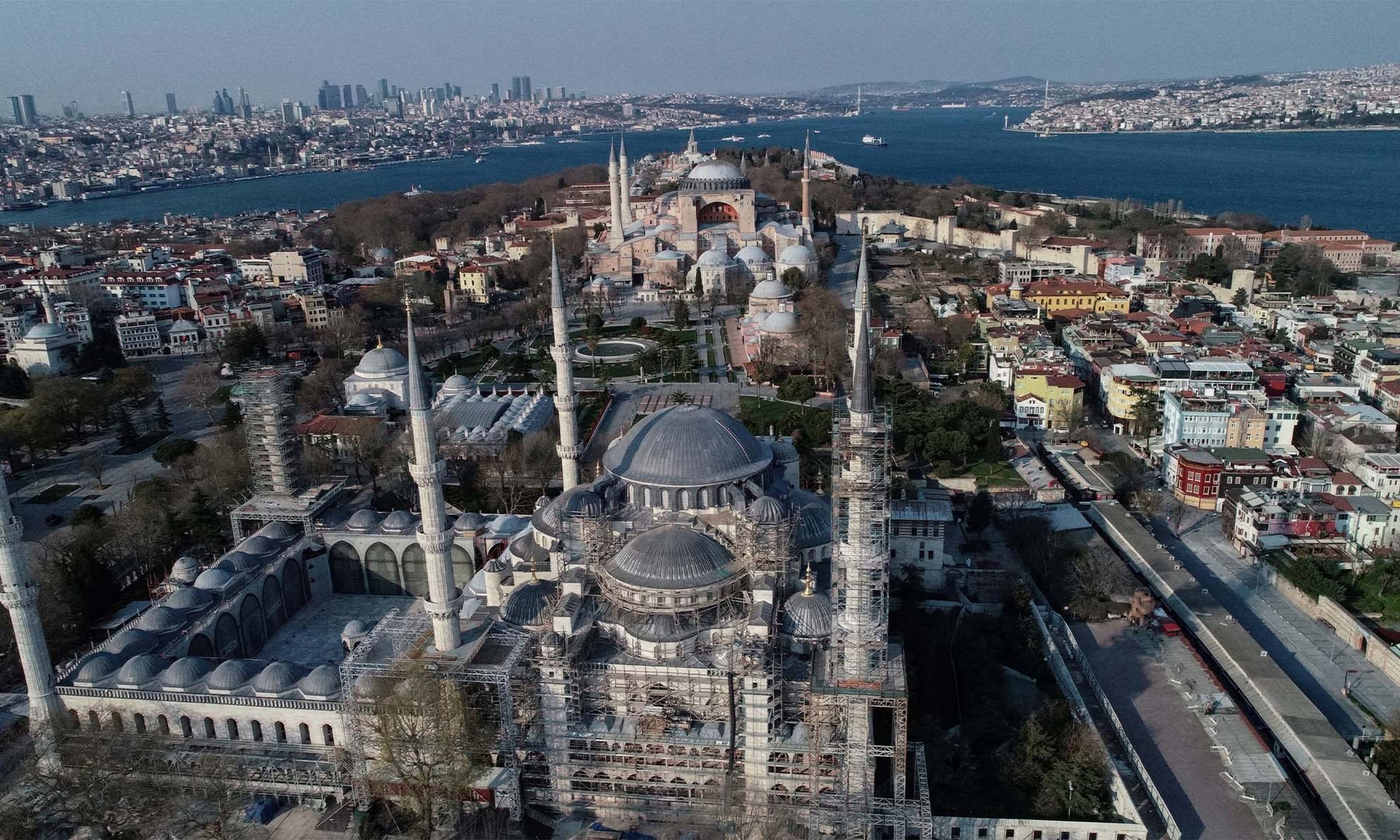
His title highlights history’s twists and turns, along with the story of Odyesseus’s wife Penelope unraveling each night the shroud she wove for her father-in-law, since finishing it would mean she must choose among the suitors who presumed her absent husband dead. Undoing the patterns woven each day is an evocative image for the halting dynamic of change. The reference also recalls Greek influences on the Middle East and its overlap with Ottoman-ruled Greece and the Balkans. Istanbul and much of Anatolia still show the physical legacy, albeit under different names, of that Greek presence, while Turkey, “a hybrid European–Middle Eastern country,” has leaned toward the latter identity by emphasizing Islam and seeking a larger regional role.
Kemal Atatürk created modern Turkey out of the Ottoman Empire’s wreckage by defeating Greek intervention, resisting foreign control, and westernizing society. His replacement of Arabic script with the Roman alphabet illustrates deeper changes that included secularization. Later urbanization brought religious peasants into cities where faith gave order to their lives. They backed populist leaders who challenged aspects of Atatürk’s legacy that are too entrenched to reverse easily. Recep Tayyip Erdoğan has “evolved into a democratically elected autocrat” pushing Islam domestically and seeking influence abroad. More-liberal figures such as Ahmet Davutoğlu sought to bring “Turkey’s experience of forging a secure and democratic nation-state to the wider region,” but Erdoğan and his associates lack the subtlety for diplomacy. Their bumptious interventions have antagonized other countries, while economic mismanagement limits Turkey’s reach even as foreign initiatives divert the public’s attention from domestic failings.
A neo-Ottoman solution to the Middle East is therefore unlikely, but then Arabs do not welcome Turkish guidance. Kaplan notes how they historically sided with Orthodox Greeks and Armenians against Turks, and that the institutional fragility of Arab states makes modernization a heavy lift. Egypt’s recent experience during the Arab Spring showed the dangers of pushing change. Popular yearning for dignity — which Kaplan defines as “a rule of law as opposed to arbitrary fiat, and a government that provides basic services with a semblance of transparency and efficiency” — drove protests across much of the region. In Egypt, Hosni Mubarak’s dictatorship lacked a mechanism for a leadership transition, but American-backed protests spun out of control and empowered the Muslim Brotherhood, which ruled with neither moderation nor effectiveness. Consequent anarchy fueled popular discontent and a military coup that restored order. Egypt’s government looks now to China for aid in creating jobs to assuage its people’s demands, in a shift pulling the country away from ties with Washington.
Ethiopia, “at once a loose and sprawling empire and a deeply institutionalized state,” increasingly threatens Egypt with its strategic grip on the Nile’s headwaters. Kaplan describes it as part of the Middle East, with ties to Yemen and Arabia, older Greek influences, and stark differences from other African countries. Problems of governance link Ethiopia with other countries he covers, and like Yugoslavia it also faces the risk of violent dissolution. The murder in 1975 of Haile Selassie, Ethiopia’s last emperor, raises parallels with the overthrow of imperial Russia in bringing to power more brutal rulers who used famine as a weapon. A federalized state in the 1990s that followed dictatorship fell short of striking a balance between unity and devolution and failed to make democracy work. Ethiopia’s fragility despite its many advantages threatens the region if the country’s domestic conflicts flow across borders.
Kaplan finds Saudi Arabia’s recent modernization a bright spot in an otherwise bleak story. Making no effort to downplay authoritarian rule and human-rights abuses under Mohammed bin Salman, he notes efforts to reform society by providing dignity along with prosperity. The Arabian Peninsula’s social contract leaving politics to ruling families so long “as they deliver peace and a modicum of justice” has provided more stability than have dictatorships or inept efforts at democracy. Consulting with tribal elders and influential figures makes the system more consensual, while vetting proposals for social reforms and economic development for viability and testing them against evidence adds efficiency. Singapore, which Lee Kuan Yew transformed through technocratic governance, has provided the model for reforming the monarchy established by Ibn Saud in the 1920s. The synthesis allows for a move away from strict Islamic custom in everyday life and for a shift to a post-oil economy, along with stability notably lacking elsewhere.
Arbitrary borders and ethnic diversity across the Fertile Crescent, from Syria to Iraq on the Persian Gulf, bring instability, which breeds cruel despotism to control it lest the worse fate of anarchy ensue. Kaplan praises Hafez al-Assad for having the self-discipline to face the reality of his situation in Syria with all its disadvantages. Assad kept the country stable for decades in ways highlighted by his son Bashar’s failure. Though brutal, the elder Assad’s savagery discriminated, unlike that of Saddam Hussein in Iraq. Caught in unforgiving territory without natural frontiers and on the border between Shia and Sunni Islam, Iraq posed an even harder political riddle than Syria. American intervention only made a bad situation worse, and Kaplan regrets supporting the Iraq War. Defenders of bringing democracy to the Middle East and intervention to transform regimes during the War on Terror will challenge him, but evidence gives him the better argument. Failure in Iraq, later replicated in Libya, at least kept the United States out of Syria, where Washington had no solution despite pressure to act.
Iran underwent in the 1970s the last great 20th-century revolution, and the first one to be televised. This echo of the Bolshevik Revolution brought to power the Islamic Republic, whose war with Iraq enforced a grim discipline that marked its only golden age. Kaplan approaches its story as an early postmortem. Iran enjoys a rich cultural and institutional legacy dating from Safavid Persia, which gave the clerical regime the advantage of an intricate power structure that helped it last. Decades later, with momentum exhausted, the revolution lacks any constituency at home beyond the fragile regime itself. A postrevolutionary or counterrevolutionary order repudiating the ayatollahs might change the region as much as the Berlin Wall’s collapse changed Europe, but by challenging traditional Arab monarchies it might also bring a dangerous clash that has to be anticipated.
Afghanistan, whose problems spill into Pakistan, gives an object lesson in the dangers of intervention. Within these weak states, strong and effective groups operated. Tribal society functioned well enough until Soviet involvement and efforts to transform society brought disruption. Destroying the tribal system left a vacuum that nothing lasting has come to fill. Ideology, including Islamism, only fuels conflict. Efforts to modernize and impose a centralized state falter against the area’s decentralized reality. Since kinship and patronage drive politics along the western edge of South Asia that Islam and the Middle East have shaped, Western policies toward the area must run with rather than against the grain of those societies or fail.
Along with American and European experiences in the Middle East, the challenge from China’s ambitions looms over Kaplan’s engaging narrative. Although intervention has failed, involvement with the region cannot be avoided. The greater Middle East must, then, be seen on its own terms. Kaplan’s argument for “granular, ground-level knowledge from the field in place of lofty concepts and causes that have often been the curse of Washington” resonates. So does his evocation of Elie Kedourie’s observation that where liberal Western thought frames conflicts as between heroes and villains, Middle Eastern contests pit villains against other villains. Even those who resist Kaplan’s tragic sensibility have much to learn from his look at the emerging Middle East and its recent history.












Comments