Dr. Robin MacGregor Murray, professor of psychiatric research at King’s College London, is sitting in his living room in Wimbledon, London. Upstairs, his wife and colleague, Dr. Marta Di Forti, is talking with a patient over Zoom. The husband-and-wife team are two of the world’s leading researchers on cannabis and psychosis.
In 2004, the pair launched the Genetics and Psychotic Disorder study, examining the genetic and environmental causes of psychosis. Since 2019, Di Forti has been running the National Health Service’s first clinic for cannabis-induced psychosis. The initial pilot scheme had 20 patients. Demand for the service is only growing, with 30 or more patients participating by Zoom each week. Di Forti told the London Times that she gets “emails from parents and young people across the country asking to come to the clinic,” but they do not yet have the capacity. At present the staff are mostly operating virtually, on account of the pandemic, but they also admit roughly 200 patients to the hospital per year with florid cannabis-induced psychosis. In England, cannabis-related hospitalizations are on the rise, with a 57 percent increase between 2013 and 2018, from 19,765 to 31,130 patients.
Though scientists are typically reluctant to declare causation — especially in an area as controversial as cannabis — Murray and Di Forti prove a bold exception. Murray is from Glasgow, Scotland. He began his career in psychiatry in the 1970s, specializing in the treatment of psychotics, that is, “people who hear voices or have delusions, particularly paranoid delusions.” The severest form of this is schizophrenia. Throughout the ’70s and ’80s, the idea that cannabis might be contributing to mental-health problems never occurred to Murray and his colleagues. In 1996 the Lancet — Britain’s top medical journal — editorialized that cannabis was a safe drug. When psychotic patients’ families would ask whether there was any link, since their loved one “smoked marijuana morning, noon, and night,” Murray would answer no.
By the 1990s, however, the question had been raised so many times that he began to wonder. First, Murray and his researchers found that people who kept smoking cannabis after developing psychosis did much worse than people who stopped. “After establishing that it was bad for you once you were psychotic, then we began looking at whether it actually provoked the psychosis in the first place,” Murray says. By 2003, they were convinced that cannabis was a “component cause” of psychosis. In other words, while a person may already have a genetic vulnerability, or other risk factors, heavy cannabis use can also trigger and exacerbate psychosis in those without an obvious predisposition.
The discovery came at an interesting political time in the U.K. Tony Blair’s government decided to relax laws pertaining to cannabis in 2004, downgrading it from a Class B to a Class C drug (the latter is considered the least dangerous drug type, with the most lenient sentences). However, five years later, the decision was reversed, as scientific research began to show that heavy cannabis use significantly increased the odds of psychosis. Murray recalls being invited on many television and radio programs during the political back-and-forth to argue with politicians and other doctors about the dangers of cannabis. After ten years or so, however, the invites stopped because producers couldn’t find anybody to argue with him. Today, according to Murray, those working in Britain’s psychiatric services are mostly agreed about the relationship between cannabis and psychosis. “It’s more a question of how important it is,” he says.
There are two main chemical ingredients in cannabis. One is tetrahydrocannabinol, or THC. The other is cannabidiol, or CBD. THC is what provides the euphoric feeling, or “high.” Is there a relationship between the amount of THC and the risk of developing psychosis? “Definitely,” Murray says. “I think that’s why I didn’t see people who were psychotic following cannabis use when I was young.”
What Murray is referring to is that in the 1960s, cannabis was grown, treated, and consumed differently than it is today. It was roughly a fifth as potent. But since the mid 1990s, CBD content has fallen as THC has risen. Most of what is available now in Britain is what’s known locally as “skunk,” high-potency cannabis (famous for its pungent smell). “Nowadays, the cannabis in the U.K. is mostly about 15 to 20 percent THC and hardly any CBD,” Murray explains. “And of course, in Holland, you can get 40 percent THC, and then in Colorado you can get 70, 80, 90 percent THC.”
Frequency of use is also a crucial factor in assessing a person’s risk of developing psychosis. Murray used to ask his patients whether they smoked every day, but he soon realized that this information alone was insufficient. “Some of the people that we see,” particularly those in Di Forti’s clinic, “smoke five, ten, 15, 20 joints a day.” He explains that you usually need to be really addicted or dependent on cannabis before you go psychotic. (Consumption of cannabis in other forms, e.g., edibles or liquids, can also cause psychosis.)
Di Forti, who joins us briefly, describes her morning appointment with a cannabis-dependent patient. She says that the patient smokes from the moment he gets up to the moment he goes to sleep, surviving mostly on takeout food. “Why does he speak to you if he is still smoking so much?” Murray asks her. “He is still thinking that it might be a good idea for him to stop,” she says.
Most of the patients at the clinic smoke every day and have done so for several years. Yet their psychosis can come on quite suddenly: “Just like cigarettes and lung cancer. You could be smoking for 20 years before you get lung cancer,” Murray says. Likewise, you could be smoking cannabis for five or even ten years before you go psychotic.
By the time patients are admitted to Di Forti’s clinic, they are usually very socially isolated. The nature of psychosis — especially paranoia — makes it difficult for individuals to form strong relationships or hold down employment. Sometimes, the cannabis dealer may be one of the few people the patient regularly interacts with.
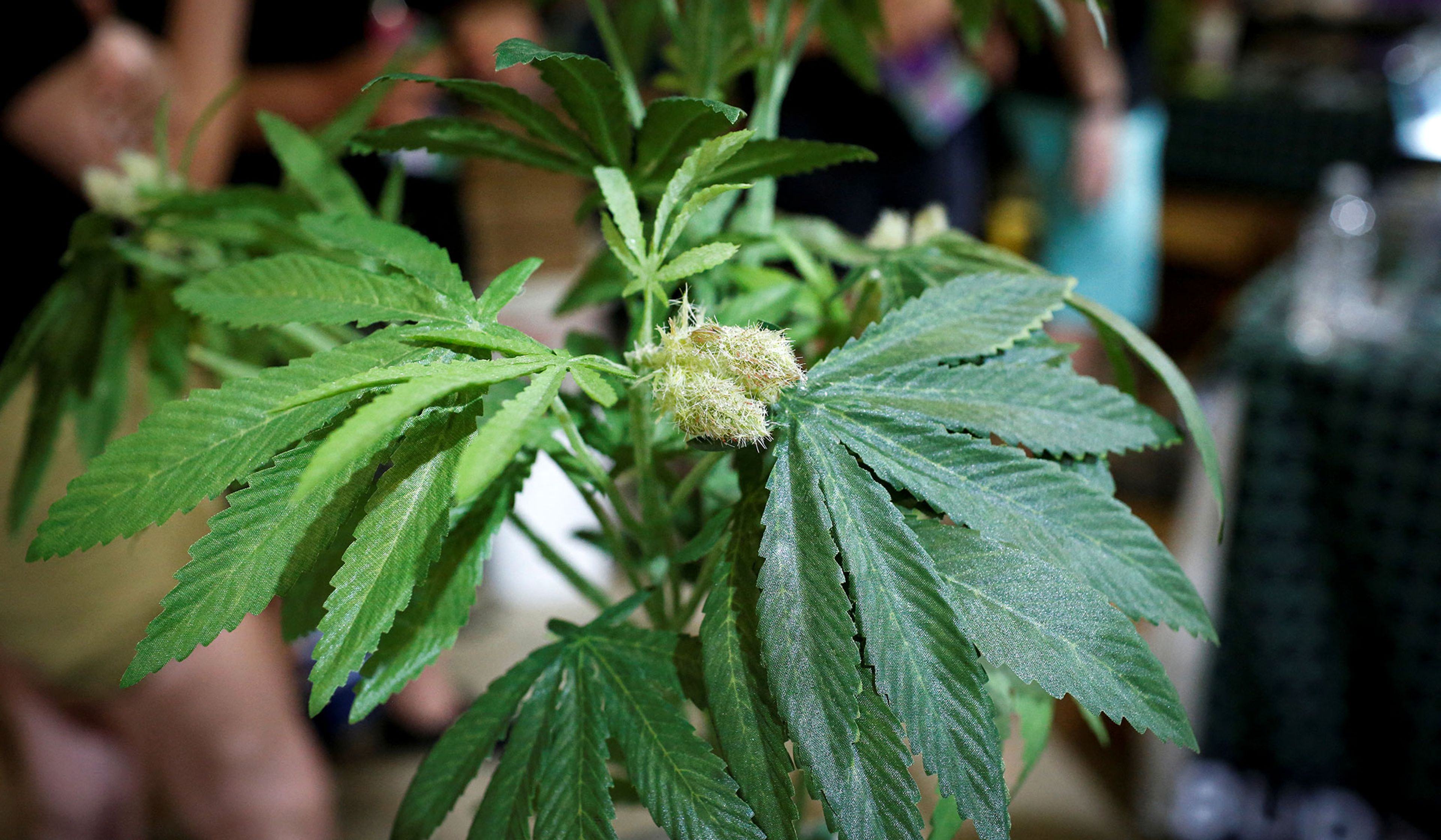

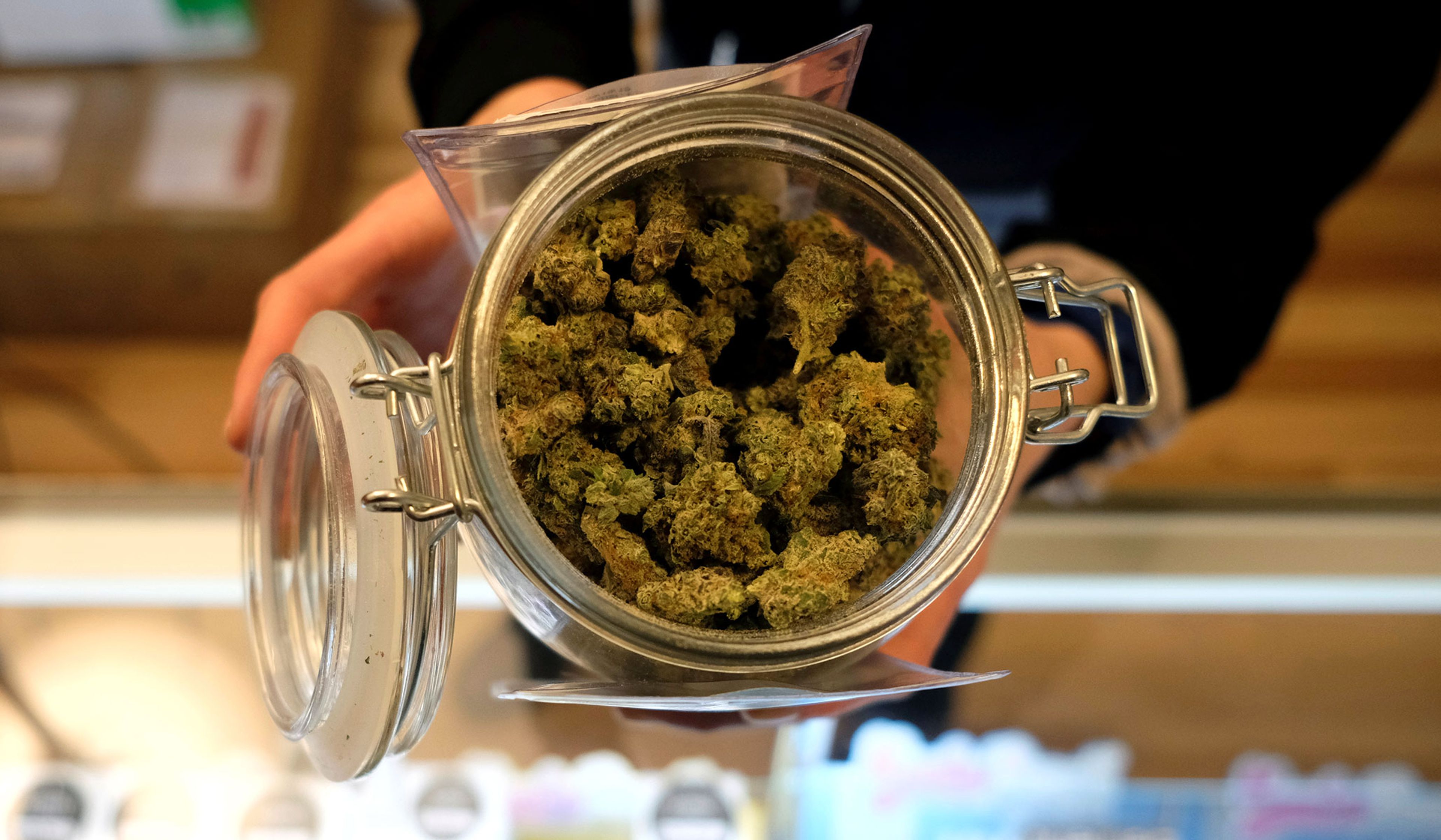
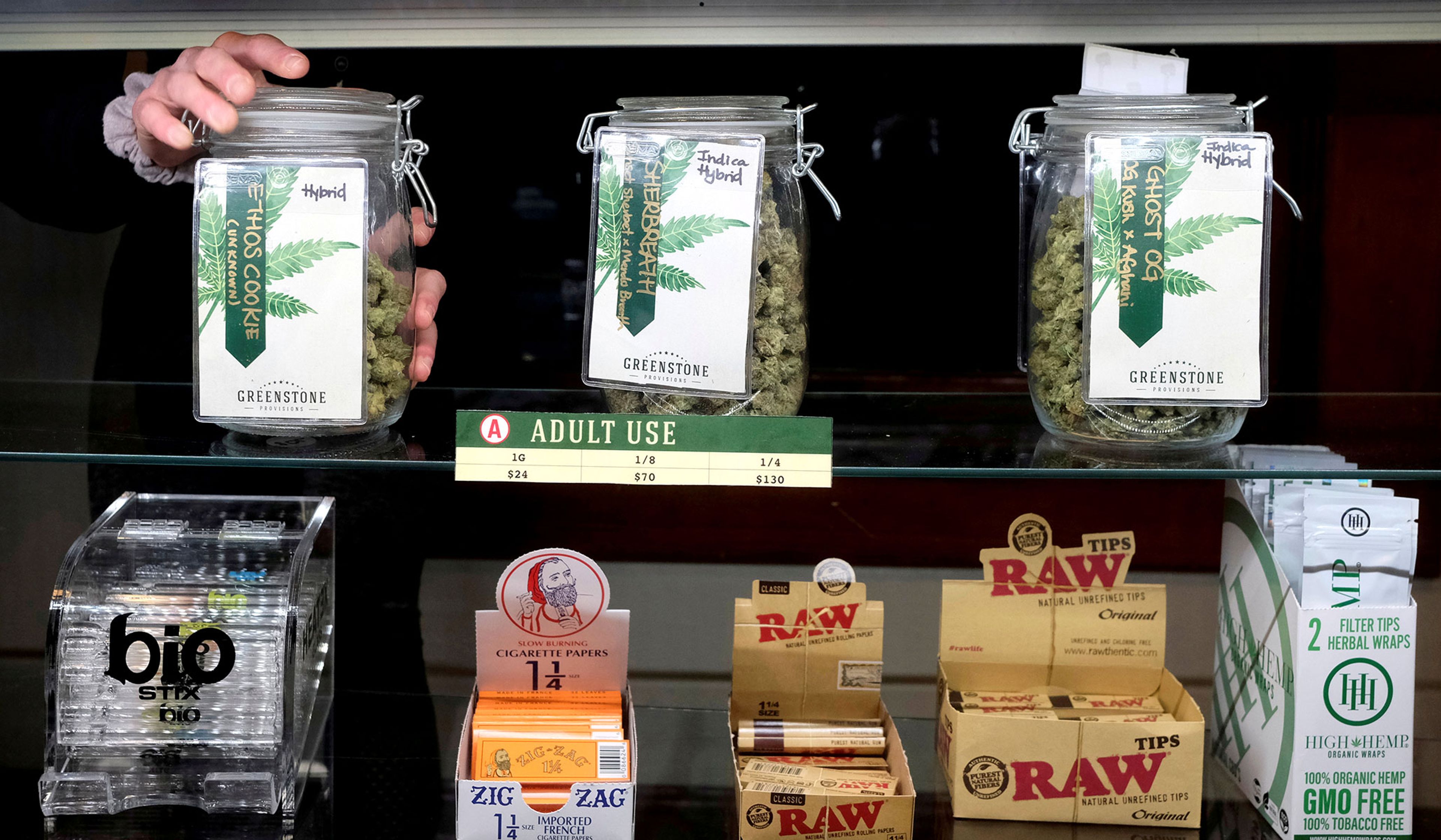
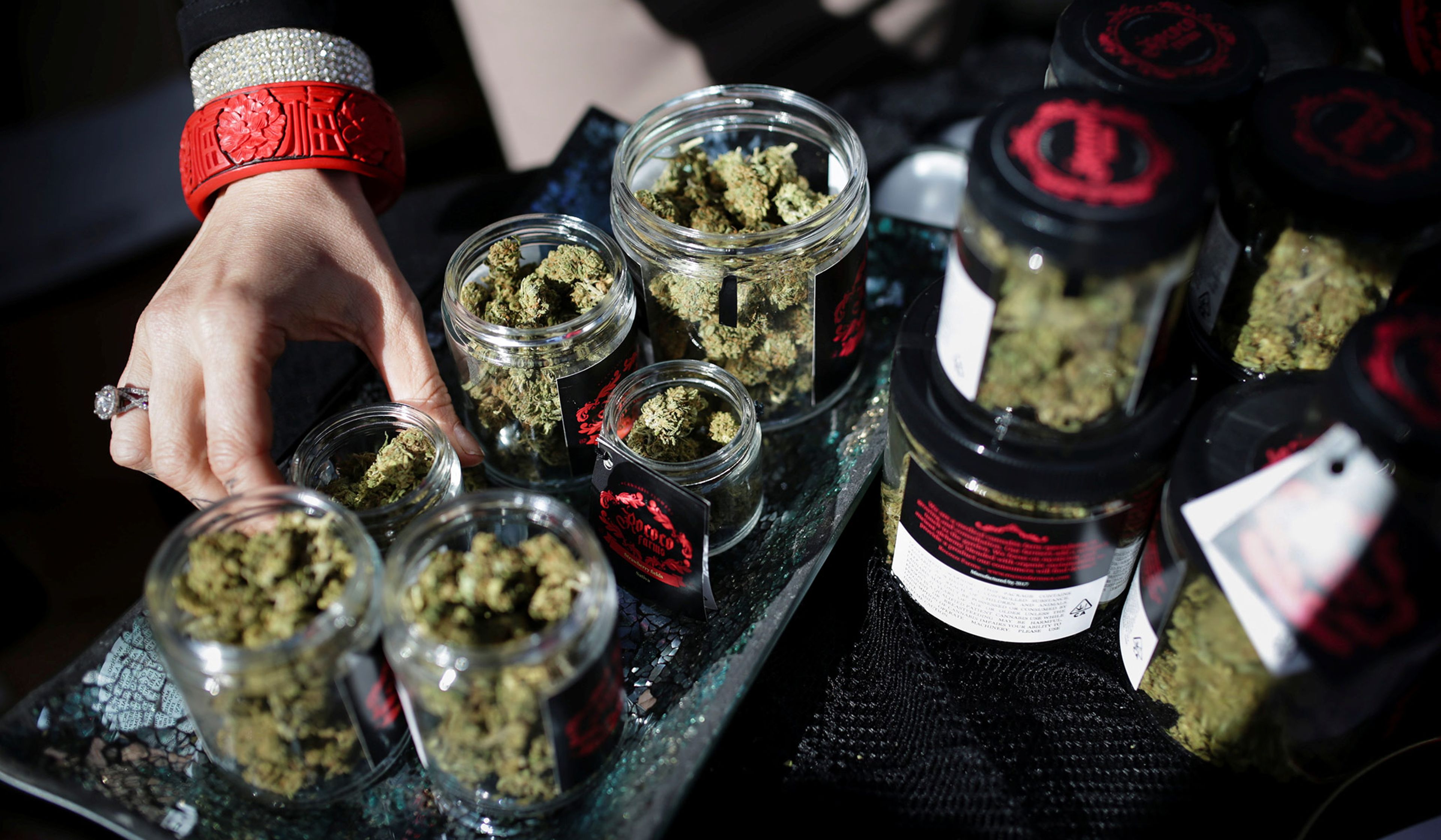
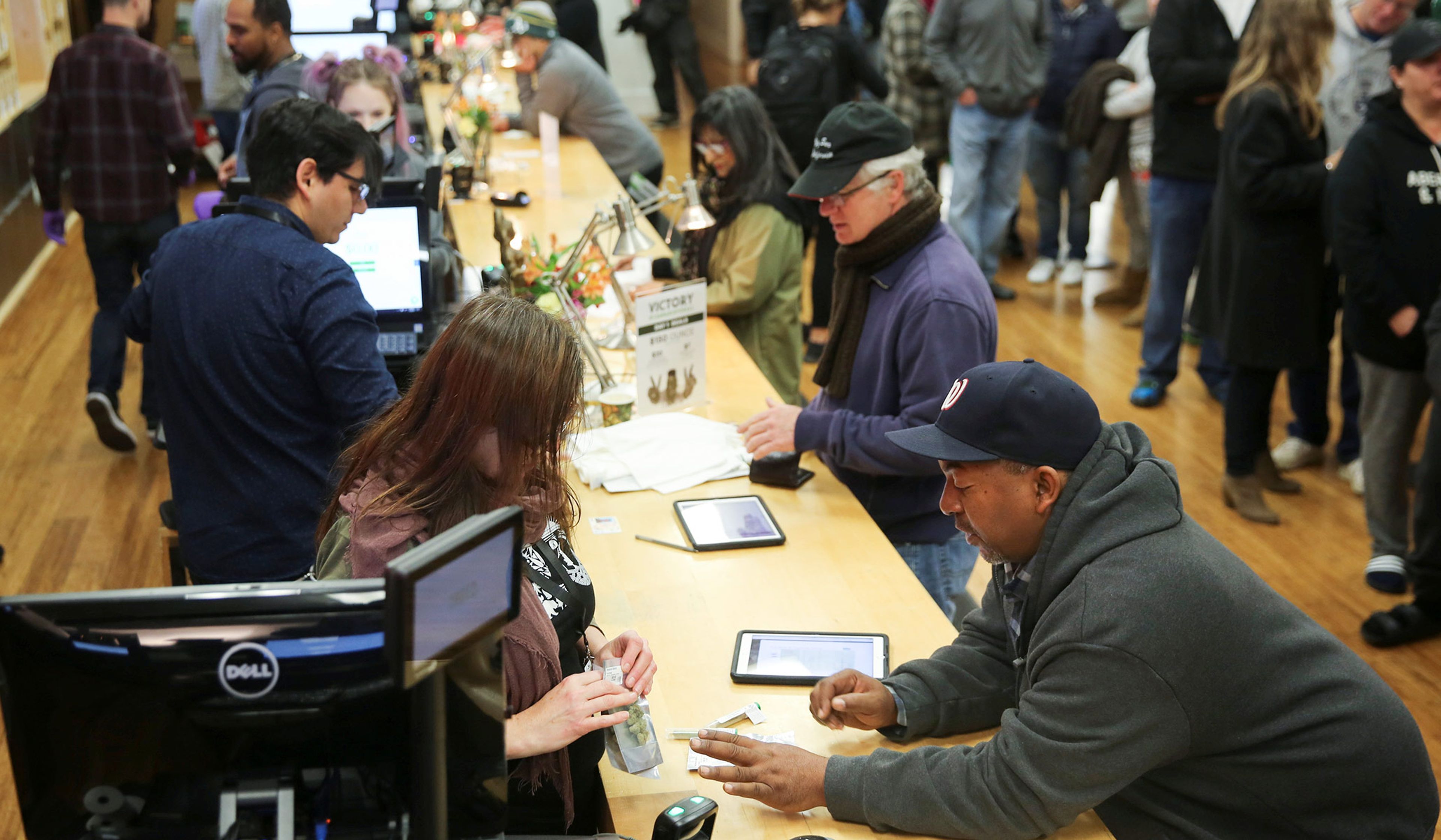
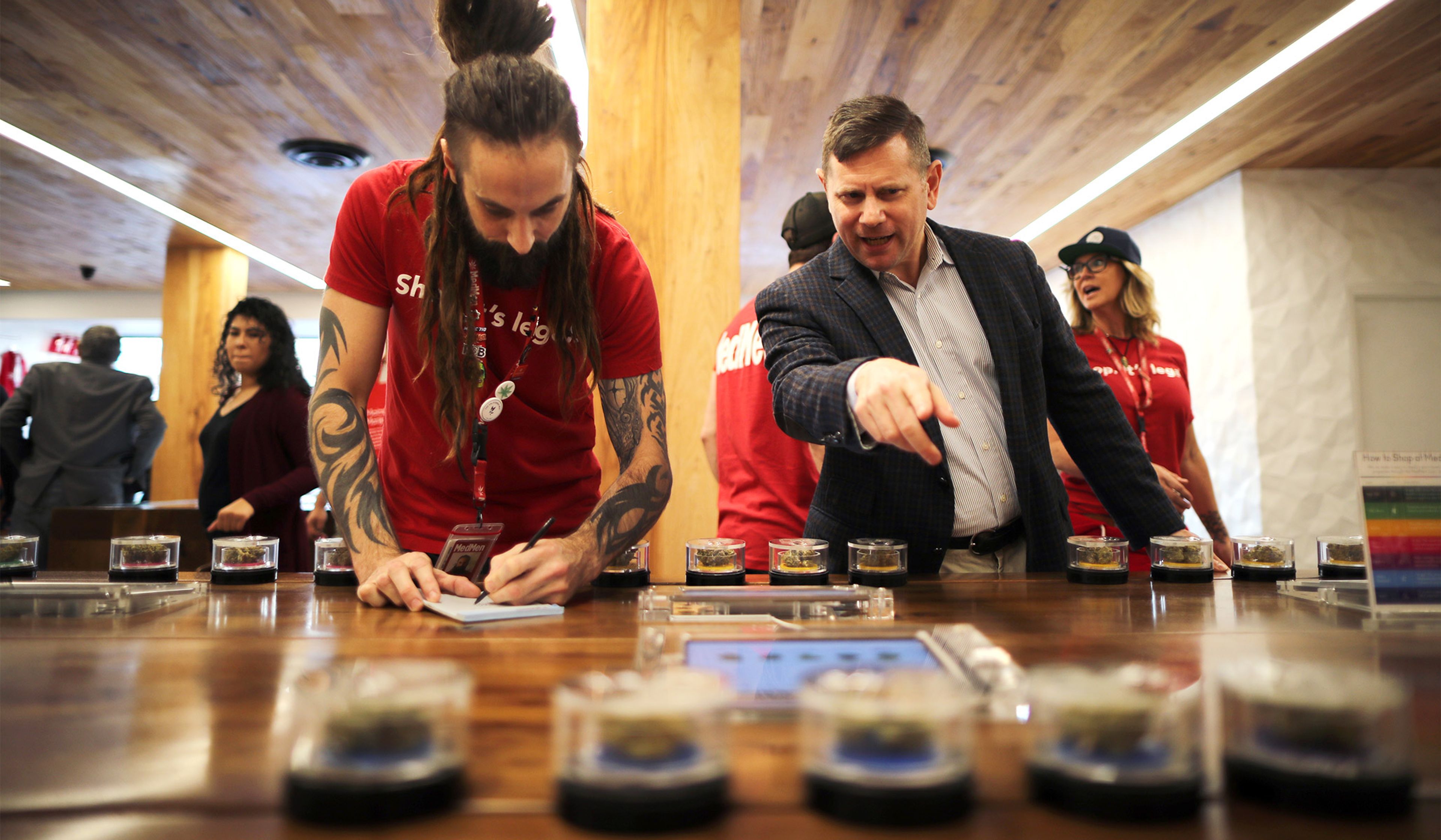
A fully budded marijuana plant at the Cannadelic Miami expo in Miami, Fla., February 5, 2022.
Marco Bello/Reuters
A common argument in favor of cannabis liberalization is that alcohol and tobacco are overall more harmful. “That is true,” Murray says. “But why is that? It’s because [cannabis is] not so available.” Murray explains:
If 100 people smoke cannabis with 15 percent THC content every day, five of them will develop frank [i.e., blatant] clinical psychosis; if they smoke cannabis containing 30 percent THC every day, then 10 of them will develop psychosis. This compares with 1 percent risk in the general population. For comparison — in 100 tobacco smokers, about 10 will get lung cancer.
Murray is not the only specialist concerned by the increased potency and frequency of cannabis consumption. Jonathan Caulkins, co-author of Marijuana Legalization: What Everyone Needs to Know, notes that the average user is consuming cannabis daily, whereas the pre-2000 user was smoking just two nights a week. Today’s user is also consuming more cannabis (in grams), which — combined with the higher potency — means THC consumption has increased by a factor of 70 in the last two decades. Another way of thinking about this “phenomenal change,” Caulkins says, is to translate the difference in cannabis-related THC consumption to caffeine. To get the same increase, a caffeine user would have to swap his daily 20-ounce bottle of Diet Coke for 35 grande cappuccinos.
In the U.S., cannabis dependency is on the rise. Between 2006 and 2017, the number of Americans who reported using the drug at least 300 times a year rose from 3 million to 8 million. As Murray explained in an article for JAMA Psychiatry: “Lung cancer reached epidemic proportions after cigarette smoking spread, and the frequency of alcoholic liver disease waxes and wanes in proportion to changes in population alcohol consumption. Growing evidence suggests that this is also the case for cannabis and psychosis.”
In 2006, researchers at Cambridge University investigated cannabis use in South East London and found that “cannabis use in the year prior to presentation with schizophrenia increased markedly between 1965 and 1999, and disproportionately so compared to increase in cannabis use in other psychiatric disorders.” The researchers believed their findings to be “compatible with growing evidence that cannabis use is a contributory cause of schizophrenia.” Di Forti and her team estimate that in London the eradication of cannabis use would remove 30 percent of first-episode psychotic incidents, and as much as 50 percent in Amsterdam. Their study, published in 2019 in the Lancet, showed that across their European sites, people who smoked high-potency cannabis were five times as likely to develop psychosis as never-users. The possibility of “reverse causality” — that psychotic people are more likely to use cannabis (perhaps to relieve symptoms) rather than the other way around — has been explored thoroughly by researchers and deemed unlikely. “Most [cannabis users] start because they enjoy it, or because friends or family introduce them to it, as with alcohol,” Murray explains.
Cannabis-induced psychosis is distinct from smoking-induced lung cancer in that it is a “young person’s illness.” This is in part because it is popular among this demographic — today, more young people use cannabis than smoke tobacco — but it is also because of how it affects the brain’s dopamine system, which is at its most active during a person’s adolescence and early twenties. While lung cancer may shorten a person’s life, having psychosis early into adulthood can have a debilitating effect for the rest of one’s life, though, of course, neither outcome is desirable.
Initially, Murray felt “very odd” about weighing in on the cannabis controversy. Psychiatrists tend to be liberal. He jokes that many of his friends in the profession thought he was “demented or becoming reactionary.” These days, the Left has been joined by much of the libertarian Right, and “of course, the cannabis users,” in insisting that it isn’t a dangerous drug. But Murray isn’t opposed to legalization, “if you can control it.” It’s commercialization that he rejects.
In Britain, where recreational cannabis is still illegal, the industry doesn’t have much influence. The same cannot be said for the U.S. Here, annual sales of legal cannabis are expected to exceed $66.3 billion by 2025. In a JAMA Psychiatry article co-written with Wayne Hall of the University of Queensland, Murray warned that “as with the first reports more than 60 years ago of a causal association between cigarette smoking and lung cancer, the cannabis industry denies or minimizes the evidence that cannabis use increases the risk of psychosis.”
Of course, even where the industry is less powerful, controlling cannabis post-decriminalization has its challenges. In Portugal, researchers observed a 29-fold increase in hospitalization for psychotic disorders in the 15-year period after decriminalization. Potency and consumption both tend to increase after legalization. In 2011, the Dutch government even considered outlawing high-potency cannabis, though it abandoned the idea after deciding that it would be nearly impossible to enforce.
Having a public debate about cannabis policy is helpful, Murray says, in that it increases public awareness about the drug’s dangers. He cites the example of a cartoon printed in the Times of London several years ago. It shows pro-Brexit conservatives Boris Johnson and Jacob Rees-Mogg “puffing cannabis furiously” against the headline “Brexit will be good for Britain” as then–prime minister Theresa May dismisses their “cannabis-induced delusion.” For the cartoonist to choose this subject, Murray says, “his assumption must be that the reader of the Times at least does know that [cannabis-induced psychosis] happens.”
As it stands, too few people — especially in the United States — are aware of the risks posed by cannabis. Murray believes that legalizing the drug makes sense so long as politicians can rein in the industry and ensure, as was eventually done with tobacco, that the public has access to accurate information. But that means taking on a Goliath-sized industry. And so far, the U.S. is headed full speed in the opposite direction.









Comments