There are two fairy tales playing in movie theaters at the moment — one created by a British director, Alex Garland, the other by a Frenchwoman, Céline Sciamma. In each one a female character, feeling guilt in the aftermath of the death of someone close to her, repairs to an isolated country house and then has strange encounters in the woods. This description makes them sound similar; in fact, the similarity is worth noting because of how radically they differ otherwise, the poles of art they represent.
The Garland movie, Men, gives us a widow, played by Jessie Buckley, who retreats to a serene-seeming English country house after the trauma of watching her husband plunge past her apartment window to his death. She wanted a divorce, he was abusive, he may have committed suicide as a last act of revenge — but whatever the truth, she needs rest and healing, and surely that’s what the rural life is for?
Au contraire: This particular slice of rural England is a landscape of chthonic nightmare, where all the men seem to have the same face as her awkward host (Rory Kinnear), their advances escalate from microaggressions to the real thing, and before you know it she’s being chased by a naked leaf-sprouting embodiment of primal male something-or-other, a Green Man in the style of the medieval carvings that the camera lingers over, which in turn becomes something that isn’t for the squeamish (a group I’m happy to count myself among).
In a way this vision of a predatory Eternal Masculine that waits for unwary women in the woods makes an interesting counterpoint to one of our best recent horror movies, Ari Aster’s Midsommar, in which hapless dimwitted men are fed to the feminine-coded sacred powers of the spring. With the difference, though, that in Midsommar the Eternal Feminine is allowed to be terrifying to the end, whereas — in keeping with our era’s ideological sympathies — Garland’s version of the Eternal Masculine is ultimately revealed as wounded, impotent, and weak.
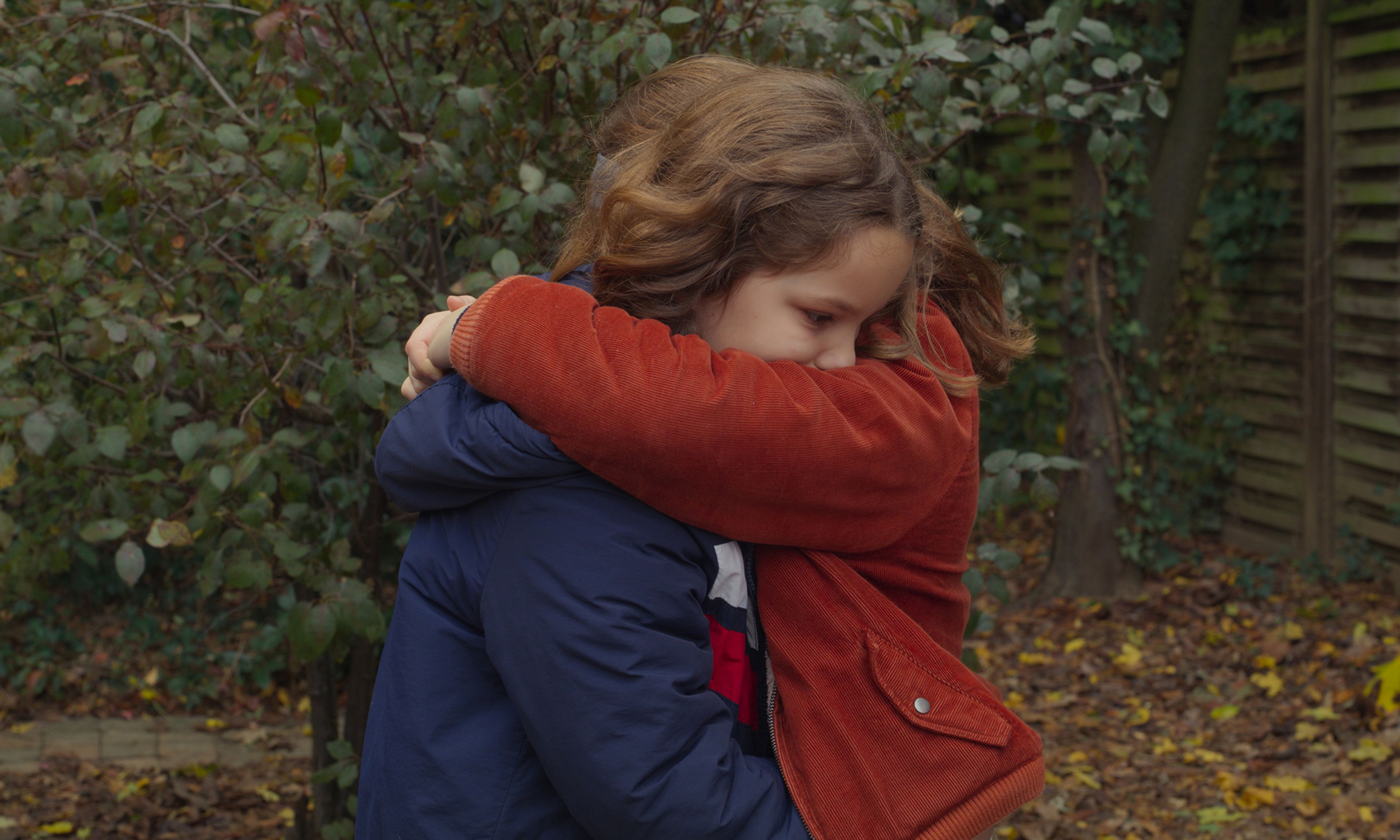
But if Men and Midsommar are forms of faerie-horror in dialogue with each other, Sciamma’s country story, Petite Maman, is up to something completely different. Here the country house belongs to a departed maternal grandmother, and the visiting female is a little girl, eight-year-old Nelly (Joséphine Sanz), who feels like she didn’t adequately say goodbye to her grand-mère. She’s there with her mother (Nina Meurisse) and father (Stéphane Varupenne), who are busy packing up the grandmother’s belongings while their daughter roves into the surrounding woods.
There, searching for a house her mother built in the forest as a girl, she meets another little girl (Gabrielle Sanz, Joséphine’s sister), dressed in a red sweater, hauling branches to build her own forest house. The girls fall in together and become friends, going back and forth between each other’s homes — which appear to be the same house, the grandmother’s house, in different periods in time. Meanwhile Nelly’s present-day mother recedes, departs — it’s hinted that the marriage is unhappy, that she might even be running off — and Nelly is left with her father, who gently supervises while she hangs out and bonds with her newest, but also maybe oldest, female friend.
If the woodland magic in Men is too much muchness, horror oozing up everywhere you look, in Petite Maman the magic is radically benign. You keep waiting for some hint of the sinister or dangerous in the supernatural time-traveling: A reference to an operation that the other little girl needs to have, for instance, made me spin out a whole scenario where Nelly herself somehow isn’t real but part of a dying girl’s imagined future . . . but no such twist awaits, no shadow falls over the proceedings. The ghostly forces are benign; they just want women to love one another and understand one another across the generations.
Likewise, if the masculine principle in Men is a source of predation and oppression, if the woodland magic reveals a primal battle of the sexes, then in Petite Maman the male sex barely matters: The marriage may be unhappy, but the dad is a harmless figure, shaggy, gentle, flexible, unimportant. Sciamma’s last movie, A Portrait of a Lady on Fire, was about an 18th-century lesbian romance, and here instead of all-female romantic love we have a portrait of familial love in which the feminine line is all that really matters.
Both movies are interesting; neither is quite satisfactory. Men is aggressively over the top, its sheer grisliness unjustified by its mythological pretensions. Petite Maman is lovely but wan, low-energy, more like a wistful episode in a TV anthology than cinema in full. They represent a yang and yin of fairy stories; somewhere between them lies real art.












Comments