On a sunny September afternoon in 1984, an Irish Republican Army operative named Patrick Magee stepped into room 629 of Brighton’s Grand Hotel. Twenty-seven days later, that Victorian edifice would host the 101st Conservative Party Conference, led by Prime Minister Margaret Thatcher. Magee’s orders were blunt and deadly: plant a bomb that would kill the PM, cripple Her Majesty’s Government, and strike a blow for Irish reunification. In There Will Be Fire, native Dubliner Rory Carroll chronicles this plot and its aftermath to stirring effect.
Thatcher was not, of course, the first assassination target of Irish paramilitary groups. Five years earlier, IRA terrorists in Sligo, on the Emerald Isle’s northwest coast, had taken out Lord Mountbatten, cousin to the queen and former viceroy of India. Five weeks before that, the obscurer Irish National Liberation Army murdered Airey Neave, a senior Tory whom Thatcher intended, upon taking office, to name secretary of state for Northern Ireland. By 1984, “the Troubles,” as the ongoing campaign of violence had come to be known, had taken more than 2,500 lives, among them mothers and children, soldiers and civilians. Though the outline of this sectarian strife will likely be known to readers, Carroll deftly refreshes our memories on the particulars, contextualizing the Brighton attack with the bombings, shootings, negotiations, and arrests that preceded it.
As this background gives way to Carroll’s essential story, readers encounter any number of fascinating characters. Among these are Joe Cahill, a “short, bald Belfast native” who convinces both Moammar Qaddafi and Whitey Bulger to run guns for the IRA; David Tadd, a working-class boy turned Scotland Yarder who identifies Magee using a single registration-card palm print; Norman Tebbit, the hugely effective trade and industry minister who might have followed Thatcher as PM had the bomb never gone off; and Sussex CID (Criminal Investigation Department) chief Jack Reece, who leads “the UK’s biggest-ever manhunt” in the wake of the Brighton attack.
Perhaps the most purely disagreeable figure to crop up in these pages is Gerry Adams, the paramilitary boss and Sinn Féin man who conspicuously failed to win a share of the 1998 Nobel Peace Prize despite his role in the Good Friday Agreement. (The award went to Ulster politicians John Hume and David Trimble instead.) Beneath Carroll’s pen, Adams emerges as a two-faced political climber, eager for “a permanent move to electoral politics” but more than willing to get his hands dirty. Though the famous Irishman has long denied any membership in the IRA, Carroll is having none of it. By 1981, Adams was already a member of the organization’s powerful Army Council and was well on his way to the Sinn Féin presidency. Moreover, “the Army Council knew of the plot” to kill Thatcher. Carroll argues convincingly that the operation could not have proceeded without Adams’s go-ahead.
If Sinn Féin’s future leader was a conniving double-dealer, what about Magee himself, the man most directly responsible for the Brighton blast? Born in Belfast in 1951, Magee spent much of his childhood in England before returning to Ulster for a life of booze, itinerant labor, and petty crime. By the time of his entry into the IRA, in 1972, he had mostly shaken his British accent but could slide back into it when necessary, a useful skill for an operative who would one day be assigned to the organization’s England Department. Like many IRA men of his generation, Magee seems to have joined in pursuit of “respect and approbation,” a way to “stand out from the ranks of the unemployed and powerless.” Whatever his motives, he eventually found himself in Brighton, armed with nitroglycerine-based gelignite, a nine-volt battery, and a long-delay timer set for October 12, 1984.
Like The Looming Tower, Lawrence Wright’s Pulitzer Prize–winning saga of the 9/11 plot, There Will Be Fire has much to say about turf-guarding and lack of cooperation in the intelligence community. At the time of the Brighton bombing, Magee was known already to the Royal Ulster Constabulary, the British army, MI5 and MI6, and police services in both Dublin and London. That his presence in England went unchallenged is the kind of jackpot luck that terrorists write songs about — a clear result, in Carroll’s telling, of the security services’ “endless bureaucratic jousting for budgets and dominion.” Though MI5 would later claim to have flagged the relevant intelligence for political officials, no proof of this assertion ever emerged. In any event, Magee walked into the Grand unchallenged, charming valets and receptionists alike despite carrying a suitcase filled with explosives.
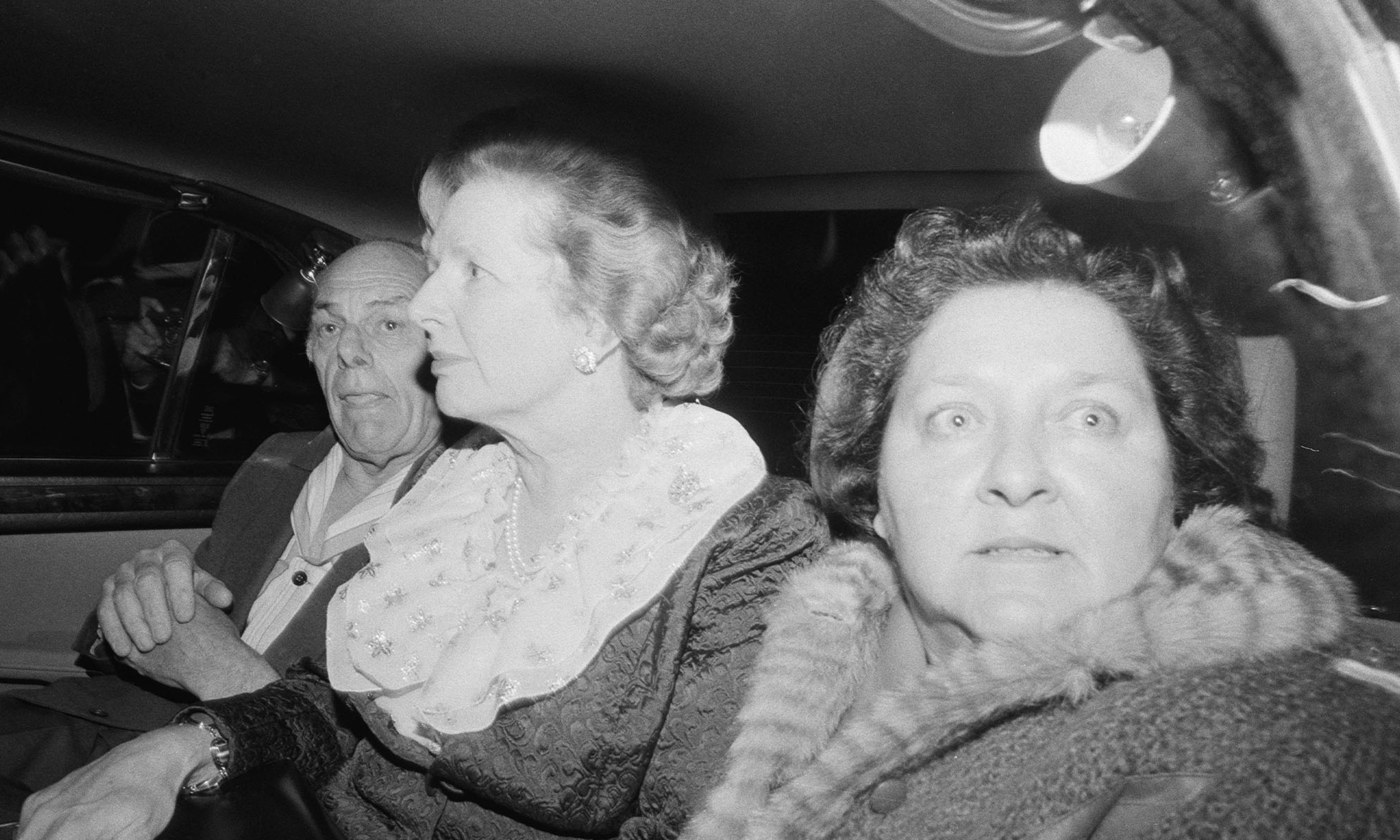
And so the bomb went off. The official death toll was five, and Thatcher herself escaped assassination only narrowly, exiting her suite’s bathroom perhaps two minutes before the explosion brought down its ceiling. Despite the relative modesty of the blast’s body count, it is difficult to overstate its effect on British politics. To begin with, the Brighton attack unsurprisingly delayed negotiations between London and Dublin over Northern Ireland. (“It could look as if we were bombed into making concessions,” Thatcher wrote in a memo.) Also relevant: Thatcher’s personal popularity soared, at least for a time, following the attempt on her life. Yet the bomb’s greatest legacy, Carroll argues, was its impact on security protocols. “No longer could the public mingle freely with senior elected representatives,” the author laments. Instead, politics would henceforth be conducted “behind bullet-proof screens and body scanners.”
Does There Will Be Fire coddle Irish radicals and malign Thatcher, as one might expect from a mainstream popular history? Happily, no. Though Carroll is clearly sympathetic to the IRA’s political goals, he has no trouble portraying particular IRA members as sociopathic killers. As for Thatcher, she is handled so magnanimously that one might peg Carroll as a closet Tory. The Iron Lady “never retreated, was not weary, and felt no burden [of office].” She was a figure of “courage and resolution,” a combination on exhilarating display when, less than twelve hours after the explosion, she delivered her conference address as planned. Among the book’s most affecting passages is Carroll’s description of this speech, every moment of which shimmers with righteous determination. The author’s verdict concerning the address is suitably laudatory: “Even those in Britain who loathed her were awed.”
Carroll’s book does occasionally disappoint. At times, its lapses are entirely technical, as when the author allows our introduction to a corps of bomb-disposal men to run distractingly long. Elsewhere, the book suffers from odd lapses in historical judgment, claiming, for instance, that the attempt on Thatcher’s life was “the most audacious conspiracy against the British Crown since the Gunpowder Plot of 1605.” The American Founders would likely disagree. There is also an obnoxious anti-Brexit screed in which Carroll blames Thatcher for “seeding in the Conservative Party [that] radical idea.” I will leave it to professional historians to debate the origins of anti-EU sentiment in Great Britain. But it strikes me as foolish to imply, as Carroll does, that the assassination of Margaret Thatcher might have prevented Brexit altogether.
These are, in the end, small complaints, especially given Carroll’s facility with the well-chosen detail. Here, on one page, is the American Secret Service breaking 10 Downing Street’s ancient grandfather clock during a state visit by Ronald Reagan. There, on another, is a hunger-striking IRA prisoner reading Leon Uris’s Trinity, a novel of Ireland that I thrilled to as a teenager despite its being unalloyed anti-British propaganda. Perhaps the best thing that can be said about There Will Be Fire is that it is a work for grown-ups — a measured reflection rather than a jeremiad for one side or the other. Ireland and Irish Americans deserve many more such books. Read this one, for a start.











Comments