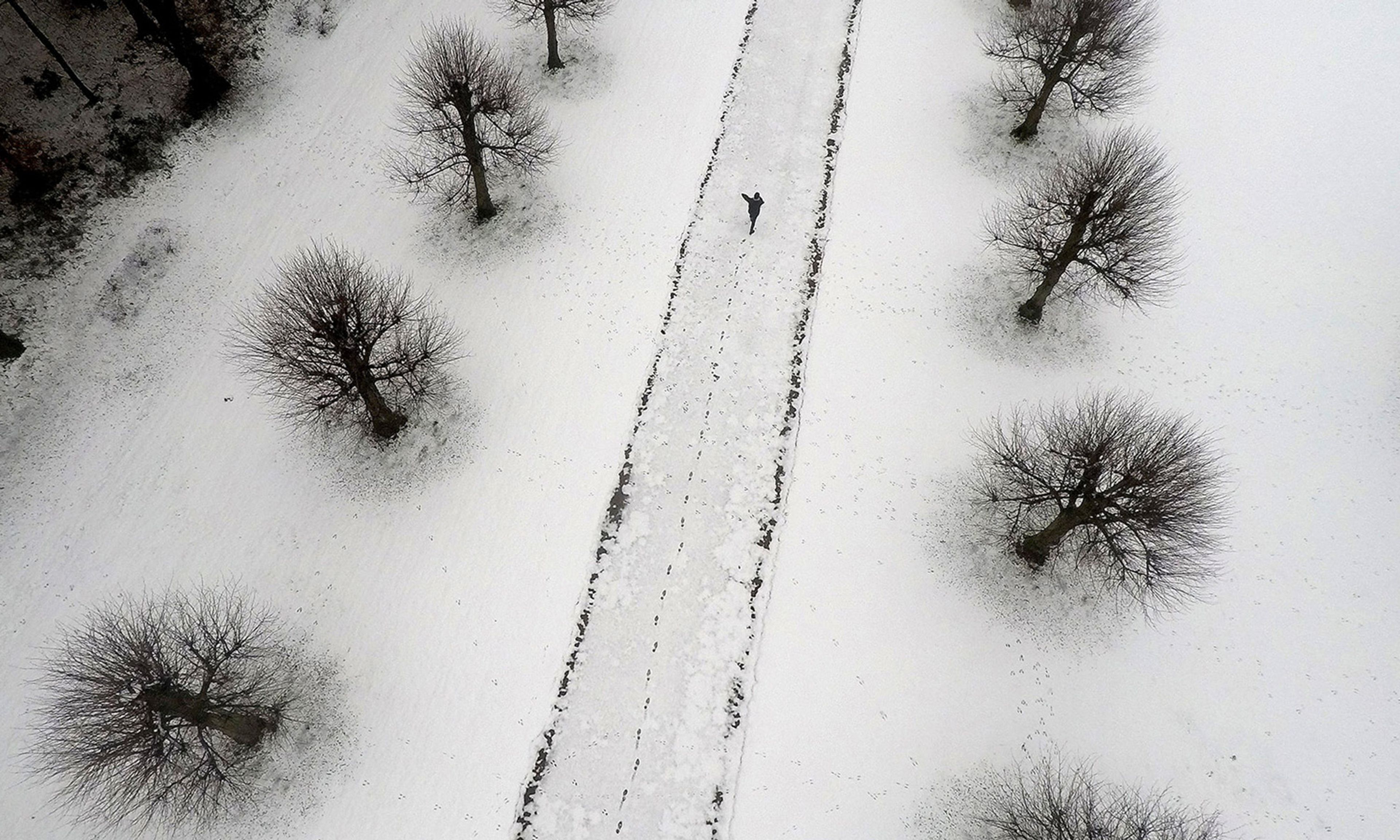
The season’s first snowfall, between Hanukkah and Christmas, left gifts of varying sizes in different parts of the state. One small city to our west received 40 inches, collapsing the roof of a sports arena (vacant at the time, fortunately). We got a foot. It covered everything. Our stone walls disappeared; a stone-crow garden ornament became a bump. Odd branches collapsed under the weight, though pine boughs held the snow easily, as if shrugging their shoulders and reminding their deciduous neighbors, We are designed for this. The world was a crisis of intersectionality: Whiteness was everywhere. (But so it always is, hence our vigilance.)
The snow came down as powder, easy to shovel so long as you removed it in stories, like a building being dismantled. Our fellow townsman, who mows in the summer, blew out the driveway, leaving neat walls by which to measure the snow’s depth. The silence, already profound since the fall of the leaves, deepened; the stream was smothered; squirrels kept to their nests, the dog up the road stayed inside. Lines from carols — “On a cold winter’s night that was so deep”; “Mark my footsteps, my good page, / Follow in them boldly” — became vivid. My only footsteps led to the woodpile, the compost, and the car.
Over the next week the snow subsided a bit as the sun shone and ice melt did its work. Stones in the walls reappeared, the crow poked his head up, the front sidewalk turned to ice, then to dryness. With a long-handled contraption I pulled snow off the edges of the roof, hoping to expose the gutters and unblock them (to little effect). The banks that lined the roads became dirty. This is the long slow diminuendo of a snowstorm, always repeated, until the next one arrives.
What arrived instead was a sudden warm front and rain. The temperature shot into the 50s (we were eating outside in that weather, just a month ago). The rain started midday, and drummed heavily all night. Wind made the deck doors bang. At one point I heard a loud, long swishing as an ash tree snapped and came down.
Next morning the world was transformed. White had turned green. Patches of snow remained visible in the woods, and by the driveway where the snowblower had deposited it, but everywhere else it had vanished. My friend Doug sent me a clip taken with his smartphone from a bridge over a small glen a few miles distant. Normally a sheet of water folds over a rock ledge maybe two feet high. Now the ledge was obliterated in raging whitewater; the audio roared like a racetrack. Closer to home even our little stream made a hoarse thrum like a spillway at a power plant. The pond was engorged; piles of leaf litter lay here and there, where nighttime torrents had left them. The animal kingdom stirred; I wondered whether the grey squirrels’ tail-tips get wet when they drag, but their owners seem to know how to take care of themselves. In the compost bin, old leavings, frozen in a snowy tomb, enjoyed a messy resurrection; may ours be neater.
In the 21 years we have had a house here, there have been heavier snowfalls and heavier rainfalls — once the stream lifted our footbridge on its back and bore it away (not far; we were able to rope it and haul it back before the water receded). But never have I seen serious snow and rain so close together, to such dramatic effect.
Coming as they did at the end of the year, the paired storms recalled, well, the end of the year, its iconography and aspirations. Ball drops and cork pops. Babies in top hats and new-year-labeled swaddling; robed bearded oldsters shuffling away. Midnight kisses with casual acquaintances, as forgettable as they are easy. Fresh starts and resolutions; new gym memberships; hangovers. And all because of a turn in the earth’s orbit, and the conventions of a calendar established by Babylonians and popes centuries ago.
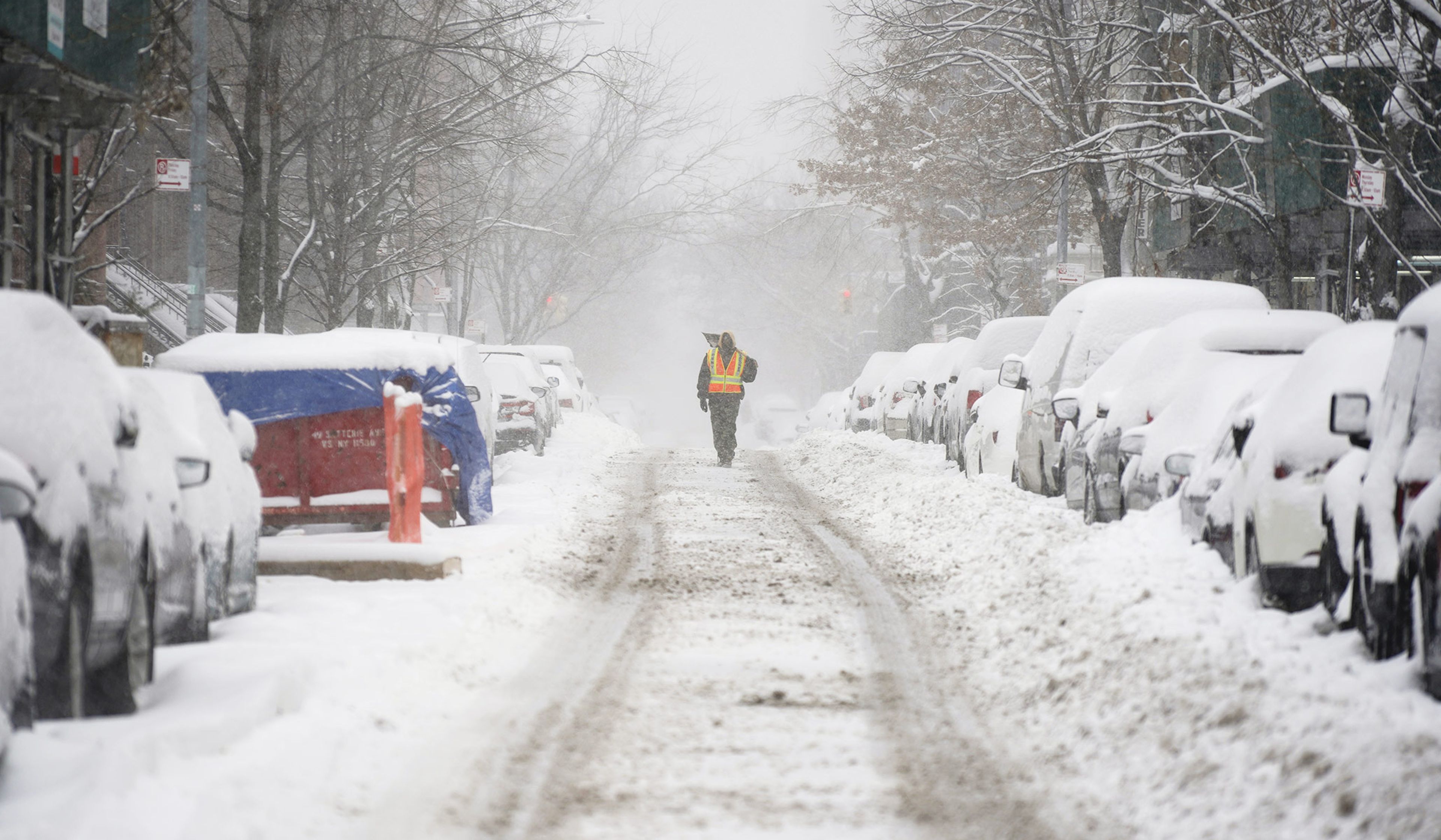
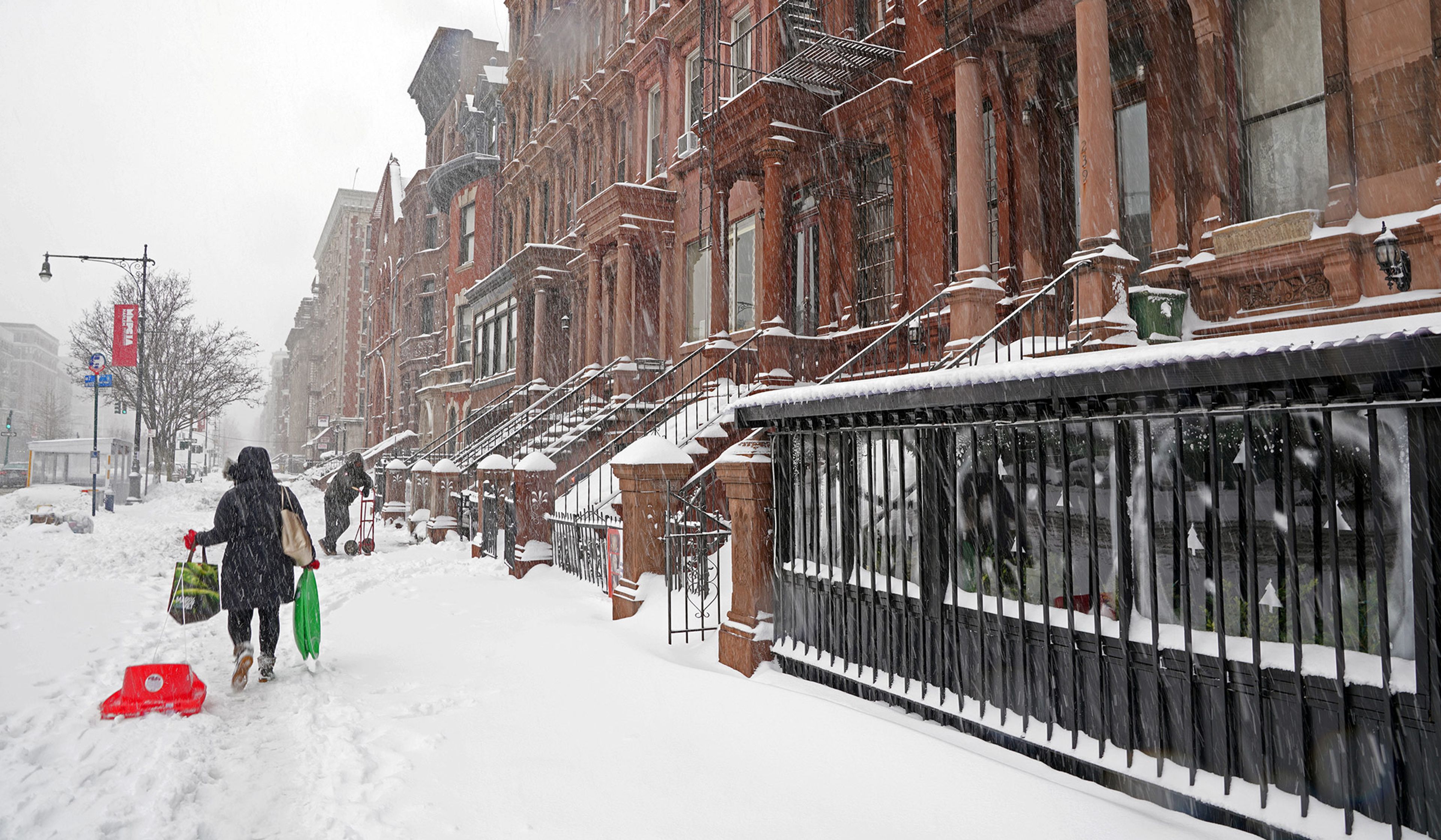
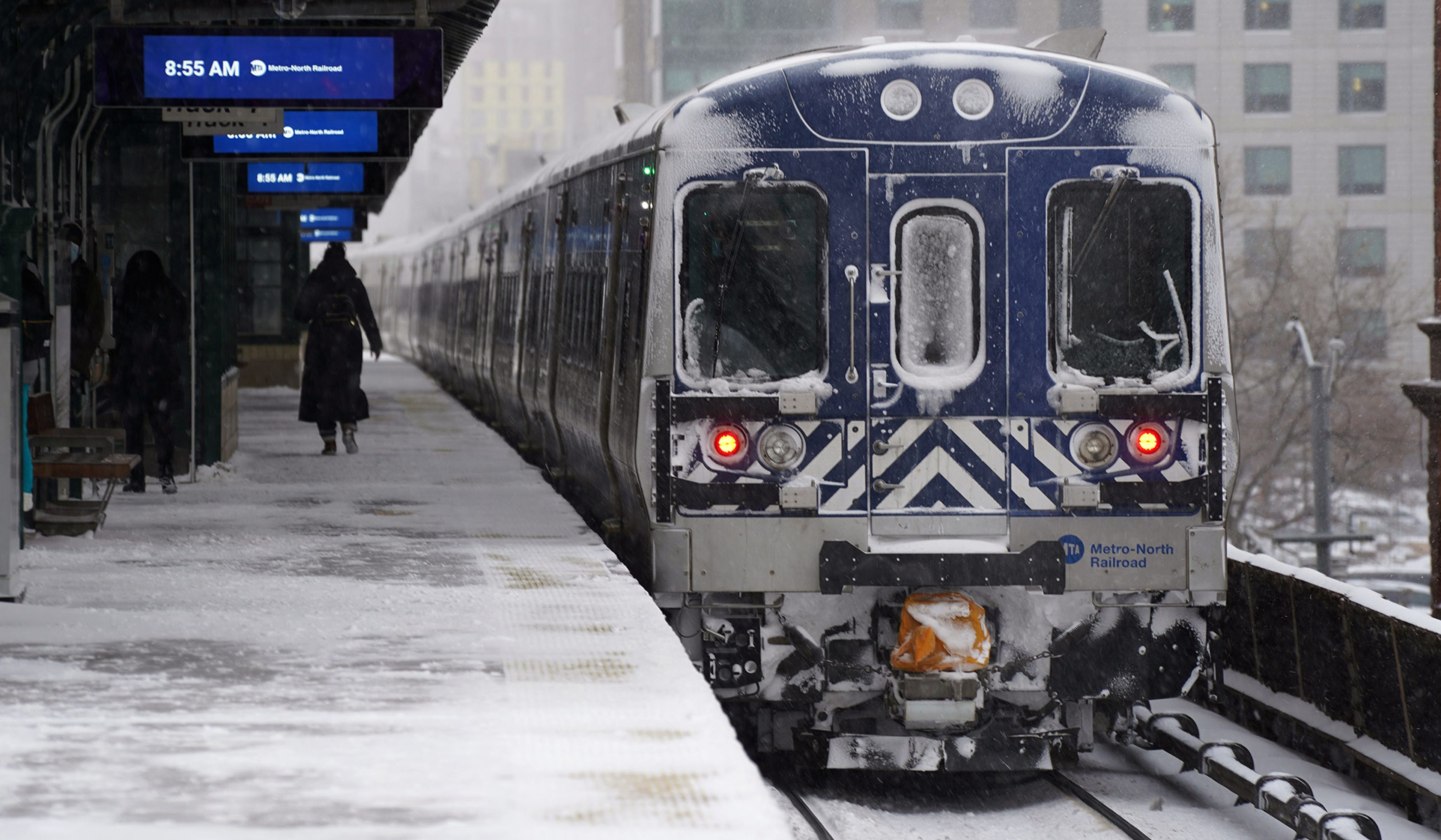
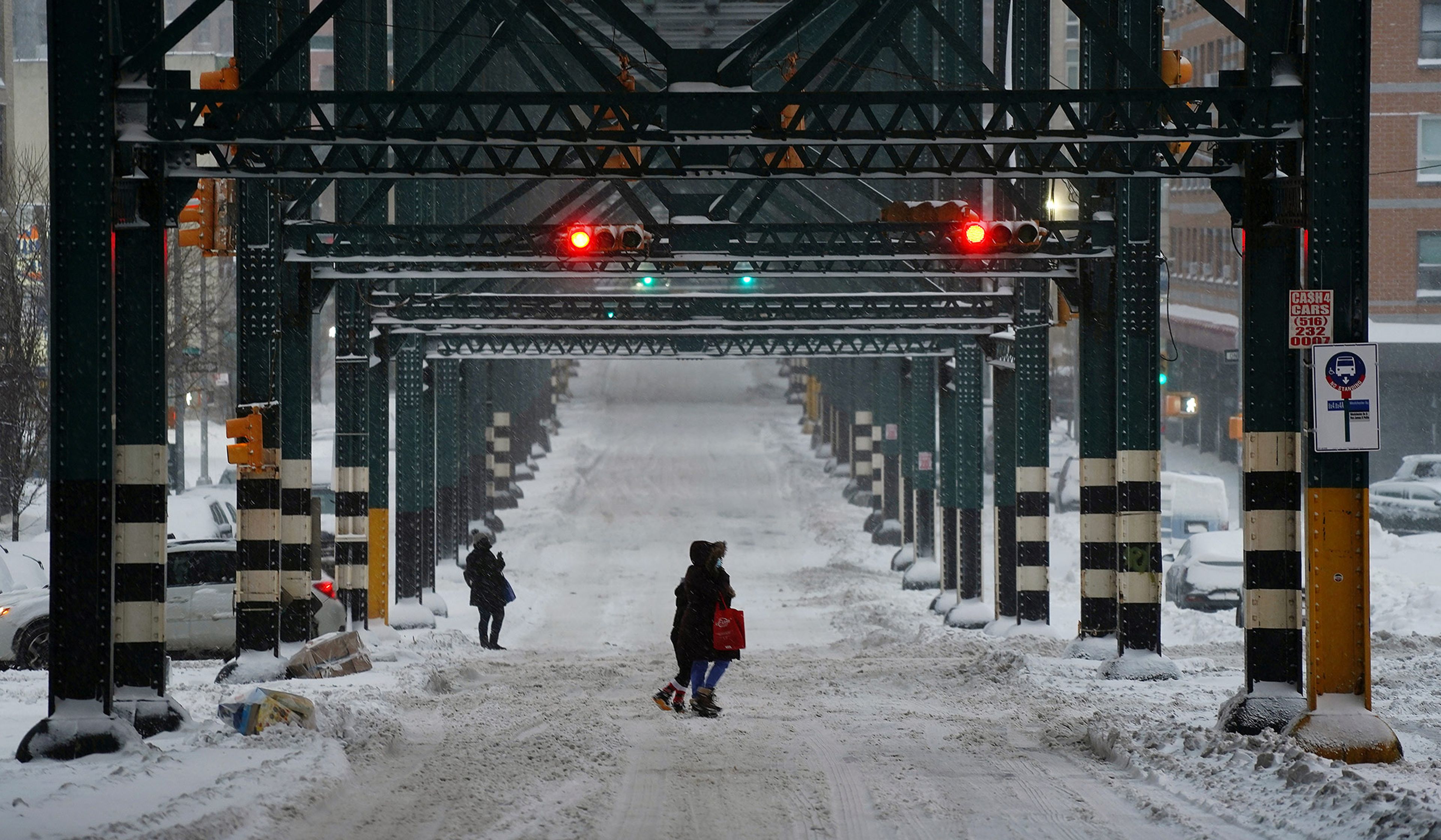
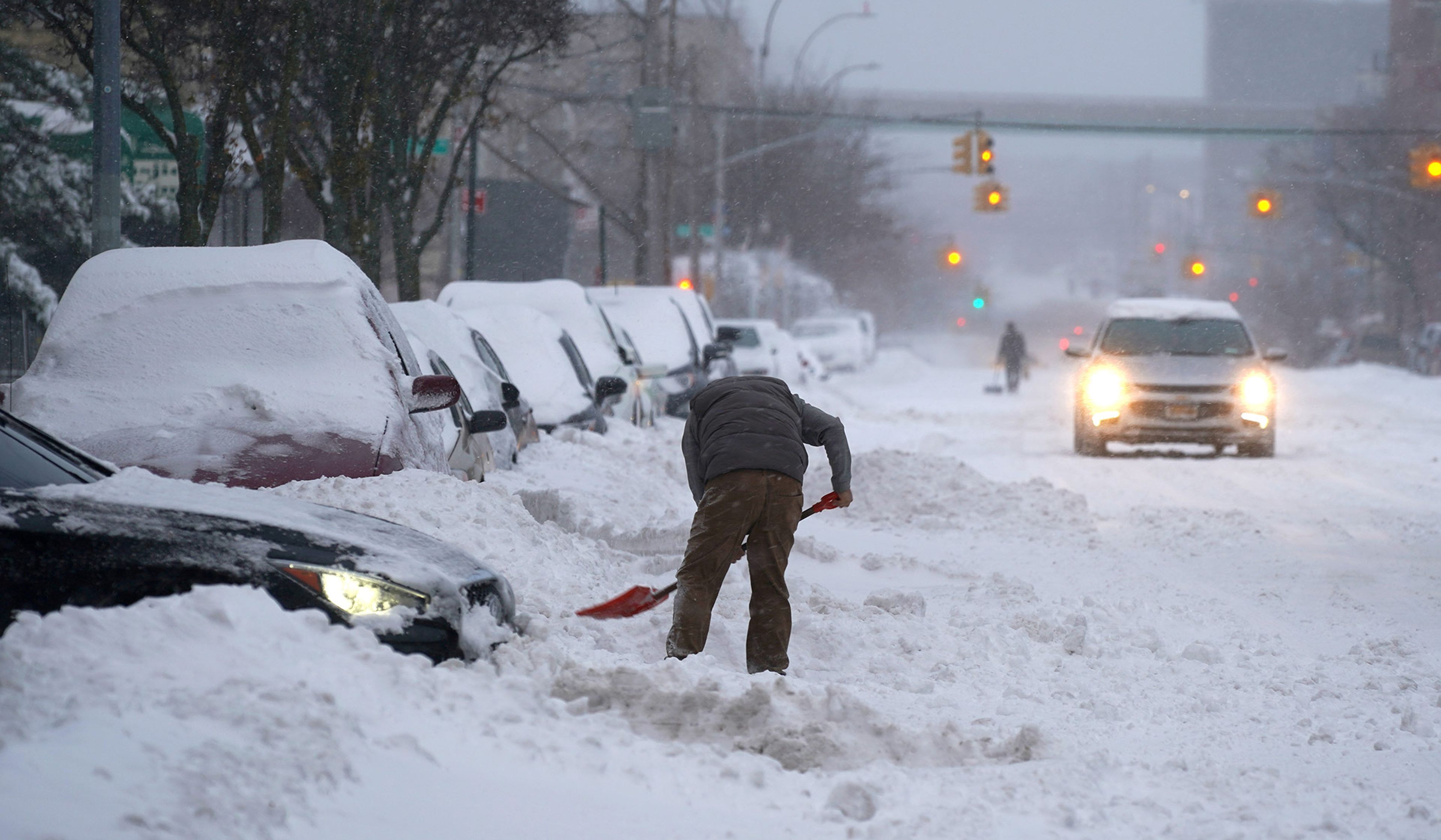
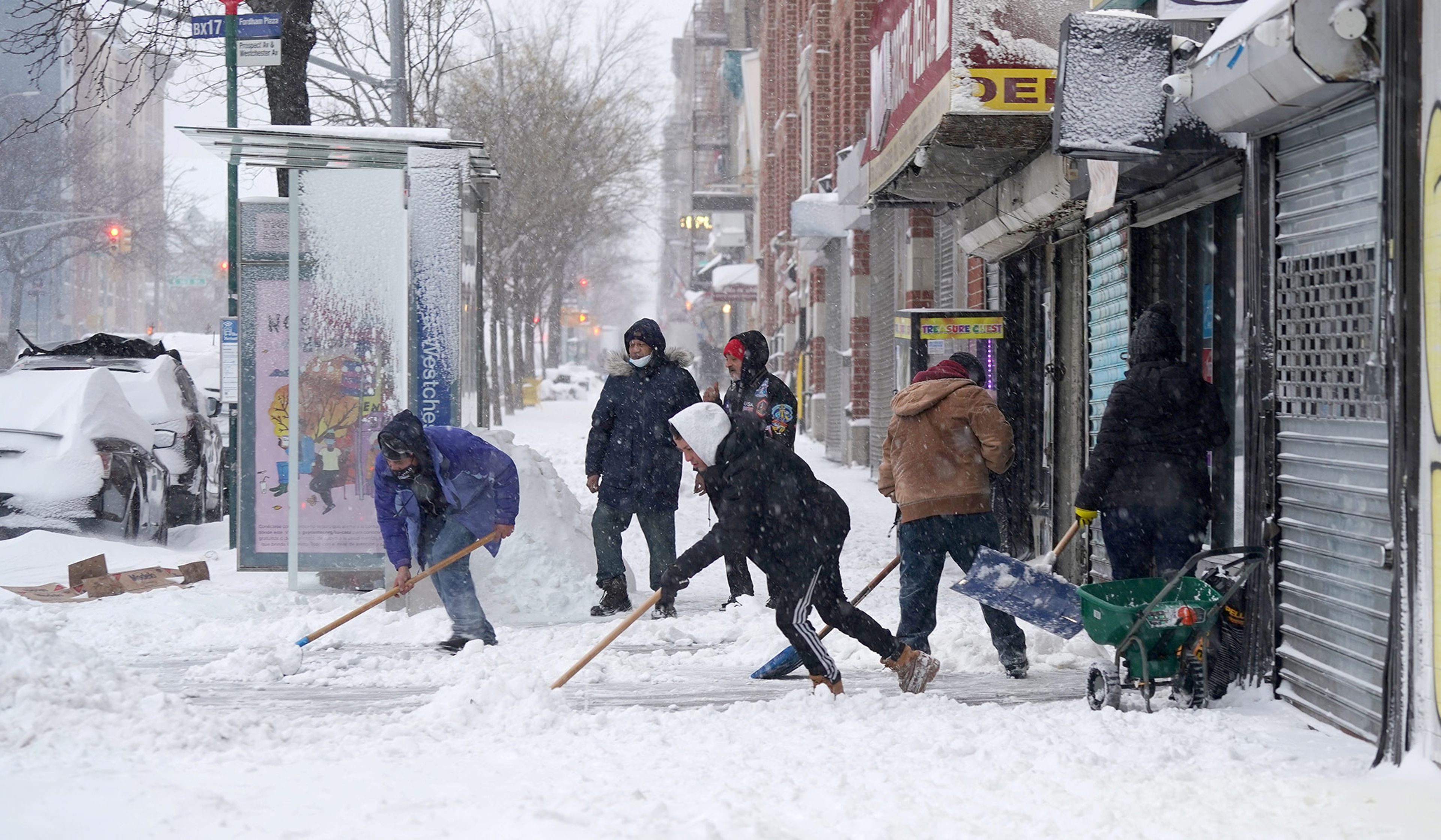
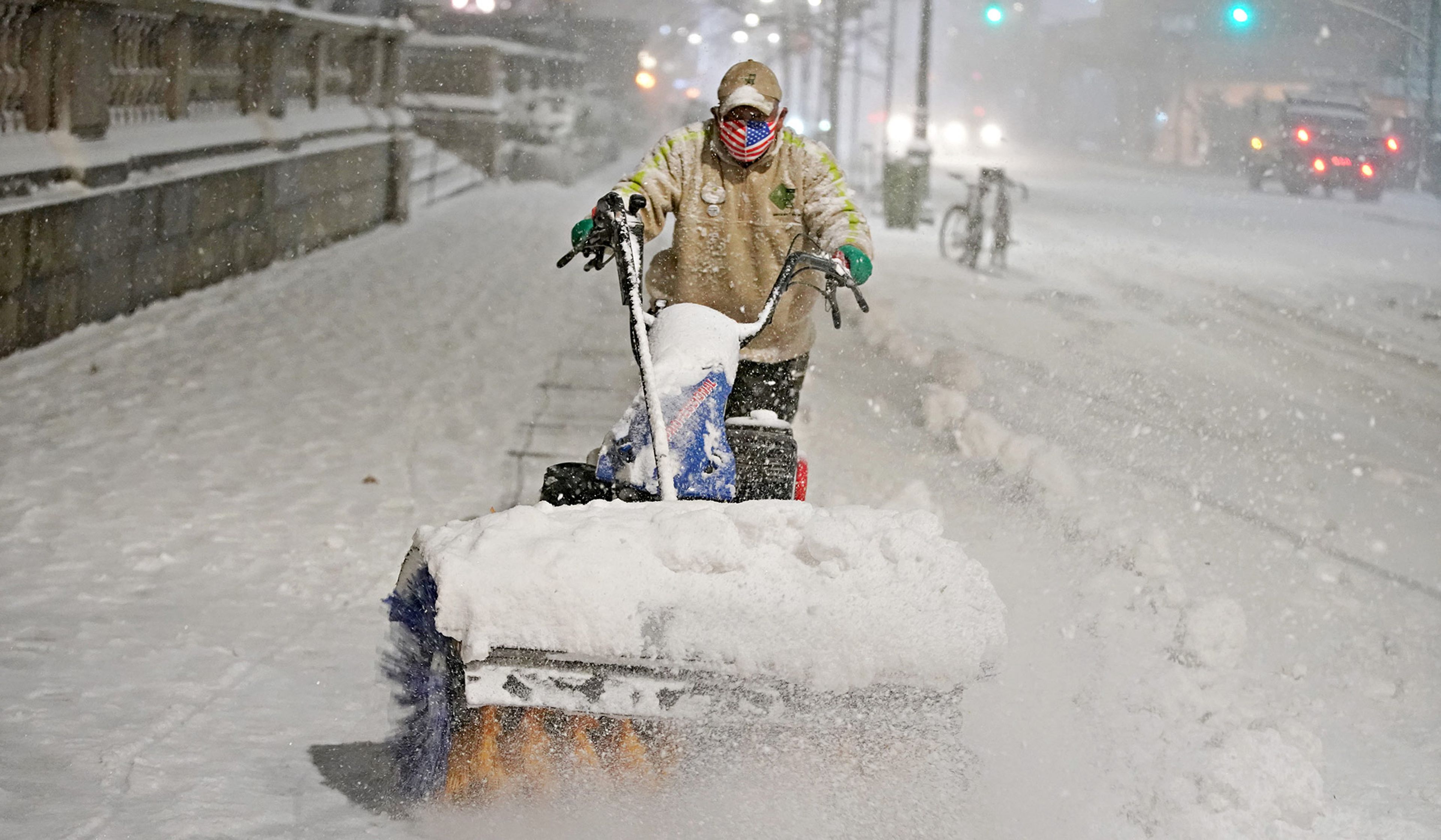
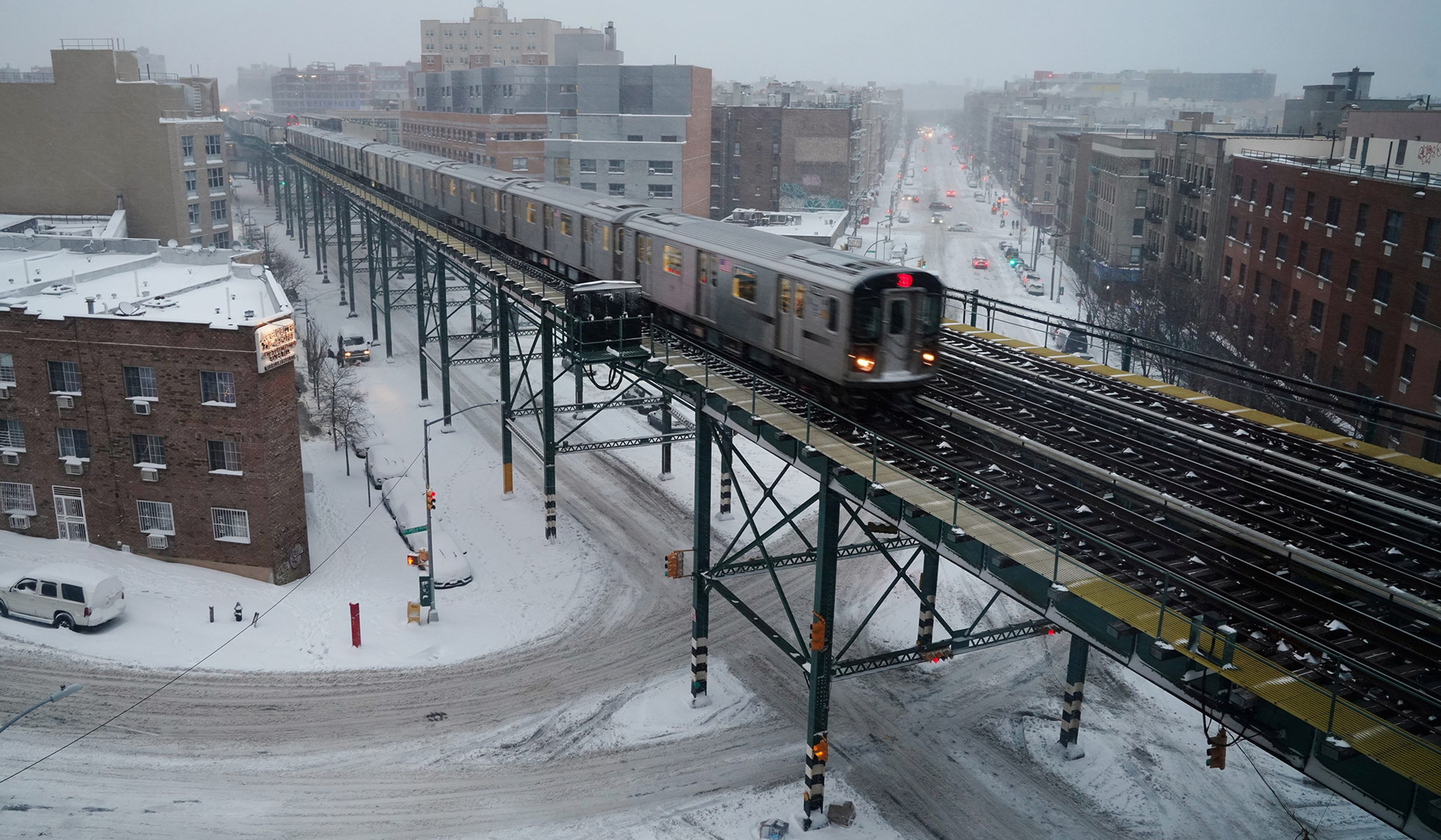
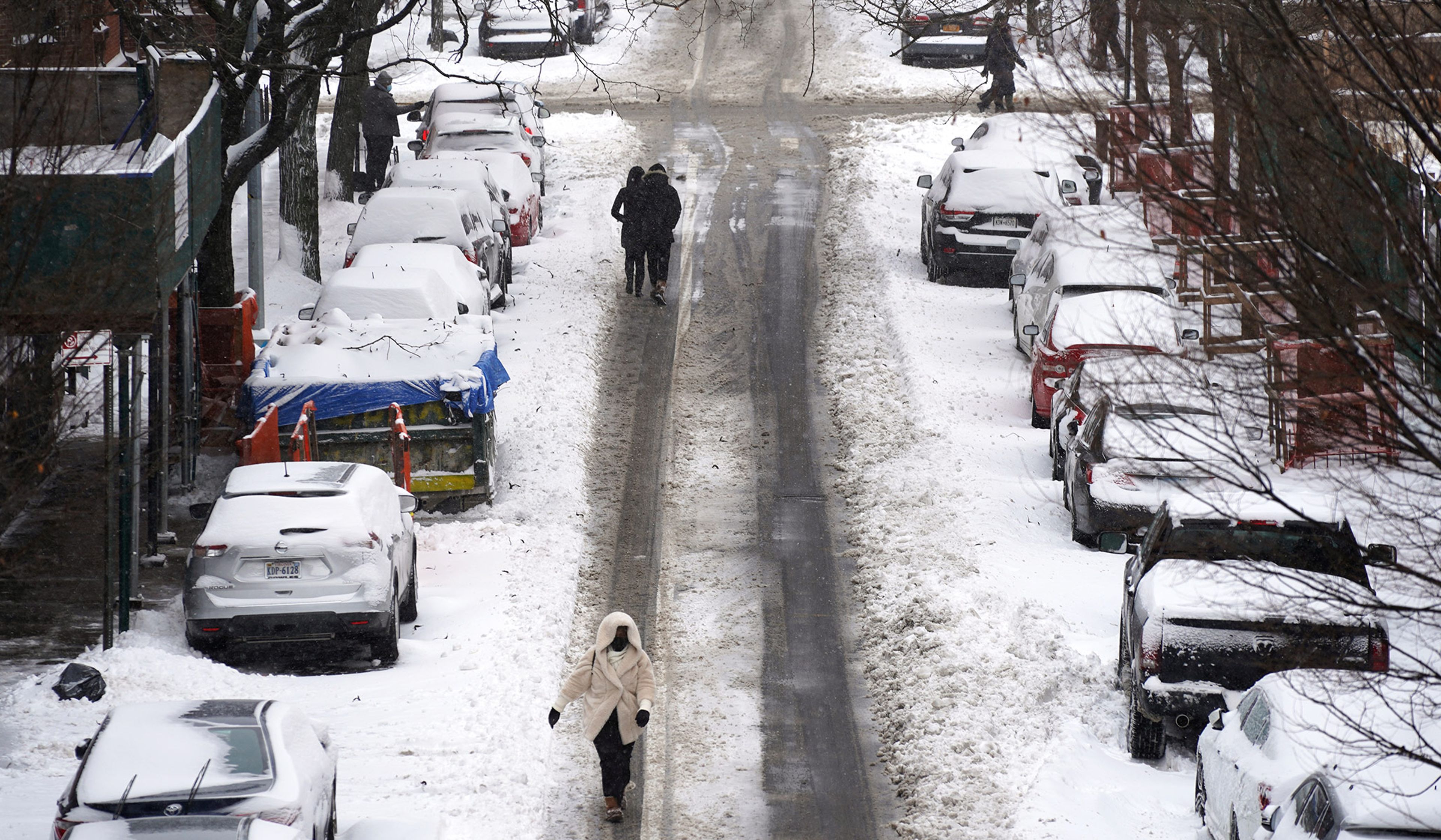
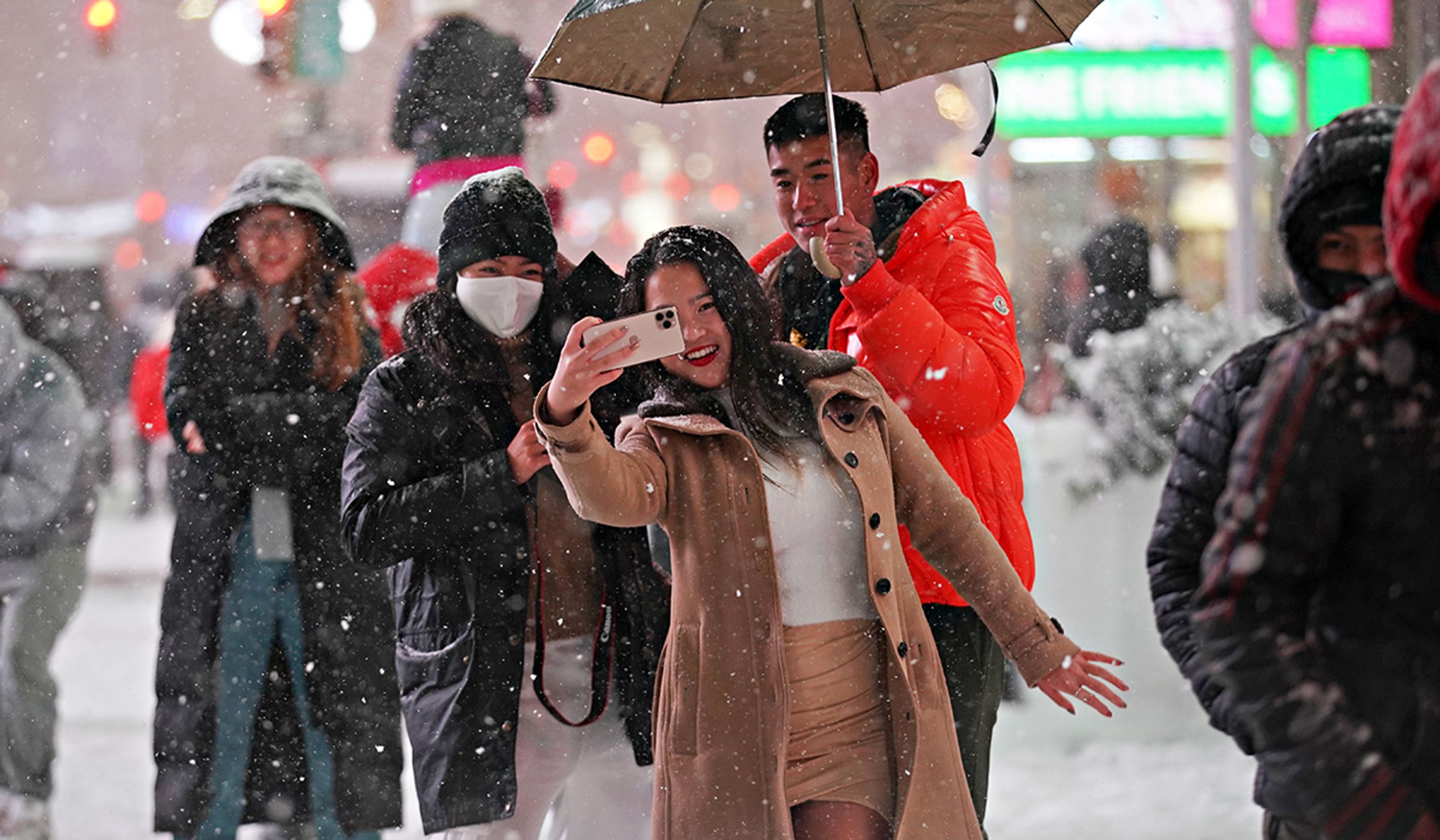
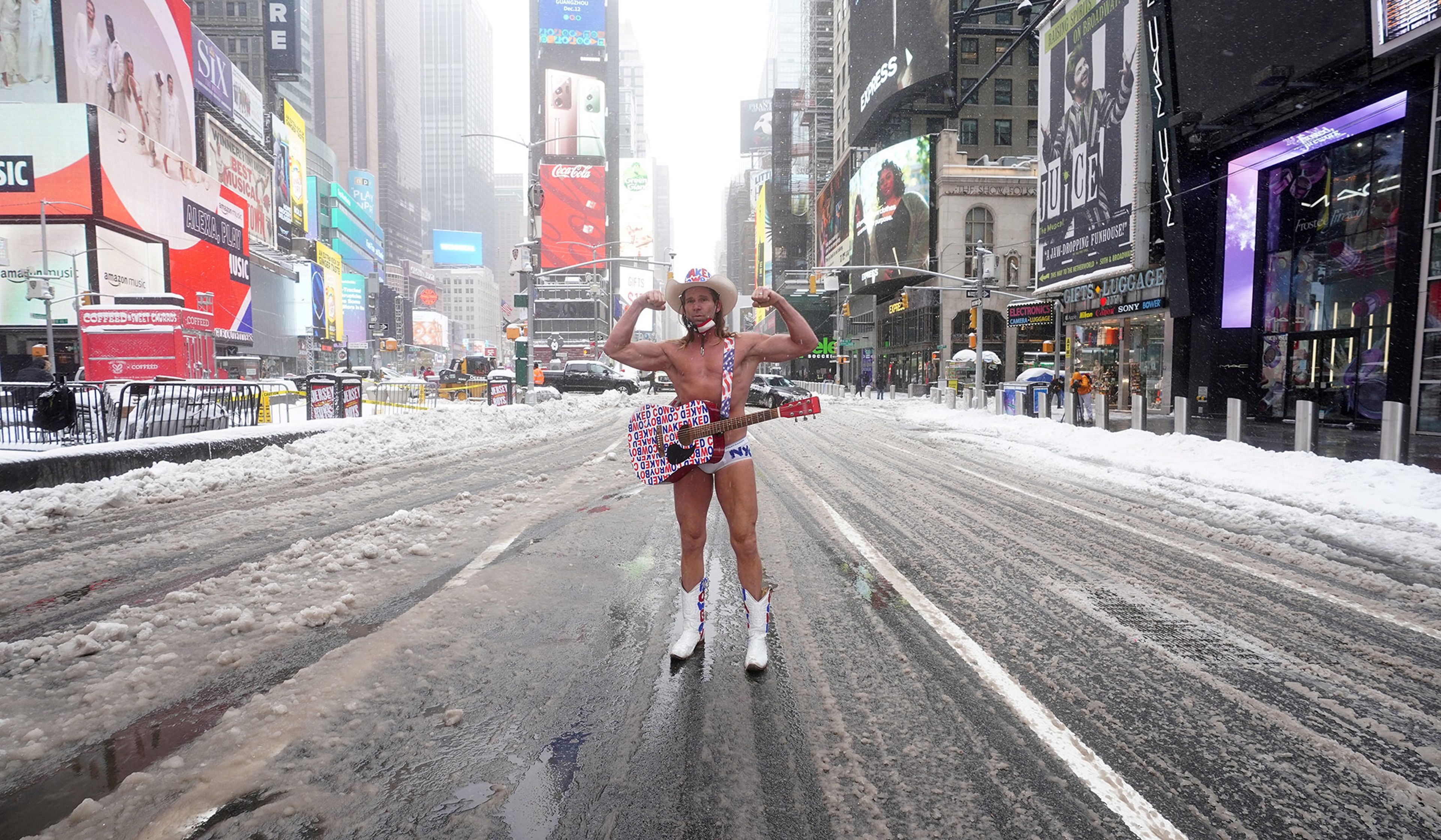
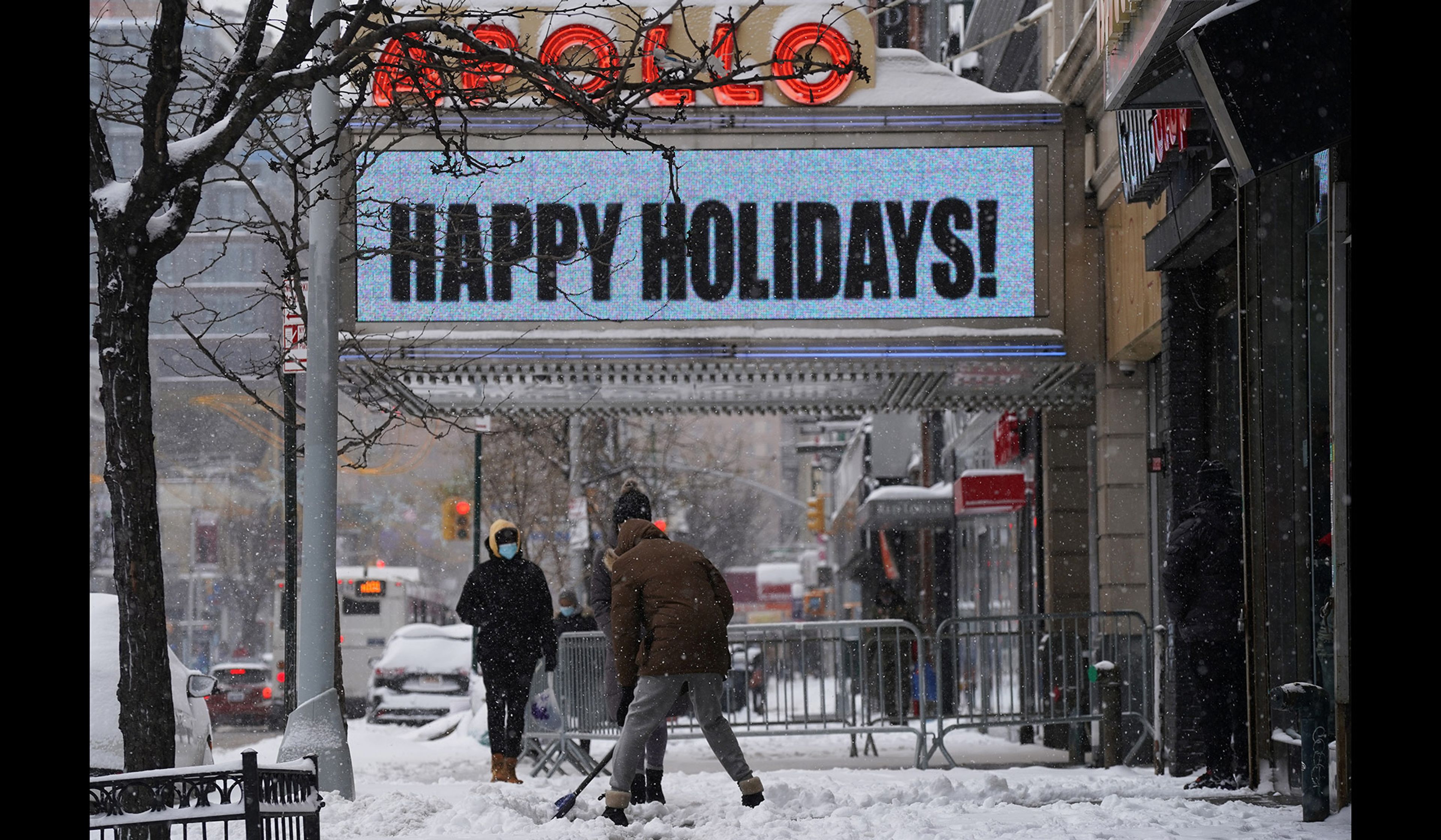
Snow falls during a Nor’easter storm in New York City, December 17, 2020.
David ‘Dee’ Delgado/Reuters
The idea of the clean sweep can be dangerous. Philip Rieff, who had the misfortune to be Mr. Sontag, warned that the clean sweep was the dream of artistic and political revolutionaries alike. He saw Nazis as high modernists in action, doing to humans what their peers of the pen and paintbrush were doing to the human form, no longer divine. Without being so drastic, we can see the allure of the clean sweep in ordinary politics, whenever ordinary politicians feel too trying, too ordinary. Then along come outsiders (some of them frustrated insiders), from Donald Trump to Andrew Jackson to Viscount Bolingbroke, who promise to come in and bust everything up. It never quite works, does it? Or, to the extent it does, it works poorly. Revolutions can sometimes exchange specific ills for real improvements, but rarely many at once, and never without expenditure of treasure, blood, and occasional old goods lost in the shuffle.
Our winter thaw lasted one day before the temperature dropped again. A few snowflakes even came down the next night, sticking to the most receptive surfaces — the roof of the car, the bench on the deck. The pond regrew its cap of ice, and though the awakened water still flowed strongly enough to keep an open bypass alongside it, a stretch of cold nights will be able to reseal even that. The fire in the fireplace throws out a little heat, as well as seasonal decorative light.
It feels wintry again because it is after all winter. Orion still rules the night sky. Sap, chipmunks, mallards will come again, but not for a while. As with the world, so (almost) with us. Mental winters, large as societies or small as living rooms, are not tied to schedules; they do not change, they can be changed. But it is never as simple as saying so. It takes work — and persistence, which is work through time.












Comments