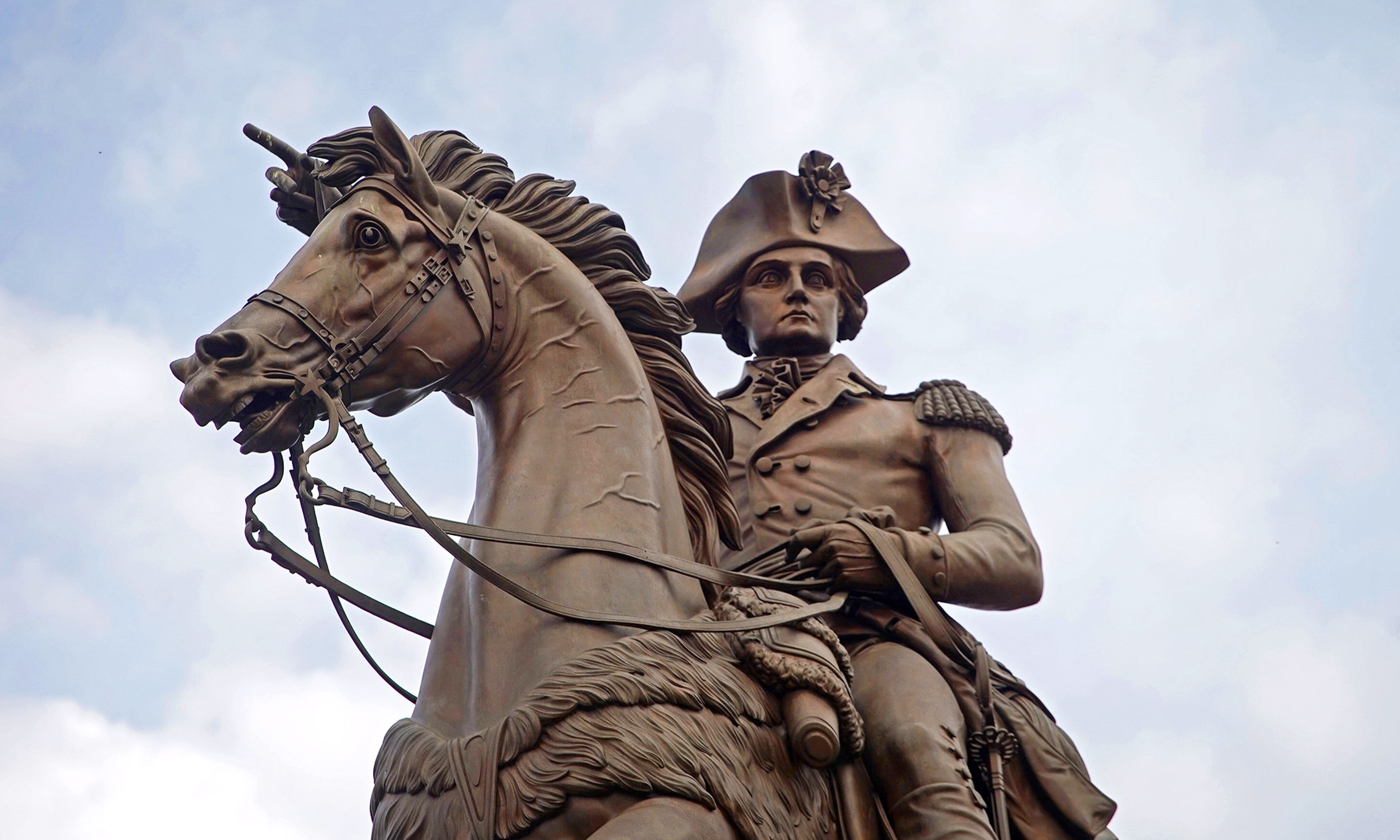
I will admit that in turning the first pages of Peter Henriques’s new book on George Washington, my reaction was unfavorable. I was not persuaded by the author’s speculations concerning Washington’s relationship with his mother, Mary Ball Washington, a thing difficult to reconstruct for want of evidence, nor was it altogether news to me that Parson Weems’s account of young George and the cherry tree is likely mythical. But when I reached Henriques’s account of the near execution of Charles Asgill at Washington’s hands, I was won over, as a skillful historian brings to life, with economy and discernment, an episode in which a statesman actually tried to reconcile the demands of leadership with the requirements of personal honor.
The Asgill affair had its origin in a revolution that was also, as Henriques reminds us, a civil war. The strife in New Jersey was especially cruel, in part because Loyalists who had retreated to British-held New York could cross the water at will “to burn, pillage, and kill.” Their Patriot counterparts gave as good as they got, and in 1782 one of them, a tough hombre called Joshua Huddy, was seized by the Loyalists at Dover, now known as Toms River, and was taken into British custody. The British released him into the hands of a Loyalist hothead, Richard Lippencott, who pretended that he wanted to include Huddy in an exchange of prisoners. A short time later the American patriot was found dangling from a gallows on a beach on Sandy Hook Bay, hanged in revenge for murdered Loyalists.
On the American side there were cries for vengeance, and oddly enough Washington, who, as Henriques writes, was “skeptical of retaliation,” gave in to them, informing his British counterpart, Sir Henry Clinton, that if Lippencott were not given up to American justice, there would be hell to pay. Lippencott was not given up, and Washington ordered one of his generals to select, by lot, a British prisoner to be hanged in his place. The victim, a young officer called Charles Asgill, naturally enough became the object of much sympathy. He was 19 years old, the son of a pro-American baronet and merchant banker who had served as lord mayor of London. A thorough gentleman, young Asgill had displayed gallantry on the battlefield and charity to those Americans whom he vanquished. As if all this were not enough, he had surrendered to the Americans under terms that protected him against reprisal.
The result, Henriques writes, was a drama “more fitting for a novel or a play than for real life.” And not merely the outward drama of an innocent young man about to be hanged, but the inward drama of Washington himself. The American commander in chief seems to have recognized almost at once that he had made, what was worse than a mistake, a blunder that compromised his honor, for after the victory at Yorktown he had given his word that those who surrendered to him would not be harmed. The difficulty was how to get out of it. Washington had not risen to be the greatest leader of his century, and one of the greatest leaders of all time, without having learned that going back on one’s decisions is a fatal sign of weakness; and in his struggle with the British crown-in-parliament, the greatest power on earth in those days, he could not afford to be seen as weak.
In the end Washington found a way to maintain face as a commander without killing young Asgill. He punted the question to the Continental Congress, talkers who could debate the question until doomsday; and in the interval the young captain’s mother, Lady Asgill, who was of French Huguenot descent, was able to plead her case in the court of France. By the terms of his surrender, Asgill was a prisoner of France as well as of the United States, and Louis XVI and Marie Antoinette let it be known that they would be grateful if the Americans could show mercy. With a hint from Washington, that is what the Americans did. It was far from the most glorious chapter in the great man’s career, but his decision to temporize and pass the buck was the best available to him once the initial mistake was made, and may be usefully studied as an example of how a leader can extricate himself from the consequences of a bad decision without making the whole business worse.
Henriques is as insightful in his analysis of Washington’s quarrels with his fellow Virginians. Some of the earliest philosophic skirmishes on the road to civil war were fought in Washington’s America, and indeed in his own cabinet. He himself believed that America’s future lay in becoming a modern commercial republic such as the young Alexander Hamilton envisioned. The Virginia elite, on the other hand, feared national consolidation as a threat to liberty. According to Jefferson, Edmund Randolph, who served under Washington as attorney general and secretary of state, confided to him that the great man once admitted “that if there were ever to be a division between the North and the South, Washington would align himself with the North.”
His home state sensed the ambivalence, and Henriques thinks that Washington was probably less popular in Virginia than in any other state in the Union. The planters resisted modern commerce because they were attached to their agrarian mode of life, but it was a culture, of course, that rested ultimately on slavery, and in his chapter on Washington’s own slaves, Henriques shows with much sensitivity how each of the bondspeople whom he has been able to trace “dealt uniquely with his or her place in a system forced upon them,” all “trying as well as they could to live lives of their own” on terms of dignity. What he describes as his “fragmentary glimpses” of human strength in the midst of “slavery’s primal horrors” gives the reader a different idea of Mount Vernon, even as it reflects what he calls the “saddest aspect” of Washington’s life.
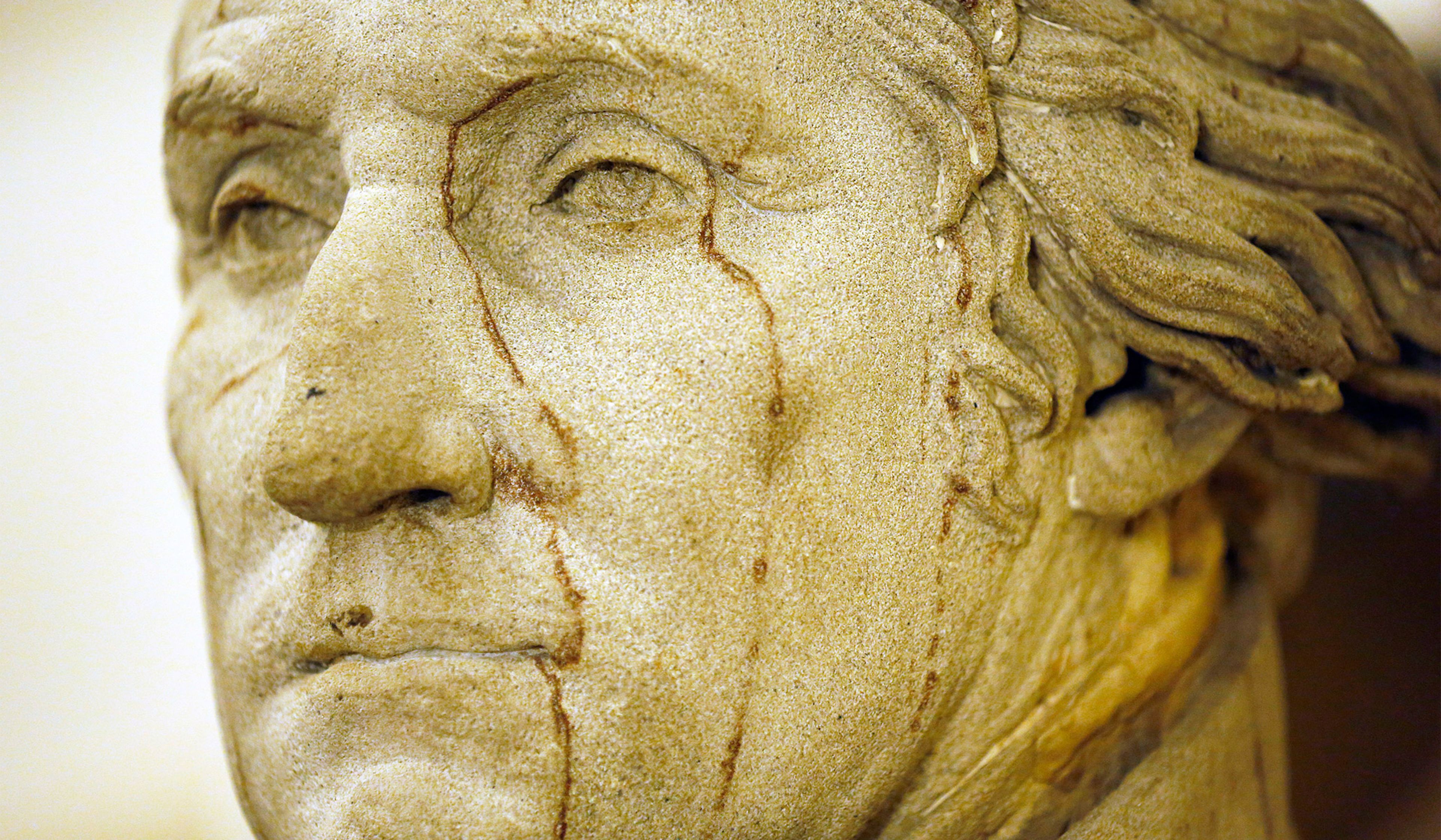
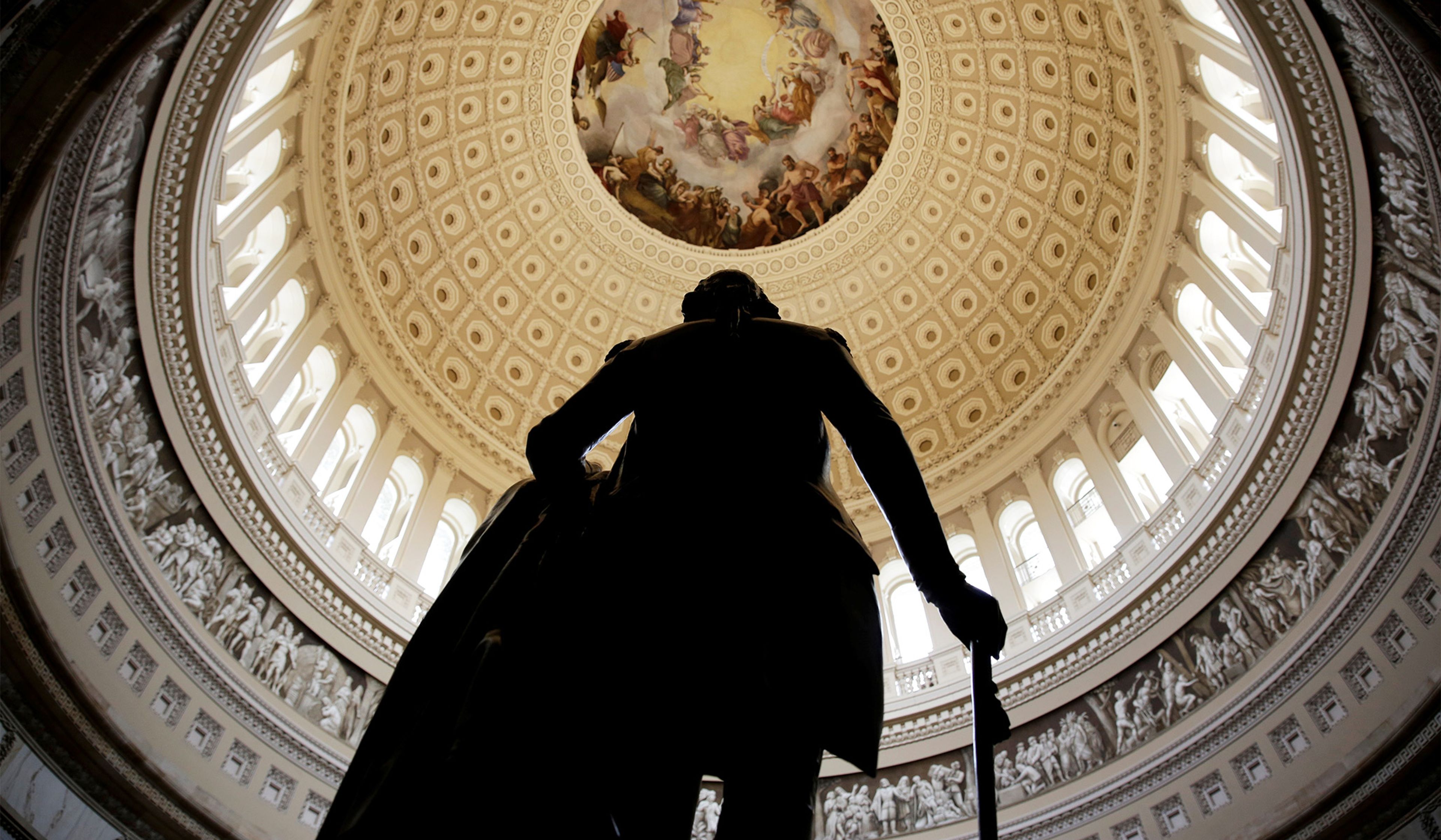
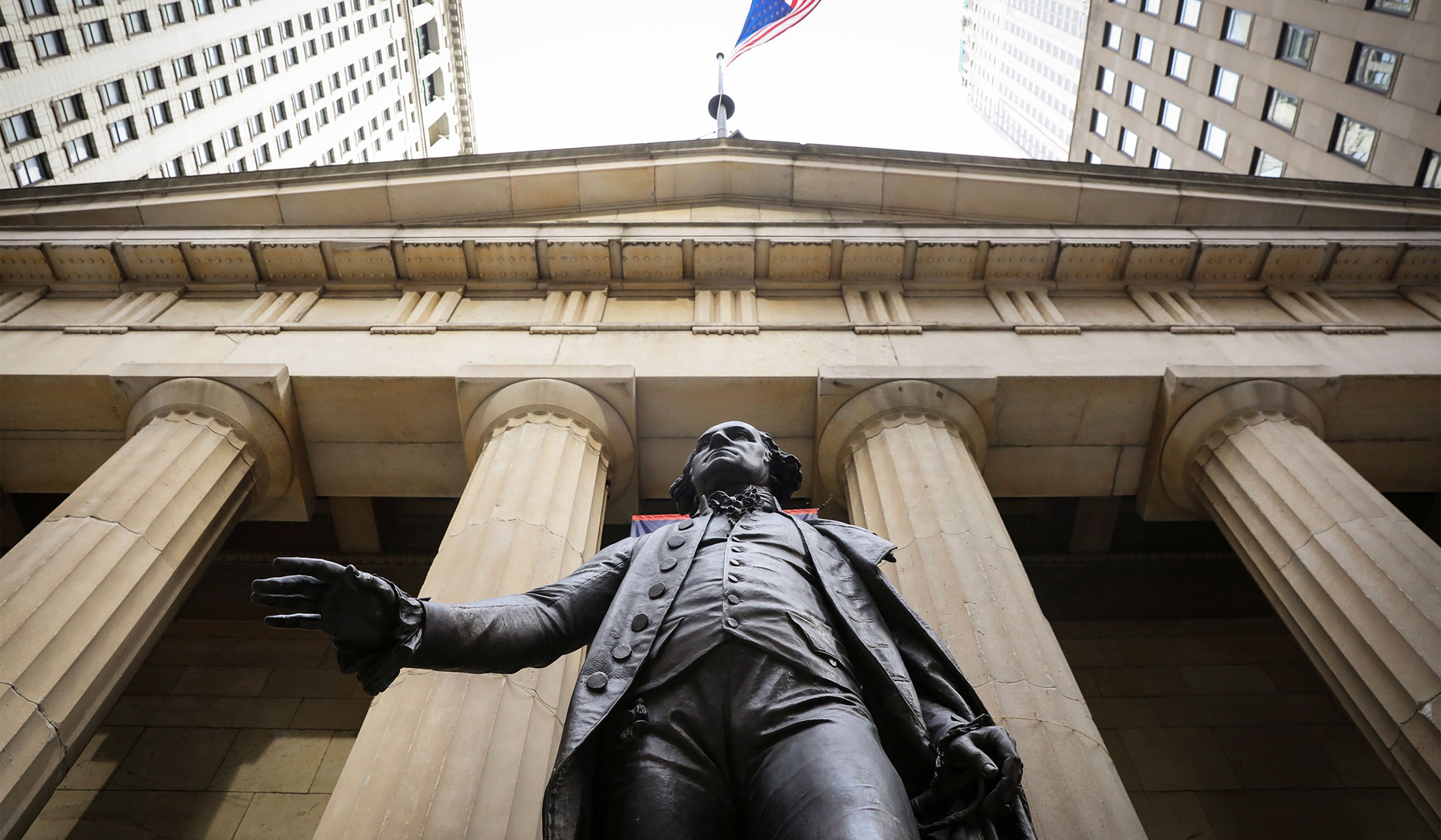

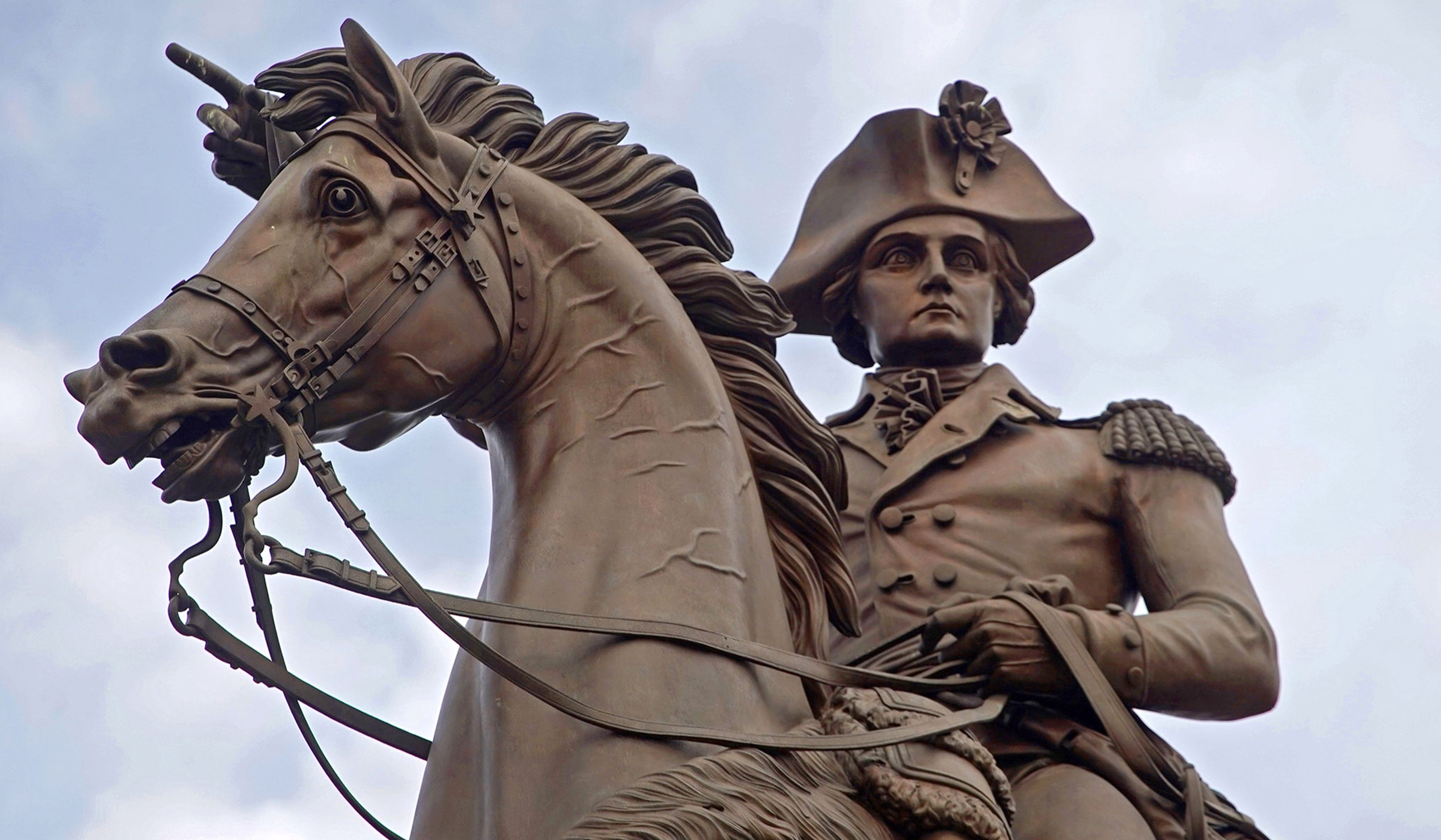
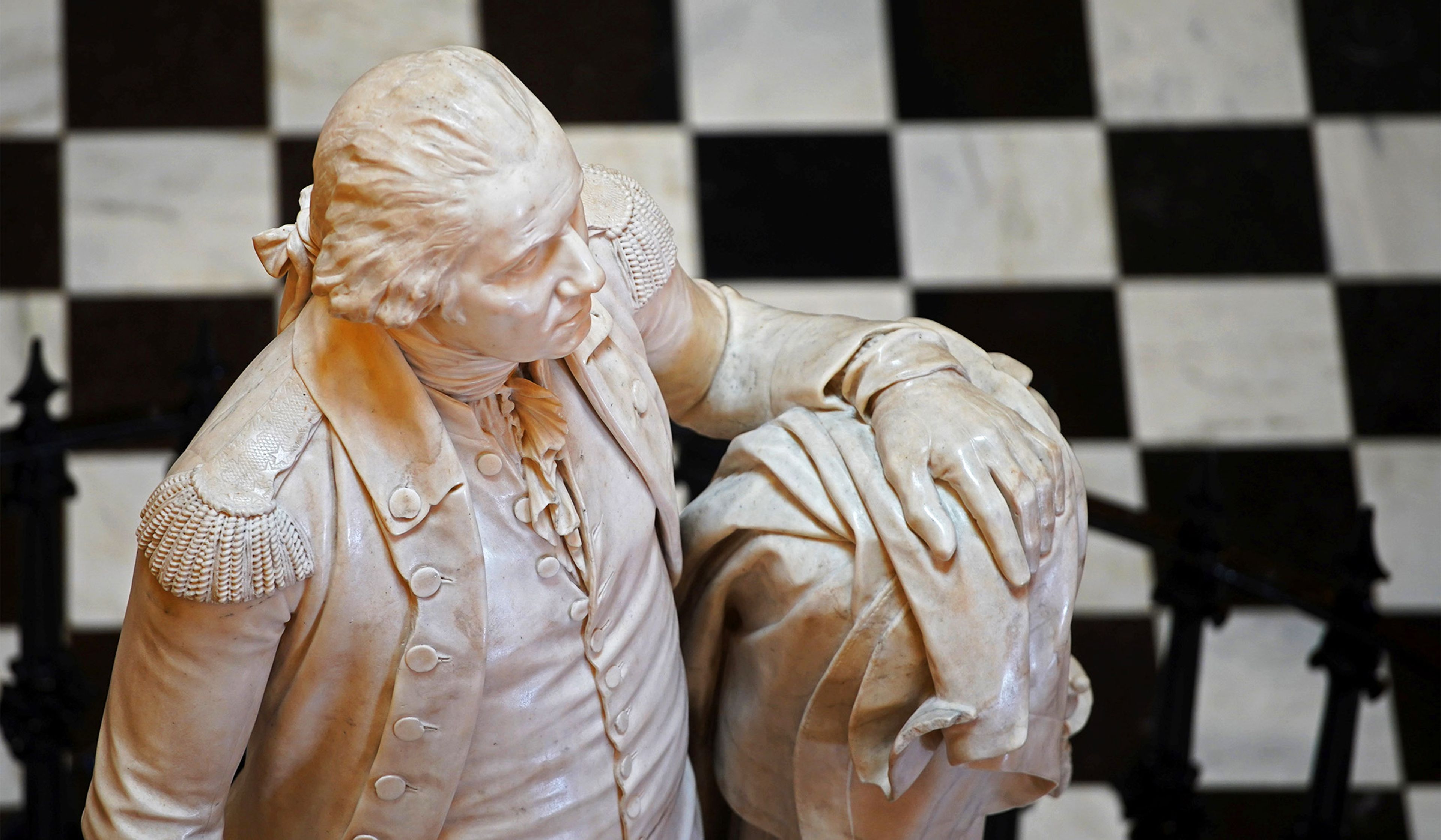
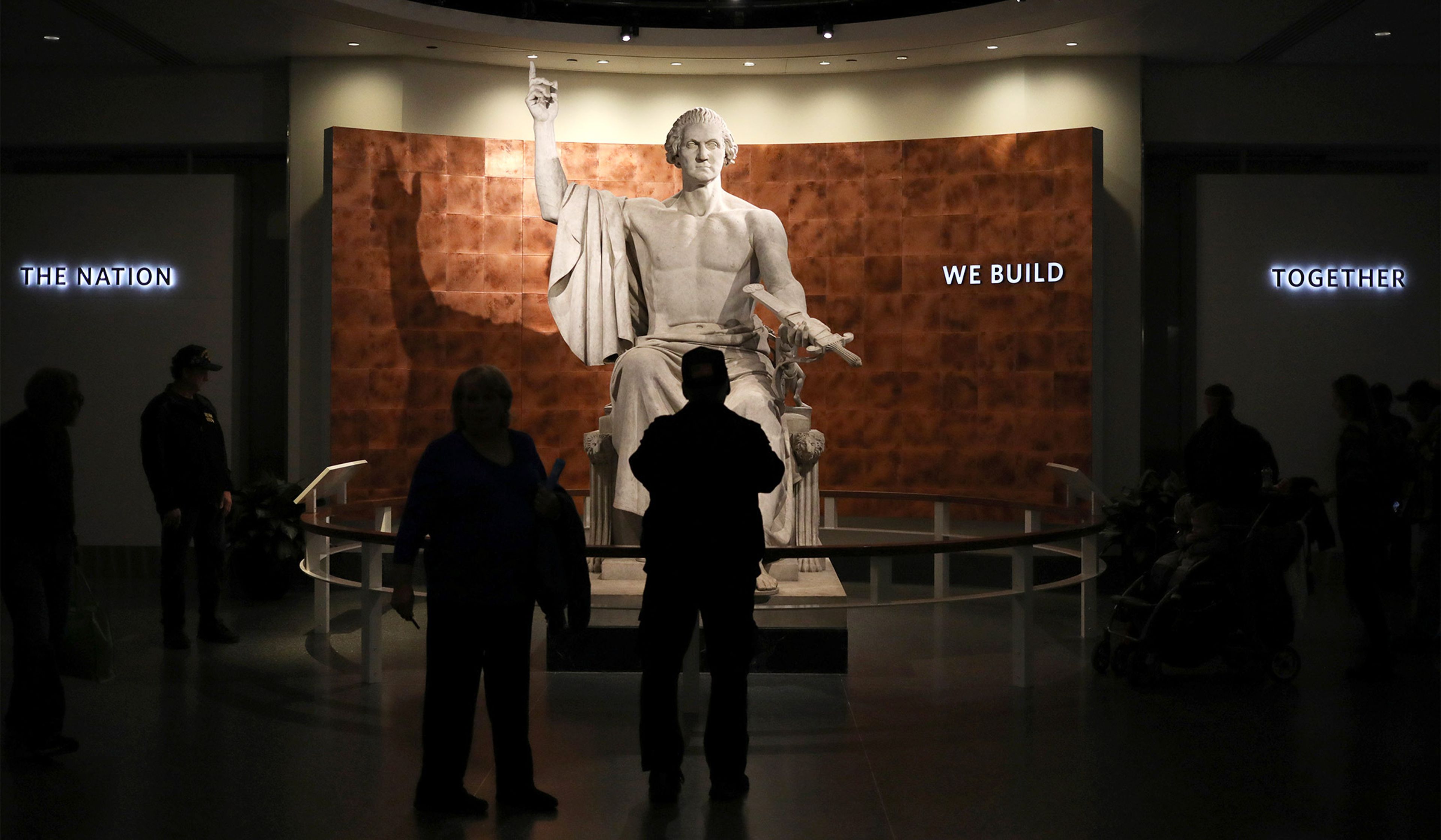
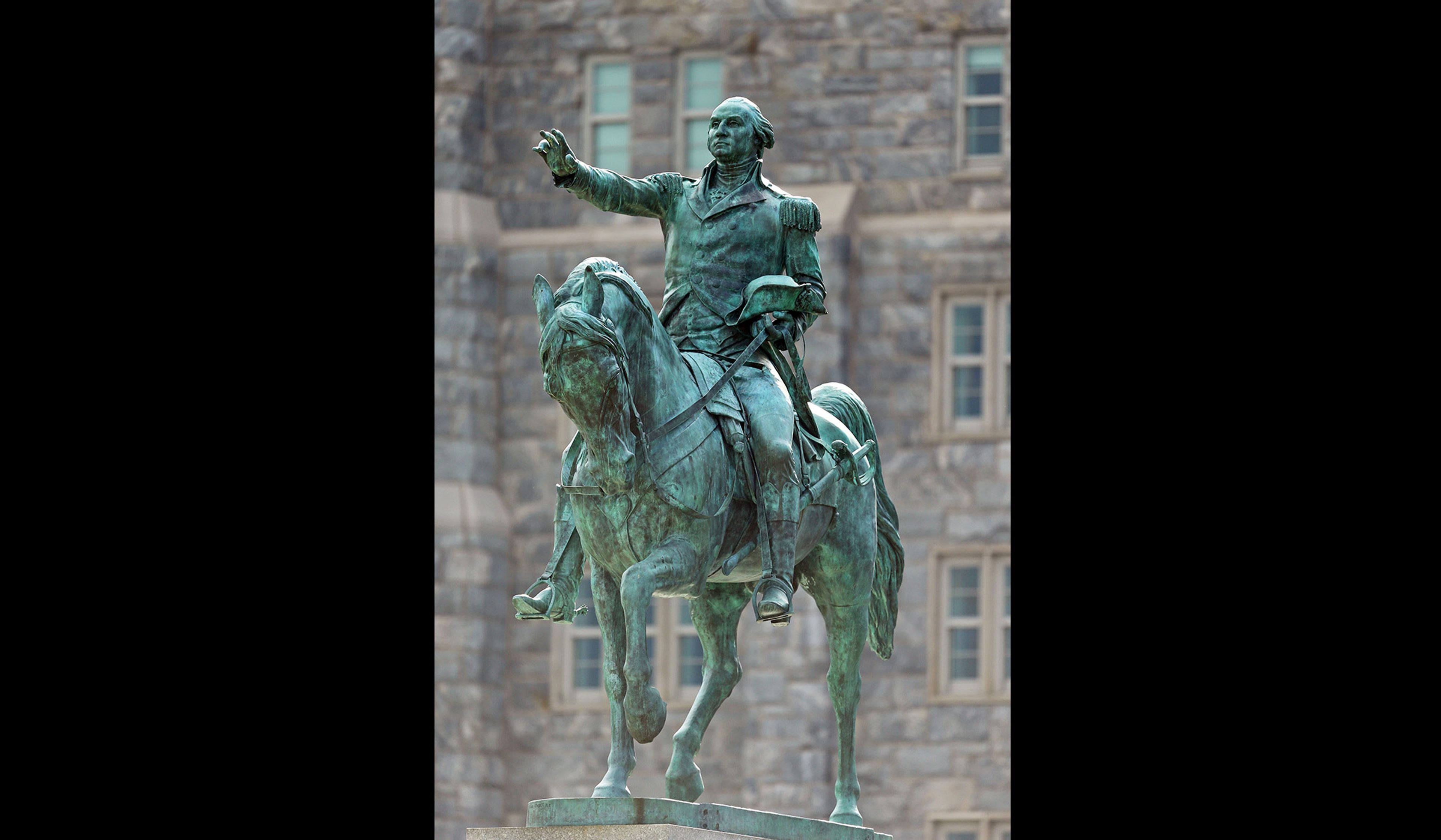
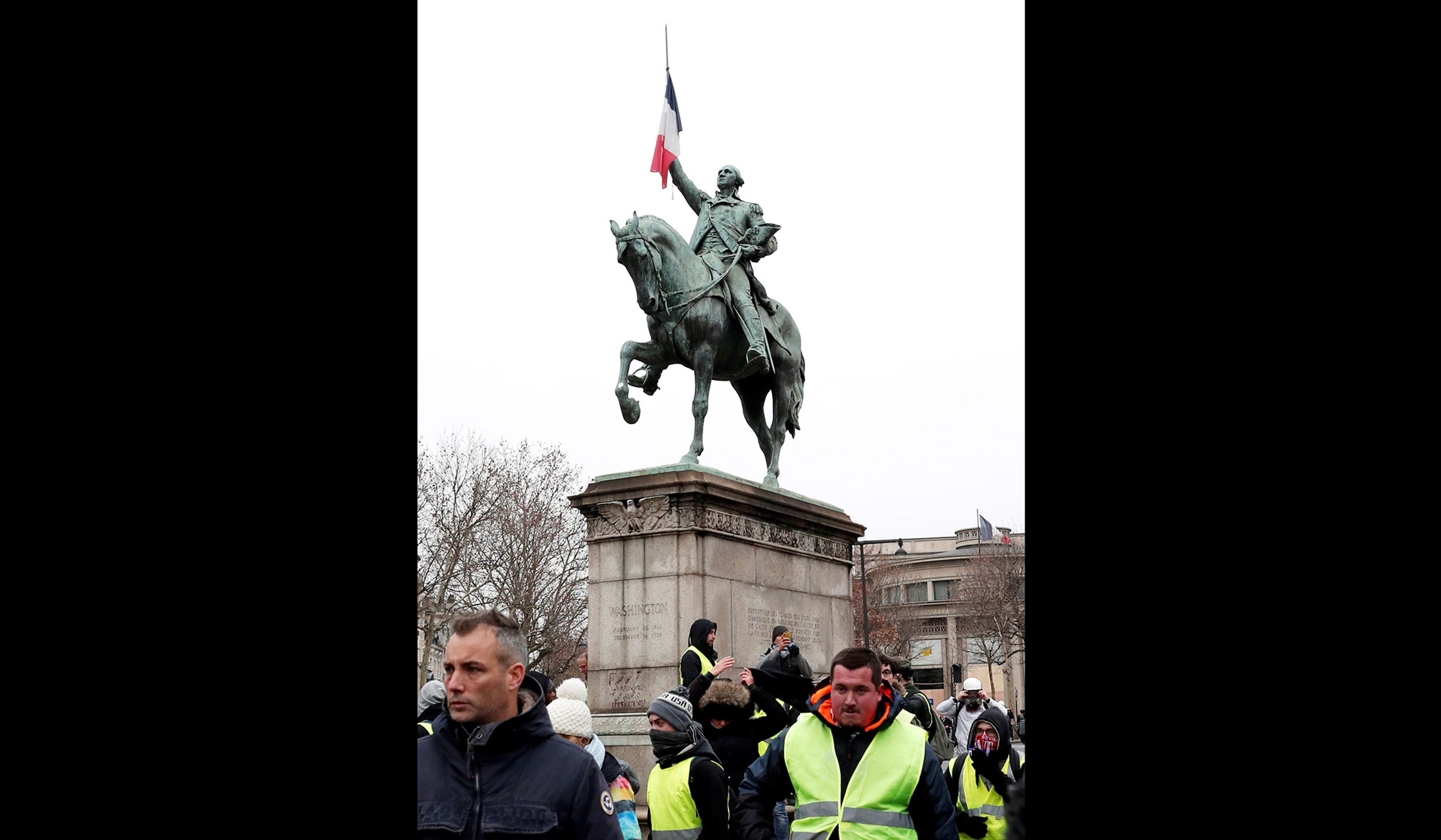
Statue of George Washington in the U.S. Capitol building in Washington, D.C., October 1, 2013.
Jim Bourg/Reuters
I was less convinced by Henriques’s theory, derived from his study of Carl Jung, that Washington’s public persona, that of a virtuous leader who sought fame through disinterested public service, was at odds with a “shadow self” that craved “public adulation” and “ego-based gratification from the public.” We do not need Jung to tell us that the desire of the great-souled human being to accomplish immortal deeds — the aspiration to set one’s self in glory above one’s peers — is an ambiguous phenomenon, one that mingles much of what is highest in the soul with other, less attractive elements of character. Henriques’s psychiatric portrait of a Washington who, if he had a “temperament very high on extraversion,” was “conflicted” and “in denial about a significant force in his shadow self” seems to me less to illuminate the man than to diminish him. Washington’s own vocabulary of “Patriots, Sages, and Heroes” who seek the “temple of fame” is much richer.
Washington was brought up in the classical idea of ambition that Milton voiced when he spoke of the love of fame as the “last infirmity of noble mind.” It was a way of understanding moral ambiguities in the passion for glory, one that found expression in Tacitus, who said of Helvidius Priscus, a Roman politico, that “those who thought him too eager for glory forgot that the love of fame is the last desire to be relinquished even by the wise,” and in Greek philosophers who saw that the greatest minds are “wont to lay aside love of fame as a sort of last garment.” The trick, Washington saw, was to prevent what is corrupt and delusional in the longing for glory from overcoming what is really virtuous in it. Alexander and Caesar were drunk with the love of fame; Cincinnatus and the Catos were more temperate. Washington, who was schooled in this science of virtue, knew the stakes as well as anyone has ever known them, and in laying down his commission at Annapolis, and in refusing to stand for a third term as president, he resisted Caesarian overreaching. In doing so he made the American republic possible. As Henriques rightly says, without Washington’s moral fiber, America’s “great experiment in republican government would never have had the chance to thrive.”
If no man is a hero to his valet, he may be still so to his historian, and Henriques has written a valuable, if at times provoking, book on his own hero. Yet although one has no wish to detract from the greatness of Washington, it is necessary to recognize the limits of that greatness. Henry Adams pointed out that America’s commercial democracy, with all its virtues, is inadequate precisely because it is founded on too narrow a conception of human flourishing. Adams knew very well that in certain kinds of ingenuity — in the arts of free government and political economy, individual rights and rational self-interest — the United States has led the world with a way of life that liberates the oppressed.
But we can no longer rest on those laurels. Something is missing. Look into the mirror held up in our hysterical politics and in our hysterical advertisements (where you see reflected the image of a sick, sleepless, and dejected people), and you are likely to think that Adams was prophetic when he foresaw America succumbing to “the air and movement of hysteria.” A century after he said that for Americans “work, whiskey, and cards” are life — that his fellow citizens failed to go up higher, to reach places that other, in many ways less admirable, civilizations reached — it is not all that different. Something is missing. And conservatives seem as helpless before the vacancy as everyone else.












Comments