The commonplace “a prophet without honor in his own country” suggests he is overlooked. In fact, however, he is not overlooked but derided or reviled — the strength of the populace’s reactions is directly proportional to its horror at his accuracy.
The richest and most powerful may insist the Earth is flat, or the moon landing was a hoax, and no one will wish them dead; but assassins tried to kill both Abraham Lincoln and Donald Trump on the way to their inaugurations.
Yom Kippur is the holiest day of the year to Jews, traditionally spent at the synagogue in meditation, fasting, and prayer. In the long afternoon, we read the Book of Jonah. Some rabbis say that it’s a sort of relief as it can be read as a comedy: Jonah is told to cry out against Nineveh. He tries to flee his responsibilities, and is eaten by a fish and spewed out at Nineveh, the very spot he was avoiding; he exhorts the wicked inhabitants to repent, they do so, and he immediately sits and bitches about the whole, to him, pointless adventure.
But as the hungry, fatigued synagogue afternoon drags on, the weary Jew may look for, and perhaps find, relief in familiar passages, made new not only by his altered state but by changes in the year since he last read the liturgy.
Some rabbis hold that Jonah, directed to declaim against Nineveh, demurred as he knew that its inhabitants were liars — that they would repent on command, and would revert as soon as Jonah departed. This would support the sitcom view: to wit, “I was sent on a pointless errand, and I got swallowed by a fish to no purpose whatever.”
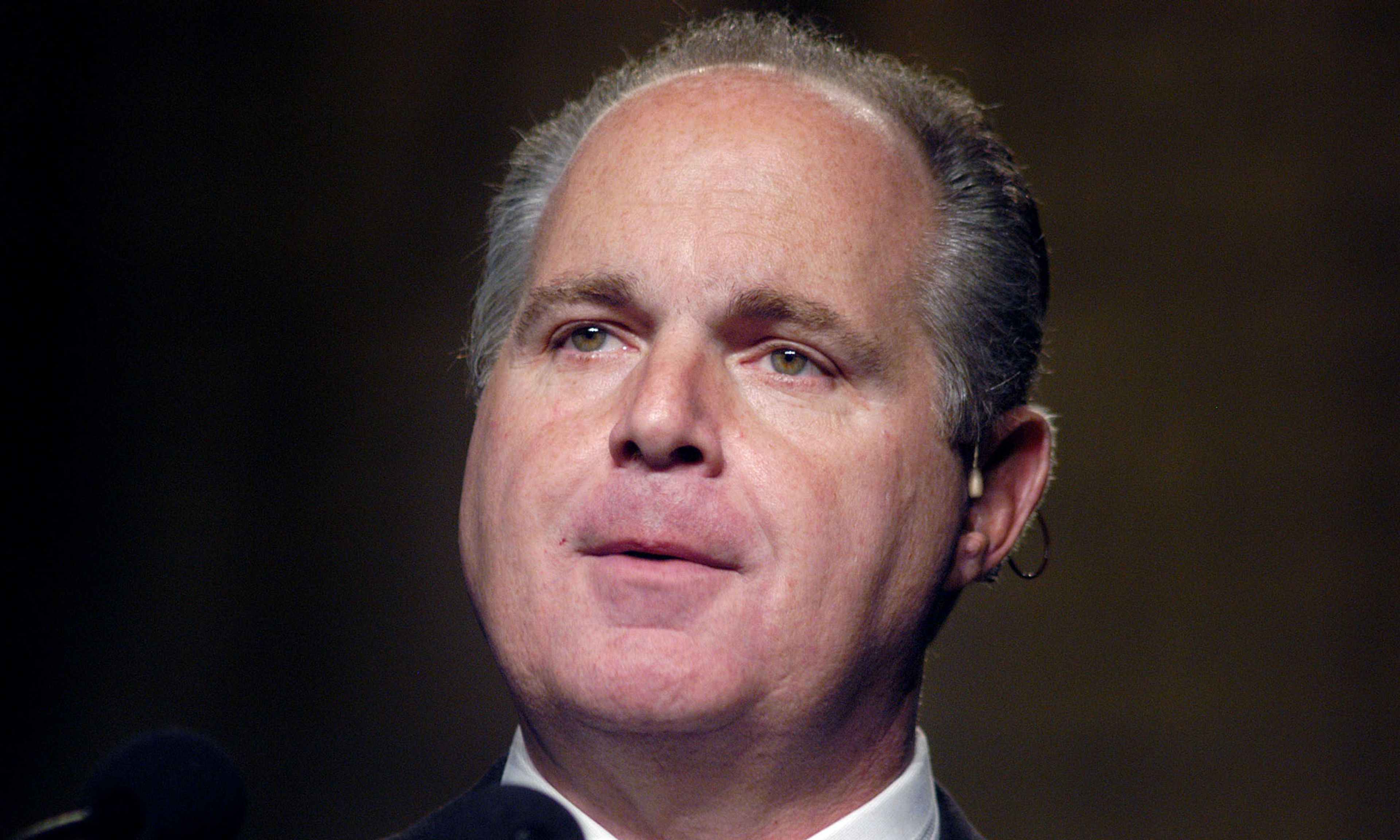
But on reading the story this past Yom Kippur afternoon, I found myself thinking of Rush.
Someone complained to him that it was impossible to talk with a liberal, as conversation invariably turned into debate and then immediately into denunciation and anger; that it was profitless and should be avoided.
Rush said no, that there was always a third party listening.
That was some wisdom.
A liberal, in discussion with a conservative, is an adversary talking to an adversary. He must defend not only his positions but his psychic integrity; for the possibility he might be in error threatens his ability to remain in communities that would expel him for heresy. The conservative, to him, thus is a terrorist. But the onlooker or eavesdropper, though in total disagreement with the conservative, is not called upon to defend anything. He may merely listen, and might, subsequently, reflect.
* * *
A prophet, in the Old Testament sense, was not a predictor of the future but one inspired to preach the word of God.
Moses and Jesus were both prophets. Like many heroes, they asked to be excused the test they subsequently accepted.
Jonah, the prophet, was unique. He didn’t beg off but lit out. He went down to the waterfront and boarded a ship for Tarshish, a city far away from Nineveh.
On board the ship a great storm blew up, and the sailors were afraid. They concluded that someone aboard had offended the gods, and cast lots to divine the malefactor’s identity. It fell on Jonah.
They confronted him, and he confessed and asked them to save their lives and throw him in the sea. Now, rather than ditching him, they pulled with all their might for land. But the sea grew higher and higher. They took him and cast him overboard, and the sea immediately calmed. “Then the men felt a great fear of G-d: they slaughtered a sacrifice to Him and took vows” (Jonah 1:16).
* * *
We don’t know who is listening. Jonah’s sailors are Rush’s third party to the conversation; and Jonah was absolutely accurate in assessing the Ninevites’ spiritual capacity but inferior in his understanding of God, and God’s plan for the world. The sailors, being human, might have been defended against a preacher’s exhortations, but they were so moved by Jonah’s self-sacrifice that they adopted his religion.
That was my lesson, on Yom Kippur.
We know in our hearts that we are always performing. It’s a relief to remember we are also always observing.












Comments