The good news first: The Hobbit: An Unexpected Journey, part one of the long-gestating trilogy of prequels to Peter Jackson’s astonishingly good Lord of the Rings, is not a failure, not a flop, not the kind of misbegotten cinematic return to classic territory that casts a wasting shadow back across the original films. It’s not The Phantom Menace, in other words, or The Kingdom of the Crystal Skull. The only genuinely disastrous decision Jackson made was to experiment with a double-speed projection rate that makes Middle Earth look like a daytime soap opera crossed with a high-end video game. But happily, that disaster can be quarantined: The Hobbit is mostly being shown at normal speed, which was how I saw it and how you should as well.
But here’s the bad news: When you do see it, whether under your own steam or under the influence of the Tolkien obsessive in your life, you’ll find that everyone who raised an eyebrow at the news that Jackson was making not one, not two, but three movies out of a book that’s slimmer than any of the three volumes of The Lord of the Rings was absolutely right to be doubtful about that decision. Most of what works in this Hobbit was there already waiting in the book, while most of what doesn’t is the padding that Jackson has added in a quest to turn a child-sized adventure yarn into a capital-“E” Epic.
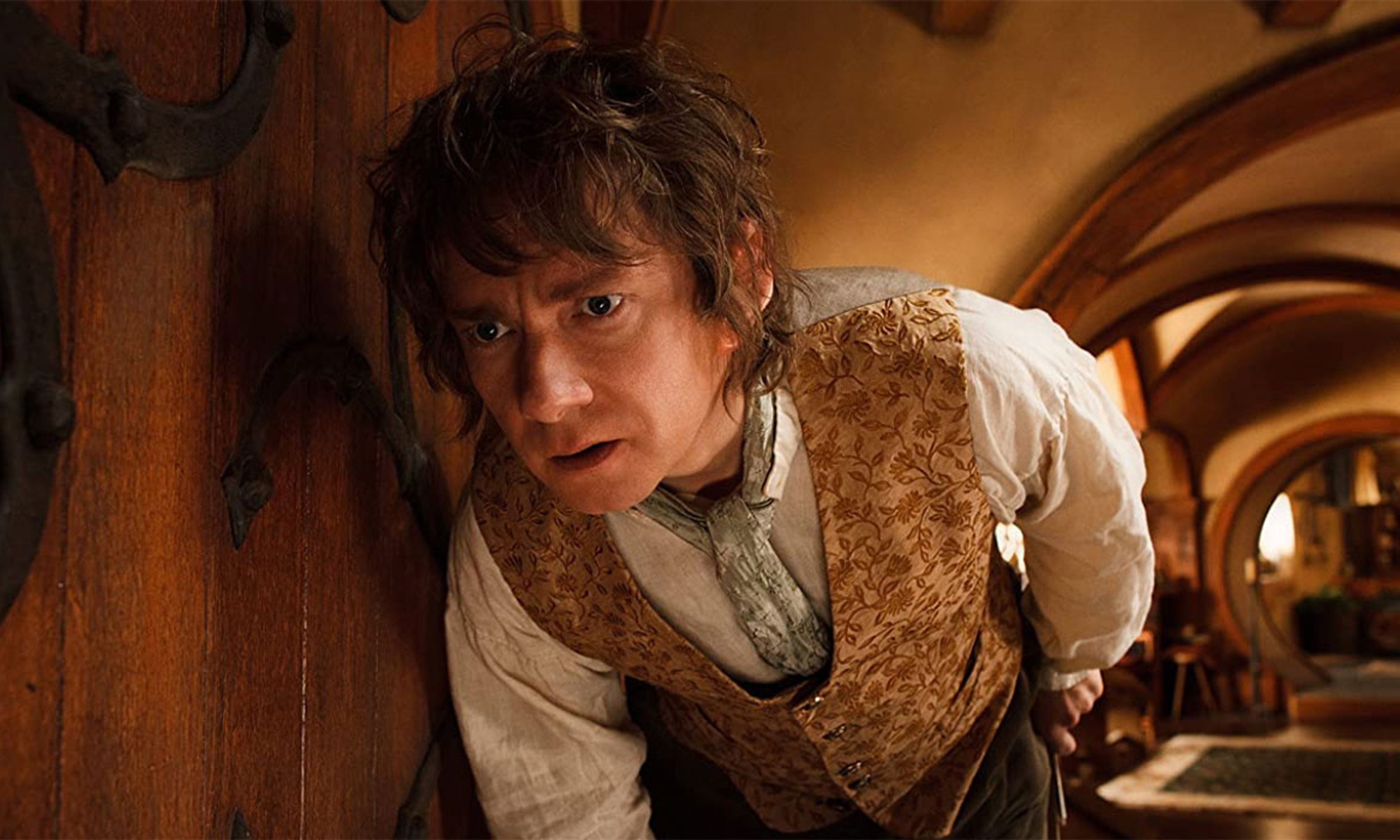
If you can ignore the padding, the yarn itself is nicely handled. In Martin Freeman, a BBC fixture with some Hollywood crossovers to his credit, Jackson has found a Bilbo Baggins who’s truer to Tolkien’s idea of hobbit-hood than some of the actors in the Rings trilogy. Freeman plays Bilbo as the classic Little Englander, delighted in his gardens and his bookshelves and his pipe, untroubled by the wider world so long as it doesn’t trouble him. Which it doesn’t, until the day when Ian McKellen’s rumpled wizard, Gandalf, comes calling, along with a troupe of dispossessed dwarves seeking a lucky fourteenth for their quest to win back a kingdom lost to the dragon Smaug almost two centuries ago.
A night of songs and stories and flying crockery later, Bilbo has somehow been induced — tempted? goaded? — into leaving home and hearth and Shire behind and setting out into the wild. There he finds a succession of adventures: a close shave involving trolls and their cookpot, a stint in the elven refuge of Rivendell, a treacherous journey over the Misty Mountains that includes a detour into orc-ridden caverns, and finally a fateful encounter, far down in the caves, with the creature Gollum (Andy Serkis) and his precious, invisibility-granting ring.
All of this is well handled: Jackson proved once before that he understands how to unite fidelity in adaptation with imagination in interpretation, and he proves it again in the way the dwarves’ roistering at Bag End diminishes into melancholy song, in the difficult balance between menace and low comedy that the troll encounter strikes, in the sustained tension of Bilbo’s riddle contest with Gollum underground.
But in Tolkien’s book, all of these incidents are handled briskly, and it takes just six chapters to get Bilbo and the dwarves from the green Shire to the far side of the Misty Mountains, which is where this Hobbit adaptation leaves off. To turn such a swift progress into a nearly three-hour, first-of-a-trilogy film, Jackson relies on digressions, detours, embellishments, flashbacks, extra battles, interminable chase scenes, cameos from old favorites, extra bad guys . . . none of which, I’m sorry to say, works nearly as well as the material that’s just lifted directly from the novel.
The problem isn’t that The Hobbit takes unreasonable liberties with Tolkien’s world. I have a few nerd’s quibbles with how Jackson rewrites the Middle Earth timeline, but everything he adds is adapted from somewhere in the canon. The forays into dwarf history, the cameo from the animal-loving wizard Radagast the Brown, the meetings between Gandalf and the rest of the White Council (Cate Blanchett’s Galadriel, Hugo Weaving’s Elrond, Christopher Lee’s as-yet-unfallen Saruman), the prelude to the Dark Lord Sauron’s eventual Lord of the Rings reemergence — it all fits into the larger story of Middle Earth that Tolkien’s near-endless writings wove.
It just doesn’t fit into The Hobbit. The wonderful thing about Tolkien’s first novel is that it really is a hobbit’s-eye view of Middle Earth, in which the bigger, darker stories that come to fruition in The Lord of the Rings are hinted at but left half-glimpsed and not quite understood. The one ring to rule them all is still just a magic ring, orcs are “goblins” and elves a fair folk who love to sing, the worst evils are well off stage, and it’s possible to go “there and back again,” as the subtitle has it, without the kind of anguish that befalls another Baggins in the later trilogy.
I can understand why Jackson, having told the larger story before turning to the smaller, felt that he couldn’t shrink his lens all the way back to hobbit size and needed to keep it wide instead. But Tolkien knew what he was doing, and this good-enough, entertaining-but-too-baggy adaptation is the weaker for trying to improve upon perfection.












Comments