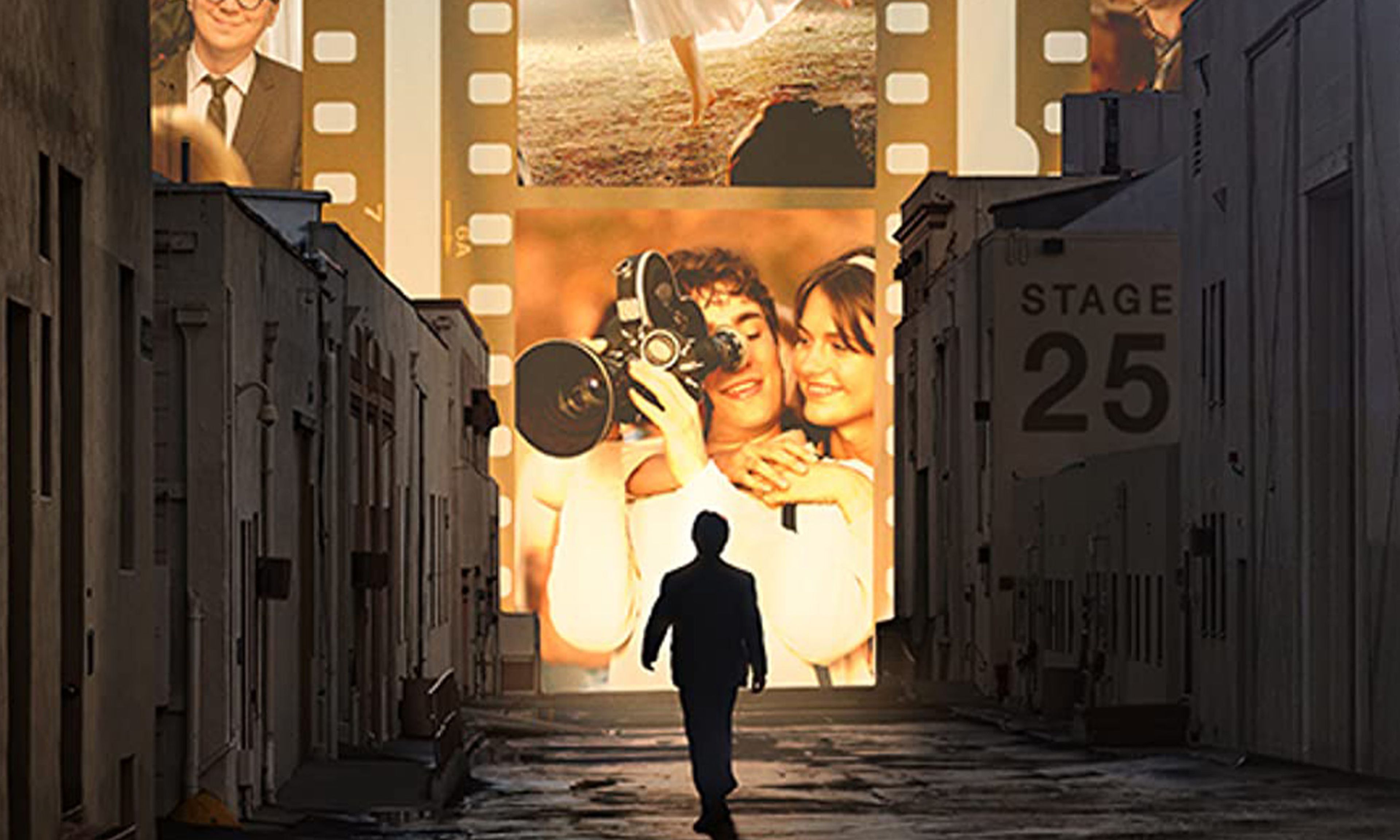
When I was a boy I loved the movies. I had visions of assembling a set for a pirate movie in the wild ditch below our backyard, of transforming the abandoned factories along a nearby river into 18th-century fortifications for a Last of the Mohicans adaptation, of remaking Mary Poppins with a nanny who was truer to the astringent character in P. L. Travers’s books.
But I never actually did any of it, and once or twice when my parents raised the idea of taking a filmmaking class, I demurred. It was so much easier to just write my stories down, and play the movies I wanted to make from them inside the theater of the mind, than to enter worlds where I was less immediately comfortable — the worlds of technique and organization and machinery, where the collaborative art form we call “the movies” is actually forged.
Those who can, do; those who can’t, write movie reviews. Here I am.
But thanks to The Fabelmans, Steven Spielberg’s coming-of-age movie about growing up to become Steven Spielberg, I now know that it wasn’t really my fault. What the young genius director needs, it turns out — along with, you know, actual genius — is a very particular parental cocktail, a mixture of familial influences that grafts together a creative temperament with the spirit of the tinkerer, the organizer, the builder-of-things (which, despite my dad’s best efforts to interest me in his workbench, I sadly lacked). Mere creativity is inadequate; if you want to make movies like Spielberg you also need to have the spirit of an engineer.
The Fabelmans tells a story about a mid-century Jewish family divided between a mother, Mitzi (Michelle Williams), a piano prodigy who overflows with creativity that her life as a homemaking mother of four doesn’t fully satisfy, and a father, Burt (Paul Dano), who’s an early computer guy, more comfortable with machines than human emotions. Their only son, Sammy — played by Mateo Zoryon Francis-DeFord as a kid, and Gabriel LaBelle as a teenager — is possessed by the movies from the night when his parents take him to see The Greatest Show on Earth. He induces his father to buy him a train set for Hanukkah, and then incurs paternal disappointment when he uses it to stage a train wreck to match the movie’s climactic scene. But his mother understands him better, and she encourages him to film the scale-model wreck — it will be their secret, the two artists in the family. And so off he goes, toward a youth spent filming his siblings and his parents, staging a full-scale World War II movie with his fellow Boy Scouts, and discovering all the secrets that only a camera can reveal.
One of those secrets, revealed in a moment of awful clarity when the teenage Sammy edits home movies from their family camping trip, is that his mother’s unhappiness is salved by the family’s “uncle” Benny (Seth Rogen), really Burt’s colleague and best friend, whose frequent presence in their house is a stabilizing influence at first, and then the force that pulls the Fabelman marriage apart.
From that revelation of intimate betrayal onward the filmmaking prodigy is in a kind of low-grade war with his artistic mother, and the conflict leaves him ambivalent about the aesthetic gifts that he’s inherited from her. But ultimately he has to love her and forgive her, and more than that he has to recognize that he needs to do what she could not, and choose to live the artist’s vocation fully — even if, as his circus-performer uncle Boris (Judd Hirsch) insists in a big mid-movie speech, it leaves him constantly internally divided, constantly fearing that he’ll let his loved ones down.
So one obvious reading of The Fabelmans is that it’s all about Sammy accepting that he’s primarily Mitzi’s son, with all the gifts and challenges that entails, and not the practical-minded man of business that his dad hopes he’ll become once he puts away the movie camera.
But as a portrait of what actually makes a successful artist, as opposed to a frustrated artistic spirit, the key scene in the movie comes early on, when Burt remarks on how one of Sammy’s cinematic setups reminds him of the way he himself organizes a computer-industry project, and how those skills will serve his son well when he shifts from moviemaking to the real world.
On the surface it’s an obtuse moment, since the father can’t see that his son’s filmmaking gifts are themselves a real-world skill. But in a deeper sense it’s a moment of insight as important to the story as all the people telling Sammy how much he resembles Mitzi. Because Burt is right; the son does have the same kind of skills as the father, and it’s those technical and organizational skills that prevent the artistic temperament from simply turning inward on itself, that translate mere artistic impulses into actual cinematic art.
I don’t know how fully Spielberg intends this part of the movie’s message. Some reviews have interpreted the film as identifying straightforwardly with Mitzi, and certainly in Williams’s big performance she’s the more vivid character by far. But part of being a great artist is that you sometimes intuit and portray more than you consciously intend. And on that level, The Fabelmans feels like a story in which a filmmaker who thinks of himself first and foremost as his mother’s son can’t help revealing just how much he’s like his dad.












Comments