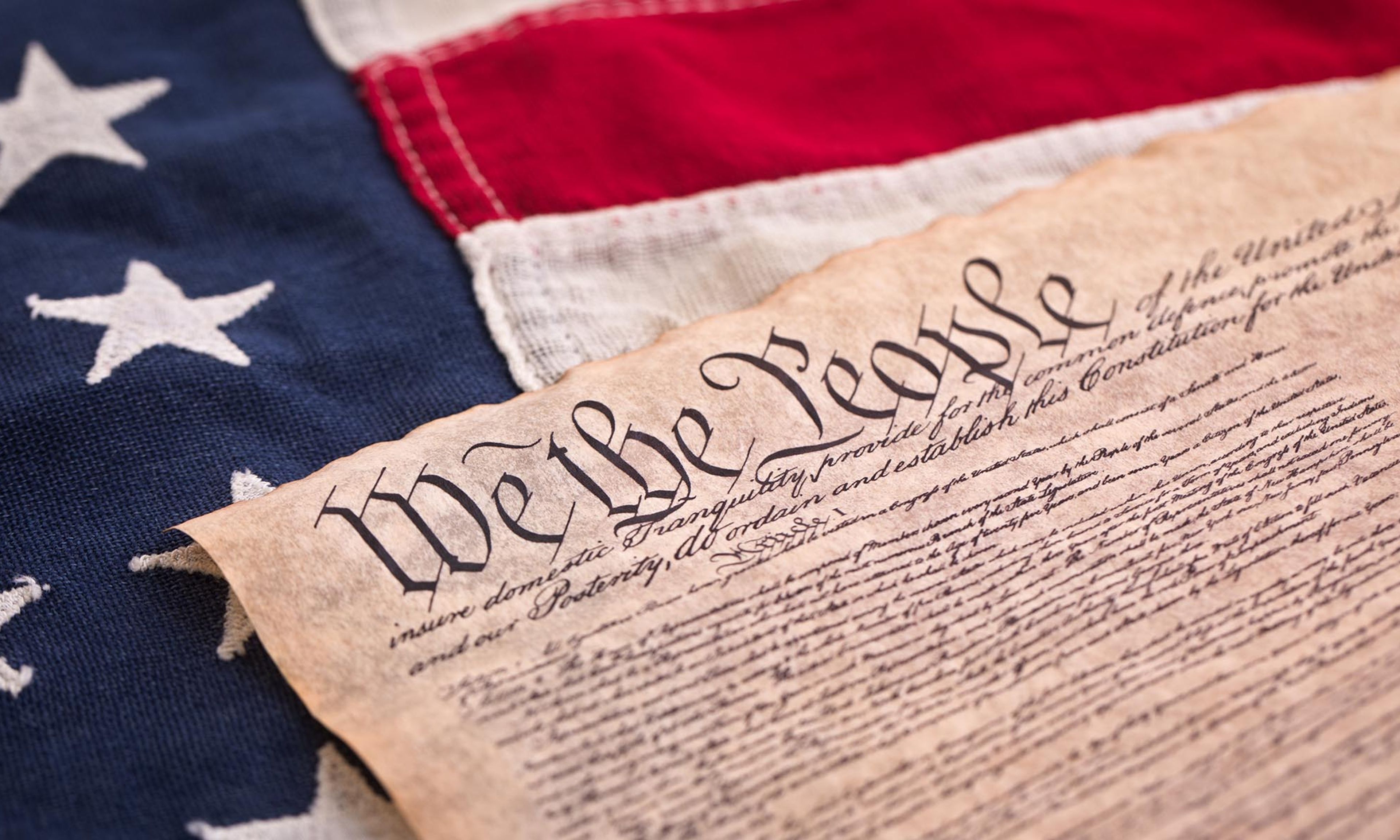
‘This moment in our history,” write Dennis Hale and Marc Landy in their new book, Keeping the Republic: A Defense of American Constitutionalism (University Press of Kansas, 280 pp., $54.95), “has produced more than the usual amount of complaints about the Constitution.” Hale and Landy, both professors of political science at Boston College, felt compelled to respond to a “growing sense of anger” and “mounting impatience” with the restraints imposed by the Constitution. The result is a cogent and compelling brief for the system of government devised by the Framers. The authors not only deal with current attacks on the Senate, the filibuster, the Electoral College, the Supreme Court, and other purportedly antidemocratic or racist features of the constitutional order; they outline and respond to the strongest arguments made against it over the past few centuries by Anti-Federalists, abolitionists, progressives, and New Dealers. Hale and Landy then attempt to answer the “bedeviling questions” of how, despite its wisdom, the Constitution has come to be seriously undercut and how the American people have grown to demand so much from their government while trusting it so little. The fault, they argue, is not in our Constitution but in ourselves.
In 2011, Secretary of State Hillary Clinton announced that the United States would reorient its foreign policy toward Asia. In the ten years that followed, write Robert D. Blackwill and Richard Fontaine, “the United States did not, in fact, pivot to Asia.” In Lost Decade: The US Pivot to Asia and the Rise of Chinese Power (Oxford University Press, 480 pp., $29.99), Blackwill and Fontaine trace the impetus for the attempted rebalancing, how other countries and regions responded, and where and how it foundered across three successive presidential administrations. Their purpose is to draw lessons for policy-makers about how the U.S. might successfully execute a pivot in the coming decade. That will involve, they argue, a grand strategy that aligns ends with means and “identifies not only areas in which to do more, but also places where the United States will do less,” while not abandoning other vital commitments. (In addition to trade-offs, it will require increased defense spending.) Blackwill and Fontaine note that, in U.S. history, strategic shifts like the one they are advocating came in response to some precipitating crisis. But they hope that there is now enough bipartisan agreement about the threat from China that political leaders will “make the necessary moves before they are forced upon them.”
“The great stage on which we act out our lives is now the sofa or the couch — in front of a screen of course,” writes the French intellectual Pascal Bruckner in The Triumph of the Slippers: On the Withdrawal from the World (Polity, 118 pp., $19.95, translated by Cory Stockwell). Published initially in France in 2022, when Covid-era restrictions were only just lifting, the book has lost little relevance in a post-pandemic world. Bruckner’s provocative contention is that “the mood of our time is that of the end of the world,” with the consequences of widespread fear, inertia, somnolence, and flight inward from reality. The book’s chapters unfold in literary, self-contained essays touching on sleep, eros, the bedroom, banality, routine, slouching, technology, casual dress, and climate panic. Bruckner’s prose style — energetic, cultured, and confident — is the antithesis of the impulse he describes. His sentences are epigrammatic, e.g.: “All of today’s technologies encourage incarceration under the guise of openness.” Alongside his central metaphor of the slippers, he presents the character of Oblomov, from the 19th-century Russian novel by Ivan Goncharov, as a man embodying our zeitgeist, one who “lives lying down most of the time.” Despite this discouraging picture, Bruckner counsels against despair. A “true renaissance,” he believes, remains possible.












Comments