The scale of the Great Lakes is often underestimated by those who’ve yet to visit their shores. Largely responsible for the peopling of the Midwest, they hold 95 percent of the United States’ surface fresh water. Caribbean-appearing in the summers and home to Bering Strait demons in the winters (the “witch of November” that Gordon Lightfoot sang of), the Great Lakes are the resting place of some 6,000 vessels and more than 30,000 souls. Sudden gales, rocky passages, and fresh water’s proclivity to flash-freeze on vessels’ superstructure and decks conspired to sink any and all, whether they be passenger liners packed with Dutch immigrants or weathered ore ships with a seasoned crew. None were safe. When the winds rise on the shore of Lake Michigan, the only Great Lake that shares no shoreline with Canada, it’s easy enough to hear the wails of the dead or see movement ’round the fog-ensorcelled lighthouses. A Midwestern mariner, I struck out to see what I could learn of the flesh, steel, and timber revenants of the Great Lakes and the increasingly translucent stories of warships that float upon them still.
You awake in the USS Cobia’s goat locker, an inch from a gruesome 90-degree join of steel ventilation, to the sound of a distant pump emptying the boat’s bladder into the Manitowoc River. The air is stale and moist, like kissing a woman after she’s run a great distance and inadvertently consumed 80W-90 gear oil. Extricating oneself from the rack — a multi-minute effort of coming to terms with aged inflexibility (humbling to remember that at 30, I’d have been older than almost the entire crew save her captain, Albert Becker) — leads to the conclusion that the designers of the World War II–era sub assumed the rack’s occupant would either become a permanent fixture there or be too busy running her weapons, drive, and auxiliary systems even to think about using the cot.
Every square inch of a submarine has a purpose, and probably more than one. A crewman’s comfort is self-evidently the bottommost priority in every blueprint, the principal concern being to win the war at hand — in this case, by sinking Japanese cargo ships by torpedo or deck gun. There were already none left by early 1945, with U.S. submarines accounting for 55 percent of all ship kills in the Pacific theater.
As one ascends from the magazine hatch cut into the hull, the sun and the void of a three-inch deck gun’s muzzle greet one’s grogginess. It’s there on the teak superstructure of the Cobia, Groton-made and now permanently residing in Manitowoc, Wis., that one can appreciate the exiguous scale of the “boat,” the preferred term for submariners’ ships. Topside, a submarine looks seaworthy the same way a B-17 looks ready for the Daytona 500 — not very. But it’d be odd for a ship with the prefix “sub-” to appear most natural on the surface. While maintaining on the surface plane is possible, the submarine’s place is several fathoms below. It’s there that the blackened spar that is the periscope juts up toward the sky, hiding the boat from sub-killing escorts and informing the men below of ships not destined to see the dawn.
A bullet scar in the steel just beneath the 20mm gun’s deck testifies to the terrific kinetic power of past incoming fire. There a placard honors a young sailor who died serving the gun during a surface battle; torpedoes were expensive, and rearming would take boats out of the fight, so subs were charged with surfacing and fighting it out with broadsides if the enemy vessel was under a certain size. Dying above the waves rather than below them — as did many of the 52 U.S. submarines lost during World War II — Gunner’s Mate Third-Class Ralph Clark Huston Jr. was the ship’s sole casualty of the war. But the Japanese sure did get close to killing the Cobia, having cornered the sub in the muddy shallows known as the Gulf of Siam. For eight hours, the Cobia sank deeper into the mud as depth charges ticked down from above. Having turned off all nonessential equipment, the men counted the hours with cigarettes that struggled more and more to stay lit as oxygen was consumed. In those stifling quarters, the air could be parted like curtains and the sweat falling from the men could be measured with a fathometer as they listened to the grim chorus of clicks that preceded each blast. When the Japanese minelayer finally left, the crew could only figure that their hunter had expended every depth charge in its racks.
Purely offensive creatures, submarines are hated by surface ships and loved by their crews. Subs do not give or expect quarter, and the mortality rates of American and German submariners during World War II testify to this absolutist devotion to aggression and destruction.
A surface guy myself, I was already used to the moniker “target” as chortlingly rendered by those of the submarining Silent Service, and I found it an absolute pleasure to sit down with Mark (cook) and Greg (machinist mate) to hear their sea stories. The two submariners, now volunteers at Manitowoc’s Wisconsin Maritime Museum and tenders of the “old girl,” were blessed old salts whose reminiscences of port visits in Souda Bay, Shanghai, and Hong Kong will stay between us. What they related of the diesel-electric submarine fleet (now replaced by nuclear-powered “Starship Enterprises,” in Greg’s words) would humble any young Navy vet.
When the sub was under way, “shower” had its usual meaning only for cooks and the corpsman. The shower stalls were storage for dry goods, an irony lost on no one. The rest of the crew and officers would develop a “protective layer” of diesel fumes, nicotine, and sweat. “It’s what you volunteered for,” Greg says with a shrug and a wry smile every time I wonder at some new inconvenience a submariner endured — all American subs were crewed by volunteers, and one could give it up at a word. What’s even more amazing is that, today, volunteers are bringing the boat’s systems online. The three-inch gun rotates with ease, the engines run, the pumps empty bilges, and the high-pressure air compressor fills flasks. If it weren’t for a cease-and-desist letter from the FCC, the radios would be alight with communication. It’s a testament to the love for these boats that the Cobia is coming back to life and (assuming the museum can raise the remaining $700,000 of its $1.5 million target) will look all the more handsome after a dry-dock period late next year.
The museum’s executive director, Kevin, provides a tour of a recently opened exhibit focused on the recovered objects and stories of shipwreck victims. Each on its own plinth sit a pepperbox pistol with one round fired (a struggle at the lifeboats?), a lady’s douche, an ice skate, and a Dutch-language Bible — reminders that the body and spirit each have requirements. People are people, no matter the year.
A coal-fired antique of a car ferry, the SS Badger is a delight to sail on a cloudless afternoon. The lake, a killer, is docile, placated by the wind-wanting warmth of late May. A plume of black smoke chuffs merrily from the stacks, and I spend most of the five-hour trip from Manitowoc to Ludington, Mich., at a table reading Zen and the Art of Motorcycle Maintenance. If one looks behind us, a solar-powered ship bearing the name “EPuAd,” with a raving one-legged bureaucrat at its bow, can be seen shaking his fist with every revolution of the Skinner Unaflow steam engines. This crossing is Lake Michigan at its narrowest, some 62 miles. The “sweet sea,” some call this great lake, and today the name is fitting. Whether the thousands of sailors and immigrants lost to these waters’ clutches would agree is another thing entirely. But here, within view of the Michigan dunes and the bone-white windmills standing hundreds of feet tall and smacking of the EU Dutch rather than the clogging Calvinists, the approaching tableau is equal parts futuristic and primitive.
Three decks under my feet hunches a Fiat 124 Spider. Sporting an Italian badge with Japanese innards, the Fiat would have been on the wrong side of the war 80 years ago. My asphalt-clutching roadster is gunmetal gray; its design echoes much of the engineering of the submarines I hunted — tubular and spare with singular intention. Sleeker and more fragile than almost anything else on the road, the 124 is a delightful nod to automotive history, and its headlights are reminiscent of torpedo tubes. To come up for air is to lower the soft top, a departure in engineering and intent from the closed cans that surround it on the freeways and country roads. Its sea trials on the twisting Lakeshore Drive of Sheboygan County were a success.
The disembarkation from the Badger is a disorienting event only because one does not see such a high level of public trust all that often. The ferrymen drive the vehicles off the deck and leave them running — the cars to idle and the employees to hurriedly retrieve the next batch of autos. Meanwhile, the passengers are expected to return to the cars they came in. There are no ID checks; get in your car and drive. Refreshing.
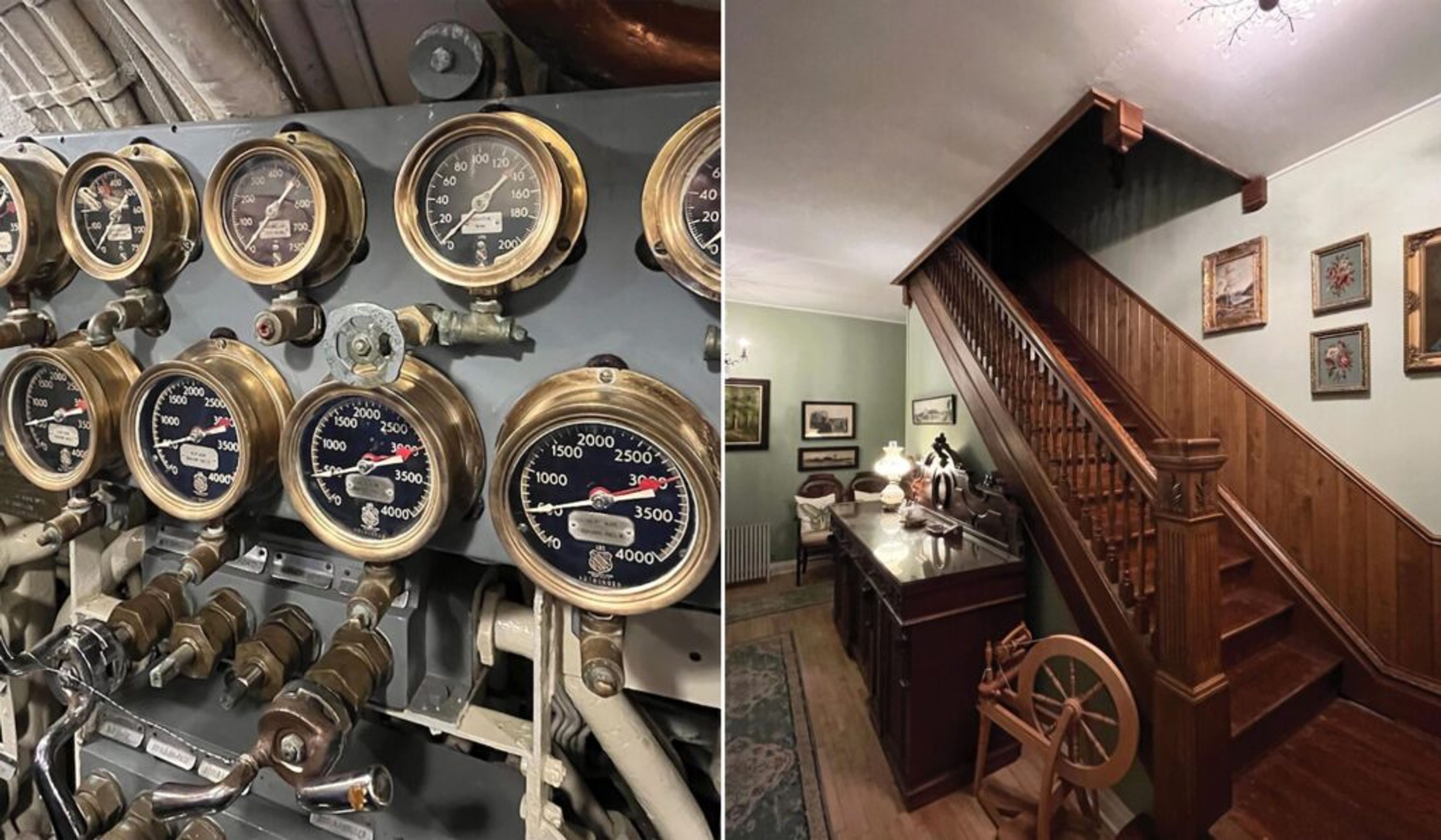
The next boat for me will be the USS Silversides in Muskegon, Mich., where the welcome desk is manned by a retired Navy shopkeep and Scott, a researcher, is waiting to provide a tour of the most decorated World War II sub still floating. With 23 confirmed kills and another seven credited to her, the Silversides, commissioned just before Pearl Harbor, menaced Japanese shipping from the earliest days of the war. The differences between the Silversides’ design and the Cobia’s are astonishingly few, as both are Gato-class. Four massive differences are the presence of Fairbanks Morse diesels rather than the GM powerplant of the Cobia. The bulkheads are lined with cork, and at the wardroom’s small table the only emergency sub appendectomy of the war was performed in the stillness of the deep using mess-decks spoons fashioned into retractors. The surgery was a success, but a mere one hour after the patient was sewn up, a Japanese sub-hunter discovered the Silversides recharging its batteries on the surface and sent depth charges and aircraft after it as it dove. A bomb’s explosion knocked the convalescing sailor from his rack.
The Silversides’ ghost and protector, Torpedoman Third Class Mike Harbin, a young Oklahoman, died while serving the deck gun on the boat’s first cruise. Running between the scuttle that led down to the magazine and the gun, Harbin died so immediately that the other sailors thought he’d tripped. As with the Cobia, the death of a young third-class was the boat’s only casualty, and the stories of Mike’s haunting involve practical jokes on shipmates and visitors rather than malevolence. The Silversides is also due for a date with the shipyards, the plan being to tow the boat full across the lake to a Wisconsin yard. Donations to that end are always welcome, I’m told.
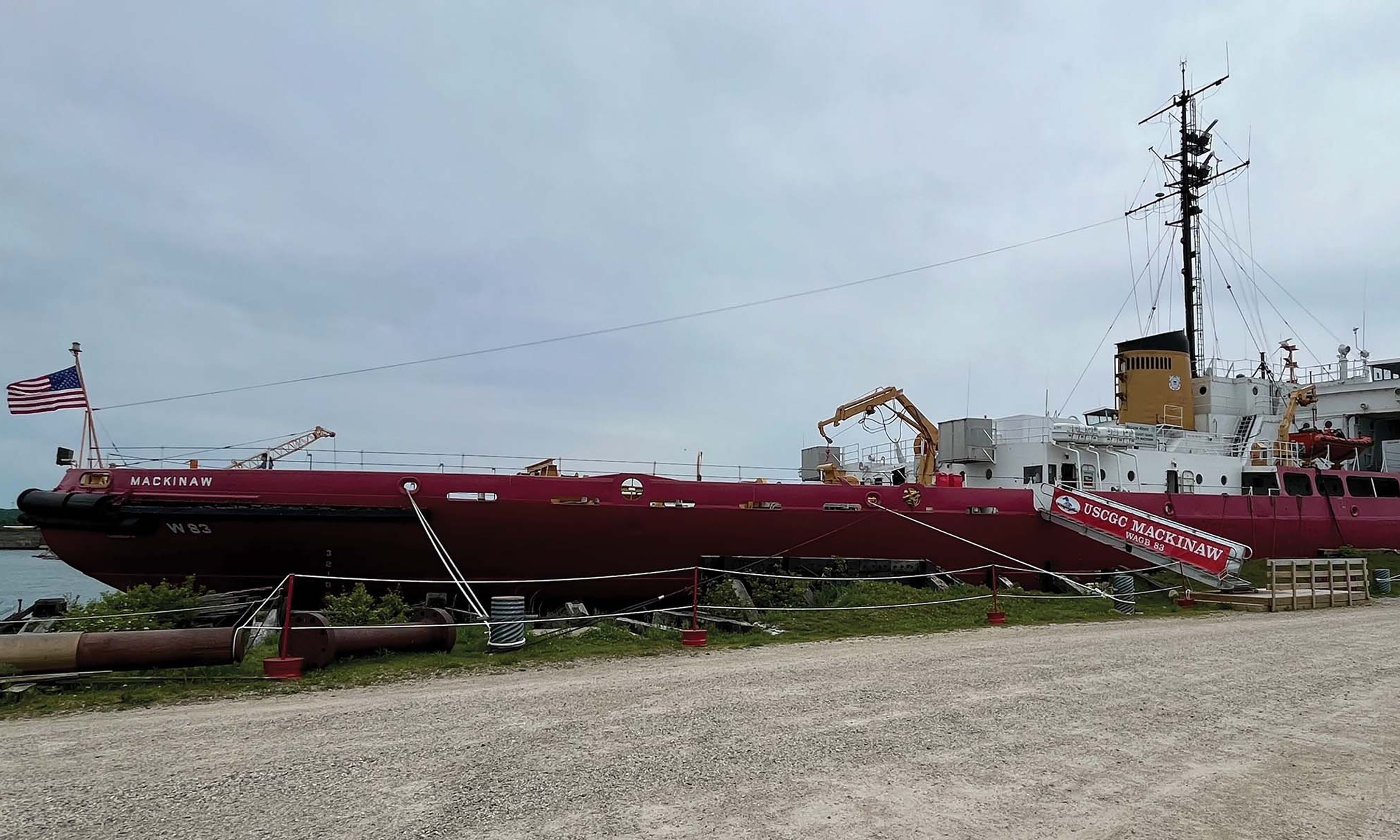
The final stretch is to the USCGC Mackinaw, a Coast Guard icebreaker that cleared the way for iron ore from Michigan’s Upper Peninsula (UP) to make it down to the roaring Detroit war factories. Decommissioned this millennium, the heavy breaker is spotless. While no ghosts are ascribed to the ship, it feels the most haunted: It seems like at any moment the crew may once again board her, fire off the Fairbanks Morse engines (each with an extra cylinder compared with the Silversides’ diesels), and take the Mackinaw back into a snowstorm. Chilling.
Already so far north, I cross the symphonic grating of the Mackinac Bridge and stay the night at the Celibeth House, a lumber baron’s home built in 1895 in the town of Blaney Park. The Victorian farmhouse feels suspended in time. Guests are served a breakfast of Finnish pancakes and bacon, the dairy and pork coming from area farms. The proprietor, a homeschooling mom of ten, explains that the baron named the town after Cornelius Blaney, his favorite lumber captain. The UP, remote even in the 21st century, was a world away from the industrial powerhouses of Detroit and Chicago in the 19th. The eyes in the portrait of a young woman on the landing follow the writer as he heads to the front porch to read.
Departing in the morning gloom, I was haunted not by any individual phantasm but by the potential of those lost. The decisions made or unmade by the sub captains that kept their crews alive, the fires that consumed bloodlines aboard the passenger ships on Lake Michigan, and the fortunes won and lost on her shores make every piece of nautical history that remains a porthole to wonder at the promise of the Great Lakes.












Comments