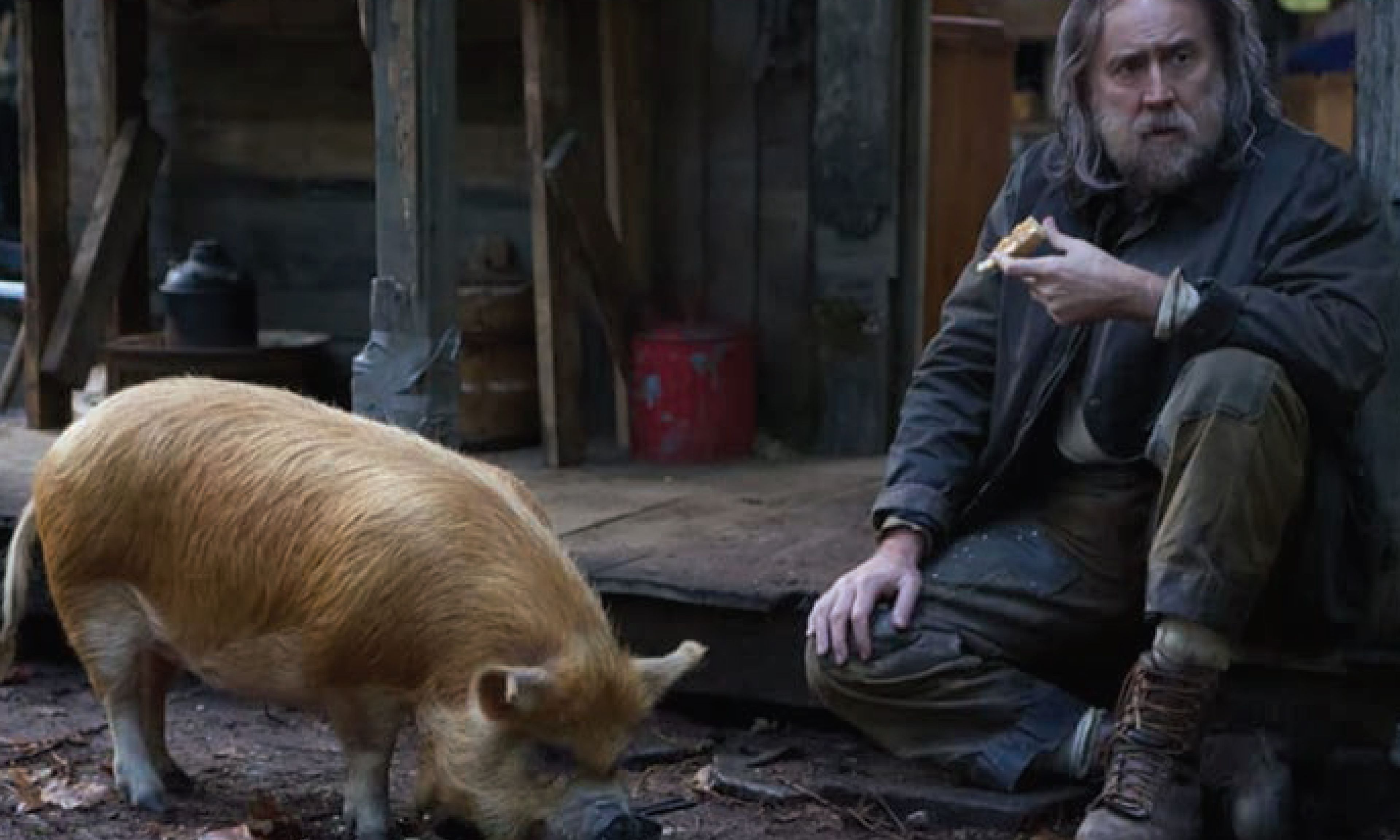
If I say that Pig is the best of the approximately 1,327 movies for which Nicolas Cage has cashed a paycheck in the last five years, you may not know what to make of that endorsement. After all, as a discerning moviegoer you probably haven’t checked out Prisoners of the Ghostland (“a notorious criminal must break an evil curse in order to rescue an abducted girl who has mysteriously disappeared”) or A Score to Settle (“an ex-enforcer for a local crime syndicate has vowed to enact retribution on his mob bosses after 19 years of wrongful imprisonment”) or Kill Chain (“three strangers’ lives are inevitably entangled in a conflict none of them are prepared for”), among other gems from Cage’s work-for-anybody phase.
In truth I haven’t either, and it’s possible that I’m being unfair to Cage’s paycheck-to-paycheck work, his recent churn (six movies in 2019 alone) of low-rent action flicks and direct-to-streaming dystopias. So let’s say, instead, that Pig is the best movie I’ve seen in theaters since seeing movies in theaters became possible again — which still risks damning with faint praise, but at least makes a comparison that I can fully stand behind.
The conceit of Pig, which marks the directorial debut of its co-writer, Michael Sarnoski, is basically What if we made a Liam Neeson kidnap thriller, but for foodies? The titular animal is the kidnap victim, a truffle pig who shares a cabin somewhere in the deep woods of Oregon with Cage’s Neeson figure, a bearded hermit known as Rob. Once a week Amir (Alex Wolff), a slick young kid with a sports car, shows up and trades some essentials to Rob in exchange for a cooler full of truffles, destined for the gourmet restaurants of greater Portland. That is, until the night when this arrangement is disrupted by shadowy figures in a pickup truck, who knock Rob unconscious, stuff his porcine companion in a sack, and disappear.
So Rob sets out to get his truffle pig back, which requires making a pilgrimage into the sordid underbelly of the Portland restaurant scene, wherein we learn that Cage’s character was once a legendary chef, so legendary that his return is greeted disbelievingly, like Arthur come back from Avalon — or, maybe more aptly, John Wick coming out of hitman retirement to exact revenge.


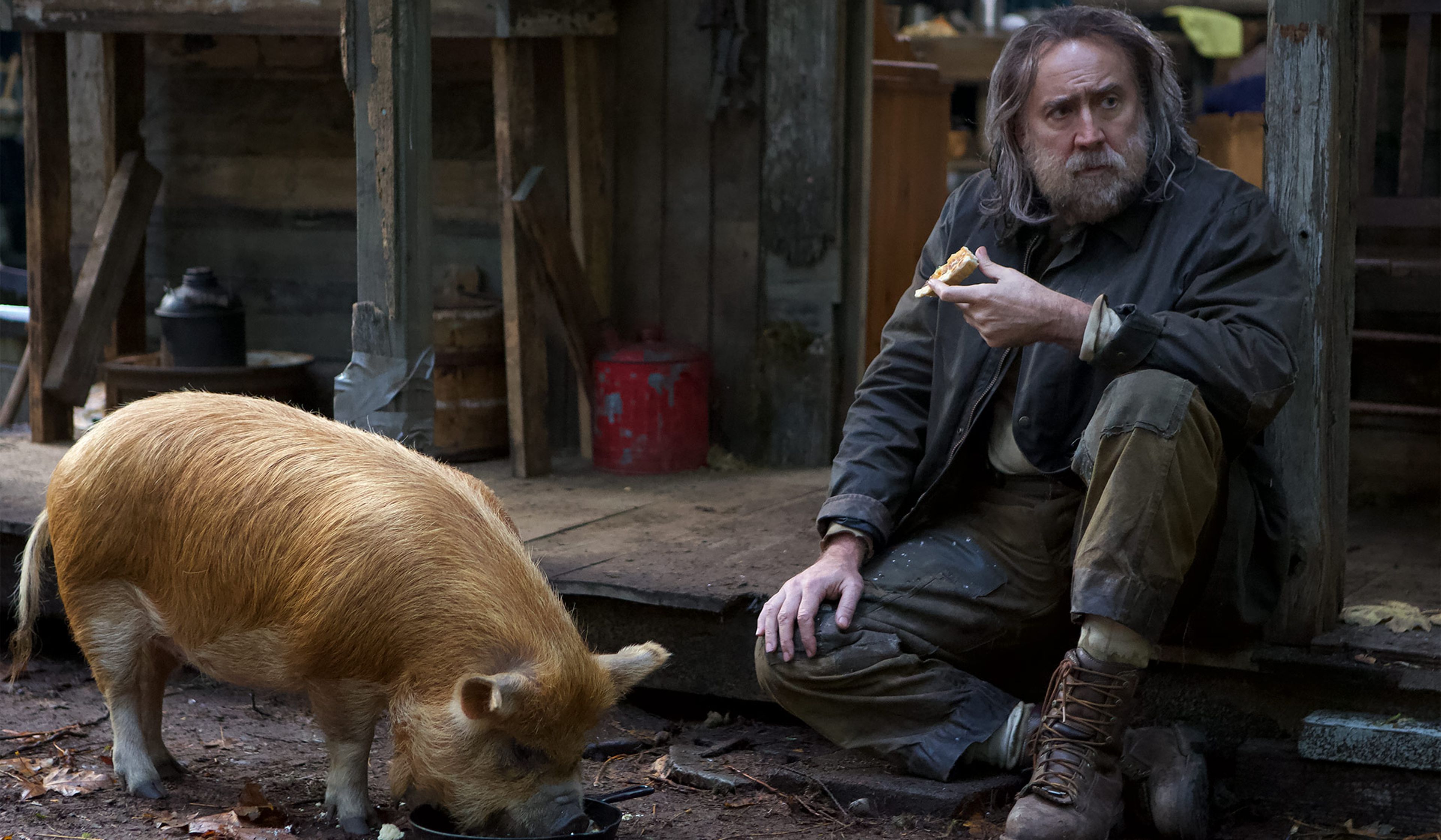
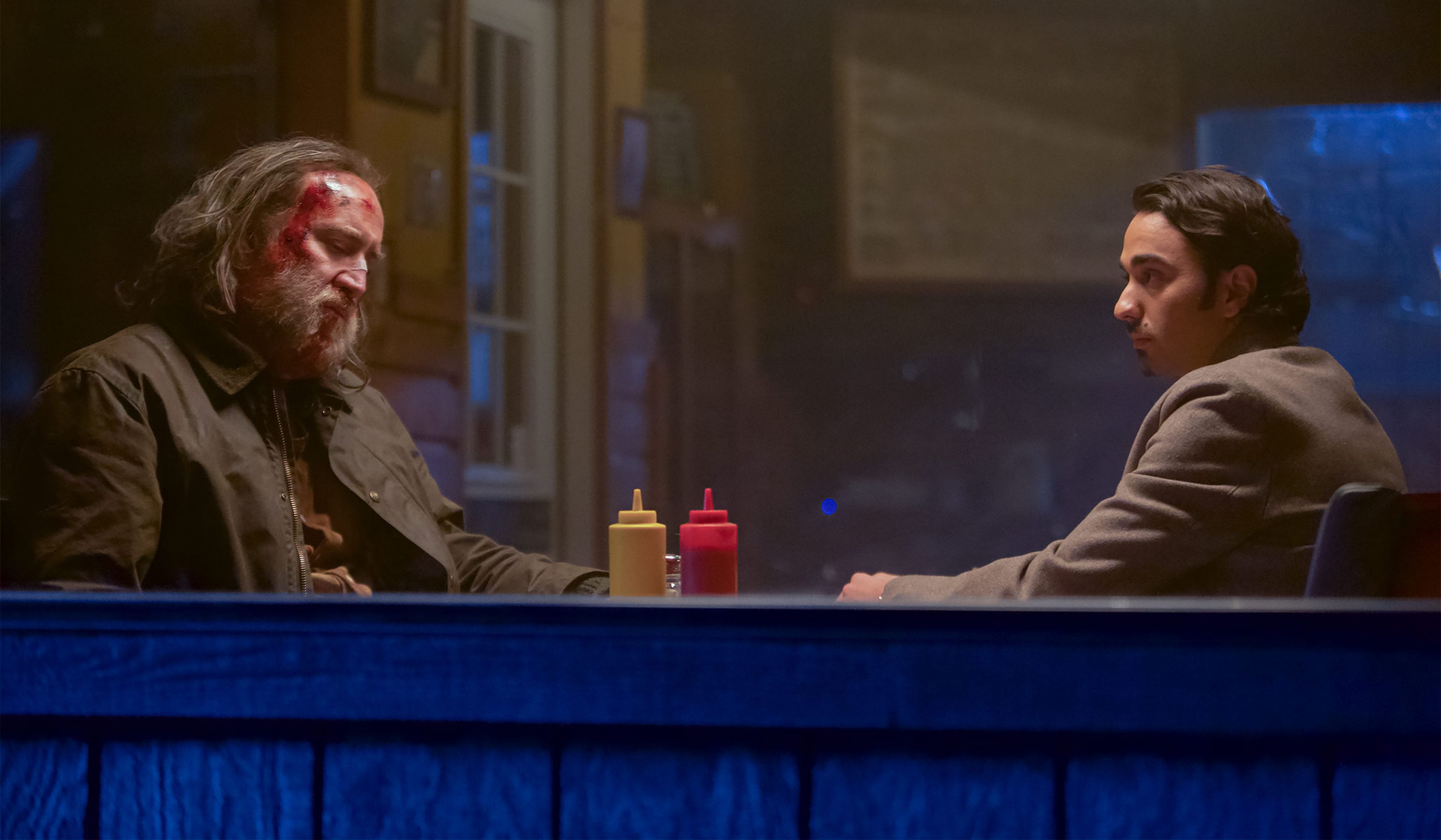
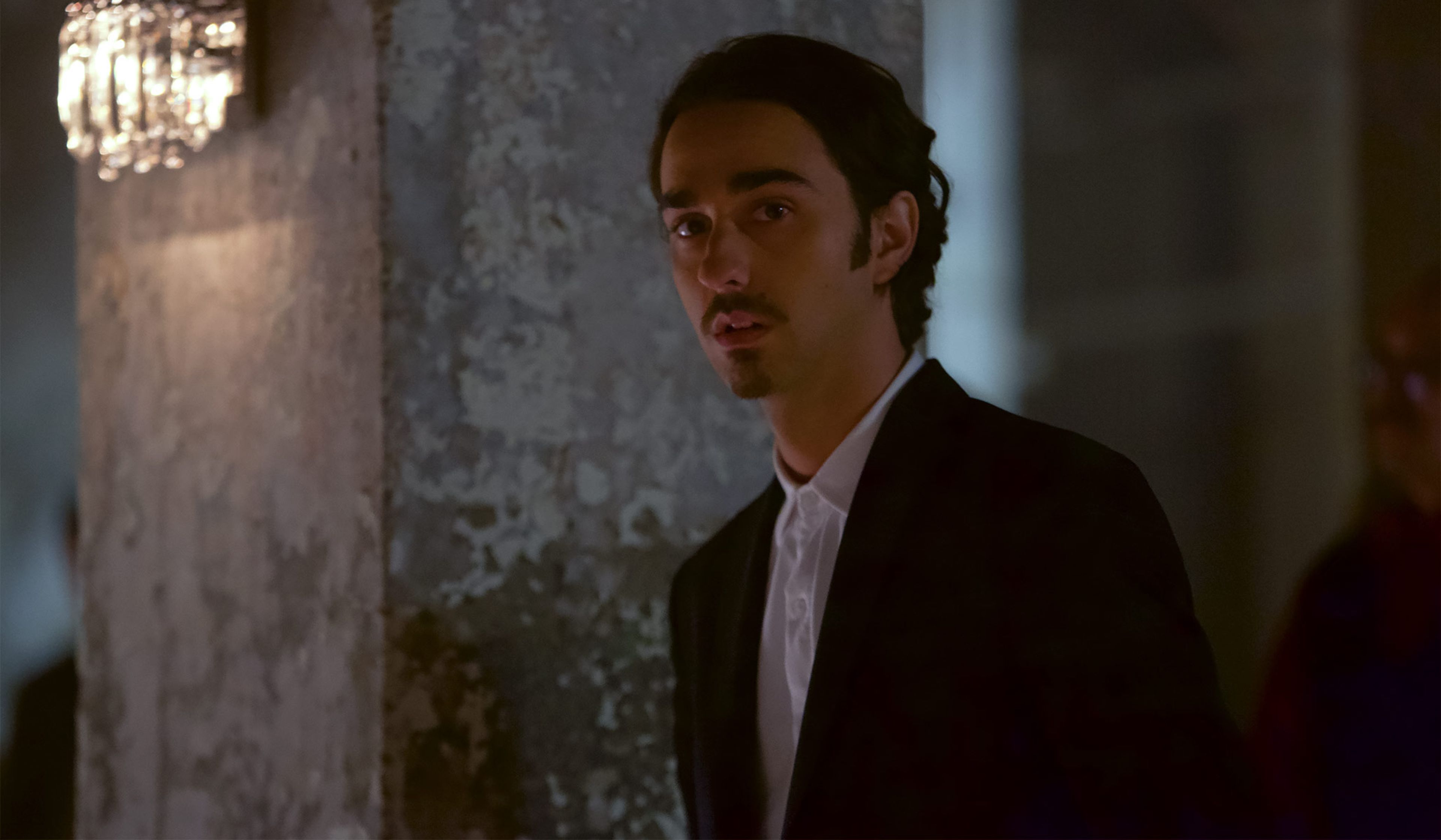

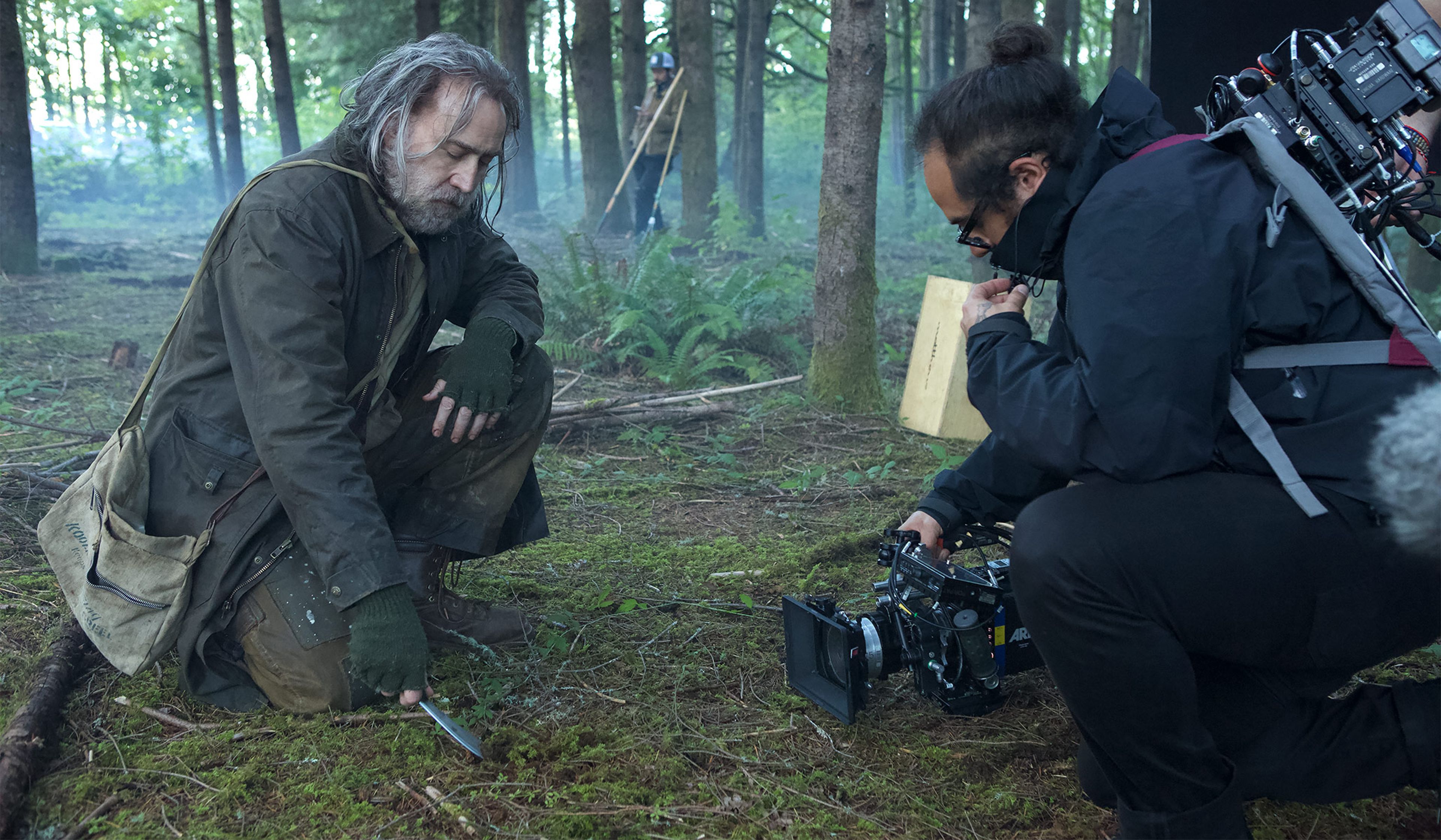
Nicolas Cage in Pig.
NEON
Except unlike Wick or one of Neeson’s avenging action-movie dads, Cage’s very special skills don’t include the ability to deal out violence. Instead he seems to have three powers: the power to take a beating, something he does at some sort of underground fight club for restaurant staff, a scene where the movie slips a little too much from surrealism into parody; the power to shame, something he does to a former sous-chef who’s sold out completely to garbage bougie food-scene tastes; and the power to cook a meal that in just a few bites can evoke long-gone happiness and break the armor a miserable man has forged around his heart.
Rob is such a man, his woodland exile clearly a flight from tragedy and grief; so is Amir’s father, played by Adam Arkin, a more successful and sinister dealer in exotic foodstuffs than his son. Beat by beat, Pig is an homage to the revenge genre, but stuffed inside that structure is a meditation on impermanence and loss, in which the transience of the chef’s art is linked, via Cage’s mournful tones, to the tsunami that is supposed to bury the Pacific Northwest someday. Which day, no one knows — but in the ravaged shape of Cage’s face, its canyons defaced and bloodied as the film goes on, you can see the geologic ravages to come.
Since Pig is doing something slightly absurd with its ex-chef-as-avenging-angel arc, and since it’s very serious about tragedy and loss, it’s a movie in which too much laughter is dangerous, even spell-shattering — which is why I mentioned the underground restaurant fight club as a conceit too far, a moment when the spell is broken by amused, When’s Tyler Durden going to show up? disbelief.
But for the most part Pig is true to its dreamlike logic without making the dream so outlandish that you simply snap awake. And its climax, the final confrontation that would be the shoot-out in the Neeson movie, generates laughter that doesn’t challenge the movie’s audacity but instead affirms it: You suddenly recognize that this was where Rob’s journey was going from the beginning, and admire the work of imagination that gives us Cage, bowed under the weight of years and innumerable bad movies, revealing the grace in bread and fire, salt and meat.












Comments