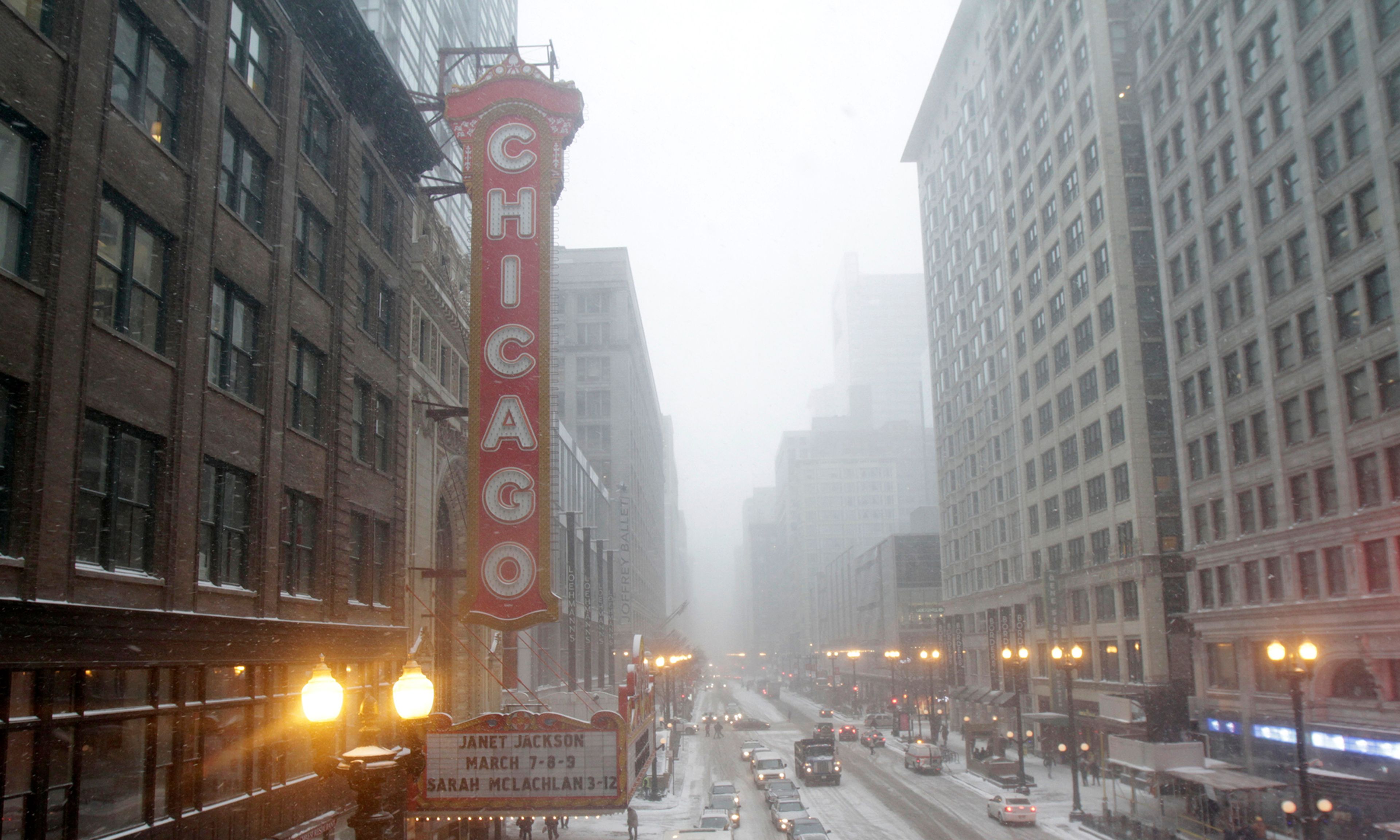
I am thinking of my father quite a bit lately. He grew up on the West Side of Chicago, raised poor by a single, immigrant mother, in the Depression. He enlisted right after Pearl Harbor and served in the Army in World War II. After the War, he bluffed his way, under the Jewish quota, into Northwestern law school, and graduated first in his class. He then spent 40 years as a labor lawyer, representing the Film Technicians, the Building Trades Unions, and a lot of other workers.
I broke out of, or was excused from, the middle-class existence he’d achieved for his kids, and I knocked about, making my living at what would now be called “entry level” but were then known as “menial” jobs. I became fascinated by the speech of the people I met, worked with, or worked for; and with that of those among whom I spent most of my leisure. For I was a snakebit gambler, and my off-hours passed in backroom poker games.
To me, it was as it must have been to white musicians in Chicago in the ’20s, hearing jazz for the first time. A Chicagoan locution, e.g.: “Yeah, I was crossing the street, and if I didn’t look twice I would of got hitten by a cab.” And the oddity in the speech I heard was the occasional absence of profanity. I took it all in, and I wrote it all down because it was alive. And I loved it.
Part of the Left’s outrage at Trump is his refusal to speak in hieratic language. He’s spent his life buying and selling politicians, negotiating with construction unions, bureaucrats, and The Boys. He speaks American, and those of us who also love the language were awed and delighted to hear it from an elected official.
As for profanity: What is its linguistic purpose? For, on various streets and in various jobs, it is expected, and, in the military, required.
See S. I. Hayakawa’s Language in Thought and Action (1949): A fellow from Oxford comes down to the British coal country to campaign among the miners for electoral reform. Miner says, “Hey, what’s all this bloody nonsense about ‘one man, one vote’?”
Oxford chap says, “Why, quite simply, it means ‘one bloody man, one bloody vote.’”
Miner says, “Then why the hell can’t they just say so?”
I spent many blessed years in a village in Vermont. The village custom held that all males, from boyhood, had a nickname, and that it followed them through life. I recall Chunk, Bozo, Nooky, Spud, Buggy. The names could be called across a field, or a shop floor. They had good consonants.
A good dog name, similarly, should be able to carry. One might call a working dog Buck, or Queenie, but not Leslie, or Thea. The hard consonants get the attention, which is one purpose of profanity. As in “one bloody man, one bloody vote”; it is used generally as the direct-object indicator, linguistically useful as it means “Stand by.”
Biblical Hebrew is a punchy language. It largely dispenses with pronouns, attaching them to the verb or noun; but it features the direct object indicator, e.g., “He sent et the messenger to the river” (et being the indication that the direct object is coming up), and so one might do well to pay attention.
In demotic Chicagoan that speech particle exists as “He sent the #$% messenger . . .” Same thing. Ain’t knowledge grand? And how lucky am I that my grotesque career as a student debarred me from the study of philology, deconstructionism, the search for a universal grammar, and the attendant wisdom of Noam Chomsky?
No, I, an apikoros (“apostate,” from Epicurean), have always been fascinated by actual speech. Why, for example, does one say “a history” but “an historical novel”? A mystery.
But I heard my father use profanity only once, and I’ve thought about it quite a lot of late. The world, through the rough treatment of which he’d lived all his life, was in the midst of its usual absurd upheaval; the then current rendition of the Vietnam War, assassinations, the Cuban missile crisis. I asked him if he had any wisdom. And he said, “Sometimes the world’s just got to take a big #$%&.” Rough and unlovely speech, but like the direct-object indicator, it served to make me pay attention.
Language, of course, is generally employed by human beings to distract or deceive. So there is much to be said for critical listening.
Take, for example, the language of crickets. One may count their chirps in 15 seconds, and add 37. The total will approximate the temperature in Fahrenheit. All honor to whoever first listened and figured it out.
Here is a late discovery of mine. A revered talk-show host, a man of wisdom, humor, and probity, peppers his show with ads. He introduces most of the ads with the words “My friends . . .” He uses the phrase nowhere else. A close listener might observe that he is trying, consciously or not, either to lull the listeners into receptivity; or to excuse to himself his (no doubt necessary) descent into the permitted approximations-to-truth of the marketplace.
My grandfather, Jack, immigrated here from Warsaw. He was a dour man, and had only one joke. Here it is: “What do you have to pay to go to school?” Answer, “You have to pay attention.”










Comments