The essays compiled in The State of Black America together present a nuanced take on black conservatism that draws on certain elements of black history for strength and guidance. (The collection is not to be confused with another project of the same name: the National Urban League’s annual report of social-scientific data on black America.) The book’s editor, W. B. Allen, is a black political scientist who has served as the CEO of the Center for Urban Renewal and Education. The book’s corporate author, CURE was started by Star Parker, a well-known black conservative whose efforts were integral to passing the welfare reform of the 1990s, and who finishes out the book with an essay on the centrality of marriage to black flourishing. The collection as a whole hopes to create or affirm black patriotism by presenting black victories in the face of oppression. Allen believes that these were possible because the American legal structure is one that allows for great flourishing, even if black Americans didn’t enjoy all of its benefits until more recently.
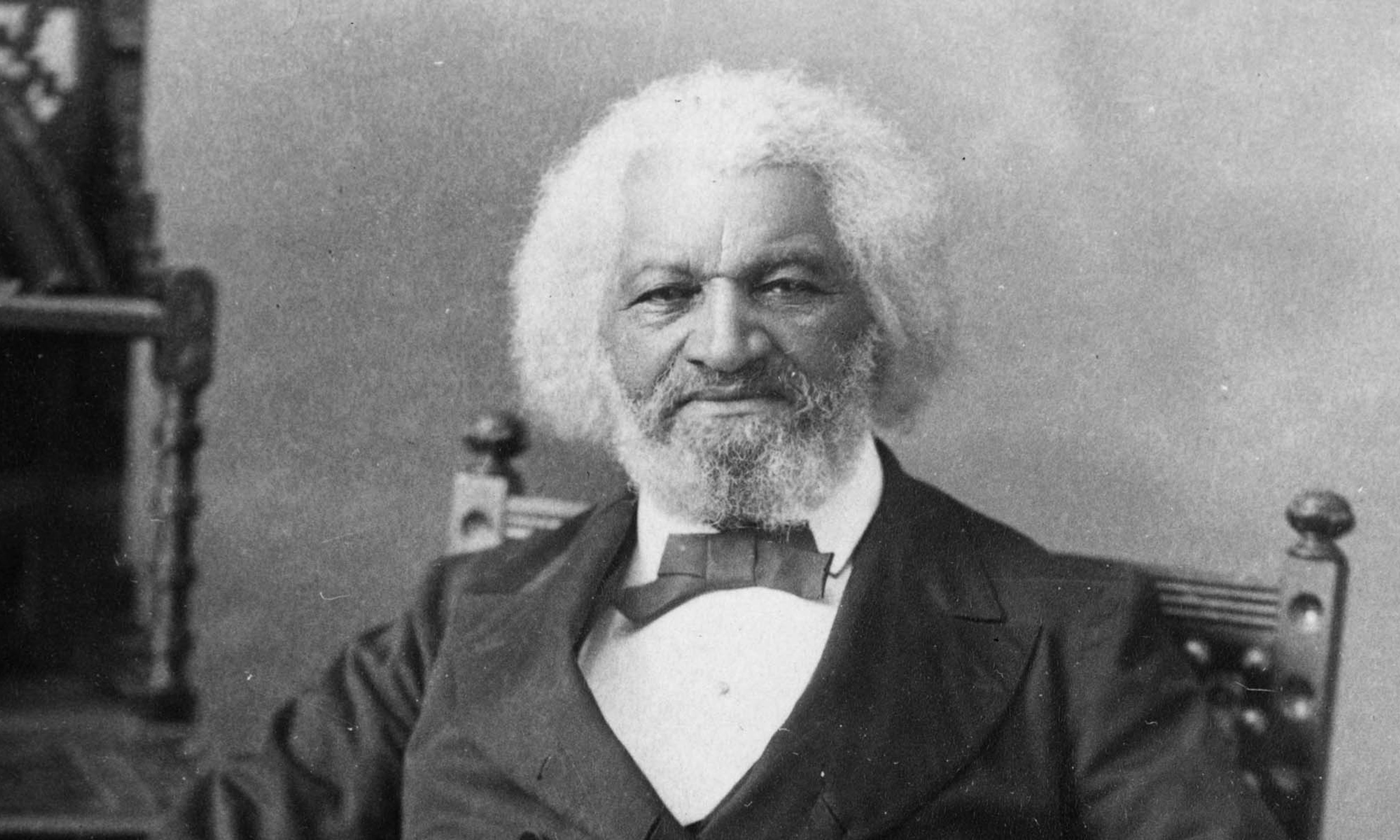
The conservative approach to racial issues can often alienate black Americans by offering lots of criticisms but no positive project. Merely lambasting the revolutionary views of the Left or condemning the conditions of struggling black inner-city residents doesn’t offer black Americans cultural resources for moving forward. That is not the approach taken here. Most of the essays overtly prefer the classical liberalism of Frederick Douglass, the efforts of black Republicans working to build black political involvement in the late 19th and early 20th centuries, and the National Negro Business League of Booker T. Washington to the more collectivist and victim-oriented narrative that took center stage in the late 1960s. Allen thinks of this latter narrative as a myth that hamstrings black success by teaching black people to see themselves as wards of the state, metaphorically speaking. The collection’s authors respond with an empowering message of individual responsibility inspired by black men and women of astounding ability and determination and episodes of amazing black progress.
At the same time, these essays do not represent a single position. Allen does not run from those aspects of American history that have led to today’s racial hangover. He invites an essay from two progressive authors, Precious Hall and Daphne Cooper, who consider historical, structural injustices against black Americans. Interestingly, they condemn the New Deal and the Great Society as having resulted in more harm than good by offering government assistance for particular individuals without undoing the systemic injustices causing their problems.
In his opening essay, Allen pays careful attention to the way we collect data on racial disparities. He convincingly questions how enlightening many of these data really are, given the huge influx of white immigrants in the 19th and early 20th centuries and our constantly changing racial categorizations (a subject further explored in a new book by David Bernstein, Classified: The Untold Story of Racial Classification in America). This demographic debate matters a lot, since figures such as Ibram X. Kendi have focused so heavily on the concept of black — white gaps. Kendi has called for what Allen describes as a “pristinely standardized national database” to track racial disparities in minute detail. Allen argues that such a project would require a mobilization of time and resources so great that its violation of personal privacy and its unconstitutionality would pale only in comparison with its sheer impracticality. Attention would be much better spent on promoting black flourishing through building strong families, neighborhoods, and business networks.
Fans of Glenn Loury’s podcast The Glenn Show will recognize many of the points made in his essay. Now that we’ve lost Walter Williams, my guess is that Thomas Sowell’s mantle as the grandfather of black heterodox thought will pass to Loury, an economist at Brown University. In his essay in defense of black-American patriotism, Loury comes out swinging. He argues that black intellectuals such as he must admit the “painful necessity” of doing real social-science work on racial disparities; that is, they must speak honestly about the “socially mediated behavioral problems” causing the constant stream of high crime in our nation’s inner cities. Blaming anti-black racism for a problem that is now endemic simply will not help solve that problem. The attempts to explain every racial disparity as the result of a racist system are unbelievable, in Loury’s view — a mere “debater’s trick.” As a good social scientist, he feels obliged to remind us that the killing of black unarmed men by police officers, while tragic and even deeply problematic for the police, is also quite rare. Tropes about police hunting black Americans or the infusion of fear about the dangers of even walking out one’s door are wild exaggerations. He also worries that the tendency to racialize everything is creating a backlash whereby the demonization of whites leads a small number of them to radicalize into genuine white supremacists.
As a prominent public intellectual, Loury is concerned about the ways in which these sorts of points are almost unspeakable in the university system and even outside it. He argues that a frank account would acknowledge how the lives of black Americans have been completely transformed in the last century, from the median black man working on a farm and earning significantly less than his white counterparts, to black Americans holding economic power so significant today that the black-American economy by itself dwarfs the Nigerian economy by a factor of five. In spite of what he calls the “existential challenges” that black Americans face when it comes to embracing American patriotism, Loury echoes Frederick Douglass’s claim that the black attitude toward this country ought to be “Ours!”
In preparing to write this review, I listened to Allen present the book’s arguments on C-SPAN and was struck by the response of most of the black callers. Of course, certain shows garner certain audiences, but I understood the frustration of callers who felt that he down-played the significance of our history of racism. Many black conservatives are exhausted by what they see as a crushing obsession with racial oppression that tricks their countrymen into feeling defeated and giving up. This group directly opposes the Kendi-esque approach, but they should hold this stand in healthy tension with an acknowledgment of past injustice, one not grounded in ideological enmity with the American project.
In Black Liberation through the Marketplace, Marcus Witcher and I show how so much of our painful racial history is defined by legal exclusion of black Americans from the very institutions — property, contract, and the rule of law — that form the basis of the American project of peace and prosperity. By doing so, we don’t simply assert a triviality, that there was some good and some bad in American history. We say precisely that the good arose when (classically) liberal institutions were honored and that the bad arose when they were not. Thus, black patriotism ought to arise from the fact that black Americans stood up and demanded, whether through courageous entrepreneurship or the political push for civil rights, to be included in the American project. Indeed, Robert Bland’s essay in The State of Black America on black Republicans persevering through the dark post-Reconstruction period offers a good example of this kind of story.
When, however, the only essay that directly addresses historical fallout from systemic racial exclusion is written by the only progressive authors in the collection (Hall and Cooper), it can give the impression that the conservative authors don’t have a perspective that does justice to the suffering of black men and women who survived Jim Crow, many of whom are still living today. This is a risky criticism, given that W. B. Allen himself lived through that era. But people respond to injustice in different ways, and it’s not unfair when those who were affected ask us to properly acknowledge this history.
In my own research, I was stunned to learn about the practice of convict leasing, the incredible popularity of the eugenics movement in America, and the massive abuse of eminent domain that was central to the building of the federal highway system and to so-called urban renewal (or “negro removal,” as James Baldwin deemed it). While a vague sense of pervasive racism does little good for Americans, a study of concrete instances of municipal, state, and federal complicity in racist oppression can do a lot of good. One might even argue that the best way to move forward in hope is always to do right by the past, just as the best way to heal a wound is to clean it out before bandaging it, even though it can often be quite painful.
Conservatives sometimes make the mistake of associating all such efforts with the Left, but why give the process over to them? On the whole, the Left will misunderstand the history by totalizing one lens (in this case, race) and then botch the solutions with their hopeless grasp of economics. Besides, when so much of the havoc was caused by progressive social engineering, simply forgetting and moving on causes us to miss out on the opportunity to demonstrate the destructiveness of central planning. Rather than vacating the conversation, creating a vacuum that will be filled by ideological movements such as critical race theory and third-wave anti-racism, it’s better for conservatives to participate, anchoring the discussion in reality and directing it toward hope.












Comments