Like most adults today, I barely remember life before Roe v. Wade. But I do recall the flashbulb moment when the new world order hit home. One night in 1973, my mother returned from work with something shiny on the collar of her starched white uniform: a silver pin representing two tiny feet. She would wear it at the local hospital from then on, she explained, and so would some of the other nurses. The pins signaled their refusal to participate in abortion — a word I heard that night for the first time.
This was not an association of Catholics. These were nurses, period: medical professionals in a small-city hospital in upstate New York. They knew from their shifts in labor and maternity wards that what grew within a pregnant woman was no mere “clump of cells.” Long before the sonogram would settle the question forever, nurses and doctors and midwives and others experienced in handling pregnancy and birth knew.
It would take a massive campaign of indoctrination by the country’s most elite institutions, and staggering complicity, to try to obliterate that knowledge. Courts and universities, medical schools and prestige journalism, Hollywood and the arts, trend-setters and jet-setters all thronged to the challenge. It would take culture-wide mendacity of a most vigorous and self-interested kind to replace what the nurses knew with one bold lie after another: Violence toward the unborn is a human right. Mothers and children are natural enemies. Career comes first. My body, my choice.
Given the sheer scale of that reeducation project, it’s small wonder that so many went so far astray. As the decades ground on, and the thrown-away piled up, and the hearts and minds pledged to their defense remained mostly outside once-polite society, more and more younger Americans came to hear nothing but the gospel according to Roe. One by one, their leaders bent before the idol of convenience. So, too, did plenty of their parents, at times even their churches. It fell to self-dealing hucksters like Hugh Hefner to seize the cultural initiative, normalizing the notion that one sophisticated solution to a problem is to kill it.
This brings us to the first extralegal meaning of the Dobbs decision: The generations schooled by Roe were duped, big time, beginning with that majority opinion. The law, as is famously repeated, is a teacher. Roe taught scientism, bowdlerized history, and naked will harnessed to faulty logic. Dobbs, by extraordinary contrast, teaches constitutional law and history with rigorous, uncompromising reason. The decision says, in effect, This Court and this country took a major wrong turn almost 50 years ago. From now on, thanks to the courage of this Court’s majority, the generations duped by Roe can’t pretend not to know.
Yes, a clamorous and at times menacing minority now clings bitterly to yesterday’s license. In some states, abortion will continue as before — maybe even increase. Corporations broadcast that they will go to great lengths to hold on to their female employees: subsidized abortion, subsidized egg-freezing, and whatever else it takes to make a company woman be more like a man. Even so, pro-choice advocates must now do what they have not been accustomed to doing for half a century: make their case in the public square. The clarifications, however sepulchral, will be instructive, hence one more change for the better.
A second meaning of Dobbs is equally bracing. If it has turned out that, under the aegis of the Constitution, abortion on demand requires a second look, then related second looks at today’s American experiment might also be in order. These include not only scrutiny of other cases involving substantive due process, as recommended in Justice Clarence Thomas’s concurrence. We are also overdue for new critical thinking about society at large after Roe, entailing plain English about what the post-1960s social revolutions wrought.
For God’s sake: Look at where we’ve been. Sixty-three million abortions since 1973. Sixty-three million human creatures prevented from turning into babies and toddlers, teenagers and adults; filling playgrounds, working and marrying, comforting aged parents; enriching the lives of siblings and cousins and friends; enjoying children of their own; staving off by their very existence the ravages of that singularly lethal curse of the age of Roe, loneliness.
Look at where we are now. That vaunted “freer,” “better” world, in whose name Roe’s toll has been committed? It careens toward chaos. During the last few years, American life expectancy has fallen for the first time in our history. Drugs that anesthetize life and conscience course down Main Street. Deprived of a circle of people in their lives for reasons that include nonstop abortion, some among us display the pathologies of psychologist Harry Harlow’s socially isolated animals: rage, violence, dysfunction. Untethered from their own, they are in free fall.
The clinical varieties of what used to be called “madness” keep rising, especially among the young. And now the feral offspring of a feral era pour unprecedented violence into the streets. Practically to a man, these demented souls share interrupted family trees — another blight that abortion on demand, with its millions of human subtractions, helped to make possible. Barbarism toward small things breeds barbarism toward bigger ones. Who can doubt that the wanton devaluation of nurture enshrined by Roe and Casey bears some of the unassigned blame here?
Third, Dobbs spells vindication of an epochal kind to millions who never expected to see it: the pro-life movement. All those grannies and priests, teenagers and parents; those people from all over with their strollers and walkers and wheelchairs; those countercultural doctors and nurses, those penitents and refugees from the sexual revolution alike; those Americans of every hue and place who have made this movement the most small-c catholic association in the United States: Every foot soldier now knows in his heart something hitherto accepted in blind faith. The sacrifices were worth it — all of them.
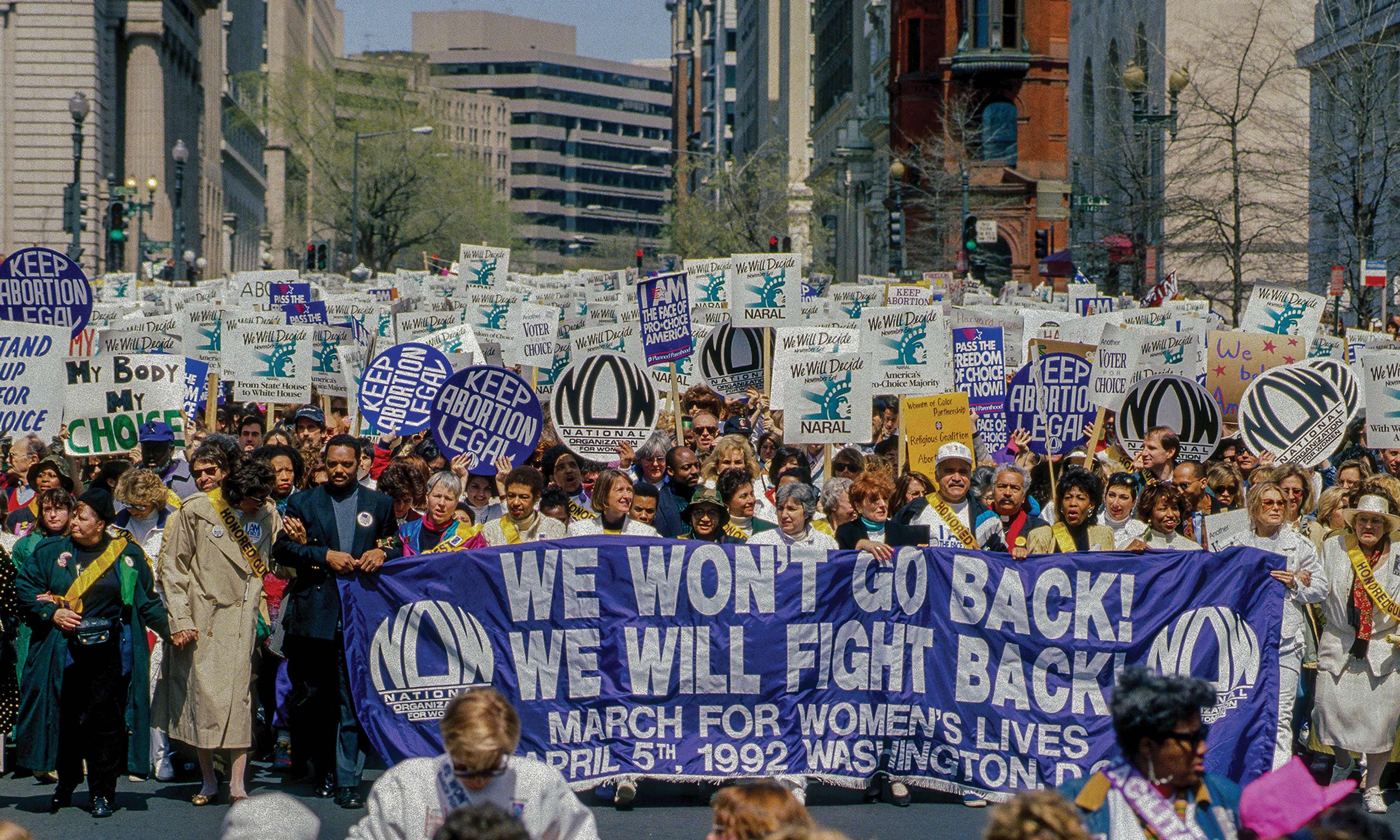
Every last pair of ice-crusted sneakers and socks, marching down the National Mall in frigid January. Every tedious, long trip made for the Cause by anyone, anywhere. Every prayer for the innocent lobbed blindly into the cosmos. Every diaper and dime sent to emergency pregnancy centers. Every word uttered or written on behalf of the defenseless. And to those who led by love alone: Every sleepless night spent taking care of a baby, waiting up for a teenager, arranging for an adoption, sitting with a woman in labor, dropping off meals to new families — all of those unbidden acts, seen or unseen, counted. Every silver pin of yesteryear, representing tiny feet.
Dobbs also yields a fourth kind of meaning, this one for politics. In the battles between those who believe the United States to be irredeemable without radical new arrangements and those who do not, a gale wind of momentum has just been sent the latter’s way. Hamilton, Madison, and Jay came through. The federalism that remains one of the wonders of the political world came through. It came through in a way that many since Roe had despaired of ever happening again.
And exactly as Roe did before it, that last lesson will race beyond America’s statehouses to courts and parliaments around the globe. For years, countries grounded in the same civilization have wearied of their traditionalist pasts and longed for a seat at the Western cool-kid table. A number have lately deep-sixed earlier national laws that proscribed and limited abortion. Now the most prominent court in the world has declared that the law need not rubber-stamp the destruction of the unborn after all. True, recrimination from abroad thunders on — for now. But the claim that legalizing abortion puts a nation in history’s swankest corner has been undercut. Without doubt, the second thoughts sparked by Dobbs will not be confined to U.S. borders.
Fifth, as has been said truthfully and ad infinitum since the leak of the draft opinion in May, Dobbs means that the pro-life movement must pivot to accommodate new work — more checks to be written; more pro bono legal help; more therapy for fragile families; more roofs to shelter innocent heads; more adoption options; more attention to foster care; more time spent in prisons and other places, helping absent and estranged fathers become fathers. In a word, more love.
It also suggests room for initiatives on another side of the ledger: deterrence. Thanks to Roe, for a very long time men with the worst intentions have enjoyed carte blanche to behave heartlessly. That cultural permission now looks shakier than it has in 50 years. Just for starters, in the name of renewed compassion for women, how about doubling the penalties for possession of date-rape drugs and imposing mandatory sentences for their use? Or toughening up paternity and child-support laws in every state? Or taking a closer look at a commercial surrogacy industry that treats mothers like domesticated animals and babies like high-end consumer choices? For that matter, if America is really more serious than ever about reducing the risks of unexpected pregnancies, how about finally regulating today’s chief teacher of brutality toward women: Internet pornography?
The long national rave inaugurated by Roe v. Wade is over. Its run has been prodigious. Just about every adult now alive checked in on that party somewhere. But what the forces behind Roe would never acknowledge, and the forces behind Dobbs do, is the ultimate lesson of that experience. There is a floor. There is a level beneath which men and women cannot sink in the name of autonomy without crashing through to a pit. And thanks to this Court, the United States is now lifted from the depths once more. This is not just a good thing but a great one, to be celebrated and memorialized and passed down with pride like all liberations from bondage, however partial.
So bring on the post-Dobbs future. Let voters in every state weigh a framed sonogram photo against a handmaid costume. Let everyone who learned the truths of Roe’s legacy the hard way now forgive, including themselves, and move on. Let the Zoomers and Millennials and other Americans shortchanged by family and community collapse come to know the truth: Life is good. New life is grand. Let the babies of tomorrow do what babies do, what Americans scarred by Roe missed out on: humanize the people around them. And may the continuing, manifestly loving work of the pro-life movement come to soften the hearts of opponents and rekindle something that so many after 1973 thought all but extinguished by law: mercy. Mercy.
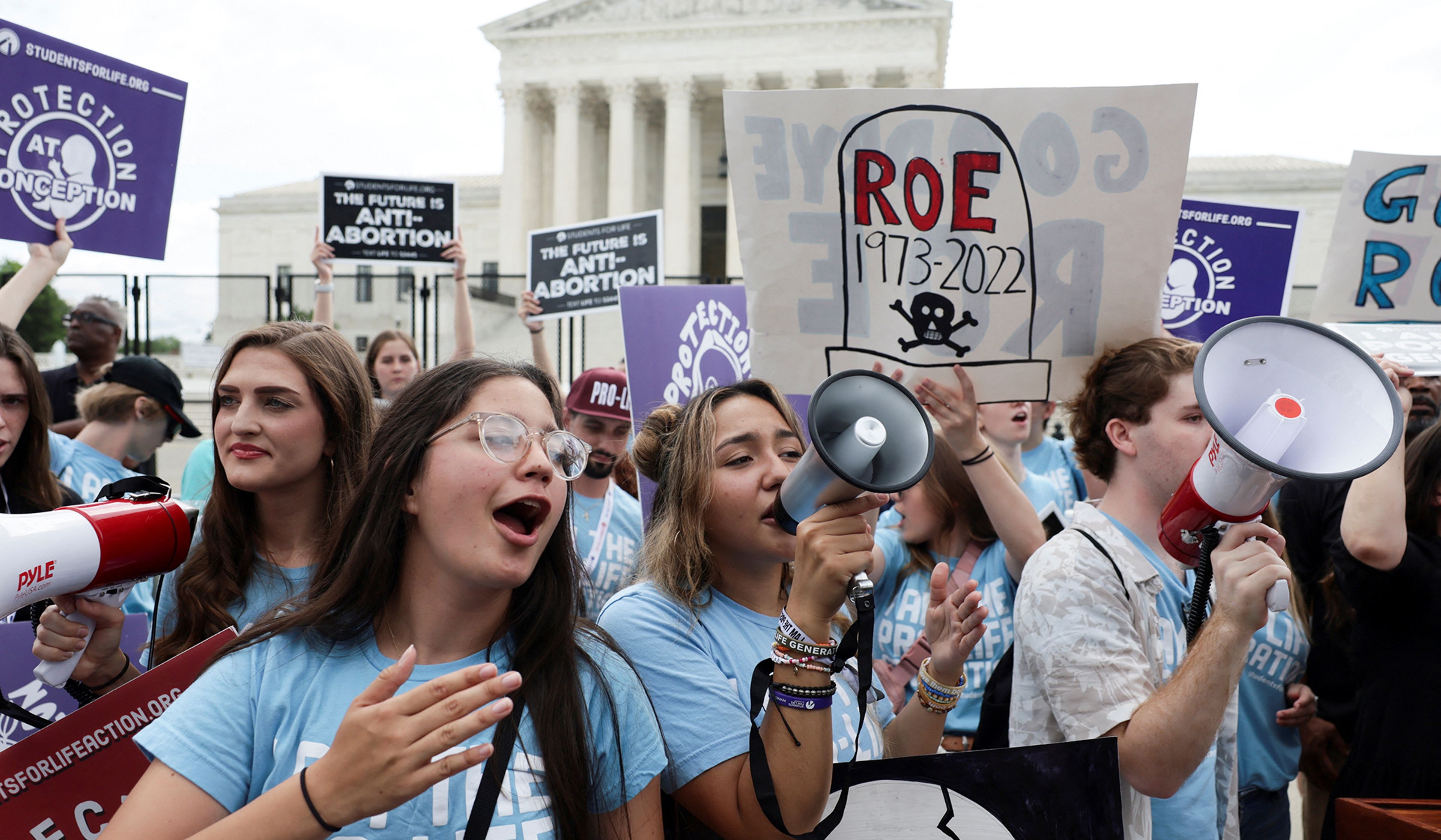
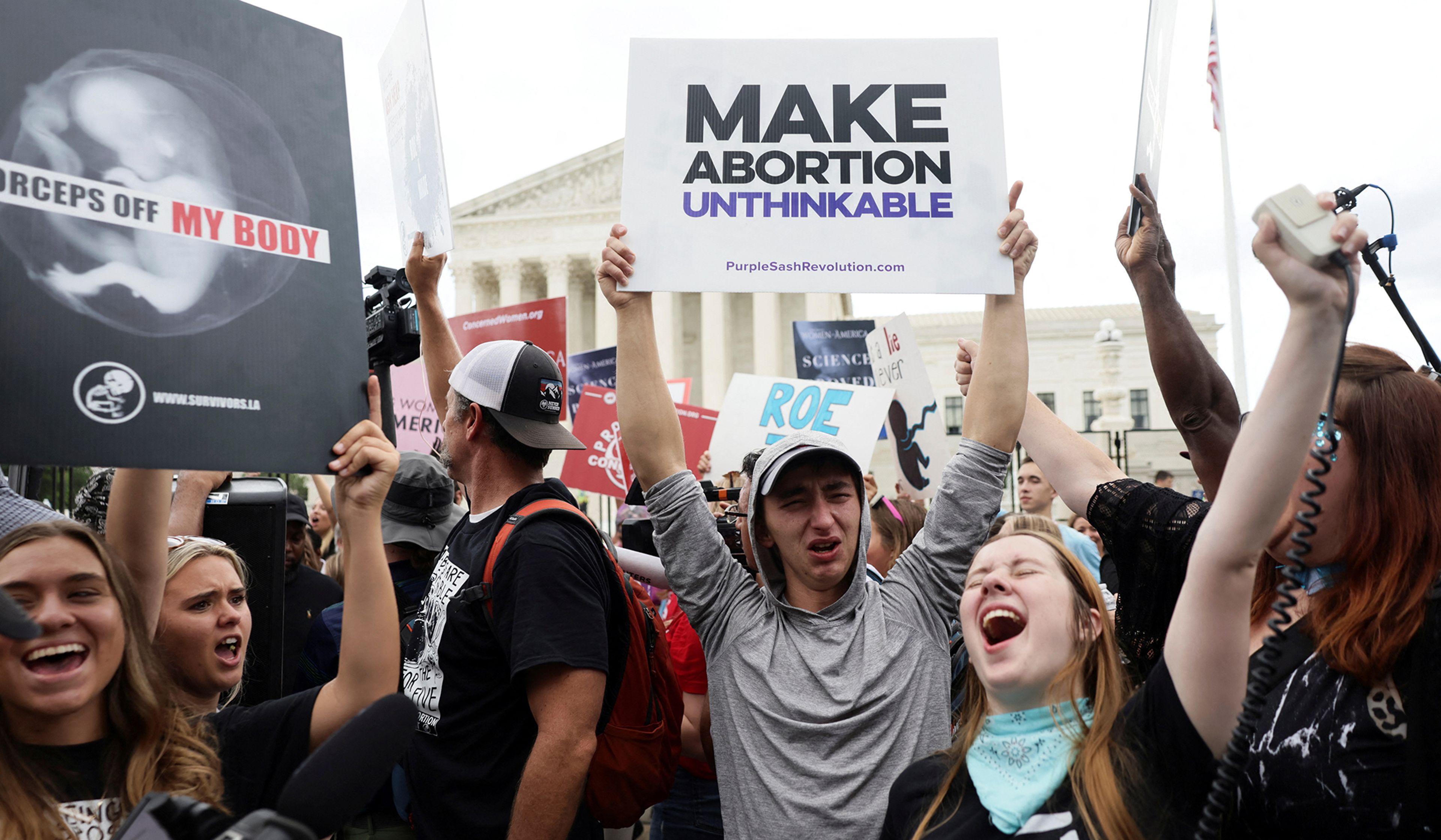
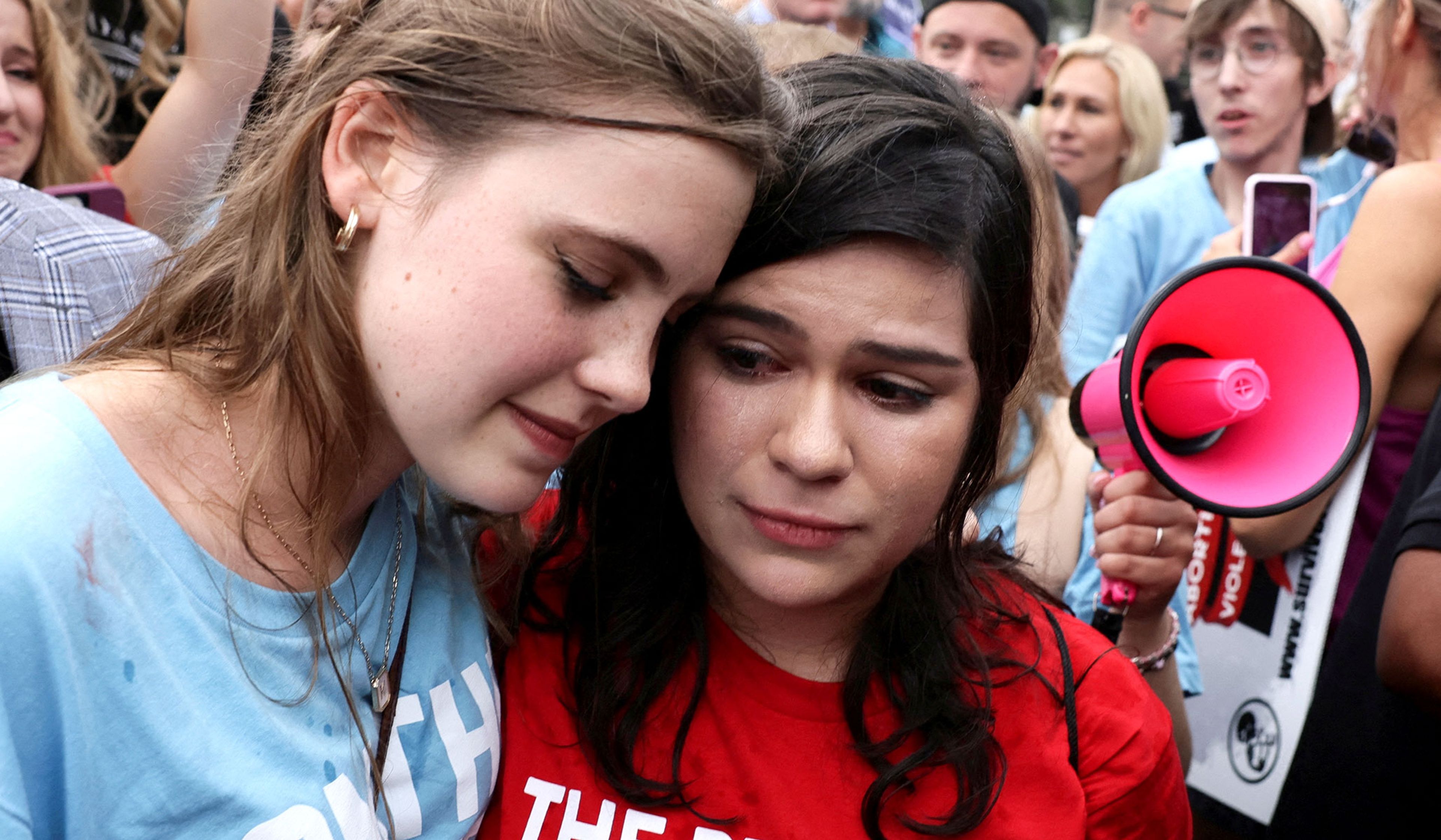
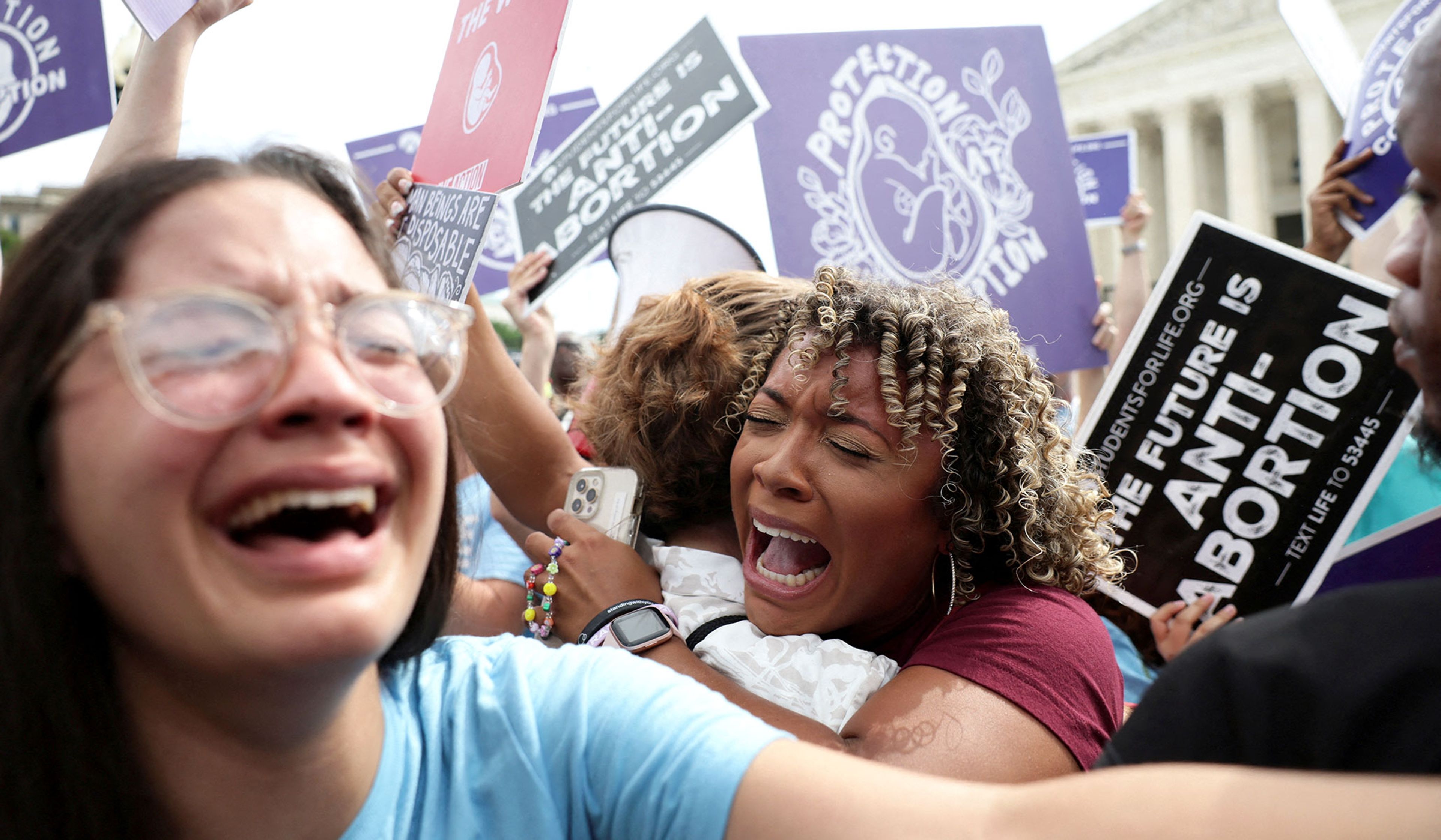
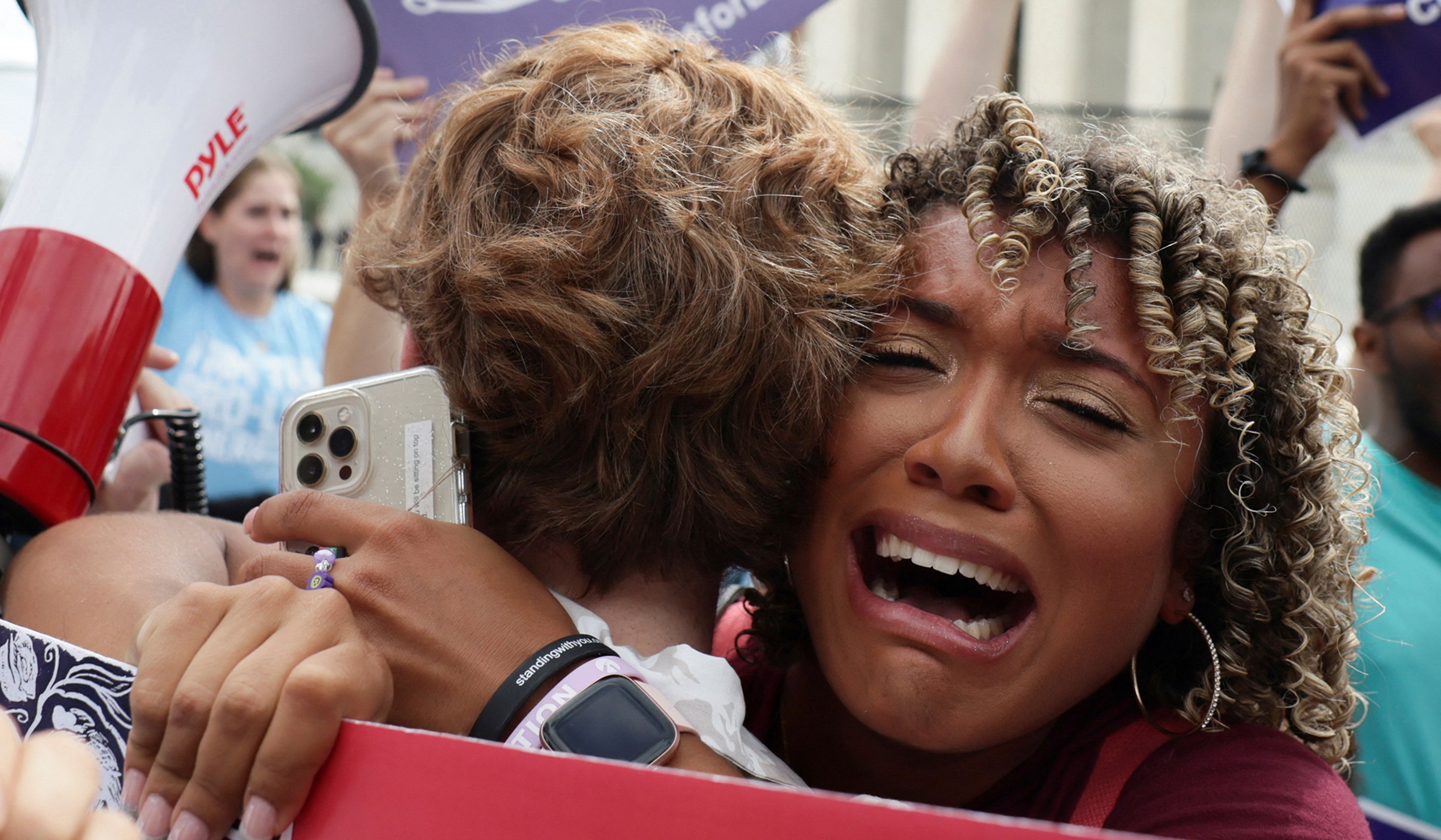
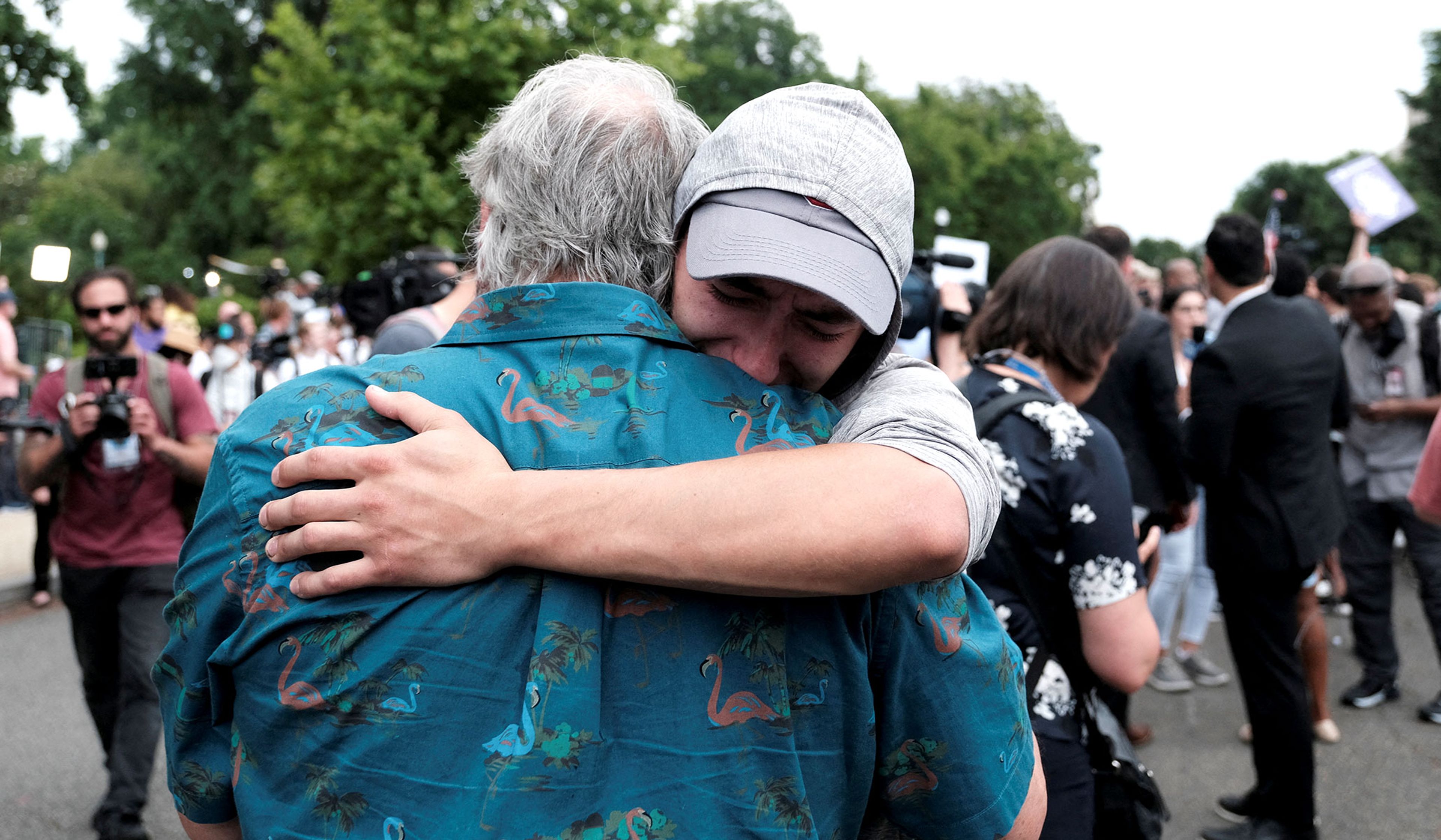
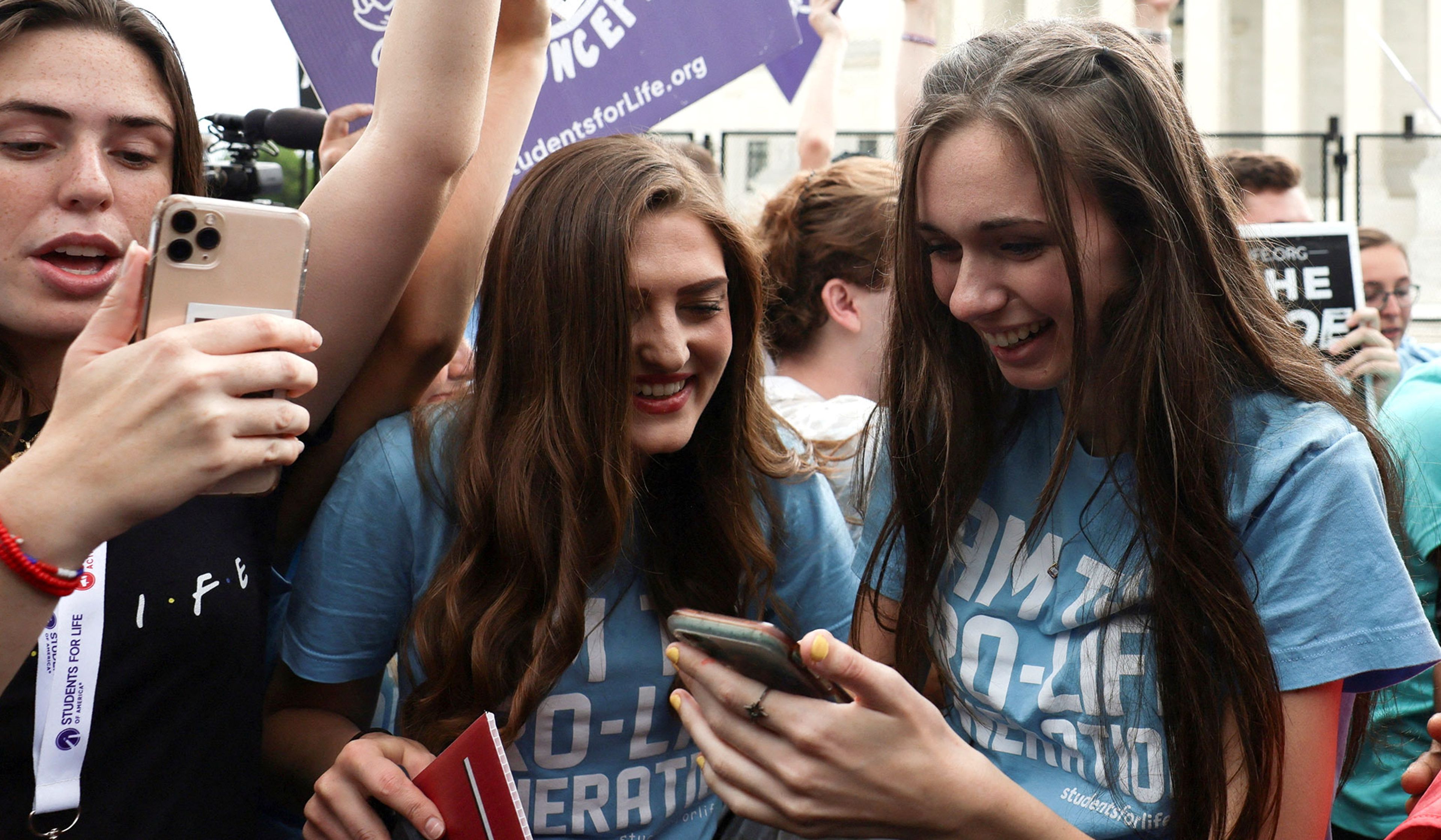
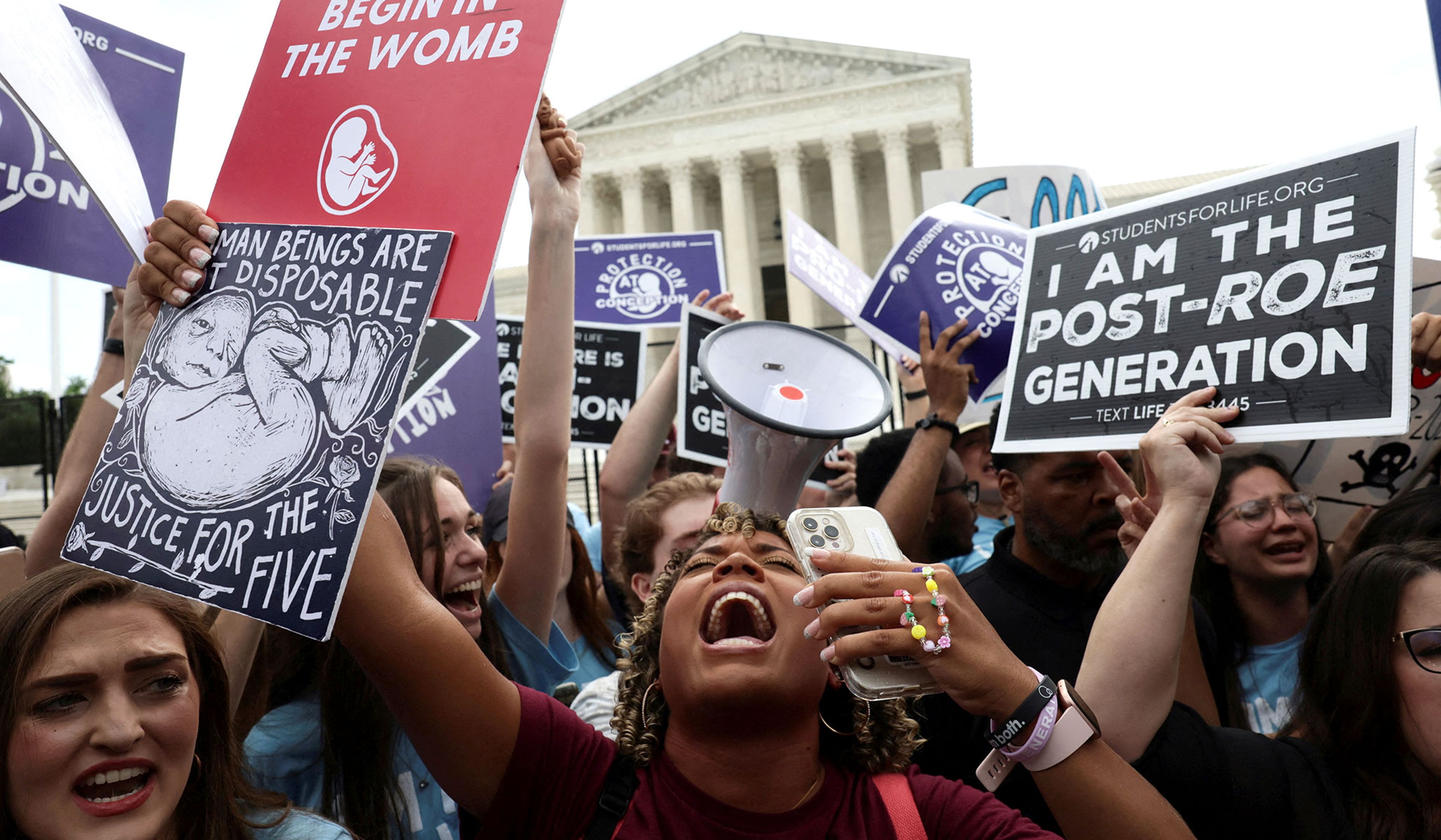
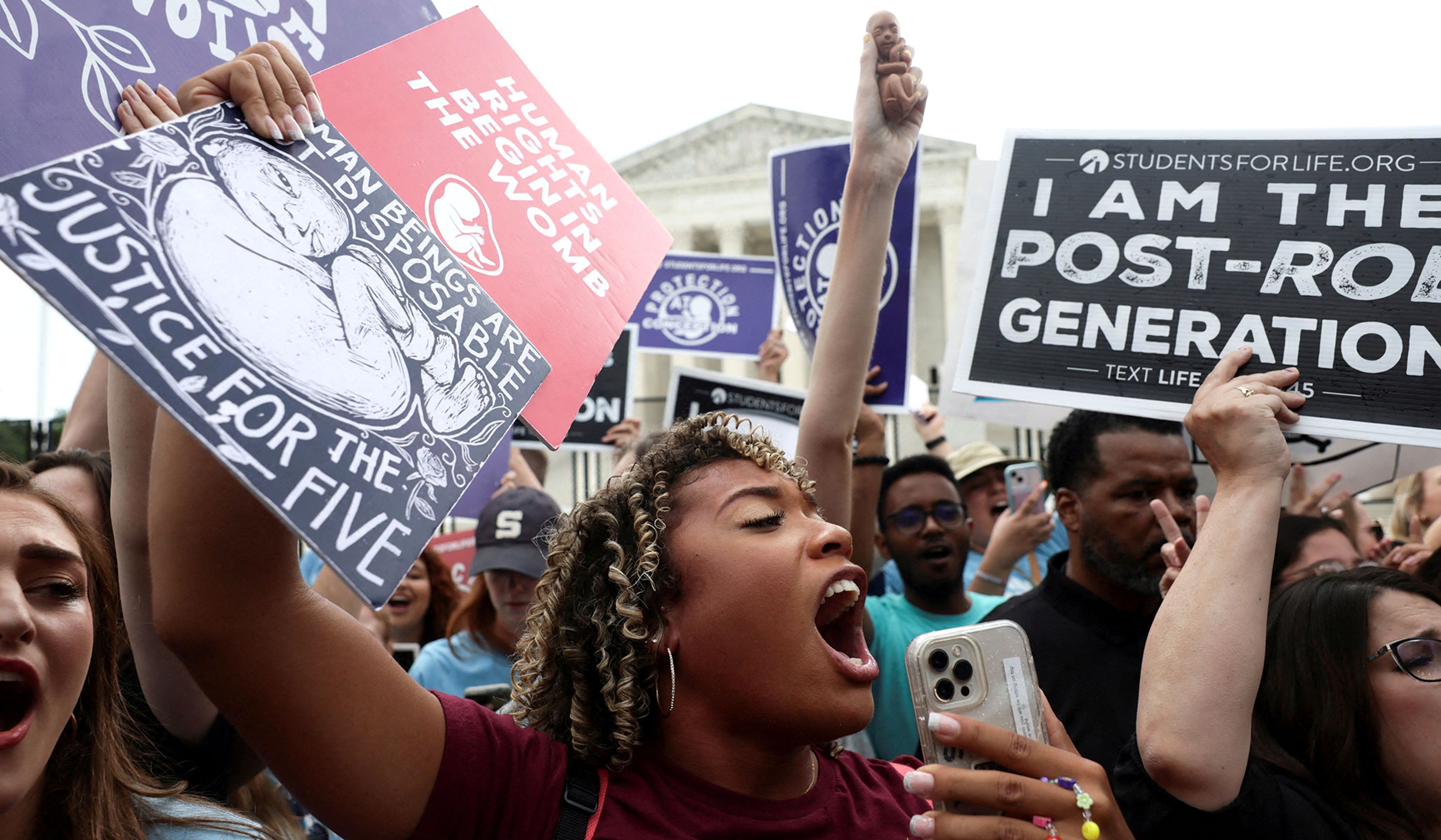
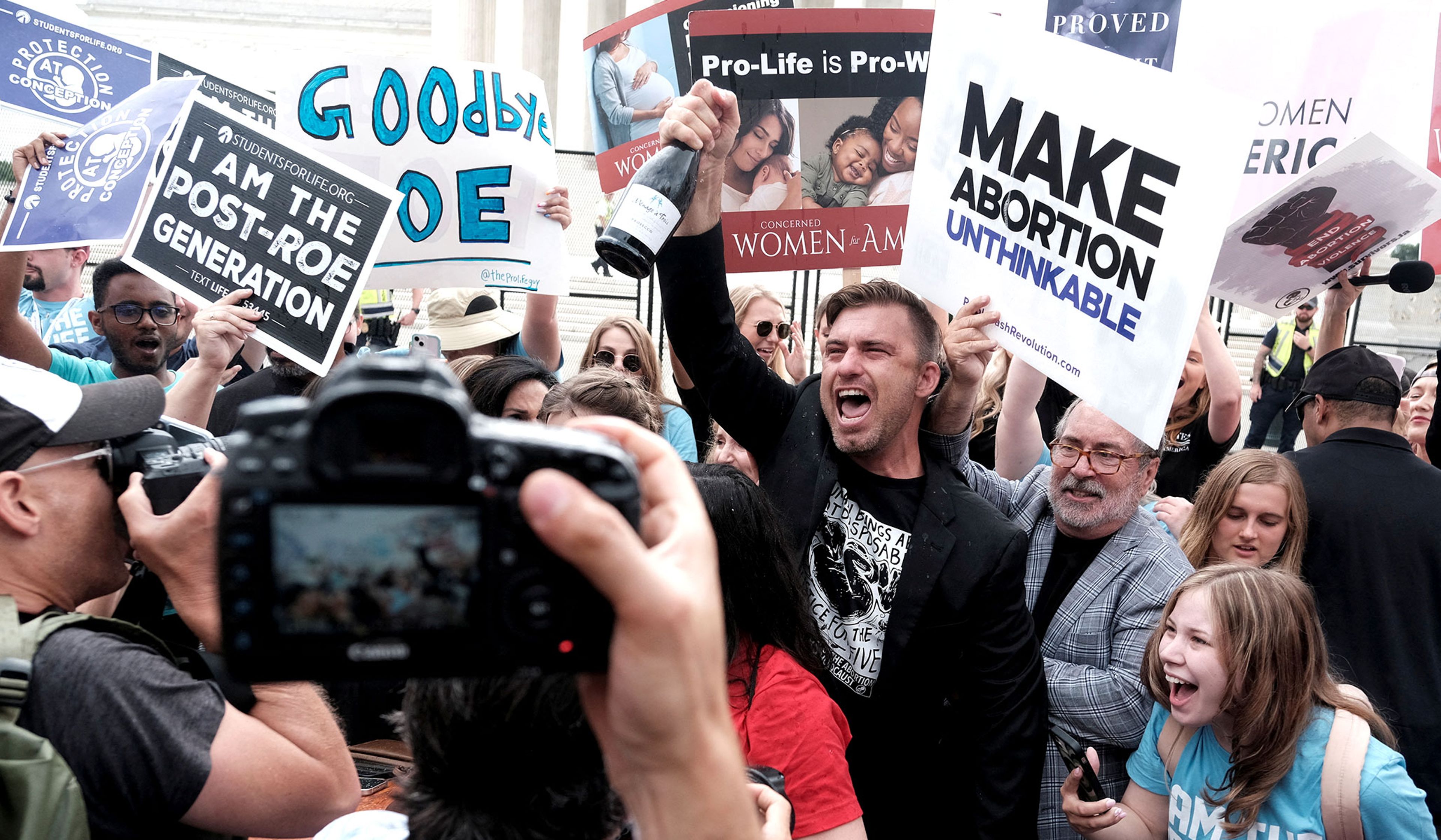
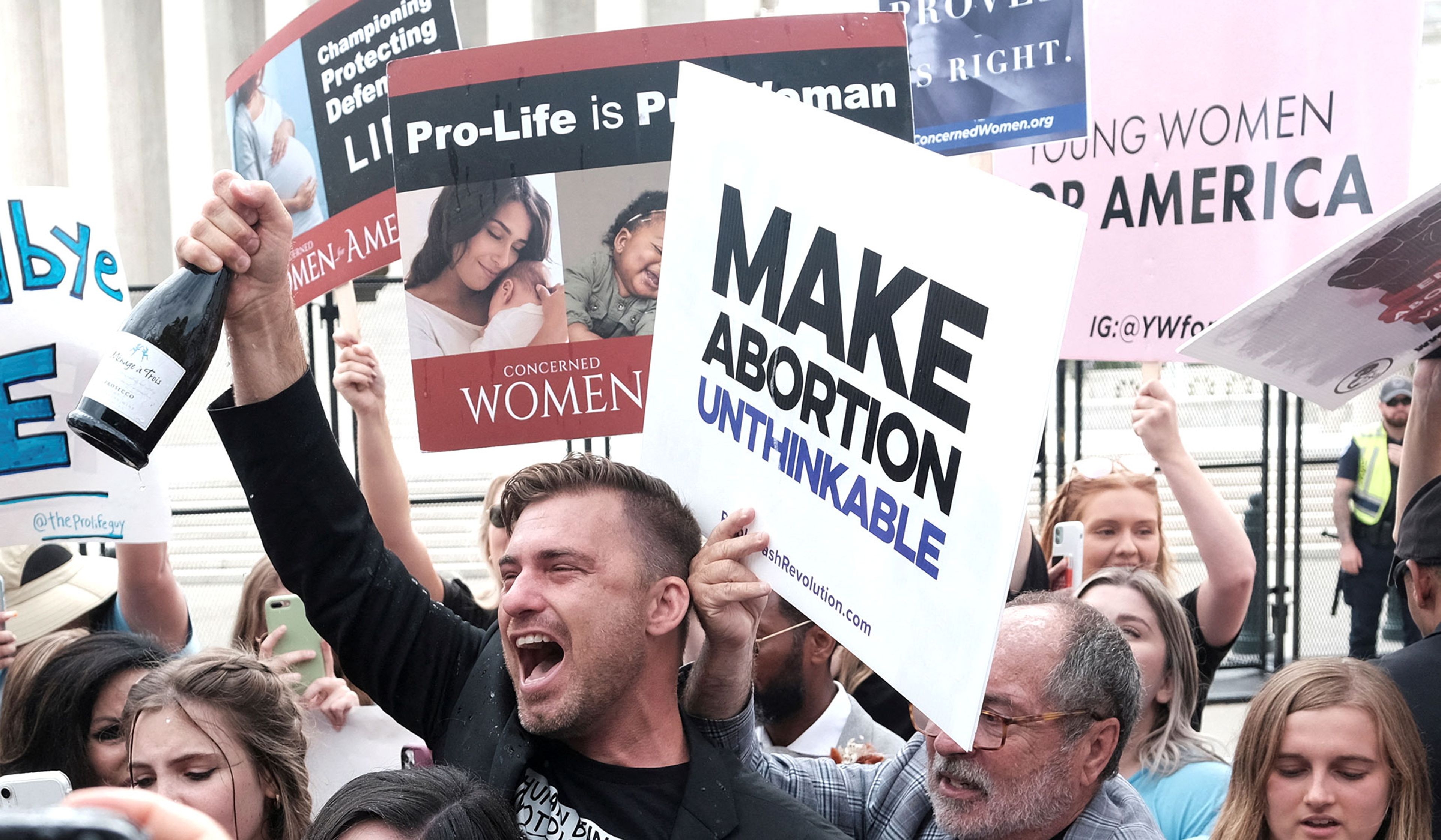
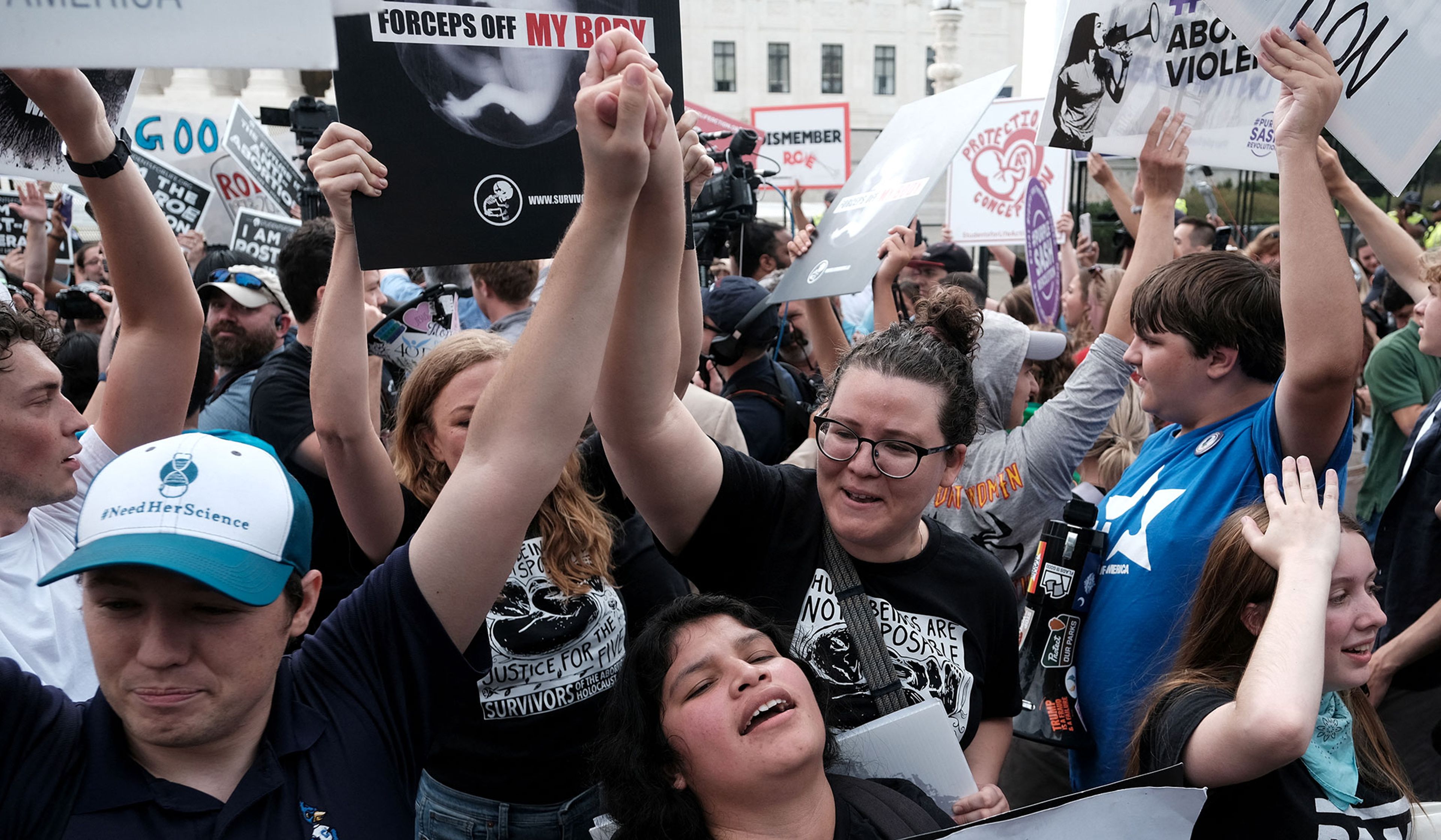
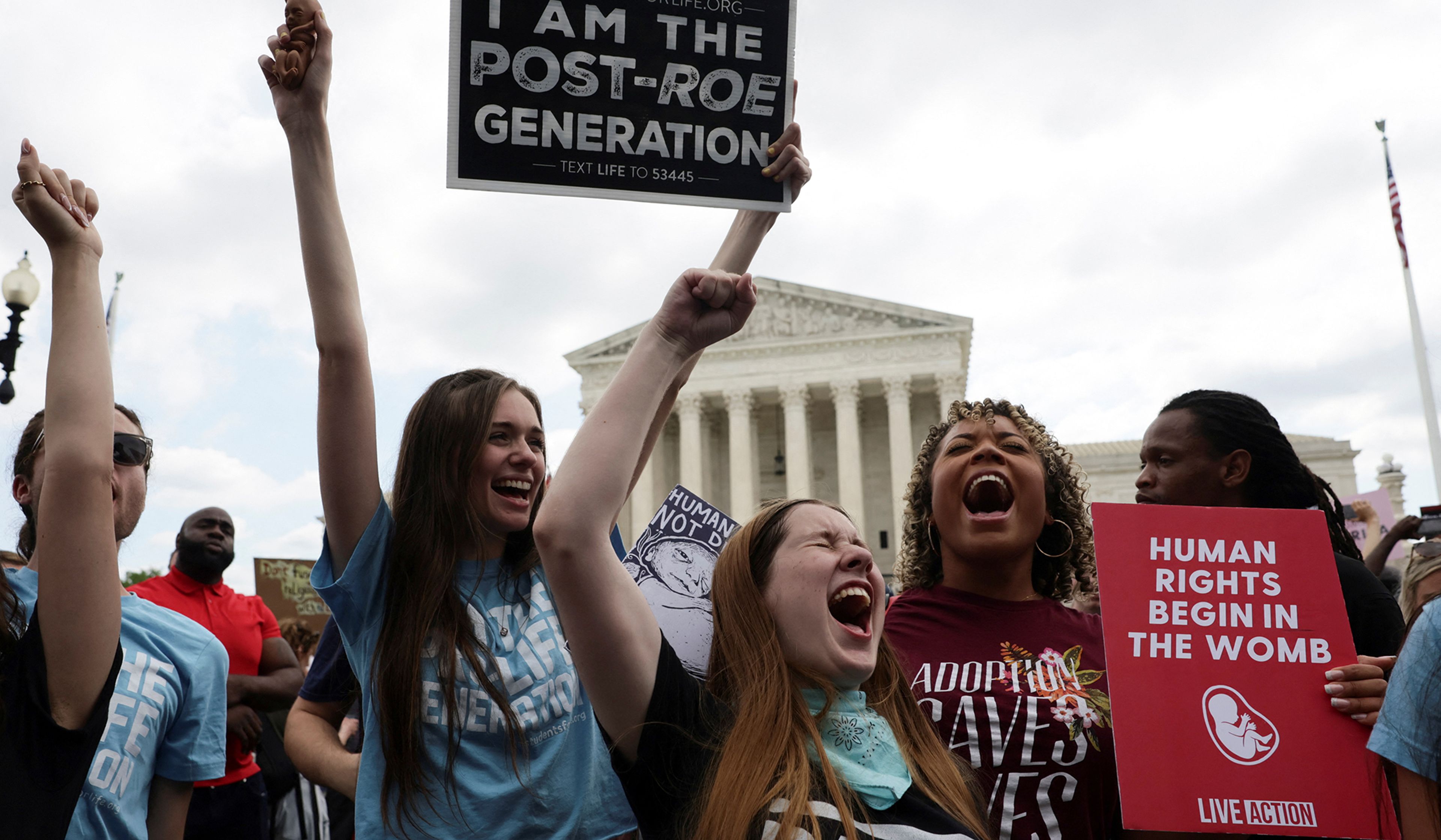
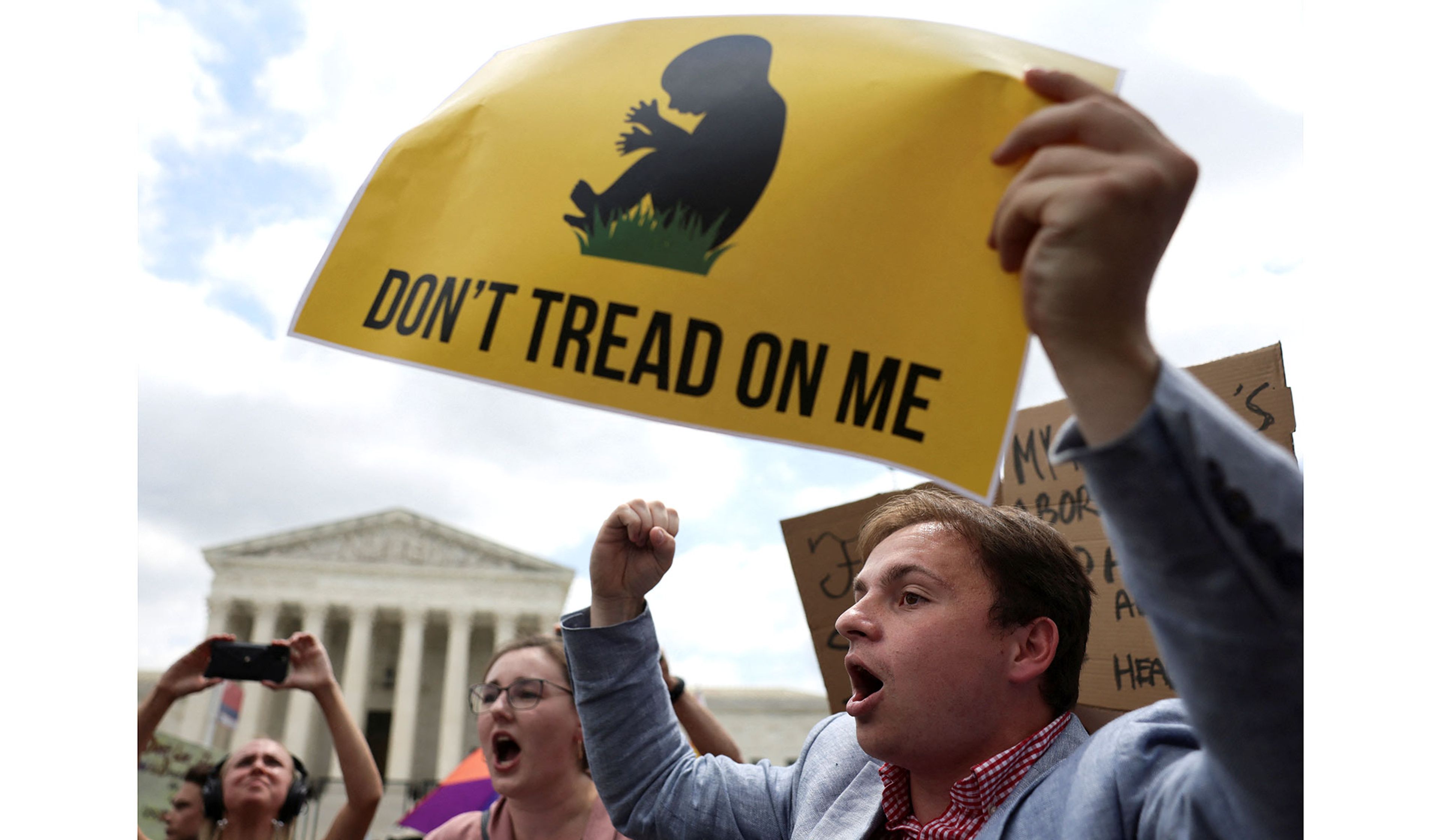
Pro-life activists celebrate outside the Supreme Court as the court rules in Dobbs v. Women’s Health Organization overturning Roe v. Wade in Washington, D.C., June 24, 2022.
Evelyn Hockstein/Reuters










Comments