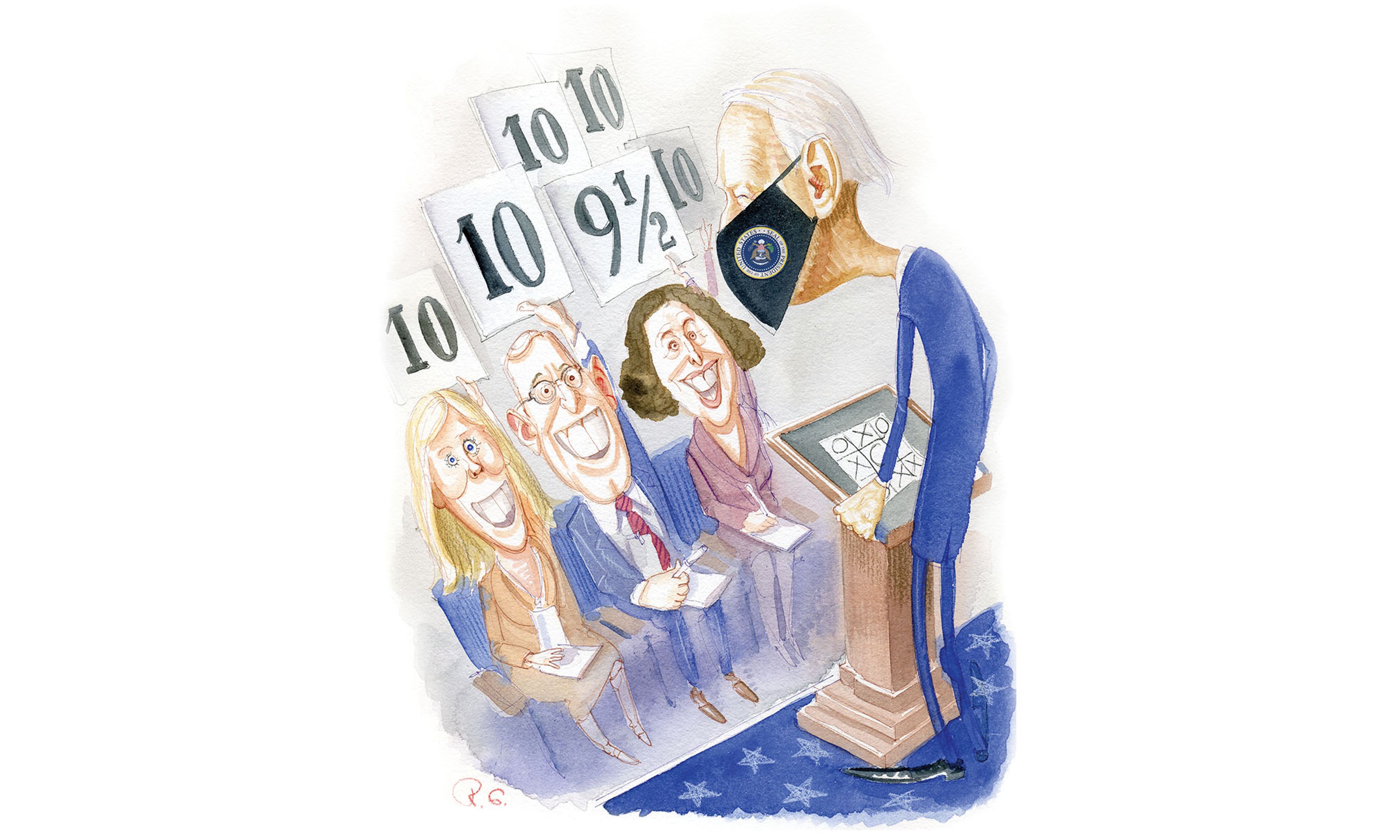
• Train Major? They haven’t even trained Joe.
• For 50 years, Joe Biden was among the staunchest advocates of the filibuster in the history of the United States. In 2005, he said opponents of the filibuster were, in the interest of myopic short-term gain, forgetting their role as “temporary custodians” of the Senate and engaging in a “naked power grab.” Political battles, Biden submitted, should be fought hard, but fought “within the strictures and requirements of the Senate rules.” To take any other approach would be to undermine “the one thing this country stands for: not tilting the playing field on the side of those who control and own the field.” But now Biden maintains that abuse of the filibuster “last year” has altered his thinking. But last year it was the Democrats who were in the minority and the Democrats who used the filibuster hundreds of times — with Biden’s support. He also talked of abuse during the last “20 years.” But the most famous of Biden’s pro-filibuster speeches came in 2005, and he has reiterated its theses as recently as this year. It is not recent abuses that have changed his view of the filibuster, and still less its alleged status as a “relic of Jim Crow,” as he puts it. It is purely that it is an obstacle to his party’s power.
• Biden said in his first press conference that Georgia’s new voting and elections law is “un-American” and “sick” and “makes Jim Crow look like Jim Eagle.” His particular focus is a provision barring anyone from approaching voters waiting in line and handing out gifts, specifically including food and water. Many states, however, have long had anti-electioneering laws that prevent people from approaching voters at the polling place or giving them gifts. Thirsty voters may still bring or buy water, and polling places may accept donations of water to a self-service box. It is just not to be handed out directly by partisans. Long lines are a real concern, but the bill beefs up Georgia’s power to force localities (which control individual polling places) to add precincts and voting machines. More broadly, while the bill modestly shores up election security and efficiency, it also expands weekend voting statewide, permanently authorizes ballot drop boxes, adds more state oversight of local officials, expands eligibility to be a poll worker, lets illiterate people have others help fill out their absentee ballots, and requires jails to give access to eligible inmates to apply for absentee ballots. On the whole, it creates broader access to voting in Georgia than existed before 2020, and bars nobody from voting. It is a shameful insult to black Americans who lived through segregation to compare this to Jim Crow.
• Biden held a two-hour conference with historians including Jon Meacham, Michael Beschloss, Doris Kearns Goodwin, Annette Gordon-Reed, and Joanne Freeman. “I’m no FDR,” said Biden at one point, meaning he sure would like to be. More pertinent is his desire to outshine his former No. 1. “Biden,” wrote Maureen Dowd, “is being hailed as a transformational, once-in-a-generation progressive champion, . . . while [Barack] Obama has become a cautionary tale about what happens when Democrats get the keys to the car but don’t put their foot on the gas.” The personal dynamics are fascinating, but what can Biden’s foot accomplish? He can spend trillions. But structural changes — a Green New Deal, no filibuster, D.C. and Puerto Rican statehood — seem far off, even with a tie-breaking veep and a prospectively stolen Iowa congressional seat. Keep the choruses of “Happy Days Are Here Again” on hold for now.
• Former president Donald Trump addressed the Capitol Hill riot in an interview with Fox host Laura Ingraham, and the lies popped out of his mouth like toads after a spring shower. “Right from the start, it was zero threat. . . . Some of them went in, and they’re hugging and kissing the police and the guards, you know? They had great relationships.” Some of them did that. And some of them beat the police and the guards with flagpoles, crushed them in doors, threw objects at them, or attacked them with bear spray. One of the rioters, Lonnie Coffman, had in his car eleven Molotov cocktails, thankfully never used. Many of the supporters Donald Trump summoned to Washington that day were peaceful and deluded: They thought their rally on the Ellipse and their march to the Capitol might induce Congress or Vice President Pence to change the vote of the Electoral College at the last minute. Some of those supporters came determined to make that case forcefully. Trump bears moral responsibility for them all.
• Democratic election lawyer Marc Elias filed a brief with a House committee making the case that the House should overturn the election result in Iowa’s second congressional district, where Republican Mariannette Miller-Meeks beat Democrat Rita Hart by six votes. Hart decided to bypass the Iowa courts with her challenge and go directly to the House, in a transparent attempt to avoid a decision based on Iowa law to seek one based on the partisan interests of fellow Democrats. Sure enough, Elias has put the point in black and white. Quoting from the last case when a Democratic-controlled House overturned an election (in 1985, to award an Indiana seat to a Democrat), his brief says the committee is “certainly not bound” to follow Iowa law, and indeed, “there are instances where it is in fact bound by justice and equity to deviate from it.” Uh-huh. Elias claims that 22 ballots, most of which went for Hart, were improperly discarded. But he doesn’t allege any fraud or irregularity in the consideration of the ballots, or even partisan favoritism. He just wants them, despite the fact that some clearly run afoul of Iowa law and there are questions about the provenance of others, to count in order to put his client over the top. Unfortunately, he’s arguing in a venue that will probably find this rationale compelling.
• The Albany Times Union reported that Andrew Cuomo’s mother, his CNN-host brother, and the families of other notables were tested for COVID last spring, at a time when sorely afflicted nursing homes in New York were scrambling for test kits. Lindsey Boylan, the former aide who first accused Governor Cuomo of sexual harassment, meanwhile told Ronan Farrow and The New Yorker that Cuomo once said he would “mount” her like a dog, after his puppy, Captain, tried to do the same. She thought then it was a “dumb third-grade” remark, though she went packing when he later kissed her, unbidden and without permission. This all keeps the media pot boiling, but there is a danger that the legislature’s impeachment investigation will (intentionally) bog down in detail, giving Cuomo time to wait the scandals out. Bill Clinton made use of the same technique; Cuomo may repeat his former patron’s experience.
• When Senator Elizabeth Warren (D., Mass.) tweeted that Amazon doesn’t pay its “fair share” in taxes, the company responded that it follows the tax laws that legislators, including Warren, make. She shot back that she would “fight to break up Big Tech so you’re not powerful enough to heckle senators with snotty tweets.” Her remark was at once alarming and pathetic. It should go without saying that criticism of a public official is not a legitimate reason to punish a company. But even the broken-up bits of Amazon, like any random guy with an Internet connection, would have the power to heckle senators. So among the lessons of this sorry episode is that arrogance makes you thoughtless.
• Senators Tammy Duckworth (D., Ill.) and Mazie Hirono (D., Hawaii) briefly threatened to hold up the nominations of any Biden nominees other than “diversity candidates.” They were frustrated by the lack of Asian Americans on Biden’s list but backed off after assurances that more officials of the desired racial background would be coming. In other words, the senators said they were prepared to engage in racial (and other forms of) discrimination in order to extort more discrimination. John Calhoun couldn’t fault their consistency.
• In 1957, Congress passed a resolution authorizing the use of military force to protect any Middle Eastern regime threatened by communists. It’s still on the books. So are the authorizations of force passed for the first and second Iraq wars, in 1991 and 2002. A bipartisan group of legislators wants to repeal them. This isn’t just a matter of legal housekeeping. The Obama administration cited the 2002 resolution to buttress its claim to be able to dispense with getting congressional approval to fight the Islamic State. The repeal bill does not, however, target the post–September 11 resolution of 2001, which has been stretched even more creatively. That’s the one that authorizes force against all those who took part in the attacks on us or harbored them. That one needs updating, as the terrorists we are now fighting are not the same people. But any sign of congressional interest in reclaiming powers it has granted to the executive branch is welcome.
• Congressional Democrats and congressional Republicans both decided to end party and committee rules that had forbade earmarks over the last decade. Now legislators will be able to direct that spending goes to particular projects, usually in their own states and districts. The end of the practice was bipartisan, too: Earmarks had become associated with corruption after a series of congressional scandals. The high-minded argument for bringing them back is that the legislature, rather than the executive, should control spending. In the current fiscal and political context, though, it is hard to see this as anything but another sign that neither party sees any responsibility to guard taxpayers’ interests.
• After the overwhelmingly Republican legislature in South Dakota passed a bill to uphold sex-exclusive sports (which are currently under attack from transgender lobbyists across the country), Governor Kristi Noem stunned conservatives nationwide by abusing her powers in a “style-and-form” veto, removing the bill’s application to collegiate sports as well as its requirement of biological-sex verification. Noem’s team further depleted her political capital by dismissing the legitimate criticism of her actions as “conservative cancel culture” and unpersuasively attempting to justify her move as having been a strategic one. Noem explained that the bill would “only allow the NCAA to bully South Dakota,” and that it would be far better to try to build “a coalition,” by which she meant setting up a website. If the NCAA is acting as a bully, as it well may be, the correct response is to stand up to it. Governor Bill Lee of Tennessee had the right idea in signing a bill “to preserve women’s athletics and ensure fair competition.” Republicans will be fighting big business on this issue. They had better get used to it.
• You know you have a sick society when you write the words “dissident baker” and everybody knows exactly whom you are talking about. We mean, of course, Jack Phillips, the Colorado cakeshop owner who is very much interested in literally minding his own business while an increasingly exotic assortment of cranks and crackpots attempt to use state nondiscrimination laws to bully him into preparing gay-wedding cakes, gender-transition cakes, or Satan-using-a-sex-toy cakes. This is a campaign of ongoing harassment, led most energetically by Autumn Scardina, the publicity-hungry transgender lawyer behind both the gender-transition-cake request and the Satan-themed one that we cannot actually describe in detail while maintaining our editorial standards. Scardina, who made the transgender-cake request on the same day that the Supreme Court agreed to hear another of the cases against Phillips, has barraged the baker with abusive emails, while Phillips’s wife and daughter have been subjected to all manner of insult and threat. Phillips describes the timing in an interview with National Review: “This person said that if this case was dismissed or if we won for any reason that they would be right back the very next day, to call and request another cake and sue us again.” Which is exactly what has happened. Scardina’s actions are, of course, reprehensible, but the underlying problem is the law itself, which by refusing to explicitly make room for the conscience invites precisely this kind of abuse. Colorado could change the law, and should.
• A disturbed young man shot nine people at three spas or massage parlors in or near Atlanta, killing eight. Six of the dead were Asian women, leading many to call the murders hate crimes. Hatred of women in sex work, and women generally, in all likelihood (the shooter was a frequent patron) was the motive; maybe something about Asians as well, although we do not yet have evidence. Is there a wave of anti-Asian sentiment abroad? There are certainly indications of a surge in harassment of Asian Americans at the start of the pandemic. But many of the worst attacks, especially on elderly people, have been concentrated in a few big cities that have seen rising disorder in general. As with the Atlanta killings, it would be best to await more evidence before reaching conclusions.
• Addressing the news that ten people had been murdered in Boulder, Colo., President Biden explained that he didn’t need “to wait another minute, let alone an hour, to take commonsense steps that will save the lives in the future and to urge my colleagues in the House and Senate to act.” Biden’s first agenda item is to extend federal background checks to private firearms transfers conducted within the same state. But, as is almost always the case, the shooter in Colorado bought his gun from a store and passed an FBI check in the process. Had Biden waited a little, he would have known that. Also on the agenda is to prohibit the most commonly owned rifle in America, the AR-15, and to limit the number of rounds commercially available magazines can hold to ten. Biden insists that these measures would save lives, but there are scant data to support this claim. A review of the available studies conducted by the RAND Corporation and updated last year found the evidence that bans on so-called assault weapons reduce murders and mass shootings to be “inconclusive.” The issue of violence committed with firearms is a thorny and complicated one. There are no obvious answers, but one thing is for sure: Those who refuse to pay attention to the details are of no help at all.
• Baltimore is the second-most-dangerous big city in the United States (go, St. Louis!) and one of the most dangerous cities in the world, with a higher murder rate than Kingston, Jamaica, or Chihuahua, Mexico. In response to that, the geniuses who have made Baltimore what it is have decided to stop enforcing the law when it comes to certain offenses, such as drug possession and prostitution. Baltimore had suspended prosecuting these crimes during the coronavirus epidemic and has now decided to make that a permanent practice. We enjoyed the third season of The Wire as much as anybody, but we have our doubts about using it as a model of public policy. There is a good case for liberalizing the laws regarding drug possession (and arguably those for prostitution as well), but the way to reform them is not to have the police simply ignore their existence, which is an invitation to chaos. Street-level drug-dealing and prostitution go hand in hand with other, more serious crimes, and tolerating them creates an atmosphere of lawlessness and despair. If Maryland wants to undertake a serious program of criminal-justice reform — which could involve redirecting low-level drug and prostitution offenders out of the criminal-justice system and into drug treatment and other services — then that requires a larger effort than simply turning a blind eye to quotidian crime in Baltimore, which has been suffering far too much of it for far too long.
• As the nation’s teachers’ unions continue their remarkably successful campaign for their two-point agenda — (1) not going to work, and (2) getting paid — another epidemic is showing up in schoolchildren from Las Vegas to Chicago to South Florida: academic collapse. Many school districts have seen the number of students failing one or more courses triple from their usual levels, and many education experts worry that the damage done by extended absence from the classroom may prove irreversible for many students. In North Carolina, two out of three students are rated “not proficient” in the latest round of math examinations, up from less than half last year, according to Reuters. A McKinsey study of 25 states finds that white students are about three months behind where they would be in math absent the pandemic interruptions, while black and Latino students are about twice as far behind. We put teachers at the front of the line for vaccinations for a good reason: The work they do — or, at least, the work they are supposed to be doing — is critical. The CDC has advised that schools can be safely reopened with as little as three feet of social distancing — and the progressives who spent the past year imploring the world to “listen to the science” decided instead to listen to the public-sector unions, the people who actually run the Democratic Party. The toll of the coronavirus epidemic has been horrible, but we are making a generation of students pay a higher price than they should have to.
• Politico reports that in October 2018 Hunter Biden was “involved in a bizarre incident” in which his brother’s widow, Hallie (with whom Hunter was at that time involved romantically), took Hunter’s .38 revolver and threw it in the garbage behind a Delaware grocery store. The incident raises a series of troubling questions — not least of which involves the Secret Service, which according to multiple sources inserted itself in the investigation in an apparent attempt to shield the Bidens from trouble while Delaware State Police were questioning the pair. (At the time, no Biden family member, including the former vice president, was a government official or under Secret Service protection, and a White House spokesman insists that “President Biden did not have any knowledge of, or involvement in, the Secret Service’s alleged role.”) Politico also obtained a copy of Biden’s federal Firearms Transaction Record, in which he responded “No” to a question asking, “Are you an unlawful user of, or addicted to, marijuana or any depressant, stimulant, narcotic drug, or any other controlled substance?” In so answering, Hunter Biden almost certainly lied and thereby committed a federal crime. In 2014, Biden was discharged from the Navy Reserve after testing positive for cocaine. Since then, he and his family have repeatedly spoken about his continued drug problem. The entire matter warrants investigation.
• The late-coming correction never gets the same attention that the viral disinformation does. It’s difficult to think of a starker, more deleterious example of this phenomenon than the saga of Sidney Powell, the lawyer who spent the aftermath of the 2020 presidential election insisting that it had been stolen from Donald Trump by a communist cabal including Joe Biden, the Democratic Party, China, Hugo Chávez, and Dominion Voting Systems, among other culprits. All the while, Powell lined her pockets with the donations of people she called patriots. Dominion, quite understandably, does not appreciate this unearned reputation as a conspirator and is taking Powell to court in a defamation suit. In a motion to dismiss it, Powell’s team defends their client by asserting that “no reasonable person” could be expected to believe her outlandish accusations. In any settlement, she should have to put that on her business cards.
• Cancel culture has also found its way to Sharon Osbourne, a panelist on the daytime show The Talk. According to a CBS statement, Osbourne “has decided to leave” the program for good after coming under fire for comments made on the show in March. The episode in question featured the show’s hosts debating whether Piers Morgan’s tart comments about Meghan Markle were racist. Osbourne defended Morgan, voicing her concern that doing so might lead to her being considered racist herself. After Osbourne faced allegations of racism in part because she had talked over her African-American co-host Sheryl Underwood during the conversation, CBS announced Osbourne’s departure and said that her conduct “did not align with our values for a respectful workplace.” It is always troubling to see a figure marched out of the public square for issuing the wrong opinion or committing some unintended breach of social etiquette, but this particular cancellation comes with a golden parachute: Reports are that Osbourne will receive a pay-off of several million dollars.
• Houses of worship in Washington, D.C., have been subjected to some of the country’s harshest coronavirus-related restrictions. On March 25, however, they were granted significant relief. A federal judge ruled that the city government’s strict regulation — limiting occupancy to 25 percent, with a 250-person cap — was unconstitutional. The ruling found that the District’s rules made it an outlier compared with the rest of the country and that the cap on attendance was needlessly restrictive, since many churches in D.C. can accommodate more than 500 individuals while still allowing for proper social distancing. Take, for example, the Basilica of the National Shrine of the Immaculate Conception, the largest Catholic church in the nation. Under Mayor Muriel Bowser’s restrictions, it could seat only about 8 percent of its capacity. The decision notes, too, that such a restriction would not be applied to an institution that “hawked wares instead of proclaimed the Gospel.” The court’s ruling was not only correct but particularly well timed for those celebrating Passover and Easter in the District.
• In a victory for common sense as well as civil rights, the Sixth Circuit federal appeals court upheld on freedom-of-speech and -conscience grounds the right of a philosophy professor to refuse to refer to a biologically male student with the terms that the student and the administration of Ohio’s Shawnee State University demanded. The student had rejected every reasonable compromise — such as Professor Nicholas Meriwether’s offer to use the student’s last name (rather than “Mr.” or “Ms.,” as he refers to other students), or even to use “Ms.,” “she,” and “her,” provided the university permitted him to append to the syllabus an explanation of his views on this central philosophical issue. Writing for a unanimous three-judge panel, Trump appointee Amul Thapar trenchantly explained that free speech must reign in the classroom if the American university is to be what it purports to be, a sanctuary of critical examination, not dogma or political orthodoxy. The First Amendment, moreover, does not abide the university’s blatant hostility to religious belief. May the decision be read widely.
• During a high-level U.S.–China meeting in Anchorage, Secretary of State Antony Blinken and national-security adviser Jake Sullivan squared off against their Chinese counterparts. Blinken’s mention of the Chinese Communist Party’s abominable behavior during the opening statements set off the Chinese side, and top CCP diplomat Yang Jiechi responded with a 17-minute tirade (far exceeding the two-minute limit), in which he accused the U.S. of human-rights abuses and argued that America’s stand for universal rights does not reflect global opinion. After the U.S. officials responded, Yang admonished them: “The United States isn’t qualified to speak from a position of strength.” The Chinese party-state has an inflated view of its strength, though, and its antics in Anchorage indicate that it is frustrated that President Biden has largely maintained the Trump administration’s tough stance on China. Nevertheless, the administration was mistaken to provide the CCP such a global platform from which to broadcast its lies to the world.
• The World Health Organization’s investigation into the origins of COVID-19 is an international scandal. The global health body has released a joint report with the Chinese government on its findings about the disease, following a WHO mission to China in February, and it only confirms the grave doubts that outside observers harbored about the panel’s impartiality. The study dismisses as “extremely unlikely” the lab theory of COVID’s origin — the idea that the virus leaked from the Wuhan Institute of Virology, the highest-security lab in China (biosafety level four) and one known to have experimented with coronaviruses carried by bats. It instead asserts that the virus most likely reached humans directly from bats or via other small mammals. The available circumstantial evidence, including declassified U.S. intelligence, provides strong support for the lab-leak hypothesis, notwithstanding the insistence to the contrary of the Chinese government and researchers with blatant conflicts of interest. Given how much we still don’t know, it would serve the public, not to mention history and science, to have a truly trustworthy and comprehensive investigation into the origins of this calamity.
• Beijing has continued its relentless harassment of Taiwan, sending ten jets into the country’s air-defense identification zone as a U.S. ambassador was visiting. The incident took place just days after the Chinese party-state sent its largest-ever incursion into the zone. Because this constant harassment has cost the Taiwanese military precious resources, draining its ability to fight off an invasion, Taiwan’s military will no longer scramble its own jets in response. Instead, it will track the Chinese planes with surface-to-air missiles on the ground. Two top U.S. commanders have warned in recent weeks that an offensive from the mainland could take place sooner than the conventional wisdom has long held. Meanwhile, the Biden administration’s diplomacy to shore up Taiwan’s position has been solid: The visit of the U.S. ambassador was part of a continuation of the previous administration’s overhaul of diplomatic protocol toward Taipei. Still, the CCP is itching to take Taiwan, and absent a concerted effort to strengthen the U.S. military posture in the region, it stands a chance of succeeding.
• A democratic alliance is a heartening thing. The United States, Britain, the European Union, and Canada have coordinated sanctions against Chinese officials responsible for the persecution of the Uyghurs and other minority groups in the northwest of China. We will need more such coordination, if Beijing is to be checked, and if human rights are to be defended. In retaliation, Beijing sanctioned Western officials, such as members of the European Parliament. They will now be forbidden to travel to China and to engage in business dealings with China. “Badge of honor,” responded one MEP, Raphaël Glucksmann of France. That’s the spirit.
• “So, you know Vladimir Putin,” said George Stephanopoulos to President Biden. “You think he’s a killer?” “Mmm-hmm, I do,” answered Biden. This was in sharp contrast to Biden’s predecessor. (The first time Donald Trump was asked about Putin and killing, he said, “Well, I think our country does plenty of killing also.” The second time he was asked about it, he said, “What, you think our country’s so innocent?” There was once a phrase for this: “moral equivalence.”) Biden’s remark may have been undiplomatic. In response, Russia recalled its ambassador. But the remark was also true, and there is value in that.
• Putin’s government has imprisoned Alexei Navalny, the Russian opposition leader, in a notorious penal colony. (As a rule, penal colonies in Russia are notorious.) “His health is extremely unfavorable,” said his lawyer, “and every day gets worse.” Navalny’s right leg has turned numb, and he cannot put weight on it. “We are afraid for his life and his health,” said the lawyer. Last summer, Russian agents poisoned Navalny with a military nerve agent, Novichok. He was saved in a hospital in Germany. Brave almost beyond belief, he went back to Russia in January, and was arrested at the airport. The more the world pays attention to him, the better the chances he will survive.
• Since the Burmese military staged a coup on February 1, Burmese citizens have been in the streets, protesting, wanting their democracy back. The authorities have killed more than 500 of them. They are determined to maintain their grip on power, no matter what. And yet the people keep coming out to protest, despite the killing. They too are determined, and inspiring for it.
• After Phil Klein took over as the new editor of National Review Online in mid March, the staff of NR convened a “Hullaballoo & Tattoo” to toast outgoing skipper Charlie Cooke and his achievements during the five years of his editorship. As part of the hullabaloo, the writers and editors were challenged to write a limerick celebrating — and poking fun at — our Bonnie Prince Charlie. Deputy managing editor Fred O’Brien wrote the winning verse: “When the British lost Citizen Charlie, / They all thought he was acting bizarrely; / But through quick transformation / He’s embodied our nation, / Like Uncle Sam riding a Harley.”
• Older NR readers may remember the late-Seventies issue whose cover described articles by Eldridge Cleaver and G. Gordon Liddy. (“That will look good in the faculty lounge!” Jeff Hart laughed, delighted.) In a way, the two relics of the greater Sixties became mirror images of each other: icons of extremism in defense of . . . whatever. Liddy, the Watergate burglar who never ratted, spent the rest of his life cultivating his tough-guy manner. One gig was a column for Forbes FYI, a lifestyle magazine then edited by Chris Buckley, in which he gave advice on security — how to defend yourself if attacked, how to protect art from theft. Action-figure politics never goes away, as we saw in the streets of Portland and the Capitol Hill riot. Liddy was no episode, but a harbinger. As a radio and TV host, he was surprisingly mild-mannered, winning. Dead at 90, R.I.P.
• Charles Hill, a 27-year veteran of the Foreign Service, avoided the ceremonial niceties of the embassy, preferring to strategize behind the scenes. In appointments in Taiwan, Hong Kong, and South Vietnam, and as a senior adviser to Reagan, Kissinger, and George Shultz, he was concerned to identify emerging threats to global stability. He left government for academia in 1989 and in 1992 settled at Yale, where his wife, Norma, taught in the political-science department. There Charlie Hill found a professional home and built his second career, teaching in the Directed Studies program, building courses with titles as various as “Intellectual Circles” and “Baseball as Grand Strategy.” America in the 21st century, he thought, must aim not so much to conserve an international order of sovereign states as to arrest and reverse their decline, as some indulge in authoritarian aggression (e.g., China) while others succumb to decadence and indifference (the West). Never sentimental but always creative, he looked to literature for the insight that “grand strategy requires, beyond rational calculation, in acts of the imagination.” See his book Grand Strategy: Literature, Statecraft, and World Order, a marriage of humanism and foreign policy. Dead at 84. R.I.P.
• James Levine was one of the greatest conductors — one of the greatest musicians — of our time. A native of Cincinnati, he apprenticed under George Szell in another Ohio city, Cleveland. Like Szell, Levine was rigorous, versatile, and brilliant. For 40 years, Levine was music director of the Metropolitan Opera. He held symphonic posts too, in Munich, Boston, and elsewhere. He set a musical standard that will be remembered for a long time to come. In 2018, the Met severed all ties with him when he was accused of a long history of sexual predation and assault. Levine denied these accusations; they were credible nonetheless. Dead at 77. R.I.P.
• “Can’t do it,” Larry McMurtry told an interviewer in 2013, referring to his lifelong project to “demythologize” the American West. “It’s impossible.” He mused that his western novel Lonesome Dove, which he considered “a long critique” of the genre, had become “the chief source” of the enduring lore. He set his most acclaimed westerns, beginning with Horseman, Pass By (1961), in a period within the living memory of his readers, examining with quiet attention to detail the inner lives of characters in small towns haunted by both a vague nostalgia and a poignant anxiety that the world was passing them by. His fiction traveled easily from the page to the screen: Movie classics whose origins were McMurtry tales include Hud, The Last Picture Show, Terms of Endearment, and the television miniseries Streets of Laredo. He founded a bookstore in Washington, D.C., in 1971 and in the 1980s moved it to his hometown, Archer City, Texas, where it grew to nearly half a million titles before he auctioned off most of the inventory in 2012. He called himself “a minor regional writer,” never mind his Pulitzer Prize and National Humanities Medal. Dead at 84. R.I.P.
• That there will be no more poems from Adam Zagajewski, who died unexpectedly on March 21 in Krakow, comes as a blow. He was born in 1945 in Lvov, then part of Poland but soon to be swallowed by the Soviet Union. He studied philosophy in Krakow and in the late 1960s published his first poems, becoming, with fellow poets, an outspoken critic of the Communist government. In 1982 he went into exile in Paris. A poet of human experience, he was ever an innocent, wide-eyed at beauty. His poems press up to the window between the interior life, laden with memory, and the world as we find it. Tremor, his first book to appear in English translation, begins with an elegy for the lost city of Lvov — “after all / it exists, quiet and pure as / a peach. It is everywhere.” He taught for many years in Houston and Chicago; along with his poetry, he published books of essays and a memoir. Adam Zagajewski was arguably the last great poet of our time. “Praise the mutilated world / and the gray feather a thrush lost, / and the gentle light that strays and vanishes / and returns.” R.I.P.
• When Beverly Cleary turned 100 in 2016, she told reporters that she “didn’t do it on purpose.” Born and raised in Oregon, Cleary, after a brief struggle learning to read, began a life-long relationship with books and stories. She started her career as a children’s librarian, but after being confronted by a disgruntled student who allegedly asked, “Where are the books about kids like us?” she set to work creating some of the most beloved characters in children’s literature. The delightfully pesky Ramona Quimby is perhaps Cleary’s best-known character, but we mustn’t forget Henry’s poor dog Ribsy, daring Ralph S. Mouse, and dear Emily of Emily’s Runaway Imagination. Cleary captured the joy and sincerity of childhood, cared about her characters’ feelings, and understood the importance of humor, which she used very well. A prolific writer, she published more than 40 books in her lifetime, but it isn’t the number of books that entitles her to a high ranking on the list of giants in the children’s literary world. It is the lively tales of children going about their days, children with whom you used to play, the child each of us used to be. Cleary passed away at her home in California, 18 days before her 105th birthday. R.I.P.
• Since the Boston Marathon began in 1897, it has been a proving ground for runners around the world. Merely to experience the prestige of the race, to become part of its storied history, is a dream for many. But of all the athletes who have braved the treacherous course from Hopkinton, the town outside of Boston where the race actually begins, into the city itself, one stands out. That would be Dick Hoyt. From 1980 to 2014, Hoyt ran the Boston Marathon 32 times. Even those who have never run a mile, much less 26.2, much less ascended Heartbreak Hill, would consider this a nigh-superhuman feat in itself. But Dick’s staggering record becomes even more astonishing in light of the manner of his races. For in his marathons, Dick Hoyt was never alone. In each of them, Rick, his son, was with him. Rick is a quadriplegic and has cerebral palsy; his father pushed him along the course, all the way to the finish. Boston was not the only marathon in which they participated together: The iconic father-son pairing finished 72 marathons (with a career-best 2:40 in 1992) and 257 triathlons total. But they were a fixture in Boston, becoming rightly identified with the race itself. Dead at 80. R.I.P.
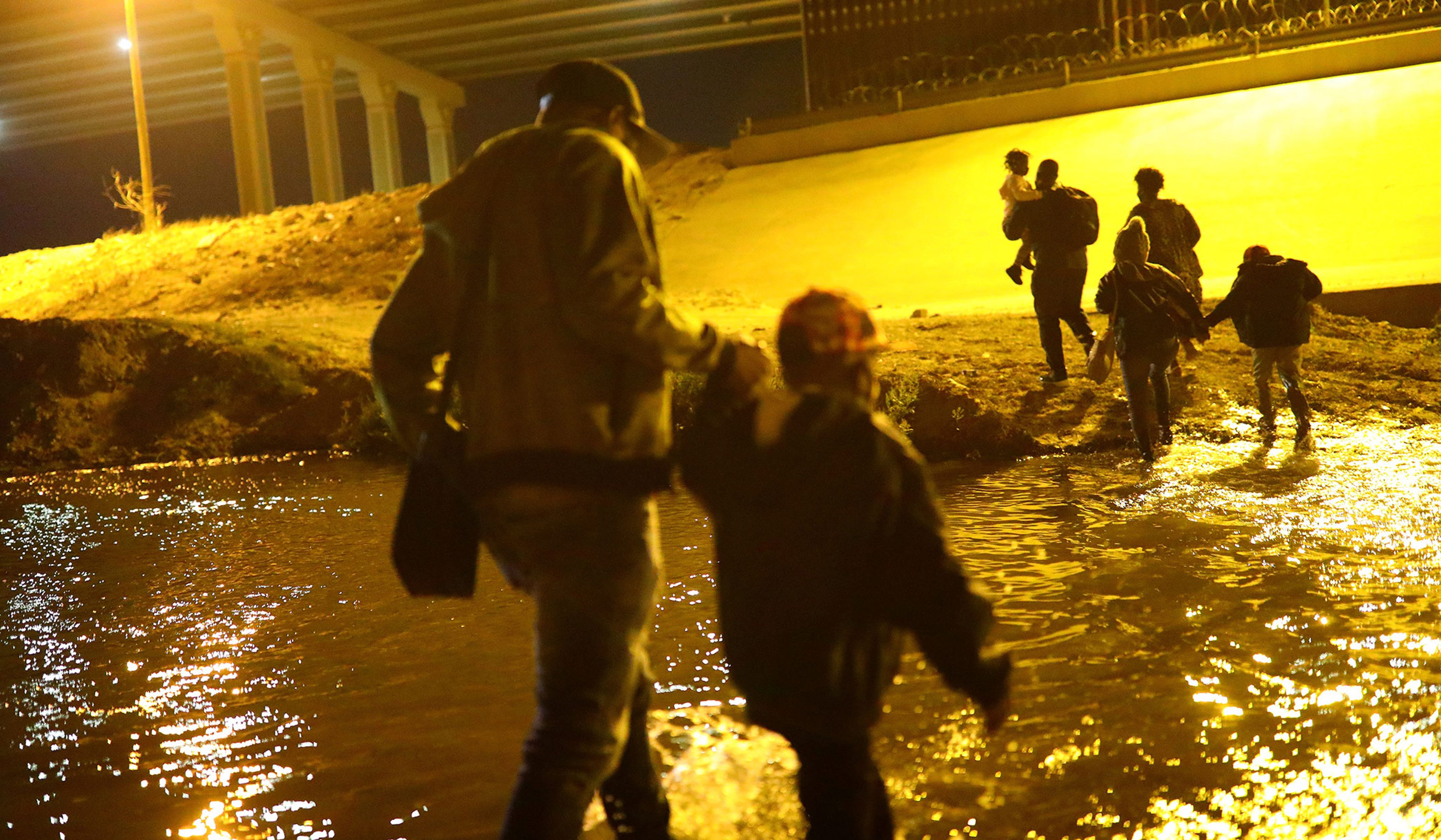
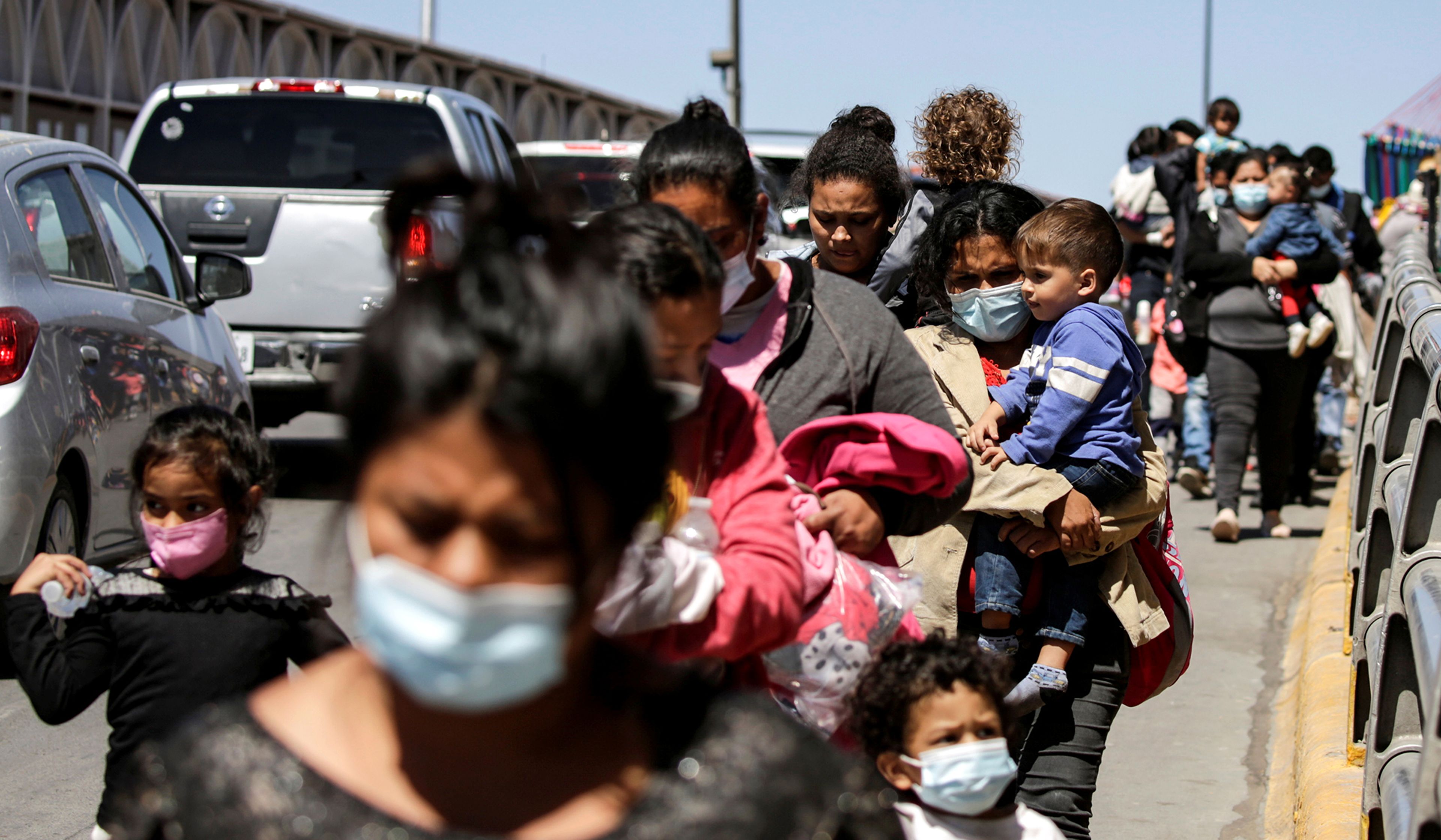


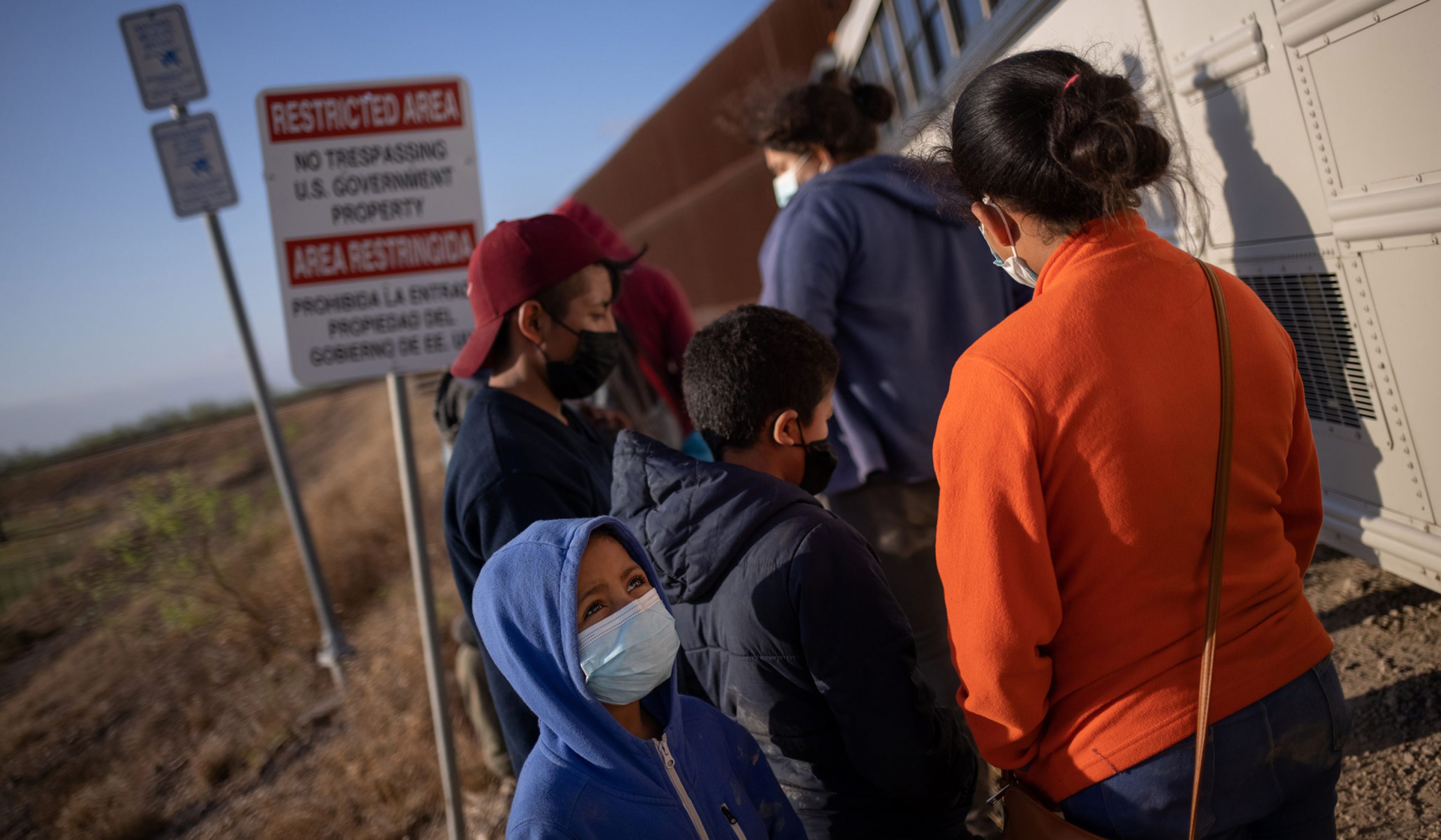
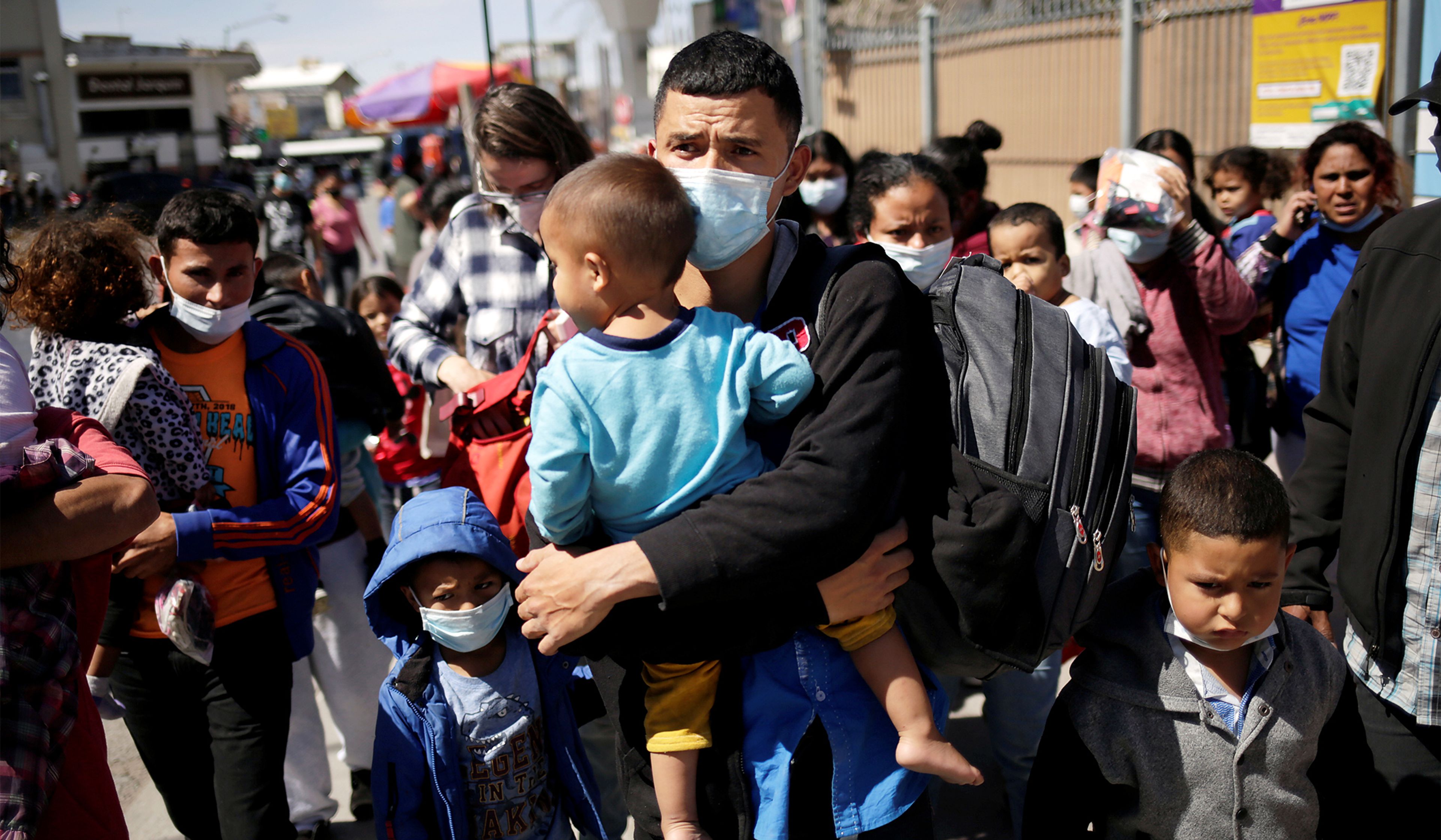


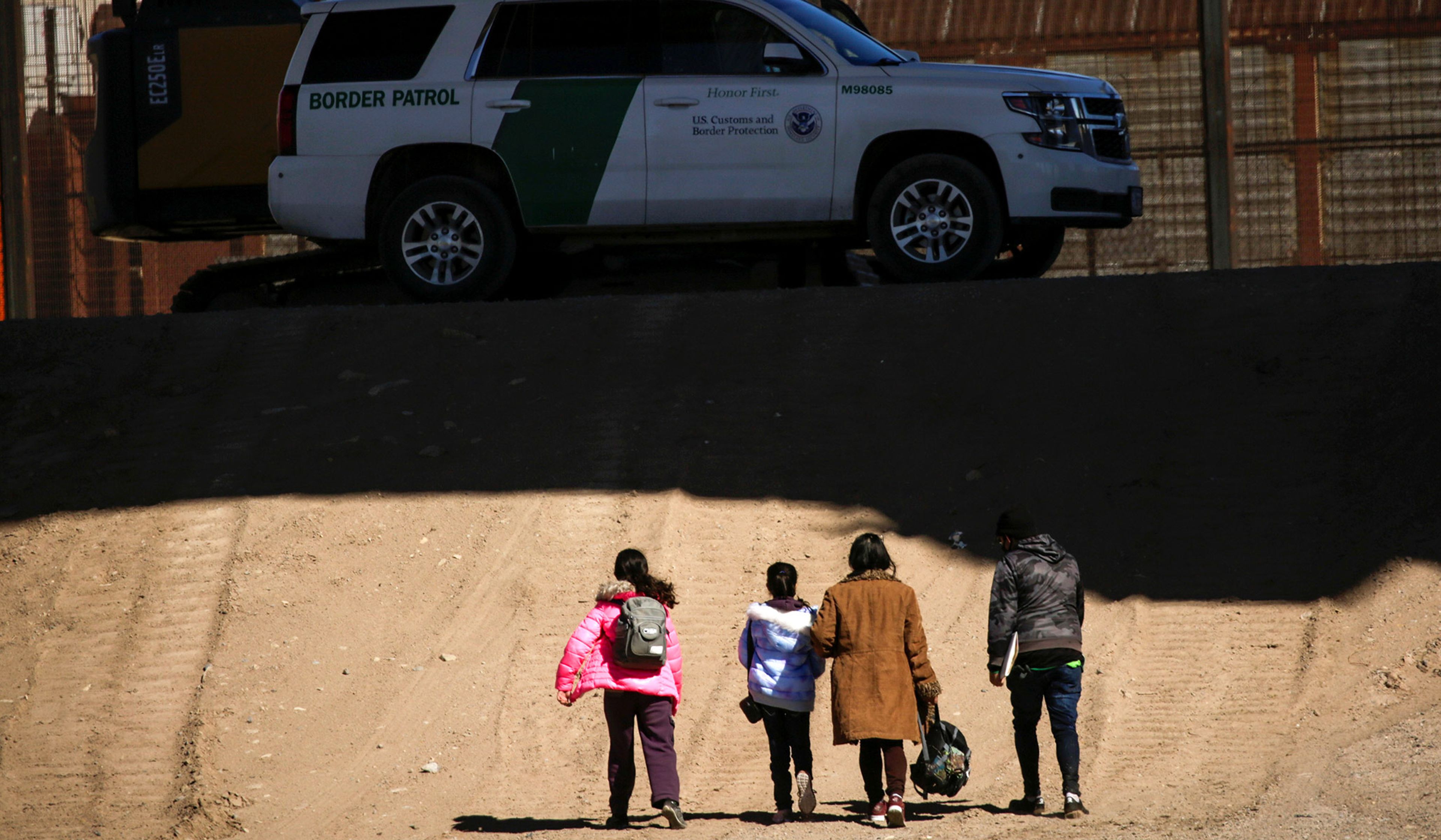
A family of migrants cross the Rio Bravo River to turn themselves in to U.S Border Patrol agents to request asylum in El Paso, Texas, seen from Ciudad Juarez, Mexico, March 30, 2021.
Edgard Garrido/Reuters
The Biden Crisis That Dare Not Speak Its Name
Reporters aren’t in the practice, obviously, of being particularly tough on President Biden. But at his first press conference as president, Cecilia Vega of ABC News politely nailed him to the wall on a key failure of his border policy.
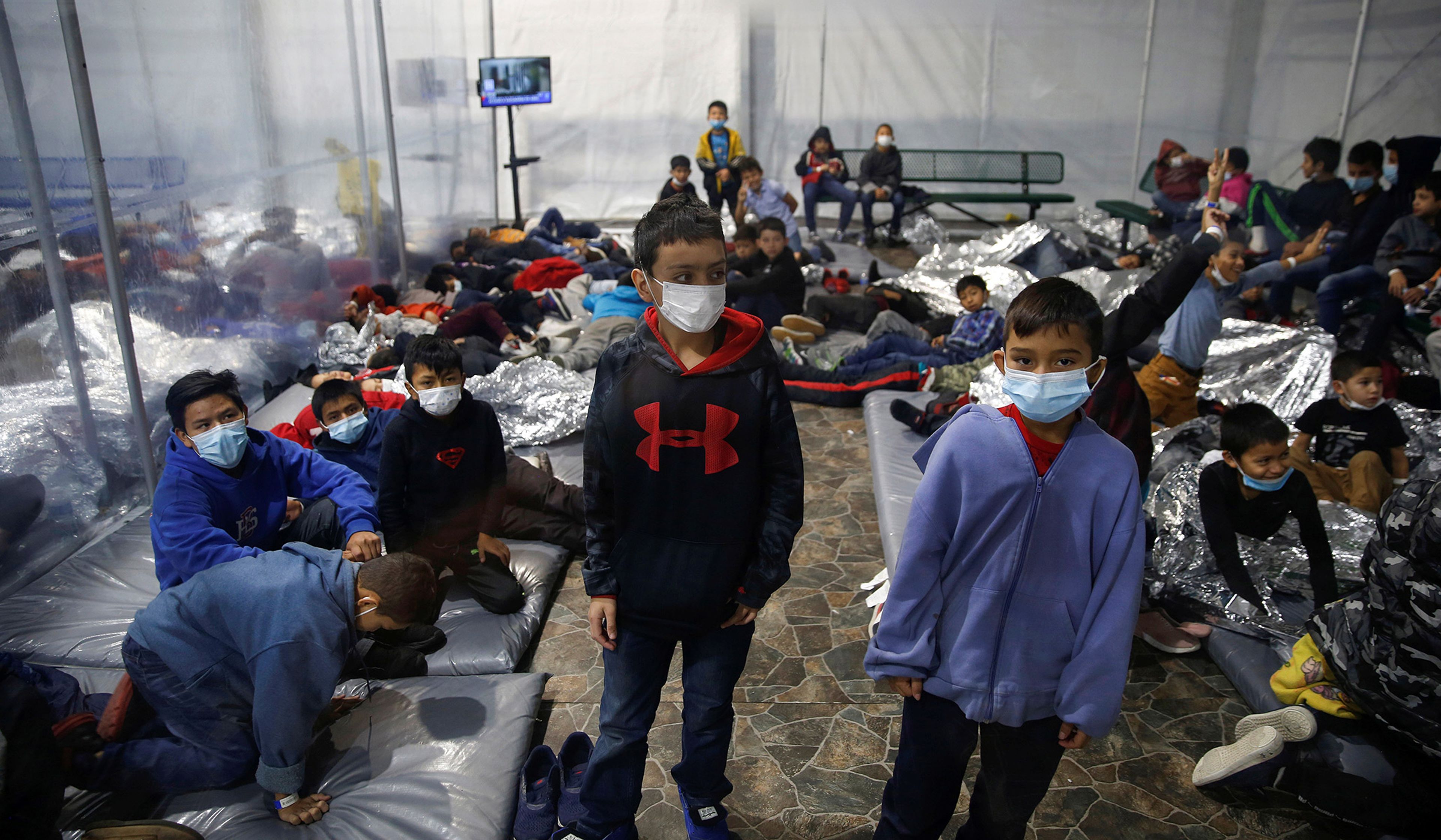
She told an affecting story of meeting a nine-year-old boy at the border who had walked to the U.S. from Honduras, and said that when she called the boy’s mother, the woman explained that she had sent him to the U.S. because she believed that Biden would let him into the country.
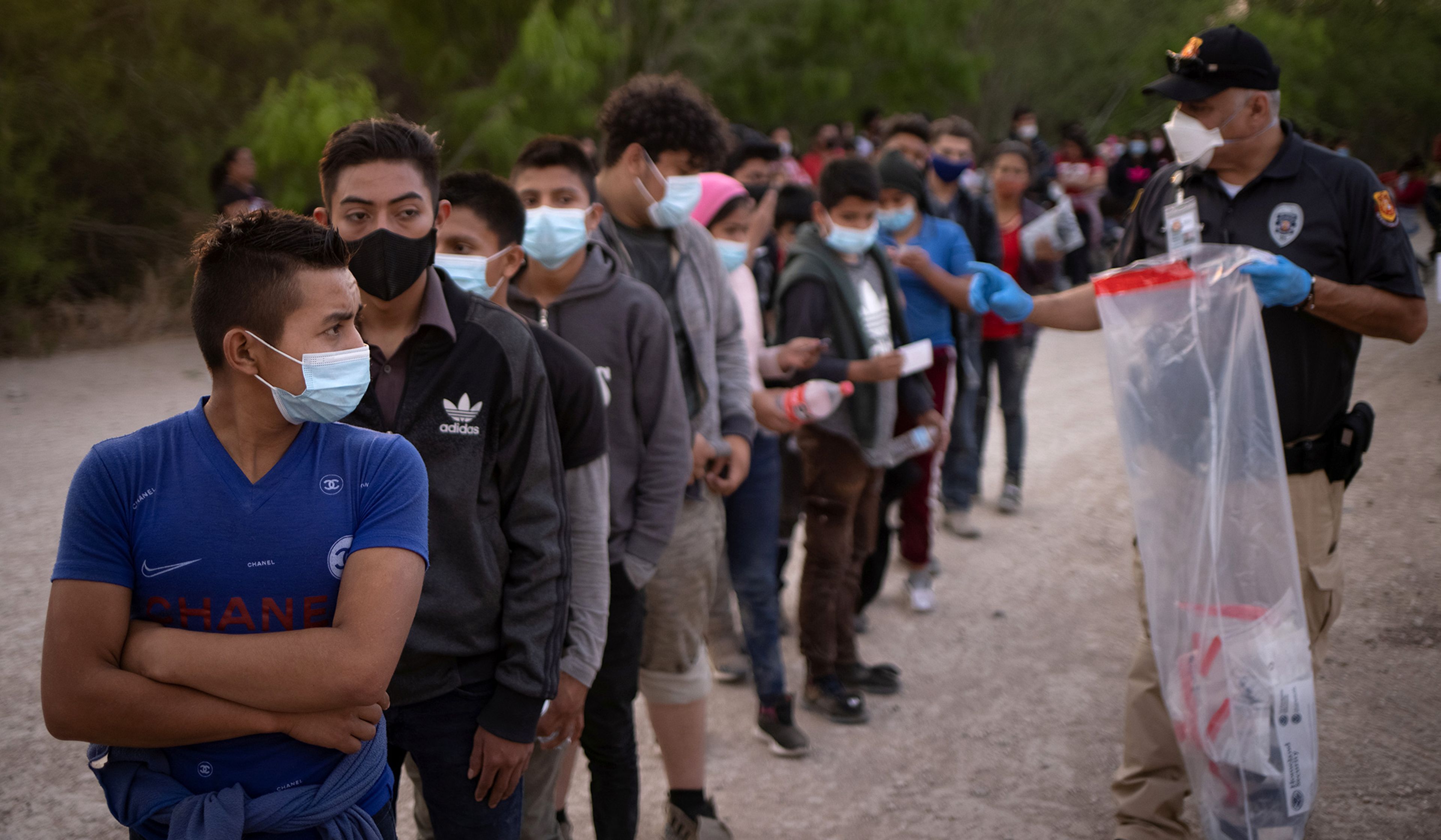
This, of course, is exactly why there have been record numbers of minors showing up at the border. Biden created an exemption in Title 42 — the public-health authority that President Trump had used to turn back migrants during the pandemic — specifically for minors, and predictably there’s been a surge of minors.
In evading this reality throughout the press conference, Biden resorted to a haze of misrepresentations, and inadvertently exposed the senselessness of his own policy.
In response to Vega, he echoed a distortion often made by his Homeland Security secretary Alejandro Mayorkas and said that Trump had dumped children into the Mexican desert. Except Biden made the charge even more lurid by alleging that Trump had let children starve to death.
This is a disgraceful and stupid charge. The Trump administration either flew back migrants to their home countries directly or handed them over to Mexican authorities to do the same. No one was pushed into the desert.
Also, in response to Vega, he said that the nine-year-old boy should be returned to his mother in Honduras. But that was precisely the Trump policy that Biden overturned and now falsely portrays as inhumane. Under Biden’s policy, that nine-year-old is likely in an HHS detention facility and will not be returned home, instead placed with a relative or family friend in the United States.
The rest of Biden’s statements about the border weren’t any more accurate or sensible.
He said that family units are all being turned back at the border. First, we know this is not true. Reports suggest that most family units are now getting into the United States. Second, it’s not clear why this stated policy of returning family units wouldn’t, in Biden’s terms, be just as immoral as returning minors.
Biden said that Trump’s policies had no effect at the border. This is demonstrably false. Trump had gotten control of the border prior to the onset of the pandemic.
He blamed Trump for reducing shelters for migrants, a truly absurd charge. Trump only closed the surge facilities set up during the crisis of 2018–2019 because they were no longer needed, and, besides, Democrats agitated to shut down these facilities.
Overall, Biden gave no indication that he understands how he has stoked the current crisis or that he knows how to address it. His emphasis was on improved processing of the migrants that are coming, rather than persuading them to stay home. That will inevitably mean more families in Central America deciding to send their children on the harrowing journey north, whether Biden wants to acknowledge it or not.
Mann Down
If you wait nearly a decade, the courts might finally do what’s obviously been right all along.
That’s one of the lessons of the Superior Court of the District of Columbia’s granting National Review’s motion for summary judgment in Michael Mann’s seemingly interminable lawsuit against us.
For eight long years, we have watched as all remained quiet on the Western Front. Nothing had seemed to make a difference — not the anti-SLAPP laws that were designed to prevent this sort of legal harassment of publications, not our motions and appeals going all the way to the Supreme Court, not the First Amendment itself. Instead, we were stuck in a grinding battle of attrition, in which the only change was the ever-growing size of our attorney fees — just as Mann intended.
The climate scientist launched the suit in response to a Mark Steyn blog post in 2012 criticizing his work, and boasted privately that the suit was an opportunity to “ruin” NR.
The D.C, ruling in mid March is a victory for free speech, but a limited one. The court held that, as a publisher, we cannot be held to an “actual malice” standard for the words of a non-employee whose post wasn’t reviewed prior to publication. This is a commonsensical standard that is well established in the law. If it were otherwise, it would significantly increase the legal exposure of publishers and chill free speech.
That Mann was able to bleed us of millions in legal fees for so long should be a blot on the American escutcheon.
If the ruling is good news, it would have been much better if Mann’s suit had been dismissed in its entirety. Instead, his meritless and vindictive pursuit of Mark Steyn and the Competitive Enterprise Institute continues (Steyn quoted a CEI critique of Mann in his post). Friends of the First Amendment, whether right, left, or center, should rally to the defense of Steyn and CEI.
As for NR, this saga is far from over. Mann may well appeal the ruling. Also, Mark Steyn’s legal fees have always been covered by our legal insurance, and still are. Finally, we have the presumptive right for Mann to pay our legal fees for some of the case, an option that, as it happens, would require even more expenditures in the short term.
Our legal insurance has never covered all of our fees, and the policy is not inexhaustible. So, perversely, even after Mann’s suit has finally been found by a judge to fail a threshold standard, he is still going to be able to drain us of time and resources — which, once again, is his purpose.
This lawsuit has been a disgrace from beginning to end. Justice won’t truly be done until the entire thing is discarded and crushed under foot.











Comments