For 40 years, people have said that novels by Salman Rushdie are “magical.” The new one certainly is. It is magical in conception, magical in plot, magical in execution. It is at the same time supernatural, or superhuman, and natural, or human — grittily so. All too. Near the end of the book, its main character says, “The truth of the world is that people act according to their natures.”
In this book, Victory City, the magic is in the service of the realism. The magic sometimes acts as the spoonful of sugar that helps the realism go down.
Have the opening sentence:
On the last day of her life, when she was two hundred and forty-seven years old, the blind poet, miracle worker, and prophetess Pampa Kampana completed her immense narrative poem about Bisnaga and buried it in a clay pot sealed with wax in the heart of the ruined Royal Enclosure, as a message to the future.
What is “Bisnaga”? It is a city, or a kingdom, which becomes an empire. “Bisnaga” is the “victory city,” until it becomes a defeated one (or, more accurately, self-defeated).
The plot of the novel, roughly, roughly, is this: A little girl lives in a kingdom, attacked and destroyed by another kingdom. We are in the 14th century. The girl sees the widows all around her kill themselves on a great funeral pyre. These include her own mother. In due course, a goddess enters the girl. The goddess will breathe through her, act through her.
With these powers, the girl, or young woman — Pampa Kampana — brings into being a new city, a new kingdom. The inhabitants of the kingdom are newborn, whether they are young, middle-aged, or old. They have no memories, or identities, or histories. Pampa Kampana whispers these things into them.
The kingdom, Bisnaga, waxes and wanes, waxes and wanes — and falls. In her final days, Pampa Kampana gets it all down, in her vast, epic poem.
So, Victory City is this poem, this epic? Sort of. It is the narrator’s (Rushdie’s) retelling of the poem. From time to time, the narrator intervenes to comment on the poem. His book is “but a pale shadow” of the original, he pleads. This poor man is “neither a scholar nor a poet but merely a spinner of yarns.”
Uh-huh. Salman Rushdie is plenty scholarly and poetic. He is also, true, one helluva spinner of yarns.
You have a little of the plot. What is the book about? It’s about memory, politics, theology, tribalism, sexuality, destiny. All that in one li’l novel? Yes, and more. The philosophically inclined can dig in to a philosophical feast. The reader can go as deep as he wants. He can also remain on the surface — and I don’t mean “surface” pejoratively.
I mean that you can simply enjoy the book as prose — prose-music. Forget Rushdie the historian, and student of politics, and social observer, and enjoy him as literary artist. Reading this book is like going to an orchestral concert, with a varied and colorful program. You can soak up the sounds.
Rushdie writes in long, elegant, beautiful sentences. They are easy to read, these sentences — they read fast. I think I had to reread about two of them, in 300-plus pages, to be sure I knew what was happening. The book shows no effort, frankly. The sentences fall off logs. If there was labor, it doesn’t show.
Paul Johnson, the late historian and journalist, advised, “Write short sentences. And occasionally throw in a long one.” Rushdie tends to write in long sentences, occasionally throwing in a short one. One sentence reads, in its entirety, “Well!” It is a perfect — and perfectly placed — sentence.
The writing is beautiful — magical — as I’ve said. But it is not airy-fairy. Rushdie is too realistic a magical-realist for that. He drops an F-bomb or two, and there is even a bit of the scatological. (A new king — a bad guy — styles himself “Hukka Raya the Second.” In “the rougher parts of town,” people refer to him as “Number Two.”)
Rushdie is not averse to a little wordplay. Every once in a while, you get a sentence such as this: “He had seen the world from Alpha to Omega, from up to down, from give to take, from win to lose . . .”
Many, many sentences are arresting, asking you to consider them and remember them. Early on, Pampa Kampana decides that she will not be mired in the dark, terrible past. No, “she would laugh at death and turn her face toward life.”

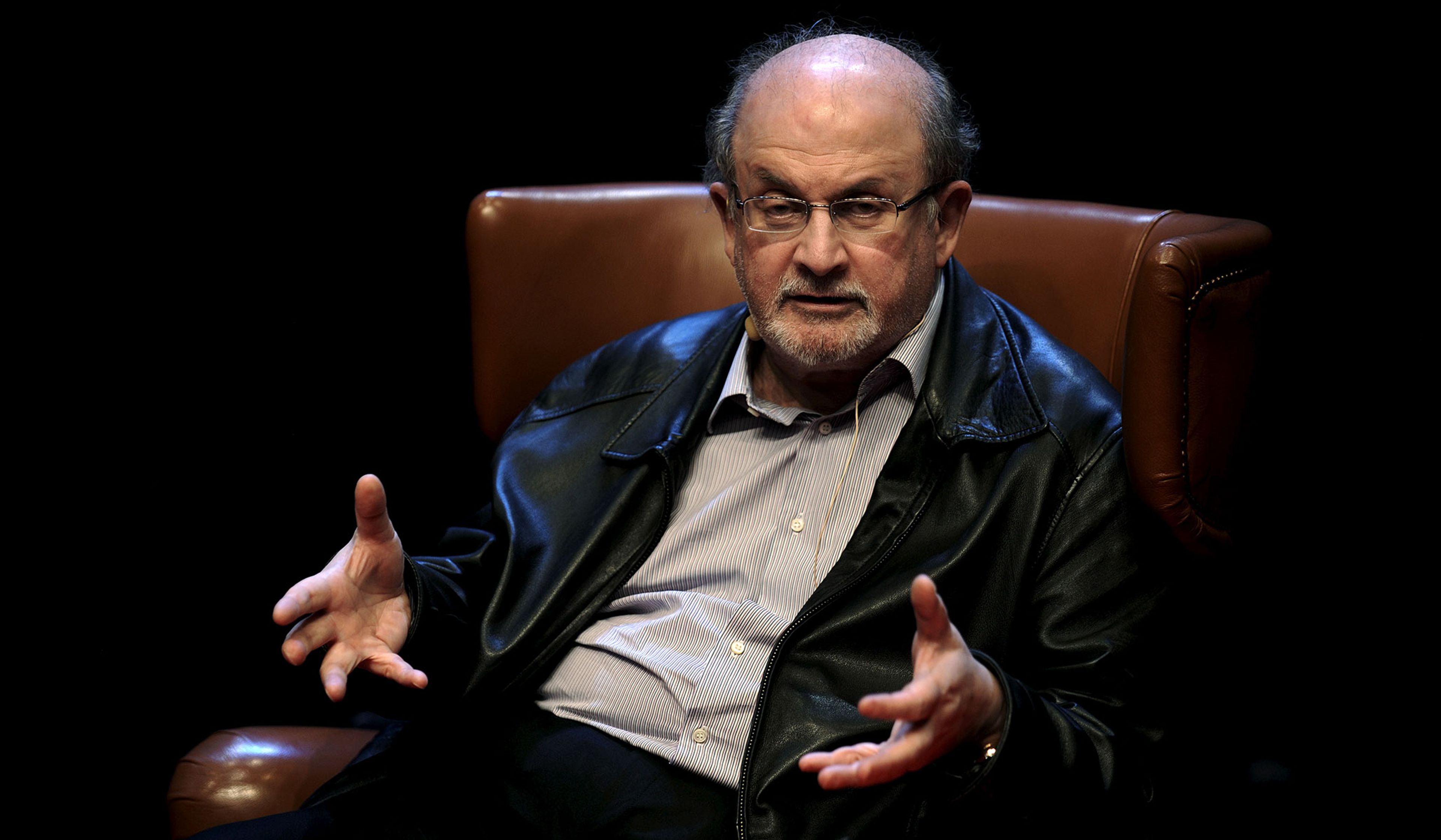
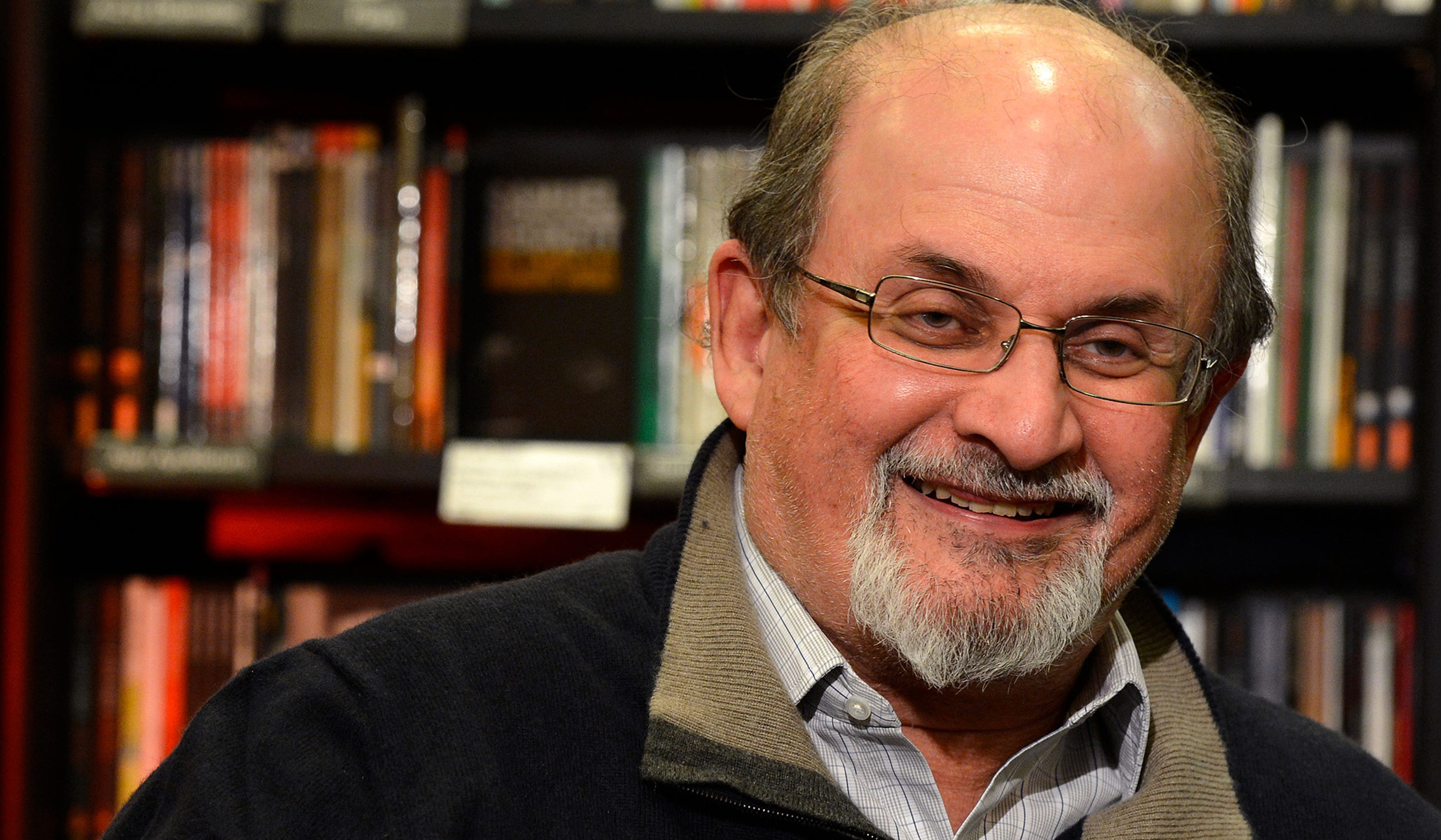
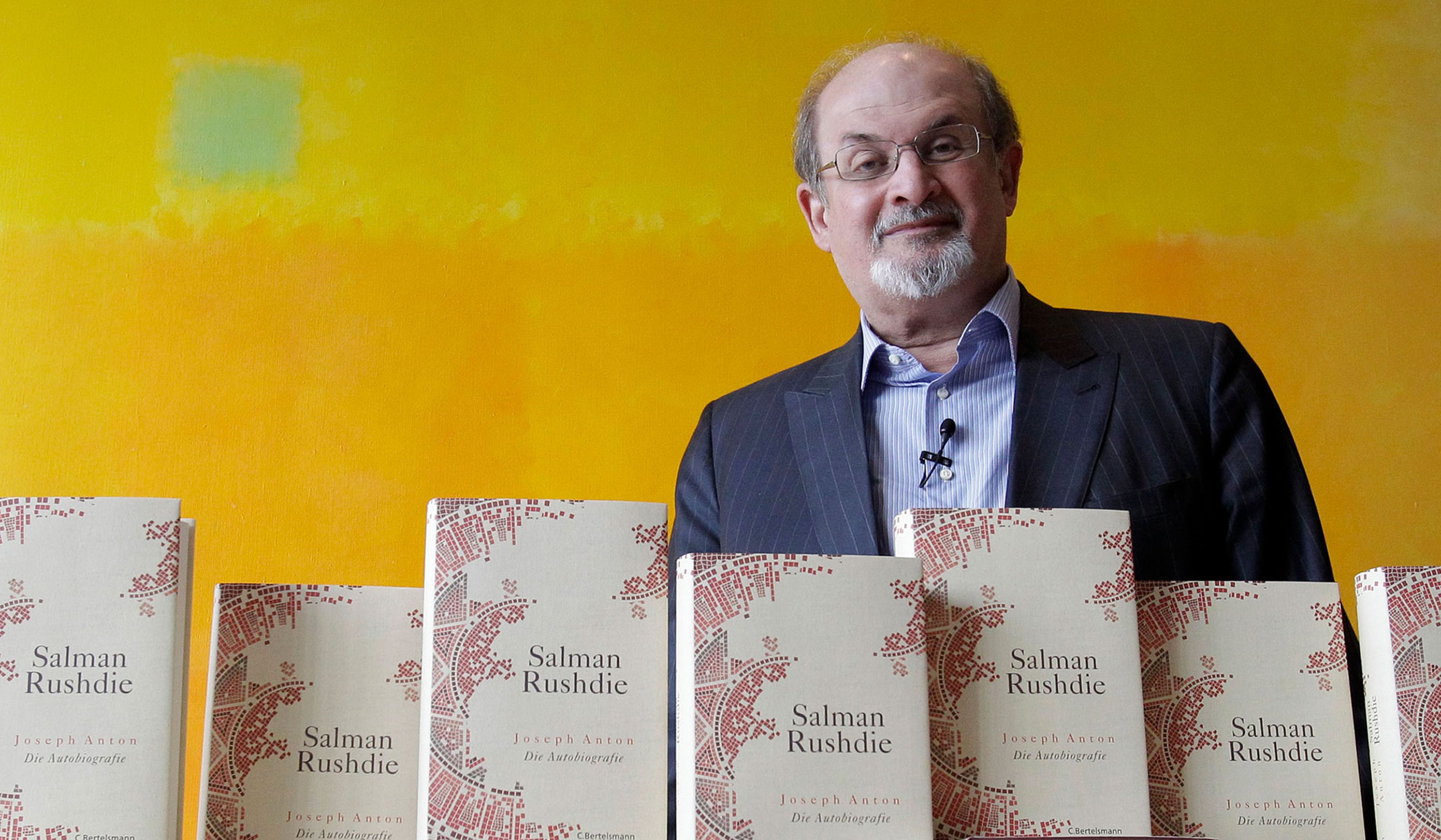

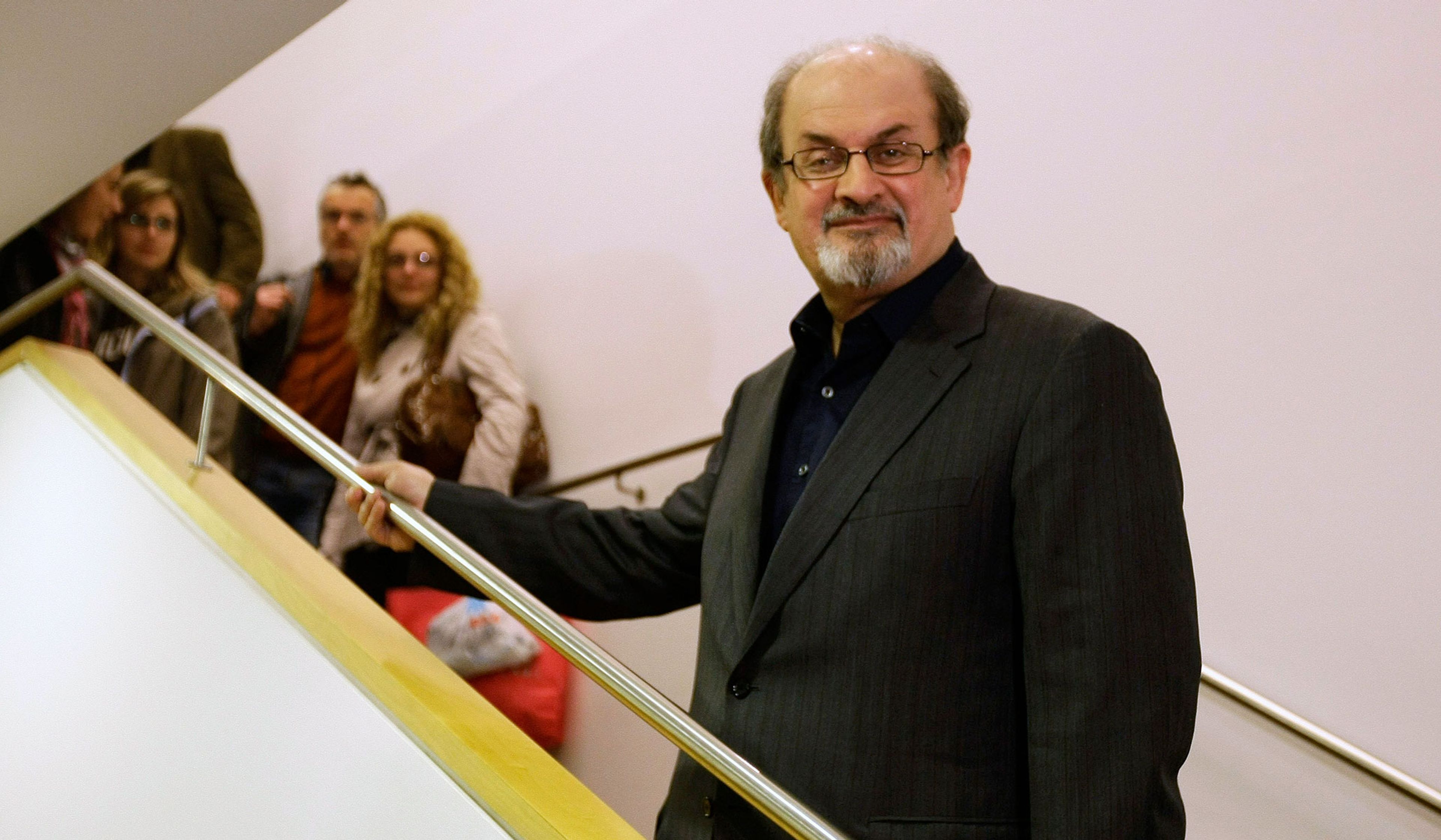
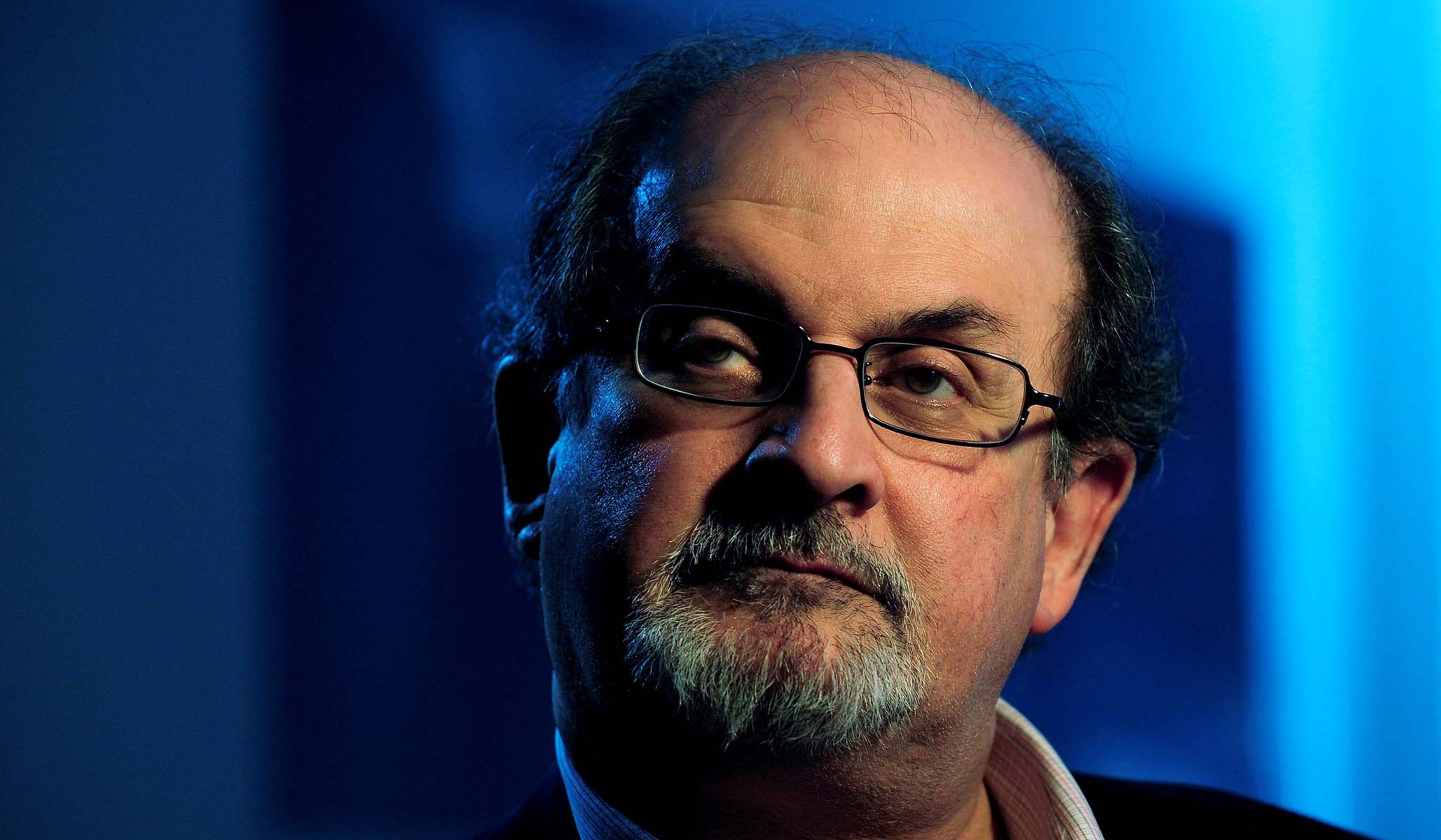
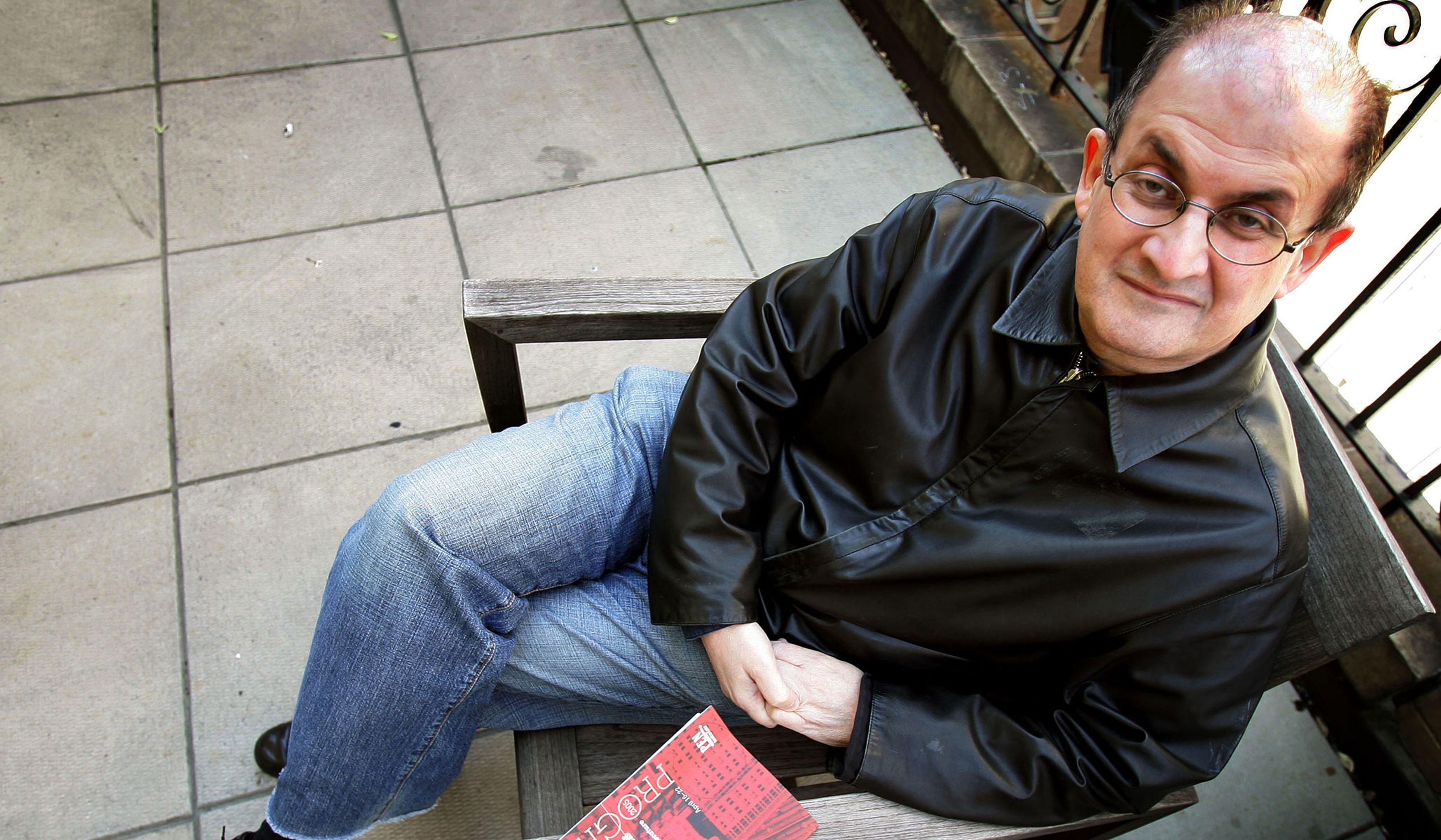
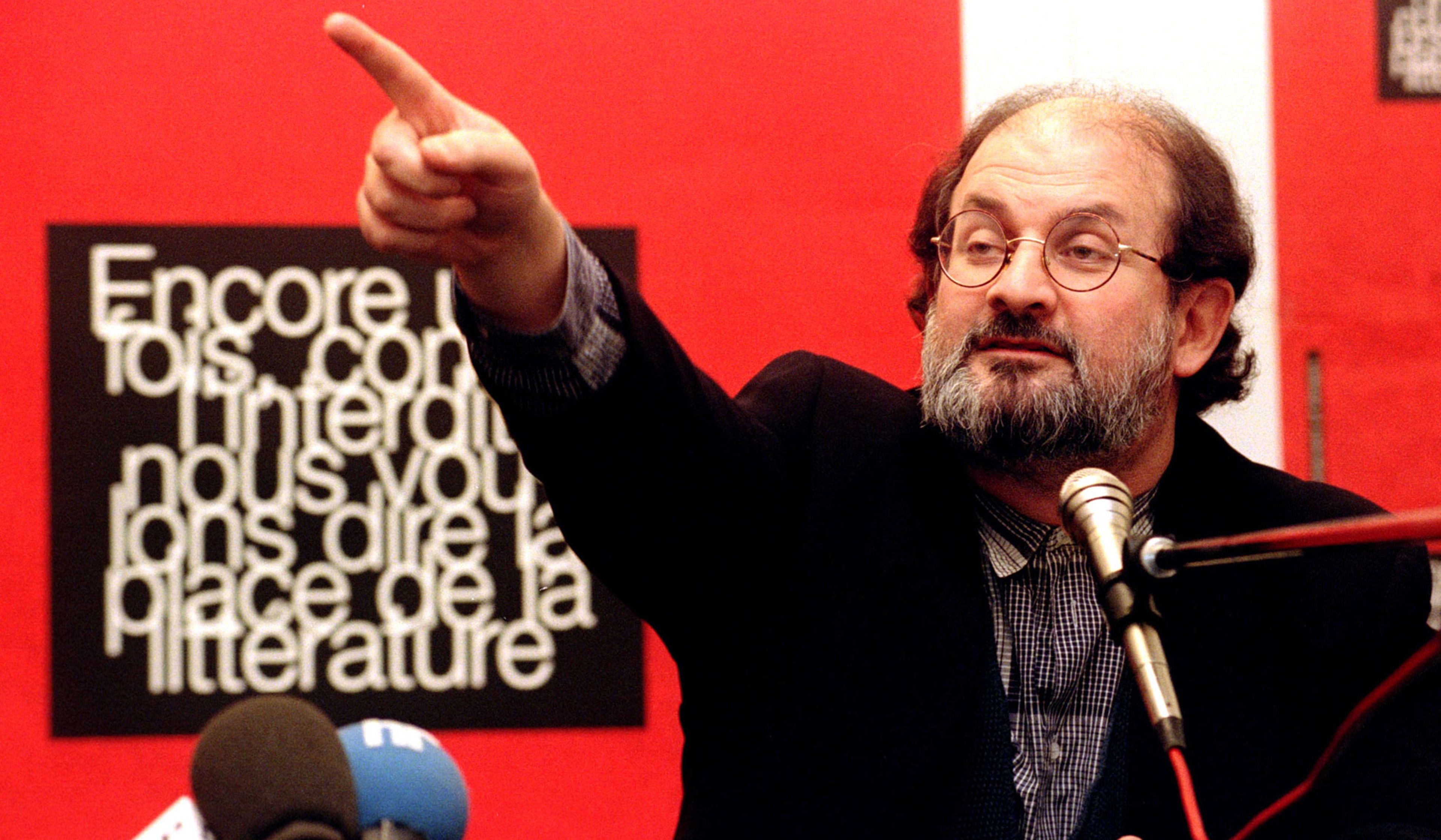
Author Salman Rushdie arrives at the High Court to settle a libel action in London, England, August 26, 2008.
Luke MacGregor/Reuters
How do you like this? (Something a bit lighter, perhaps.) “They were on relatively friendly terms, the crows and parrots, because both species were disapproved of by many of the other birds.”
And how about this? “Nothing endures, but nothing is meaningless either.” That is almost like good-news, bad-news (or bad-news, good-news). There is a certain comfort in it as well.
I have said that the book is about (“about”) politics, in addition to umpteen other things. Here is a passage that tells us something about politics. The narrator, Rushdie, is talking about a movement that arose in Bisnaga.
Its platform had the unusual characteristic of looking forward by looking back — in other words, it wanted the future to be what the past had been, and so turned nostalgia into a new kind of radical idea, according to which the terms “back” and “forward” were synonyms rather than opposites, and described the same movement, in the same direction.
Amid dark days in Bisnaga — when Number Two is on the throne — a “heroic protester” dares to “stand alone at the heart of the bazaar distributing pamphlets.” When state agents descend on him, they find that the pamphlets are blank — utterly blank. “What does this mean?” they demand. “Why isn’t there any message written here?” The protester answers, “There’s no need. Everything is clear.”
In March 2022, a few weeks after the Kremlin launched its all-out assault on Ukraine, Russians were arrested for holding up blank signs. Had Rushdie completed his novel by then? It would be interesting to ask.
About religion, he writes keenly. Caustically? Sometimes, yes, but not without a solid basis. Consider this: “Achyuta was religious, in the sense of being hostile to followers of other religions.” When I read that, I thought, “Bull’s-eye.” Rushdie’s sentence describes multitudes.
He writes about politics and religion — and the despotic blending of them. Number Two abolishes the traditional royal council and replaces it with the DAS, i.e., the Divine Ascendancy Senate. Reading about its ways and goons, I could not help thinking about Iran.
It was in 1989 that Ayatollah Khomeini inflicted his “fatwa” on Rushdie — the command that he be murdered. (The ayatollah had bought some nonsense about a novel that Rushdie had written.) For almost 35 years now, Rushdie has dodged assassination. He has had close calls. Last summer, at a public event in western New York, a man almost stabbed him to death. According to reports, Rushdie has lost sight in one eye and the use of one hand.
When will the Khomeinist regime in Iran — or the Putinist one in Russia, for that matter — at last die? Writing about events in Bisnaga, Rushdie says,
The goon squads of the ancien régime retreated in disarray. That regime had seemed all-powerful, invincible, but in the end its whole apparatus crumbled in days and blew away like dust, revealing that it had rotted from the inside, so that when it was pushed, it was too weak to go on standing.
May this happen IRL (“in real life”). It has happened before.
Perhaps above all, Victory City is a love song to pluralism: to diversity and Vive la différence. At one point, Rushdie speaks of a “mood of so-what tolerance.” He longs for a place where the circumcised and the uncircumcised, the religious and the nonreligious, can live in harmony — even if a noisy harmony — with each man doing his own thing, and letting others do the same. Rushdie bears the scars, literally, of illiberalism, or anti-pluralism.
Again, Victory City is a philosophical feast and a prose symphony. It is also a story — you want to turn the pages. What’s more, it is a story about storytelling! Remember: Pampa Kampana whispers to the newborn, of all ages, the stories of their lives. Later, she says of Bisnaga that “the great river of its story flows into the ocean of stories which is the history of the world.”
(In 1990, Rushdie published a children’s novel, Haroun and the Sea of Stories. About 15 years later, it became an opera: music by Charles Wuorinen, libretto by James Fenton.)
You can see in Victory City an homage to storytelling. In a season of exile — a long one — Pampa Kampana enters a “deep, healing sleep.” Eventually she is awakened by “an act of love” — a kiss. Remind you of something? There is also a hint of the Arthurian legend of the sword in the stone.
For about three days, as I held this book in my hands, Rushdie told me a story. What a pleasurable experience. What an imagination this fellow has (to go with the formal learning). What a relationship with words he has. Victory City is his 15th novel. It ends with the sentence, “Words are the only victors.” In the flesh or not, Rushdie will outlive all the devil’s tools who have tried to kill him.












Comments